How to Get Rid of Fungus Gnats in Houseplants (Finally)
Those tiny flying jerks ruining your plants? Here's exactly how to murder fungus gnats—with ranked methods, timeline expectations, and the stuff the internet gets wrong.
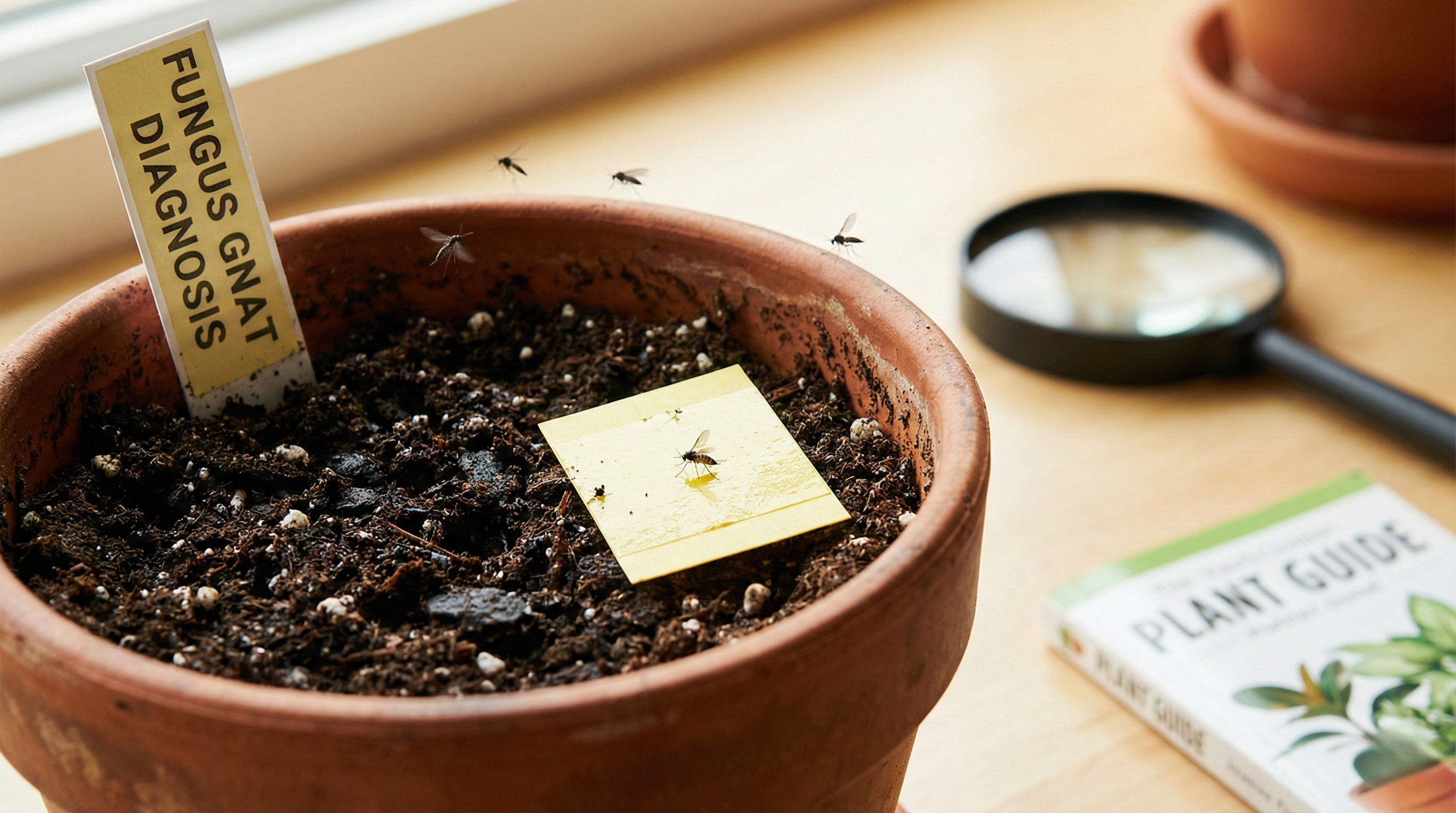
What Even Are Fungus Gnats?
Fungus gnats are those tiny black flies that appear seemingly out of nowhere and spend their entire existence annoying the hell out of you while hovering dramatically near your face whenever you walk past your plant shelf.
Here's the thing: the adult gnats you see are mostly harmless. They're annoying, sure, but they don't bite, they don't damage your plants, and they have a lifespan of about one week. The real problem is happening underground.
Life Cycle Breakdown (Why They Keep Coming Back)
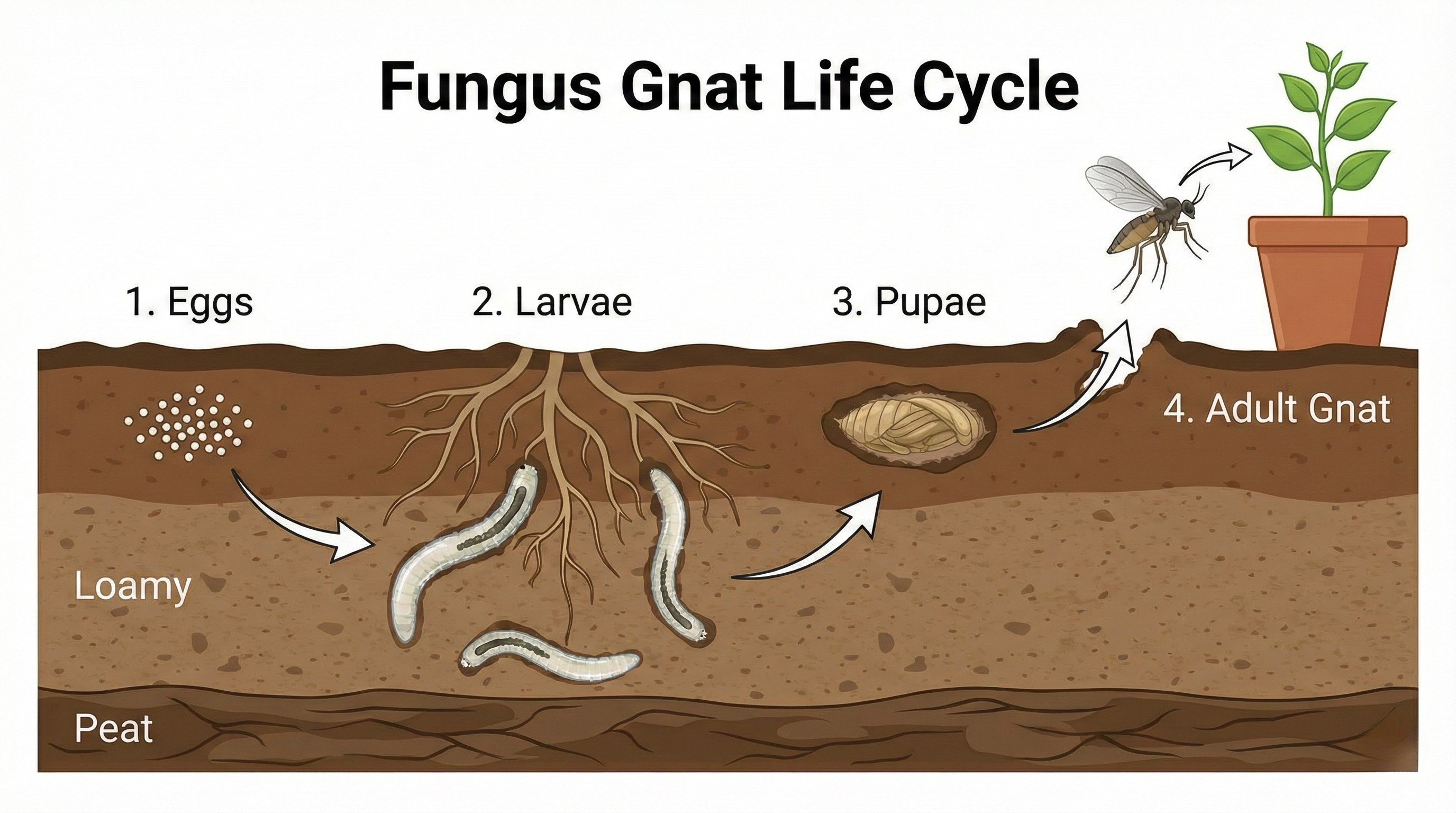
Fungus gnats go through four stages: egg, larva, pupa, and adult. The entire cycle takes about 3-4 weeks depending on temperature and humidity. Here's why this matters:
Eggs are laid in the top 2-3 inches of moist soil. A single female can lay 100-300 eggs in her short life. These eggs hatch in 3-7 days.
Larvae are the actual plant-damaging stage. These translucent, worm-like creatures feed on fine root hairs and organic matter in your soil. Heavy feeding can stress plants, reduce nutrient uptake, and create entry points for root rot. Larvae stage lasts 10-14 days.
Pupa happens in the soil for 3-7 days. No feeding, just metamorphosis into an adult.
Adults emerge and immediately mate. The females start laying eggs within 48 hours of emerging. And then the whole terrible cycle starts again.
This is why you can't just kill the adults and expect to be done. If any eggs or larvae remain, you'll have a new generation within weeks. The life cycle is the reason most people fail to eradicate fungus gnats—they stop treatment too early.
Where They Come From (It's Not Your Fault... Mostly)
Fungus gnats almost always arrive in one of three ways:
New plants. This is the most common vector. Even healthy-looking plants from reputable sources can carry fungus gnat eggs or larvae in their soil. When you bring a new plant home and place it near your existing collection, the eggs hatch and suddenly you have an infestation. This is exactly why quarantine new plants for at least two weeks before introducing them to your main collection.
Bagged potting mix. Those big bags of potting soil you buy at the garden center? They're often breeding grounds for fungus gnats. The moisture and organic matter in bagged soil is exactly what female gnats look for when laying eggs. Some batches are worse than others, but no potting mix is immune.
Outdoor plants. If you move plants inside for winter or spend summers on a patio, fungus gnats can hitch a ride in on the soil. Even plants that look perfectly fine can have larvae hiding in the root zone.
How to Know You Have Them (Besides the Panic)
The Signs (Besides the Obvious Flying)
The first sign most people notice is the flying adults. You'll see them doing their clumsy, hovering dance near your plants or, more annoyingly, directly in your face when you're trying to enjoy your morning coffee.
But before you see adults, you might notice other signs:
Sudden plant stress. If a plant that was doing fine suddenly looks droopy, yellow, or stunted, check the roots. Fungus gnat larvae feed on root hairs, which can cause symptoms that look like overwatering or nutrient deficiency. The larvae are particularly damaging to seedlings, cuttings, and young plants with delicate root systems.
Slowed growth. Plants with larval damage often put out smaller new leaves or stop growing entirely. The root damage means they can't take up nutrients efficiently, even if the soil is rich.
Tiny white translucent worms in the soil. If you dig slightly into the top layer of soil and see tiny, almost transparent worms with black heads—congratulations, you've found fungus gnat larvae.
Damage vs. Other Issues
The tricky part is that fungus gnat damage mimics other problems. Overwatering causes yellow leaves and root rot. Underwatering causes crispy, droopy leaves. Nutrient deficiencies cause stunted growth. How do you tell the difference?
The key differentiator is the combination of flying adults plus plant stress. If you see the flies and your plant is struggling, larvae are almost certainly the culprit. If your plant is stressed but you don't see any gnats flying around, look at your watering habits first—overwatering creates the exact moist soil conditions that fungus gnats love.
The Emergency Protocol: What Works in 24-48 Hours
When you first discover you have fungus gnats, you want results fast. These methods will start reducing the adult population immediately.
Sticky Traps (For Immediate Adult Control)
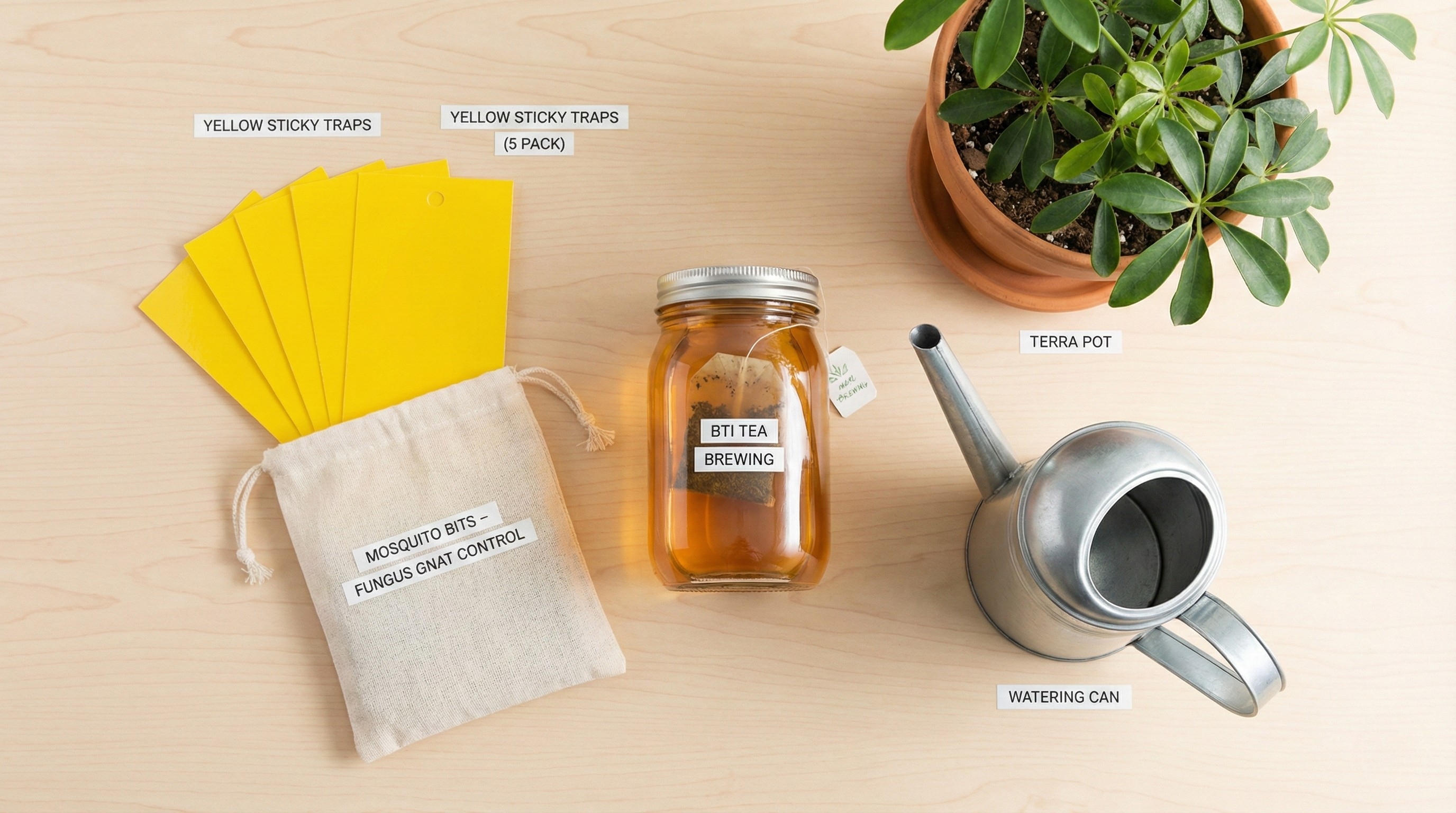
Yellow sticky traps are the fastest way to reduce the adult population. Adult gnats are attracted to the color yellow, and when they land on the sticky surface, they're trapped and die within hours.
How to use them effectively:
Place traps horizontally across the soil surface—this catches gnats as they land to lay eggs. Place additional traps vertically near the foliage, where adults hang out between egg-laying sessions. Change or replace traps every few days as they fill up.
The traps won't solve the underlying problem because they don't affect eggs or larvae in the soil. But they dramatically reduce the number of eggs being laid each day, which is essential for breaking the cycle.
Hydrogen Peroxide Soil Drench (Kills Larvae Fast)
A hydrogen peroxide soil drench is one of the most effective treatments for killing larvae in the soil. The peroxide releases oxygen when it contacts organic matter, which literally burns and kills larvae on contact.
The recipe:
Mix 1 part 3% hydrogen peroxide (the kind you buy at any drugstore) with 4 parts water. So for every cup of hydrogen peroxide, add 4 cups of water.
Water your plants with this solution until it runs from the drainage holes. The soil should be thoroughly saturated. The peroxide will bubble slightly—that's normal and means it's working.
Repeat this treatment every 3-4 days for two weeks. This breaks the life cycle by killing newly hatched larvae before they can mature and lay more eggs.
Mosquito Bits Overview (For the Desperate)
Mosquito bits contain Bacillus thuringiensis israelensis (Bti), a naturally occurring bacteria that kills mosquito and fungus gnat larvae. The larvae ingest the bacteria, which damages their digestive system and kills them within 48 hours.
How to use:
Sprinkle the granules on top of your soil according to package directions, then water them in. Alternatively, you can make a "tea" by soaking the bits in water for 30 minutes and using that water to water your plants.
Mosquito bits are effective, but they're not instant. It takes 24-48 hours for the bacteria to work. This is why combining bits with sticky traps gives you the best results—you kill adults immediately while waiting for the bits to kill larvae.
The Real Solution: Eradicate Them for Good
The 2-Week Plan (Timeline Expectations)
Here's the uncomfortable truth: you cannot get rid of fungus gnats in 24 hours. The life cycle ensures that even if you kill every adult today, eggs in the soil will hatch over the next week, producing a new generation of adults that will lay more eggs.
The minimum effective timeline is 2-3 weeks. Here's why:
- Adults live about 1 week
- Eggs hatch every 3-7 days
- Larvae take 10-14 days to mature
You need to continue treatment for at least two full weeks after seeing zero gnats to ensure you've killed every generation. Stop too early, and you'll have a reinfestation within days.
Week 1: Apply hydrogen peroxide drench every 3-4 days. Keep sticky traps in place. Check traps daily and note the decline in adult captures.
Week 2: Continue hydrogen peroxide drenches. If you haven't seen any adults for 5-7 days, you're making progress. But keep treating.
Week 3 (if needed): By now, most infestations are under control. If you're still seeing occasional adults, continue treatment for another week. If no adults for a full week, you can taper off.
Combining Methods for Maximum Annihilation
The most effective approach combines multiple methods targeting different life stages:
- Sticky traps catch adults and prevent egg-laying
- Hydrogen peroxide kills larvae on contact
- Mosquito bits provide ongoing larval control for 2-4 weeks
- Drier soil makes the environment inhospitable for eggs and young larvae
Use all four simultaneously for the fastest results. This multi-pronged attack ensures that no matter what stage the gnats are in, you're hitting them with something effective.
Ranked: What Actually Works (And What Doesn't)
Most Effective (Do These First)
Hydrogen peroxide soil drench (1:4 ratio): Kills larvae on contact. Fast-acting, inexpensive, and safe for your plants. Requires repeated applications. Our top recommendation.
Mosquito bits (Bti): Targets larvae with biological control. Safe, easy to use, and continues working for weeks. Doesn't kill adults, so combine with traps.
Yellow sticky traps: Immediate adult reduction. Cheap, available everywhere, and gives you visible progress. Doesn't affect eggs or larvae.
Moderately Effective (Good Additions)
Diatomaceous earth: Food-grade DE can be sprinkled on soil surface. It damages larvae that crawl through it, but it's less effective in moist soil and needs reapplication after watering.
Bottom watering: Water plants from the bottom by letting them sit in a tray of water. This keeps the top layer of soil drier, which discourages egg-laying. Not a standalone solution but helpful alongside other methods.
Total Waste of Time (Save Your Money)
Neem oil: Here's where the internet leads you astray. Neem oil is a contact killer—great for spider mites, aphids, and other pests you can spray directly. But fungus gnat larvae live IN the soil, where neem oil can't reach them effectively. You can drench soil with diluted neem, but it doesn't work as well as hydrogen peroxide or Bti. Save your neem for treating root rot or foliar pests.
Cinnamon: Pinterest swears by cinnamon for fungus gnats. The theory is that cinnamon has antifungal properties and gnats like fungus. Reality: cinnamon does absolutely nothing to kill fungus gnat eggs or larvae. It might slightly dry the soil surface, but not enough to make a difference. It's a folk remedy with zero scientific backing.
Apple cider vinegar traps: These catch a few adults but nowhere near as effectively as yellow sticky traps. The vinegar solution also attracts fruit flies, which are a different problem entirely. Not worth the counter space.
Essential oils: Tea tree, peppermint, eucalyptus—none of these kill fungus gnats effectively. They'll maybe annoy the adults for a few minutes. Save your essential oils for aromatherapy.
The Prevention Playbook
Once you've eliminated fungus gnats, you don't want them back. Here's how to keep them from returning.
Quarantine New Plants (Critical!)
New plants are the most common source of fungus gnat infestations. When you bring a new plant home, isolate it in a separate room for two weeks. Check it regularly for signs of gnats during this period. If you see any flying insects, treat before introducing it to your main collection.
Soil Moisture Management
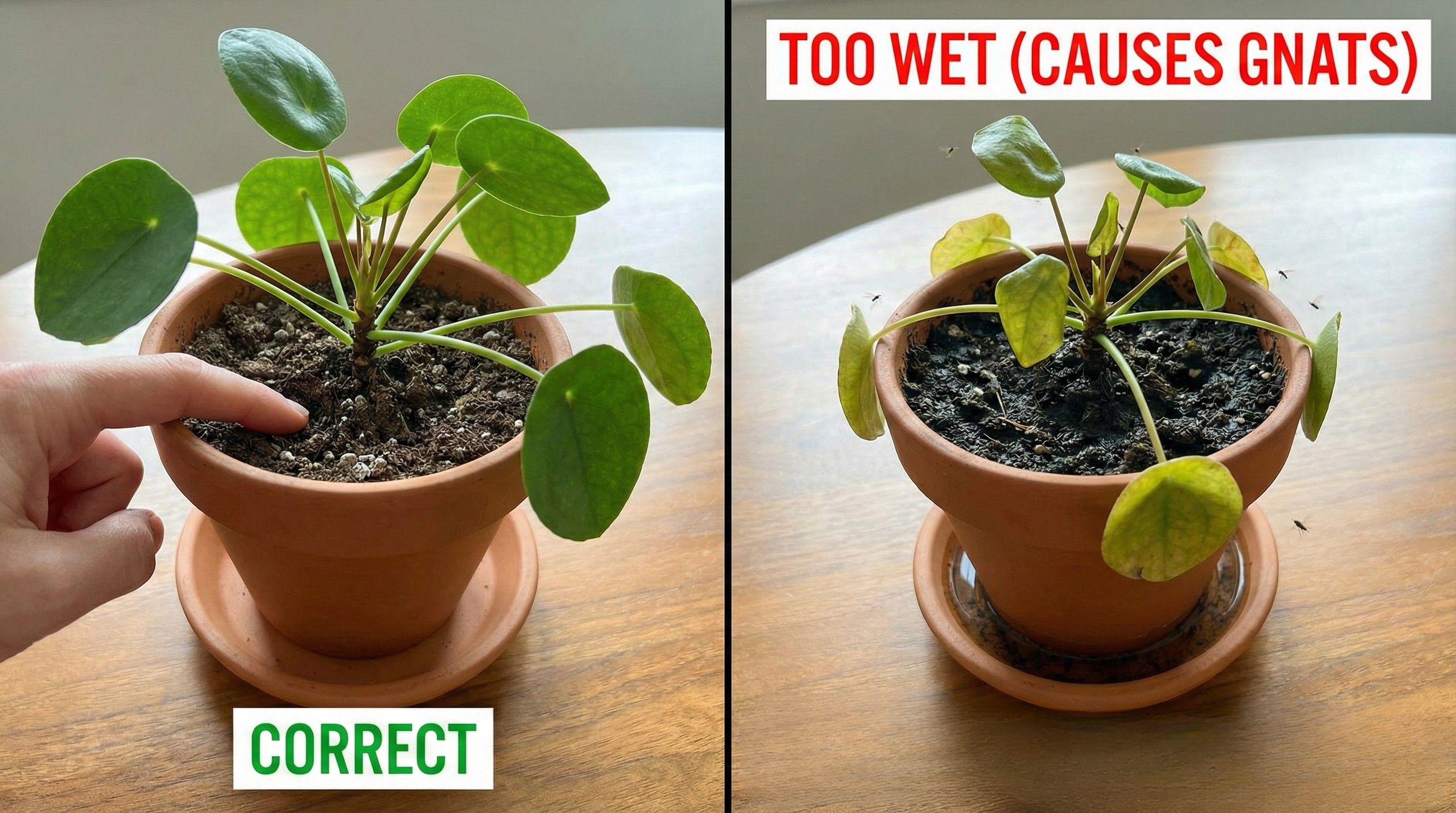
Fungus gnats need moist soil to reproduce. Letting the top 1-2 inches of soil dry completely between waterings disrupts their breeding cycle. This doesn't mean underwatering your plants—just don't keep the soil constantly soggy.
For plants that genuinely need consistently moist soil (ferns, some tropicals), use bottom watering to keep the surface drier. You can also top-dress with a layer of sand or perlite, which dries out quickly and makes the surface less attractive for egg-laying.
Potting Mix Inspection
When potting or repotting, inspect the mix before use. If it smells overly damp or has a fungusy odor, it might already have gnat eggs. Let overly moist mix dry out before using it, or bake it in the oven at 200°F for 30 minutes to kill any eggs or larvae.
🌱 Set Your Plants Up for Success
Great plants start with great soil. Here are our go-to mixes and amendments:
*As an Amazon Associate, we earn from qualifying purchases.
Seasonal Prevention (Bringing Plants Inside)
Before moving outdoor plants inside for fall, inspect the soil carefully. You might even repot them into fresh, sterile potting mix before bringing them in. This prevents outdoor gnats from establishing themselves in your indoor collection.
Myths and Stuff the Internet Gets Wrong
Why Neem Oil Won't Save You
Neem oil has a well-deserved reputation as a plant care miracle worker. It kills spider mites, aphids, thrips, and countless other pests. People recommend it for everything, which is why it's also incorrectly recommended for fungus gnats.
The problem is delivery. Neem oil works through contact—it kills pests when it touches them directly. Spider mites live on leaves where you can spray them. Aphids cluster on new growth where you can coat them. But fungus gnat larvae live IN the soil, buried where neem oil can't reach them.
You can try soil drenches with diluted neem oil, but it doesn't work as effectively as hydrogen peroxide or Bti. The active compounds break down quickly in soil, and larvae are somewhat resistant anyway. Neem oil is fantastic for many pest problems—just not this one.
Cinnamon: Folk Remedy, Not Science
Cinnamon appears everywhere as a natural fungus gnat solution. The reasoning sounds plausible: cinnamon is antifungal, and fungus gnats feed on fungus in soil. So cinnamon should kill them, right?
Here's the problem: fungus gnats don't feed on the fungus that cinnamon affects. They're not eating the harmful fungi that cinnamon targets—they're eating organic matter and root tissues. Cinnamon does absolutely nothing to disrupt their life cycle.
Does cinnamon hurt anything? Not really. It's safe for plants and won't cause problems. But it also won't solve your gnat problem. At best, it slightly dries the soil surface. At worst, it's a false sense of security that delays actual treatment.
Other Myths Debunked
Dry rice in soil: Someone somewhere decided that putting dry rice in plant soil would help. It does nothing except create a moldy mess.
Soap and water sprays: These kill soft-bodied pests on contact but do nothing for soil-dwelling larvae. You're just spraying water on the problem.
Lemon juice: Similar to cinnamon—won't hurt anything, won't fix anything.
FAQ: Your Burning Fungus Gnat Questions
How long does it take to get rid of fungus gnats?
You'll see adult reduction in 24-48 hours with sticky traps, but full eradication takes 2-3 weeks to break the life cycle. Patience + consistency wins. Plan for three weeks and be happily surprised if you're done in two.
Does hydrogen peroxide kill fungus gnats?
Yes—specifically a 1:4 hydrogen peroxide to water drench kills larvae on contact. It won't affect adult gnats, so combine with sticky traps for complete control. Repeat every 3-4 days for best results.
Are mosquito bits the same as mosquito dunks?
Similar active ingredient (Bt), but mosquito bits are granules you mix into water for soil drenches—perfect for pots. Dunk tea works but is messier. Bits are more convenient for container plants.
Why won't neem oil get rid of fungus gnats?
Neem oil is a contact killer—great for spider mites and aphids you can spray directly. Fungus gnat larvae live IN the soil, where neem can't reach them effectively. It's the wrong tool for this specific job.
Can fungus gnats damage my plants?
Adults are harmless, but larvae feed on fine root hairs, reducing nutrient uptake and creating entry points for root rot. Heavy infestations can stress or kill plants, especially seedlings and young plants. The damage also makes plants more susceptible to disease.
How do I prevent fungus gnats from coming back?
Let soil dry more between waterings, quarantine new plants for 2 weeks, inspect potting mix before use, and avoid leaving standing water in saucers. The key is making your soil less attractive for egg-laying while staying vigilant about new plant introductions.
Related Guides
Want to master your plant care skills? Check out these guides:
- How to Quarantine New Plants the Right Way — Prevent pests before they enter your collection
- Overwatering vs. Underwatering: What's Actually Killing Your Plant — Diagnose the real problem
- How to Treat Root Rot and Save Your Plant — Because fungus gnat damage often leads to rot
Still fighting fungus gnats? The key is consistency. Treat for the full three weeks, even when you think they're gone. The life cycle will get you if you stop early.