Brown Spots on Fiddle Leaf Fig: Causes & Solutions
That brown spot isn't a death sentence. Let's figure out what it is and fix it.
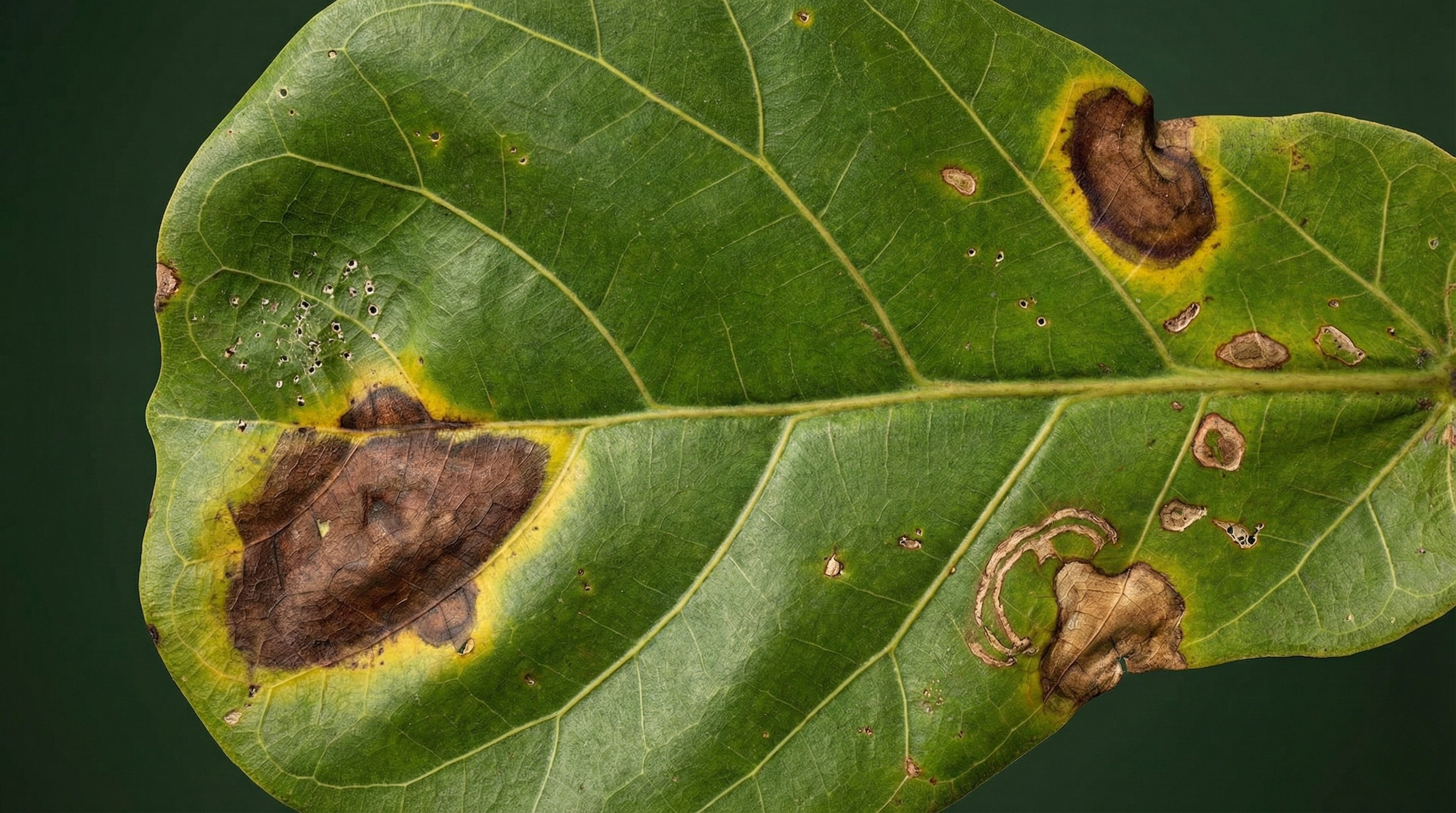
The Golden Rule of Fiddle Leaf Fig Diagnosis
Before we dive in: Fiddle Leaf Figs are dramatic. They'll drop three leaves the second you look at them wrong. A few brown spots isn't the end. But consistent new spotting means something's wrong.
The key is pattern recognition. Where are the spots? How big are they? What's the color? These clues tell you exactly what's happening.
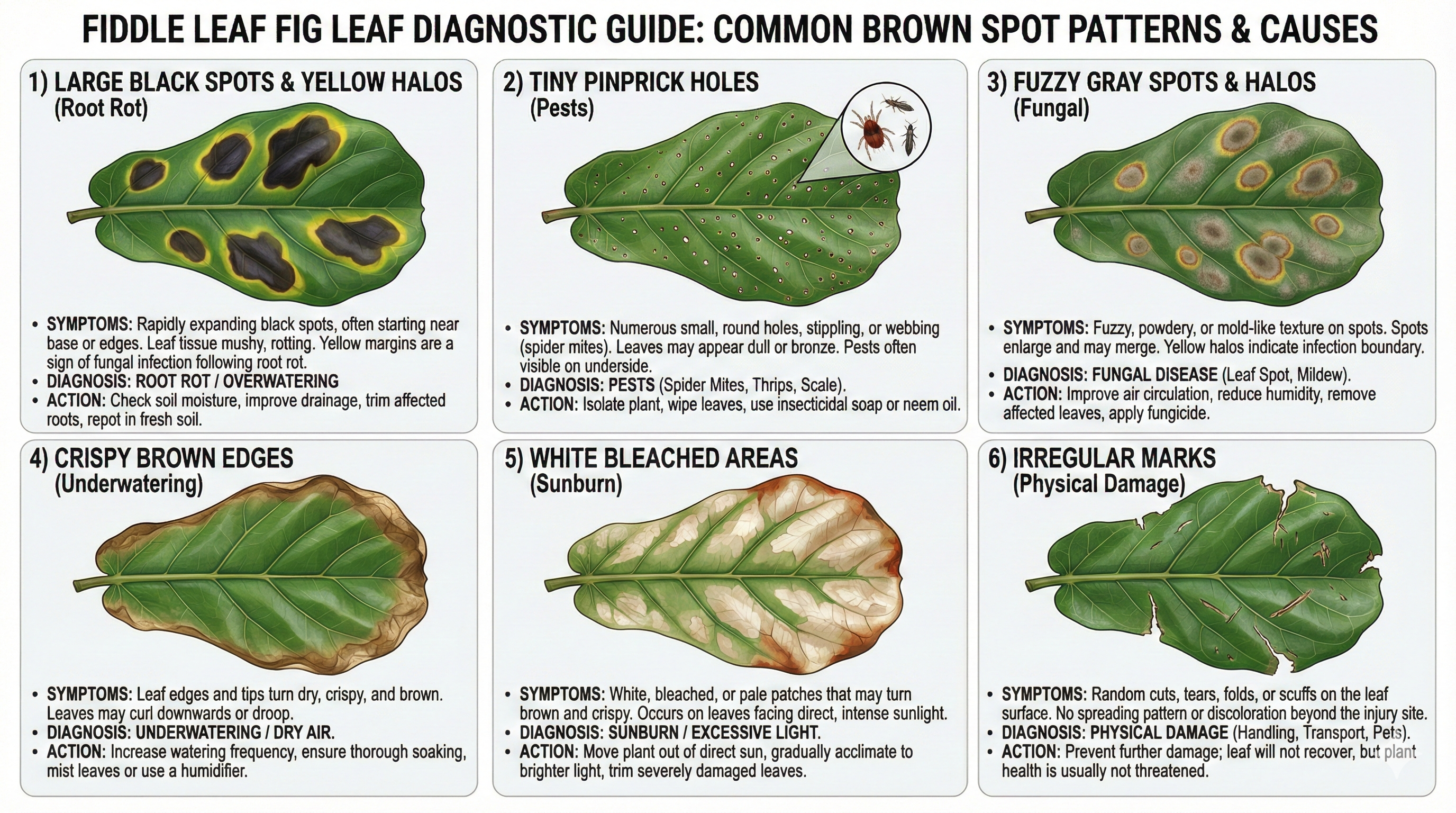
The Main Culprits: What's Causing Those Spots?
1. Root Rot (The Most Common Cause)
The Symptom:
- Large brown or black spots, often starting at the edges
- Yellow halo or yellowing around the brown spots
- Soft, mushy spots that might ooze or smell
- Leaves dropping even though soil is wet
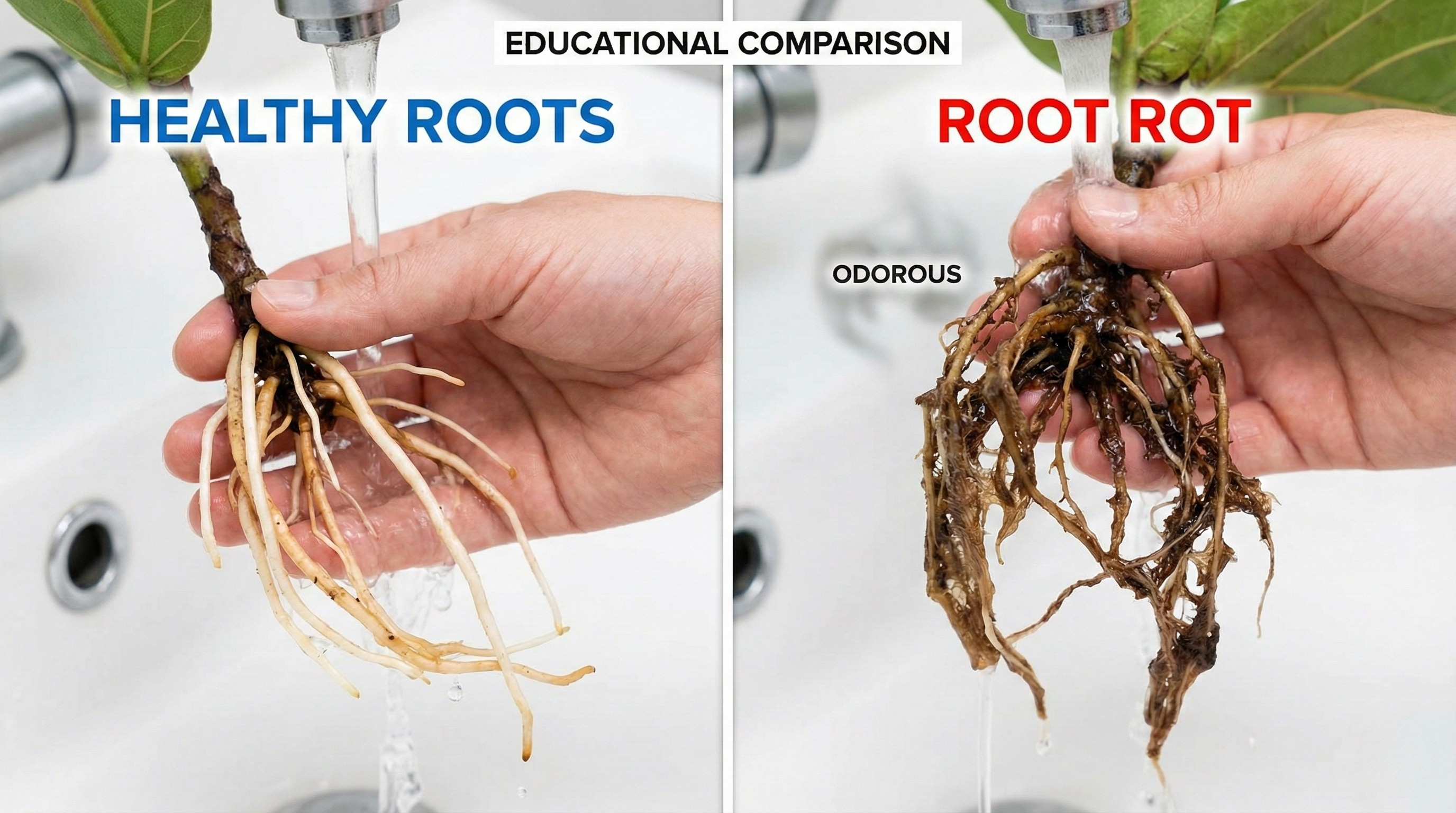
- Brown, mushy roots when you check (healthy roots = white/tan and firm)
The Cause: Root rot happens when roots sit in water too long. Fiddle Leaf Figs like to dry out between waterings—somewhat. Not desert-dry, but not soggy. When soil stays wet, roots can't breathe and bacteria/fungi attack.
The Fix:
- Take the plant out of the pot immediately
- Rinse off all soil from the roots
- Cut away all brown, mushy, smelly roots with sterilized scissors
- Repot in fresh, well-draining soil (add perlite or orchid bark)
- Go up a pot size ONLY if roots were totally root-bound
- Water only when top 2-3 inches of soil are dry
- Make sure your pot has drainage holes (no例外)
Prevention:
- Always check soil before watering—stick your finger in
- Use a pot with drainage holes (terracotta is great)
- In winter, water less frequently
📏 Know Exactly When to Water
Stop guessing—these moisture meters take the guesswork out of watering:
*As an Amazon Associate, we earn from qualifying purchases.
2. Underwatering Stress
The Symptom:
- Brown, crispy spots starting at leaf edges or tips
- Leaves looking droopy or wilted overall
- Soil pulling away from the sides of the pot
- Leaves feel thin or papery, not thick and firm
- Dry, cracked soil surface
The Cause: Fiddle Leaf Figs don't like to go fully dry. When they do, the leaf tissue dies from the edges inward.
The Fix:
- Give the plant a thorough watering—water until it drains from the bottom
- Let it sit in a tray of water for 10-15 minutes if soil is really dry
- Establish a better watering schedule (check weekly)
- Consider a self-watering pot if you're forgetful
Pro Tip: If the soil is super dry and water runs straight through without absorbing, do the "bottom watering" method: put the pot in a tray of water and let it drink from below for 20-30 minutes.
3. Pest Infestation
The Symptom:
- Tiny pinprick holes all over leaves
- Small bumps or raised spots on leaf undersides
- Sticky residue (honeydew) on leaves or nearby surfaces
- Webbing (spider mites)
- Leaves yellowing or distorting
- Visible bugs (check undersides with magnifying glass)
The Common Pests:
- Spider mites: Tiny red or brown dots, fine webbing
- Mealybugs: White, cottony masses in leaf joints
- Scale: Brown or tan bumps that scrape off
- Fungus gnats: Tiny flies around the soil
The Fix:
- Isolate the plant immediately (pests spread fast)
- Shower the plant with water to knock off as many pests as possible
- Spray with neem oil or insecticidal soap (repeat every 3-5 days for 2-3 weeks)
- For heavy infestations, may need to use a systemic insecticide
- Check ALL nearby plants
- Clean the area around the affected plant
Prevention:
- Quarantine new plants for 2 weeks before adding to your collection
- Regularly inspect leaves (especially undersides)
- Don't overwater (fungus gnats love wet soil)
4. Fungal Infections
The Symptom:
- Brown spots with distinct yellow halos or rings
- Spots starting small and expanding over time
- Gray or fuzzy growth on spots (advanced cases)
- Spots often irregular in shape
- Usually starts on lower/older leaves
The Cause: Fungal infections love poor air circulation, wet leaves, and high humidity without airflow. Sometimes they enter through wounds or pest damage.
The Fix:
- Remove affected leaves immediately (cut at the stem)
- Improve air circulation—fan on low nearby, don't crowd plants
- Water at the base, not on the leaves
- Apply a fungicide (neem oil works for mild cases)
- Repot in fresh soil if infection is severe
- Reduce humidity if it's very high
Prevention:
- Don't mist Fiddle Leaf Figs (they don't need it and it causes wet leaves)
- Ensure good air circulation
- Water in the morning so any splashed water can dry
- Clean up fallen leaves from soil surface
5. Nutrient Deficiency
The Symptom:
- Uniform yellowing or browning between veins
- Smaller new leaves than usual
- Slowed growth overall
- General leaf discoloration, not specific spots
- Often accompanied by soil that's never been refreshed
The Cause: Fiddle Leaf Figs are hungry plants. Over time, they use up nutrients in the soil. If you never fertilize or haven't repotted in years, they'll show deficiencies.
The Fix:
- Apply a balanced liquid fertilizer (20-20-20) diluted to half strength
- Feed every 2-4 weeks during growing season (spring/summer)
- Refresh top 2-3 inches of soil annually
- Repot every 18-24 months with fresh potting mix
🌱 Feed Them Right: Fertilizers That Actually Work
Skip the "miracle grow" hype. These give your plants the nutrients they actually need:
*As an Amazon Associate, we earn from qualifying purchases.
Prevention:
- Fertilize regularly during growing season
- Don't overfertilize (can burn roots and cause brown tips)
- Refresh soil periodically
6. Sunburn
The Symptom:
- White or bleached spots that turn brown
- Usually on the side of the plant facing the window
- Sharp, defined edges to the damage
- Can happen quickly after moving to a sunnier spot
- No yellow halo or spreading
The Cause: Fiddle Leaf Figs like bright light, but not direct scorching sun. The leaves literally burn.
The Fix:
- Move the plant back from direct sunlight
- Use sheer curtains to filter harsh rays
- The damaged leaves won't heal—trim them if you want
- Acclimate gradually if moving to brighter conditions
Prevention:
- Place 2-3 feet from south/west facing windows
- Rotate plant regularly for even growth
- Don't move from low light to direct sun suddenly
7. Physical Damage
The Symptom:
- Brown spots in exact shapes (not round)—often along edges
- Single or few spots, not spreading
- Usually from a specific incident you might remember
- Leaves brushing against walls, furniture, or other plants
The Cause: Leaves that get bumped or bruised will turn brown at the injury site.
The Fix:
- Nothing to do—the leaf is fine, just scarred
- Trim cosmetic damage if it bothers you
- Move plant to prevent future bumping
Quick Diagnosis Chart
| Spot Appearance | Location | Likely Cause | Action |
|---|---|---|---|
| Large black/brown spots with yellow halos | Edges, spreading | Root rot | Check roots, repot in dry soil |
| Tiny pinprick holes | All over leaves | Pests | Inspect with magnifying glass, treat with neem |
| Brown spots with fuzzy gray growth | Anywhere | Fungal infection | Remove leaves, improve airflow, apply fungicide |
| Crispy brown edges only | Leaf edges | Underwatering/humidity | Water thoroughly, consider humidity |
| White/bleached turning brown | Sun-facing side | Sunburn | Move back from window |
| Irregular brown marks | Anywhere | Physical damage | Leave it alone, move plant |
| Yellowing between veins, small new leaves | Entire plant | Nutrient deficiency | Fertilize |
The Recovery Timeline
Here's what to expect after fixing the problem:
Root Rot Recovery:
- 2-4 weeks to see new healthy growth
- Old damaged leaves will not heal—expect them to drop eventually
- New leaves come in green and healthy = you're on track
Pest Recovery:
- Pests should be gone within 1-2 treatments
- Continue treatment for 2-3 weeks to catch new hatchlings
- Check neighboring plants for 1 month
Fungal Recovery:
- Spots stop spreading within 1 week of treatment
- New growth should be spot-free
- May take 1-2 months for plant to fully recover
When to Give Up
Sometimes a Fiddle Leaf Fig is too far gone. Time to start over if:
- The main stem is soft, black, or mushy
- All leaves have dropped and stem is brown
- Root rot reached the crown and you can't find any healthy roots
- The plant has been dying for months despite your efforts
The good news: You can often propagate a healthy top section. Cut above the damage, root in water, and start fresh.
The Bottom Line
Brown spots on your Fiddle Leaf Fig aren't a death sentence—they're a message. Your plant is trying to tell you something. Root rot is most common, so start there. Check the roots, check the soil, check for bugs. Match the treatment to the cause, be patient, and your Fiddle Leaf Fig will reward you with those gorgeous, giant violin-shaped leaves again.
Related Articles: