Variegated String of Hearts Care Guide (Ceropegia Woodii)
The trailing vine that'll make you feel like you have your life together, even when you just forgot to water it for three weeks.
Why Variegated String of Hearts Is Worth the Effort
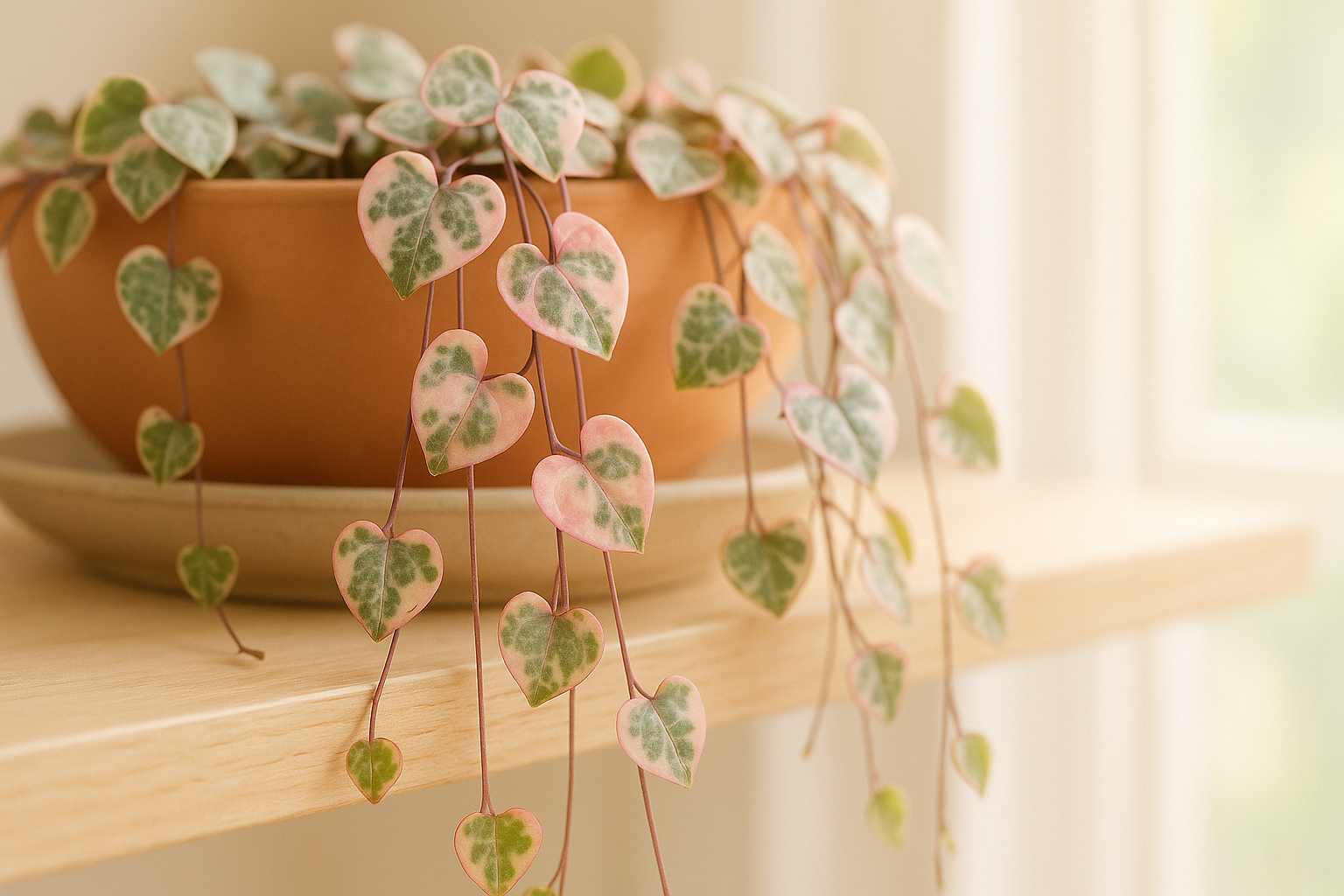
Variegated string of hearts (Ceropegia woodii variegata) is basically the designer version of the regular string of hearts. Those cream-and-pink marbled heart-shaped leaves trailing from aerial tubers?chef's kiss. It looks expensive, difficult, and impressive on a shelf.
But here's the thing — it's actually pretty forgiving. This is a semi-suucculent, which means it stores water in those tiny tubers along the vines. It can handle periods of neglect that would kill other plants. You don't need to mist it. You don't need a humidifier. You don't need to talk to it (though we won't stop you).
What you do need: good light, well-draining soil, and the wisdom to put it in a shallow pot. Get those three things right and you'll have cascading vines that look like you know what you're doing.
If you're new to indoor plants, welcome — this is a great place to start. Our beginner's guide to indoor plant care covers the basics if you need a refresher on the fundamentals.
What Makes Variegated SOH Different from Regular String of Hearts
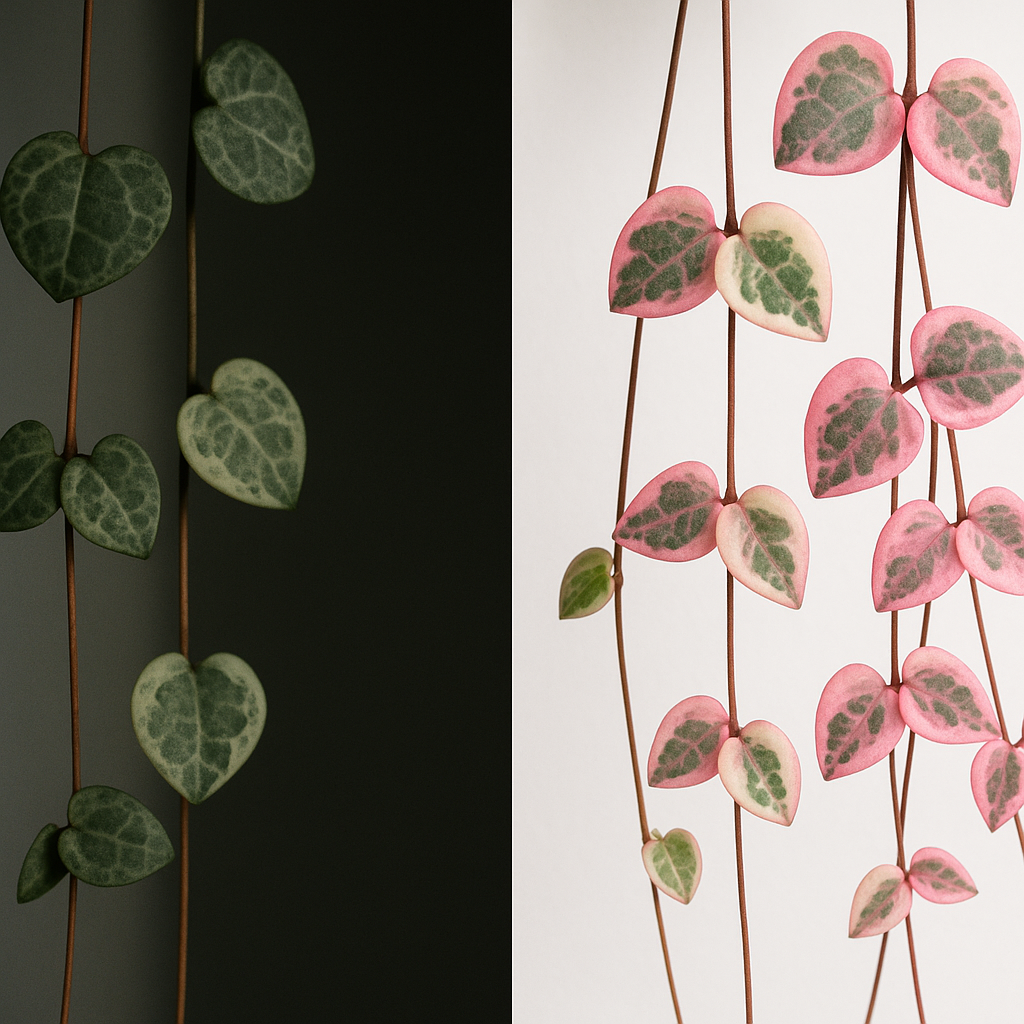
Regular string of hearts has solid green leaves with silver markings underneath. The variegated version? Same plant, fancier outfit. The leaves have cream, white, and pink variegation that appears in patches across the foliage.
The trade-off: Variegated leaves have less chlorophyll than green ones. That means:
- The variegated plant grows slightly slower
- It needs more light to photosynthesize effectively
- The pink patches are more sensitive to sun damage
The care is essentially the same as regular string of hearts, but you're always one step away from losing your variegation if the light isn't quite right. Think of it as a high-maintenance friend who's worth the effort.
If you're curious about other trailing plants with similar vibes, check out our String of Pearls care guide — same family of "trailing things that look good on shelves," different genus.
Light Requirements: The Key to Maximum Pink Variegation
Here's where variegated string of hearts separates itself from the pack. Light doesn't just keep it alive — light controls the variegation.
More bright indirect light = more vibrant pink variegation on the leaf edges. Less light = the pink fades to cream or white, and the plant pushes out more green leaves to compensate for the chlorophyll loss.
This is the core trade-off with variegated SOH. You're not just growing a plant — you're growing a living color chart.
Bright Indirect Light: The Sweet Spot
Place your variegated SOH near an east or west-facing window where it gets 4-6 hours of bright, indirect light. Morning sun is gentler; afternoon sun can be harsh and scorch those pink edges.
South-facing windows work too, but pull the plant back a foot or two from the glass, especially if you're in a hot climate.
The test: If you can read a book comfortably in the light, your plant can photosynthesize there.
Direct Sun: Proceed with Caution
A couple hours of gentle morning sun is fine. But harsh afternoon direct sun? The variegated patches will scorch — they'll turn brown and crispy, and those leaves won't recover.
If your window gets strong direct sun, sheer curtains exist for a reason.
Grow Lights for Low-Light Spaces
Let's be honest: not everyone has ideal window placement. If your space doesn't get enough natural light, a grow light is your friend.
Full-spectrum LED clip-on lights (like a GE BR30 or similar) positioned 6-12 inches above the plant for 8-10 hours a day will keep the variegation poppin'. This is especially useful in winter months when daylight is shorter and weaker.
For more options, see our grow lights for houseplants guide.
Watering Schedule: Letting It Dry Between Waterings
Variegated SOH is a semi-succulent. Those little aerial tubers store water. This plant would rather be slightly thirsty than waterlogged.
The rule: Let the soil dry out completely between waterings. Completely. Not "mostly dry" — bone dry.
The Soak-and-Dry Method
When you water, water thoroughly until it drains from the bottom. Then let it drain fully and do not water again until the soil is dry and the leaves look slightly less plump. This might be 10-14 days in summer, or 3-4 weeks in winter.
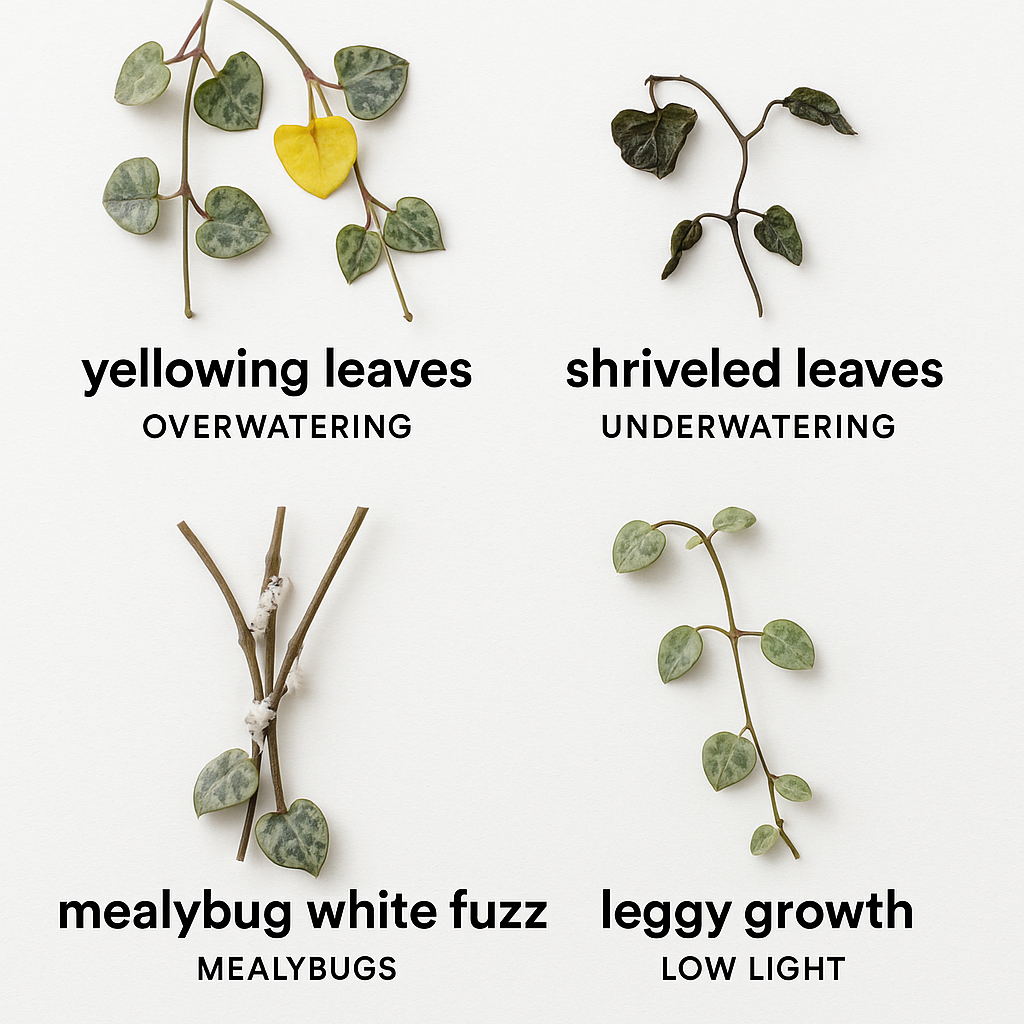
Signs you're underwatering: Leaves pucker or shrivel slightly. The plant looks a bit sad but perks up within hours of watering.
Signs you're overwatering: Yellowing leaves, mushy stems, or tubers that feel soft. Root rot sets in fast if the soil stays wet.
Seasonal Adjustments: Summer vs Winter
In summer (growing season), your plant will drink more. Water more frequently.
In winter, growth slows significantly. The plant basically goes on vacation. Water less — you might only water once a month. This is normal and not a problem.
Signs of Overwatering vs Underwatering
| Symptom | Likely Cause | Fix |
|---|---|---|
| Yellowing, mushy leaves | Overwatering | Let dry out, check drainage |
| Leaves pucker/shrivel | Underwatering | Water thoroughly |
| Leggy growth | Not enough light | Move to brighter spot |
| Brown crispy edges | Too much direct sun | Move out of direct sun |
Soil Mix: The Make-or-Break Factor for SOH
This is not optional. Standard potting soil will kill your variegated string of hearts. It holds too much moisture and doesn't drain fast enough.
You need: fast-draining, gritty, low-organic-matter soil.
If you've ever killed a succulent or cactus by overwatering, this is why. Succulents need to dry out fast. Regular potting soil stays wet for days.
The Ideal Gritty Mix Recipe
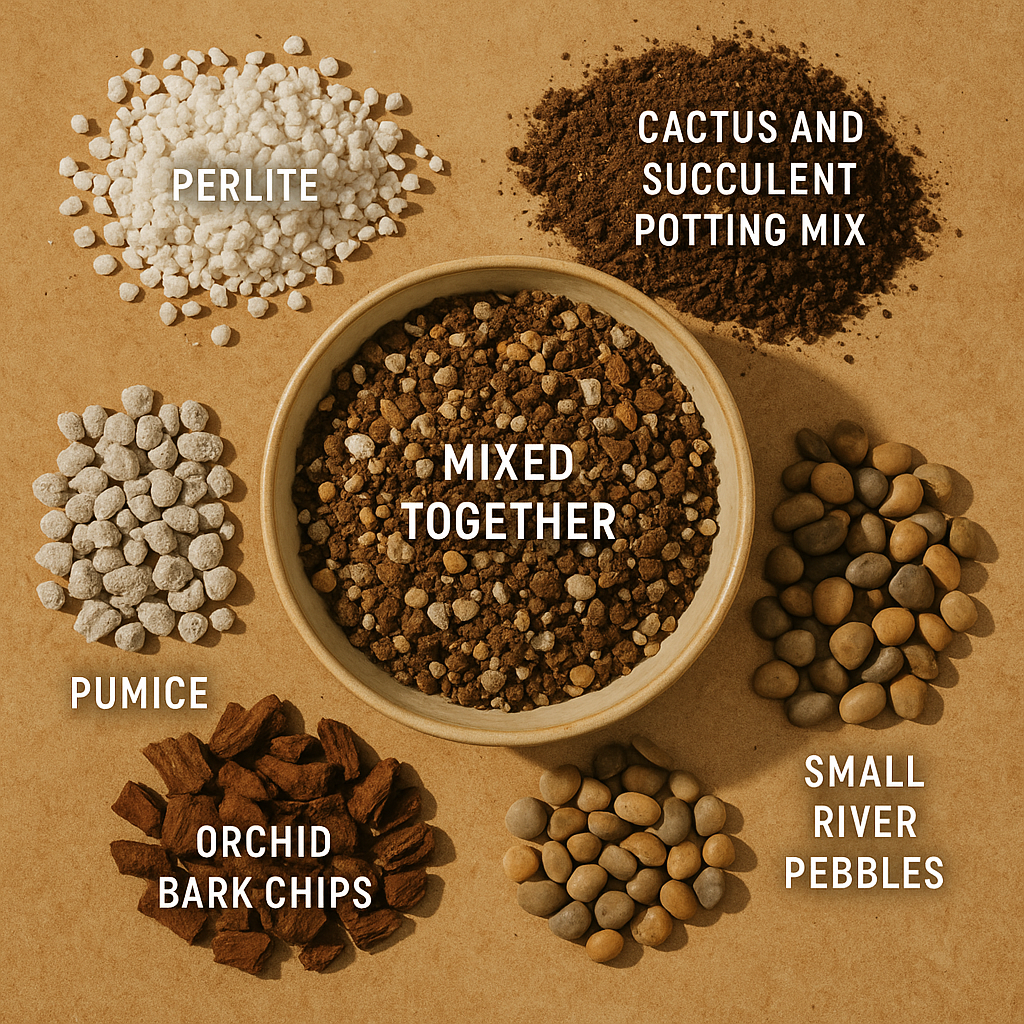
Mix these together:
- 2 parts succulent/cactus soil
- 1 part perlite
- 1 part pumice or orchid bark
The perlite and pumice create air pockets and improve drainage. The orchid bark adds a little structure while still draining well. You want water to flush through in seconds, not minutes.
For more on what makes a good gritty mix, see our best soil for succulents guide.
Commercial Mix Alternatives
If you're not mixing your own, look for a "succulent and cactus" blend. These are specifically formulated to drain fast.
Shop Fast-Draining Succulent Soil on Amazon
Bonsai Jack and similar ultra-fast-draining blends work great. The key is reading the label — if it says "fast draining" or "succulent," you're probably in the right place.
Why Shallow Pots Matter
Here's a tip that competitors bury in Reddit comments: variegated SOH has shallow roots.
This plant does not go deep. A deep pot means more soil at the bottom that stays wet longer. That excess moisture sits and invites root rot.
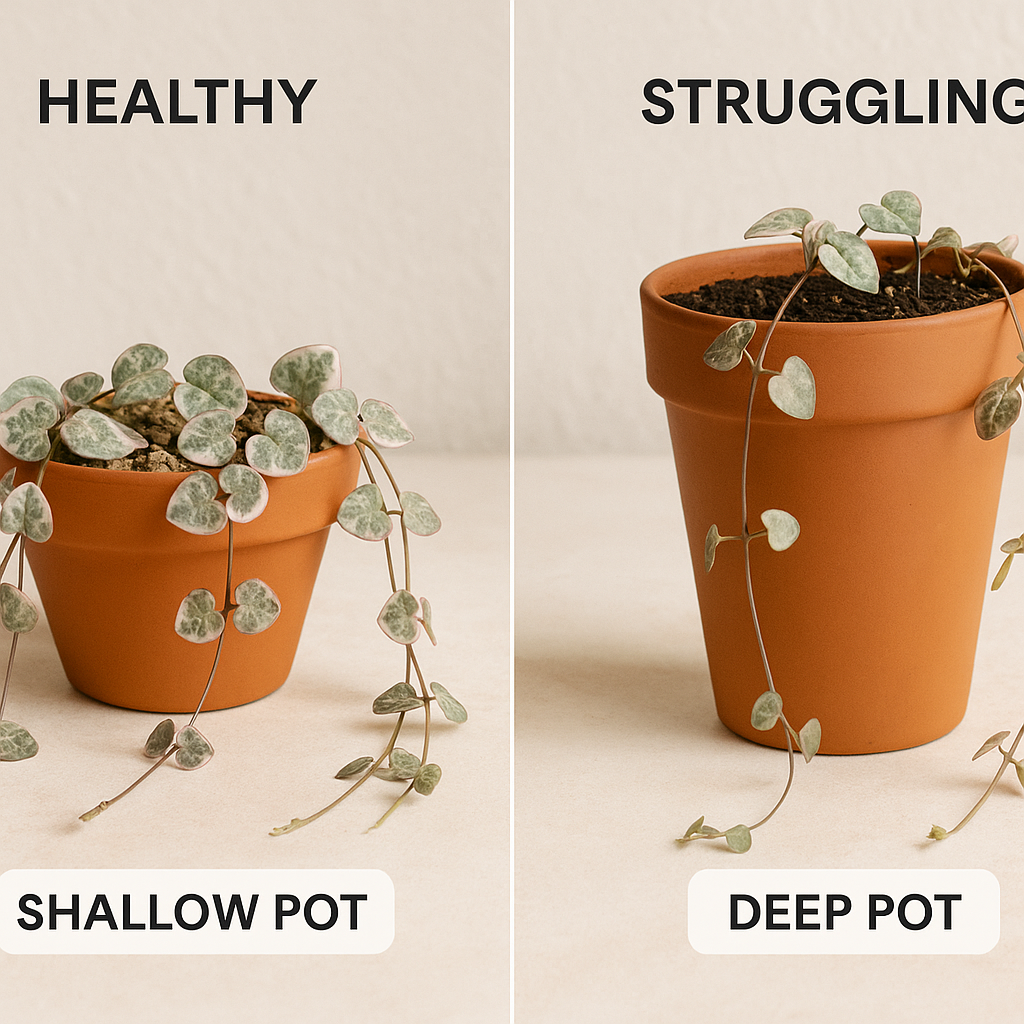
Use a shallow pot — something like a 4-inch depth is ideal. It can be wider (for trailing vines to spill over), but the depth should be minimal. Terracotta is great because it breathes and helps the soil dry faster.
Temperature and Humidity: Comfortable Room Conditions
The good news: variegated string of hearts is pretty chill about temperature. Standard room temps (65-80°F / 18-27°C) are perfect.
What it can't handle:
- Frost (it will die)
- Temps below 50°F for extended periods
- Being next to a cold draft in winter
Humidity: Don't overthink it. Average household humidity (30-50%) is fine. This isn't a tropical plant — it's a semi-succulent from southern Africa. It tolerates dry air better than most houseplants.
Don't mist it. Don't put it in a pebble tray. Don't group it with other plants to "increase humidity." Just... let it be.
Fertilizing: Less Is More with This Semi-Succulent
Variegated SOH isn't a heavy feeder. In fact, over-fertilizing is worse than under-fertilizing.
Feed during growing season (spring and summer) with a balanced liquid fertilizer diluted to half strength. Once a month is plenty.
In fall and winter: Don't fertilize. The plant is resting and doesn't need the extra nutrients. Excess fertilizer salts build up in the soil and can burn the roots.
If you recently repotted into fresh soil, you might not need to fertilize at all for the first few months — fresh mix has nutrients.
Propagation Guide: 3 Methods (Water, Soil, and Tuber)
The great thing about variegated string of hearts? It's stupid easy to propagate. Those little aerial tubers along the vines? They're basically propagation insurance.
Propagation in Water
- Take a cutting with 2-3 nodes (the little bumps where leaves attach)
- Remove leaves near the bottom node
- Place in water with the nodes submerged
- Put in bright indirect light
- Change water every few days
- Roots appear in 1-2 weeks
- Once roots are 1-2 inches long, plant in gritty soil
This is the most satisfying method because you can watch the roots grow.
Propagation in Soil
- Take a cutting with at least one node
- Dust the node with rooting hormone (optional but helps)
- Stick the node into moist gritty soil
- Keep the soil lightly moist for the first week or two
- Tugging gently after 2 weeks tells you if roots have formed (resistance = success)
Tuber Propagation Method
This is the easiest and most "SOH-specific" method. Those round little tubers that form along the vines? They want to grow.
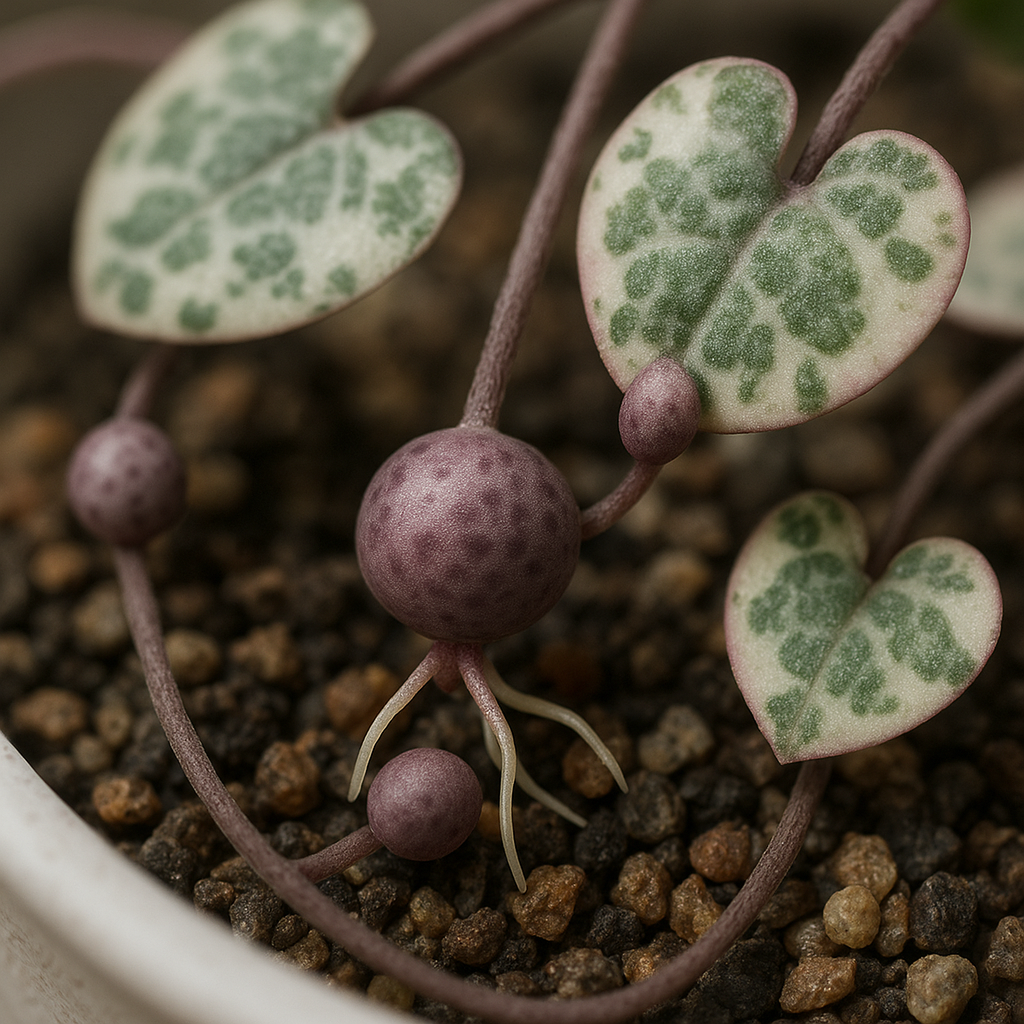
- Identify an aerial tuber on an existing vine
- Place the tuber directly on top of gritty soil
- Lightly press it into the surface — don't bury it
- Keep the soil lightly moist
- The tuber will send out roots and a new vine within 2-3 weeks
- Once established, treat like a normal plant
You can also pin the vine to the soil surface with the tuber touching dirt — it'll root in place without being cut from the mother plant.
For more detail, see our how to propagate string of hearts guide.
Common Problems and How to Fix Them
Variegated string of hearts is relatively trouble-free, but here's what can go wrong:
Root Rot: Causes and Treatment
Cause: Overwatering, poorly draining soil, or a pot without drainage holes.
Signs: Yellowing leaves, mushy stems at the base, tubers that feel soft, soil that stays wet for weeks.
Treatment: If caught early, unpot the plant, trim away any mushy/rotten roots, let it dry out for a day, then repot in fresh gritty mix and a clean pot. If the rot is extensive, take cuttings from the healthy parts and propagate.
Prevention: Use well-draining soil, shallow pots, and let the soil dry between waterings. This plant can survive weeks of drought but dies in days of wet soil.
Drooping or Shriveled Leaves
Cause: Underwatering or very low humidity.
Signs: Leaves look deflated, wrinkled, or curl inward.
Treatment: Give it a thorough watering. It should perk up within a few hours. If it doesn't, check the roots — you might have an underwatering/overwatering combo where the roots died and can't absorb water anymore.
Loss of Variegation: Too Little Light
Cause: Not enough bright indirect light.
Signs: New leaves are mostly green with minimal pink/cream variegation.
Treatment: Move to a brighter spot. The plant won't revert existing leaves, but new growth will show improved variegation if the light is better. Consider a grow light if your space doesn't have ideal natural light.
Pests: Mealybugs and Spider Mites
Mealybugs: White cottony masses on stems and leaf joints. Wipe with rubbing alcohol on a cotton swab, or spray with insecticidal soap.
Spider mites: Tiny red or brown dots on leaf undersides, often with fine webbing. Wipe leaves down and spray with water or insecticidal soap. Increase humidity — spider mites hate moisture.
Variegated SOH vs Other String of Hearts Varieties
Regular String of Hearts (Ceropegia woodii): Solid green leaves with silver-pink undersides. Hardier, faster-growing, less light-demanding. Easier to keep variegated.
Variegated String of Hearts (Ceropegia woodii variegata): Marbled cream, white, and pink leaves. Slower growing. Needs more light. More dramatic and harder to maintain at peak variegation.
String of Hearts "Silver Glory": Often confused with variegated, this has more silver coloring rather than pink. Leaves are thinner and more delicate.
String of Hearts "Black Beauty": Darker, almost burgundy-toned leaves with minimal variegation. Dramatic but different look.
The variegated version is the most high-maintenance of the bunch, but also the most striking.
Frequently Asked Questions
How often should I water my variegated string of hearts? Let the soil dry completely between waterings. In summer, this might be every 10-14 days. In winter, it could be every 3-4 weeks. When in doubt, wait another few days.
Why is my variegated SOH losing its pink color? Not enough light. Move it to a brighter spot with more bright indirect light. The pink variegation intensifies with better light.
Can variegated string of hearts grow in low light? It survives, but it won't thrive or maintain good variegation. It will become leggy and mostly green. Low-light spaces benefit from a grow light supplement.
Do I need to mist my variegated string of hearts? No. It's a semi-succulent that tolerates dry air. Misting can actually cause problems by keeping the leaves too wet.
Why are the tubers on my SOH turning soft? Overwatering. Soft tubers are a sign of rot. Let the soil dry completely, check the roots, and reduce your watering frequency.
Can I put my variegated SOH in a hanging basket? Absolutely — it's one of the best trailing plants for hanging baskets. Just make sure it's in a shallow basket with fast-draining soil.
Is variegated string of hearts toxic to pets? It's considered non-toxic to cats and dogs, but it's not exactly edible. If your pet is a chronic plant chewer, keep it out of reach.
Bottom Line
Variegated string of hearts is a stunning plant that's more forgiving than it looks. Give it bright indirect light, fast-draining soil, shallow pots, and let it dry between waterings. The variegation will reward you with vibrant pink edges when you get the light right.
It's the perfect plant for anyone who wants something that looks impressive but doesn't want to stress about constant care. Those cascading vines with marbled hearts? Worth it.
Not sure if variegated SOH is right for you? Start with our beginner's guide to indoor plant care for the fundamentals.