Rubber Plant Varieties Compared: Burgundy vs Tineke vs Ruby
Three Ficus elastica varieties, three very different temperaments. Here's how to pick the right one.
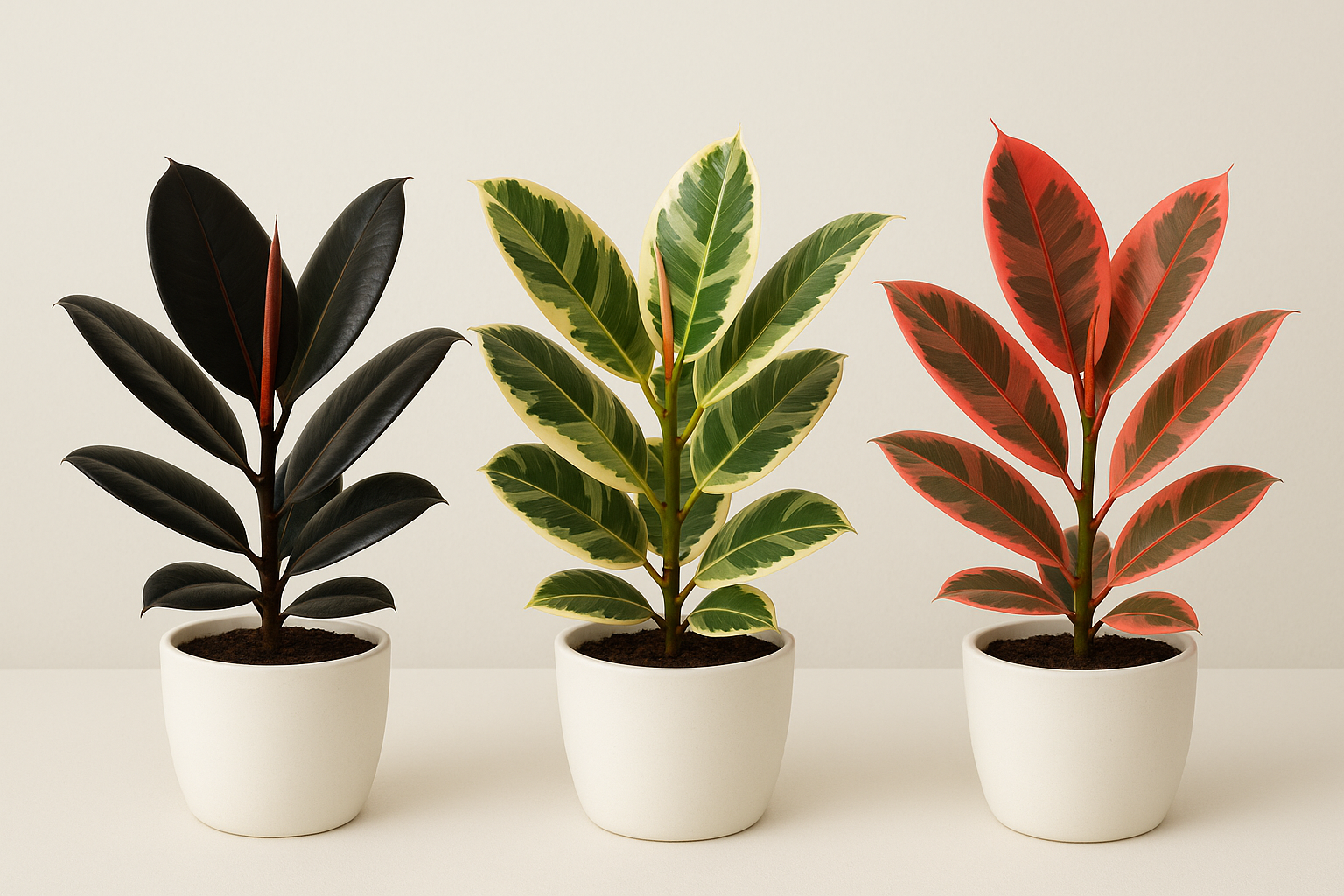
Why Compare These Three?
Ficus elastica is having a moment. Every plant shop, every Instagram feed, every "easy houseplants for beginners" list includes at least one rubber plant variety. But here's what nobody tells you before you buy: not all rubber plants are created equal, and picking the wrong one for your space is how you end up with a drooping, yellowing, dropping-leaves situation within three weeks.
Burgundy, Tineke, and Ruby are the three most widely available Ficus elastica varieties. They look completely different from each other, they have different light requirements, different temperaments, and — bonus round — they're all frequently mislabeled at garden centers. Ruby gets sold as Tineke. Tineke gets sold as "variegated rubber plant" with no variety name. Burgundy goes by Black Prince, Abidjan, or just "dark rubber plant."
So let's actually compare them — side by side, with no fluff.
Side-by-Side Comparison
| Burgundy | Tineke | Ruby | |
|---|---|---|---|
| Leaf color | Deep dark green to burgundy-black, glossy | Green + cream variegation, pink sheath on new growth | Green with pink and red variegation |
| Variegation | None | Green and cream, pink accents | Pink and red, can be bold or subtle |
| Light needs | Low to bright indirect — most tolerant | Bright indirect to filtered direct — needs more than Burgundy | Bright indirect to some direct — needs the most light of the three |
| Growth rate | Medium | Medium-fast | Slow |
| Difficulty | Beginner | Beginner-Intermediate | Intermediate |
| Price range | $$-$$$ | $$-$$$ | $$$$ |
| Pet toxic? | Yes | Yes | Yes |
Still here? Good. Let's dig into each one individually.
Burgundy — The Drama Queen
Also sold as: Black Prince, Abidjan
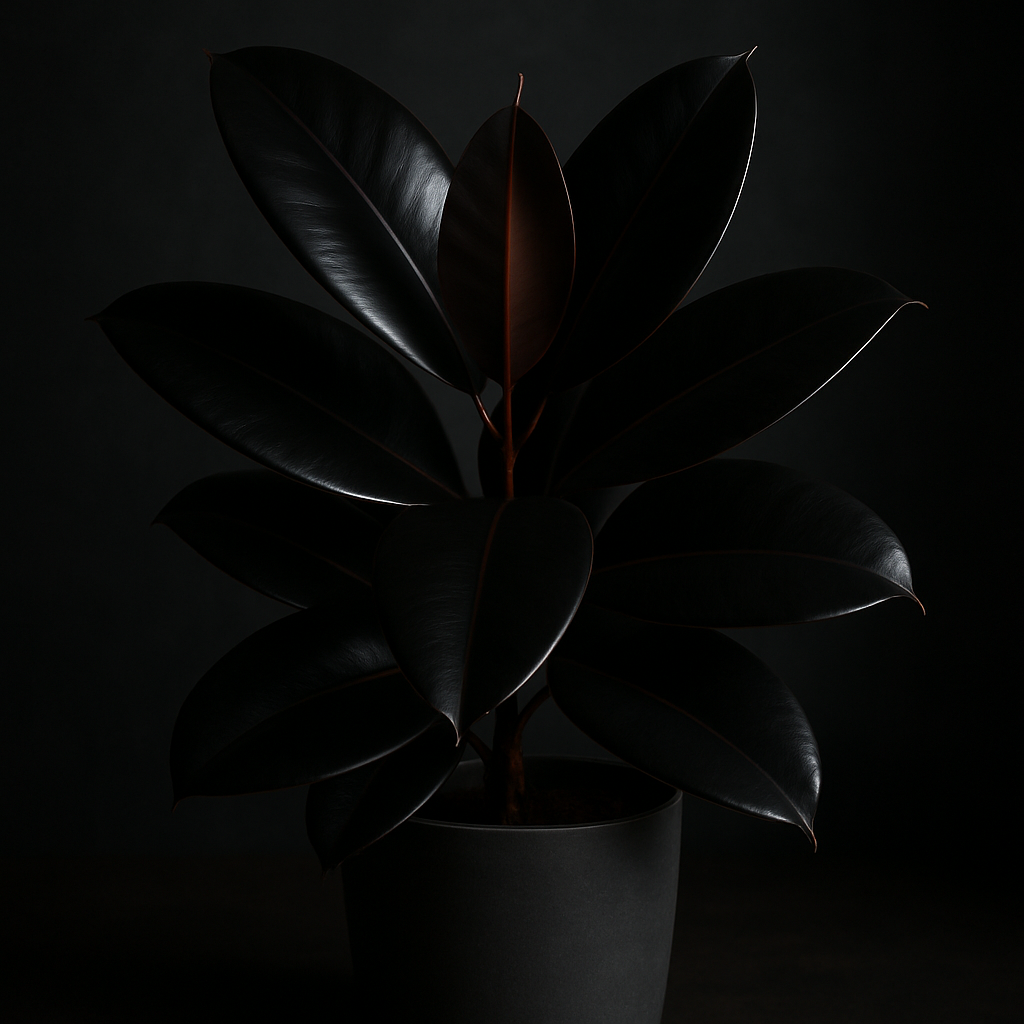
Burgundy is the one that started the rubber plant craze, even if nobody calls it by the right name half the time. Its leaves are thick, waxy, and so dark they're almost black — a deep forest green that reads as near-black in low light. The underside and new growth sheaths are a rich burgundy-red, which is where the name comes from.
Light Requirements: The Low-Light Champion
Here's the thing nobody tells you about Burgundy: it tolerates low light better than almost any other variegated houseplant you can buy. This isn't a plant that will immediately fade to sad solid green the moment you move it three feet from a window. It holds its color in dimmer conditions.
That said, "tolerates" is doing heavy lifting here. Burgundy grows best in medium to bright indirect light. It just won't punish you as harshly as Tineke or Ruby if you can't give it that.
The rule: If your space gets the least natural light, Burgundy is your best bet. Move it closer to a window if you want faster growth.
Watering and Soil Preferences
Burgundy is more drought-tolerant than its variegated cousins. Its thick leaves store water, so it forgives the "I forgot to water for two weeks" situation better than Tineke or Ruby.
But — and this is a big but — it's still a Ficus elastica. It hates sitting in wet soil. Root rot is the number one killer, and Burgundy is slightly more forgiving of overwatering than the variegated types (which is a relative statement — don't take it as permission to drown it).
Check Soil Moisture Before Watering →
Use a chunky, fast-draining soil mix. Perlite, pine bark, and a quality houseplant blend — not straight potting soil from the garden center. If it drains in 10 seconds, you're doing it right.
Beginner-Friendliness and Resilience
Burgundy wins the "most forgiving" award of the three. It tolerates inconsistent watering, handles lower light without throwing a tantrum, and isn't as dramatic about temperature swings as Ruby.
Bottom line: If you want a rubber plant and you're newish to houseplants, Burgundy is the smart choice. It's the one that will survive your learning curve.
Tineke — The Reliable Favorite
The most commonly mislabeled rubber plant at garden centers
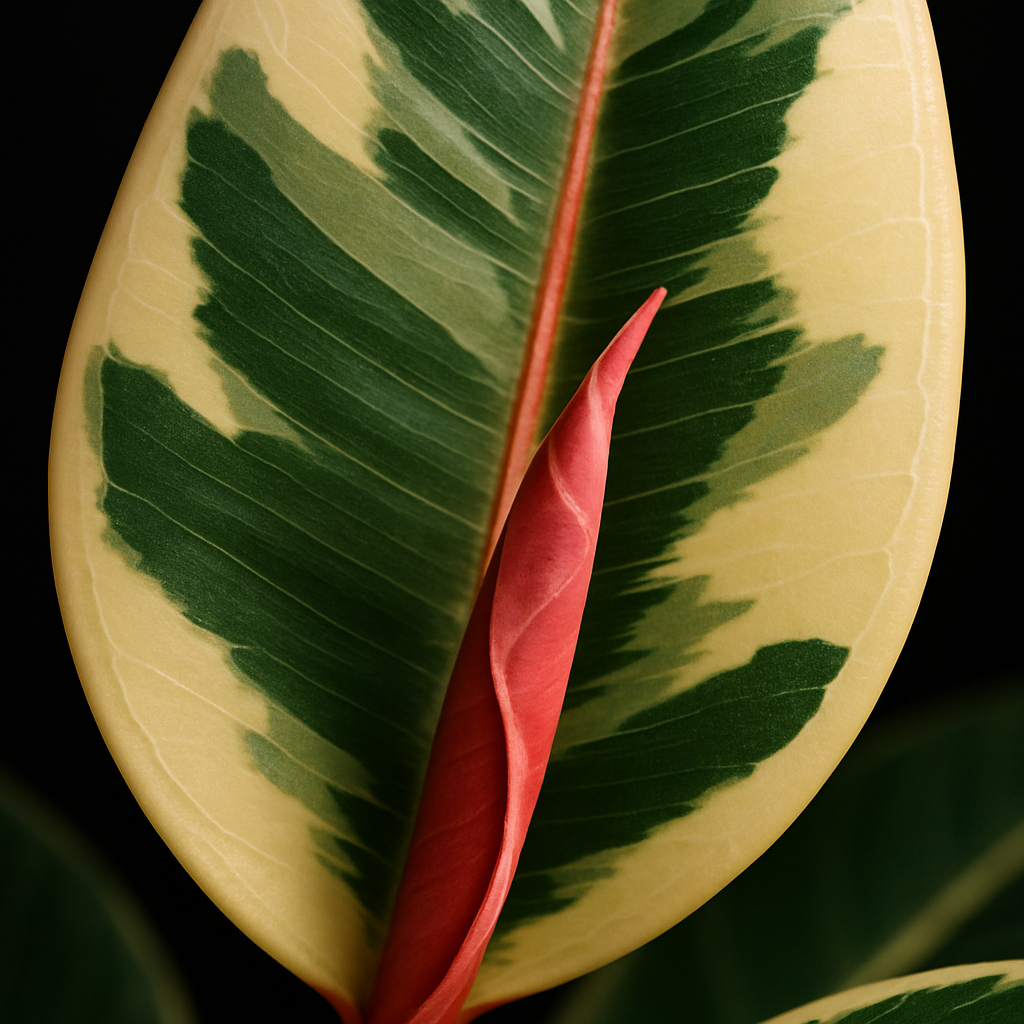
Tineke is the green-and-cream variegated rubber plant you've seen everywhere. Its leaves feature irregular patches of deep green and soft cream, with new growth emerging from a pink to reddish sheath — like a flower bud wrapped around the unfurling leaf.
It's the most widely sold variegated Ficus elastica, and the most commonly misidentified. If a garden center has a "variegated rubber plant" with no label, it's almost certainly a Tineke. The cream sections can occasionally blush pink in high light, which sometimes causes confusion with Ruby — more on that below.
Light Requirements: Keeping the Cream
This is where Tineke starts asking more of you than Burgundy does. Tineke needs bright indirect light to maintain its variegation. In low light, the cream patches will fade. The plant will still live, but it'll gradually turn more and more green until you're wondering why you paid extra for variegation that isn't showing.
The fix is simple: move it closer to your brightest window. East or west-facing is ideal. A few feet back from a south-facing window works too. Direct afternoon sun can scorch the cream patches, so filtered light is better than blazing exposure.
Watering and Soil Preferences
Tineke is more sensitive to overwatering than Burgundy. Its variegated leaves are slightly thinner than Burgundy's solid dark foliage, which means it doesn't store quite as much water. Let the top 2 inches of soil dry out before watering.
Root rot is the real risk here. Use the same chunky, fast-draining approach as Burgundy — perlite is your friend. A moisture meter is genuinely useful for Tineke because the soil surface can look dry while the root zone is still damp.
Check Soil Moisture Before Watering →
Beginner-Friendliness
Tineke is the easiest variegated rubber plant to find and the easiest to keep happy — as long as you give it enough light. If you can place it near a bright window, it will reward you with consistent cream variegation on every new leaf. If you can't, save yourself the frustration and go with Burgundy.
Ruby — The Showstopper
The most expensive, the most demanding, and the most stunning
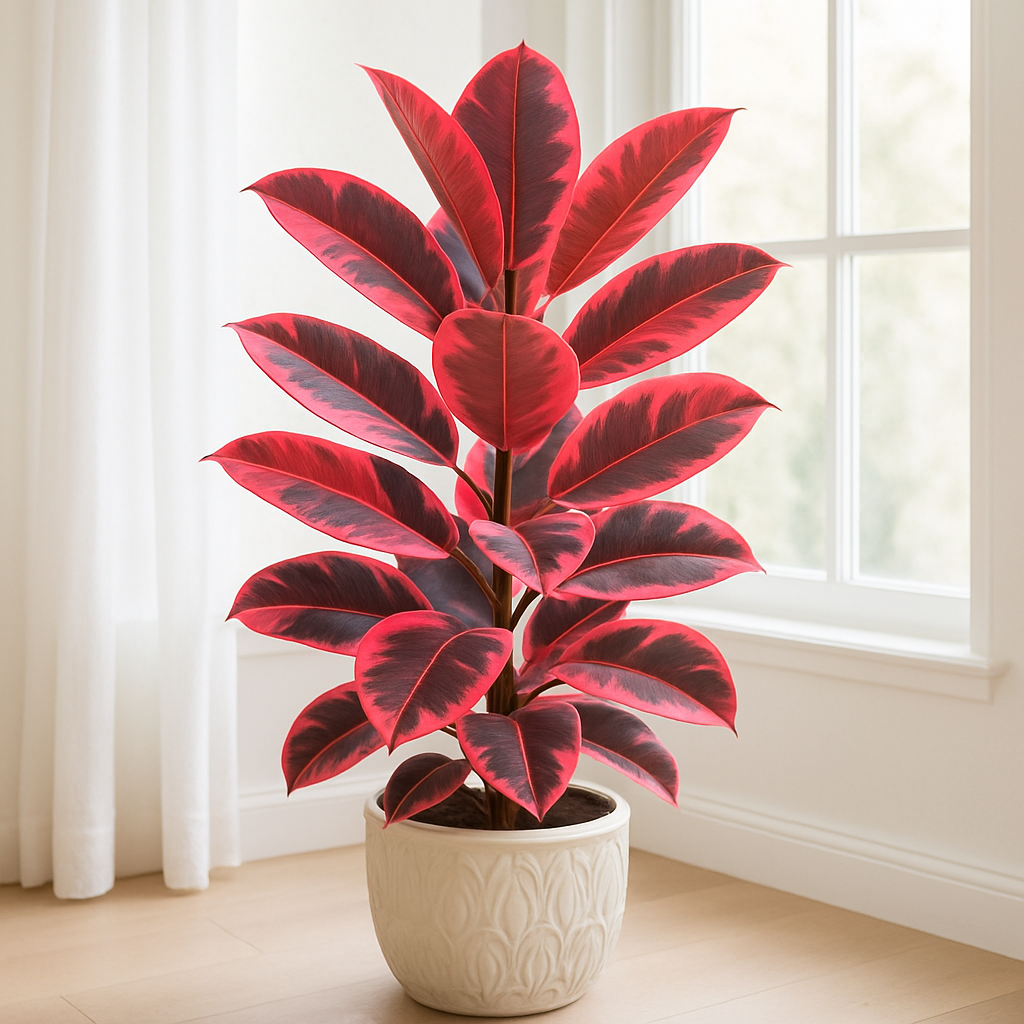
Ruby is the one that makes people stop scrolling. Where Tineke whispers "cream," Ruby shouts "hot pink and red." Its variegation runs from soft blush pink to deep magenta, with new growth emerging from a sheath so intensely colored it almost looks like a flower. Mature leaves can display pink, red, and cream all at once, making each leaf a small abstract painting.
Ruby is also the most commonly misidentified of the three — often sold as "pink variegated rubber plant" without a variety name, or occasionally confused with Tineke when the pink tones are more muted.
Light Requirements: Brightest of the Three
Ruby needs the most light to look its best. Not just "bright indirect" — we're talking close to a window, maybe even some gentle direct morning or late-afternoon sun. The pink and red pigments in Ruby's variegation develop in response to light. Put Ruby in a dim corner and it will not just fade — it'll become mostly green within a few months.
North-facing windows are a write-off for Ruby. East-facing is workable with proximity to the glass. South or west-facing with good light is ideal.
The rule: If you can't provide bright light year-round, Ruby's color will disappoint you. It's the tradeoff for all that visual drama.
Watering and Soil Preferences
Ruby is the most sensitive of the three to overwatering. Its slower growth rate means it uses less water, and its roots are more prone to rot if kept consistently wet. Let the top 2-3 inches of soil dry out before watering.
Fast-draining soil is non-negotiable. Perlite, bark, chunky mix — same as the others, but take it even more seriously with Ruby. A pot with excellent drainage holes is essential.
Check Soil Moisture Before Watering →
Price and Value: Is It Worth It?
Ruby costs more than Burgundy and Tineke, sometimes significantly. The color is harder to produce commercially, the growth rate is slower, and the demand is high. You'll regularly see Rubies priced 30-50% higher than equivalent-size Tinekes or Burgundys.
Is it worth it? If you can give it the light it needs, yes. Ruby is genuinely showstopping in a way the other two aren't. If you can't give it enough light, you're paying premium prices for a plant that will look like a mediocre Tineke within a few months. Be honest with yourself before you buy.
Which Should You Choose? (Decision Matrix)
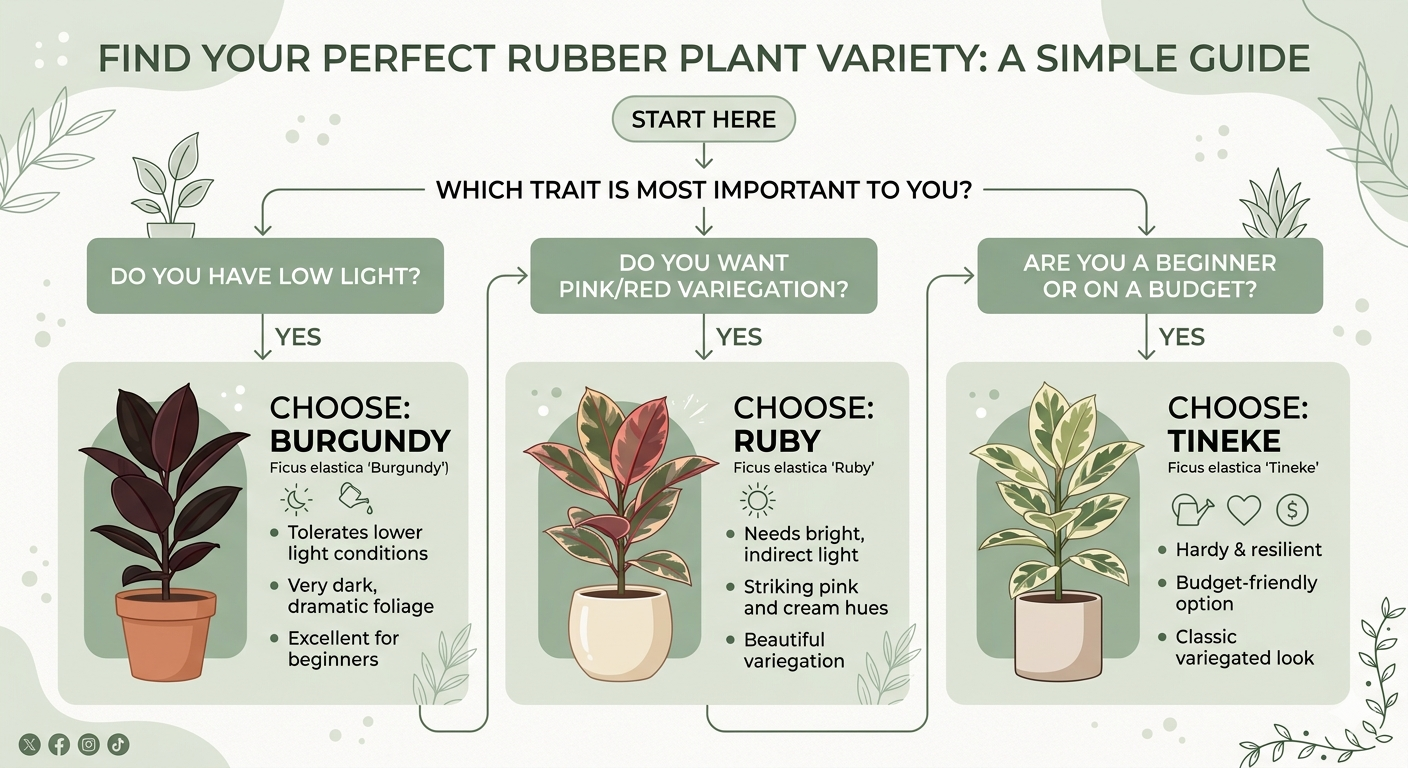
Here's the 30-second version:
- You have low light → Burgundy. No question.
- You want bold pink/red color and have a bright window → Ruby. Worth it if you can commit.
- You want variegation without the high-maintenance drama → Tineke. Cream tones, easier care, easier to find.
- You're on a budget → Tineke or Burgundy. Both are more affordable than Ruby and easier to source.
Still unsure? Here's a more detailed breakdown:
You Have Low Light — Choose Burgundy
Burgundy is the only one of the three that genuinely handles lower-light situations without significant degradation. It won't thrive in a dark corner, but it'll survive and maintain its dramatic dark foliage in ways that Tineke and Ruby simply won't.
You Want Bold Pink/Red Color — Choose Ruby
Ruby is the only variety with genuine pink-to-red variegation. If that's the look you're after, nothing else delivers. Just make sure you have the light to support it.
You Want Easy Care + Subtle Variegation — Choose Tineke
Tineke is the "intermediate" option: variegated enough to be interesting, but easier to keep happy than Ruby. It's the right choice if you want something prettier than Burgundy but don't have the bright light Ruby demands.
You Have a Tight Budget — Choose Tineke
Ruby commands a premium. Tineke and Burgundy are more consistently priced and easier to find at affordable price points. If budget is a constraint, start with Tineke — it's the best value of the three.
Care Differences by Variety
The general care is similar across all three Ficus elastica varieties — but the details matter differently for each.
Watering: Frequency and Amount
| Variety | Water when... | Risk if overwatered |
|---|---|---|
| Burgundy | Top 2 inches dry | Low — most tolerant |
| Tineke | Top 2 inches dry | Medium |
| Ruby | Top 2-3 inches dry | High — most sensitive |
All three prefer to dry out somewhat between waterings. Burgundy can bounce back from the occasional overwatering more easily. Ruby cannot.
Check Soil Moisture Before Watering →
Soil Mix Preferences
Rubber plants need chunky, fast-draining soil. All three. Don't argue with this.
Grab Perlite for a Chunkier Rubber Plant Soil Mix →
Mix perlite (or pumice) into a quality houseplant potting mix at roughly a 1:3 ratio. Orchid bark works too. The goal is airiness and fast drainage — if water pools on top and takes more than 5-10 seconds to absorb, your mix is too dense.
For more detail on what goes into a good chunky mix, see our soil mix guide.
Fertilizing Schedule
Feed all three with a balanced liquid houseplant fertilizer during the growing season (spring through summer). Monthly applications are sufficient. Stop in fall and winter when growth slows.
Feed Your Rubber Plant During Growing Season →
Don't fertilize newly repotted plants for 4-6 weeks — the fresh soil has enough nutrients, and fertilizer in wet fresh soil can burn roots.
Pruning for Bushier Growth
Rubber plants naturally grow as a single-stem tree. If you want a bushier plant, prune the top off when it's at your desired height. This stimulates branching.
Be warned: Ficus elastica bleeds a milky sap when cut. It's irritating to skin and will stain surfaces. Do this outside or over a drop cloth, and let the cut heal before watering.
Repotting Timeline
- Young plants: Repot every 1-2 years when roots emerge from drainage holes
- Mature plants: Every 2-3 years, or when you see roots circling the pot
- Pot size: Go up 1-2 inches in diameter each time. Too much extra soil holds water and invites root rot.
Common Problems & How to Fix Them
Yellow Leaves
Burgundy: Usually overwatering. Check the soil. If it's wet two inches down and you watered recently, that's your culprit. Let it dry out.
Tineke and Ruby: Same issue, more severe consequences. Both are more sensitive to overwatering than Burgundy. A single overwatering event can cause yellow leaves on these two, where Burgundy might shrug it off.
Also check: too much direct sun can burn Tineke's cream patches yellow, and nutrient deficiencies can cause yellowing — though this is less common with regular fertilizing.
Leaf Drop
Ficus elastica drops leaves when it's stressed. Common causes:
- Temperature shock — sudden cold drafts, HVAC vents blowing directly on the plant
- Overwatering — roots drowning, can't absorb water, leaves fall
- Underwatering — too dry for too long
- Moving the plant — rubber plants hate being relocated. Pick a spot and commit.
If you just moved your rubber plant and it's dropping leaves, give it time. It may just be adjusting. Consistent care and patience usually win.
Root Rot
This is the big one. Root rot happens when soil stays wet too long, roots suffocate, and then fungal or bacterial rot sets in.
Burgundy: Most tolerant. Can survive a brief overwatering if caught early.
Tineke and Ruby: Less forgiving. Root rot can kill these two faster.
Signs: yellow leaves that keep coming despite correcting water, mushy stems at the base, a musty smell from the soil, leaves dropping rapidly.
Fix: If you catch it early, let the soil dry out completely and improve drainage. If it's advanced, you'll need to treat the root rot — which may mean unpotting, trimming dead roots, and repotting in fresh dry mix.
For prevention: don't let rubber plants sit in water in their saucers. Ever.
Variegation Fading in Tineke and Ruby
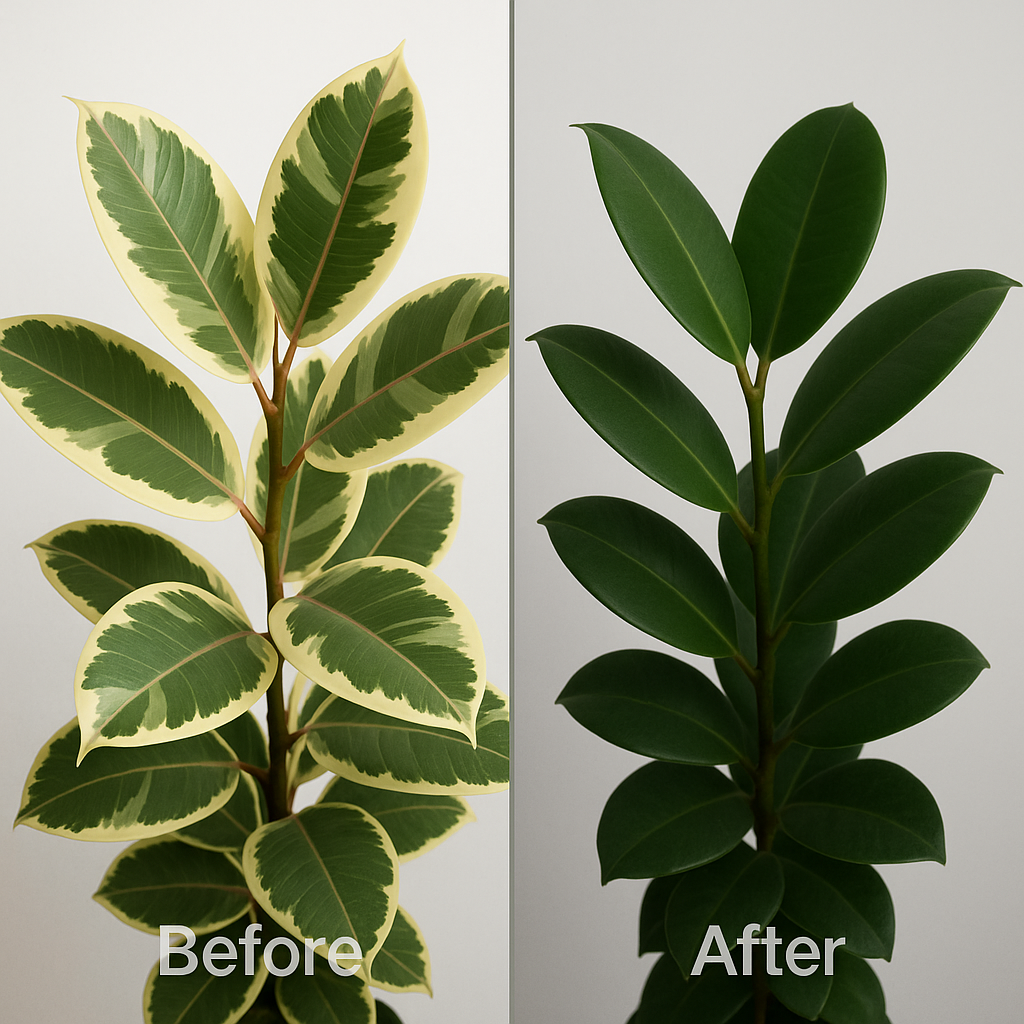
This is the number one complaint about variegated rubber plants, and it's almost always a light problem.
Tineke: Cream sections fade to green in low light. Move it closer to your brightest window. If the plant has been in dim light for a long time, the faded leaves won't recover — but new growth will come in variegated if light is improved.
Ruby: Pink and red tones fade to cream or green without enough light. Same fix: more light. Ruby needs the brightest window of the three.
This is why we recommend Tineke over Ruby for people without ideal light conditions. The cream in Tineke can survive slightly dimmer conditions than the pink in Ruby, which needs serious bright light to stay vibrant.
Leggy Growth
Long stems with widely spaced leaves usually mean not enough light. The plant is reaching toward whatever light source it can find, stretching out as it goes.
Fix: move to brighter light. Prune back leggy stems to encourage branching. A rubber plant in ideal light conditions grows more compact and full.
Are Rubber Plants Toxic to Pets?
Yes. All Ficus elastica varieties — Burgundy, Tineke, Ruby — are toxic to cats and dogs if ingested. The milky sap causes irritation to mouth and stomach, and can be more serious if a pet eats a large amount.
Keep all three out of reach of pets. If you have a cat that chews plants, consider a pet-safe plant list instead.
Where to Buy
All three varieties are available at most well-stocked plant shops and online retailers. Here's what to expect:
Burgundy: The easiest to find and most affordable. Available at local nurseries, big-box garden centers, and online.
Tineke: Widely available. Mid-range price point. Check the label carefully — if it just says "variegated rubber plant," it's probably a Tineke.
Ruby: Less common in stores. You'll find the best selection at specialty online plant shops. Be prepared to pay more.
Expect to pay roughly $20-40 for a small (6-inch pot) Burgundy or Tineke. Ruby at the same size often runs $40-70, sometimes more depending on the vendor.
For a curated list of reputable online shops, see our best online plant shops guide.
Bottom Line
These three Ficus elastica varieties share a family name and a basic care template — but that's where the similarities end.
Burgundy is the one you buy when you want a dramatic, low-fuss statement plant that doesn't need perfect light. It's the beginner-friendly choice and the one most likely to still look great a year from now with average care.
Tineke is the one you buy when you want variegation without the high maintenance. Give it decent light and consistent watering and it'll reward you with beautiful cream-and-green foliage. It's the bridge between Burgundy and Ruby.
Ruby is the one you buy when you know what you're getting into. Bright light, patient growth, premium price. If you can deliver, it's the showstopper of the three. If you can't, you'll be disappointed.
Pick based on your actual light conditions and your actual attention span, not the Instagram version of what these plants look like in perfect conditions.
Want more rubber plant care? Our rubber plant care guide covers general Ficus elastica care in detail.
Our Favorite Rubber Plant Care Gear
We use these products ourselves:
Moisture Meter: The XLUX Long Probe Moisture Meter is the one we reach for most — long probe reaches deep into tall rubber plant pots without disturbing roots.
Perlite: Grab a bag of horticultural perlite and mix it into any standard potting mix for better drainage. Your rubber plant's roots will thank you.
Fertilizer: Balanced liquid houseplant fertilizer — use during spring and summer to support new growth.
Decorative Planter: A statement plant like Ruby deserves a worthy pot. Find a mid-century modern planter that does justice to your rubber plant →