Philodendron Moonlight Care Guide — The Bright Chartreuse Foliage Plant
The plant that makes people think your watering is off — when actually, it's thriving.
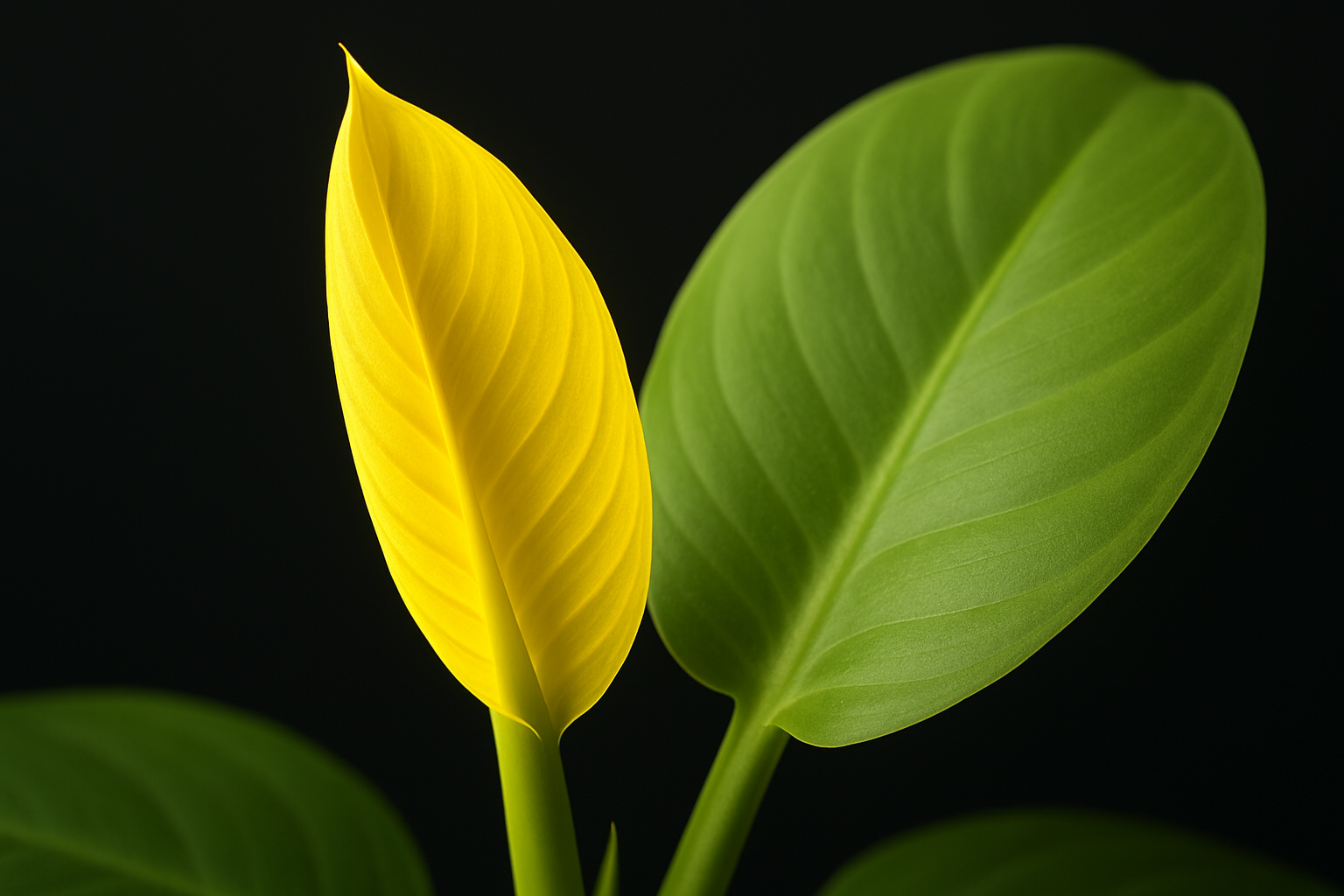
Philodendron Moonlight: The Chartreuse Showstopper
Most houseplant guides start with "this plant loves bright indirect light" like that's a personality trait. With Philodendron Moonlight, the first thing you need to know is the color.
This plant isn't green. At least, not primarily. Its signature feature is chartreuse — a bright yellow-green that glows in good light and looks almost fluorescent in new growth. Mature leaves soften to lime green. It's genuinely one of the most vibrant houseplants you can keep, and people who don't know plants will stop and stare at it.
The catch: people see yellow leaves and panic. "Is my plant dying?" No. New growth on Philodendron Moonlight is yellow. That's the point. The color is the whole point.
Learn the general philodendron care principles that apply here →
What Makes Moonlight Different
Philodendron Moonlight (Philodendron hybrid 'Moonlight') is a self-heading philodendron — meaning it grows in a clumping rosette pattern rather than vining. It won't trail or climb unless you stake it, and even then, the stems are shorter and sturdier than typical vining philodendrons.
What makes it distinctive beyond color:
- Compact growth — grows 18–24" tall indoors, making it perfect for tabletops, shelves, or a bright corner
- Upright habit — no trailing vines, just a dense cluster of leaves from the center
- Fast grower — in good conditions, it produces a new leaf every 4–6 weeks during growing season
- Non-toxic — Philodendron Moonlight is mildly toxic if ingested (contains calcium oxalate crystals), so keep it away from pets and kids who might chew on it
Philodendron propagation basics — the essentials apply here →
Moonlight vs Lemon Lime vs Golden Goddess
If you've been online shopping for this plant, you've probably noticed three names that look suspiciously similar: Moonlight, Lemon Lime, and Golden Goddess. They are not the same plant, and once you see them side by side, the differences are immediately obvious.
| Variety | Color | Growth Habit |
|---|---|---|
| Philodendron Moonlight | Bright chartreuse (new growth) → lime green (mature) | Self-heading, clumping |
| Philodendron Lemon Lime | Yellow-green, slightly more "lemony" | Vining, trailing |
| Golden Goddess | Pale lime with golden tones in bright light | Vining, climbing |
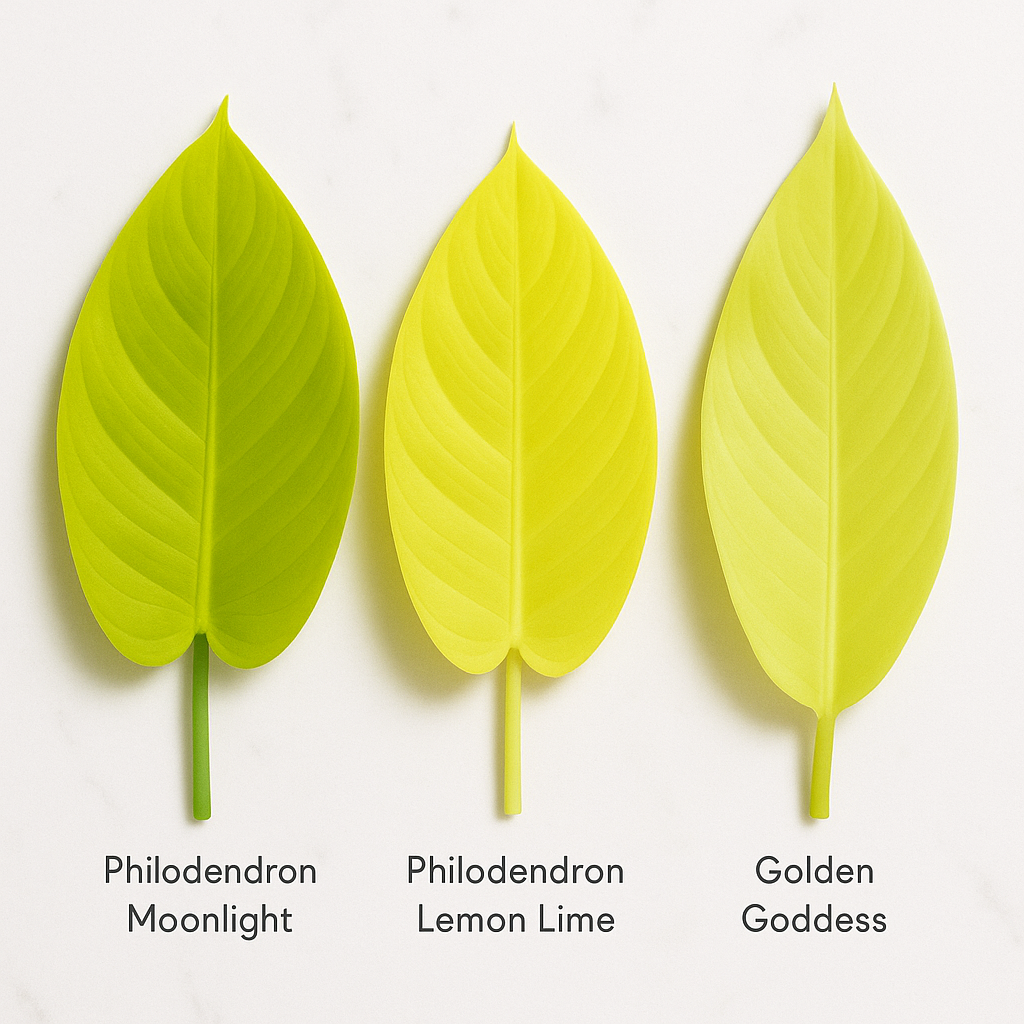
The color difference is the easiest identifier: Moonlight's new growth is in the yellow spectrum (chartreuse), Lemon Lime's new growth leans more green, and Golden Goddess stays pale lime even in mature leaves.
Light Requirements
Philodendron Moonlight produces the best chartreuse color in bright indirect light. Not low light. Not direct sun. Bright. Indirect.
Direct sun will scorch the leaves — you'll see brown patches or the color fading to pale yellow or white. Too little light and the chartreuse washes out to plain green, and the plant grows slower.
The ideal setup:
- East-facing window with a few feet of distance
- South or west window with a sheer curtain filtering the light
- Within 2–3 feet of any bright window
Signs of too much light:
- Brown scorched patches on leaves
- Faded, bleached-looking foliage
- Crisp leaf edges
Signs of too little light:
- Growth slows or stops
- New leaves come in smaller
- Color fades from chartreuse to ordinary green
- Plant reaches or leans toward the light source
If your space has only low light, a basic grow light setup can supplement. Moonlight isn't that demanding — even a few hours of decent light per day keeps it going.
Too Much Light vs Not Enough Light
| Symptom | Too Much Light | Not Enough Light |
|---|---|---|
| Leaf color | Faded, pale | Dull, all-green |
| Leaf texture) | Scorched, crispy edges | Soft, thin |
| Growth rate | Slow (heat stress) | Very slow or stopped |
| Stem length | Normal | Stretched/leggy |
Use the chartreuse color as your indicator. Bright yellow-chartreuse = happy with light. All-green = light is too low.
Watering Your Philodendron Moonlight
This is where most people get it wrong with Moonlight — and it's also where the "yellow leaf panic" originates.
Philodendron Moonlight likes to dry out more than most people expect. It's not a swamp plant. It grows in forest floor conditions where roots get nutrients from decomposing organic matter — but that matter drains fast. Keeping the soil constantly moist is a one-way ticket to root rot.
The rule: Let the top 2–3 inches of soil dry out before watering. In practice, that's typically every 7–10 days in warm months, less in winter. Always check before you water. The finger test works perfectly.
How to water properly:
- Check soil moisture — 2–3 inches down should be dry
- Water thoroughly until it drains from the bottom
- Empty the saucer after 20 minutes
- Do not water again until the top soil is dry
Check Soil Moisture Before You Water →
How to Tell If Your Moonlight Is Thirsty
Moonlight tells you when it's thirsty:
- Soil pulls away from the pot edges —dry soil contracts
- Leaves start to look slightly droopy — not wilted, just less perky than usual
- Pot feels very light when lifted — dry soil weighs almost nothing
- The whole plant looks slightly "meh" — subtle, but you'll notice
The moisture meter takeaway: when in doubt, wait a day. Moonlight is more forgiving of underwatering than overwatering. It bounces back from a dry wilt faster than it recovers from root rot.
Overwatering vs Natural Yellowing
Here's the myth we need to bust right now:
Yellow leaves on Philodendron Moonlight = overwatering? NOT ALWAYS.
On most houseplants, yes — yellow leaves usually mean too much water. But Moonlight is different. Its new leaves are naturally yellow. Chartreuse. Yellow-green. That IS the color when leaves are fresh.
You need to look at which leaves are yellow and how they feel:
- New growth (top of the plant) — if it's yellow-chartreuse and firm, that's normal. This is the signature look of the plant.
- Lower/mature leaves turning yellow — this is more likely a sign of overwatering, especially if the leaf feels soft or mushy
- Multiple leaves yellowing at once, with wet soil — overwatering, cut back immediately
- Yellow leaves with mushy stems — root rot, stop watering and check roots
The key differentiator: natural chartreuse yellow is bright, even, and the leaf feels healthy. Problem yellowing from overwatering is dull, may be blotchy, and the leaf feels weak or mushy.
🌫️ Give Your Calathea the Humidity It Craves
Want to give your calathea the humidity it craves? Here are our tested humidifiers that keep tropical plants happy:
*As an Amazon Associate, we earn from qualifying purchases.
A simple soil moisture meter takes the guesswork out of watering Moonlight. Stick it in before you water — if the top 2–3 inches are still moist, wait another day or two.
The Right Soil Mix
Philodendron Moonlight is an aroid, and aroids need chunky, fast-draining soil. Standard potting mix holds too much water and stays wet too long. Moonlight roots need air and drainage.
The fix: aroid mix, either bought pre-made or mixed yourself.
Aroid Mix Recipe for Philodendron Moonlight
The recipe is flexible, but the principle is consistent: chunky components that don't compact, fast drainage, some moisture retention.
Standard mix:
- Orchid bark (30%) — large chunks for drainage and air pockets
- Perlite (30%) — extra drainage insurance
- Coco coir or peat (20%) — moisture retention without compaction
- Horticultural charcoal (10%) — toxin absorption, improves drainage
- Optional: worm castings (10%) for nutrients
The goal: water should drain through in seconds, not minutes. If your soil is still wet an hour after watering, it's too dense.
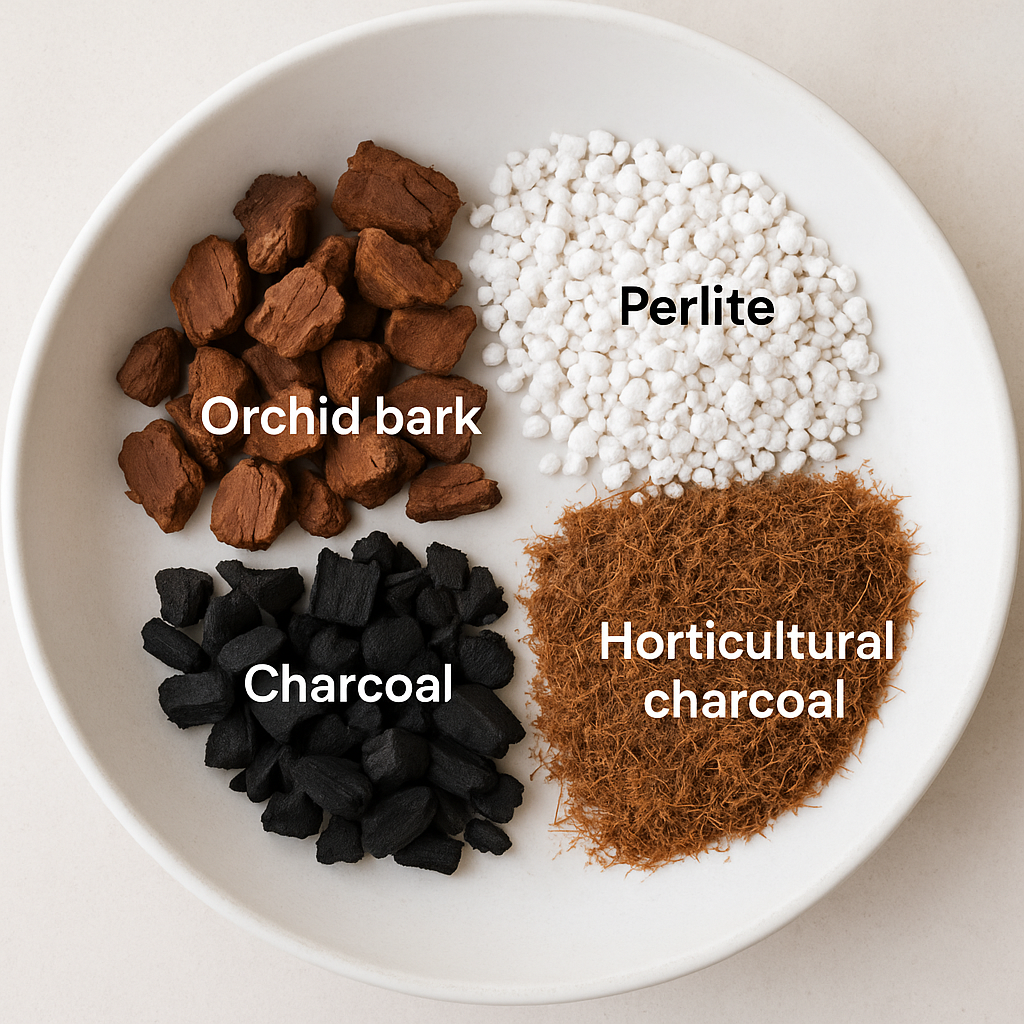
You can also buy pre-mixed aroid blend. Yes, it's pricier than standard potting mix, but your Moonlight will genuinely thrive instead of just surviving.
Repotting Signs and Timing
Time to repot when:
- Roots are coming out of drain holes
- Water runs straight through without absorbing (root bound)
- Growth has slowed despite good care and feeding
- It's been 18–24 months since last repotting
Go up only 1–2 inches in pot diameter. Too big a jump means excess soil holds water longer than the roots can use it → root rot.
When to not repot:
- In winter when growth is slow
- If the plant is stressed or recovering
- If it's currently blooming or producing new leaves (wait until it finishes)
Temperature and Humidity
Philodendron Moonlight grows best in 65–80°F (18–27°C) — standard room temperature for most homes. It doesn't like cold drafts or temperatures below 55°F.
It tolerates average household humidity (40–60%) better than many other philodendrons. You do not need to panic about humidity for this plant. The myth that all philodendrons need 70%+ humidity does not apply to Moonlight.
Myth-Busting: Does Moonlight Really Need High Humidity?
Short answer: No.
Moonlight is notably more humidity-tolerant than vining philodendrons like heartleaf or Brasil. It handles 40–60% household humidity without issue. You might see minor browning on leaf edges if your air is very dry (below 30%), but it's not the humidity disaster that other philodendrons can be.
That said, if your Moonlight is showing brown tips or crispy edges despite good watering practices — and you've confirmed it's not overwatering — then mild low humidity could be the cause. A mid-tier humidifier near your tropicals helps in that case. But it's optional, not essential.
Our humidifier recommendations for plants that actually need them →
If you're in a dry winter climate, a pebble tray under the pot provides modest humidity without the expense of a humidifier. Grouping plants together also raises the immediate micro-humidity as they transpire.
Fertilizing Schedule
Philodendron Moonlight is a light feeder. Less is more.
- Spring/Summer (active): Balanced liquid fertilizer (10-10-10 or similar) diluted to half strength, every 4–6 weeks
- Fall/Winter (dormant): Stop fertilizing. The plant isn't growing, so nutrients build up and burn roots
Signs of over-fertilizing on Moonlight:
- Brown leaf tips (looks like humidity damage — misleading)
- White crust on soil surface (salt buildup)
- Wilting with moist soil
If you see salt buildup: flush the soil with plain water several times to leach out the excess. Let the soil dry out slightly between flushes.
Signs of under-fertilizing:
- Growth is slow but plant looks otherwise healthy
- Leaves are smaller than usual
- Color fades slightly
If your plant hasn't been fed in a while (6+ months), one half-strength dose won't hurt — just don't make a habit of skipping it and then overcompensating.
Pruning for a Bushier, Fuller Plant
Because Philodendron Moonlight is self-heading (not vining), its pruning logic is different from trailing philodendrons. You can't let it get leggy and expect it to fill in on its own. You have to encourage branching.
The goal: cut back leggy stems to a node just above the soil line. This stimulates multiple new growth points from the base, giving you a denser, fuller plant rather than a single tall stem.
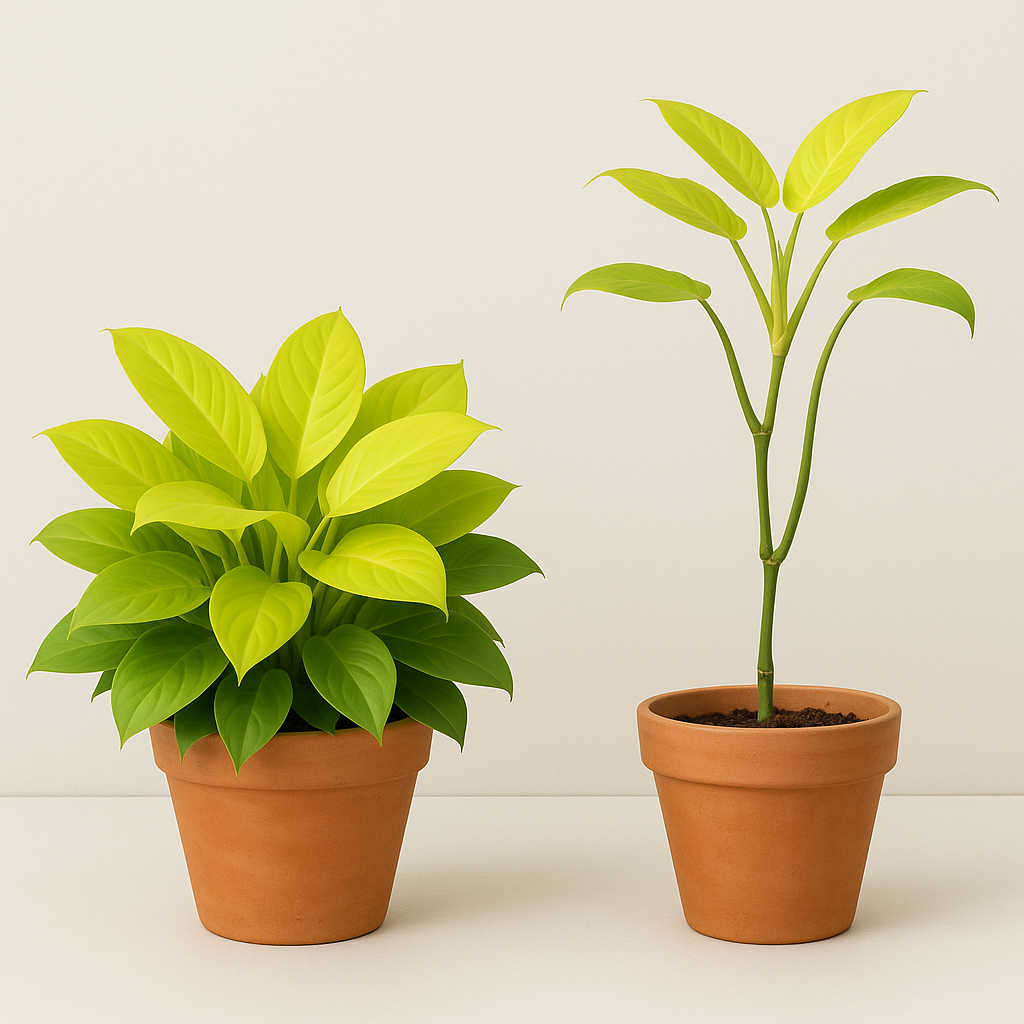
How to Make Philodendron Moonlight More Bushy
- Identify leggy stems — long, bare stems with leaves only at the top
- Cut back to a node — ideally just above the soil line or at the lowest viable node on the stem
- Make clean cuts — always use clean, sharp scissors or pruning shears. Crushing stems invites disease
- Don't remove more than 1/3 of the plant at once — stress management
A stem cut back hard to the soil line will often produce 2–3 new growth points instead of one. That's the whole trick.
Clean Cuts for Healthier Growth →
Pruning is also how you manage the natural yellowing of lower leaves: remove them as they age to keep the plant looking fresh. Always cut — don't pull — to avoid damaging the stem.
Propagation
Philodendron Moonlight propagates from stem cuttings with nodes. No node = no root. This is non-negotiable.
Propagation method: stem cuttings
- Identify a node — the small bump where a leaf meets the stem, where roots will emerge
- Cut below the node — use clean scissors, cut ¼ inch below the node
- Remove lower leaves — 1–2 leaves at the top, strip anything that would sit below the water or soil line
- Root in water or soil — both work, Moonlight roots easily
Water propagation:
- Place cutting in a jar of room temperature water, node submerged
- Change water every 3–5 days
- Roots appear in 2–4 weeks
- Transfer to chunky aroid mix when roots are 2–3 inches long
Soil propagation:
- Dip in rooting hormone (optional but helps)
- Plant in moist perlite or aroid mix, node buried
- Keep humid, cover with a plastic bag if needed
- Expect 3–6 weeks for roots
Why Moonlight is easy to propagate: it roots quickly and the stem cuttings are chunky and robust — not delicate. Even beginners get solid results.
Water Propagation vs Soil Propagation
| Factor | Water | Soil |
|---|---|---|
| Root visibility | Visible | Hidden |
| Transfer shock | Yes | None |
| Time to roots | 2–4 weeks | 3–6 weeks |
| Ease | Easier | More steps |
For beginners: start with water propagation. You get to watch the roots grow and it's more forgiving if you make small mistakes.
Troubleshooting Common Issues
Yellow Leaves — Is It Normal?
As established: new leaves on Philodendron Moonlight are naturally chartreuse. This is not a problem. It's the plant doing exactly what it's supposed to do.
When to worry:
- Widespread yellowing — multiple leaves at once, regardless of position
- Yellow + mushy stems — overwatering or root rot
- Yellow + dry, crispy soil — underwatering
- Yellow + wet soil that stays wet — root rot, check roots immediately
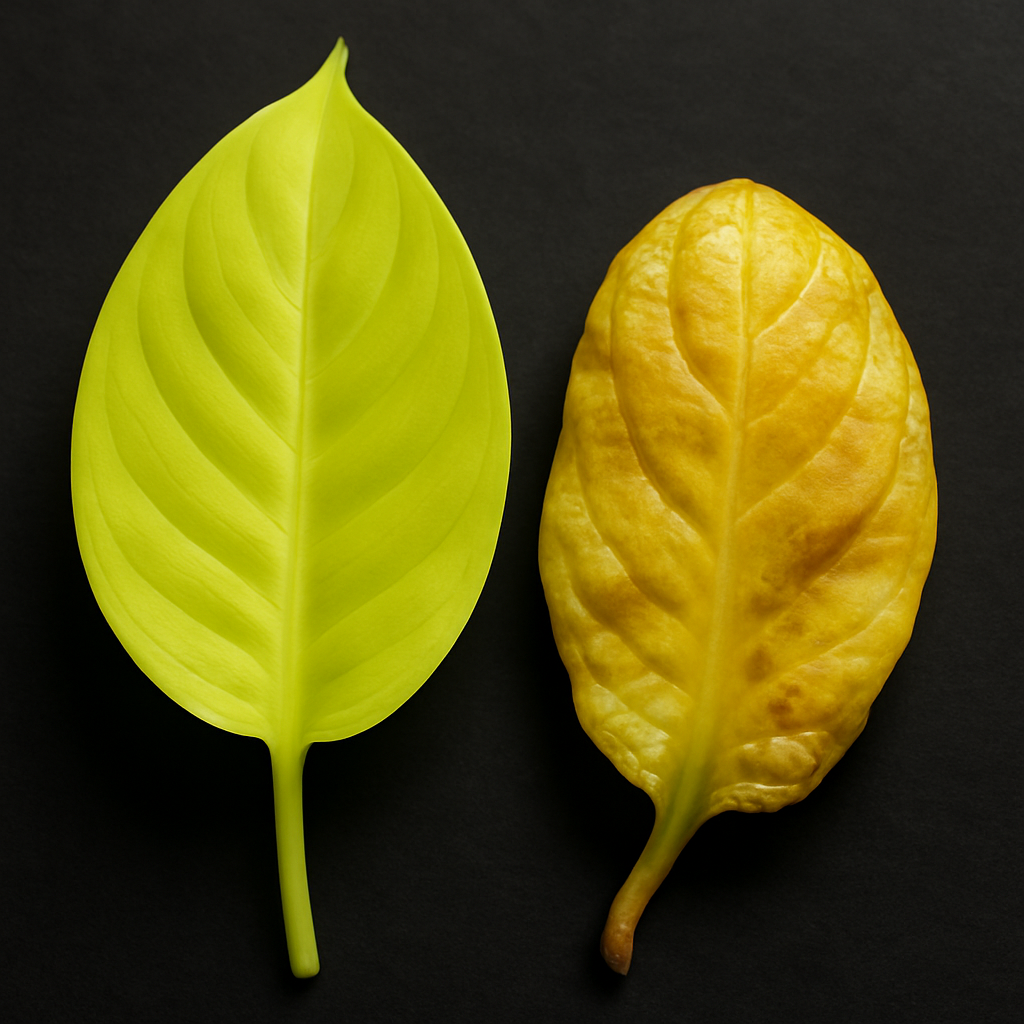
The practical rule: if the yellow leaf is at the top, firm, and the rest of the plant looks healthy — do nothing. If multiple leaves are yellowing throughout the plant and the soil is wet, stop watering and check for root rot.
Brown Tips
Usually humidity or water quality, rarely a major problem.
- Brown tips, rest of leaf looks fine → low humidity OR mineral buildup from tap water. Try filtered water and running a humidifier nearby.
- Brown tips with crispy edges →dry air (below 40% humidity for extended periods)
- Brown tips with yellow halos → potential root issues or fertilizer burn
If switching to filtered water + adding humidity doesn't help over 2–4 weeks, investigate the roots.
Drooping or Dropping Leaves
- Drooping, soil is dry → thirsty. Water thoroughly and the plant should perk up within hours.
- Drooping, soil is wet → root rot. Do not water. Check roots, trim any black/mushy ones, repot in fresh dry soil.
- Dropping leaves rapidly → shock from a recent change (repotting, moving location, temperature drop) or severe overwatering.
Normal aging: lower leaves turn yellow and drop as the plant matures. This is fine, especially if the rest of the plant looks vigorous. If the whole plant is dropping leaves, that's an urgent signal to check soil moisture and roots.
Root Rot
Root rot is the most common killer of Philodendron Moonlight, and it's almost always caused by:
- Overwatering
- Soil that doesn't drain fast enough
- Potting into a container without drainage holes
- Letting the plant sit in water in the saucer
Signs:
- Soil stays wet for more than a week
- Plant looks wilted regardless of watering
- Soil smells sour or musty
- Roots are black, mushy, or slimy when checked
What to do:
- Remove the plant from the pot
- Trim all black/mushy roots (leave firm white roots)
- Let the root ball air out for a few hours
- Repot in fresh, dry aroid mix in a clean pot with drainage
- Do not water for 3–5 days, then water lightly
Full root rot treatment guide →
Philodendron Moonlight Quick Care Summary
| Parameter | Requirement |
|---|---|
| Light | Bright indirect. Direct sun burns; low light fades chartreuse |
| Water | Top 2–3 inches dry before watering. Every 7–10 days typical |
| Soil | Chunky aroid mix. Drainage is non-negotiable |
| Temperature | 65–80°F (18–27°C). No cold drafts |
| Humidity | 40–60% — tolerates average household humidity |
| Fertilizer | Half-strength balanced feed every 4–6 weeks in growing season only |
| Pruning | Cut leggy stems to soil line to encourage branching |
| Growth habit | Self-heading/clumping, not vining |
| Mature size | 18–24" tall indoors |
| Toxicity | Mildly toxic if ingested (keep away from pets and kids) |
Products We Love
These are the tools we actually use for Philodendron Moonlight care:
- Digital Moisture Meter — Takes the guesswork out of watering
- Orchid Bark for Aroid Mix — Chunky drainage component
- Sharp Pruning Shears — Clean cuts prevent disease
- Levoit Humidifier — Optional upgrade for dry climates (Moonlight doesn't require it, but struggles plants benefit)
Want to know what's actually happening with the "plants clean air" science? Houseplants for Clean Air sets the record straight. Or browse our Repotting guide for the full pot sizing methodology.