Best Humidifiers for Houseplants: Stop Misting, Start Thriving
Misting is a waste of your time. Here's the science — and the humidifiers that actually work.
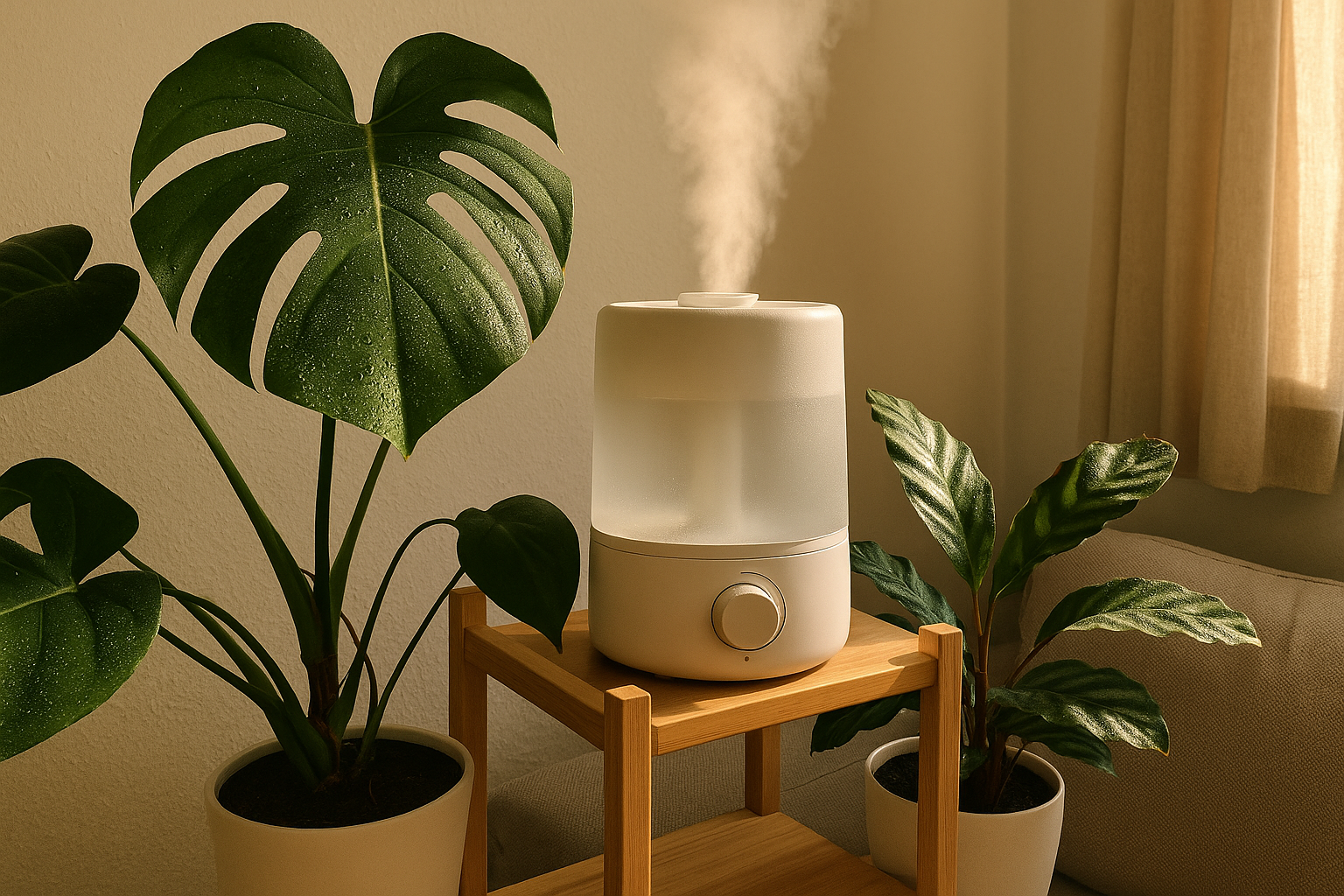
The Misting Habit You Can Finally Drop
Let's get this out of the way: if you're spending your mornings misting your plants with a spray bottle, stop. You're not helping. You're probably making things worse.
I know, I know — you've been told misting works. Maybe a store employee suggested it. Maybe a Pinterest board recommended it. Maybe your grandmother swore by it. But the science is in, and it's not on misting's side.
A spray bottle delivers a fine mist that evaporates completely within two to five minutes. Two minutes. That's how long your "humidity boost" lasts. Meanwhile, you've splashed water onto leaf surfaces, which is a one-way ticket to fungal infection city.
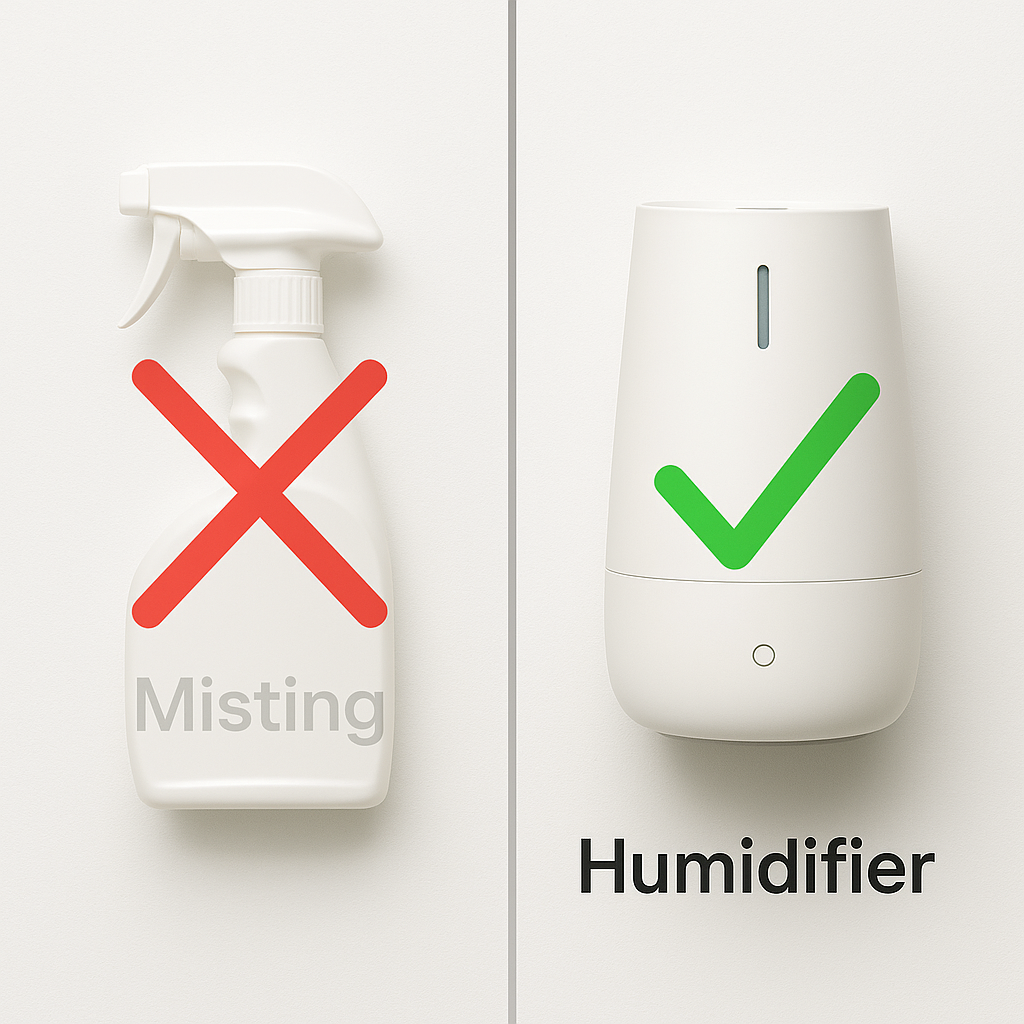
The only thing that actually raises the relative humidity in your space — consistently, measurably, without you standing there with a bottle — is a humidifier. That's what we're talking about today. Which ones to get, how to pick the right one, and which plants need what.
Why Misting Doesn't Work: The Science
Here's what happens when you mist:
The mist evaporates almost instantly. Studies on evaporation rates in indoor environments show that fine water droplets at room temperature dissipate within 2-5 minutes. Your plant never "absorbs" this water through its leaves — that's not how plants work. Water enters through roots, not foliage.
It creates uneven humidity. Misting targets the leaves you're spraying. The rest of the plant's immediate environment? Still dry. Humidity is an ambient condition — it needs to be in the air, not on the leaves.
It can cause fungal problems. Those water droplets sitting on leaves? Perfect breeding conditions for powdery mildew, botrytis, and other fungal issues. Calatheas in particular hate having wet leaves — you'll see brown spots appear almost immediately.
It doesn't change the room's humidity. Your 300-square-foot living room contains hundreds of cubic feet of air. A few pumps from a spray bottle adds a negligible amount of moisture that vanishes before you can even set the bottle down.
If you've been misting because your Calathea's leaves are curling or your Monstera has brown edges, misting isn't the fix. You need to raise the ambient humidity — the moisture content of the air itself. The only tool that does that reliably is a humidifier.
How Humidifiers Actually Help Plants
A humidifier adds moisture to the air in your space. Not on the leaves — in the air. This matters because plants interact with ambient humidity constantly through a process called transpiration.
When humidity is adequate, plants transpire normally — they release water vapor through tiny pores called stomata. This drives the capillary action that pulls water and nutrients up from the roots. When the air is too dry, plants close their stomata to conserve water, which slows or halts nutrient uptake entirely.
The result: even if you're watering perfectly, dry air can make your plant look thirsty, crispy, and stunted. Brown leaf edges, curling leaves, slow growth — these are often humidity symptoms, not watering problems.
A humidifier keeps relative humidity in the range your tropical plants need, so they can transpire normally, grow consistently, and stay healthy without you doing anything. Set it, forget it, watch your plants thank you.
What Humidity Level Do Houseplants Need?
Not all plants need the same humidity. Here's the breakdown:
| Plant Type | Target Relative Humidity | Examples |
|---|---|---|
| Tropical | 60%+ | Monstera, Calathea, Maranta, most Aroids |
| Semi-tropical | 40-60% | Pothos, Philodendron, Dracaena |
| Arid-tolerant | Below 40% | Succulents, cacti, snake plants |
Most common houseplants are tropical or semi-tropical. If you have a Monstera, Calathea, Bird of Paradise, or any aroid, you're aiming for 60% or higher. These plants evolved under rainforest canopies where humidity is consistently high.
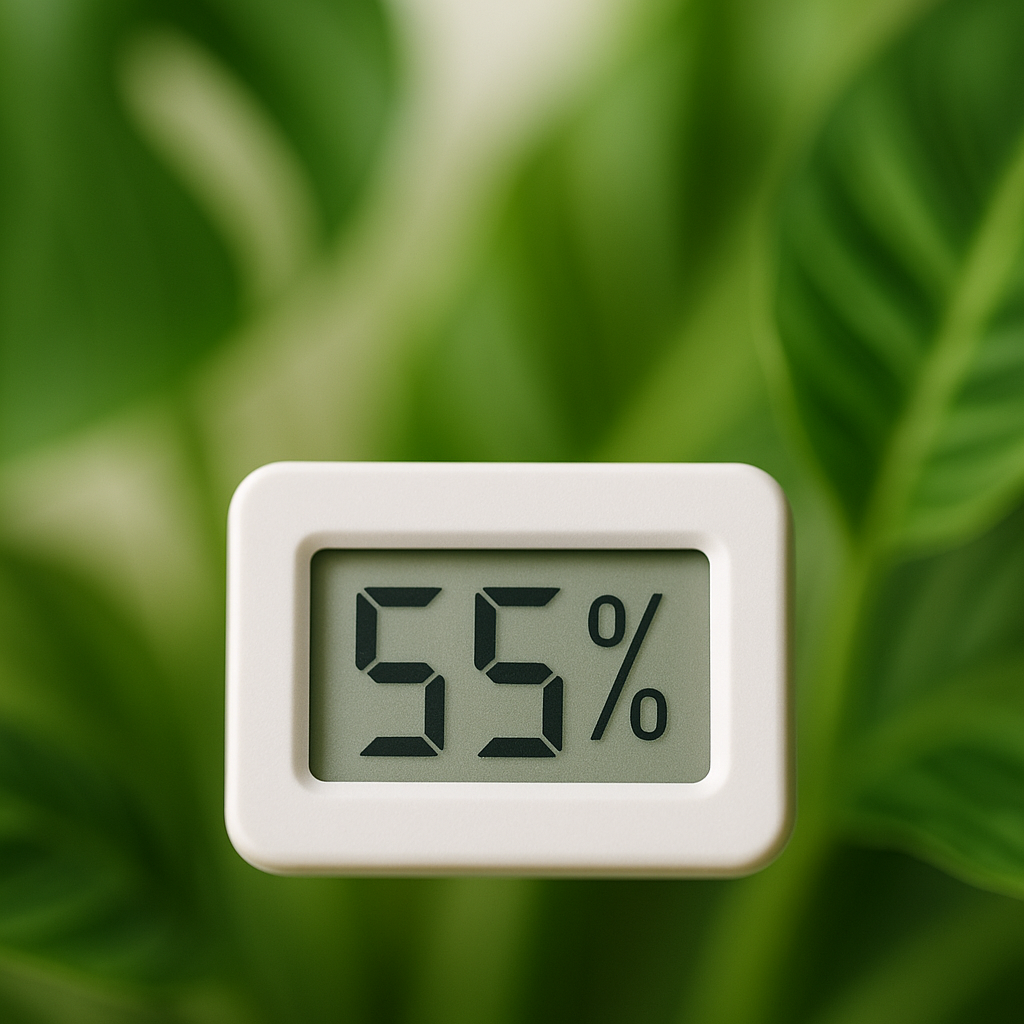
A hygrometer — a small device that measures relative humidity — is essential for taking the guesswork out. Without one, you're adjusting blind.
How to Choose the Right Humidifier
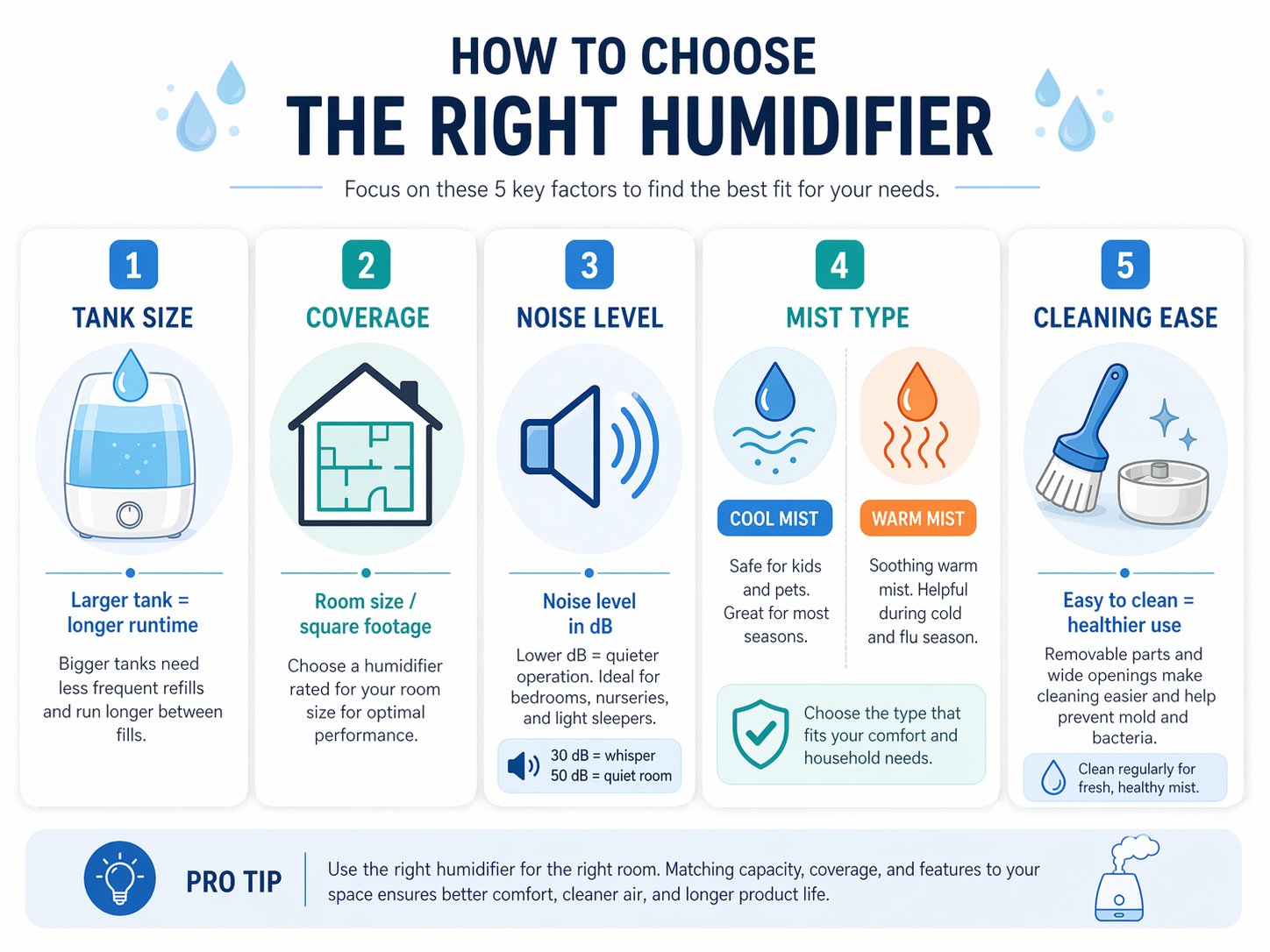
Before you buy, here are the five things that actually matter:
1. Tank size. Bigger tank = longer runtime between refills. A 3-4 liter tank runs 12-24 hours depending on mist output. A 1.5-liter tank might only last 8-12 hours. For overnight or all-day coverage, bigger is better.
2. Coverage area. Humidifiers are rated for specific square footage. A unit rated for 300 sq ft will struggle in a large open-plan living room. Check the specs and match to your actual space.
3. Noise level. If you're putting this in your bedroom or a quiet office, get one with a "whisper quiet" rating (under 30 dB). Ultrasonic humidifiers are generally the quietest option.
4. Cool mist vs. warm mist. Cool mist is fine for most houseplants and is safer (no heating element). Warm mist can help in very cold rooms but isn't necessary for plant care.
5. Ease of cleaning. This is non-negotiable. Standing water + humidifiers = mold and bacteria growth if you don't clean regularly. Look for wide-mouth openings and dishwasher-safe components if possible.
Skip the features you don't need. Auto-shutoff is standard. UV sanitization is marketing. App control is genuinely useful for monitoring humidity remotely, but it's not essential.
Our Top Humidifier Picks
Our #1 Pick for Smart Plant Parents: Levoit Oasis Smart Humidifier (6L)
Levoit Oasis Smart Humidifier (6L) → Check Price on Amazon
The Levoit Oasis is the most recommended plant humidifier across every major publication, and for good reason. The 6-liter tank covers up to 500 sq ft, runs up to 60 hours on the lowest mist setting, and connects to the VeSync app so you can monitor humidity from your phone without walking over to check it.
For plant parents with multiple plants across a few rooms, this is the easiest way to maintain consistent humidity without constantly refilling and adjusting. The app also logs humidity data, so you can see patterns over time and adjust your settings seasonally.
Best for: Multiple plants, larger spaces, tech-savvy plant parents who want data.
Best Value Under $50: Pure Enrichment Mistoso (1.5L)
Pure Enrichment Mistoso (1.5L) → Check Price on Amazon
If you're new to humidifiers or don't want to spend much to start, the Pure Enrichment Mistoso is the budget pick that actually works. With 15,000+ Amazon reviews and consistent top rankings from Good Housekeeping and The Spruce, it's the most proven entry-level option.
It's compact, easy to clean, and runs quietly enough for a bedroom. The 1.5-liter tank is on the small side (12-18 hours runtime depending on setting), so it's best for a single plant or a small collection on a plant shelf.
Best for: Budget buyers, single plants or small spaces, first-time humidifier owners.
Plant-Specific Humidifier Recommendations
Monstera
Monstera deliciosa is a tropical forest plant that craves humidity — aim for 60%+ consistently. The good news: Monstera is forgiving. It doesn't throw a fit the way Calatheas do if humidity dips temporarily. Run your humidifier during the day, target 60-70% RH, and you'll see the difference in larger leaves with bigger fenestrations.
Which humidifier: Anything in your budget range. Levoit's larger units handle multiple Monstera in a larger space best.
Calathea & Maranta
These are the drama queens of the plant world. Calatheas need 60%+ humidity consistently, and they'll let you know — immediately — if they're not getting it. Brown edges, leaf curling, and that distinctive crispy texture appear fast when humidity drops.
For Calatheas and Marantas, consistency is more important than volume. A smaller humidifier running steadily is better than a big one running intermittently.
Which humidifier: Pure Enrichment Mistoso if you have one or two Calatheas on a shelf. Levoit Oasis if you have a dedicated plant corner with multiple humidity-loving specimens.
Pothos & Philodendron
Good news: these are more forgiving. Pothos and most Philodendrons will tolerate 40-60% humidity without complaint. They're semi-tropical by nature, so they handle average indoor humidity better than true tropicals.
Which humidifier: A smaller unit is fine. If your space is naturally dry (below 40% RH in winter especially), bump up to a mid-size unit. But don't overspend if you only have Pothos.
Fiddle Leaf Fig
Fiddle leaf figs are tricky. They want consistency above all — fluctuations in humidity cause them to drop leaves faster than almost any other plant. They need 50-60% RH and steady conditions.
Which humidifier: A larger coverage unit if your FLF is in a room with variable humidity. The Levoit's app monitoring helps track whether your space is holding steady.
Orchids
Orchids are different. They prefer humidity bursts (50-70%) followed by drying periods. They're epiphytes — in the wild, they grow on tree bark where water runs through quickly and dries fast. Constant high humidity isn't their jam.
Which humidifier: If you're growing orchids with other tropical plants, run a humidifier in that room. But don't be surprised if your orchids prefer being near (but not directly in front of) the humidifier's output.
How to Use Your Humidifier for Plants
Placement matters. Put your humidifier within 3-5 feet of your plants, pointed at the area with the most plant density. Not directly on the plants — you want mist to disperse into the air, not pool on leaves.
Run it during the day when plants are transpiring most actively. 4-8 hours is usually sufficient for average spaces. In winter, when heating systems dry the air significantly, you may need to run it longer or continuously.
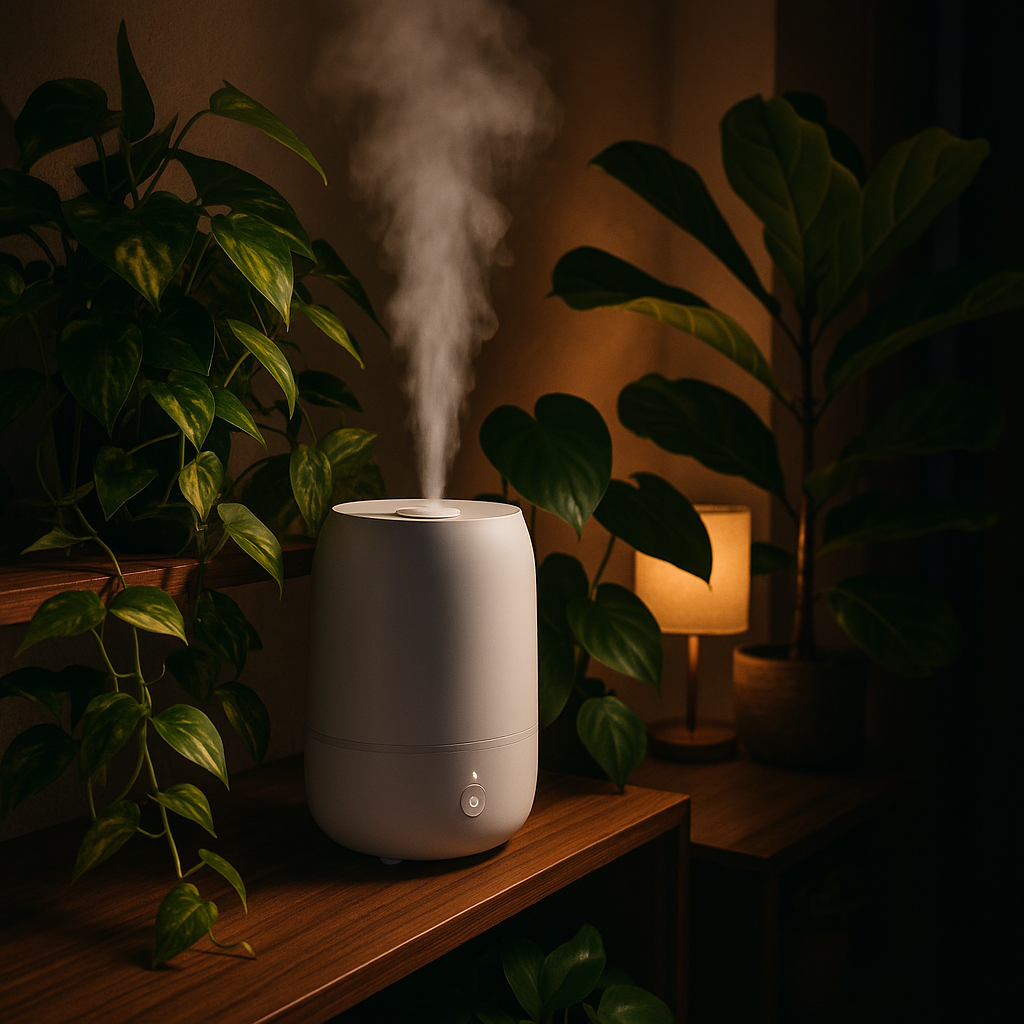
Clean it weekly. This is the part everyone skips and then wonders why their plants' leaves have brown spots that look like a fungal issue. Standing water breeds bacteria and mold. Every 7 days: empty the tank, wipe it out with a clean cloth, and run a vinegar solution (1:1 water and white vinegar) through the system if your humidifier has a cleaning mode. Rinse thoroughly before refilling.
Use distilled or filtered water when possible. Tap water contains minerals that can leave white dust on surfaces and contribute to mineral buildup in your humidifier. If you only have tap water, clean your humidifier more frequently.
Seasonal adjustment: Your plants' humidity needs shift with the seasons. Heating in winter dries air dramatically — you may need to run your humidifier more often in cold months. Summer usually requires less supplemental humidity unless you're running heavy AC.
Frequently Asked Questions
Does misting plants actually help? No. Misting provides only temporary surface moisture that evaporates within minutes. It creates uneven humidity, can promote fungal growth on leaves, and does not raise the ambient humidity around your plant in any meaningful way. A humidifier is the only way to increase relative humidity consistently.
How long should I run a humidifier for my plants? Run your humidifier for 4-8 hours daily, or continuously if your ambient humidity is well below your plants' target range. Monitor with a hygrometer and adjust seasonally — plants typically need more humidity in winter when heating dries the air.
Can I use tap water in my humidifier? You can, but distilled or filtered water is better. Tap water contains minerals that can leave residue and contribute to buildup in your humidifier. If you notice white dust around your humidifier, switch to filtered water and clean the unit more often.
How close should a humidifier be to my plants? Keep it within 3-5 feet of your plants. You want the mist to disperse into the room's air, not land directly on foliage.
What's the ideal humidity for most houseplants? Most tropical houseplants thrive at 60% relative humidity or higher. Semi-tropical plants do well at 40-60%, and arid-tolerant plants like succulents are fine below 40%.
Can a humidifier cause problems for plants? Only if you overdo it. Excess humidity (above 80% for extended periods) can encourage fungal growth and pest issues. If you're running a humidifier 24/7 and your plants are showing signs of mold, bacterial infection, or yellowing leaves, dial back the runtime and improve airflow.
Our Favorite Humidifier Gear
We use these products ourselves: