Humidity Solutions for Apartments: Small-Space Plant Care in Dry Climates
Your apartment is running at 20–30% humidity in winter. Your tropical plants miss home. Here is exactly what to do about it — from free hacks to the right humidifier.
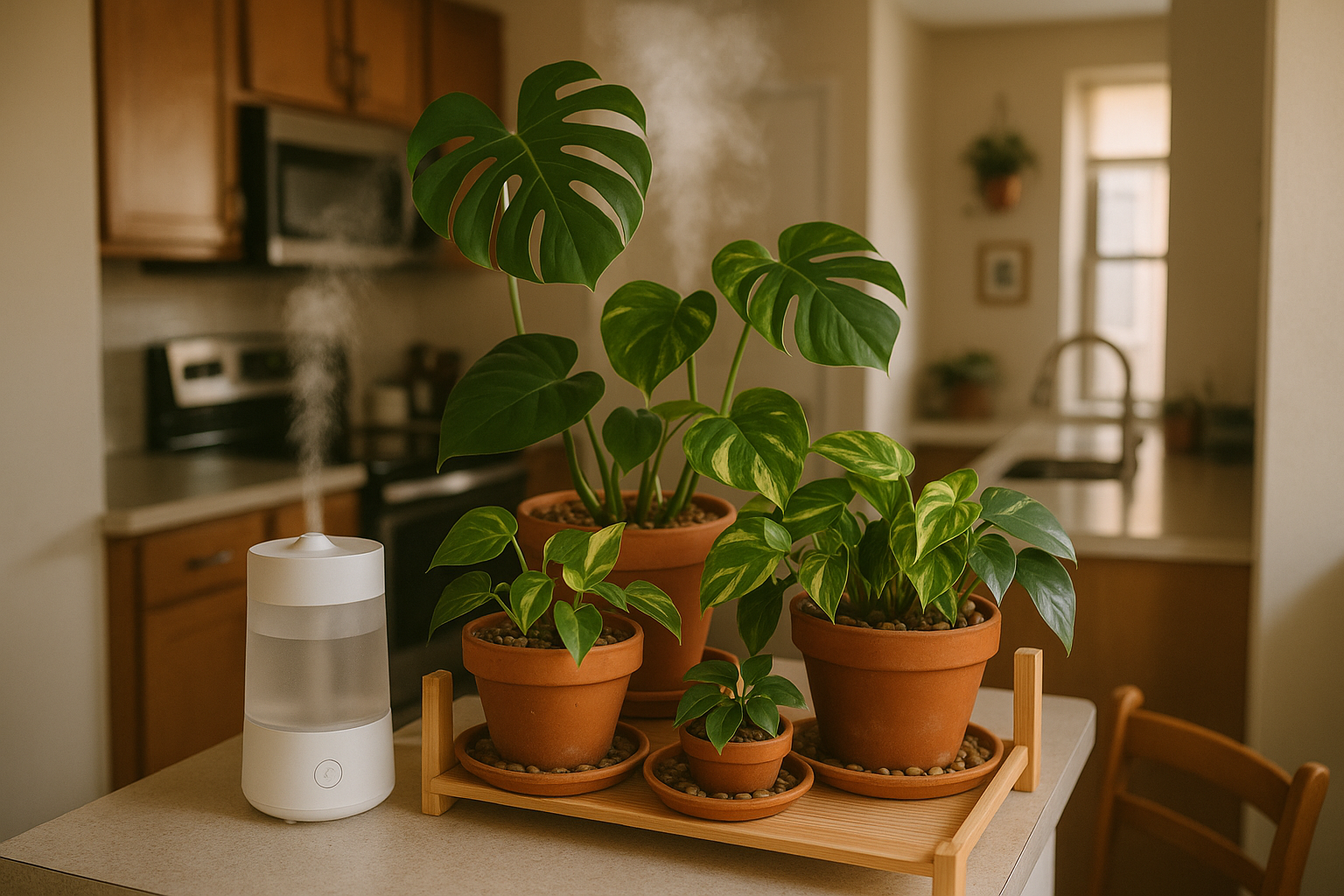
The Dry Apartment Reality Check
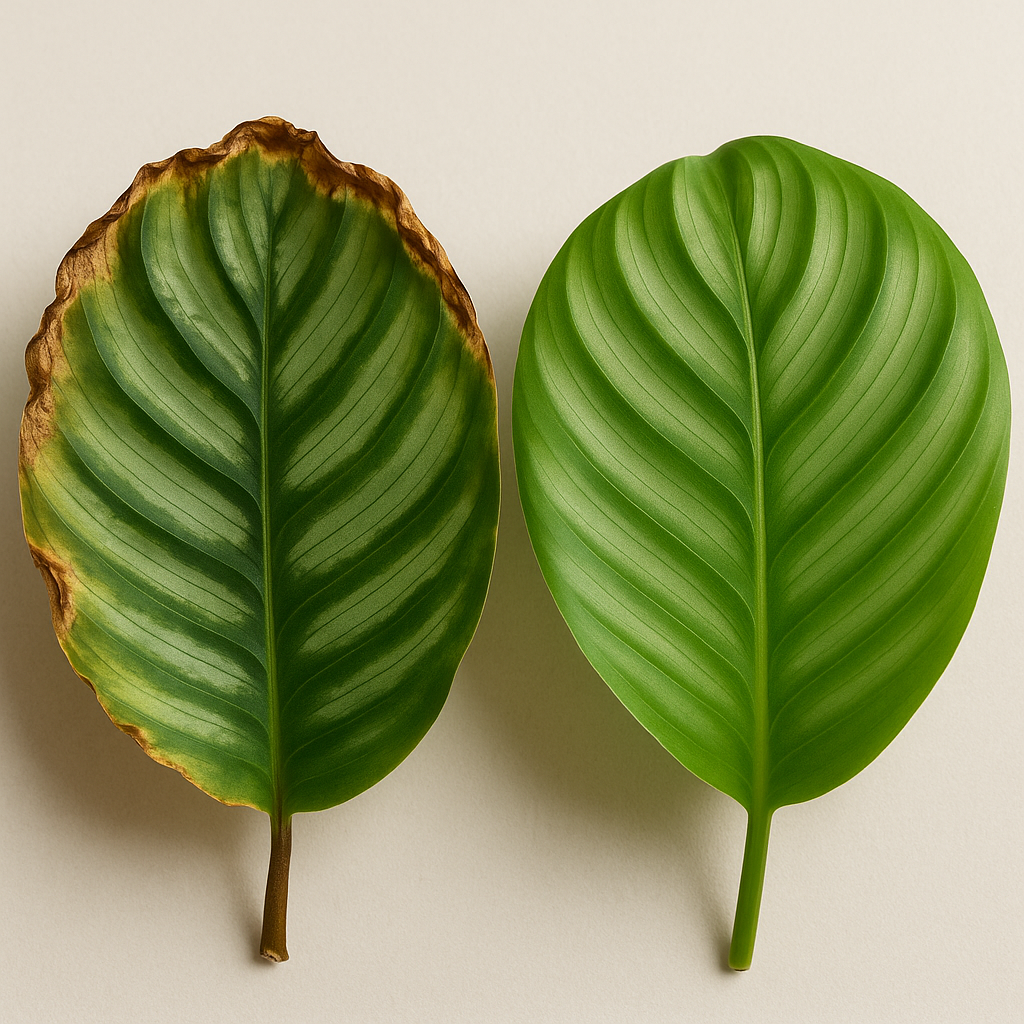
If your Calathea has been looking crispy around the edges, or your Ferns brown faster than you can water them, your first instinct is probably to water more. Stop. The problem is almost certainly the air.
Standard apartment heating — especially in winter — can push indoor relative humidity down to 20–30%. That's desert-level dry. Tropical houseplants evolved under forest canopies where humidity routinely sits at 50–80%. No amount of watering fixes that gap.
The symptoms are distinctive:
- Crispy, brown leaf edges — especially on thin-leaved plants (Calathea, Ferns, Prayer Plants)
- Leaf curling — leaves roll inward to conserve moisture
- Slow or stunted growth — even during the growing season
- Brown tips on broad-leaf plants — Monstera and Philodendron especially
If any of those sound familiar, your air is too dry. Not your watering. Your air.
What Your Hygrometer Is Actually Telling You
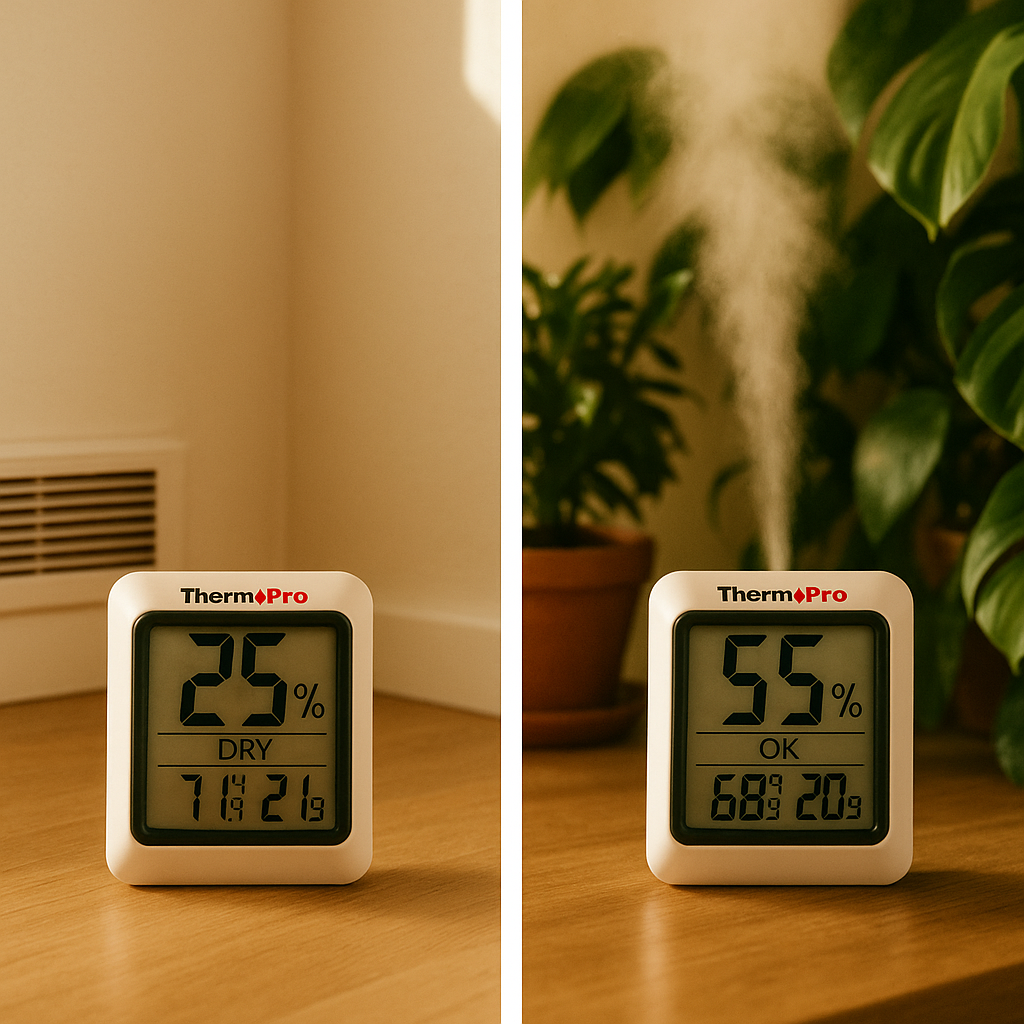
Before you buy anything — before you change a single thing — you need a baseline. That means a digital hygrometer. They're cheap, they're small, and they take three seconds to read.
Check Humidity Levels — $10 on Amazon
Place it near your plants, wait 10 minutes, and read the number. That's your starting point.
- Below 40%: Your plants are under real humidity stress. Act now.
- 40–50%: Marginal. Some tough tropicals will handle it; most will show signs.
- 50–65%: The sweet spot for most tropical houseplants.
- 65–80%: Ideal for humidity-loving plants — Calathea, Ferns, Alocasia.
Quiz — Do You Actually Need a Humidity Solution Right Now?
Ask yourself these:
- Are your plants showing brown edges, leaf curl, or crispy tips? → Yes = humidity problem.
- Is it winter or are you running AC constantly? → Heating and AC both dry out air significantly.
- Do you have thin-leaved tropicals? (Calathea, Ferns, Prayer Plants, Bird of Paradise) → These are humidity divas. They need 60%+ or they look rough.
- Are you running a humidifier already? → If not, and you answered yes to any of the above, get one.
If two or more of those apply, you need a humidity solution. Keep reading.
The Solutions Ladder (Ranked by Effectiveness)
Not all humidity solutions are created equal. Some cost nothing and work okay. Others cost $70+ and actually solve the problem. Here's the honest ranking:
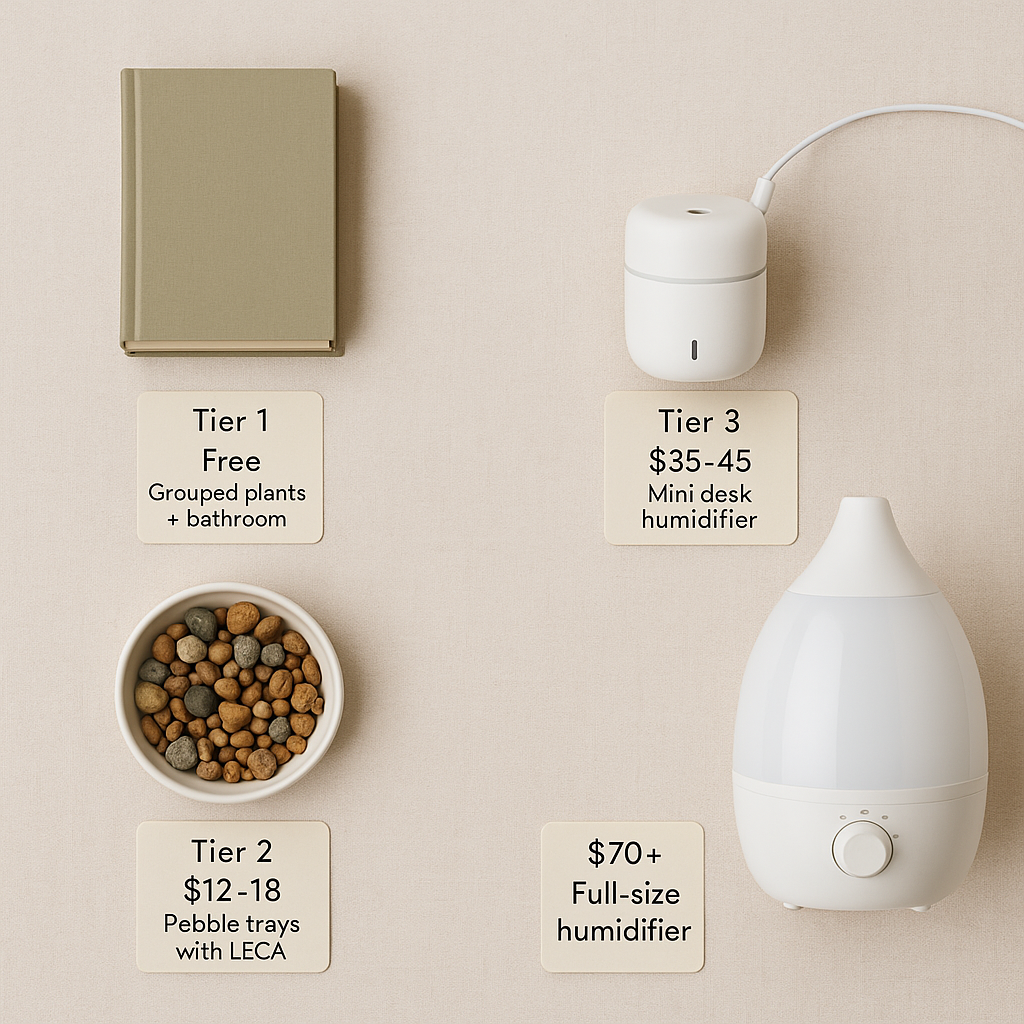
Tier 1: Free Solutions — Grouping, Bathroom Strategy, Closing Doors
The cheapest things you can do cost zero dollars.
Group your plants together. Plants transpire — they release moisture through their leaves. When you cluster them, they're essentially running a tiny, collective humidifier for each other. Move your most humidity-hungry plants into a cluster and they'll noticeably perk up within a day or two.
Use your bathroom. This one feels ridiculous the first time you try it. Take your plants into the bathroom when you shower. Leave them there for 15–20 minutes after with the door closed. The steam from a hot shower spikes the humidity in that small room to 80–90%. It's a free tropical spa treatment.
Close doors to dry rooms. If certain rooms have heating vents that run constantly, close those doors. Conversely, let your plant room trap humidity by keeping it closed off from the rest of the apartment.
These methods genuinely work for the most tolerant plants. If you're growing Pothos, Snake Plants, and Monsteras, Tier 1 might be enough. If you have Calathea or Ferns, keep reading.
Tier 2: Cheap DIY — Pebble Trays and LECA Trays
A step above free, this tier uses evaporation to create localized humidity around your plants.
Fill a shallow tray with pebbles or LECA clay pebbles, add water until it sits just below the top of the pebbles, and set your plant pot on top. As the water evaporates, it humidifies the immediate area around the leaves. It's passive, silent, and requires no electricity.
Get LECA Pebbles on Amazon — from $12
Pro tip: LECA works better than plain gravel because the porous surface area is larger, meaning more evaporation. And unlike a pebble tray with just water (which can get funky), LECA doesn't rot or smell.
Pebble trays are a great option for plant shelves and windowsills where you want localized humidity without running a humidifier all day.
Tier 3: Budget Buy — Mini Humidifier ($25–50)
This is where most apartment plant parents should start if Tier 1 and 2 aren't cutting it.
A mini or desk humidifier targets a single shelf, a small corner, or a cluster of plants. They're compact (many fit in a cupholder or on a windowsill), affordable, and effective for 1–5 plants depending on size.
Shop the Levoit Classic 160 on Amazon — ~$40
The Levoit Classic 160 is the most-recommended small humidifier in the plant community for good reason:
- Fits on a plant shelf — it's 7 inches tall
- Quiet enough for shared walls — won't annoy your neighbors
- Cool mist — safe near pets and children
- Auto shut-off — when the water runs out, it stops (no flooding risk)
- ~$40 — not a huge commitment
Run it near your plant shelf for 4–6 hours a day. Set it on a timer if you're not home during the day.
Tier 4: Investment — Full-Size Humidifier for Plant Collections
If you're running a full plant room, a grow tent, or you just have more than 8–10 humidity-loving plants, a mini humidifier won't cut it. You need a full-room solution.
A 4–5L humidifier with a timer can maintain 55–65% humidity in a medium-sized bedroom or living room. Look for the same features as above — auto shut-off, quiet operation (check reviews for this specifically if you have shared walls), and cool mist.
This is Tier 4 for a reason. Most apartment plant parents don't need this. But if you're serious about Calathea, Ferns, and Alocasia, and you have the counter space, a full-size humidifier changes everything.
The Apartment-Specific Playbook
Here's the thing about most humidity guides: they assume you own your home. You can drill a hole in the wall for a whole-house humidifier, you can install a built-in humidifier on your HVAC, you can put holes in ceilings for ductwork.
You rent. None of that applies. Here is how to work with your actual situation.
Renter-Friendly Solutions (No Drilling, No Permanent Changes)
Every solution in this article is renter-friendly. Grouping, pebble trays, and bathroom steam are obviously fine. But even humidifiers are fully portable — you can unplug them and take them when you move.
The rules that matter for renters:
- No drilling, no adhesives — pebble trays sit on surfaces, humidifiers sit on counters, nothing touches walls
- Moveable is mandatory — if your lease says no permanent fixtures, everything here is fine
- Leave no trace — a Levoit on your counter when you move out takes 10 seconds to pack

Small Space Strategies — Plant Shelf Microclimates
In a small apartment, you're not humidifying a whole house — you're humidifying zones. A single plant shelf can be its own microclimate with a desk humidifier running beside it.
The setup that works for most people:
- One Levoit Classic 160 (or equivalent mini humidifier)
- 3–5 grouped tropicals on the same shelf
- Pebble trays beneath the pots for extra insurance
- Door closed to the room for 4–6 hours
This raises the humidity in that micro-zone from 25–30% up to 50–60% while the humidifier runs. You don't need to humidify your whole apartment — just the space where your plants live.
Quiet Solutions for Shared Walls and Neighbors
If you have shared walls (apartment, condo, townhouse), noise matters. Some humidifiers sound like a small waterfall. That's fine if they're in a closed bedroom. Less fine if your neighbor can hear it through the wall at 7am.
The Levoit Classic 160 is quiet enough for most shared-wall situations. If you're sensitive to this, look for models marketed as "whisper quiet" or "ultrasonic" — the vibration-based ones are inherently quieter than the fan-based designs.
Don't run humidifiers at night in a room where you sleep and your plants aren't. The humidity is for the plants. Run it when the plants need it most — during the day, while lights are on, when the heating is running.
The Right Humidifier for Your Space
If you've decided a humidifier is the right move, here's how to pick the one that actually fits your apartment.
Desk vs. Mini vs. Full-Size — Which Fits Your Apartment?
| Type | Tank Size | Coverage | Best For |
|---|---|---|---|
| Desk / Mini | 1–2L | 1–3 plants | Plant shelves, windowsills, single clusters |
| Compact | 3–4L | 4–8 plants | Small room, multiple shelves |
| Full-size | 4–6L | Whole room | Plant room, large collections |
For most apartment plant parents: start with a desk or mini humidifier. If it's not enough after two weeks, upgrade. Most people are surprised how effective a small unit is when it's focused on a plant shelf rather than trying to humidify a whole apartment.
Features That Actually Matter
Auto shut-off — Non-negotiable. When the water runs out, the unit stops. This is a fire safety feature as much as a convenience feature. Every model recommended here has it.
Cool vs. warm mist — Cool mist is standard for plants. Warm mist uses more energy and isn't safer for pets (in fact, some pets are more likely to investigate a warm unit). Stick with cool.
Tank size — Bigger tank = longer run time = less refilling. But also = bigger unit. A 1–2L desk humidifier needs refilling every 8–12 hours. If that's annoying, size up.
Noise level — Check the decibel rating if you care about this. Under 30dB is whisper-quiet. 30–45dB is noticeable but not loud. Over 50dB gets distracting.
Shop the Levoit Classic 160 on Amazon — ~$40
This is still the pick. It checks every box. If it's out of stock or you're on a tighter budget, anything from Levoit or Pure Enrichment in the $30–50 range is solid.
The Plant Shortcut — Choose Plants That Don't Need Much Humidity
Here's the thing nobody talks about honestly: you can spend $40 on a humidifier, run it every night, track your hygrometer religiously, and your Calathea will still look like it's having a crisis.
Some plants are just high-maintenance divas in the humidity department. Calathea, Ferns, and Alocasia genuinely want 65%+ humidity and they are not subtle about asking for it.
Or — you can choose plants that actually thrive in the humidity your apartment already has.
Low-Humidity Tropicals That Still Look Great
These plants handle 40–50% humidity without throwing a fit:
- Monstera — tolerates 40–60%, grows well in most apartments
- Pothos — the tank of the plant world, 30–60% is fine
- Philodendron — most varieties are flexible, 40–60%
- Snake Plant — barely cares about anything, including humidity
- ZZ Plant — another one that laughs at dry air
- Spider Plant — adaptable and forgiving
If you want a lush tropical look without the humidity maintenance, Pothos and Monstera will forgive you for running dry heat all winter. Check out our 10 Easiest Houseplants guide for more forgiving options that look great in apartments.
High-Humidity Plants Worth the Effort vs. When to Let Them Go
Some plants genuinely are worth the effort — if you have the setup:
Worth the effort:
- Calathea — finicky, dramatic, absolutely beautiful. If you love them, a humidifier is non-negotiable but the results are worth it.
- Ferns — especially Maidenhair and Boston Ferns. They want that 60%+ humidity. A bathroom windowsill with a small humidifier can work.
- Alocasia — spectacular foliage, needs 60%+. Harder to keep happy long-term in a dry apartment.
When to let them go: If you've tried everything and a plant still looks terrible by mid-winter — the crispy tips aren't stopping, the growth is stunted, the leaves keep curling — sometimes the honest move is to accept that it's not the right plant for your space. It's not failure. It's matching the plant to the environment you actually have. For more on this, see our LECA & Semi-Hydro guide which covers how switching to semi-hydro can reduce moisture stress on finicky plants.
Seasonal Maintenance — Winter vs. Summer Humidity Strategy
Your humidity needs change throughout the year. Here's the honest seasonal breakdown.
Winter (heating season): This is when apartments get driest. Every time your heating runs, it strips moisture from the air. November through March is when your plants are under the most humidity stress. Run your humidifier more frequently during this period, check your hygrometer weekly, and don't assume that because a plant survived summer it's fine in winter.
Summer: Air conditioning also dries out air, though typically less aggressively than heating. If you run AC constantly, monitor your humidity in summer too. The good news: open windows in summer let in ambient humidity. If your plants are near a screen door or open window, they may not need supplemental humidification June through August in humid climates.
Spring and fall: Transitional periods. Many plants are fine with just ambient humidity during these seasons, especially if you're in a temperate climate. Back off the humidifier and see what your hygrometer reads.
For a month-by-month breakdown, see our Winter Houseplant Care Checklist — it covers humidity adjustments alongside watering, light, and pest prevention.
Adjusting for AC Dry Air in Summer
If you run central AC in summer, it's drying out your air just like heating does in winter. The same rules apply: check your hygrometer, add pebble trays if humidity dips below 45%, and don't assume summer = humid.
Window AC units are especially drying — they pull moisture out of the air as a byproduct of cooling. If your plants are near a window unit, they may need supplemental humidity even in July.
The good news: once you have a hygrometer and one humidifier, managing this year-round takes 10 minutes of attention per week.
Products We Love
We use these products ourselves. If you buy through our links, we earn a small commission at no extra cost to you.