ZZ Plant Care Guide: The Indestructible Favorite
The plant that survives your worst habits and still looks good doing it.
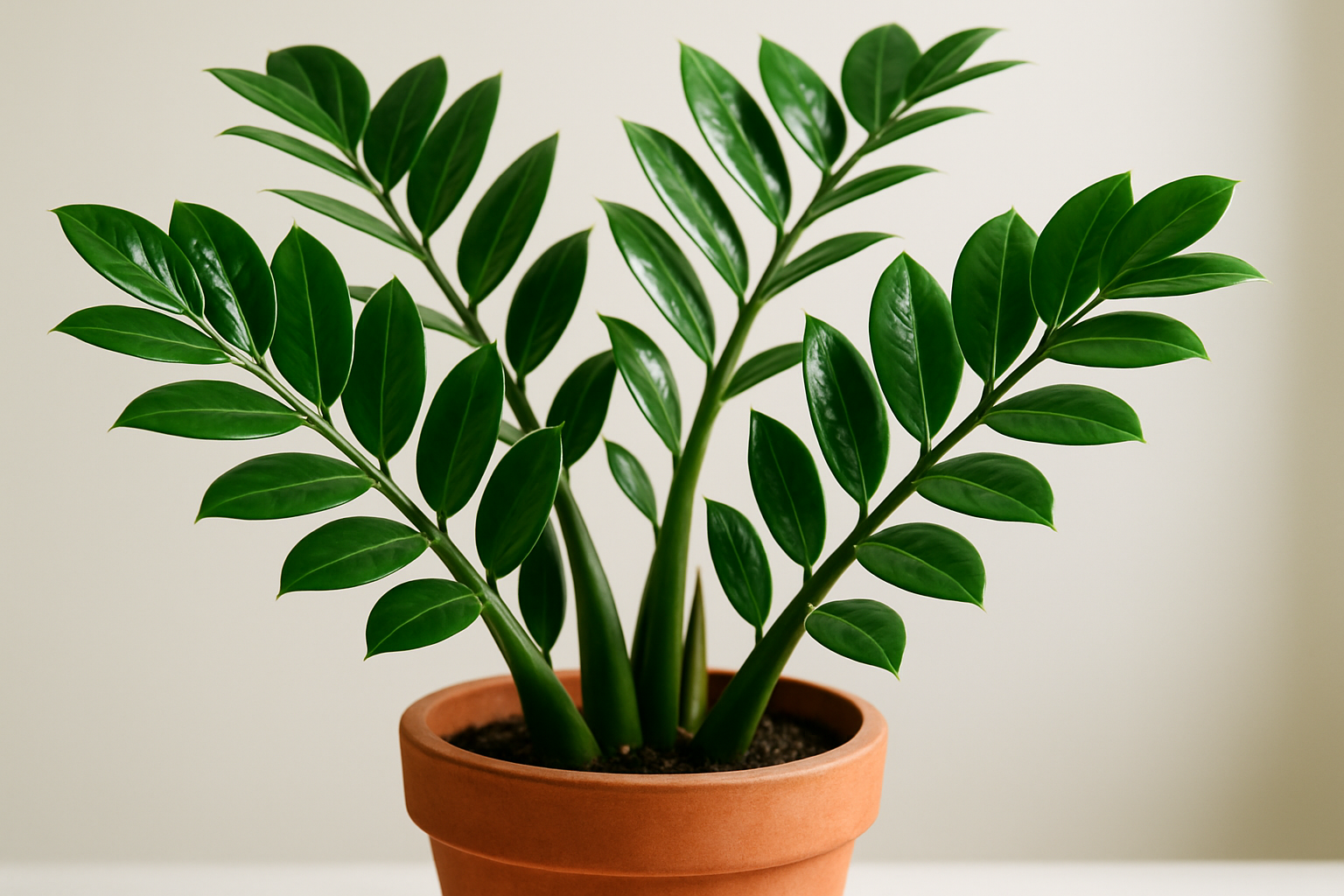
Meet the ZZ Plant: Africa's Almost-Unkillable Houseplant
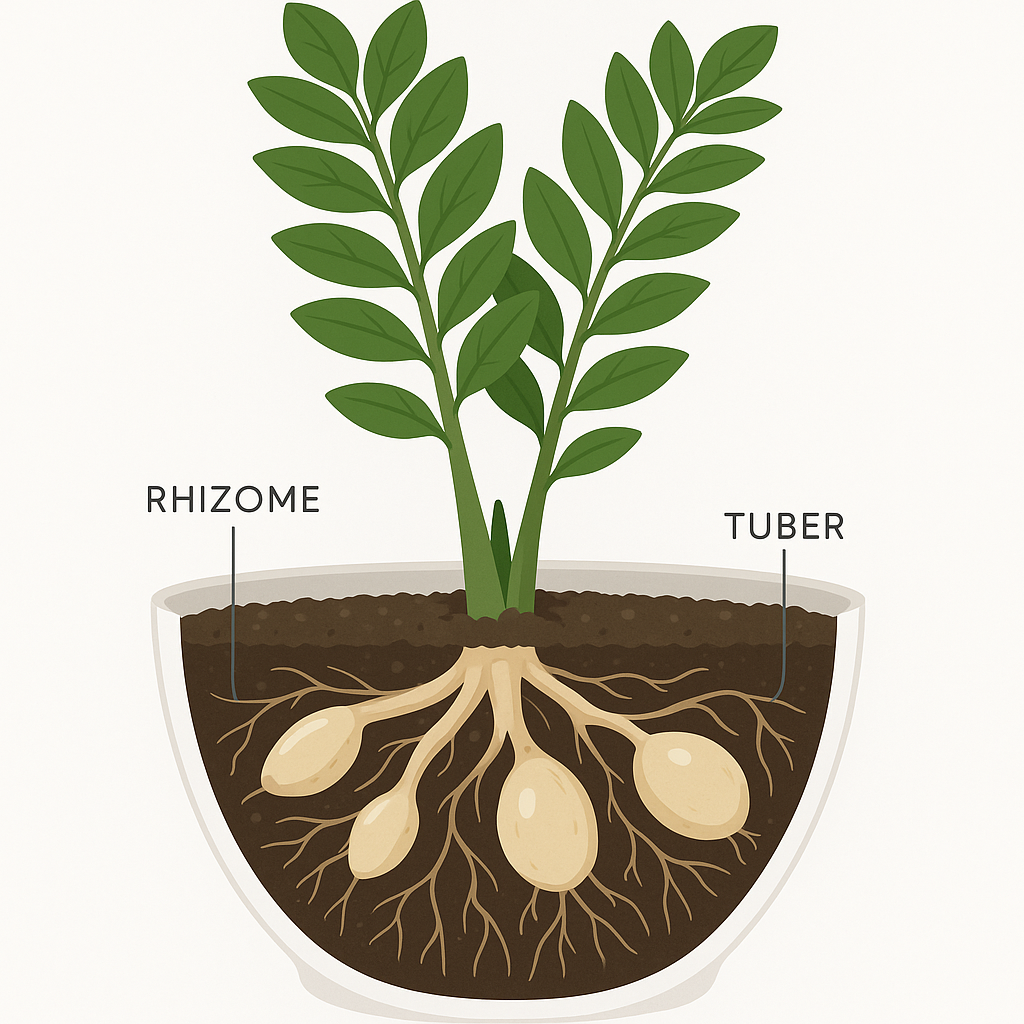
The ZZ plant (Zamioculcas zamiifolia) hails from the dry forests and savannas of eastern Africa — a region that taught this plant to survive conditions that would kill most houseplants. Under the soil, ZZ plants grow thick rhizomes: water-storing structures that function like internal reservoirs, letting the plant go weeks — sometimes a month or more — without a drink.
That's the real reason you can't kill a ZZ. It's not luck. It's botany.
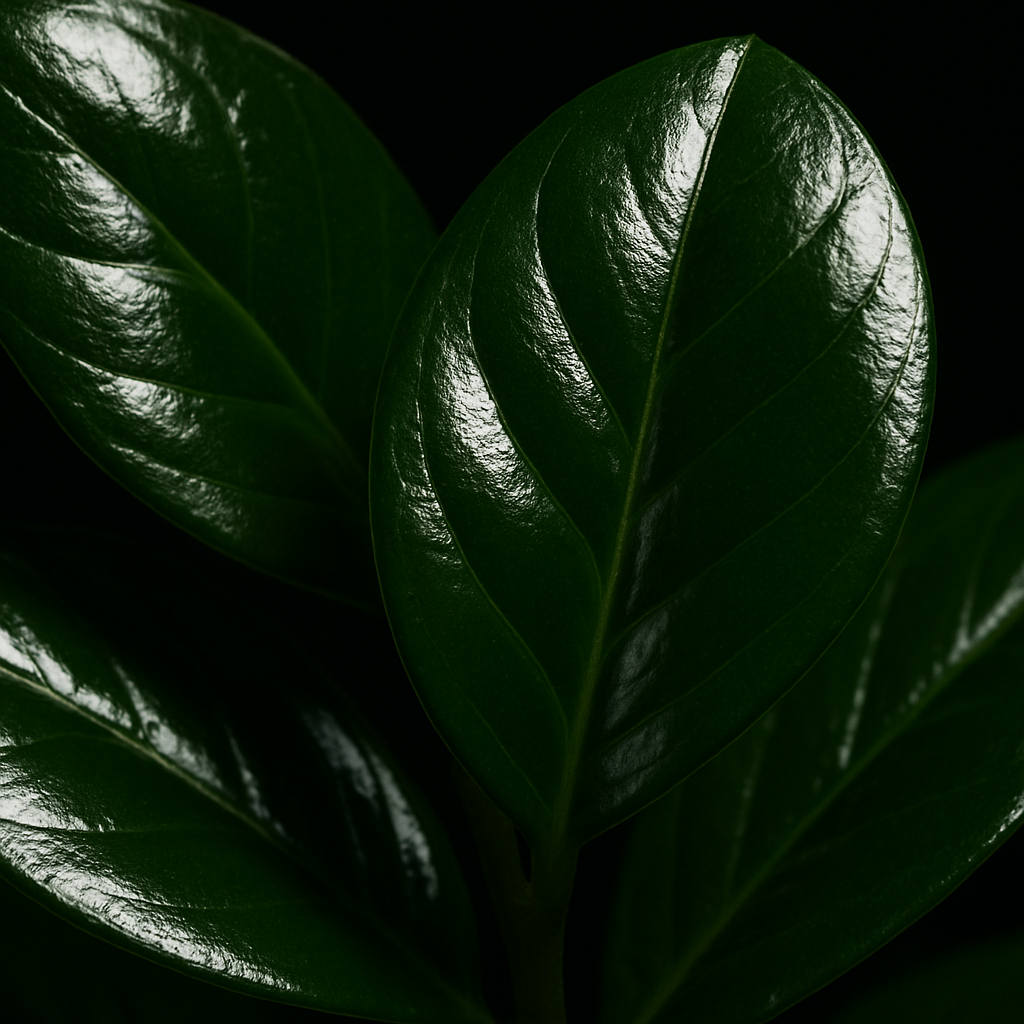
Above ground, the arching stems carry thick, waxy leaflets that反射 light and seal in moisture. That glossy coating isn't decorative — it's a drought adaptation that cuts down on evaporation, which is exactly why a ZZ can survive a vacation without a plant sitter.
Light Requirements: ZZ Plant Sunlight Needs
ZZ plants handle low light better than most houseplants. They survive dim corners, north-facing windows, and rooms without much natural light. That said, they won't refuse bright indirect light — and they'll grow faster and produce more stems in it.
The one light rule that matters: keep ZZ out of direct sun. Direct rays burn those glossy leaves, leaving brown scorch marks that don't heal. A few hours of morning sun through a sheer curtain is fine. Afternoon sun through a window? Too much.
Best Light Conditions for Raven and Variegated ZZ
The classic green ZZ tolerates the deepest shade. The Raven variety — with its near-black purple foliage — needs slightly more light to maintain that dramatic coloring. Put a Raven in a dark corner and it will slowly lose its dark pigmentation, fading toward green over time. Variegated ZZ, with its cream and green leaves, is the most demanding of the three — give it medium to bright indirect light to keep those markings distinct.
Watering the ZZ Plant: The #1 Mistake to Avoid
Overwatering is responsible for the majority of ZZ plant deaths. This is a plant that evolved to store water — so soggy soil is genuinely foreign and hostile to it. When in doubt, let the soil dry out completely between waterings.
The finger test is your best tool: Stick your finger 2 inches into the soil. If it comes out dry, water. If it feels damp at all, wait. In summer, that might be every two to three weeks. In winter, once a month or less is often plenty.
When you do water, water thoroughly — pour through until it drains from the bottom, then let the pot drain fully. Never let a ZZ sit in standing water.
Underwatering is less common and less dangerous. Signs include drooping or slightly shriveled leaves — give it a drink and it usually perks up within a day or two.
Overwatering is the threat. Watch for:
- Yellowing leaves, starting from the bottom
- Mushy or soft stems at the base
- A musty smell from the soil
- Water that sits on the surface and doesn't absorb
If you catch it early, stop watering, improve airflow, and let the soil dry out. If the rhizomes have turned mushy and dark, you may be dealing with root rot that needs intervention.
Soil and Drainage: What to Plant Your ZZ In
ZZ plants need a well-draining cactus and succulent mix. The stuff that stays wet for a week after watering will suffocate those rhizomes and invite rot. Cactus and succulent soil is formulated to drain fast — exactly what ZZ wants.
For an even better DIY mix, combine two parts standard potting soil with one part perlite. The perlite keeps the mix loose and fast-draining, and it won't break down over time like some organic amendments.
The one pot type we always recommend for ZZ: terracotta with a drainage hole. Terracotta wicks moisture from the soil and lets it evaporate faster than plastic or ceramic. ZZ loves that. If you use a decorative pot without a hole, you're setting yourself up for trouble.
Whatever pot you choose, make sure it has at least one drainage hole and never let the pot sit in a saucer full of water. Those rhizomes will rot fast in standing water.
Temperature and Humidity
ZZ plants handle average room temperatures fine — 65–85°F is the comfort zone. The main thing to watch: cold drafts and AC vents. A drafty window in winter or a direct blast from a vent can shock a ZZ, causing leaf curl and drop. If you keep your home around normal room temperature, you're good.
Humidity is not a concern. ZZ tolerates dry air without complaint — no misting, no humidifier, no special setup. It's one of the most humidity-forgiving houseplants you can own.
Fertilizer: Feeding Your ZZ Plant
ZZ plants are light feeders. They don't need much, and over-fertilizing is a real risk. Use a balanced houseplant fertilizer (such as 10-10-10) at half strength just once or twice during the growing season — spring and summer. That's it. Skip fertilizer entirely in fall and winter when growth naturally slows.
More fertilizer does not equal more growth. It equals salt buildup in the soil, which burns roots and leaves, producing brown crispy tips. When in doubt, under-feed.
ZZ Plant Varieties: Classic, Raven, Variegated, and More
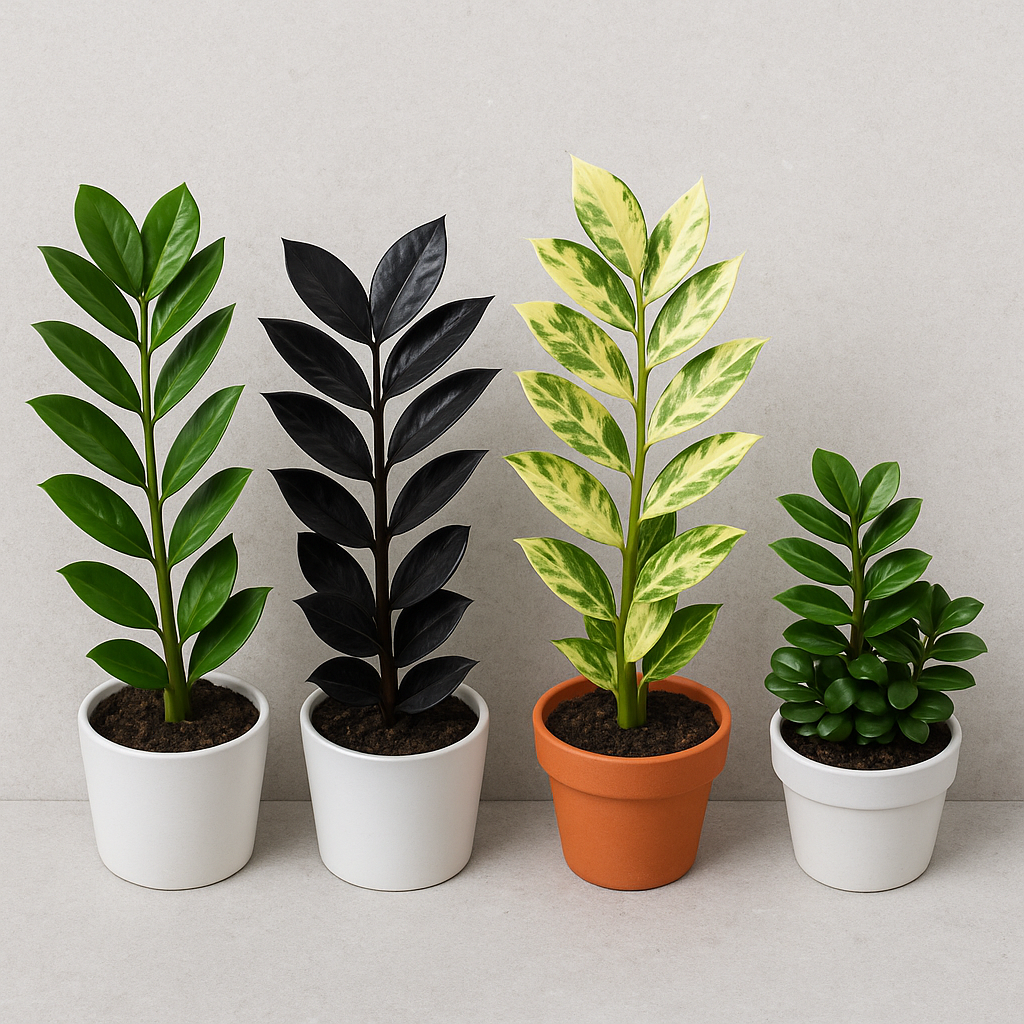
Not all ZZ plants are created equal — the variety you choose affects both aesthetics and care slightly. Here's the rundown:
| Variety | What It Looks Like | Special Care Notes |
|---|---|---|
| Classic Green ZZ | Dark green, glossy, arching stems | Most forgiving; tolerates the lowest light |
| Raven ZZ | Near-black/purple foliage, dramatic | Needs slightly more light to maintain dark color; more expensive |
| Variegated ZZ | Cream and green marbled leaves | Rarest and most expensive; needs the most light to keep variegation |
| Zenzi ZZ | Compact, smaller leaflets, denser growth | Dwarf variety; same care as classic, just smaller |
| Lucky ZZ | Compact variety with ruffled leaflets | Small footprint; good for desks and shelves |
| Gem ZZ | Dark green, semi-compact | Similar to classic, slightly more refined look |
If you're shopping for a live plant, check available ZZ varieties on Amazon — the classic green is the most affordable and widely available, while Raven and variegated command a premium.
The Raven variety has exploded in popularity thanks to social media aesthetics — the dark, moody look fits perfectly with the "dark academia" and moody interior trends. If that's your vibe, it's worth the extra cost. Just give it a bit more light than the classic green.
Troubleshooting: What's Wrong With My ZZ Plant?
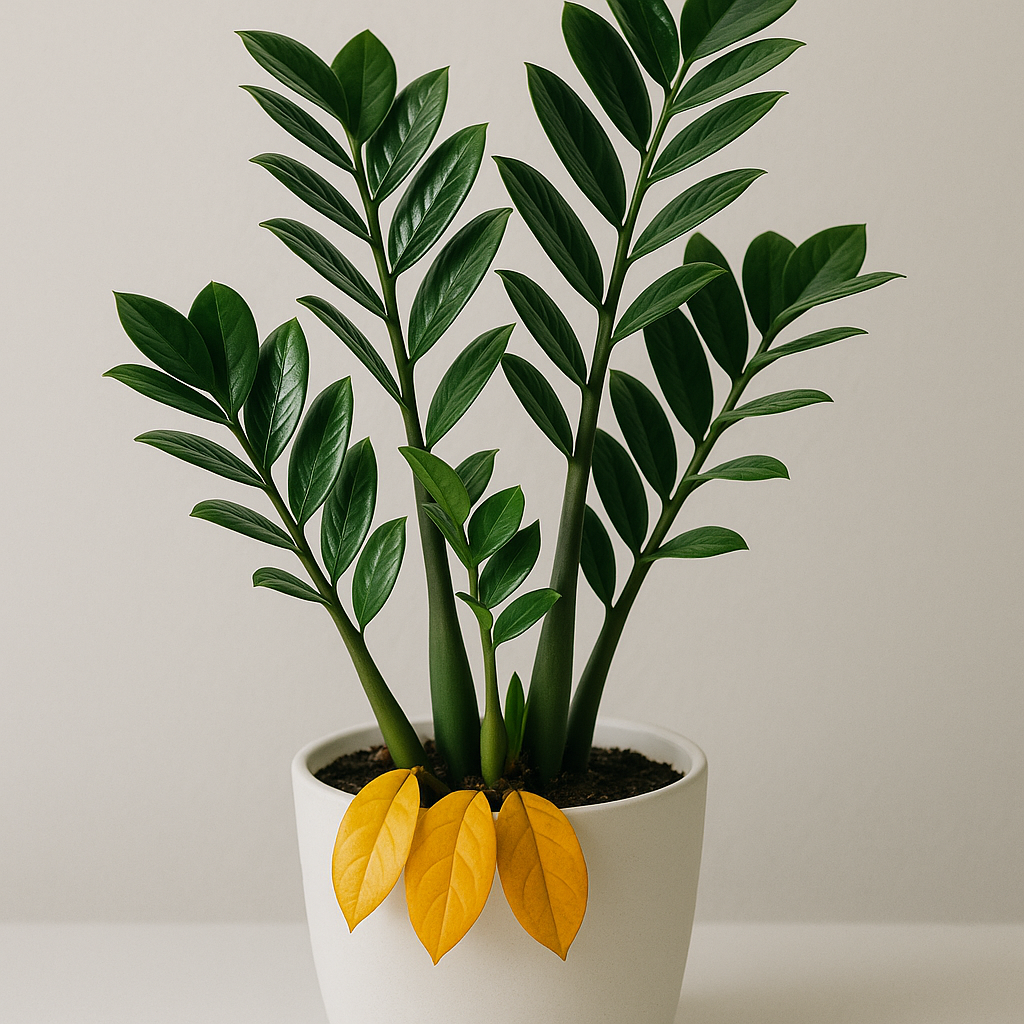
Yellowing leaves — by far the most common ZZ complaint. In virtually every case, this means overwatering. Check: Is the soil drying between waterings? Is the pot draining fully? Are the roots mushy or dark-smelling? If yes to the last two, you may have root rot — remove the plant, cut away affected rhizomes, and repot in fresh dry mix. See our Watering Guide for prevention tips.
Drooping leaves — usually means underwatering. Check the soil: is it bone dry? Give it a thorough watering and it should bounce back within 24-48 hours. If the soil is wet and the plant is drooping, you may be dealing with root rot instead.
Brown tips — usually one of three things: direct sun burn (move back from the window), salt buildup from too much fertilizer (flush the soil with plain water), or dry air (rarely a problem for ZZ, but heating vents can do it).
Slow or no growth — ZZ plants are slow growers. A few new stems per year is normal. If growth has stopped entirely, it might want more light or a bigger pot. Spring and summer are the active growing seasons — don't expect much in fall and winter.
Leaf drop — sudden leaf loss usually points to a temperature shock: a cold draft, a window left open on a freezing night, or an AC vent blowing directly on the plant. Move it to a more stable location and it should stabilize.
Is the ZZ Plant Toxic? What You Need to Know
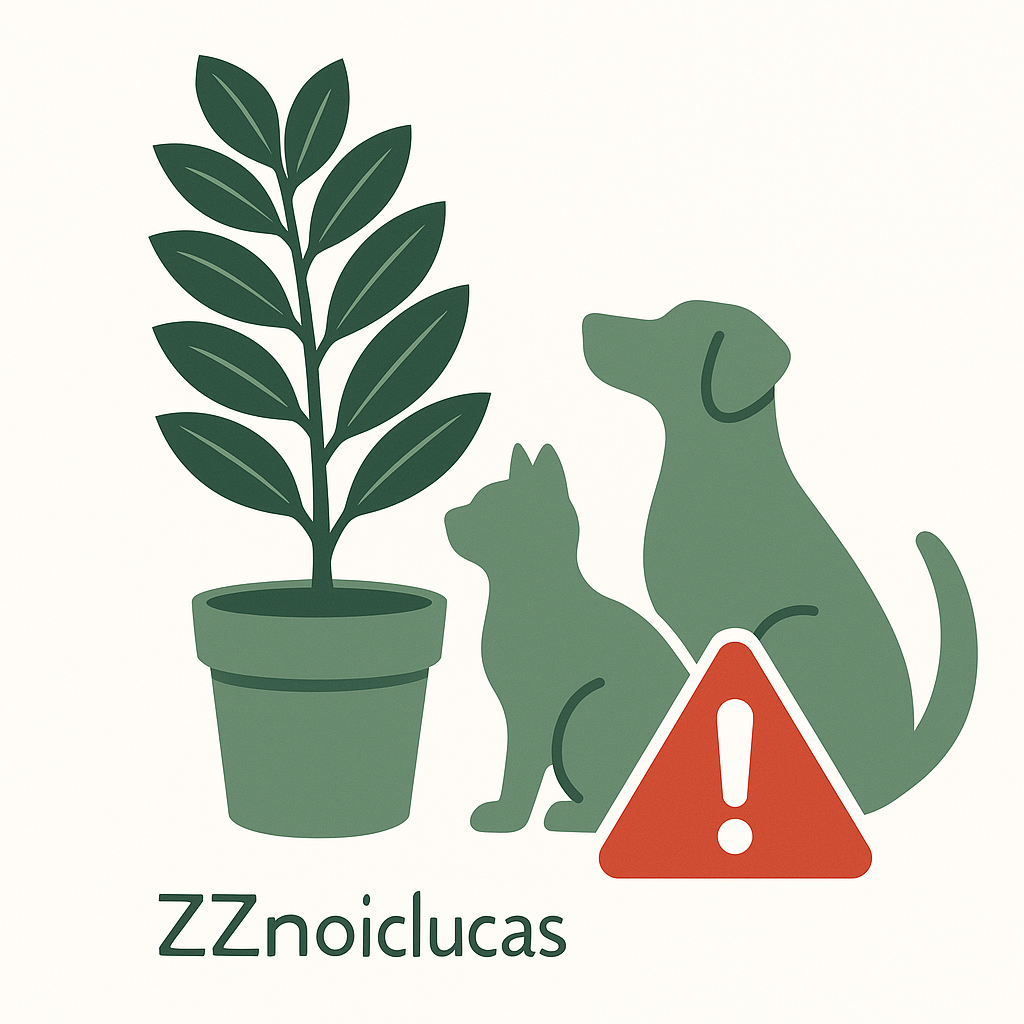
Yes — ZZ plants are toxic to both pets and humans.
ZZ contains calcium oxalate crystals (called raphides) in all parts of the plant: leaves, stems, rhizomes, and flowers. If chewed, these crystals cause immediate irritation to the mouth, tongue, and lips — burning, drooling, and difficulty swallowing. In pets, it can cause vomiting and lethargy. In humans, it's uncomfortable but rarely serious unless large amounts are ingested.
The reaction is fast and unpleasant, which is actually nature's way of preventing serious poisoning — animals and kids usually stop chewing after the first bite. But this isn't something to be casual about, especially in homes with curious pets or toddlers who put everything in their mouths.
Symptoms if ingested:
- Burning mouth and lips
- Excessive drooling (pets)
- Vomiting and difficulty swallowing
- Pawing at the mouth (pets)
If you suspect your pet has chewed a ZZ, rinse their mouth with water and contact your vet. For humans, rinse the mouth and don't swallow.
Pet-safe alternatives: If you want the architectural look of a ZZ without the toxicity, consider a Spider Plant, Parlor Palm, or Calathea. All are non-toxic and much safer for homes with pets or small children.
How to Propagate a ZZ Plant
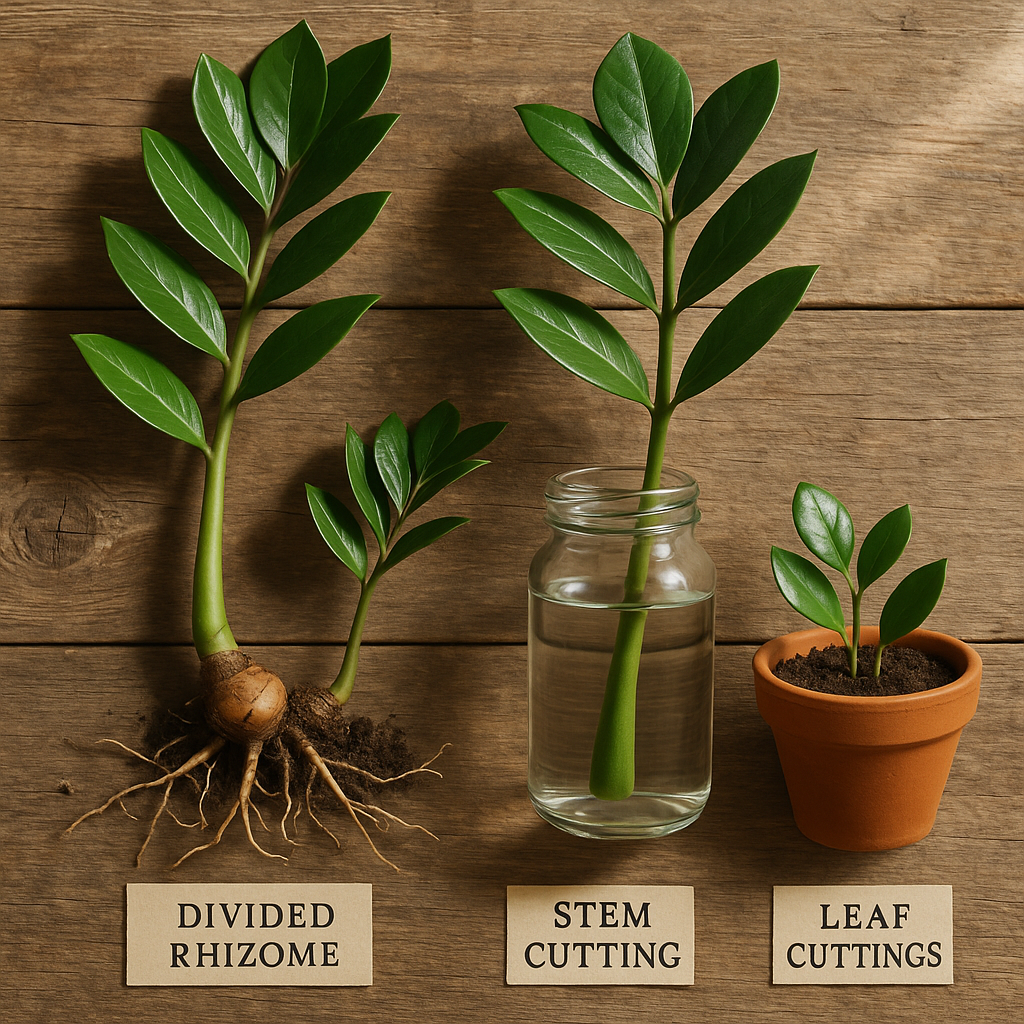
ZZ propagation is slow but doable — it just requires patience. There are three methods, ranked by speed:
Rhizome division (fastest): When repotting, gently separate the rhizomes and pull the plant into sections, each with its own roots and at least one stem. Replant each division in its own pot with fresh soil, water lightly, and you're done. New growth appears within a few weeks. This is the easiest and fastest method.
Stem cuttings in water (medium): Cut a healthy stem at the base, remove the bottom leaflets, and place the cut end in a jar of water. Change the water every week or so. Roots will form in 2-4 months. Once roots are a few inches long, transfer to soil. This method is satisfying because you can watch the roots develop, but it's slower than division.
Leaf cuttings in soil (slowest): Twist off a few individual leaflets, let the cut end dry for a day, and place the leaflet base into a small pot of damp cactus mix. Bury it about half an inch deep. Keep it barely moist. This takes the longest — roots and tiny rhizomes can take 6-12 months to form. The payoff is you can get many plants from one ZZ, but you need serious patience.
No matter which method you choose, keep the new plant in bright indirect light and resist the urge to overwater. ZZ rhizomes are prone to rotting when they're young and establishing. For more detail on general propagation techniques, see our Propagation Guide.
Repotting Your ZZ Plant
ZZ plants like to be slightly root-bound. Don't rush to repot — wait until you see roots coming out of the drainage hole, the plant is lifting out of the pot, or water runs straight through without absorbing (meaning the soil has degraded). When it's time, go up only 1-2 inches in pot diameter. A pot that's too big holds excess moisture and increases the risk of root rot.
Best time to repot: Spring or summer, when the plant is in its active growing phase and can recover faster. Avoid repotting in fall or winter when growth has slowed.
For a full breakdown of pot types and what works best, see our Best Pots for Houseplants guide. We recommend terracotta with a drainage hole for ZZ — it promotes the fast-drying conditions these plants love.
ZZ Plant FAQ
How often should I water my ZZ plant? Water when the top 2 inches of soil are completely dry — typically every 2-3 weeks in summer and monthly (or less) in winter. Always check with your finger first. Overwatering is the #1 cause of ZZ death.
Is ZZ plant toxic to cats and dogs? Yes. ZZ contains calcium oxalate crystals that cause mouth irritation, drooling, and stomach upset if chewed. Keep ZZ plants out of reach of pets and young children. Non-toxic alternatives include Spider Plant and Parlor Palm.
Can ZZ plants grow in low light? ZZ plants tolerate low light better than almost any other houseplant. They won't love it — growth will slow — but they'll survive. Bright indirect light is ideal.
How do you propagate a ZZ plant? The fastest method is rhizome division when repotting. Stem cuttings in water take 2-4 months to root. Leaf cuttings are the slowest — allow 6-12 months for new rhizomes to form.
Why is my ZZ plant turning yellow? Yellowing lower leaves almost always indicate overwatering. Check the soil moisture and roots — if they're mushy or smell bad, root rot may have set in. Reduce watering and ensure the pot has good drainage.
What are the different ZZ plant varieties? Major varieties include: Classic green ZZ (most forgiving), Raven ZZ (near-black foliage, more light), Variegated ZZ (rare, cream and green, most demanding), Zenzi ZZ (compact dwarf), Lucky, and Gem. Care is similar across all — slight light requirement differences.
How fast do ZZ plants grow? ZZ plants are slow growers. Expect a few new stems per year under normal indoor conditions. In brighter light with proper care, you may see slightly faster growth, but don't expect anything dramatic.
Do ZZ plants need fertilizer? Not really. A light feeding with balanced houseplant fertilizer at half strength once or twice during spring and summer is plenty. Over-fertilizing causes salt buildup and root burn.
Products Mentioned
We use and recommend these products: