💧 Watering Guide
How to stop drowning your plants in love
The Uncomfortable Truth
Overwatering kills more houseplants than underwatering. It's not even close.
New plant parents see a droopy leaf and reach for the watering can. But here's the thing: drooping can mean too much water OR too little. And if you guess wrong, you just made it worse.
This guide will teach you to stop guessing.
The Golden Rule
Water based on soil moisture, not a schedule.
"Water every Sunday" sounds simple, but it ignores everything that affects how fast soil dries:
- Season (summer = thirsty plants, winter = not so much)
- Humidity (dry air = faster drying)
- Pot size (small pots dry in days, big pots take weeks)
- Light (more light = more water use)
- Plant type (succulents vs ferns = totally different needs)
A schedule can't account for any of this. Checking the soil can.
How to Check Soil Moisture
The Finger Test (Free)
Stick your finger 1-2 inches into the soil.
- Feels moist? Don't water.
- Feels dry? Probably time to water.
- Can't tell? Wait another day.
This works for most tropical houseplants. For succulents, go deeper (they need to dry out completely).
Other Free Methods
- Pot weight: Lift the pot. Heavy = wet. Light = dry. You'll learn what "dry weight" feels like.
- Chopstick test: Stick a wooden chopstick in the soil, leave for a minute. Pulls out damp? Still wet.
Moisture Meters
If you want to take the guesswork out:
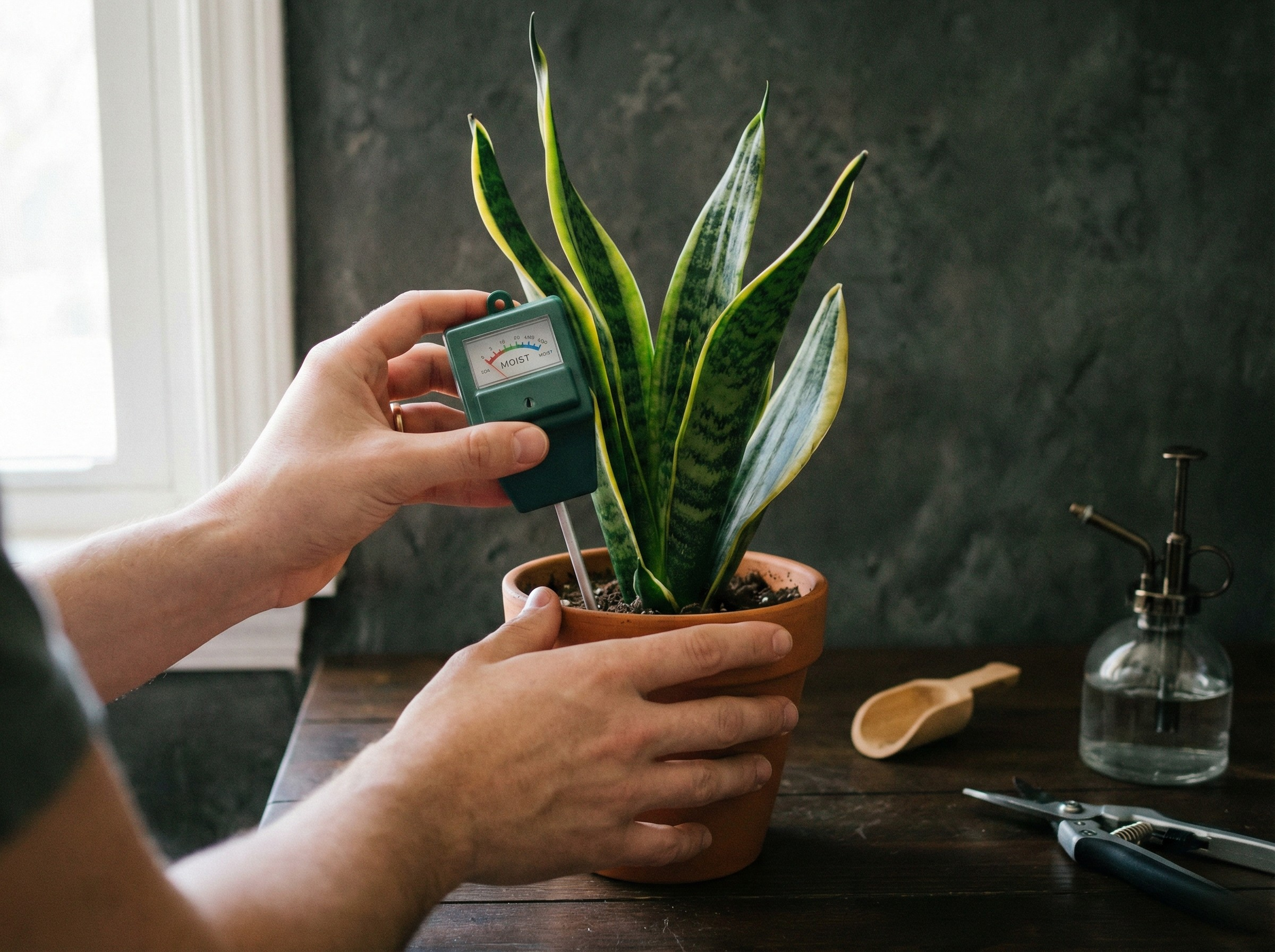
Dr.meter Soil Moisture Meter (~$13) →
Pros: No batteries, instant read, good for deep pots where your finger can't reach.
Cons: Not laboratory-accurate, can rust over time if left in soil.
Use it as a guide, not gospel. "Dry" on the meter + your finger says dry = definitely water.
Watering Frequency by Plant Type
| Plant Type | When to water | Notes |
|---|---|---|
| Succulents/Cacti | Completely dry (all the way down) | Weeks between waterings is normal |
| Snake Plant/ZZ | Mostly dry | Drought-tolerant, err on dry side |
| Pothos/Philodendron | Top 1-2" dry | Forgiving, will droop when thirsty |
| Monstera | Top 1-2" dry | Likes consistency |
| Ferns | Just barely dry on top | Don't let fully dry out |
| Calathea | Lightly moist | Drama queens, hate drying out AND being soggy |
| Fiddle Leaf Fig | Top 2" dry | Hates change, find a routine |
What Affects Watering Frequency
Pot Size
- Small pots (2-4"): Dry fast, check every few days
- Medium pots (5-8"): Check weekly
- Large pots (10"+): Can go 2+ weeks, don't rush it
Pot Material
- Terracotta: Porous, wicks moisture away, dries faster. Great if you tend to overwater.
- Plastic/glazed ceramic: Retains moisture longer. Be more careful.
- No drainage hole: Danger zone. Use a nursery pot inside instead.
Season
- Summer: Plants are actively growing, drink more
- Winter: Growth slows dramatically, water way less often
- Heating season: Air is dry, but plants still need less water (don't overcompensate)
Light Level
- Bright light: More photosynthesis = more water use
- Low light: Slower metabolism = slower drying = water less
How to Actually Water
Top Watering (Standard Method)
- Water slowly and evenly over the soil surface
- Keep going until water runs out the drainage holes
- Let excess drain completely
- Empty the saucer after 30 minutes
The point: You want water to reach all the roots, then leave. No sitting in puddles.
Bottom Watering (Sometimes Better)
- Fill a tray or basin with a few inches of water
- Set the pot in the water
- Wait 15-30 minutes
- Remove when the top of the soil feels moist
When to bottom water:
- Soil has become hydrophobic (water just runs down the sides)
- You have fungus gnats (keeps the top layer dry)
- Plants that don't like wet leaves
Signs of Over vs Underwatering
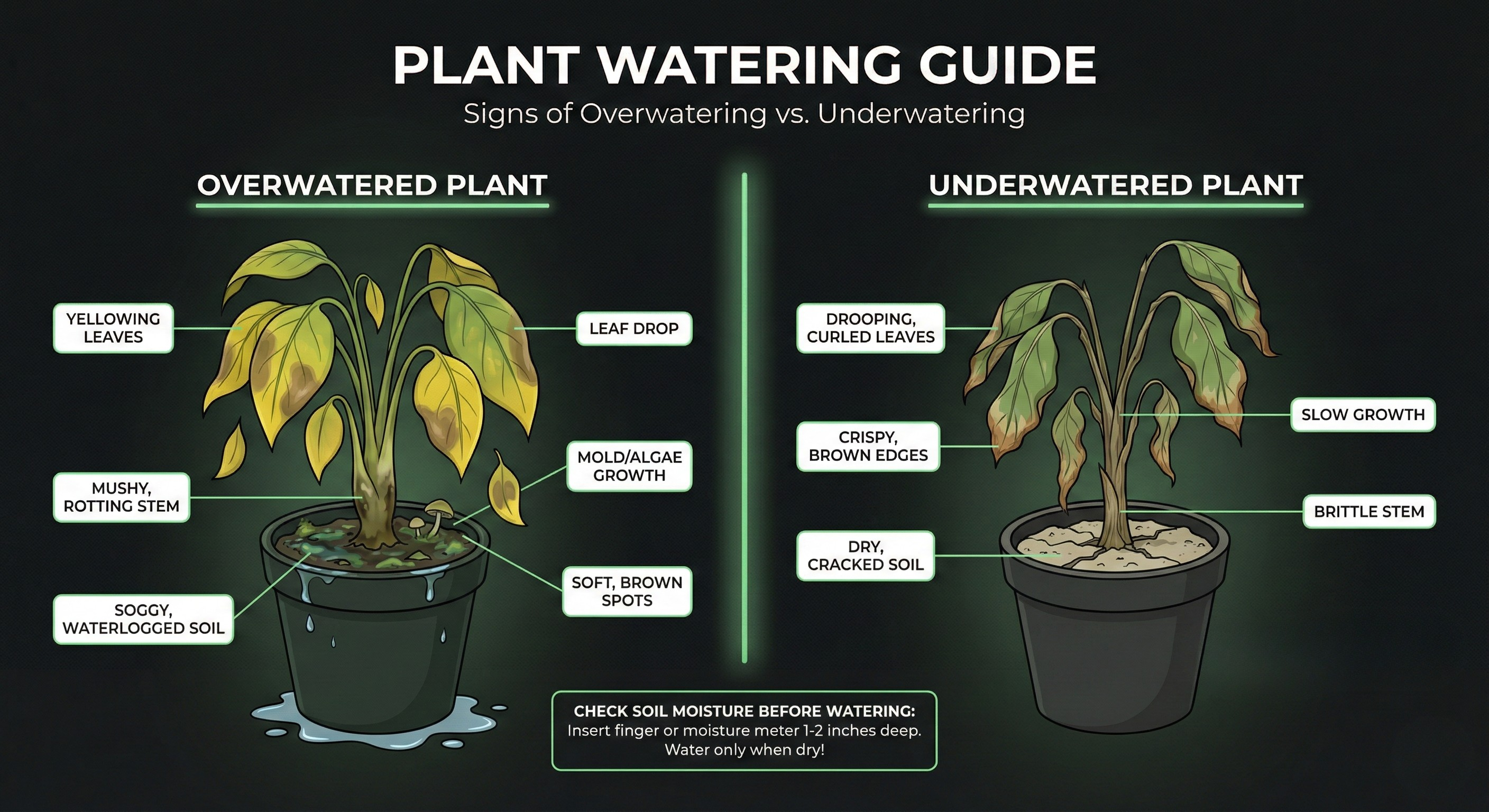
Signs You're Overwatering
- Yellow leaves (often lower leaves first)
- Mushy, soft stems
- Fungus gnats swarming the soil (they love wet soil)
- Soil stays wet for days after watering
- Moldy soil surface
- Root rot (pull out the plant: brown, mushy roots = dead roots)
Signs You're Underwatering
- Wilting or drooping (leaves go limp)
- Crispy brown leaf edges
- Curling leaves (trying to reduce surface area)
- Soil shrinking away from pot edges
- Very lightweight pot
One common symptom of underwatering is crispy edges on leaves — our calathea crispy edges guide covers this issue in detail and how to fix it.
The good news: most underwatered plants bounce back within hours of a good drink. They're dramatic, not dying.
The Drainage Commandment
Always use pots with drainage holes.
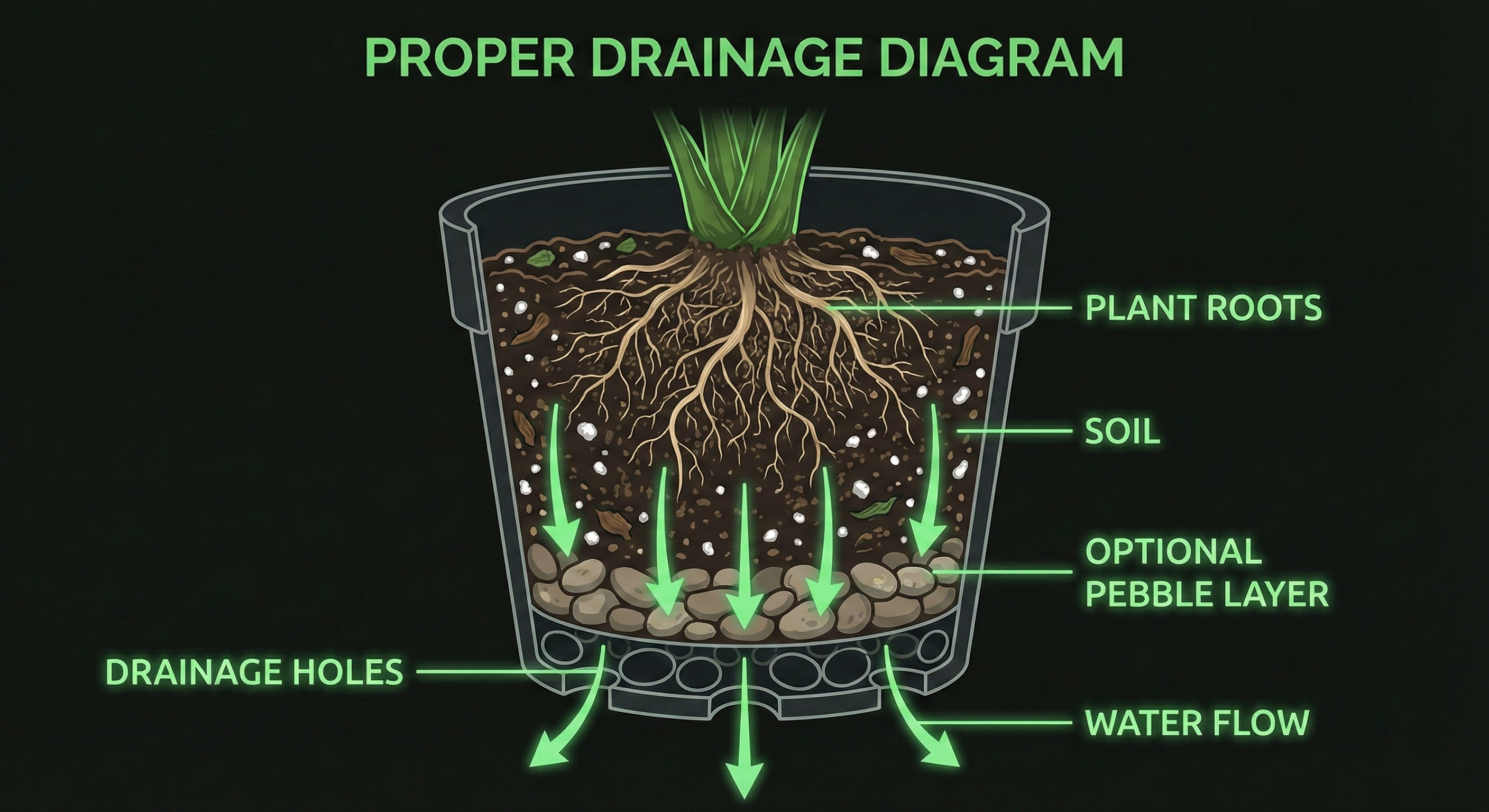
No drainage = water pools at the bottom = roots sitting in swamp = root rot = dead plant.
"But my cute decorative pot doesn't have holes!"
Solution: Keep your plant in a plastic nursery pot with drainage. Set that inside your pretty pot (this is called a cachepot). When you water, pull the nursery pot out, water over a sink, let it drain, put it back.
Tools Worth Having
Moisture Meter
Dr.meter Soil Moisture Meter →
Takes the guesswork out, especially for big pots.
Long-Spout Watering Can
Baffect 1L Indoor Watering Can →
Precise watering, less splashing, reaches into crowded plant shelves.
Self-Watering Stakes (For Travel)
REMIAWY Plant Watering Globes →
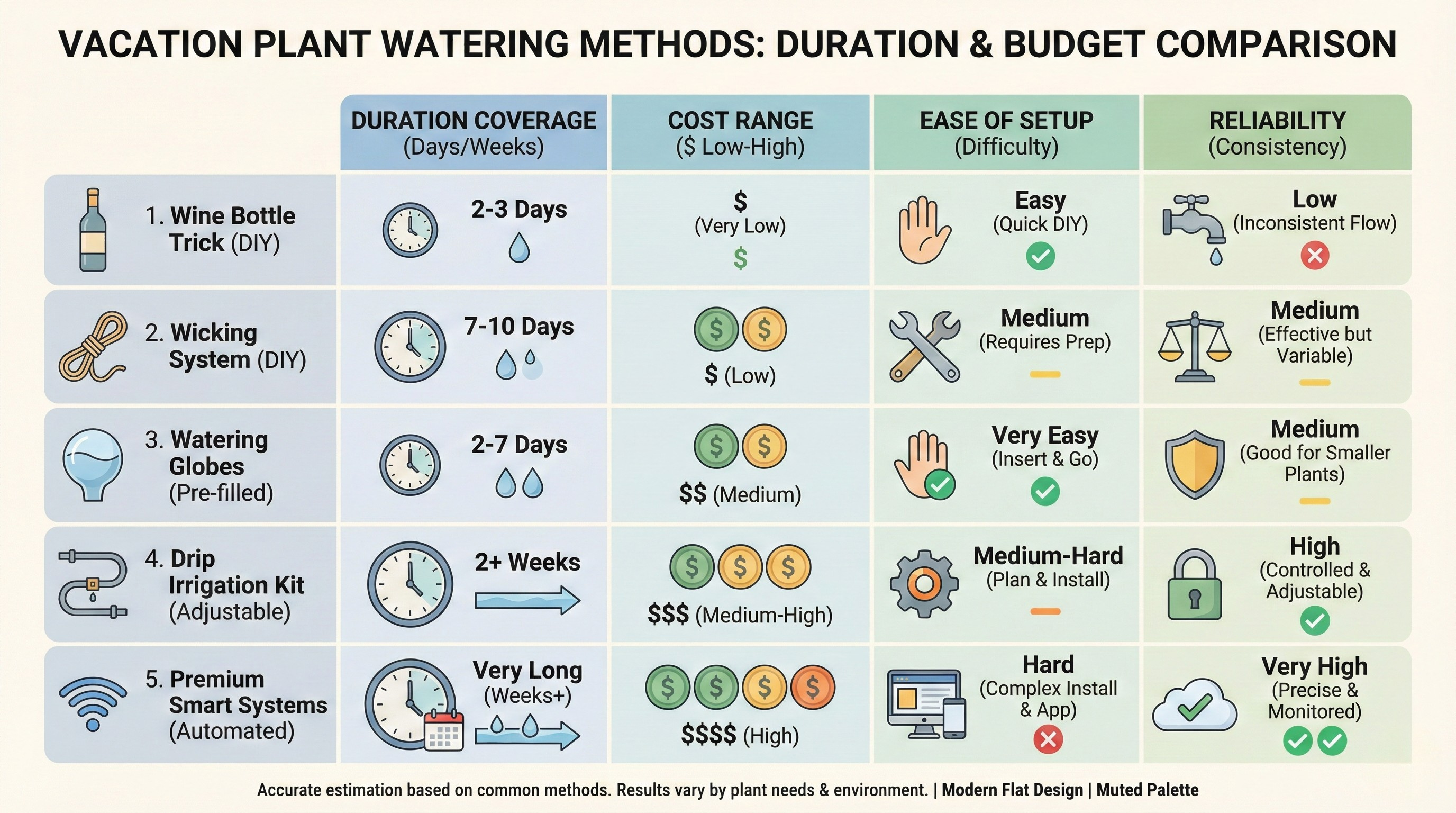
Going on vacation? These slowly release water over 1-2 weeks. Not perfect, but better than nothing.
Quick Reference
Check soil before watering. Always.
How to water: Thoroughly, until drainage. Then stop.
Overwatering signs: Yellow leaves, mushy stems, fungus gnats, perpetually wet soil.
Underwatering signs: Drooping, crispy edges, curling leaves, bone-dry soil.
When in doubt: Don't water yet.