Thai Constellation Monstera Care Guide — Stable Variegation Worth the Price
The variegated Monstera that won't ghost you after you spend $200.
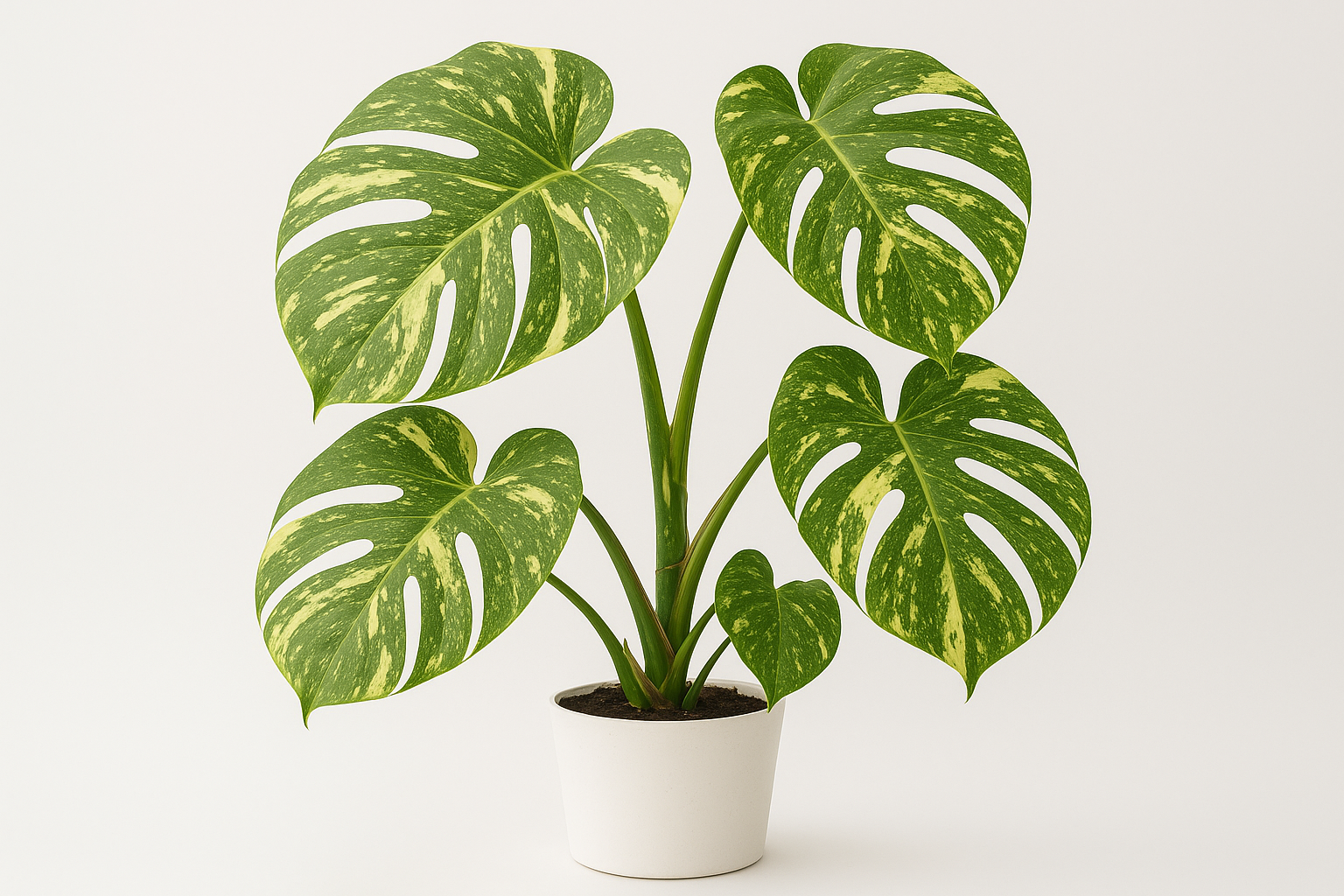
What Makes Thai Constellation Special
If you've been drooling over variegated Monsteras on Instagram, you've probably seen two main players: the Thai Constellation and the Albo Borsigiana. Both are stunning. Both cost more than your rent. But here's the thing — they're not created equal.
The Thai Constellation (Monstera deliciosa 'Thai Constellation') is a tissue-cultured variegated variety that emerged from a laboratory in Thailand in the 1990s. Unlike the Albo, which is a spontaneous sport (basically a genetic lottery winner), Thai Con was intentionally bred for stability.
Stable Variegation Explained
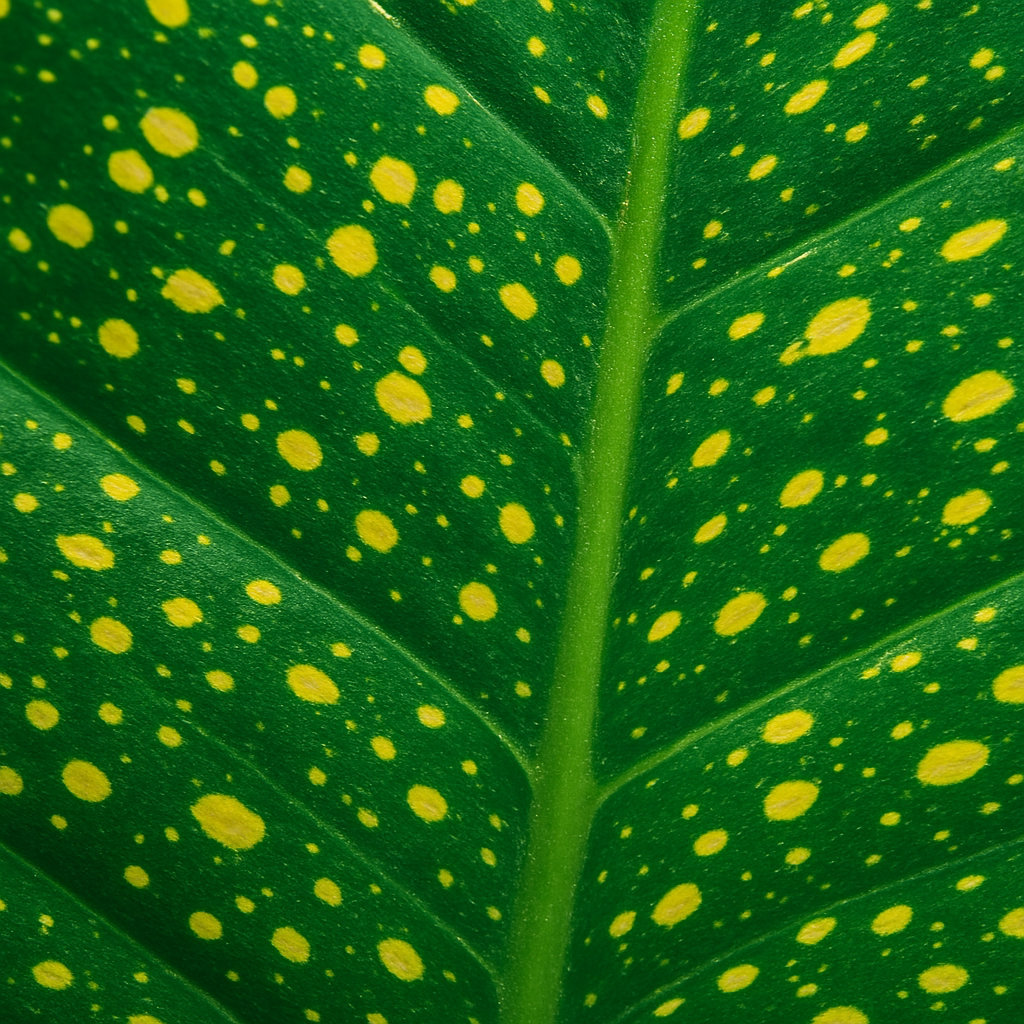
Here's the deal: Thai Con has sectoral variegation — meaning the yellow coloring appears in distinct patches or sectors across the leaf, rather than in random splashes. This variegation is stored in the plant's meristematic tissue, which means it's genetically stable. When new leaves emerge, they carry that variegation with them.
Albo, on the other hand, has random chimeric variegation — the white patches are essentially a genetic mutation that some cells carry and others don't. When you propagate an Albo, you're rolling the dice. Sometimes you get a stunning white-leafed plant. Sometimes you get a revert that looks like a regular Monstera.
The bottom line: Thai Con is less likely to revert than Albo. That's not a guarantee — reversions can still happen — but the odds are significantly better.
Thai Constellation vs Albo: Which Should You Choose?
This is the question everyone asks before dropping $150+ on a single plant. Let's break it down:
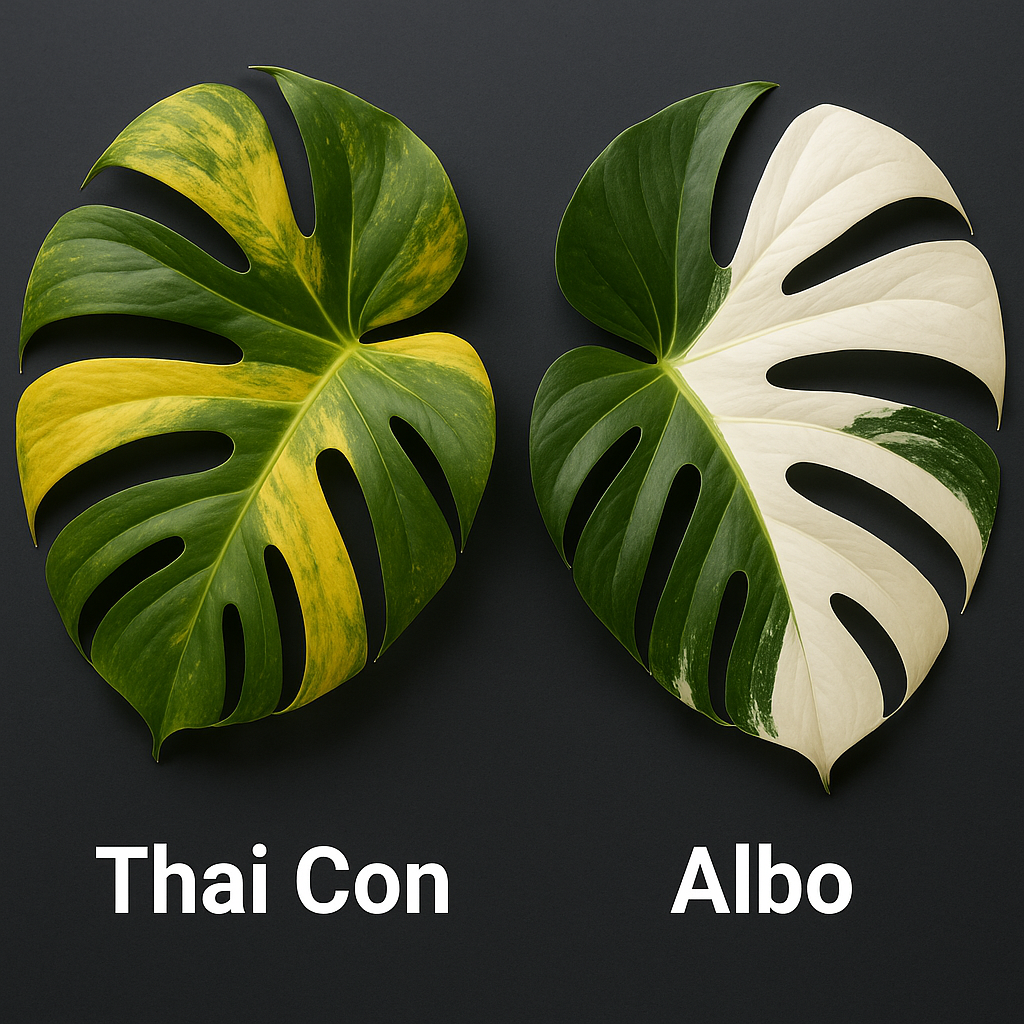
Variegation Type: Yellow vs White
- Thai Constellation: Yellow/gold variegation. Think warm, buttery, almost like the sun got spilled on the leaves.
- Albo: White/cream variegation. Stark, high-contrast, Instagram-famous.
The Albo's white variegation is flashier, but it's also biologically weaker. White = no chlorophyll. No chlorophyll = the leaf can't photosynthesize as effectively. This makes Albo slower growing and more prone to crisping or dying back.
Care Difficulty Comparison
- Thai Con: Slightly more forgiving. The yellow variegation still contains some chlorophyll, so the leaves can photosynthesize better than white variegation.
- Albo: More demanding. Those white sections are energy drains, and the plant needs more light to compensate.
If you're new to variegated Monsteras, Thai Con is the easier choice. It's less likely to throw a tantrum when conditions aren't perfect.
Price & Value
Yes, Thai Con is expensive. A single rooted cutting runs $100-200 depending on the variegation. But here's the thing — Albo is more expensive, often $200-400 for a cutting with decent variegation. And you're taking a bigger risk with reversion.
For the price-conscious buyer who wants variegation without the anxiety, Thai Con wins on value.
Light Requirements: Bright Indirect is Key
Thai Con needs bright indirect light to maintain its variegation and produce those gorgeous fenestrated leaves. Not direct sun — that'll burn those yellow patches right off. But not low light either, because the plant needs energy to fuel all that variegation.
Ideal setup: An east-facing window, or a few feet back from a south/west window with sheer curtains. You want light that's bright enough to read a book by, but not so bright you're squinting.
Signs of too much light:
- Yellow leaves or variegation turning brown
- Scorched patches on the leaves
- Fading variegation
Signs of too little light:
- Slow growth (or no growth)
- New leaves coming out smaller
- Variegation fading or turning more green
- No fenestrations (the natural holes in Monstera leaves)
If your space doesn't have enough natural light, a grow light can help. Just keep it about 12-18 inches from the plant and run it for 10-12 hours a day.
Watering: The Goldilocks Approach
Here's where most people kill their Thai Con: overwatering. This plant is not as forgiving as a pothos. The chunky mix dries faster, sure, but if you're watering on a strict schedule instead of checking the soil, you're going to run into root rot.
How Often to Water
Forget "once a week." That's a recipe for either underwatering or overwatering depending on your conditions. Instead:
- Check the soil. Stick your finger 2 inches in. If it's dry, water. If it's still moist, wait.
- Use the weight test. Lift the pot. If it feels light, water. If it's still heavy, wait.
- Get a soil moisture meter. Because sometimes it's hard to tell.
Shop Soil Moisture Meters on Amazon
Signs of Overwatering
- Yellow leaves (especially lower/mature leaves first)
- Mushy stems
- Soil staying wet for more than a week
- Root rot smell (sour, swampy)
Root Rot Prevention
If you catch root rot early, you can salvage the plant by cutting away the rotted roots, treating with hydrogen peroxide (1:1 mix with water), and repotting in fresh, dry soil. But prevention is way easier than cure.
The fix: Chunkier soil mix + watering only when dry + a pot with drainage holes. That's it.
Humidity & Temperature: Tropical Needs
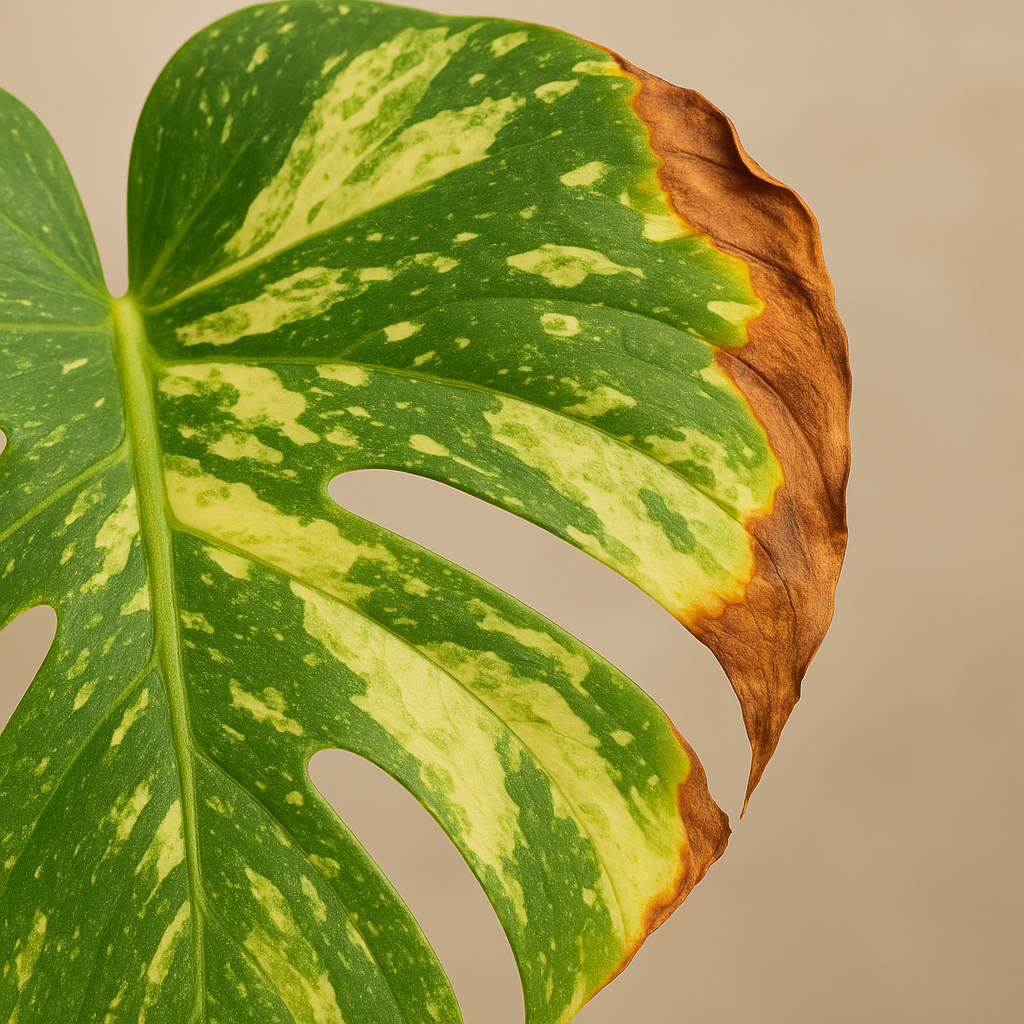
Thai Con is a tropical plant, and it wants humidity to match. We're talking 60%+ humidity ideally. In most homes, especially with AC or heating running, the humidity hovers around 30-40%. That's not enough for a happy Thai Con.
Ideal Humidity Range
- 60-70%: The sweet spot. Your plant will thrive.
- 50-60%: Acceptable, but watch for brown tips.
- Below 50%: Expect crispy edges and slower growth.
Brown Tips Solutions
That crispy, brown edges? That's the plant telling you the air is too dry. You have options:
- Get a humidifier. This is the most effective solution.
- Group plants together. They create a microclimate through transpiration.
- Use a pebble tray. Not super effective, but it helps a little.
- Move to a bathroom or kitchen. These rooms are naturally more humid.
Shop Levoit Humidifiers on Amazon
Temperature Guidelines
Keep your Thai Con in a space that's 65-80°F (18-27°C). Avoid cold drafts from windows or AC vents in winter. If you're comfortable, your plant is probably comfortable too.
Soil Mix & Potting
Regular potting soil is a death sentence for Thai Con. It holds too much water, the roots can't breathe, and you've got root rot before you know what happened.
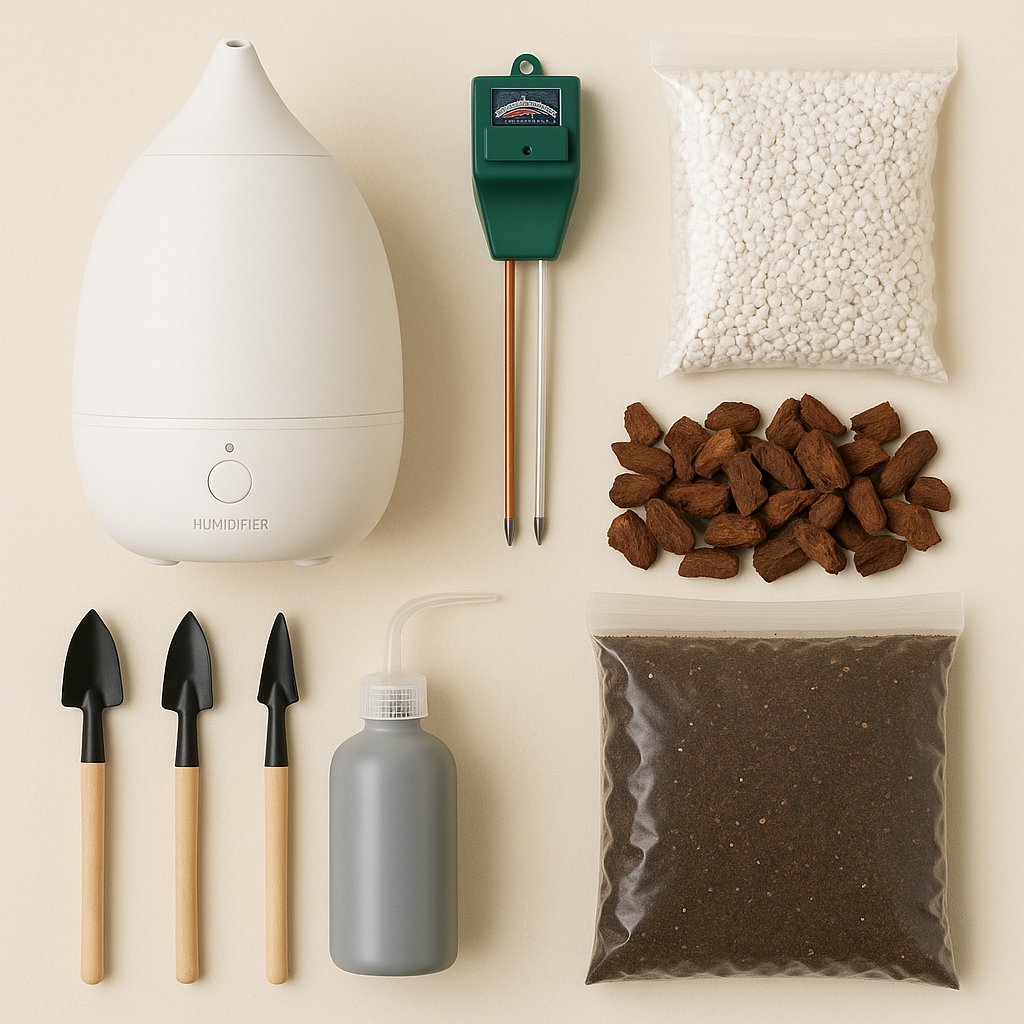
Chunky Mix Recipe
Thai Con wants a well-draining, chunky mix that dries out relatively quickly. Here's a solid recipe:
- 2 parts indoor potting mix
- 1 part perlite
- 1 part orchid bark
- Optional: handful of activated charcoal
Repotting Tips
- Repot every 1-2 years, or when roots start coming out of the drainage holes
- Go up 2 inches in pot diameter max — too much soil = staying wet too long
- Use a pot with drainage holes. No exceptions.
- Water thoroughly after repotting, then wait until the soil dries out completely
Common Problems & Solutions
Yellow Leaves
Cause: Usually overwatering. Check the soil — if it's wet and stays wet, you've got root rot starting.
Fix: Let the soil dry out completely. If the problem persists, check the roots. If they're mushy, trim the rot and repot.
Brown Tips
Cause: Low humidity. The dry air pulls moisture right out of those delicate leaf edges.
Fix: Increase humidity with a humidifier, or move the plant to a more humid room.
Pests
Thai Con is susceptible to the usual suspects: spider mites, mealybugs, thrips. Check the undersides of leaves regularly. Wipe leaves with a damp cloth to keep them clean and inspect for pests.
Fix: If you find pests, spray with insecticidal soap or neem oil. Repeat every few days until they're gone.
Reversion
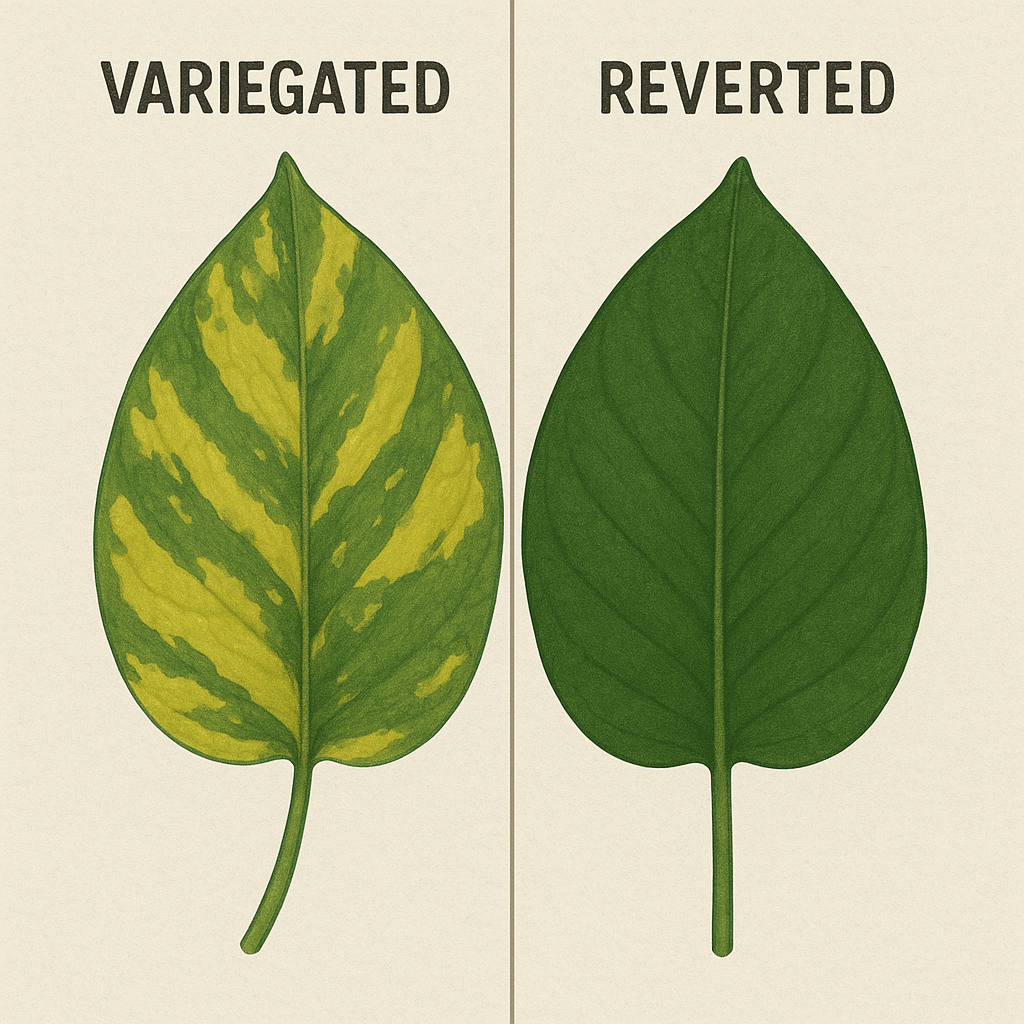
Cause: The plant decides it needs more chlorophyll to survive, so it pushes out solid green leaves.
Fix: You can't force variegation back, but you can try to prevent it by giving enough light. Low light = more green leaves. High light = more variegation. If a leaf reverts, you can prune it back to encourage variegated growth from that node.
Is It Worth the Price? Value Proposition
Let's be real: $100-200 for a plant is a lot. But here's why Thai Con is worth it:
Long-Term Value
Thai Con grows fast (for a variegated plant) and produces new leaves regularly with proper care. A healthy plant can produce a new leaf every 4-6 weeks during the growing season. That's gratification.
And because the variegation is stable, you're not constantly anxious about reversion like you would be with an Albo.
Entry-Level Variegated Plant
If you've never owned a variegated Monstera before, Thai Con is the sensible entry point. It's:
- More forgiving than Albo
- Less likely to revert
- Easier to find (more nurseries propagate it)
- Still absolutely gorgeous
You're getting the look — those stunning yellow-speckled fenestrated leaves — without the high-maintenance drama.
Ready to add more variegated plants to your collection? Check out our Alocasia varieties guide or learn about Monstera variegation types.
Products We Love
We use these products ourselves: