Stromanthe Triostar Care Guide — The Most Dramatic Prayer Plant You'll Ever Own
The pink will fade if you mess this up. Here's how to keep it.
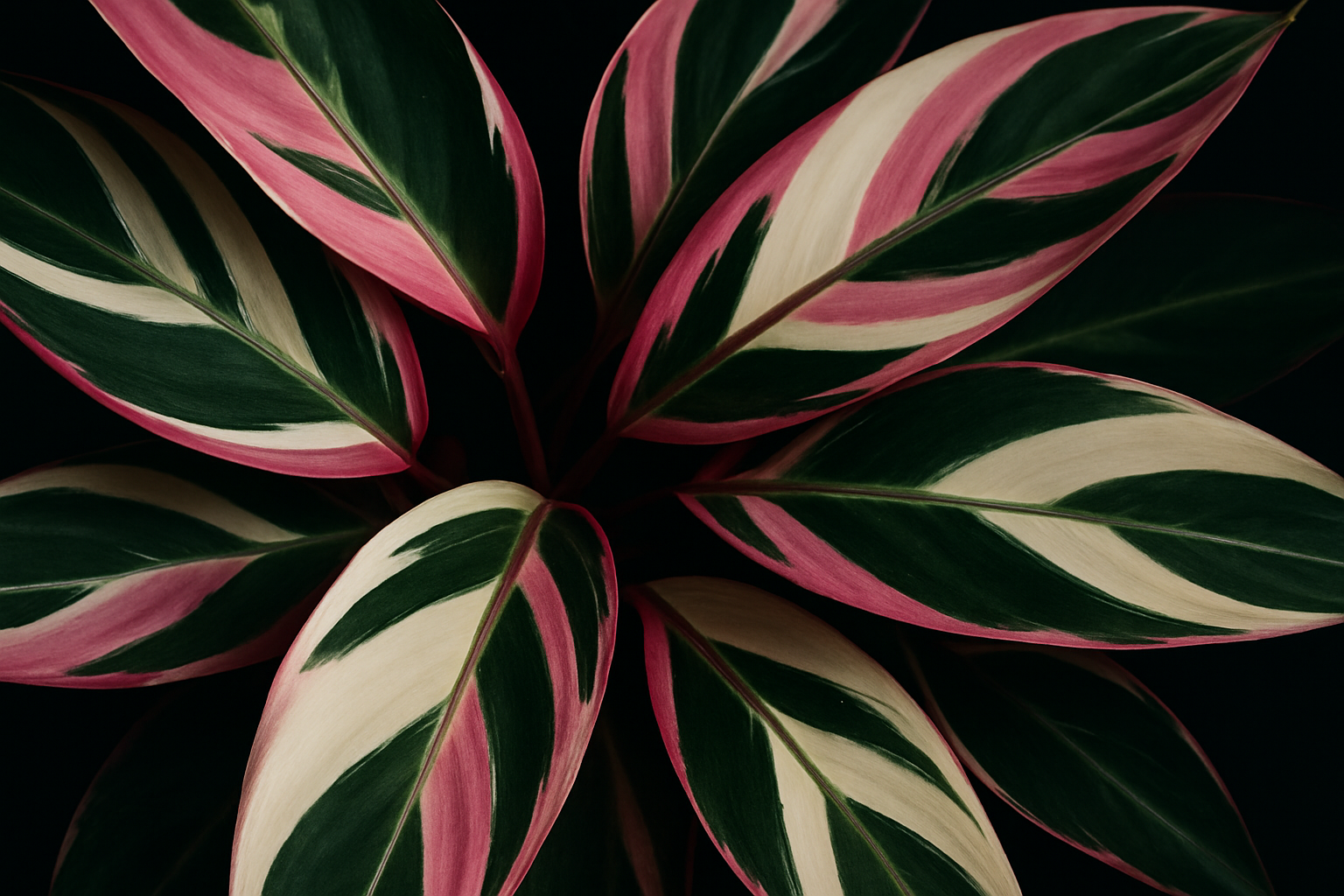
Meet the Stromanthe Triostar — Pink, Dramatic, Worth It
Stromanthe Triostar (Stromanthe thalia, formerly Ctenanthe setosa) is a member of the prayer plant family (Marantaceae) — the same crowd that gives you Calathea, Maranta, and Ctenanthe. If you've confused it with any of those, you're not wrong. They're close cousins and share the same dramatic tendencies.
But Triostar is the showoff of the group. The topsides of its leaves display tricolor variegation in deep green, creamy white, and saturated pink-purple. The undersides are a moody reddish-purple. At night, it folds its leaves upward in the classic prayer plant sleep movement. During the day, it spreads them out like it's showing off.
The catch? This plant will let you know, loudly, when something is off. Miss one requirement and you'll see it immediately in the leaves. Brown tips, yellowing, curling — you name it, this plant will show it to you. It's not beginner-friendly, but if you give it what it needs, it's one of the most rewarding tropicals you can grow indoors.
Quick care rundown:
| Light | Bright indirect; east or north window |
| Water | Filtered or distilled only |
| Humidity | 60–70% |
| Temperature | 18–27°C / 66–84°F |
| Pet safe? | Yes — non-toxic to cats and dogs |
| Difficulty | Intermediate — not for neglect |
Light — The #1 Make-or-Break Factor for Pink Leaves
Stromanthe Triostar's pink variegation is light-dependent. Give it bright indirect light and the pink stays pink. Put it in a dim corner and it will gradually fade to all green — this is called reversion, and it's the most common complaint from owners.
Direct sun is worse than low light. The leaves will scorch. You'll see bleached, brown patches where the sun hit directly. Filtered light through a sheer curtain, or placement 2–3 feet back from a sunny window, is the sweet spot.
Too dark and you'll lose the pink. Not enough light, and the plant can't sustain variegated growth, so it reverts to green to maximize photosynthesis. This isn't a sign of disease — it's a survival response. Cut the reverted stems back to encourage the plant to push variegated growth from the base.
Best Window Direction for Stromanthe Triostar
- East-facing — ideal. Morning sun is gentle; the rest of the day is bright and indirect.
- North-facing — safe fallback in most climates. Consistently indirect, no direct sun risk.
- South or West — usable with a sheer curtain to filter the direct midday and afternoon sun.
No good window? A grow light 12–18 inches above the plant for 10–12 hours a day works fine. Treat it like a medium-light plant and you'll get good results.
Water — Filtered Water Is Non-Negotiable
This is the thing most care guides gloss over, and it's the #1 reason Stromanthe Triostars fail.
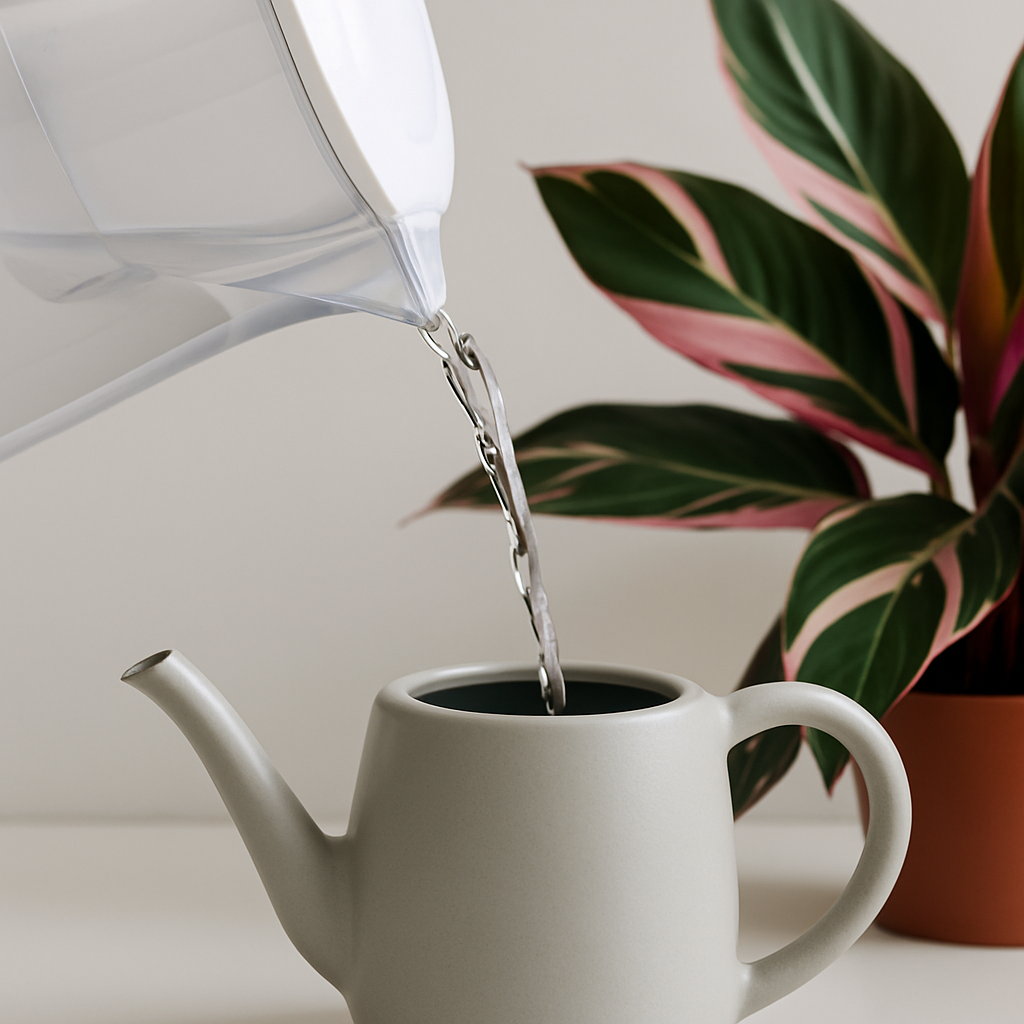
Tap water is the enemy. Chlorine, fluoride, and the dissolved minerals in hard water accumulate in the leaf tips and cause the exact brown crispy edges that make this plant look like it's dying. It might not be dying — it might just be drinking bad water.
Switch to filtered or distilled water. A Brita filter is enough. Reverse osmosis is even better. Once you switch, you'll see the difference within a couple of weeks — new growth comes in clean, and the existing brown tips stop spreading.
Check soil moisture before you water
How to Know When Your Stromanthe Triostar Needs Water
Use the finger test or a moisture meter. Don't water on a schedule.
- Moisture meter reading of 4 — time to water. Don't let it drop to 1–2.
- Finger test — stick your finger 1–2 inches into the soil. If it's dry at that depth, water. If it's still moist, wait.
- Leaf droop — a late signal. Your plant is telling you it's already thirsty.
- Curling leaves — even later. By this point the plant is stressed.
In summer, expect to water once or twice a week depending on your humidity and soil mix. In winter, much less — sometimes once every 10–14 days. Always check before you water.
Humidity — Hit 60%+ Without Misting Every Day
Stromanthe Triostar is from Brazilian rainforests. It wants 60–70% relative humidity. Your average home is probably sitting around 40–50%. That's the gap.
Misting does almost nothing for humidity. You're spraying water that evaporates within minutes. It's a feel-good activity that doesn't actually help the plant. If you're serious about keeping this plant alive long-term, you need a humidifier.
Keep humidity at 60–70% without constant misting
You can't manage humidity you can't measure
Humidifier vs Pebble Tray — Which Is Worth It?
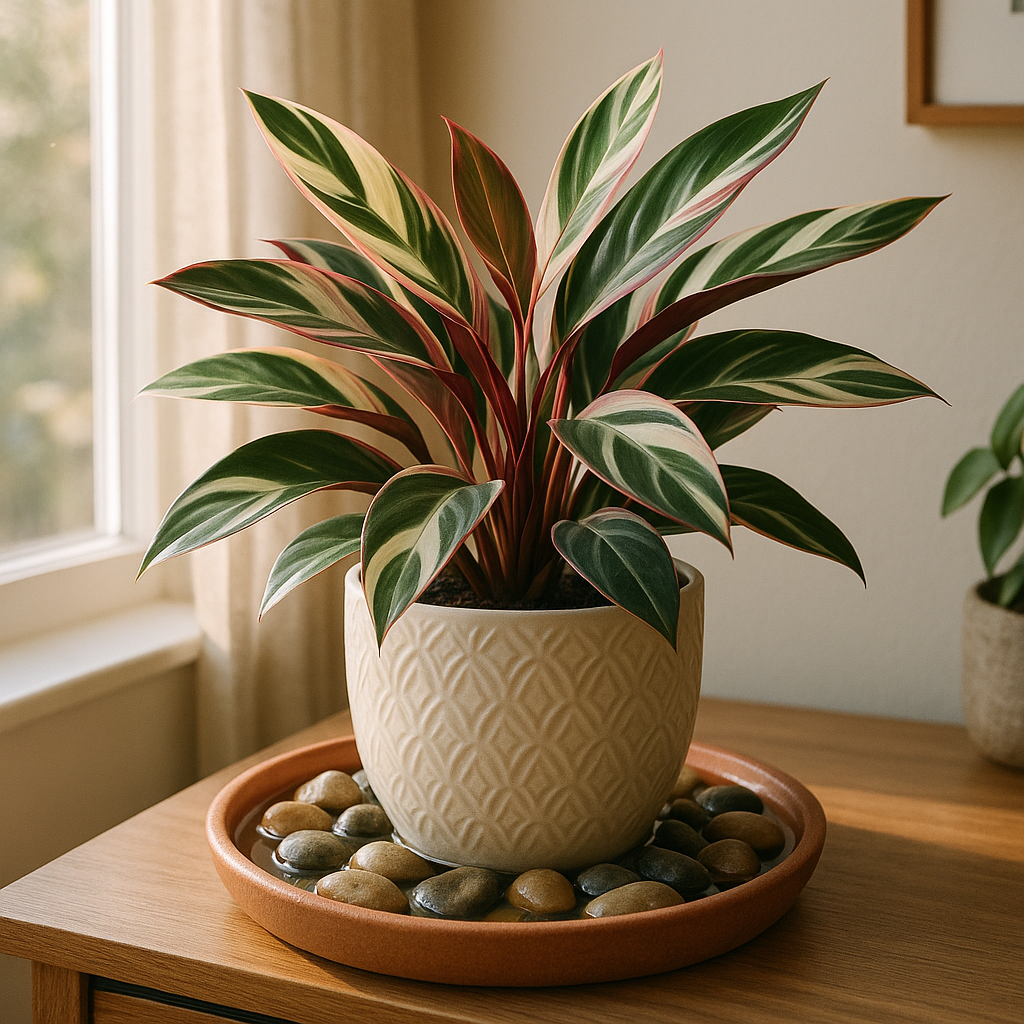
Pebble tray — the entry-level fix. Fill a tray with pebbles and water, set the pot on top. Evaporation raises humidity immediately around the plant. It helps, but it's limited — you're raising humidity in a small radius by a small amount. Fine if you only have one or two tropicals and your ambient humidity isn't terrible.
Humidifier — the real fix. A small desktop humidifier running in the same room will maintain 60%+ humidity across a much larger area. If you have multiple tropicals (Calathea, Alocasia, Ferns), this is the move. Run it during the day, especially in winter when heating dries the air out.
Hygrometer — you can't manage what you don't measure. A digital hygrometer near your plants tells you what you're actually working with. Then you know if the pebble tray is enough or if you need the humidifier.
Humidifier vs Pebble Tray — Which Is Worth It?
Pebble tray — the entry-level fix. Fill a tray with pebbles and water, set the pot on top. Evaporation raises humidity immediately around the plant. It helps, but it's limited — you're raising humidity in a small radius by a small amount. Fine if you only have one or two tropicals and your ambient humidity isn't terrible.
Humidifier — the real fix. A small desktop humidifier running in the same room will maintain 60%+ humidity across a much larger area. If you have multiple tropicals (Calathea, Alocasia, Ferns), this is the move. Run it during the day, especially in winter when heating dries the air out.
Hygrometer — you can't manage what you don't measure. A digital hygrometer near your plants tells you what you're actually working with. Then you know if the pebble tray is enough or if you need the humidifier.
Soil Mix — Chunky, Airy, Fast-Draining
Dense, water-retentive potting mix is a fast track to root rot with Stromanthe. You want something that drains fast but retains enough moisture to keep the roots happy between waterings.
Get the chunky, fast-draining mix right the first time
Good mix: peat-based potting mix + perlite + orchid bark. Roughly 60% potting mix, 20% perlite, 20% orchid bark. The perlite keeps it loose and fast-draining; the bark adds chunky structure and some moisture retention. You can buy orchid bark and perlite separately and mix your own, or look for a pre-mixed aroid mix.
What to avoid: Straight peat (drains too slowly), dense commercial potting mix straight from the bag (same problem), anything that stays wet for more than a day after watering.
Temperature — Keep It Warm, Keep It Consistent
18–27°C / 66–84°F is the comfortable range. Stromanthe doesn't want to be cold — below 15°C overnight and you'll see stress: leaf curl, wilting, brown edges.
Watch out for:
- Cold drafts from exterior doors or drafty windows in winter
- Heating vents blowing directly on the plant (hot dry air is as bad as cold drafts)
- Windowsill condensation in winter — the glass gets cold and the pot can chill
If you're comfortable, your Stromanthe probably is too.
Feeding — Gentle and Infrequent
Half-strength balanced fertilizer once a month during the growing season (spring and summer) is plenty. Stop in fall and don't feed in winter.
Overfeeding is worse than underfeeding. If you overdo it, you'll see fertilizer burn: crispy brown edges that look like low humidity damage but don't improve when you raise the humidity. When in doubt, use less. Worm castings as a top-dressing in spring is a gentler organic option if you want to avoid synthetic fertilizers entirely.
Stromanthe Triostar Problems and How to Fix Them
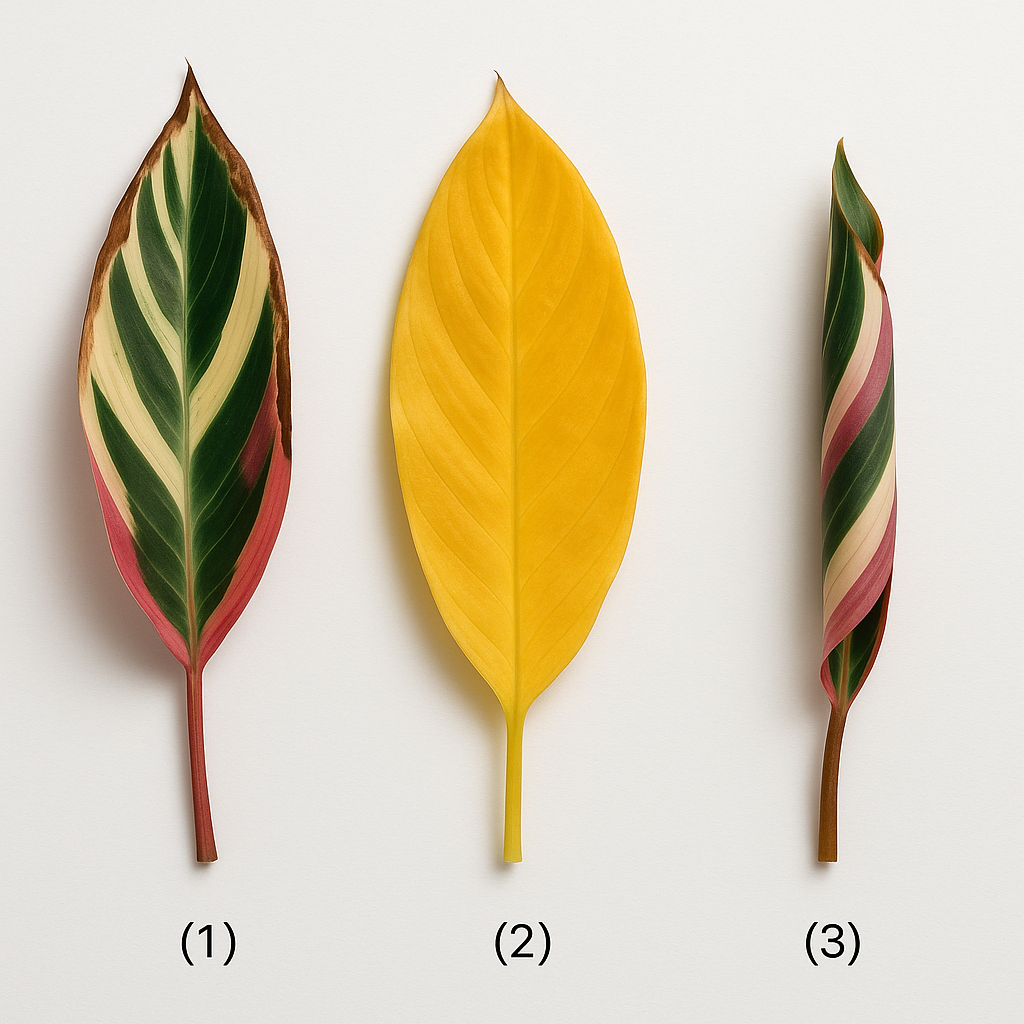
Here's the symptom decoder. Most problems with this plant fall into one of these five patterns:
At a glance:
| Symptom | Most Likely Cause |
|---|---|
| Brown tips & crispy edges | Low humidity OR hard water |
| Yellow leaves | Overwatering |
| Leaves curling inward | Underwatering OR cold shock |
| Drooping despite wet soil | Root rot |
| Pink fading to green | Not enough light (reversion) |
Brown Tips & Crispy Edges
Two causes, identical symptoms: low humidity and hard tap water. Both cause the leaf edges to dry out and brown. You might have one or both happening simultaneously.
Fix both at once: raise humidity to 60–70% and switch to filtered water. In a week or two you'll see where you stand. New growth comes in clean if you've fixed the problem.
Yellow Leaves
Almost always overwatering. Check the soil — if it's soggy and the plant is sitting in water, you have root rot. See our plant symptom decoder for root rot recovery steps.
Let the top 1–2 inches dry out before watering. If the soil is still moist at that depth, wait. In winter, let it dry even more.
Leaves Curling Inward
The prayer plant curl. When the leaves fold up tight, it's conserving water — it's the Stromanthe equivalent of closing its pores.
Two causes: underwatering or cold shock. Underwatering is the more common trigger. Water the plant and it usually rebounds within a few hours. Cold shock is less common but happens in winter when a plant is near a drafty window.
Drooping or Wilting Despite Wet Soil
Root rot from overwatering. The roots are so damaged they can't take up water, so the plant droops even though the soil is wet. Stop watering immediately. Let the soil dry out. If it's severe, repot with fresh chunky mix and trim any mushy brown roots.
Reversion — Why Your Pink Leaves Are Turning Green
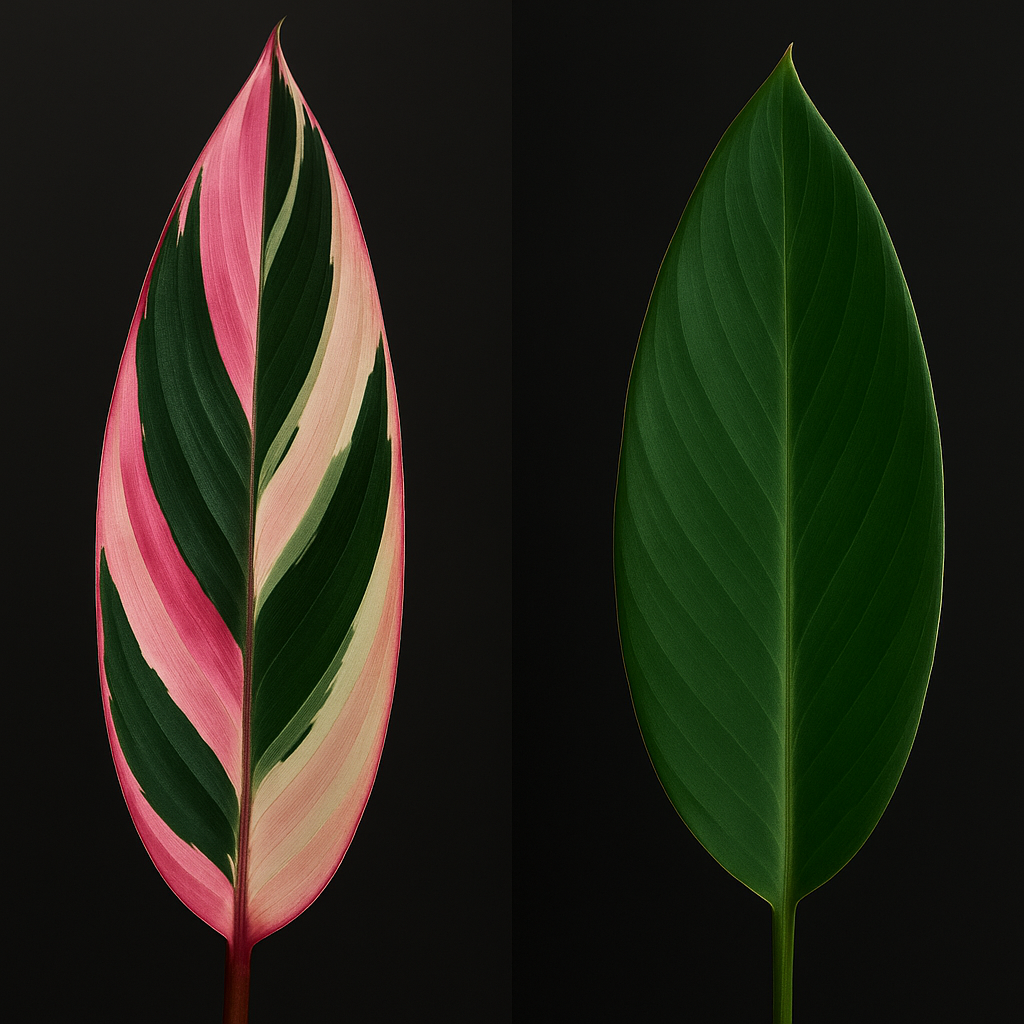
Not enough light. The plant is de-variegating to maximize photosynthesis in low-light conditions. This is normal behavior — it's not a disease or deficiency.
Fix: Move the plant closer to a window (east or north-facing). Cut fully reverted (all-green) stems back to the base — this redirects the plant's energy to the variegated growth points. Ongoing reversion requires ongoing pruning as part of normal maintenance.
Propagation — Don't Buy Another Plant, Make Another
Stromanthe Triostar propagates by division only. Water propagation does not work — the roots formed in water don't transfer well to soil and the plant will decline.
Spring or summer is the best time to divide. The plant is actively growing and recovery is faster.
Step-by-Step Division
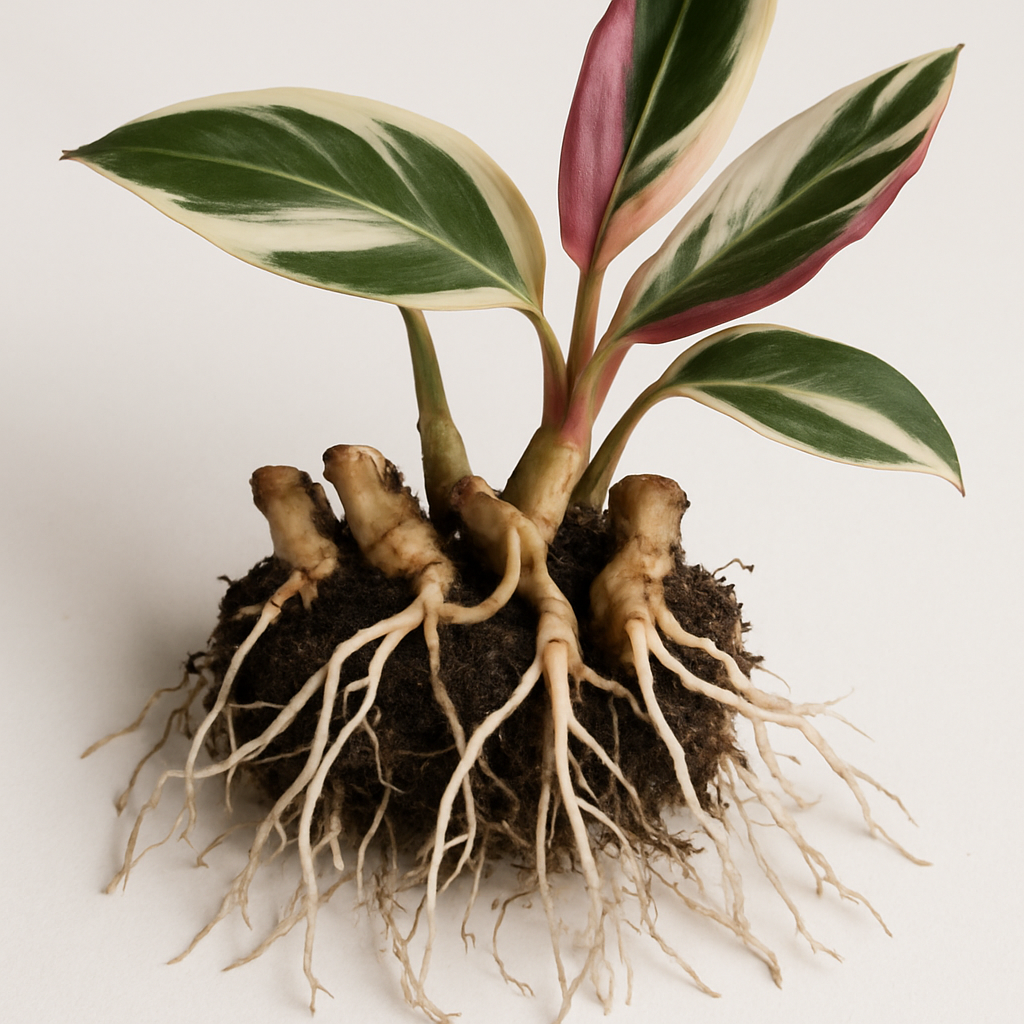
- Water the plant a day or two before dividing — hydrated roots are more resilient.
- Remove the plant from its pot. Gently shake off excess soil so you can see the root system.
- Locate the natural separation points — places where the rhizome splits into distinct sections. Each section should have at least 2–3 leaves and a portion of the root system.
- Separate using your hands or clean scissors. Don't force it — if a section doesn't want to separate, look for another division point.
- Pot each division in fresh chunky soil mix (the same mix described above). Keep the soil lightly moist.
- Keep warm and humid — 20–24°C, 60%+ humidity. A clear plastic bag over the pot for the first week helps retain humidity.
- Expect 4–6 weeks for new root growth and visible recovery.
Stromanthe Triostar FAQ
How often should I water my Stromanthe Triostar? Water when the top 1–2 inches of soil are dry, or when a moisture meter reads 4. In summer this is typically once or twice a week; in winter, less frequently. Always use filtered or distilled water — tap water damages this plant.
Why is my Stromanthe Triostar turning brown? Brown tips and crispy edges on a Stromanthe Triostar are almost always caused by low humidity or hard tap water. Raise humidity to 60%+ and switch to filtered or distilled water. The two causes produce identical symptoms, so address both.
Does Stromanthe Triostar need a humidifier? A humidifier is the most reliable way to maintain the 60–70% humidity Stromanthe Triostar needs. Pebble trays offer limited help for a single plant. If you have multiple tropicals, a humidifier is worth the investment. Misting alone is not sufficient.
How do I propagate a Stromanthe Triostar? Stromanthe Triostar is propagated by division only — never water propagation. Divide the rhizome at natural separation points in spring or summer, pot each division in fresh chunky soil mix, and keep it warm and humid. Expect 4–6 weeks for establishment.
Why is my Stromanthe Triostar losing its pink color? Your Stromanthe Triostar is losing pink variegation because it's not getting enough bright indirect light. Move it closer to a window (east or north-facing is ideal) and prune any fully reverted green stems to encourage variegated regrowth.
Is Stromanthe Triostar toxic to pets? Stromanthe Triostar is non-toxic to cats and dogs, making it a safer choice for pet-friendly households. However, ingestion may cause mild digestive upset, so it's still best kept out of reach.
Want more troubleshooting? Check out our plant symptom decoder for yellow leaves, drooping, and root rot recovery. For propagation basics, see our general propagation guide.
Products We Love
These are the tools we actually use for our Stromanthe Triostar: