Splurge Edition: Gear Worth the Investment
Ready to splurge on plant care? These premium tools make it easier and more satisfying.
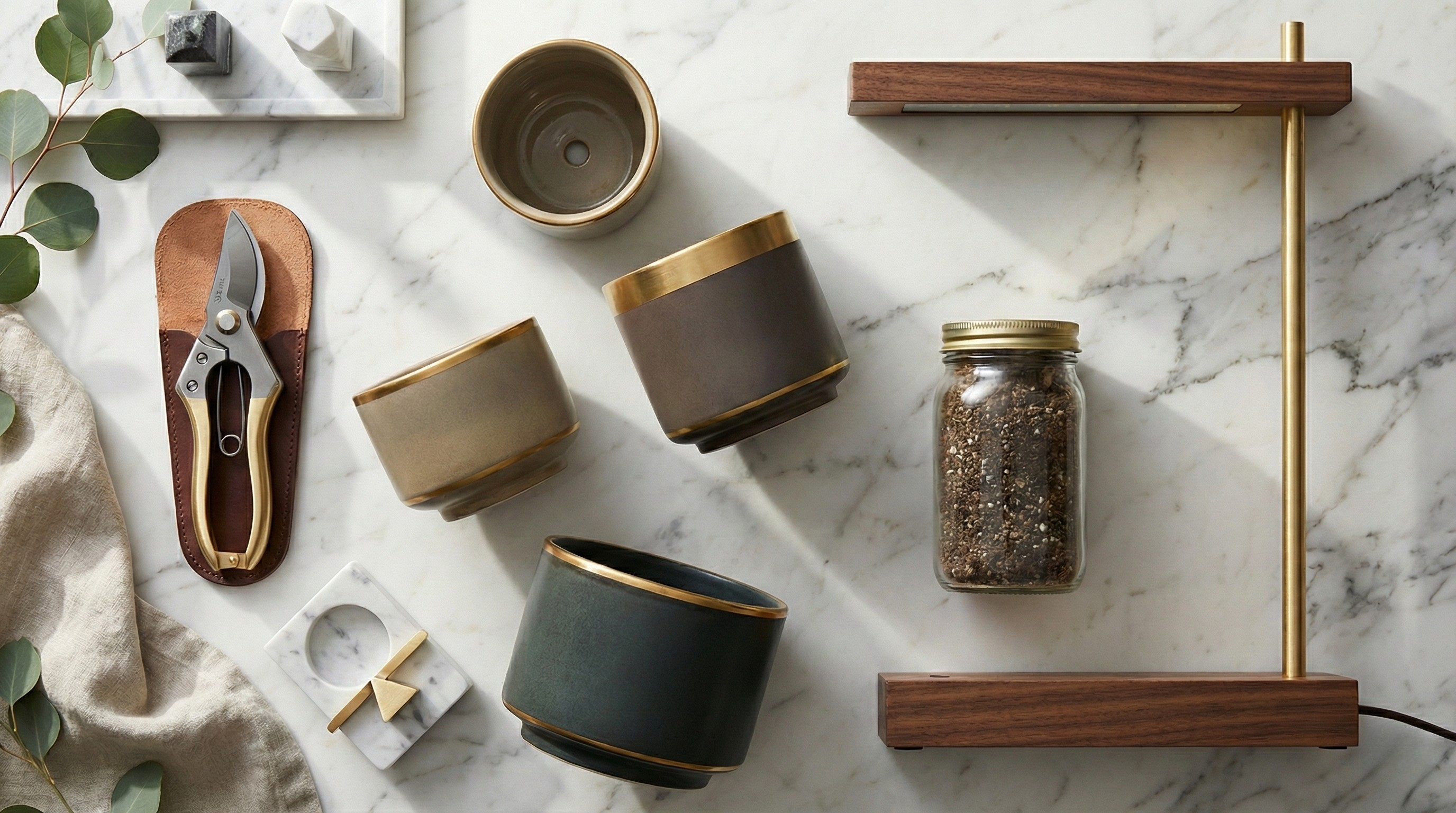
Premium Pots: Architecture for Roots
A good pot is more than a container. It's a root environment. While that $5 nursery pot works, premium pots offer better drainage engineering, superior materials, and a weight that anchors top-heavy plants like Monsteras and Fiddle Leaf Figs.
Alt才有 (C-LAB) has become a cult favorite. Their ceramic pots are incredibly heavy, thick-walled, and have perfectly engineered drainage holes that prevent water from pooling at the bottom. They are expensive, but they are essentially heirloom pieces.
Blind is the minimalist's dream. Their pots are often cachepots (decorative outer pots) or feature ingenious hidden drainage systems. The aesthetic is clean, modern, and architectural.
Otter (Otter Securs) creates pots that are practically art. Known for their durability and unique finishes, their self-watering options are particularly popular for people who travel often.
Recommendation: If you are going to splurge on one pot, make it a self-watering ceramic from Alt才有 for your biggest floor plant. The consistency of water levels leads to massive growth.
Propagation Stations: Cloning Your Collection
Tired of throwing away broken vines? A propagation station allows you to turn one plant into ten. But there are cheap versions (glass jars with foil) and there are proper stations.
Look for stations with variable water levels, glass that resists fogging, and aeration to prevent root rot. The best stations allow you to see root development clearly, which is half the fun of propagating.
Recommendation: The Mother Plant Propagation Box or the Glass Propagation Station from Bookish (or similar artisanal makers) are staples in the community. If you want to go high-tech, the Aeroponics Cloner (like a Tower Garden system) can root cuttings in half the time of water propagation.
Smart Grow Lights: Spectrum Science
You know you need light. But not all light is created equal. Budget grow lights are often purple-heavy, hot, and inefficient. Premium LEDs produce a full white spectrum that looks good in your living room while delivering the exact photosynthetic intensity your plants crave.
Mars Hydro is the gold standard for performance per dollar. Their TS and SP series lights are used by professional growers but designed for home use. They run cool, have dimmable knobs, and cover wide areas evenly.
Spider Farmer is Mars Hydro's main competitor and often preferred for their slightly more refined design and whisper-quiet fans. The SF-4000 and SF-6000 are legendary in plant circles.
Recommendation: If you have a dedicated plant shelf or tent, grab the Mars Hydro TS 3000. If you are lighting a whole room, the Spider Farmer SF-4000 is your best bet.
Greenhouse Cabinets: Control the Climate
Live in an apartment with 15% humidity? Want to grow a humidity-loving Fern but have a dry climate? A glass cabinet or greenhouse terrarium is the ultimate cheat code. It traps humidity and creates a stable microclimate that keeps delicate plants happy.
IKEA Greenhouse Cabinet Hack is a famous project. You take a basic IKEA cabinet, add smart grow lights, and you have a sealed ecosystem. It takes the guesswork out of humidity.
If you want a ready-made solution, look for glass wardrobes with ventilation. Some specialty retailers now sell "indoor greenhouses" that are essentially beautiful glass cabinets with built-in shelves.
Recommendation: Build the IKEA Milshopen Cabinet setup with a Mars Hydro clip light inside. It's the highest-performance, lowest-cost way to get a sealed environment.
Humidifiers: Mist That Matters
Those cheap "misting bottles" do almost nothing. To actually raise the humidity in a room, you need a cool-mist humidifier that outputs several gallons per day. This isn't an accessory; it's a requirement for serious collectors of Calatheas, Alocasias, and Ferns.
Levoit makes the best all-around humidifiers for plant people. They are quiet, have large tanks (lasting days), and feature precise hygrometer controls that maintain your target humidity automatically.
Recommendation: The Levoit Classic 300S. It has a 6-liter tank, smart app control, and is whisper-quiet. Set it to 55% and forget it.
Products Mentioned (Quick Links)
- Humidifier: https://www.amazon.com/dp/B07Y5X6K79?tag=feralfoliage-20
- Hygrometer: https://www.amazon.com/dp/B08KG8KZCX?tag=feralfoliage-20
- Grow lights: https://www.amazon.com/dp/B07SHY3P8G?tag=feralfoliage-20
The Takeaway
This gear isn't for everyone. But if you are serious about turning your home into a jungle, these investments pay off in plant health, growth rate, and reduced maintenance time. Sometimes, spending more upfront means spending less in the long run (and less crying over dead plants).
Related Articles: