Spider Plant Complete Care — The Ultimate Guide to Chlorophytum
The starter plant that never stops giving — and how to keep it alive without trying too hard.
About Spider Plants: Meet Chlorophytum Comosum
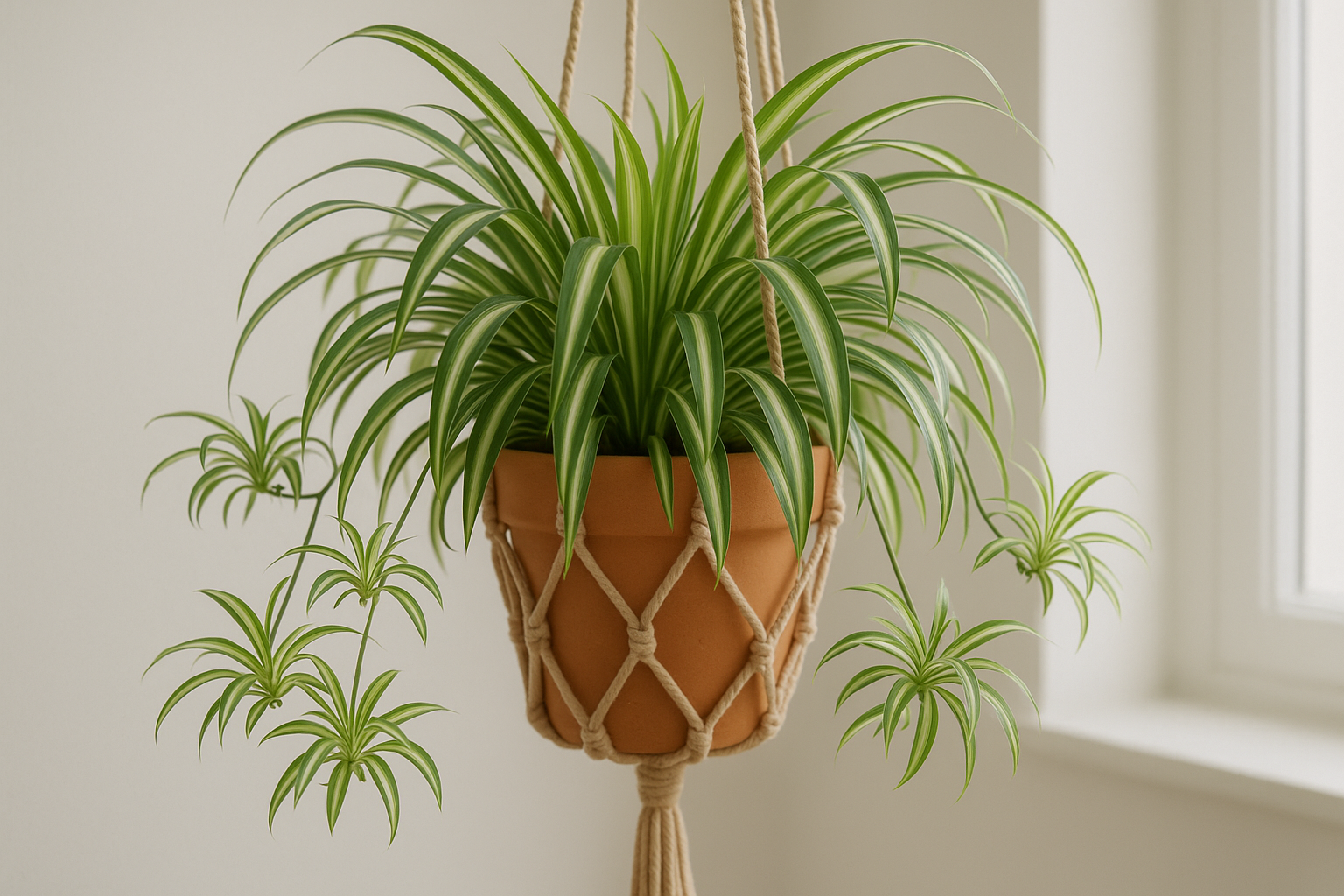
Spider plants (Chlorophytum comosum) are native to tropical Africa, and they've earned a bunch of nicknames over the years: spider ivy, airplane plant, ribbon plant, and hen and chickens (the latter usually refers to the way the babies cluster around the mother like chicks around a hen).
Here's the thing the internet doesn't lead with: spider plants are non-toxic to cats and dogs. The ASPCA has them listed as safe, which makes them one of the few stylish houseplants you can keep without worrying about your pets. If you want more options, here's our pet-safe houseplants list.
At maturity, a spider plant reaches about 1-2 feet tall and wide, with arching leaves and those iconic cascading babies — called spiderettes — dangling from long stolons. Some folks find the babies unsightly; I think they're the whole point.
What makes spider plants special: they're extremely forgiving. They tolerate irregular watering, varying light conditions, and benign neglect better than most houseplants. And when they're happy? A mature spider plant goes absolutely wild with spiderettes, essentially cloning itself for you to propagate and share.
Note: This guide covers the common Chlorophytum comosum varieties. Other species in the genus (like C. amaniense) have similar care but the comosum varieties are what you'll find at every nursery and big box store.
Light Requirements: The One Condition That Matters Most
Spider plants want bright indirect light. That's the sweet spot. They handle lower light better than most plants, but they'll grow faster and look better in brighter conditions.
What happens with too much direct sun: White or brown scorched patches on the leaves. The solid green varieties are slightly more tolerant of direct sun than their variegated siblings, but nobody wins when you put a spider plant in hot afternoon sun.
Best placement:
- East-facing windowsill (gentle morning sun)
- West-facing windowsill with some afternoon shade
- A few feet back from a south-facing window with filtered light
- North-facing windows work for solid green varieties, though growth will slow
No natural light? A basic grow light on for 8-10 hours a day keeps spider plants going. They're not demanding about it.
The variegation signal: If your variegated spider plant starts growing solid green leaves, it's telling you it needs more light. That's the plant's chlorophyll-compensating mechanism kicking in. Move it closer to a window and the variegated growth should resume.
Watering: How Often and How Much
Water when the top inch or two of soil is dry. In warm months with active growth, that's roughly once a week. In winter when growth slows, scale back to every 10-14 days.
The fluoride sensitivity issue nobody talks about:
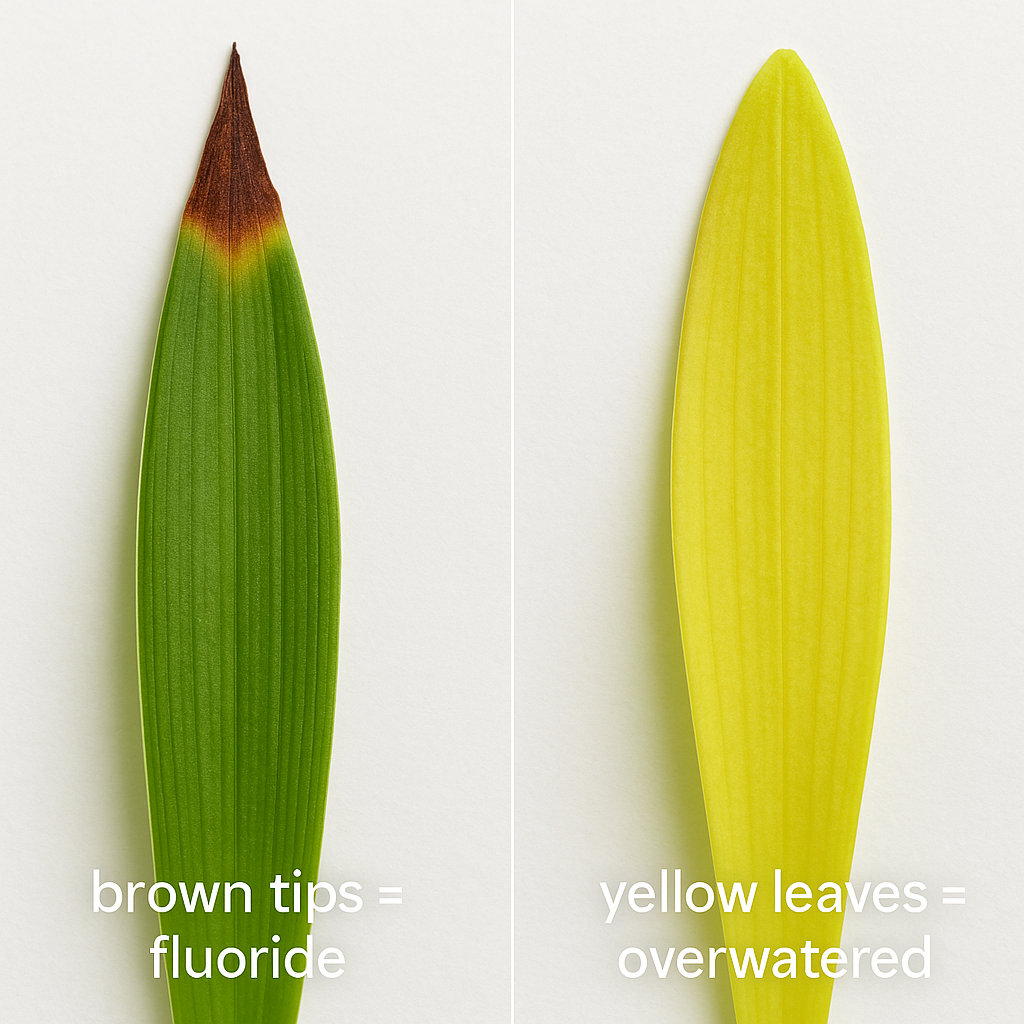
Spider plants are sensitive to fluoride and chlorine in tap water. This is the number one cause of brown tip necrosis — that characteristic brown crispy tips on the leaves. If your spider plant is otherwise healthy but the tips are browning in a clean arc pattern, your tap water is likely the culprit.
Fix: Fill a watering can and let it sit out for 24 hours before using. This lets the chlorine dissipate. Better yet, use filtered or distilled water. A Brita water filter pitcher is a cheap investment if you're serious about keeping your spider plant looking pristine.
Root rot is the other common killer: Yes, spider plants tolerate drought. They do not tolerate sitting in soggy soil. Make sure your pot has drainage holes. After watering, empty the saucer — don't let the plant sit in standing water.
For the deep dive on watering technique, see our general watering principles and our guide to treating root rot if you've already overdone it.
Soil and Repotting: Don't Overpot
Spider plants want well-draining potting mix. Their thick tuberous roots store water, so they need soil that dries out between waterings. A standard all-purpose potting mix works fine. If it's dense and moisture-retentive, mix in some perlite.
Espoma Organic Perlite at 30-40% ratio lightens up any potting mix and keeps things draining properly. It is genuinely the single most useful amendment you can add to almost any houseplant's soil.
Terracotta vs. plastic: Terracotta is the better choice for spider plants because it's porous and lets the soil dry faster, which reduces the risk of overwatering. Plastic pots retain moisture longer — fine if you're careful, but more forgiving of mistakes with terracotta.
The snug pot principle: Spider plants like being slightly root-bound. Don't jump up more than 1-2 inches in pot diameter when repotting. A too-large pot holds more soil, which holds more water, which means root rot risk. See our best pots for houseplants guide for more on this.
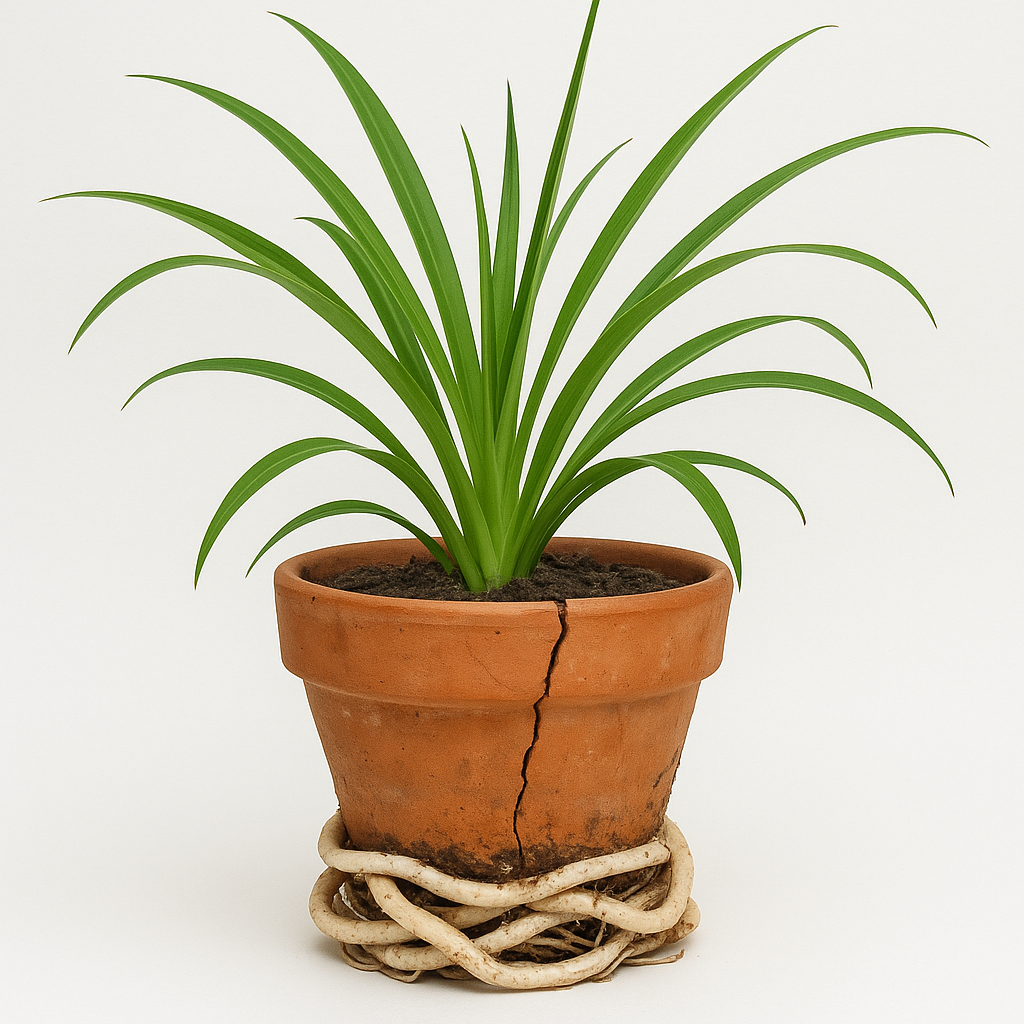
How to know when to repot:
- Roots growing out of the drainage holes
- White roots visible above the soil line
- The pot feels unusually tight or the plant pops up when you water
- Cracked or deformed pot (yes, spider plant roots are that powerful)
When to repot: Spring or early summer, when the plant is entering active growth. Use fresh potting mix and go only 1-2 inches up in pot size.
Temperature and Humidity
Spider plants are comfortable in the same temperature range you are: 60-75°F. They tolerate down to the 50s and up to the 80s without complaint, but cold drafts and air conditioning vents are the enemy. Keep them away from drafty doors in winter and don't let AC blow directly on them.
Humidity: Spider plants don't care much about humidity. They're adaptable. In very dry climates (desert regions, heated winter air), occasional misting helps, or run a humidifier nearby. The Bonnie variety is slightly more humidity-sensitive than others — the curly leaves can brown at the tips in very dry air — but it's not a dealbreaker.
Fertilizing: Less Is More
Spider plants are light feeders. Monthly during spring and summer is plenty. Use any balanced liquid houseplant fertilizer diluted to half-strength. Over-fertilizing is a real problem — it causes salt buildup in the soil, which shows up as brown leaf tips, the same symptom as fluoride sensitivity.
When to feed:
- Spring through summer: every 4-6 weeks
- Fall and winter: skip it entirely
The refresh shortcut: If you repot your spider plant every spring with fresh soil, you might not need fertilizer at all. The new soil provides enough nutrients for the first few months of active growth.
Spider Plant Varieties: A Quick Comparison
Most people don't realize there are several distinct spider plant varieties, and they have different care needs:
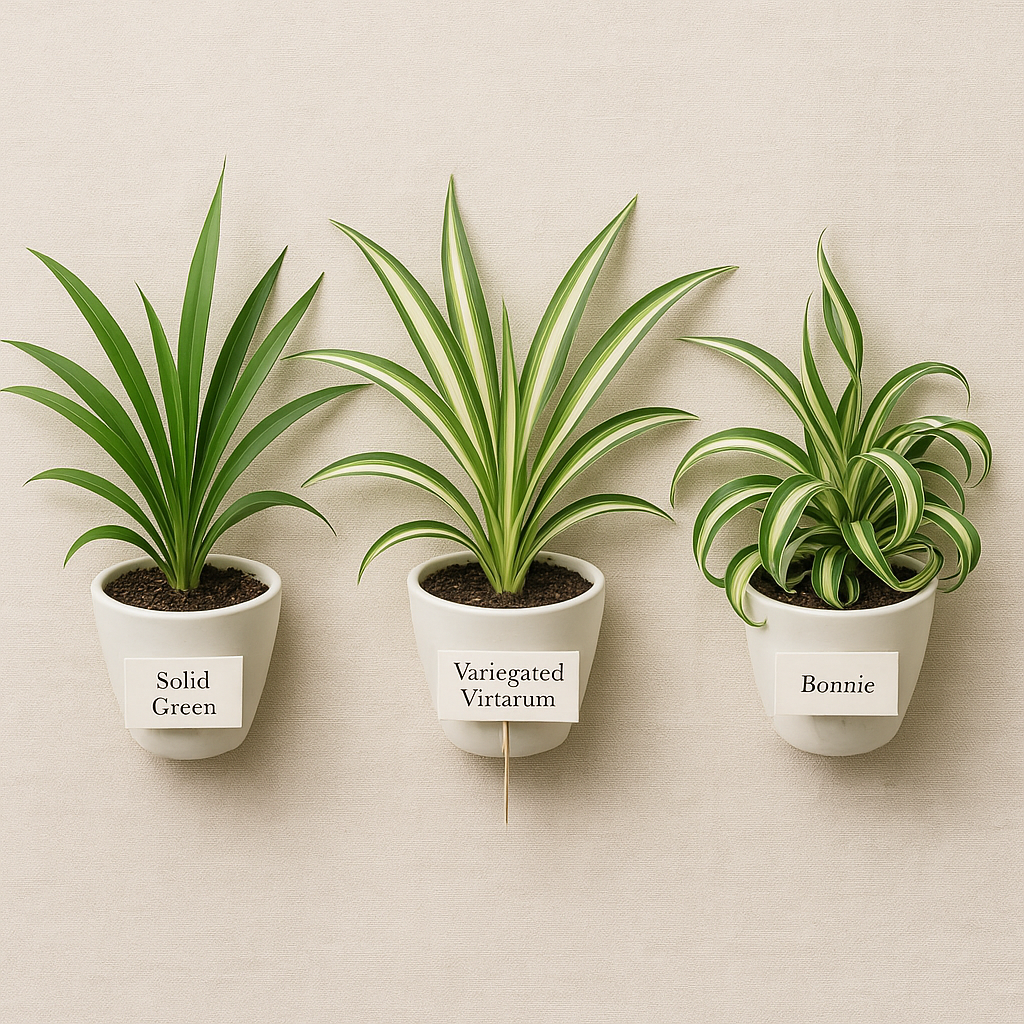
| Variety | Description | Light Needs | Notes |
|---|---|---|---|
| Solid Green | Classic all-green | Low to bright indirect | Most tolerant, best for beginners |
| Variegated (Vittatum) | White center stripe, green edges | Bright indirect | Needs more light to maintain color |
| Reverse Variegated | Green center, white edges | Medium-bright indirect | Medium light need |
| Bonnie (Curly) | Ruffled curly leaves, compact | Bright indirect | Slightly more humidity-sensitive |
The practical difference: If you have lower light in your space, go with solid green. If you want the variegated look, put it near your brightest window and expect to water slightly more often.
How to Propagate a Spider Plant
This is where spider plants earn their reputation as the gift that keeps on giving. A healthy mature spider plant produces spiderettes — little baby plants dangling from long arching stolons — that you can root and pot as new plants. One spider plant can become dozens within a year.
The readiness checklist (don't skip this)
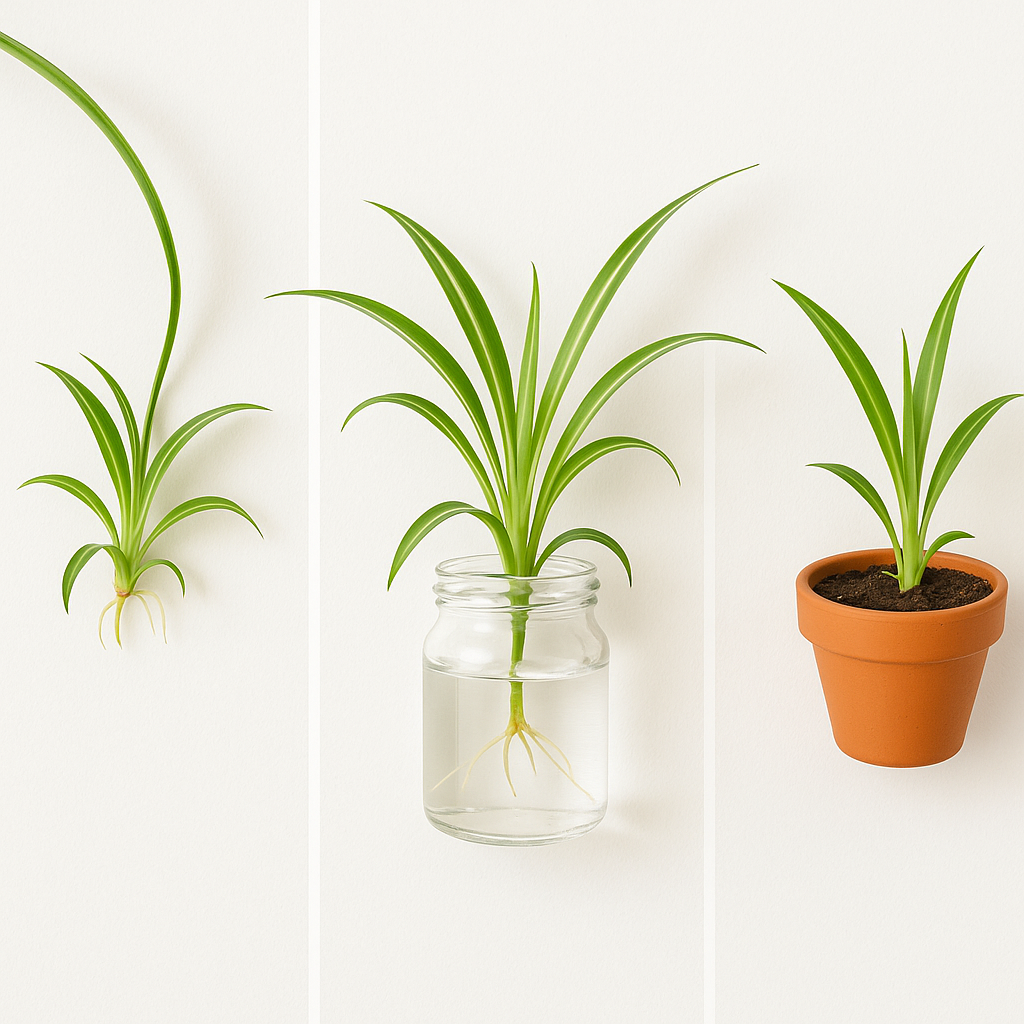
Most guides skip this part and then beginners wonder why their spiderette died. A spiderette is ready to propagate when it has:
- 5 or more leaves
- Visible white root bumps (root nubs) where it attaches to the stolon
If it has neither roots nor leaves, leave it on the mother plant until it develops both. The mother plant feeds the spiderette through the stolon until it's ready to survive on its own.
Method 1: Water rooting
- Cut the spiderette from the mother plant with 1-2 inches of stolon attached
- Place in a jar of room-temperature water, covering just the root nubs
- Change the water every 3-4 days
- Wait 2-4 weeks for roots to grow to 1-2 inches
- Pot in well-draining soil
Method 2: Soil rooting (while attached)
- Fill a small pot with well-draining soil and place it next to the mother plant
- Pin or weigh the spiderette onto the soil surface so the root nubs make contact
- Keep the soil lightly moist
- Once roots are established (gentle tug meets resistance), cut the stolon connecting it to the mother
Method 3: Division at repotting
- Unpot the mother plant and shake off excess soil
- Gently separate the root ball into sections, each with its own leaves and roots
- Pot each division separately
Which method to use: Water rooting is satisfying because you can watch the roots grow. Soil rooting has a higher success rate because the plant never experiences the transition from water to soil. Division is fastest if you're already repotting.
For more on propagation generally, see our general propagation principles — spider plant is one of the best subjects for beginners to start with.
Troubleshooting: What's Wrong With My Spider Plant?
Brown tips
Most likely cause: fluoride in tap water. If the brown tips appear in a clean arc pattern from the leaf tip, this is classic fluoride burn. Switch to filtered or distilled water and cut back on tap water entirely.
Other causes: low humidity (less common), underwatering (the soil is staying dry too long between waterings), or salt buildup from over-fertilizing. Flushing the soil with clean water once or twice helps leech out accumulated salts.
Solve Brown Tips — Get a Filtered Water Pitcher
Yellow leaves
Most likely cause: overwatering. Spider plants turn yellow from the base of the leaf upward when they're waterlogged. Let the soil dry out more between waterings. If it's severe, check for root rot (see our guide to treating root rot).
Less common: too much direct sunlight. If the yellow leaves correspond to a period of direct sun exposure, move the plant back from the window.
Pale, washed-out leaves / loss of variegation
Not enough light. The plant is trying to photosynthesize with what it has, so it's dumping the energetically expensive variegation. Move to brighter indirect light. This is reversible.
Drooping leaves
Underwatering or root-bound. Check the soil — if it's dry and the plant droops, water it. If the soil is moist and it's drooping, check if the plant is root-bound (see signs above in the Repotting section).
No spiderettes / no babies
Three reasons your spider plant isn't producing babies:
- Too young — young plants put energy into root and leaf growth before reproducing
- Not enough light — spider plants produce more spiderettes in brighter conditions
- Too root-bound — a cramped root system triggers reproduction as a survival mechanism. Try sizing up the pot slightly.
For more symptom patterns, browse the Plant ER for more diagnosis help.
Pests: Spider Plants Are Resistant But Not Immune
Spider plants are low-pest targets — they're not immune, but they're not pest magnets either. The usual suspects:
- Mealybugs — white cottony clusters at the leaf base. Most common on spider plants.
- Spider mites — tiny dots on leaf undersides, fine webbing between leaves
- Scale — brown or tan bumps on stems and leaf surfaces
- Aphids — less common, usually on new growth
Treatment: Neem oil spray or insecticidal soap, applied weekly until the infestation clears. Cover all leaf surfaces including the undersides. These products kill on contact — they don't prevent hatchlings, which is why repeat applications are necessary.
Prevention: Quarantine any new plant for a week or two before introducing it to your plant collection. Inspect before you buy.
Where to Buy Spider Plants and What to Look For
Spider plants are everywhere — which makes them cheap and easy to find, but also means quality varies.
Local nursery: Best option if you want to inspect the plant before buying. Look for: firm upright leaves (not drooping), white or cream-colored roots (not brown and mushy), no visible pests, no brown tips or yellowing.
Big box store: Fine for common varieties, but the plants are often overwatered and neglected. Inspect carefully.
Online (Etsy, Bloomscape, etc.): Good for specialty varieties (reverse variegated, bonnie) that you won't find locally. Consumer Cellular and Bloomscape both carry spider plants. Check reviews for shipping conditions.
What healthy looks like: Firm, upright leaves in solid green or bright variegation, white roots (not brown or mushy), no pest signs, no more than mild tip browning.
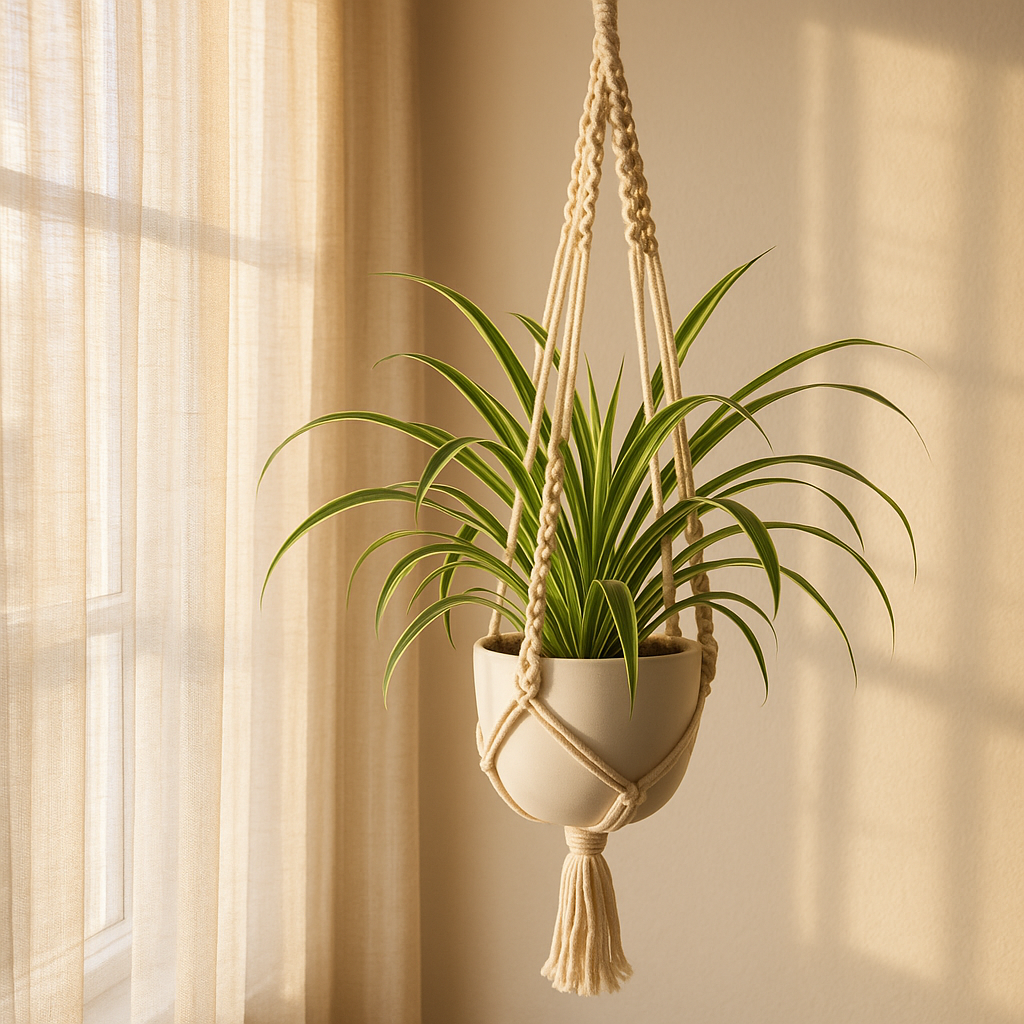
For the hanging display, a simple macramé hanger works perfectly — the spiderettes cascade down naturally and it shows off the plant the way it's meant to be seen. A set of macramé hangers is a solid purchase if you're planning to add a few trailing plants to your collection.
Bottom Line
Spider plants are the low-stakes entry point into houseplants. They're forgiving, they bounce back from mistakes, and they'll multiply on you before you've mastered the basics. The fluoride sensitivity issue is the one thing most guides miss — if you're dealing with brown tips, switch to filtered water before you do anything else.
Start with one. Propagate the babies. Give them away. In a year, you'll have more spider plants than you know what to do with — and that's kind of the point.
Want plants that are even harder to kill? See our easiest houseplants guide.
Products We Love
We actually use these:
- Brita Water Filter Pitcher (White) — solves the fluoride brown tip problem
- Espoma Organic Perlite — 8 Quart — the amendment that fixes most soil drainage problems
- XL Macramé Plant Hanger (set of 3) — the classic spider plant display setup
- General Hydroponics Liquid Nutrient Trio (FloraSeries) — if you do fertilize, this is a solid balanced option