Spider Plant Care Guide — The Easy, Air-Purifying Classic That Produces Babies
The plant that NASA loved, your cat can eat, and it makes babies you can share with everyone.
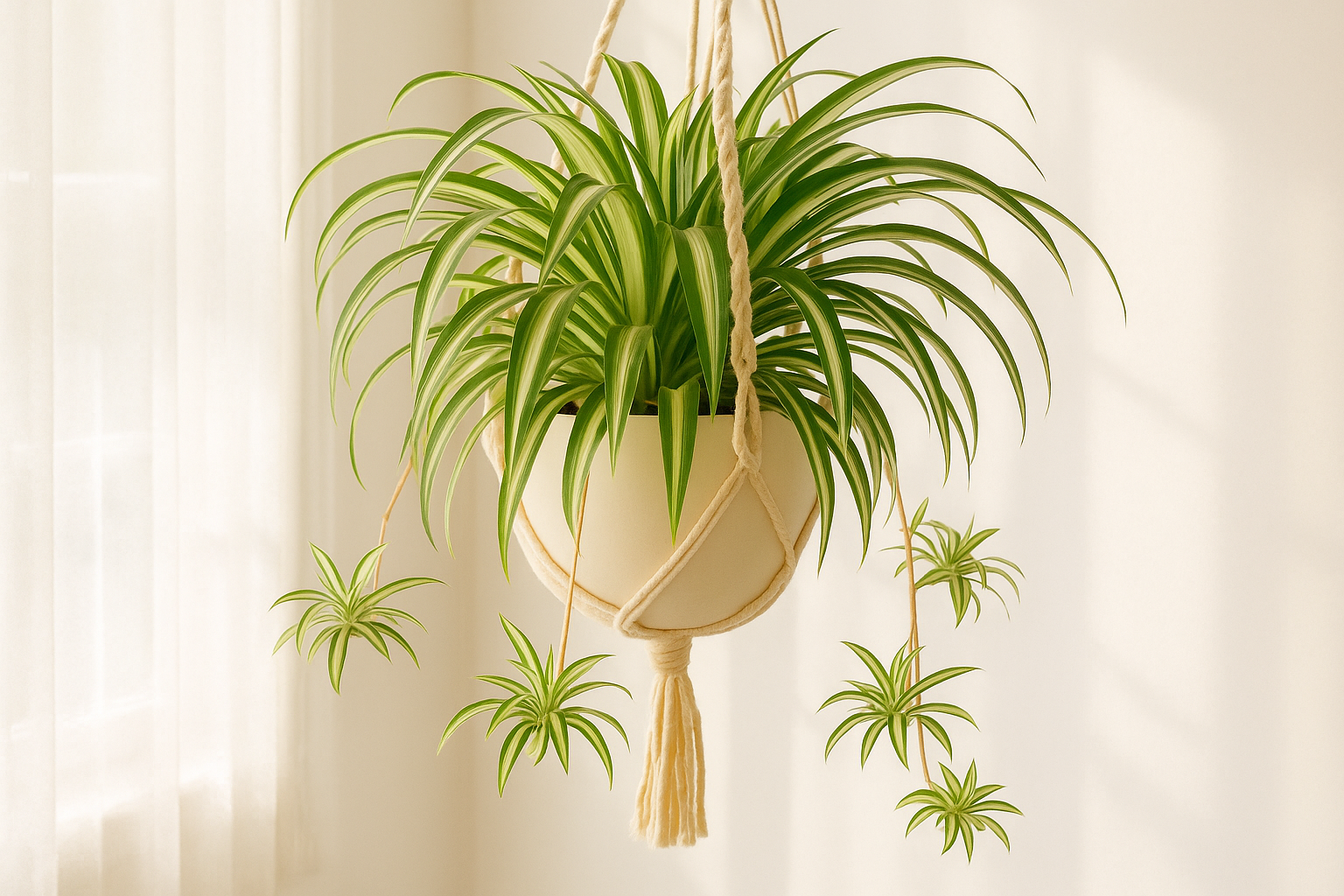
Meet the Spider Plant: Your New Favorite Housemate
Let me introduce you to Chlorophytum comosum — the spider plant. You probably had one in your dorm room in 2003. Your mom had one in 1987. They're everywhere, and there's a reason for that.
Spider plants are the triple threat of houseplants: NASA certified them as effective air purifiers, they're completely non-toxic to cats and dogs (unlike that peace lily you're coveting), and they produce cascading baby plants — called spiderettes — on long stems like some kind of plant factory you never have to feed.
They've been popular since the Victorian era and have somehow never stopped being relevant. That's rare in plant trends.
Spider Plant Varieties: Vittatum vs Bonnie vs Variegatum
Three varieties dominate the market. Here's how to tell them apart:
| Variety | Variegation | Growth Habit | Best For |
|---|---|---|---|
| Chlorophytum comosum 'Vittatum' | White center stripe, green edges | Cascading, vigorous | Classic hanging displays |
| Chlorophytum comosum 'Bonnie' | White center stripe, curly/wavy leaves | Compact, curly | Modern apartments, small spaces |
| Chlorophytum comosum 'Variegatum' | White edges, green center | Upright then cascading | The current "it" variety |
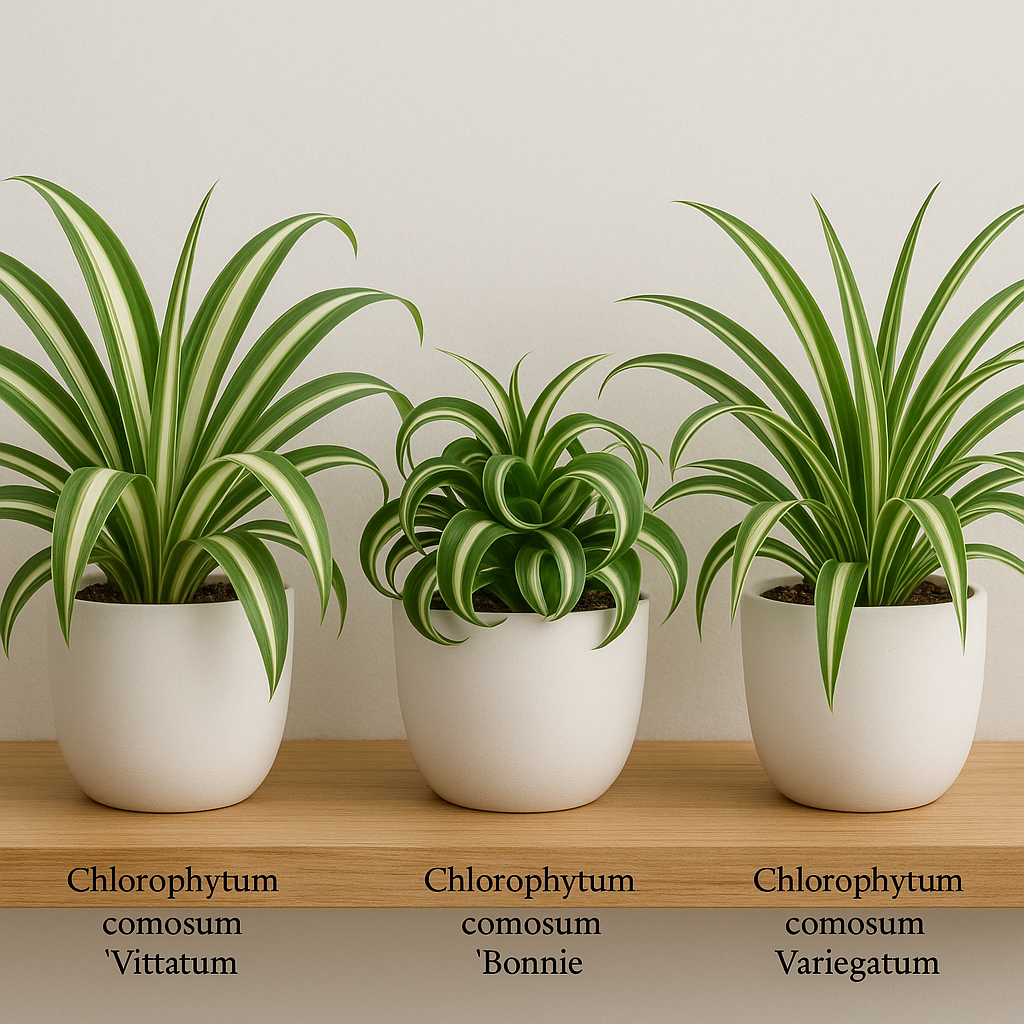
Vittatum is the classic. Bold white stripe down the center of each leaf, green edges, long arching stems that cascade beautifully in a hanging planter. If you picture a spider plant in your head, this is probably it.
Bonnie is the curly one — same white-striped variegation but with wavy, almost corkscrew leaves. It's more compact and looks a bit more chaotic in a good way. Great for smaller spaces.
Variegatum (sometimes called reverse variegated) has white margins instead of a center stripe — the green is in the middle of the leaf, white on the edges. It's gained popularity recently and is often labeled simply as "spider plant" at big box stores.
Spider plants are gorgeous in hanging planters because their arching stems and dangling babies look best displayed elevated. Shop Hanging Planters on Amazon
Light Requirements — Bright Indirect Is the Sweet Spot
Spider plants aren't picky, but they have opinions.
Bright indirect light is the sweet spot — near a window but not in direct sun. Direct sun will scorch the leaves and turn those white stripes brown. A few feet back from a south or east-facing window is ideal.
The good news: spider plants tolerate lower light better than many popular houseplants. The all-green version (Chlorophytum comosum) is particularly shade-tolerant. But lower light means slower growth and fewer babies — and the babies are the whole point, right?
If your spider plant's stripes are fading or disappearing entirely, that's a sign it's not getting enough light. Move it closer to a window.
Watering Your Spider Plant — Less Than You Think (Watch the Fluoride)
Here's the thing most spider plant guides skip over: spider plants are sensitive to fluoride and chlorine in tap water.
If you've ever wondered why your spider plant's leaf tips turn brown even though you think you're watering it correctly — this is probably why. Brown tips are the #1 spider plant complaint, and the cause is usually water quality, not watering frequency.
The rule: Water when the top 2 inches of soil are dry. In most homes, that's every 1–2 weeks. Stick your finger in the soil to check — don't guess.
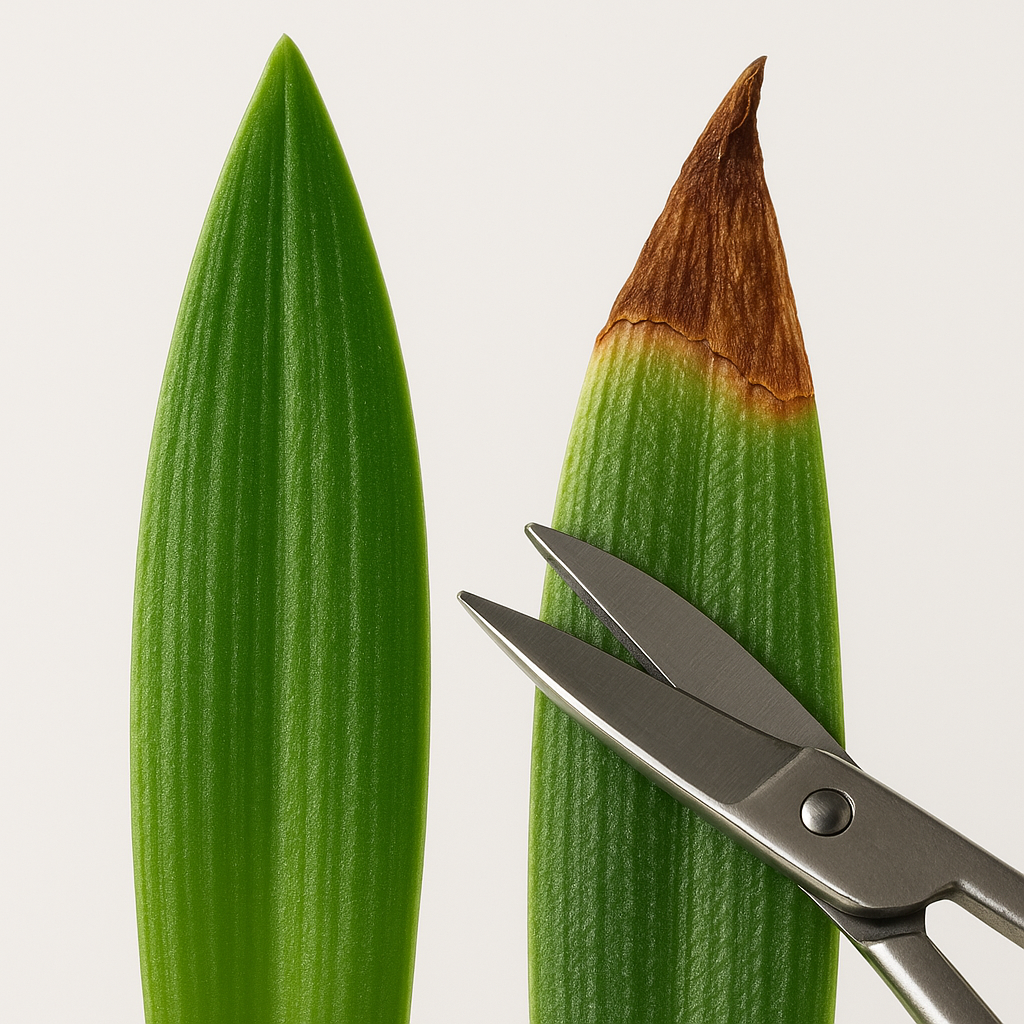
The fluoride problem: Many municipal water systems add fluoride for dental health. Spider plants hate it. If your tap water is fluoridated and your plant's tips are browning, See Water Filter Options on Amazon — or just use filtered or distilled water. Rainwater works too. This single change often eliminates brown tips entirely.
The brown tip rule-out guide:
- Fluoride/chlorine → Switch to filtered/distilled water
- Salt buildup → White crusty residue on soil = flush with clean water, stop fertilizing for a bit
- Low humidity → Dry indoor air in winter = occasional misting or pebble tray
- Overwatering → Soggy soil, yellow leaves = let it dry out more, check drainage holes
- Just old → Lower leaves naturally die off; this is fine
See our general watering guide for more on getting watering right.
Soil & Repotting — Give It Room When It Needs It
Spider plants aren't fussy about soil. A standard well-draining potting mix works fine. Add some perlite if you want to improve drainage — they don't like sitting in soggy soil.
Repotting tip: Spider plants produce MORE babies when slightly rootbound. Don't rush to repot unless the plant is clearly struggling. When you do repot, go up only 1–2 inches in pot diameter. Spring is the best time.
For step-by-step repotting guidance, check our how to repot guide.
Feeding — A Little Boost Goes a Long Way
Feed your spider plant during the growing season (spring and summer) with a balanced liquid fertilizer. Shop Houseplant Fertilizers A standard 10-10-10 or similar indoor plant fertilizer works well.
How often: Once or twice a month during active growth. Once a month is usually enough.
The no-feed season: Fall and winter. Plants slow down and don't need the extra nutrients. Feeding during dormancy leads to salt buildup, which causes — you guessed it — brown tips.
Temperature & Humidity — Average Home Conditions Are Perfect
Spider plants aren't dramatic about temperature. They handle the typical home range of 60–75°F (15–24°C) without complaint. Just keep them away from cold drafts in winter — anything below 50°F and they'll start complaining.
Humidity: Don't overthink it. Spider plants tolerate average household humidity fine. Very dry air (common in heated winter homes) can cause brown tips, but a occasional light misting or humidity tray handles it.
How to Propagate Spider Plant Babies — 3 Methods
This is where spider plants earn their reputation as the gift that keeps on giving. Your mature spider plant sends out long stems with baby plants (spiderettes) that dangle like little parachutes. These babies develop their own roots while still attached to the mother plant — nature's propagation tutorial.
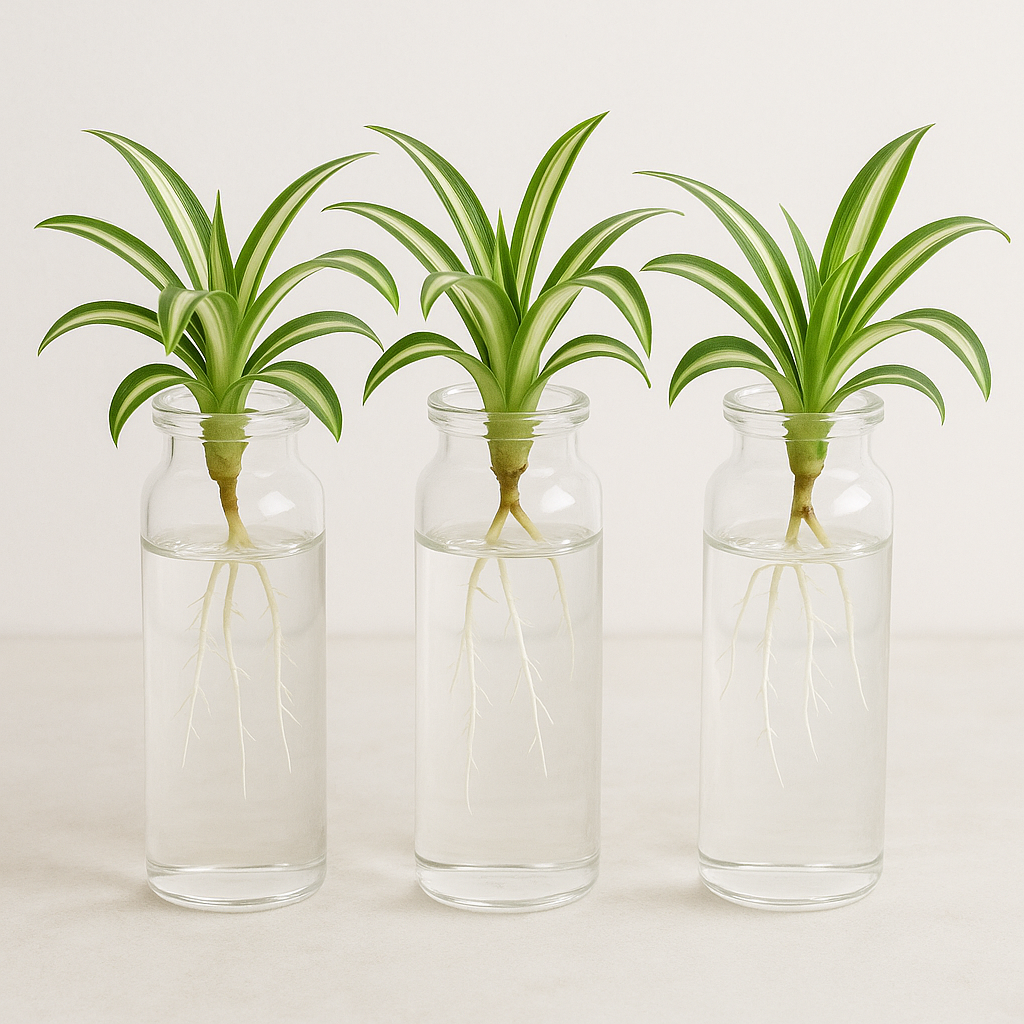
When to cut babies: Wait until the spiderettes are 2–3 inches tall and you can see small root nubs forming at the base. If the baby doesn't have roots yet, it won't survive on its own.
Method 1: Cut and pot directly Cut the baby free from the mother stem with clean scissors. Pot immediately in moist, well-draining soil. Keep the soil lightly moist for 1–2 weeks while it establishes. Done.
Method 2: Water propagation first Cut the baby and place it in a glass of water (roots down, leaves above water). Wait 1–2 weeks for visible roots, then pot in soil. This method is satisfying because you can watch the roots grow.
Method 3: Peg into soil while attached This is the slow option but nearly foolproof. Set a small pot of soil next to the mother plant. Pin the baby onto the soil surface (a small rock or bobby pin holds it in place) while it's still connected to the mother. Keep moist. Once the baby has its own solid root system (2–3 weeks), cut it free from the mother stem.
For more on propagation methods, see our general propagation guide.
All three methods work. Pick whichever fits your setup. Spider plant babies are eager to root — they basically come pre-programmed for propagation.
Common Spider Plant Problems & How to Fix Them
Brown tips — Almost always water-related: fluoride, salts, low humidity, or overwatering. Rule out each cause systematically. Switch to filtered water first — it's the most common fix. If you suspect root rot from overwatering, see our how to treat root rot guide.
Yellow leaves — Usually overwatering. Let the soil dry out more between waterings. If the soil stays soggy, check the roots for rot and repot into fresh, well-draining soil.
No babies — Your plant might be too young (give it 1–2 years), not getting enough light, or in a pot that's too big. Spider plants produce more babies when slightly rootbound in a pot that's snug, not spacious.
Root rot — The result of chronic overwatering. The soil stays soggy, roots turn mushy and brown/black, leaves yellow and wilt. Trim dead roots, repot in fresh soil, water less.
Pests — Rare, but scale insects can occasionally appear. Wipe them off with a damp cloth or treat with neem oil. Spider plants are otherwise pest-resistant.
FAQ — Quick Answers to Your Spider Plant Questions
Is spider plant safe for pets? Yes. Spider plants (Chlorophytum comosum) are non-toxic to cats and dogs according to the ASPCA. Your cat can eat it without dying — though it might cause mild stomach upset if they really binge. See our pet-safe plants list for more options.
How often should I water my spider plant? Every 1–2 weeks, letting the top 2 inches of soil dry between waterings. Frequency depends on your home's temperature and humidity. In winter, water less. A moisture meter helps take the guesswork out.
Can I use tap water? You can, but watch for brown tips. If they appear, switch to filtered, distilled, or rainwater. Fluoride in tap water is the usual suspect.
Why isn't my spider plant producing babies? Give it time (1–2 years to mature), more light, or a snugger pot. Very rootbound spider plants often produce more babies. Also: a healthy, happy plant = more babies.
What's the best pot for spider plants? Anything with drainage holes. Terra cotta breathes and helps prevent overwatering. Plastic retains moisture longer. Pick based on how often you water.
How fast do spider plants grow? Fast. In good conditions, a spider plant produces new leaves regularly and sends out flower stalks with babies throughout the growing season.
Bottom Line
Spider plants are genuinely hard to kill. They're forgiving of inconsistent watering, tolerate average home conditions, and produce an abundance of babies you can share with friends, trade at plant swaps, or just accumulate in every corner of your home.
The one thing that trips people up: water quality. If you remember one thing from this guide, let it be this — use filtered or distilled water if your tap water is fluoridated. Brown tips that won't go away are almost always a water quality issue.
Everything else? Spider plants figure it out for you.
Looking for something harder to kill? Check out our easiest houseplants guide — or if you're serious about air quality, read what actually works versus the NASA myth.
Products We Love
Macrame Hanging Planters — Spider plants cascade beautifully and look best displayed elevated. A simple macrame hanger is all you need.
Water Filter Pitcher — If your spider plant's brown tips won't quit, a Brita-style pitcher with a carbon filter removes the fluoride. This is the easiest fix for the most common spider plant complaint.
Balanced Liquid Houseplant Fertilizer — Feed monthly during spring and summer. A standard balanced fertilizer (10-10-10 or similar) is all you need.
Moisture Meter — Takes the guessing out of watering. Spider plants are overwatered more often than underwatered — a moisture meter tells you exactly when the top 2 inches are dry.