Spider Mites
The tiny vampires wreaking havoc on your plants — and how to send them packing.
What Are Spider Mites, Actually?
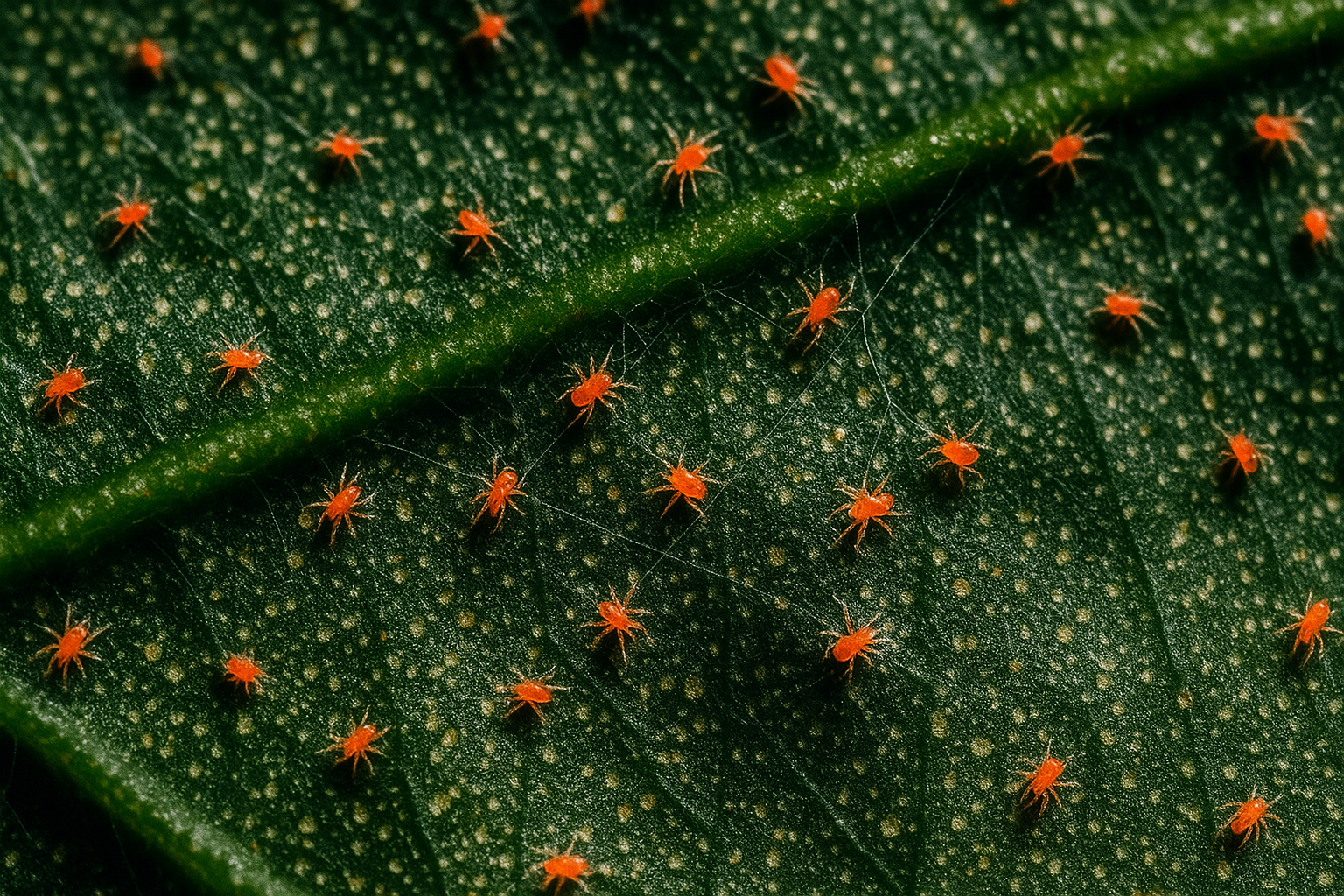
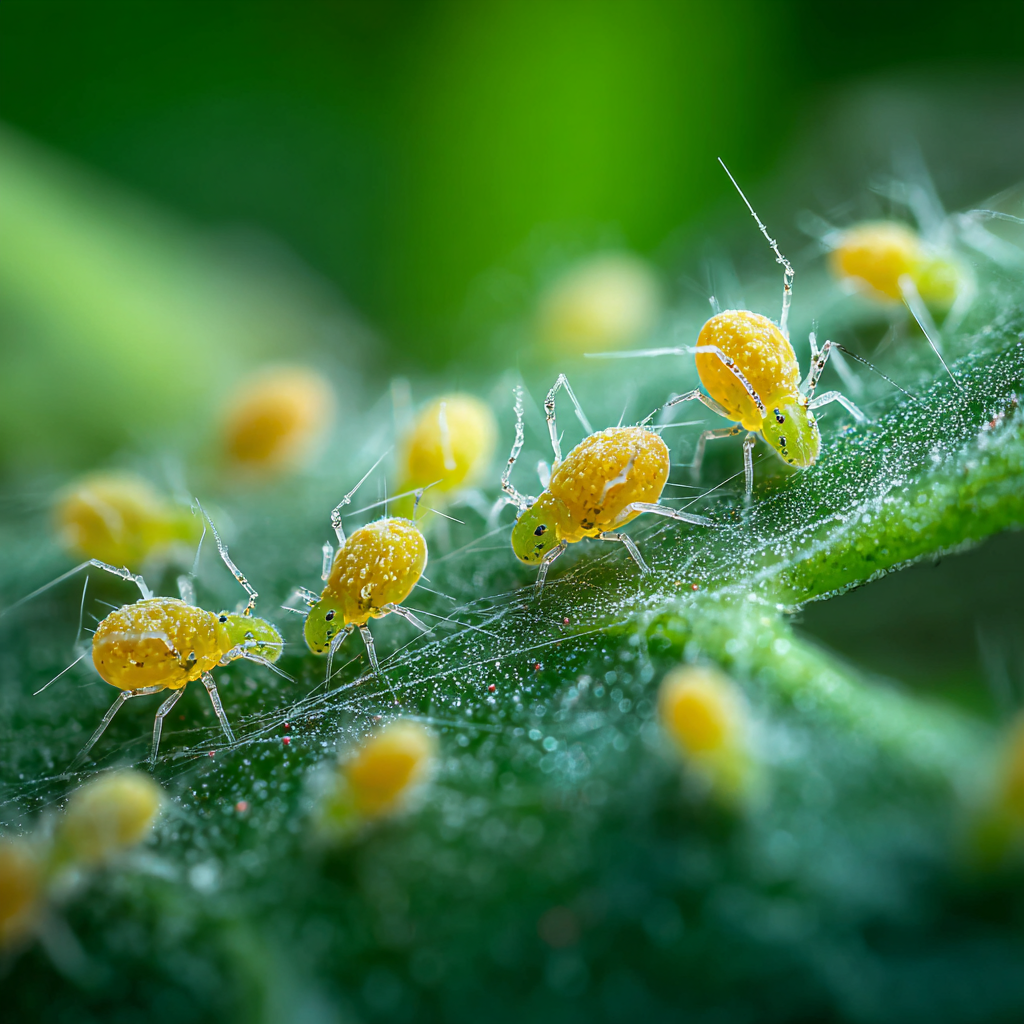
Let's get the bad news out of first: spider mites aren't insects. They're arachnids — eight-legged cousins of spiders. That means your standard insect sprays? Basically useless. These little jerks have a different anatomy, and they need different treatment.
The basics:
- Size: We're talking microscopic. The period at the end of this sentence could fit about 250 of them. You won't see them with the naked eye until there's already a full-blown infestation.
- Species: The most common houseplant offender is the two-spotted spider mite (Tetranychus urticae). Creative naming, we know.
- Reproduction: In warm conditions (70°F+), a single female can lay 20 eggs per day. Those eggs hatch in 3 days. Do the math. One week = several hundred mites. Two weeks = plant apocalypse.
- Webbing: They spin fine, silky webbing (hence the name). This isn't the cobweb stuff in your corners — it's almost invisible at first and shows up between leaves and along stems.
Myth-busting (because the internet is full of BS):
- Do they bite humans? No. They don't care about you. They want plant sap. Your blood is worthless to them.
- Can they live in soil? No. They live on the plant. If you see something in the soil, it's probably fungus gnats (different problem, different solution).
- Are they spiders? Anatomically, yes. Behaviorally, they're more like tiny vampires who also happen to be decent web spinners.
How to Identify Spider Mites (Before It's Too Late)
Here's the thing about spider mites: by the time you notice them, they've usually been partying on your plant for weeks. Early detection is everything.
The Paper Shake Test
This is your new best friend. Take a white piece of paper, hold it under a leaf, and tap the leaf firmly. If you see tiny specks crawling around that look like orange or red dust — congratulations, that's spider mites. They smear red when crushed (satisfying, but concerning).
Visual Signs
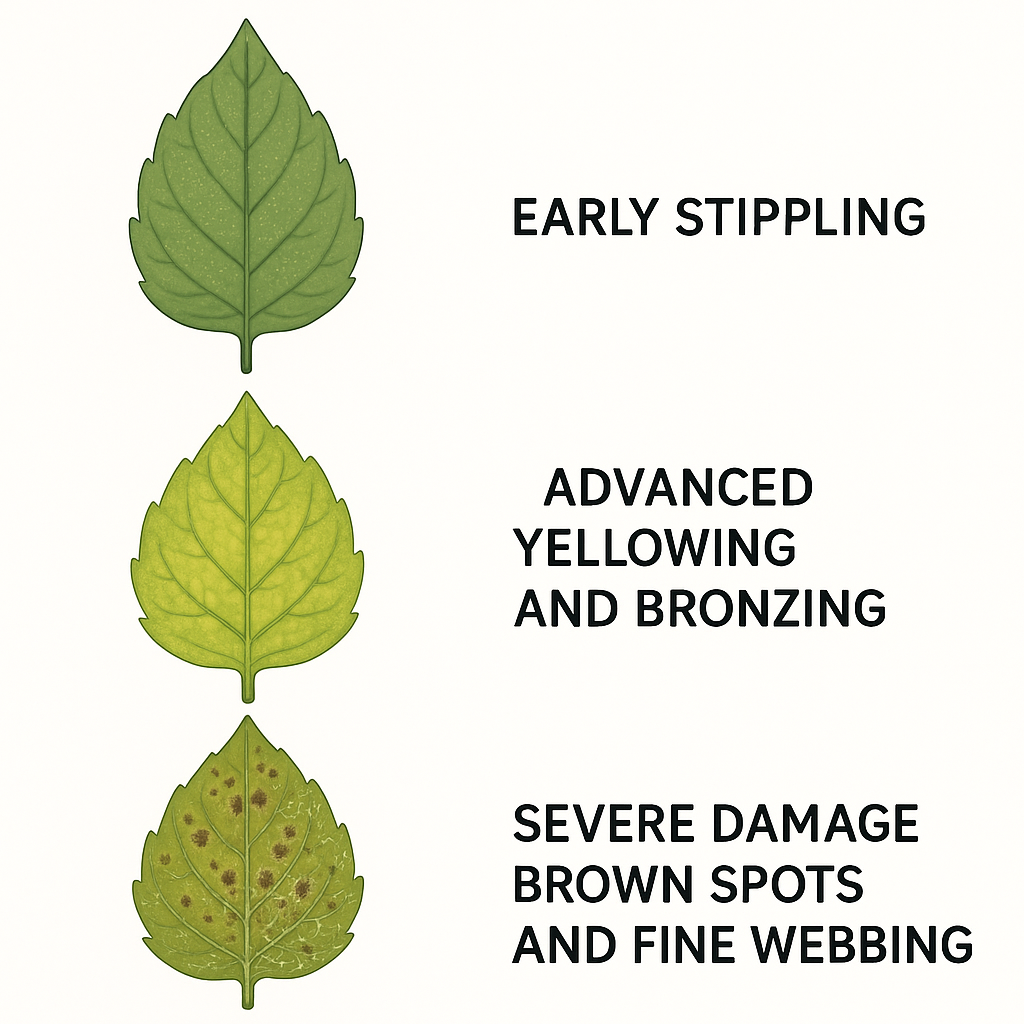
Early stage:
- Tiny yellow or white stippling on leaves (like someone poked the leaf with thousands of microscopic needles)
- Fine webbing between leaves or along stems
- Leaves looking slightly dusty or faded
Advanced stage:
- Leaves turning bronze, yellow, or brown
- Heavy webbing covering entire sections
- Leaves dropping off
- Plant looking generally pathetic and sorry for itself
Magnification Help
If the paper test feels inconclusive, get a 10x magnifying glass or use your phone's macro mode. You might be able to spot the actual mites (they look like tiny orange/red dots moving around). Two spots on their back = two-spotted spider mite. Case closed.
Emergency Treatment Protocol (You Found Them — Now What?)
Panic is justified. But channel that panic into action. Here's what to do, in order:
Step 1: Quarantine. Immediately.
Move the affected plant far away from all other plants. Spider mites can crawl between pots that are close together. Consider this plant radioactive until further notice.
Step 2: Assess the Damage
- Light infestation (a few specks, minor stippling, minimal webbing): Treatable. Keep the plant.
- Medium infestation (visible webbing, yellowing leaves, 30%+ affected): Treatable but prepare for a fight. Worth saving if the plant has sentimental value or cost more than $30.
- Heavy infestation (heavy webbing, leaves falling, plant looks half-dead): At this point, you need to make a hard call. Some plants are not worth saving — the mites have probably spread to nearby plants anyway. Toss it. Compost it. Move on. Your other plants need your attention.
Step 3: Prune Heavily Damaged Leaves
Remove leaves that are more than 50% damaged. Don't go crazy — removing more than 30% of foliage stresses the plant further. But anything clearly dead or dying has gotta go.
Step 4: Shower the Plant
Take that plant to the shower (or outside with a hose) and blast it with water. Focus on the undersides of leaves where mites love to hang out. This removes a huge portion of the population immediately. It's not a cure, but it's a start.
Step 5: Apply Treatment
After the shower, apply your chosen treatment (see next section). Coverage is key — get the undersides of every leaf.
Step 6: Repeat
Here's the brutal truth: one treatment won't cut it. Spider mite eggs take 3 days to hatch, and they hide in places sprays might miss. You need to treat every 5-7 days for at least 2-4 weeks to break the lifecycle. Mark your calendar. Set reminders. This is a commitment.
Treatment Options Ranked (Cheapest to Nuclear)
Not all treatments are created equal. Here's the honest breakdown:
Rubbing Alcohol Spray (~$5)
DIY option. Mix 1 part 70% isopropyl alcohol with 4 parts water in a spray bottle.
- Pros: Cheap, fast, effective on contact
- Cons: Can burn sensitive plants (test on one leaf first), only kills what it touches
- Best for: Quick knockdown on light infestations, budget-conscious plant parents
Dish Soap Solution (~$2)
A few drops of dish soap in a spray bottle of water. That's it.
- Pros: Extremely cheap, readily available
- Cons: Can also burn plants, less effective than other options
- Best for: First-line defense, or when you don't want to buy anything
Insecticidal Soap (~$12)
Store-bought, formulated specifically for soft-bodied insects.
- Pros: Designed for this, generally plant-safe, effective on contact
- Cons: Only kills what it touches (no residual effect)
- Best for: Most situations. A solid mid-range choice.
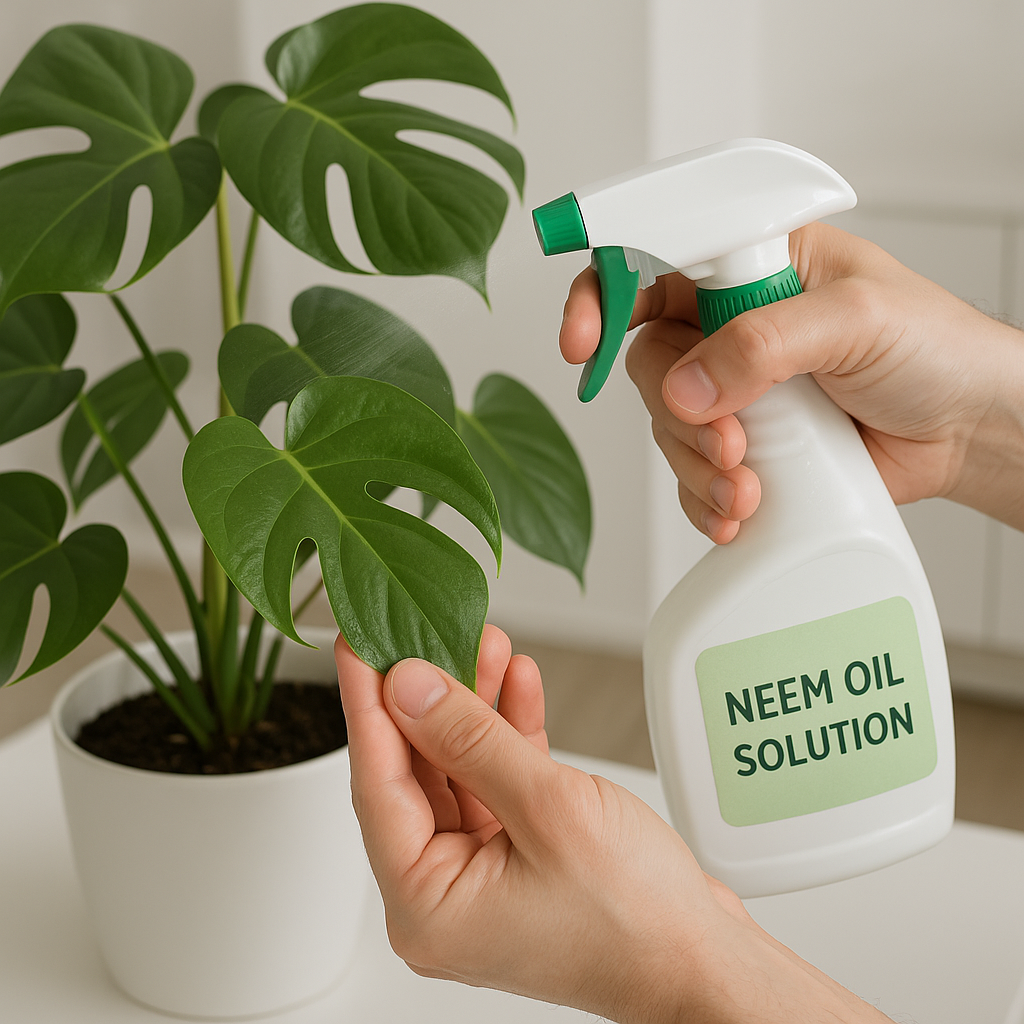
Neem Oil (~$15)
Natural oil that disrupts mite hormones and makes leaves taste terrible.
- Pros: Organic, has some residual effect, works on eggs too
- Cons: Smells like sulfur (some people hate it), can go rancid, can burn in direct sun
- Best for: Ongoing prevention or treatment. Our personal favorite.
Horticultural Oil (~$20)
Similar to neem but more refined. Smothers mites and eggs.
- Pros: Effective, works in cooler temps than neem
- Cons: Can cause leaf burn on some plants
- Best for: When neem isn't cutting it
Beneficial Insects (~$30-50)
Predatory mites (Phytoseiulus persimilis or Neoseiulus californicus) that eat spider mites for lunch.
- Pros: Natural solution, they hunt down mites even in hidden spots
- Cons: Expensive, need to order online, less effective if infestation is huge
- Best for: Greenhouse setups, valuable plants, or when you want the nuclear option without chemicals
Chemical Pesticides (Last Resort)
Only if nothing else works. We're talking products with abamectin, spiromesifen, or similar.
- Pros: Effective
- Cons: Toxic to beneficial insects, humans, pets. Can cause resistance. Should be last resort.
- Best for: Professional greenhouse situations, not your living room
How to Prevent Spider Mites
Here's the part where we tell you an ounce of prevention is worth a pound of cure. And it's true.
Humidity Is Your Friend
Spider mites love dry air. They thrive in the arid conditions of heated homes in winter. Combat this with:
- Humidifier: The single best investment for plant health in general
- Pebble trays: Fill a tray with pebbles and water, set pots on top (not in water)
- Group your plants: They create a microclimate with higher humidity together
- Mist?: Controversial. Some say it helps; others say it just wets leaves without raising humidity long-term. We're in the "skip it" camp — humidity comes from actual water evaporating, not mist.
Regular Inspections
Make inspecting your plants part of your routine. Once a week, maybe while you're watering. Focus on:
- Undersides of leaves
- New growth (mites love tender new leaves)
- Any plant that's looking slightly off-color
In winter? Inspect every 3-5 days. Spider mites are most active when indoor heating dries everything out.
Quarantine New Plants
New plants are the #1 introduction vector. Keep new arrivals separate from your collection for 14 days. Check them thoroughly during that time. Yes, even the one from the nice local nursery.
Monthly Preventative Spray
Once a month, hit your plants with a light neem oil or insecticidal soap spray. Focus on the undersides of leaves. This keeps any early introductions from getting established.
Don't Let Plants Get Water-Stressed
Dry, stressed plants are more susceptible to mites. Keep up with watering. Don't let soil go bone-dry between waterings (unless the plant prefers that, obviously).
Air Circulation
Mites prefer still air. A small fan or good airflow helps deter them. Don't go crazy — you want to keep humidity up, not create a wind tunnel. But don't stuff plants in a corner with zero airflow either.
Plants That Attract Spider Mites (And Those That Don't)
Some plants are basically spider mite magnets. It's not fair, but it's reality. Knowing your risk level helps you allocate your attention where it's needed most.
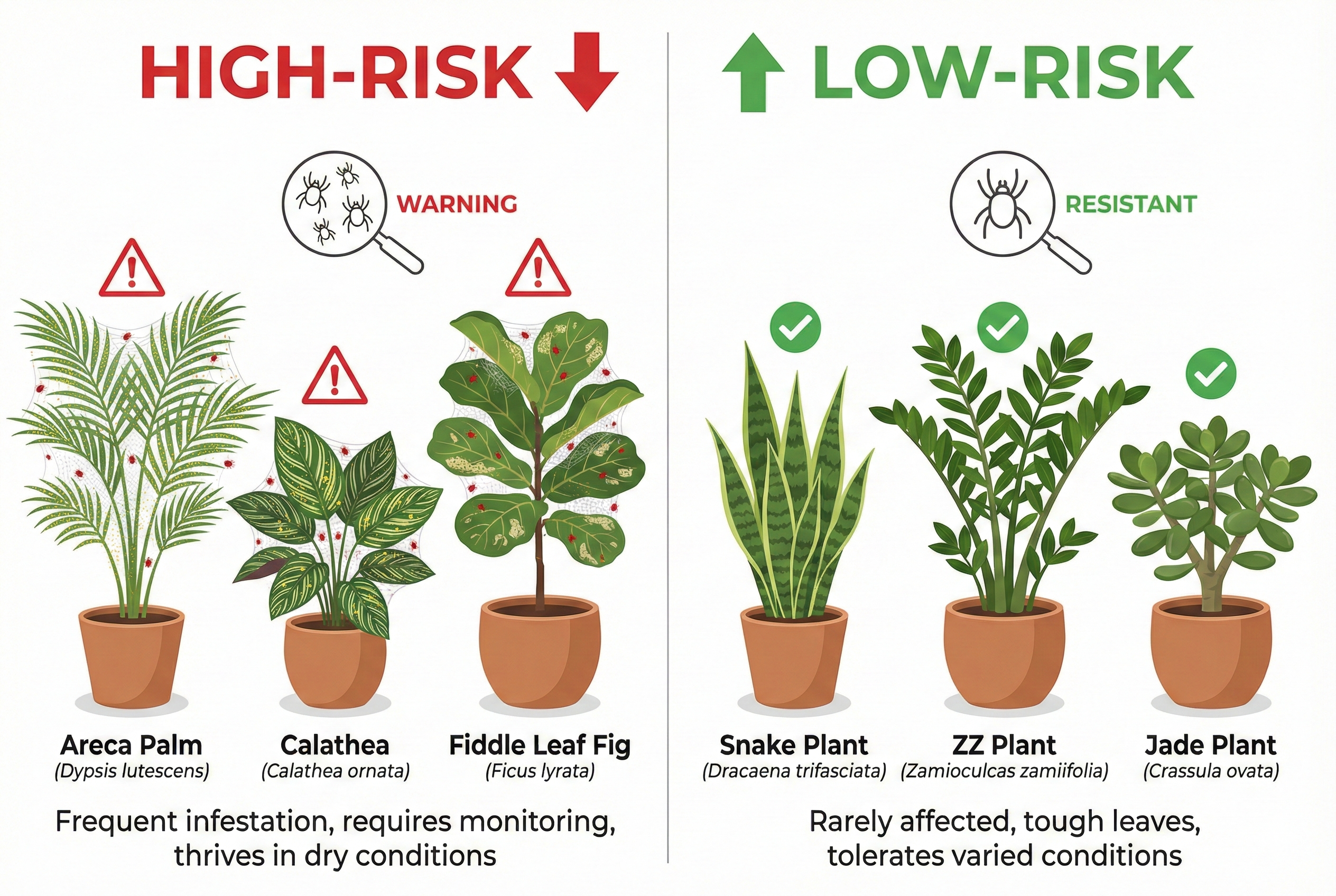
High-Risk Plants (Extra Vigilance Required)
These plants need extra attention. Consider them on probation:
- Palms: Especially areca and kentia. They hate dry air, and spider mites love them. The combination of palm drama + mite attraction makes palms one of the highest-risk categories. Check them twice weekly in winter.
- Calathea: The divas of the plant world. They demand high humidity anyway, but low humidity = mite buffet. If you've got calatheas and they're not getting 50%+ humidity, mites are a constant threat.
- Fiddle Leaf Fig: Beautiful but high-maintenance. Mites adore them. The large leaves provide plenty of surface area for feeding, and the stress of indoor conditions makes them vulnerable.
- English Ivy: Classic spider mite hangout. If you've ever grown English ivy indoors, you've probably met these pests. The trailing habit creates dense foliage where mites can hide.
- Roses (indoor): Yeah, people grow these indoors. Good luck. Roses are mite magnets outdoors, and indoor conditions don't improve matters.
- Citrus trees: Indoor citrus are notorious for spider mite problems. The thin, tender leaves are easy to puncture and the mites love the slightly sweet sap.
Low-Risk Plants (Your Stress-Free Options)
These are the plants that can generally hold their own:
- Snake Plant: Thick, tough leaves that mites struggle to penetrate. The leathery texture and lower moisture content make it unappetizing.
- ZZ Plant: Same deal — almost bulletproof. The waxy coating on leaves deters most pests, spider mites included.
- Jade Plant: Succulents in general are less appealing due to their water-storing capabilities. Thicker leaves = harder to damage = less appealing buffet.
- Pothos: Not immune, but generally tougher than the drama queens above. They're forgiving plants that bounce back from pest damage better than fussy plants.
- Rubber Plant: The thick, glossy leaves are less appealing than thin-leaved alternatives. Still worth checking, but lower risk.
If you're building a collection and hate pests, lean toward the tough stuff. The snake plant and ZZ plant won't thank you for your attention, but they also won't die if you ignore them for a week.
FAQ: Spider Mite Myths & Panic Questions
We've collected the most common panic questions from plant parents dealing with these tiny terrors. Here are the honest answers:
Do spider mites bite humans? No. Zero. They want nothing to do with you. They're only interested in plant sap. Your blood is completely uninteresting to them. You won't get any weird bites from handling infested plants.
Can spider mites live in my carpet or furniture? No. They need plants to survive. If the plant is gone, they're gone. They won't infest your home the way bed bugs or dust mites might. Your couch is safe.
How fast do they spread? Alarmingly fast. One female can lay up to 20 eggs per day, and those eggs hatch in just 3 days under warm conditions. That's why a "few specks" can become a full-blown infestation in under two weeks. The math is not in your favor.
When is it too late to save a plant? When leaves are more than 50% damaged and falling off, and the stems are covered in webbing, you're probably fighting a losing battle. At that point, you're spending more time and money trying to save the plant than it's worth. Sometimes the kindest thing is to toss it and move on.
Can I prevent them completely? Not 100%. They're airborne (sort of — they can drift on currents) and get into homes through windows, on clothing, with new plants. But you can make your plants less appealing and catch them early. Prevention is about reducing risk, not eliminating it entirely.
Do neem oil and insecticidal soap work? Yes. They're our go-to recommendations. Neem has the bonus of some residual effect, meaning it keeps working after you spray it. Insecticidal soap works on contact and is very safe for most plants. Just be consistent with reapplication — that's the key.
What's the paper shake test? It's a simple diagnostic trick: hold a white piece of paper under a leaf, tap the leaf firmly, and look for tiny moving specks. If they look orange or red and smear when you crush them, that's spider mites. It's the easiest way to confirm an infestation without magnification.
Will they come back after I treat? Possibly, especially if conditions remain favorable (dry air, warm temperatures). That's why the prevention section matters. Keep humidity up, inspect regularly, and treat at the first sign of return. The earlier you catch it, the easier it is to knock out.
Should I throw away the pot? If you've treated the plant and it's recovered, the pot is fine — just clean it thoroughly with soap and water. If you're tossing the plant, yeah, throw away the soil too. Don't reuse infested soil.
My plant had spider mites but I treated it. Is it safe near my other plants? Keep it quarantined for at least 2-4 weeks after the last treatment to make sure the mites are completely gone. Better safe than sorry.
The Bottom Line
Finding spider mites sucks. There's no way around it. But they're not a death sentence for your entire collection — provided you act fast, stay consistent, and know when to cut your losses.
Your move:
- Go inspect every plant right now. We'll wait.
- If you found something, quarantine first, treat second.
- If you're clear, buy a humidifier and keep up the weekly inspections.
🌱 Set Your Plants Up for Success
Great plants start with great soil. Here are our go-to mixes and amendments:
*As an Amazon Associate, we earn from qualifying purchases.
You got this. These tiny jerks are beatable.
Want more pest-fighting intel? Check out our Pest ID Guide for identifying other uninvited guests, or grab our Pest Control Kit for the products you need.
Humidity keeping your plants happy? Our Humidity Guide has everything you need to know.