Your snake plant was supposed to be bulletproof. The plant that survives neglect, low light, and your questionable watering habits. Yet there it sits, leaves turning a sad yellow, and you're wondering what the hell happened.
Here's the thing: yellow leaves aren't random. Your snake plant is trying to tell you something, and once you know what to look for, fixing it is usually straightforward.
TL;DR
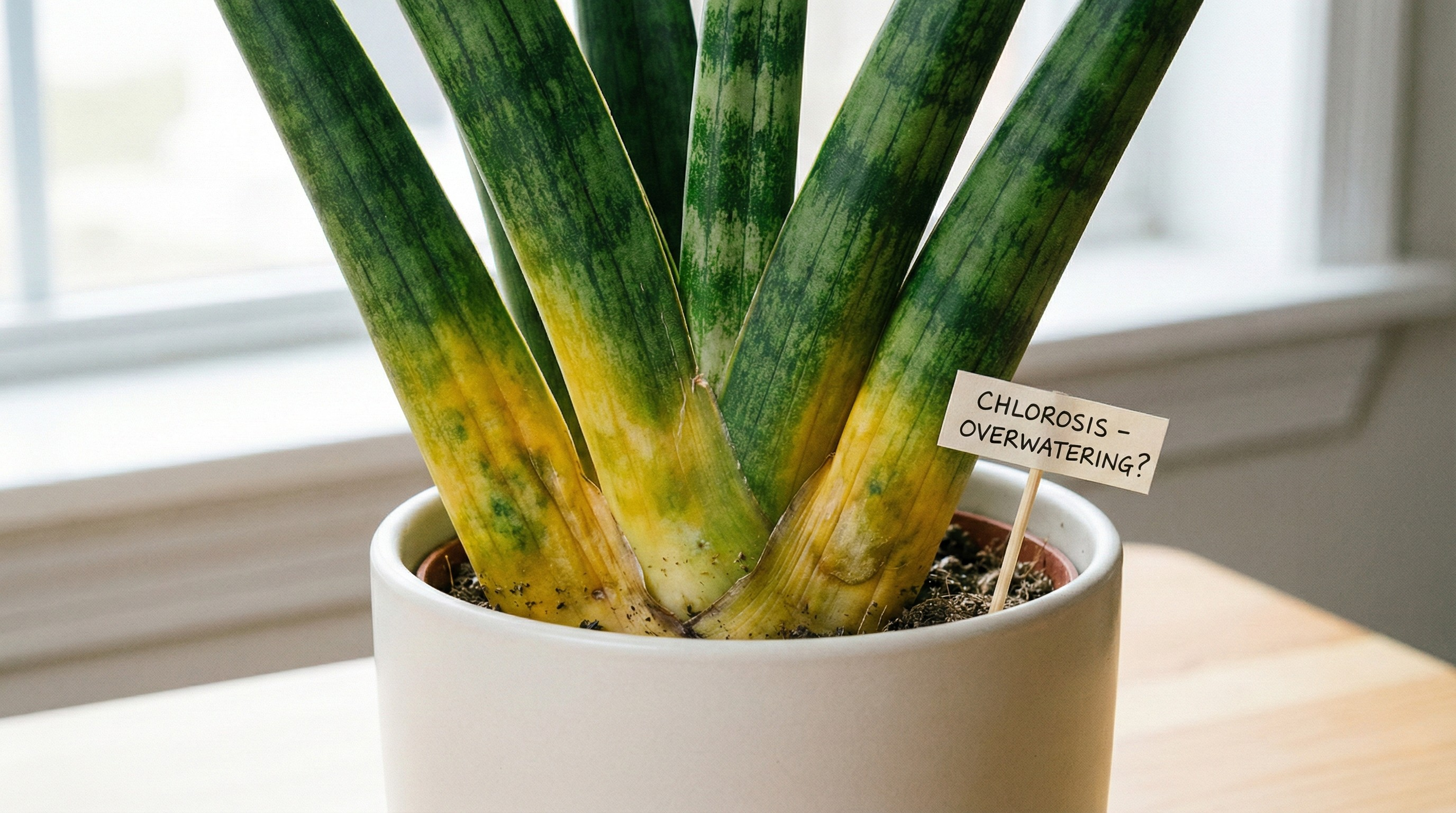
- Overwatering is the #1 cause—snake plants hate wet feet
- Root rot follows overwatering and kills fast
- Natural aging means bottom leaves yellowing is normal
- Poor drainage creates swamp conditions even with careful watering
- Temperature stress from cold drafts or heat vents
- Nutrient deficiencies signal your plant needs a feeding
The #1 Culprit: You're Loving It to Death
Let's start with the most common mistake—overwatering.
Snake plants are succulents. They store water in those thick, handsome leaves and prefer to dry out between waterings. When you treat it like a tropical diva and water weekly, the soil stays wet, roots sit in water, and rot sets in.
Signs you've overwatered:
- Yellowing that starts at the base of the leaves
- Leaves feel mushy or soft when you squeeze them
- Soil stays wet for weeks
- A funky, rotten smell coming from the pot
- Leaves falling over at the base
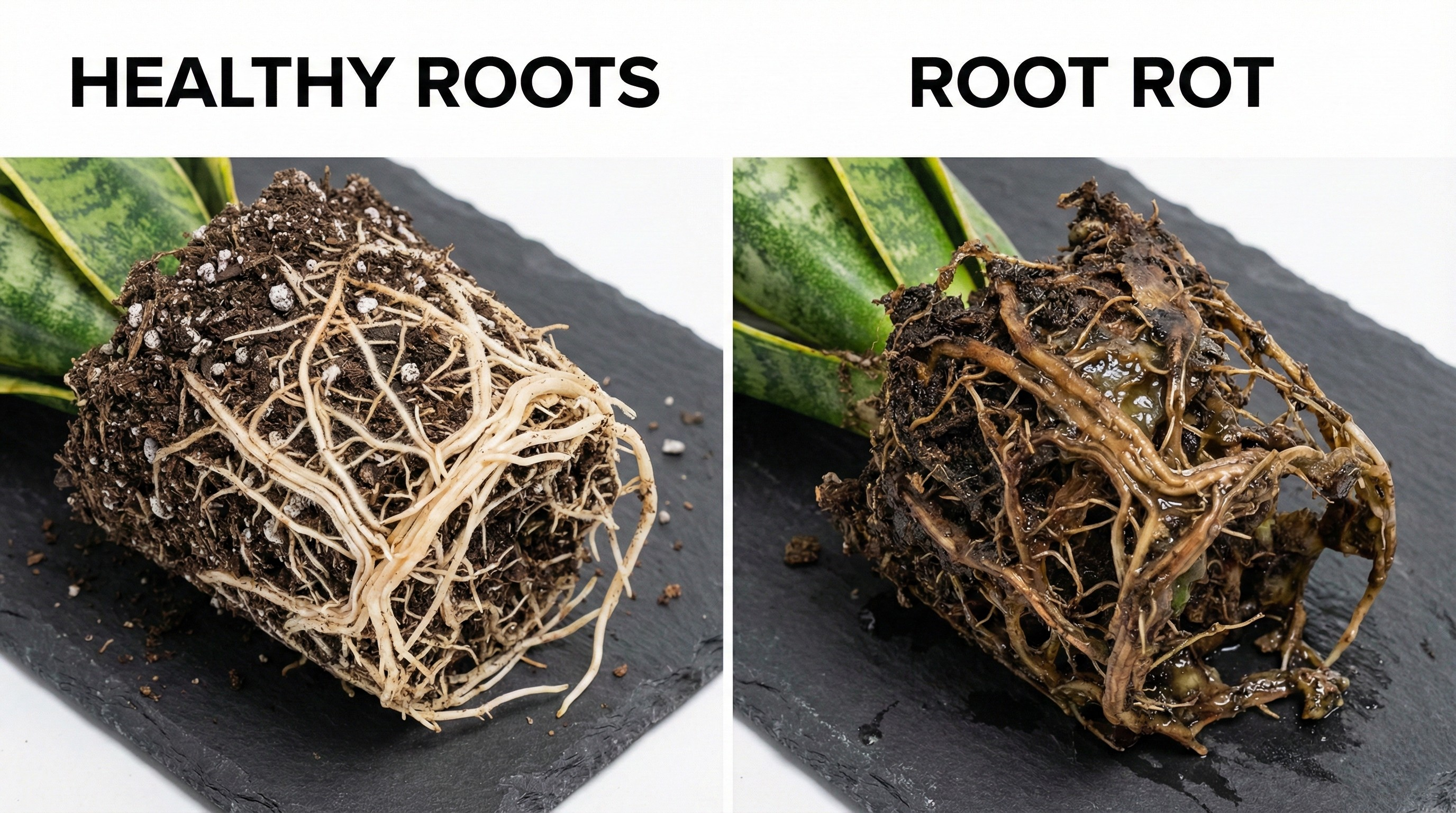
The fix: Stop watering immediately. If the soil is waterlogged, repot into dry, well-draining soil. Check the roots—if they're brown, mushy, and smell bad, you've got root rot. Trim the healthy roots, toss the affected leaves, and repot into fresh soil.
Get your watering schedule sorted. During growing season (spring/summer), every 2-3 weeks is plenty. In winter, monthly might be too often for some homes.
🚿 Level Up Your Watering Game
Ready to make watering easier? Here are our tested tools that actually make a difference:
*As an Amazon Associate, we earn from qualifying purchases.
Root Rot: The Silent Killer
Root rot doesn't announce itself with fanfare. By the time you see yellow leaves, the damage is already done underground.
Your snake plant's roots should be firm and white or light tan. If they're brown, slimy, and falling apart, that's rot. It spreads fast and will kill the entire plant if you don't act.
How to treat root rot:
- Remove the plant from its pot
- Gently shake off all wet soil
- Trim away any brown, mushy roots with sterilized scissors
- Let the healthy roots air dry for a few hours
- Repot in fresh cactus/succulent mix
- Use a pot with drainage holes—yes, really
- Wait at least a week before watering
Prevention is easier than the cure. Always use pots with drainage holes. Never let water sit in the saucer. And for the love of all things green, check soil moisture before watering.
Is It Just Old Age?
Not all yellowing is a crisis. If the oldest leaves at the bottom are yellowing and dying while new growth looks healthy, your plant is just doing its thing.
Snake plants shed their lower leaves as they grow. It's completely normal—think of it like your hair falling out (but less dramatic). The leaf will eventually dry up completely and pull away from the plant.
Normal aging signs:
- Yellowing affects only 1-2 bottom leaves
- New leaves are firm and green
- The yellowing leaf is the oldest one
- No mushiness or soft spots
If this describes your situation, just remove the yellow leaf and move on. Your plant is fine.
Poor Drainage: The Sneaky Problem
You might be watering perfectly, but if your pot doesn't drain, you're still creating a swamp.
That decorative pot without holes? The nursery pot sitting inside a sealed cachepot? The soil that's compacted and won't let water through? All of these are problems.
Signs of drainage issues:
- Water pools on top of the soil
- Soil takes forever to dry
- You notice mineral buildup or mold on the surface
- Roots are sitting in water at the bottom
Fix it:
- Always use pots with drainage holes
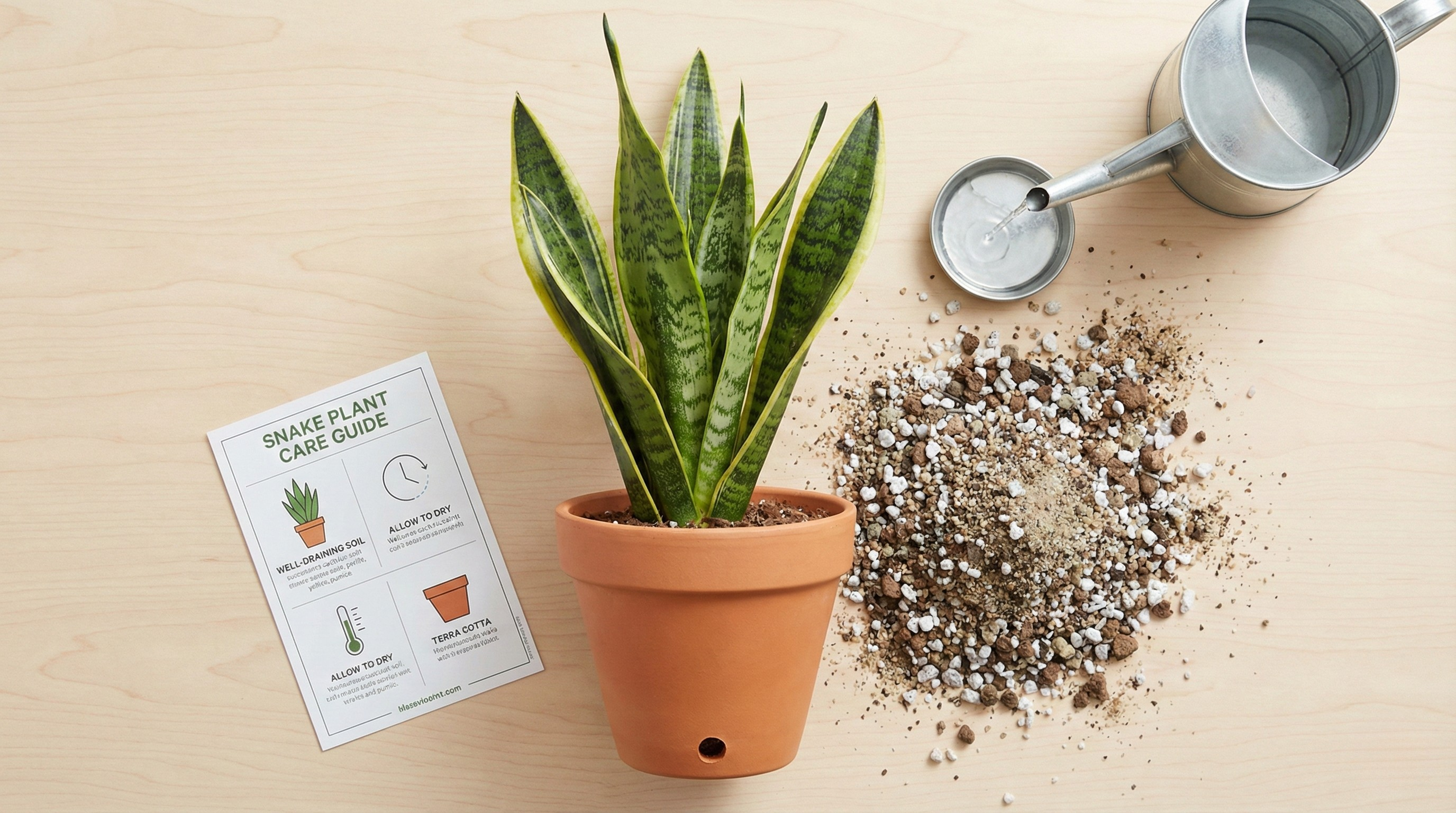
- Use a well-draining soil mix (add perlite or sand if it's too heavy)
- Never let water sit in the saucer
- Consider a terra cotta pot—they wick moisture away faster
Temperature Stress: Too Hot or Too Cold
Snake plants aren't dramatic about temperature, but extreme conditions will stress them out.
Cold damage shows up as yellow or brown patches, often with a water-soaked appearance. If your plant is near a window in winter, near an exterior door, or in an unheated room, it might be suffering.
Heat stress from being too close to radiators, heating vents, or fireplaces causes leaves to yellow and dry out. The edges might look crispy.
What they prefer:
- Temperatures between 60-80°F (15-26°C)
- Away from cold drafts
- Not directly in heating/cooling airflow
- Stable conditions without constant temperature swings
Move your plant to a more stable location and trim any severely damaged leaves. It should recover if the stress wasn't prolonged.
Nutrient Deficiencies: Your Plant is Hungry
Snake plants aren't heavy feeders, but if they're in the same soil for years without any fertilizer, they can run out of nutrients. This shows up as general yellowing, often accompanied by slow growth.
What to do:
- Feed during growing season (spring/summer) with a balanced houseplant fertilizer diluted to half strength
- Once or twice during the growing season is enough—don't overdo it
- In fall and winter, skip the fertilizer entirely
Yellow leaves from deficiencies usually correct themselves once you start feeding. But go easy—too much fertilizer burns roots and causes more problems.
Quick Diagnostic Chart
| Symptom | Most Likely Cause | Quick Fix |
|---|---|---|
| Yellow from base, mushy leaves | Overwatering / root rot | Stop water, check roots, repot |
| Bottom leaves yellowing, healthy new growth | Normal aging | Remove yellow leaves |
| Yellow patches, crispy edges | Temperature stress | Move away from drafts/vents |
| General yellowing, slow growth | Nutrient deficiency | Feed with diluted fertilizer |
| Yellow + wet soil + smell | Root rot | Trim roots, repot in dry soil |
| Yellow + dry, wrinkled leaves | Underwatering (rare but happens) | Water thoroughly |
How to Prevent Yellow Leaves
An ounce of prevention is worth a pound of cure, and snake plant care is pretty simple once you get it right.
Watering:
- Check soil moisture with your finger before watering
- When in doubt, wait another week
- Reduce watering significantly in winter
- Water less if your home is low-light or cool
Potting:
- Always use pots with drainage holes
- Use cactus/succulent mix or add perlite to regular potting soil
- Repot when roots are coming out of drainage holes or the plant is root-bound
- Size up only 1-2 inches when repotting
Light:
- Bright, indirect light is ideal
- Tolerates low light but grows slower
- Protect from harsh direct sun (causes sunburn)
- Rotate the pot occasionally for even growth
General care:
- Keep away from cold drafts and heating vents
- Dust leaves occasionally for better photosynthesis
- Feed sparingly during growing season
- Don't stress about neglect—they're called mother-in-law's tongue for a reason
When to Toss It
Sometimes a snake plant is too far gone. If the entire plant is yellow, the center growth point is mushy, or all the roots are rotten, it might be time to say goodbye.
But here's the good news: even a plant with significant root rot can sometimes be saved by taking leaf cuttings. Propagate the healthy leaves in water or soil, and you might just get a whole new plant.
The Bottom Line
Your snake plant turning yellow is usually overwatering, and the fix is simpler than you think. Check the roots, improve your drainage, and ease up on the watering can. These plants are nearly indestructible—give them half a chance and they'll bounce back.
If you've ruled out overwatering and your plant still looks off, check for pests, consider temperature stress, or think about when you last fertilized. But start with the watering—it's almost always the culprit.
Related articles: