Snake Plant Varieties Compared: Moonshine, Whale Fin & Cylindrica
Three varieties, one plant family — here's how to pick the right one for your space.
Why Snake Plants?
Let's be honest: you probably want a snake plant because you've killed something before. Maybe several somethings. Snake plants (Sansevieria, now officially Dracaena) are the "I literally cannot remember to water things" plant of choice.
They tolerate neglect, adapt to low light, and purify air — well, technically, but you'd need about 30 of them to make a difference. They're also architectural as hell, which is why interior designers keep using them.
But not all snake plants are created equal. Moonshine, Whale Fin, and Cylindrica have wildly different vibes — and a few care differences worth knowing about.
Meet the Three Varieties
Here's the quick intro before we dive into details:
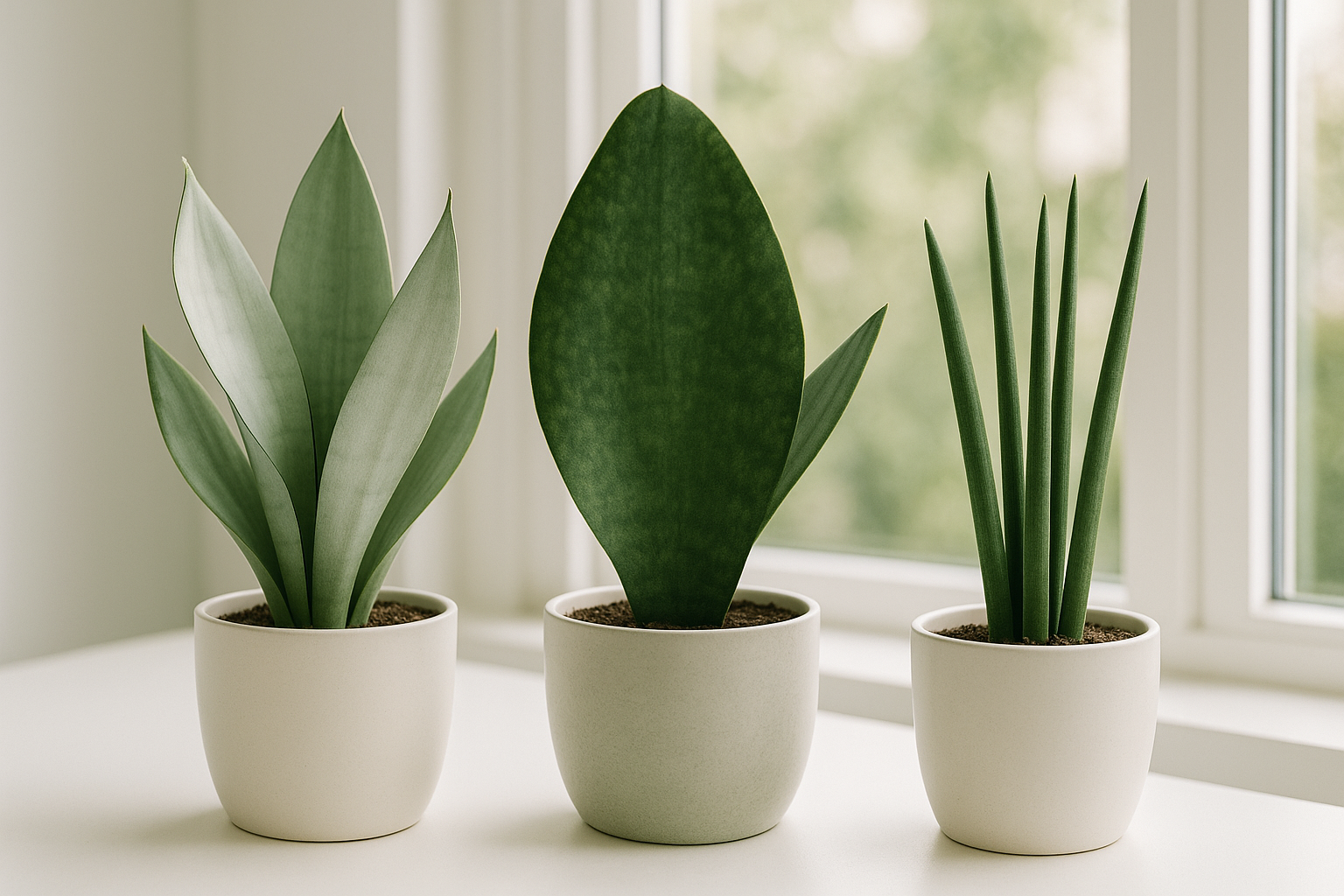
- Moonshine — Silvery pale green leaves, compact grower, needs more light than typical snake plants
- Whale Fin — Massive paddle-shaped leaves, collector favorite, relatively rare
- Cylindrica — Tubular cylindrical leaves that stick straight up like alien antennae
Side-by-Side Comparison
| Moonshine | Whale Fin | Cylindrica | |
|---|---|---|---|
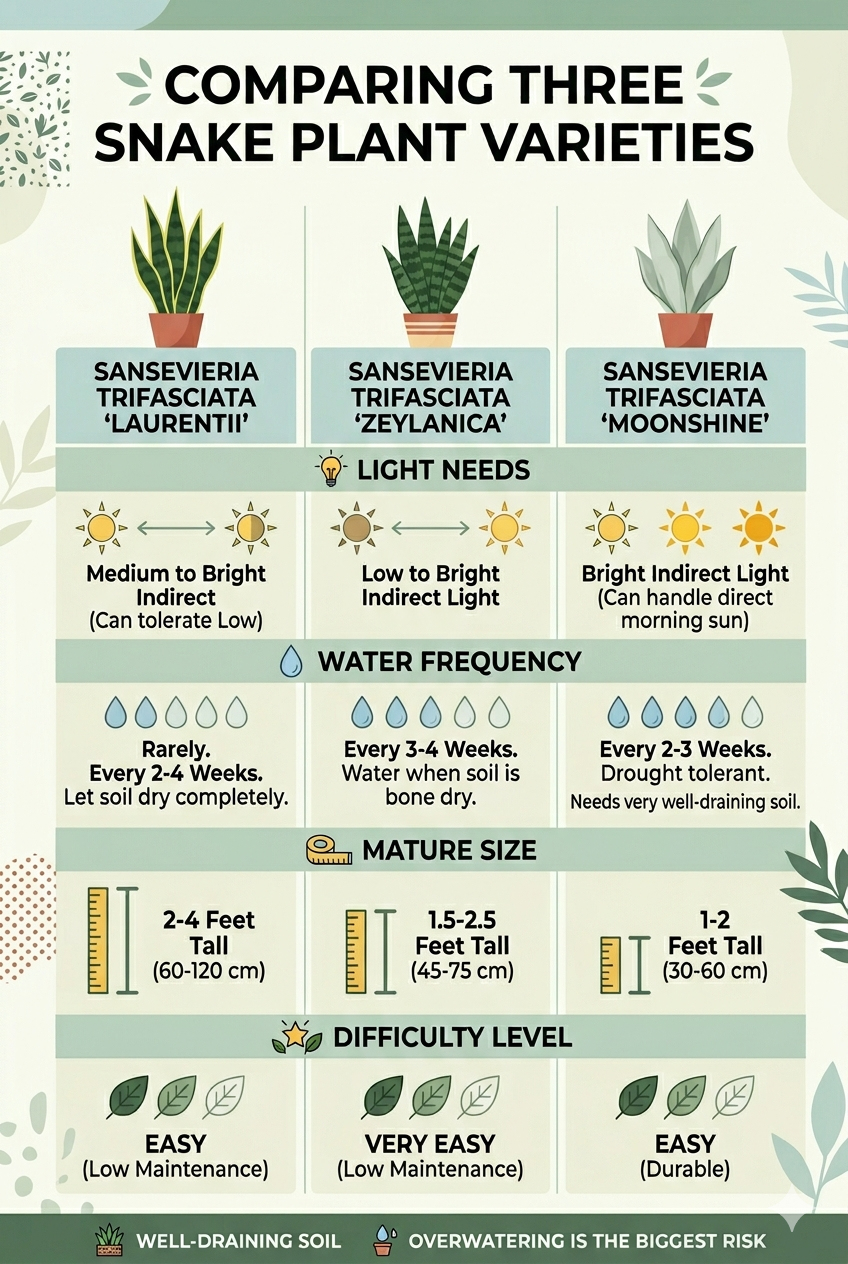
| Light | Bright indirect (needs more than typical snake plants) | Low to bright indirect | Low to bright indirect |
| Water | Allow to dry between waterings | Allow to dry, wide shallow roots | Let soil dry completely |
| Size | 12-24" tall | Up to 4' tall | 2-4' tall |
| Difficulty | Easy | Easy (but pricey) | Easy |
| Price | $15-30 | $40-100+ | $15-40 |
Get Well-Draining Soil — all three varieties need fast-draining mix to avoid root rot.
Moonshine Snake Plant
The light-loving silvery one.
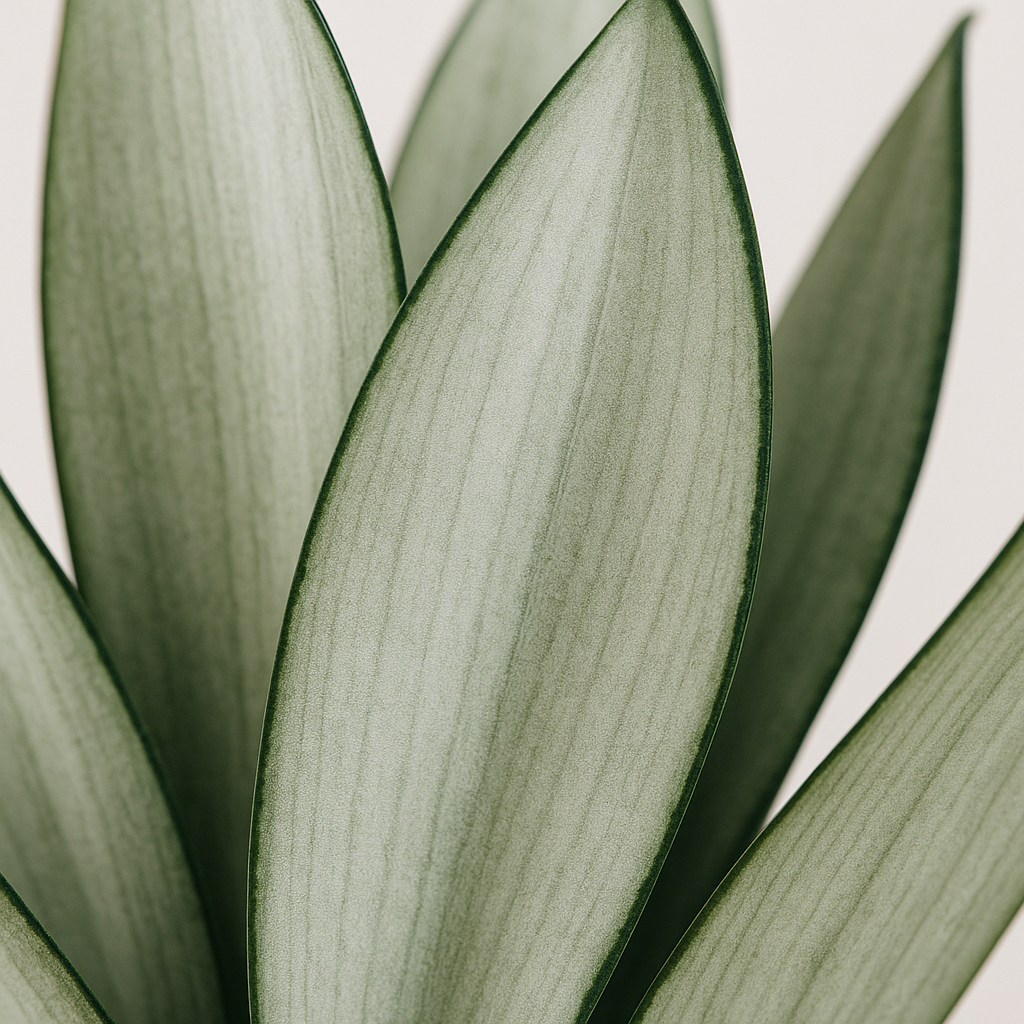
Moonshine (Dracaena trifasciata 'Moonshine') is the snake plant for people who actually put their plants near windows. Most snake plants thrive in low light, but Moonshine gets better with more of it — the silvery color deepens and the leaves grow thicker.
Light Requirements
Moonshine handles low light, but it'll get stretchy and lose that nice silvery color if you keep it in a dark corner. Give it bright indirect light for the best look. Direct sun is okay in small doses — too much can burn the leaves.
If your apartment has no good windows, add a grow light.
Water Needs
Like all snake plants, Moonshine wants to dry out completely between waterings. The silvery leaves are actually a sign it's more drought-tolerant than the green varieties — it stores water efficiently. In winter, you might water once a month. Summer, maybe every 2-3 weeks.
Use a Check Soil Moisture if you're unsure — overwatering is the #1 killer of snake plants.
Whale Fin Snake Plant
The collector's statement piece.
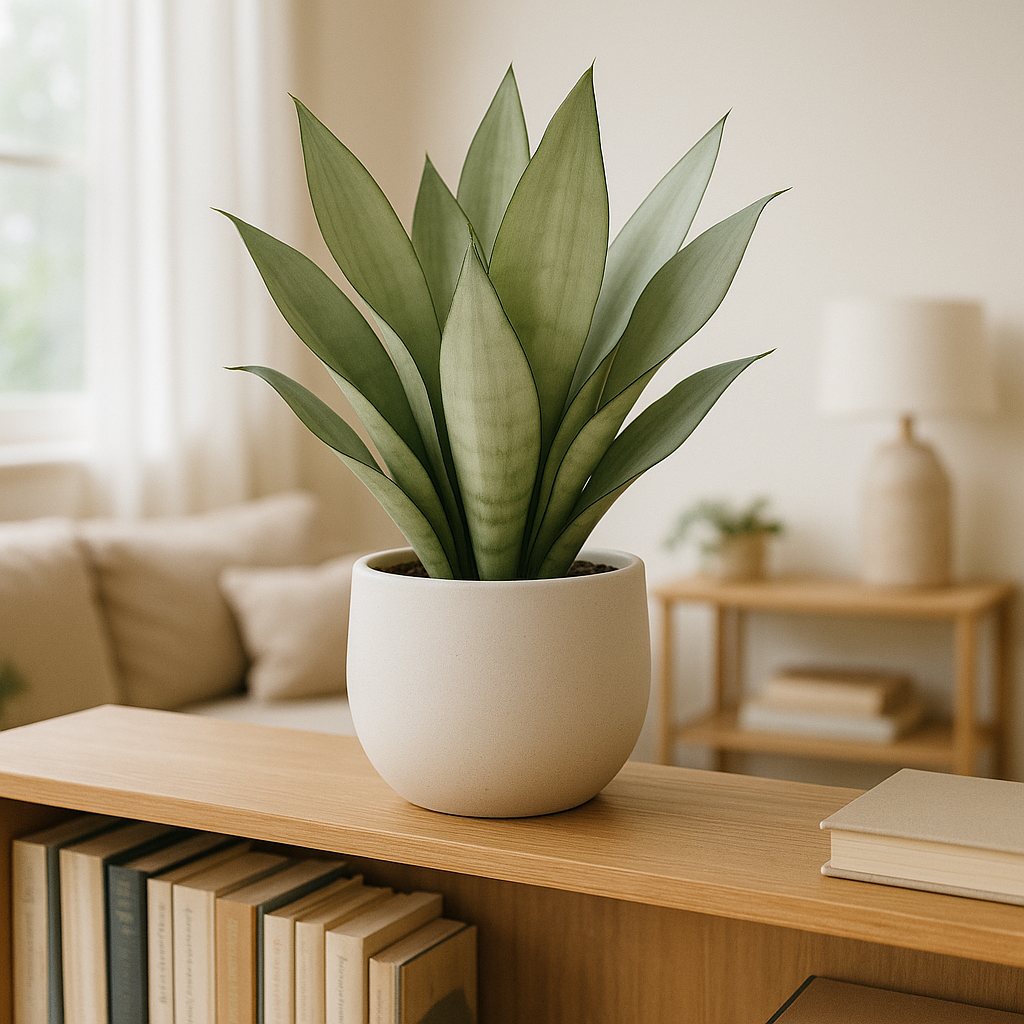
Whale Fin (Dracaena masoniana, sometimes called Sansevieria masoniana) is the one people lose their minds over in plant groups. Those wide, paddle-shaped leaves can reach 2-4 feet tall, and the pattern — subtle mottled green on dark green — is genuinely striking.
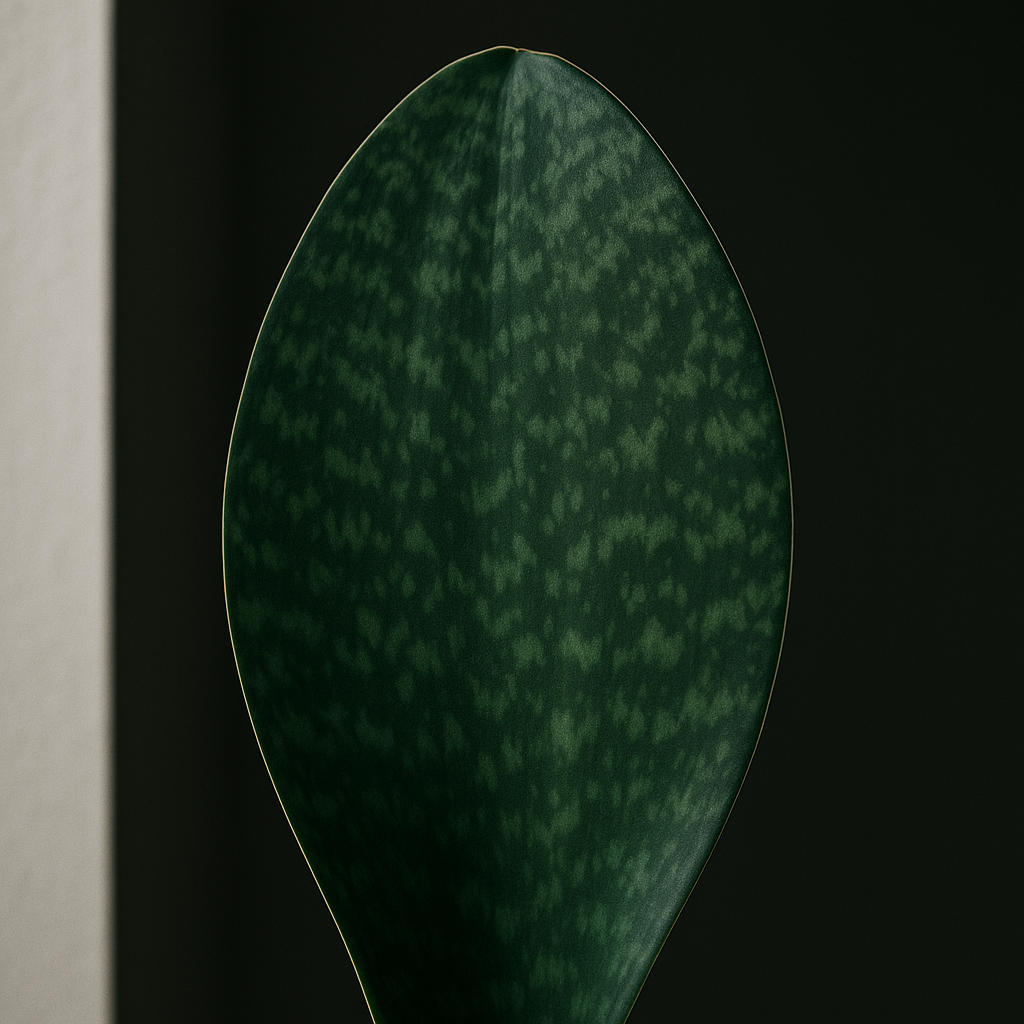
It's rarer and more expensive than standard snake plants, which makes it feel special. But it's not actually harder to care for — just harder to find.
Light Requirements
Whale Fin is forgiving. Low light, bright light, it doesn't seem to care much. It'll grow faster in bright indirect, but it'll survive in that dark corner where your other plants go to die.
Water Needs
Here's where Whale Fin is a little different: it has wide, shallow roots. When you water, make sure the water actually reaches those roots — a wide shallow pot helps. Let it dry out completely, then water deeply until water runs out the drainage holes.
Avoid letting it sit in water — those wide roots are prone to rot.
Shop Wide Pots — these give Whale Fin's roots room to spread without drowning.
Use a Check Soil Moisture before watering — the shallow root system makes overwatering extra dangerous.
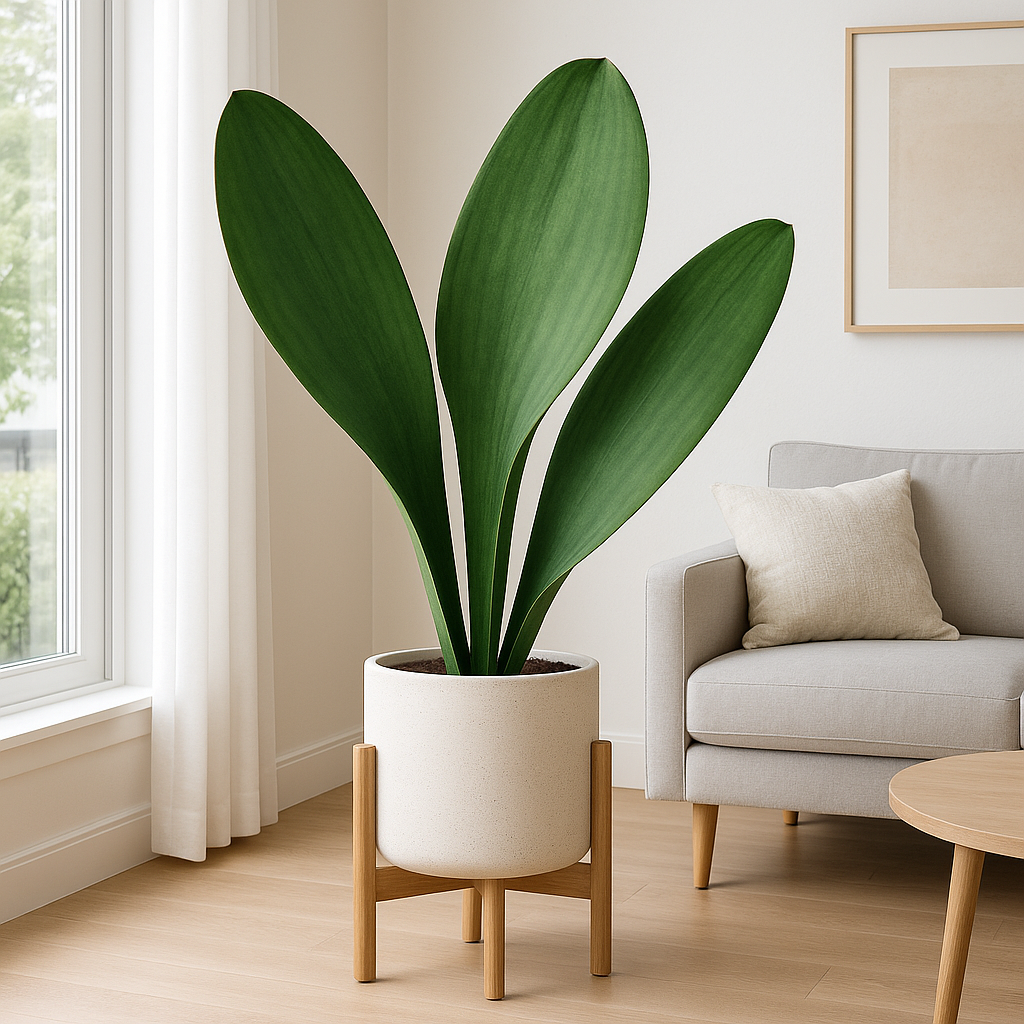
Cylindrica Snake Plant
The sculptural oddball.
Cylindrica (Dracaena cylindrical, also called African Spear) doesn't look like a typical snake plant. Instead of flat leaves, it has cylindrical tubes that grow straight up in a fan shape. Think of it as the plant version of a sea urchin.
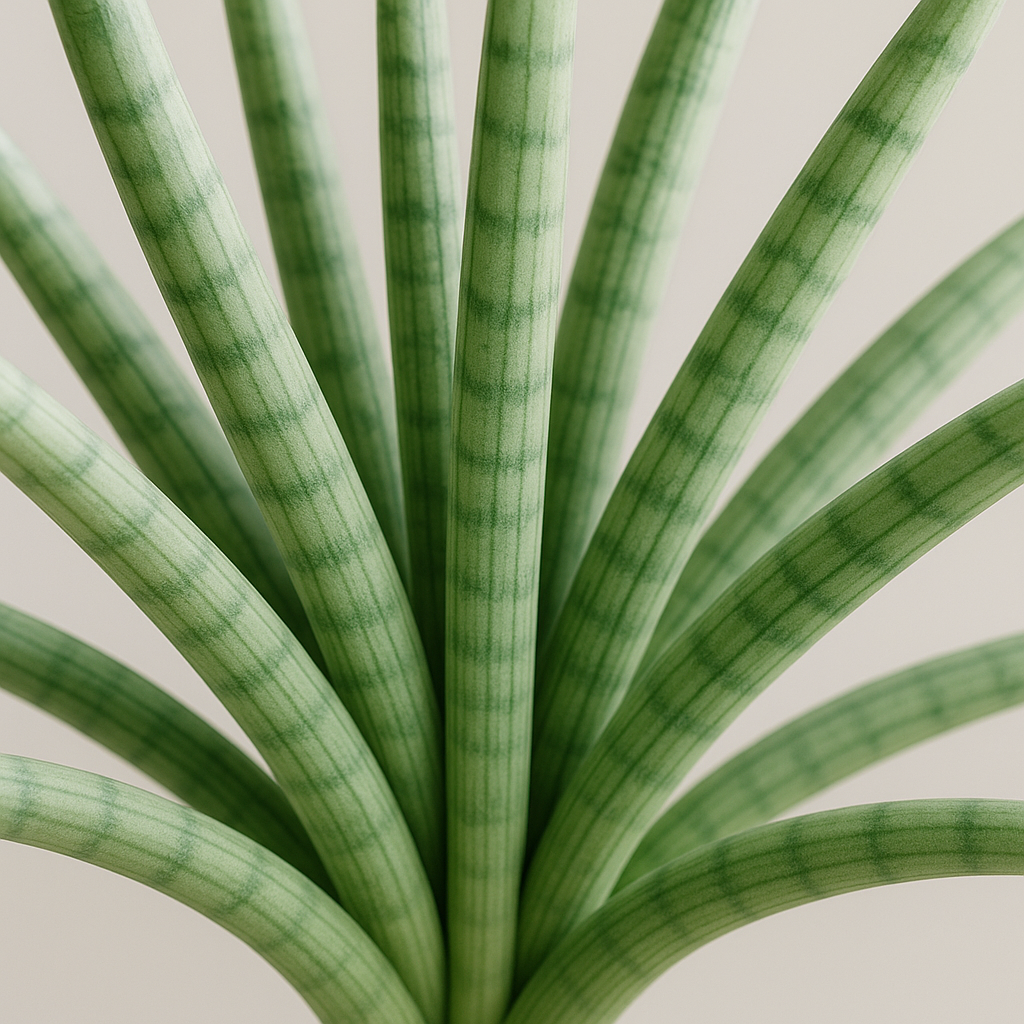
It's weird in a way that works — those vertical tubes add height without taking up horizontal space, making it great for tight corners or narrow spots.
Light Requirements
Cylindrica is the most flexible of the three when it comes to light. Low light, bright light, it genuinely doesn't matter. It'll grow faster with more light, but it won't punish you for neglect.
Water Needs
Cylindrica is the most drought-tolerant of the bunch. Those tubes store a ton of water, so you can let the soil go bone dry and it'll be fine. In winter, water literally once every 4-6 weeks.
Use a Check Soil Moisture if you tend to overwater — let it dry out completely between waterings.
Which One Should You Choose?
Here's the decision tree:
For Beginners
Go with Moonshine or Cylindrica. Both are forgiving and won't hold grudges if you forget to water for a week. Moonshine is prettier (subjective, fight me), Cylindrica is weirder. Pick your vibe.
For Low Light Spaces
All three work in low light, but Cylindrica is the most tolerant. That said, Whale Fin and Moonshine will absolutely survive — they'll just grow slower and stay smaller.
For Collectors
Whale Fin. It's the statement piece. The "look at this cool thing I found" plant. It costs more, but the wide paddle leaves create a focal point no other snake plant can match.
For Small Spaces
Moonshine stays compact (12-24") and works on shelves, desks, and tabletops. Cylindrica takes minimal floor space but adds vertical height — good for narrow corners.
Where to Buy
All three varieties are available online and at local nurseries:
- Moonshine — $15-30, widely available, most nurseries carry it
- Whale Fin — $40-100+, specialty shops and Etsy sellers
- Cylindrica — $15-40, common at big box stores and nurseries
Check our guide to best online plant shops for trusted sources.
Products We Love
We use these products ourselves:
- LED Grow Light — for Moonshine and any snake plant in low-light spots
Want more snake plant deep dives? Check out our Snake Plant Care Guide or learn Snake Plant Propagation to grow your collection.