Snake Plant Care Guide
The plant that survives neglect, survives you, and somehow still looks chic.
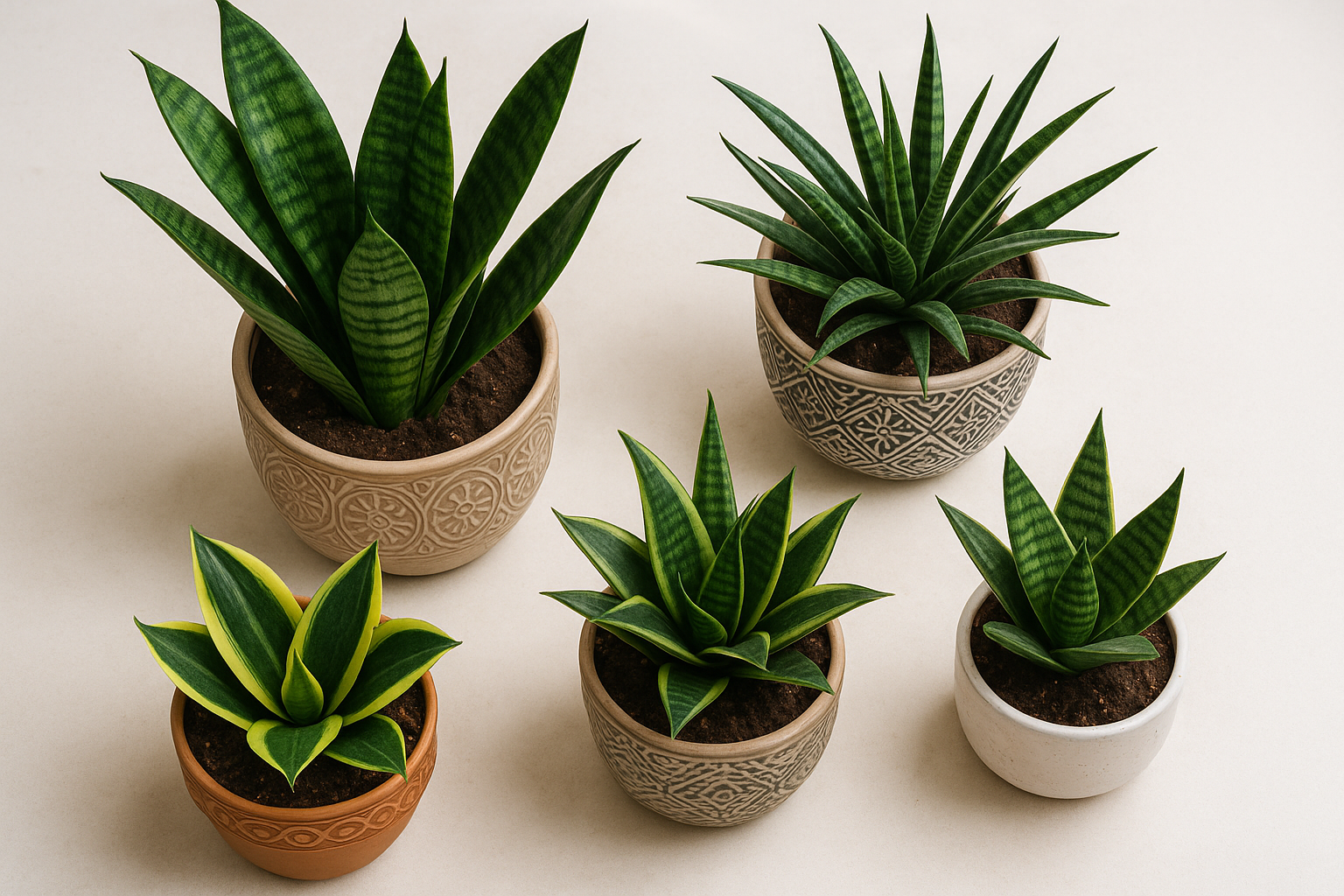
Why Snake Plants Are the Ultimate Starter Plant
If you've killed every plant you've ever owned, the snake plant (Sansevieria, now officially Dracaena genus) is your redemption arc.
These architectural beauties are native to West Africa and have进化 (evolved) to survive some genuinely terrible conditions. Drought? Check. Neglect? Check. That dark corner where nothing else survives? Check.
They're the plant equivalent of that friend who drinks black coffee and skates through life without breakfast. You don't have to do much. They just... survive.
The catch: "Survive" and "thrive" are different things. Your snake plant will live in a dark corner, but it'll grow faster and look better with some light. We'll get into that.
One more thing — snake plants are mildly toxic to pets. The ASPCA lists them as toxic to cats and dogs, causing nausea and vomiting if ingested. If you've got curious pets, maybe put this one up high or check out our pet-safe plant guide.
Quick Care Summary
| Water | Every 2-6 weeks when soil is completely dry |
| Light | Low to bright indirect; tolerates darkness |
| Soil | Well-draining (cactus/succulent mix) |
| Temperature | 60-85°F (15-29°C) |
| Difficulty | Absolute beginner |
| Pets | Toxic — keep away from curious mouths |
Watering Your Snake Plant
Here's where most people kill their snake plants: overwatering.
These are succulents. They store water in their thick leaves. They want you to forget about them.
How often to water? When the soil is completely dry — typically every 2-6 weeks depending on your environment. In winter? Maybe once a month. Summer? Every 2-3 weeks if it's hot.
The finger test: Stick your finger in the soil up to the second knuckle. If it's any bit damp, wait. If it's bone-dry, go ahead.
Take the Guesswork Out of Watering
Signs of Overwatering
- Yellow leaves — the most common sign. If the leaves are turning yellow, especially from the base up, you've got root rot brewing.
- Mushy leaves — healthy snake plant leaves are firm. If they're squishy, you've gone too far.
- Drooping — counterintuitive, but too much water makes them droop just like too little.
Signs of Underwatering
- Brown, crispy tips — usually from underwatering or low humidity.
- Drooping — yes, both over- and underwatering cause drooping. Check the soil!
- Wrinkled leaves — the plant is using its stored water reserves.
Seasonal Adjustments
Winter = dormant. Your plant basically sleeps. Water maybe once a month. Summer = growing season. They'll drink more. Adjust accordingly.
Light Requirements
Here's the beautiful thing about snake plants: they genuinely don't care about light.
Low light tolerance? Excellent. They'll survive in that hallway bathroom with no windows. They won't grow much, but they'll live.
Indirect light? Ideal. A few hours of bright indirect light and they'll actually grow — new leaves, maybe even pups (baby plants).
Direct sun? Riskier. Too much direct sun can scorch the leaves, causing brown patches. If your snake plant's been in low light, introduce it to brighter spots slowly.
Snake plants are one of our top picks for low-light spaces →
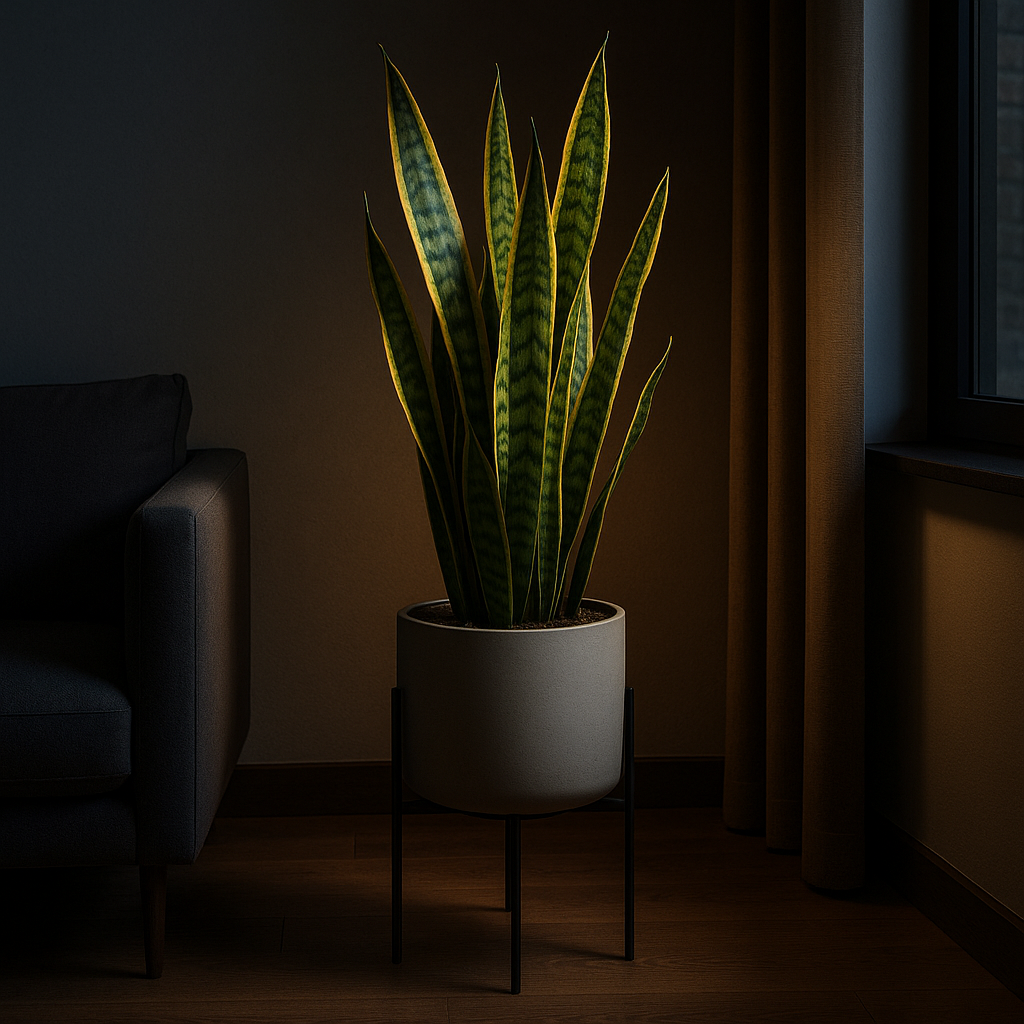
This Laurentii thrives in a corner with just overhead room lighting — proof that snake plants are the king of low light
Soil & Potting
Snake plants need fast-draining soil. This is non-negotiable. If water sits around the roots, they rot. Fast.
Best soil mix: Cactus and succulent mix is perfect. You can also mix regular potting soil with perlite or pumice (about 50/50) for extra drainage.
Get Well-Draining Soil on Amazon
Choosing the Right Pot
Terra cotta with drainage holes is the gold standard. Terra cotta is porous, so it dries out faster than plastic or ceramic. The drainage hole is essential — no exceptions.
Shop Terra Cotta Pots on Amazon
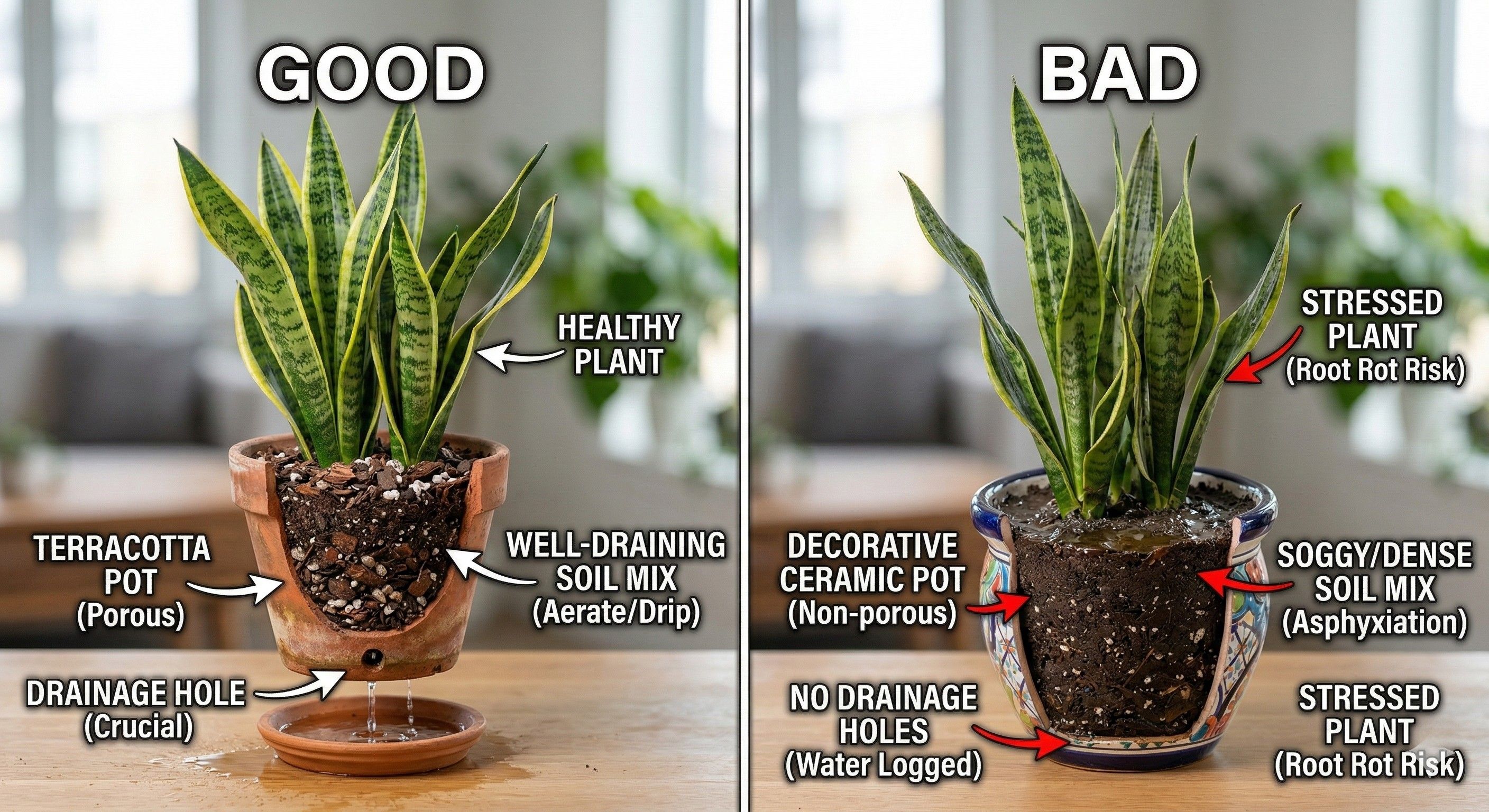
Left: Terra cotta pot with drainage hole — the right choice. Right: Decorative pot without drainage — a trap for root rot
If you must use a decorative pot without holes, take the nursery pot out, water the plant in the sink, let it drain, then put it back. Or drill a hole. (Yes, you can drill ceramic pots.)
When to Repot
- Roots coming out of the drainage holes
- Soil drying too fast (root-bound)
- It's been 2-3 years since last repot
Snake plants like being slightly root-bound, so don't rush to upsize. Go up one pot size only.
Temperature & Humidity
Ideal range: 60-85°F (15-29°C). Standard room temperature is perfect.
Cold sensitivity: Below 50°F (10°C), things get dicey. Keep them away from cold drafts in winter — doors, windows, that one drafty corner by the front door.
Humidity: They genuinely don't care. Dry air, humid bathroom, somewhere in between — snake plants handle it all. Unlike fussy tropicals, they're not begging for a humidifier.
Fertilizing
Less is more. Seriously.
When to fertilize: Once during growing season (spring/summer). That's it. Maybe twice if the plant's actively pushing new growth.
What to use: A balanced, diluted fertilizer or cactus/succulent food. Snake plants aren't heavy feeders.
Shop Cactus Fertilizer on Amazon
Less-is-more approach: When in doubt, skip it. Over-fertilizing causes salt buildup, which burns roots. You can always feed more later. You can't un-burn roots.
Common Problems & Solutions
Yellow Leaves
Almost always overwatering. Check the roots (more on that below). If it's early enough, let the soil dry out completely and water less going forward.
If the yellowing is just the bottom-most leaves while new growth continues from the center, that's normal — the plant's just shedding older leaves.
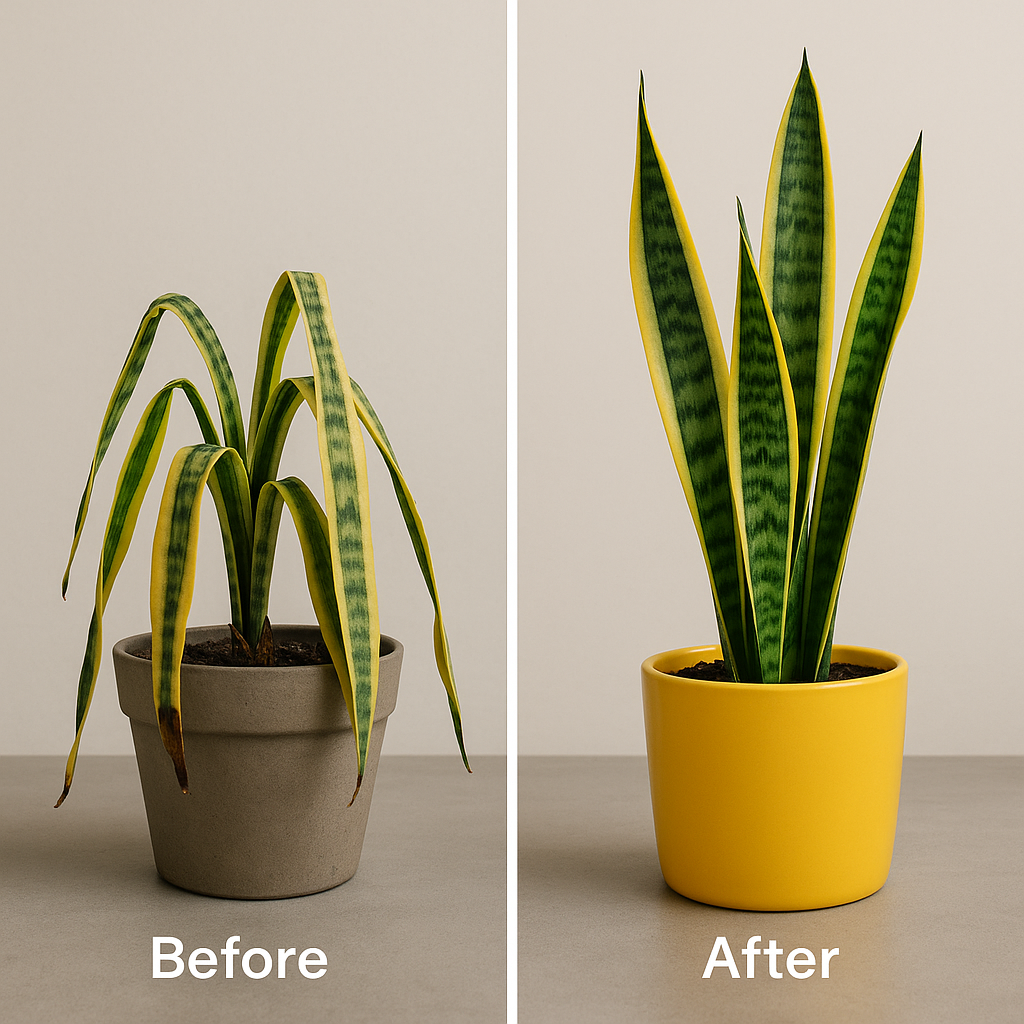
Left: A struggling overwatered snake plant. Right: The same plant 6 weeks after adjusting care — proof that snake plants are recoverable!
Brown Tips
Usually caused by:
- Underwatering — fix: water more consistently
- Low humidity — fix: mist occasionally or move away from heaters
- Fluoride in tap water — fix: use filtered or distilled water
- Fertilizer burn — fix: flush soil, reduce feeding
Root Rot
This is the #1 killer of snake plants. It's caused by overwatering or poor drainage.
Symptoms:
- Yellow leaves (often starting at base)
- Mushy, smelly roots
- Plant wobbling in the pot (no roots holding it in)
- Foul smell from soil
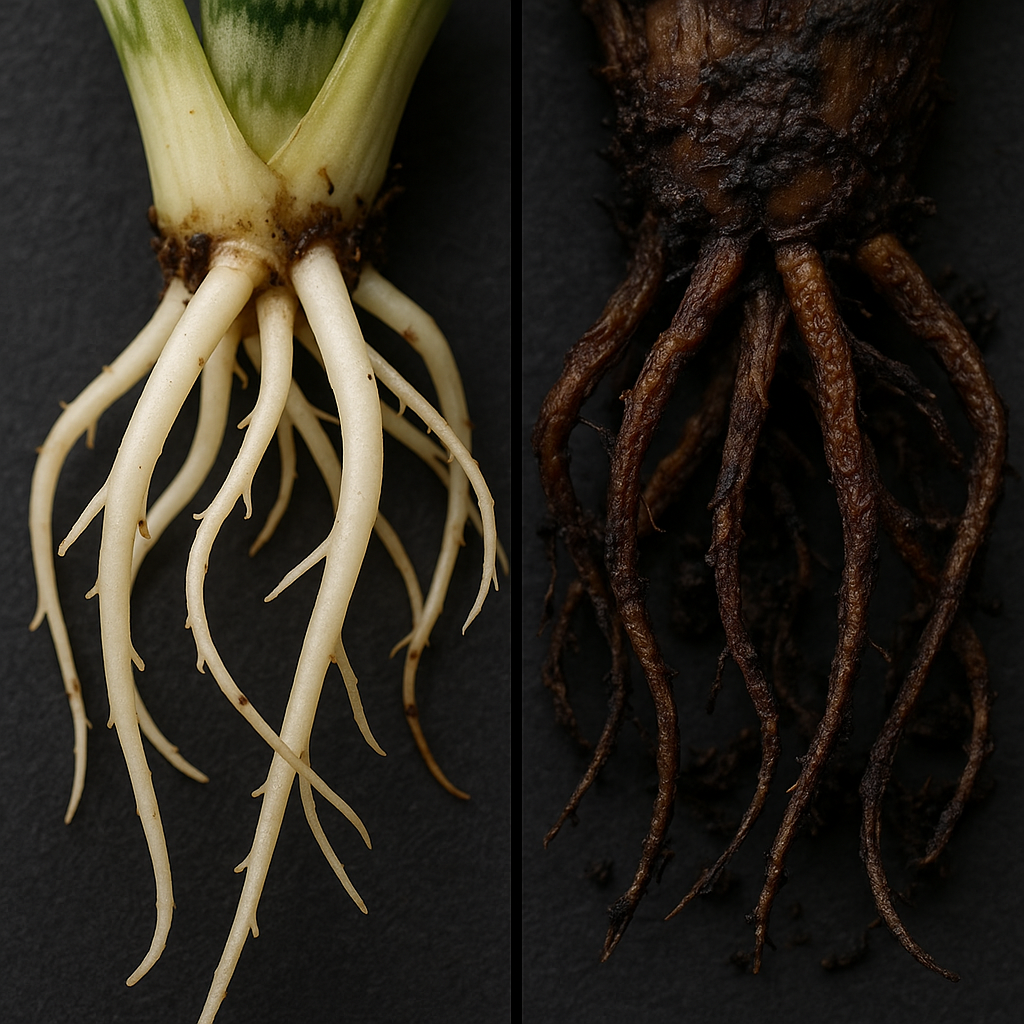
Healthy roots (left) are firm and white. Root rot (right) means brown, mushy, smelly roots — act fast!
Treatment:
- Take the plant out of the pot
- Trim away all brown, mushy roots (sterilize scissors first!)
- Let the remaining roots dry out for a few hours
- Repot in fresh, dry soil
- Wait a week before watering
- Water less going forward
If the entire root ball is mushy, you might be able to save it via leaf cuttings (see propagation below).
Pests
Snake plants are surprisingly pest-resistant. But they can get mealybugs, spider mites, or fungus gnats occasionally.
- Mealybugs: White, cottony spots. Dab with rubbing alcohol.
- Spider mites: Tiny webbing, usually from dry conditions. Wipe leaves, increase humidity.
- Fungus gnats: Fly around soil. Let soil dry out more, use sticky traps.
How to Propagate Your Snake Plant
Propagating snake plants is weirdly satisfying. You can do it two ways:
Division Method (Easier)
- Take the plant out of the pot
- Gently separate the root ball into sections — each section with its own roots and leaves
- Pot each section separately
- Water after a week
This is the fastest way to get new plants and ensures the new plant looks exactly like the parent.
Leaf Cutting Method (Slower but cool)
- Cut a healthy leaf at the base
- Let the cut end callous for a day
- Cut the leaf into 3-4 inch sections — remember which end is down (plant the bottom end)
- Stick the bottom inch into dry soil
- Wait. And wait. (It takes 1-2 months to root, 2-3+ months to sprout new growth)
- Water sparingly until roots form
The cool part? One leaf can produce multiple plants.
Popular Snake Plant Varieties
Laurentii (Sansevieria trifasciata 'Laurentii')
The classic. Yellow variegated edges, dark green center. Grows tall (2-4 feet). This is what most people picture when they think "snake plant."
Bird's Nest (Sansevieria Hahnii)
Compact rosette form. Stays small (6-12 inches). Perfect for desks, shelves, small spaces. Cute and contained.
Cylindrica (Sansevieria cylindrica)
cylindrical leaves that grow in a fan shape. Very architectural. Can be braided for extra drama.
Black Gold (Sansevieria 'Black Gold')
Dark green leaves with gold edges. Similar to Laurentii but darker and more dramatic. Statement piece energy.
Frequently Asked Questions
Can snake plants live in bathrooms? Yes! They tolerate low light and humidity. Just watch the watering — bathrooms stay humid longer, so water even less frequently.
How often should I water my snake plant? Every 2-6 weeks. When the soil is completely dry. Seriously, less than you think.
Why is my snake plant turning yellow? Overwatering. 99% of the time. Check for root rot.
Are snake plants toxic to pets? Yes. Mildly toxic to cats and dogs. Keep them out of reach or choose pet-safe alternatives.
Do snake plants flower? Rarely indoors, but it happens. The flowers are tall stalks with small white/cream blooms. They're fragrant (some say pleasantly so, others say... less pleasant). It's a sign of a very happy, mature plant.
The Bottom Line
Snake plants are the closest thing to a guaranteed win in the plant world. They're not actually unkillable, but they come close. Water them less than you think, give them any light, use well-draining soil, and they'll reward you with years of architectural beauty.
Start with one. See how it goes. Then get another. You might just discover you have a plant person in you after all.
Want more low-light options? Check out our best low-light plants guide for alternatives that thrive in the same conditions.
Products We Love
Cactus & Succulent Potting Mix — Fast-draining soil your snake plant actually needs
Classic Terra Cotta Pots with Drainage — Breathable pots that prevent overwatering
3-in-1 Soil Moisture Meter — Takes the guesswork out of watering
Espoma Organic Cactus Fertilizer — Light feeding for healthy growth