Schefflera Care Guide — Umbrella Plants That Don't Die
The umbrella plant earns its name from those glossy, hand-shaped leaf clusters — and it's forgiving enough for beginners. With one caveat: stop moving it around.
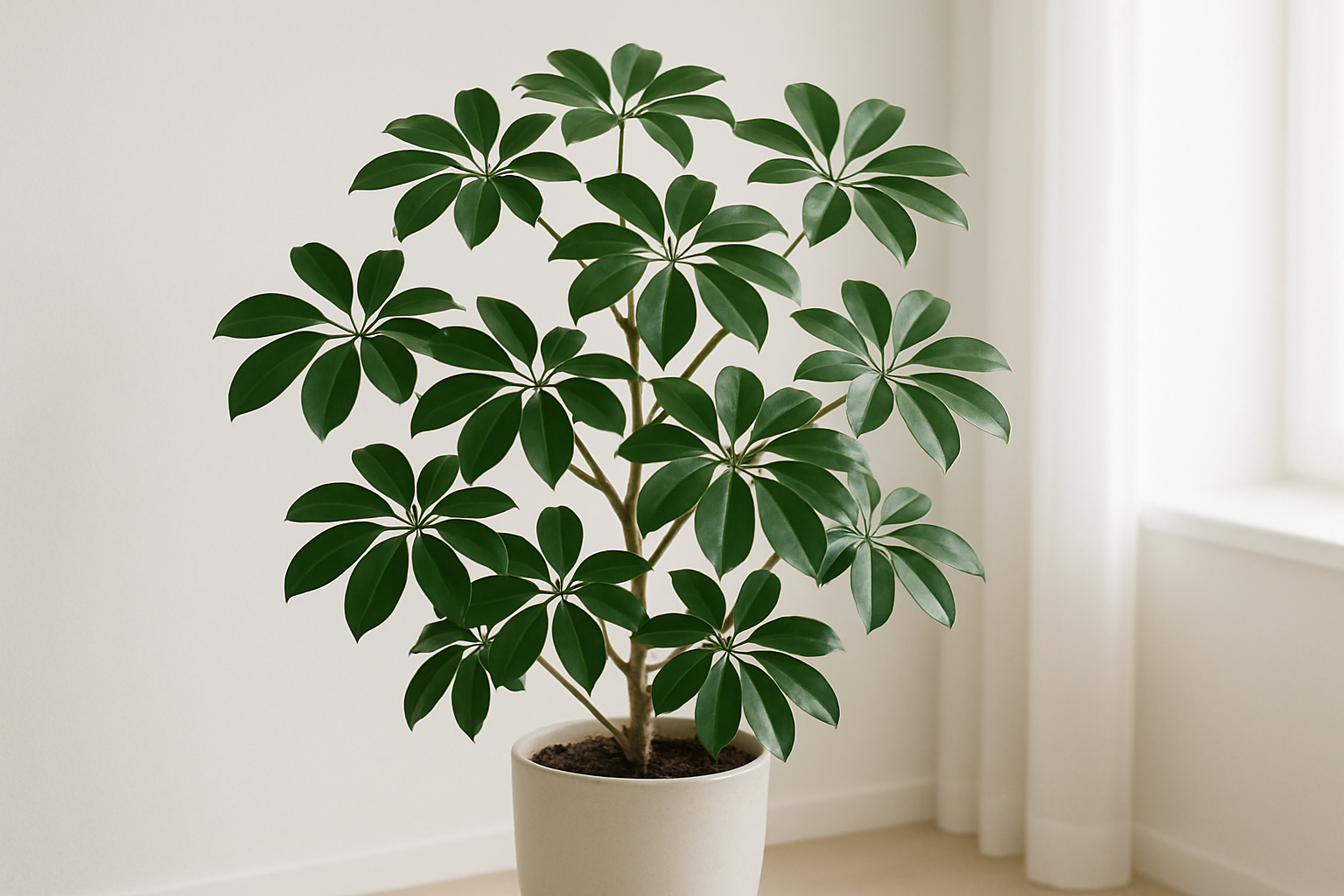
The Umbrella Plant at a Glance
Schefflera (shef-ler-ah) — also called umbrella plant or dwarf umbrella tree (Schefflera arboricola) — is the houseplant that looks impressive without demanding much. Fast-growing, tolerant of lower light, and willing to forgive inconsistent watering, it's a staple for a reason.
The catch: scheffleras are creatures of habit. Move them and they'll drop leaves in protest. This isn't a bug — it's their thing. Once you know that, scheffleras are dead simple.
Also worth knowing upfront: scheffleras are toxic to cats, dogs, and humans. The calcium oxalate crystals cause oral irritation, drooling, and vomiting if chewed. If you have pets that chew plants, this isn't the one for you — check out pet-safe plants instead.
Quick Care Checklist
| Water | When top 1-2 inches of soil are dry |
| Light | Bright indirect (east or west window) |
| Humidity | 40-60% — average home is fine |
| Temperature | 60-80°F — keep away from cold drafts |
| Soil | Well-draining potting mix |
| Fertilizer | Monthly, spring and summer only |
| Toxicity | Toxic to cats, dogs, and humans |
Watering Your Schefflera
Here's where most people get it wrong. Scheffleras are tropical, so your instinct is to keep them moist. Don't. Let the soil dry out between waterings.
The finger test: Stick your finger 1-2 inches into the soil. If it feels dry, water. If it's still damp, wait.
Water thoroughly until it drains from the bottom, then empty the saucer. Scheffleras hate sitting in water.
Shop moisture meters on Amazon →
Overwatering Signs
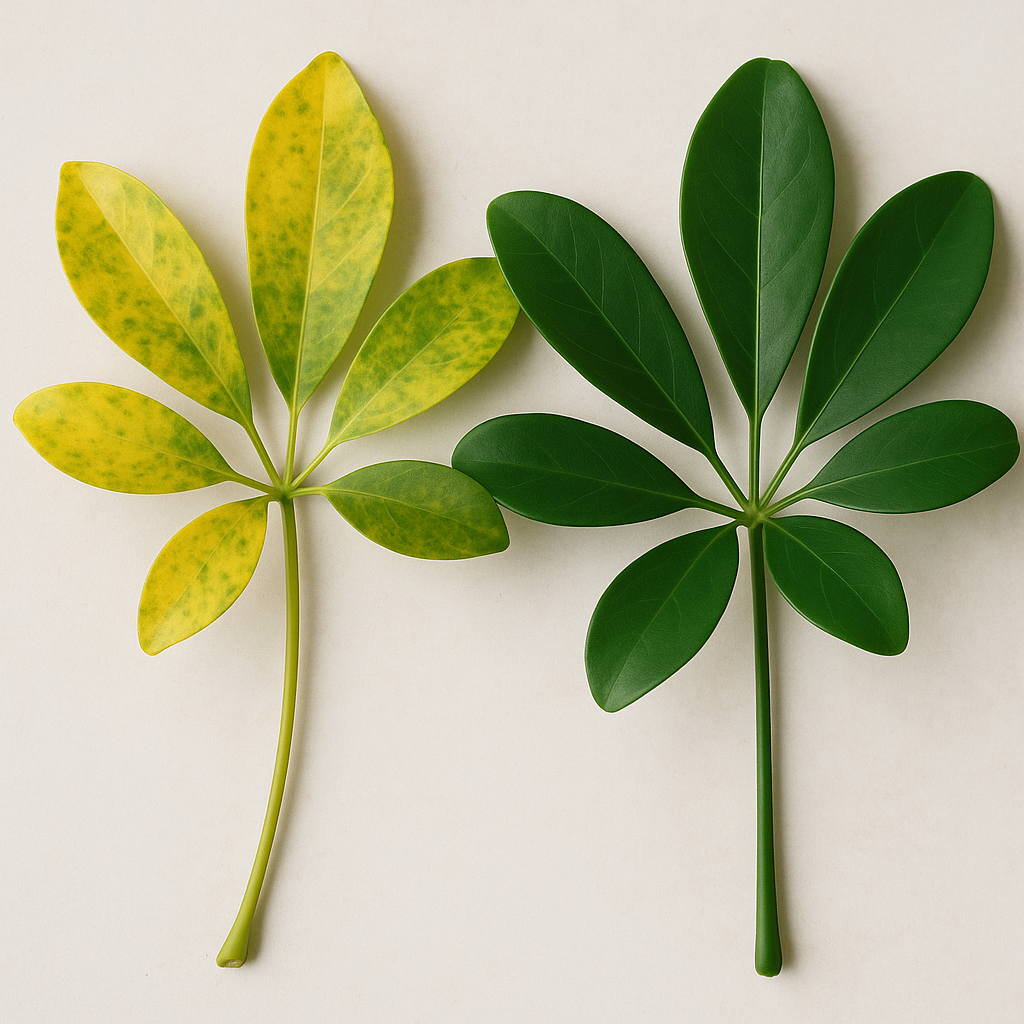
Yellowing leaves — especially lower, older ones — are the first sign of overwatering. If the soil is soggy and stems feel mushy, you've got root rot. For treatment steps, see how to treat root rot.
Underwatering Signs
Wilting, crispy leaf edges, and leaf drop despite dry soil. The plant will look DRAMATICALLY sad but usually bounces back once watered. A thorough watering should perk it up within a few hours.
The "Don't Move It" Rule
Scheffleras are one of the most movement-sensitive houseplants you can own. Relocate them and they'll drop leaves — sometimes a few, sometimes most of them.
Why? Scheffleras are understory plants in the wild. They evolved in stable, sheltered conditions where light and temperature don't change much. When you move them, you're disrupting root-shoot communication and rapid gas exchange that they've already adapted to their spot.
The fix: pick a spot and commit. Bright indirect light, away from AC vents and drafty doorways. That's home. Let it stay there.
Light — Bright Indirect Wins
"Bright indirect light" is plant internet speak for: close to a window, but not in the sunbeam.
For scheffleras, that means:
- East-facing window — ideal. Morning sun is gentle.
- West-facing window — good. Afternoon light is stronger, so pull it back a few feet.
- North-facing window — works for solid green varieties. Variegated types will lose their pattern.
- Direct sun — leaves will bleach and scorch. Brown patches appear on the sun-facing side.
Too Much vs. Too Little Light
| Sign | Cause | Fix |
|---|---|---|
| Scorched, bleached patches | Direct sun | Move back from window |
| Leggy, stretched growth | Not enough light | Move closer to window or add a grow light |
| Slow or no growth | Low light or dormancy | Check season — normal in fall/winter |
Variegated Varieties Need More Light
Variegated scheffleras (Gold Capella, Luseane Ivory) have less chlorophyll than solid green varieties, so they need more light to maintain their pattern. Without enough, the yellow variegation fades to plain green. If you want to keep those cream markings bright, give variegated types the brightest spot you have — direct morning sun is fine, just not harsh afternoon rays.
Temperature & Drafts
Scheffleras want 60-80°F. That's a normal home temperature range, so this part is usually fine.
Where things go wrong: drafts.
Cold air from an AC vent, a door that opens to the outside in winter, or a windowsill above a radiator — rapid temperature changes make scheffleras drop leaves. Not gradual seasonal shifts, but sudden blasts of cold or hot air.
Why Scheffleras Hate Drafts
They've got relatively thin cell walls compared to hardier plants. A sudden temperature drop causes the cells to contract过快 (that's "rapidly" in English). The plant responds by cutting losses — dropping leaves — to conserve energy.
Summer tip: Move scheffleras away from AC vents if you're running central air. Winter tip: Keep them away from windows that might get drafty at night.
Humidity — Moderate Is Fine
Unlike calatheas or ferns, scheffleras aren't humidity divas. They'll tolerate 40-60% — which is what most homes already have.
You only need to boost humidity if you're seeing:
- Brown, crispy leaf tips
- Leaf edges going dry despite adequate watering
A humidifier in the same room fixes this. A pebble tray with water works too, though it's less effective. Grouping plants together creates a micro-humidity zone, but scheffleras don't need it.
Soil & Repotting
Scheffleras need fast-draining soil. Standing in soggy mix is the fast track to root rot.
Mix a standard potting mix with perlite — roughly 3 parts potting mix to 1 part perlite. This keeps things draining without drying out too fast.
When to Repot
Scheffleras actually like being slightly root-bound. You don't need to repot every year.
Repot when:
- Roots are coming out of the drainage holes
- Water runs through the pot instantly (roots have taken over)
- The plant hasn't been repotted in 2-3 years
Go up only one pot size — 2 inches wider max. Too much extra soil holds moisture and leads to rot.
Repot in spring or summer only. Never in fall or winter when the plant isn't actively growing.
Fertilizing — Keep It Simple
Once a month during the growing season (spring and summer) with a balanced liquid fertilizer, diluted to half strength.
Signs of over-fertilizing:
- White crust on the soil surface
- Brown leaf tips
- Leaf edges going yellow
If this happens, flush the soil with plain water and skip the next month's feeding. In fall and winter, don't fertilize at all — the plant is resting.
Pruning Schefflera
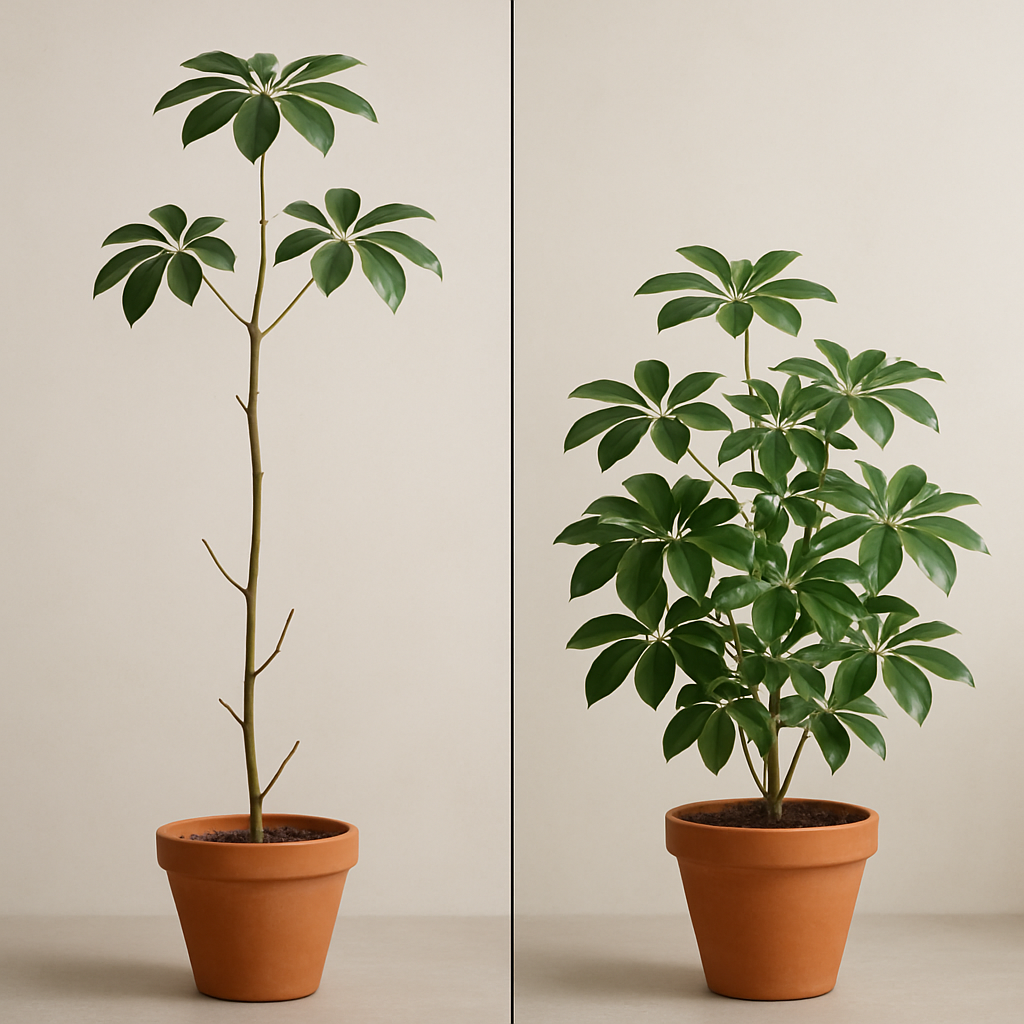
Scheffleras grow fast. Left alone, they stretch toward light and end up tall and leggy with a bare lower stem and foliage only at the top.
The fix: prune in spring or summer when the plant is actively growing.
How to Prune for Fullness
- Cut just above a node (the small bump where leaves emerge) — not in the middle of bare stem
- Make the cut at a 45-degree angle
- New growth will branch from below that point
One pruning session can transform a single-stem leggy plant into a branched, fuller one. For the full technique — tool prep, node identification, and recovery — see how to prune houseplants.
For propagation, scheffleras root well from stem cuttings in water or soil. See the propagation guide for the step-by-step.
Problems — Diagnostic Guide
| Symptom | Most Likely Cause | Check First |
|---|---|---|
| Yellow lower leaves | Overwatering | Soil moisture |
| Dropping leaves after moving | Environmental change | Normal — give it time |
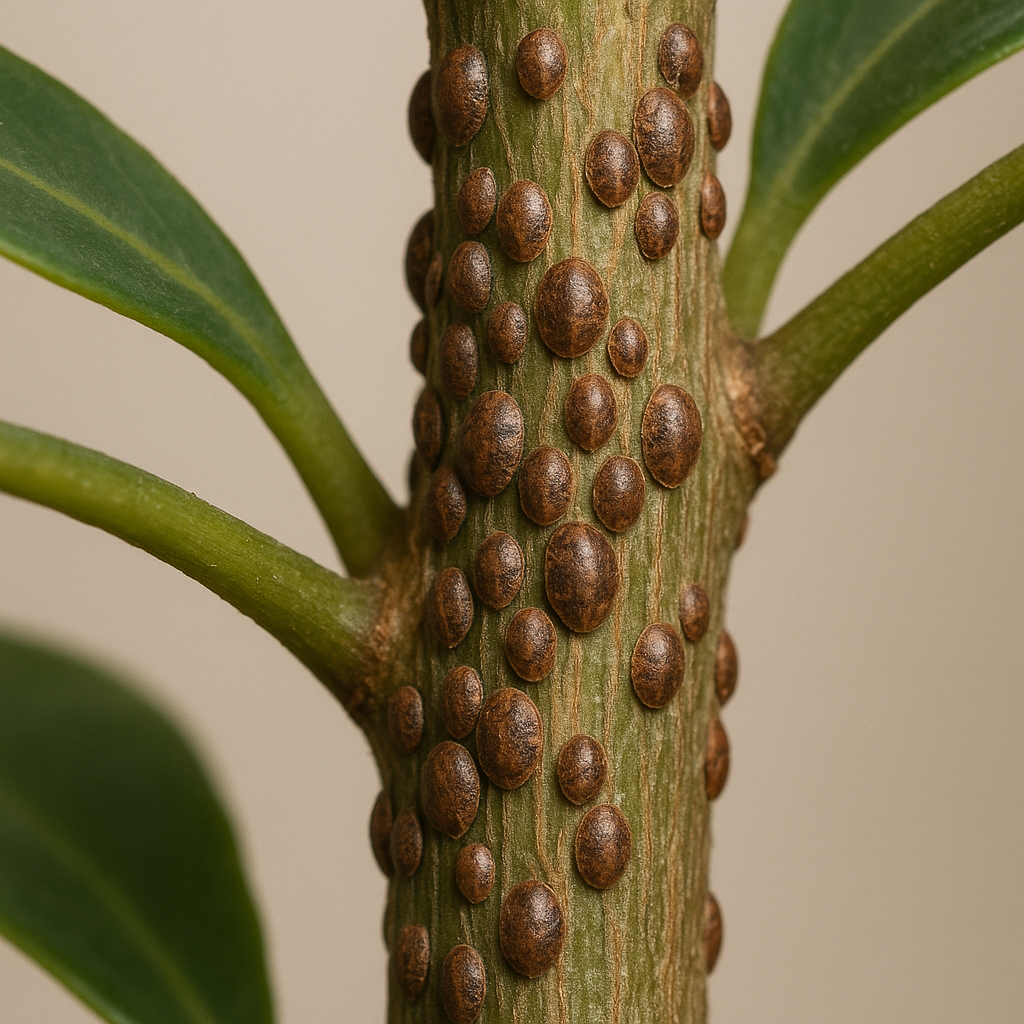
| Brown spots on stems | Scale insects | Look for brown dots along stems |
| Leggy, stretched growth | Not enough light | Move closer to window |
| Leaf curling | Underwatering, low humidity, or pests | Soil and inspect undersides |
| Drooping | Wet soil (root rot) or dry soil | Stick your finger in it |
Yellow Leaves
Usually overwatering. Check the soil — if it's wet and the lower leaves are yellowing, ease up and let it dry. If root rot has set in (mushy stems, bad smell), repot in fresh soil after trimming dead roots.
Dropping Leaves
If you moved the plant recently: that's why. Scheffleras drop leaves in response to environmental changes. It will stabilize. Don't move it again.
If you didn't move it: check for drafts, overwatering, or sudden temperature changes.
Brown Spots
Could be scale insects — and on scheffleras, they don't always look like classic raised bumps. They can appear as small brown dots clustered along stems, especially on woody growth. If you see this pattern, wipe with rubbing alcohol on a cotton swab and inspect nearby plants.
Other causes: sun scorch (brown patches on the sun-facing side), fungal infection (spreading brown spots with yellow halos), or bacterial issues. For broader troubleshooting, see Plant ER.
Leggy Growth
Not enough light. Move the plant closer to a window. Prune back the leggy stems to encourage branching (see pruning section above). Add a grow light if your space doesn't have a bright window.
Curling Leaves
Usually underwatering or low humidity. Check the soil — if it's dry, water. If it's humidifier season and the air is dry, run a humidifier. If the soil is moist and humidity is fine, inspect the undersides of leaves for spider mites or other pests.
Schefflera Varieties
Most indoor scheffleras are Schefflera arboricola — the dwarf umbrella tree. It's compact, bushy, and grows 4-8 feet indoors.
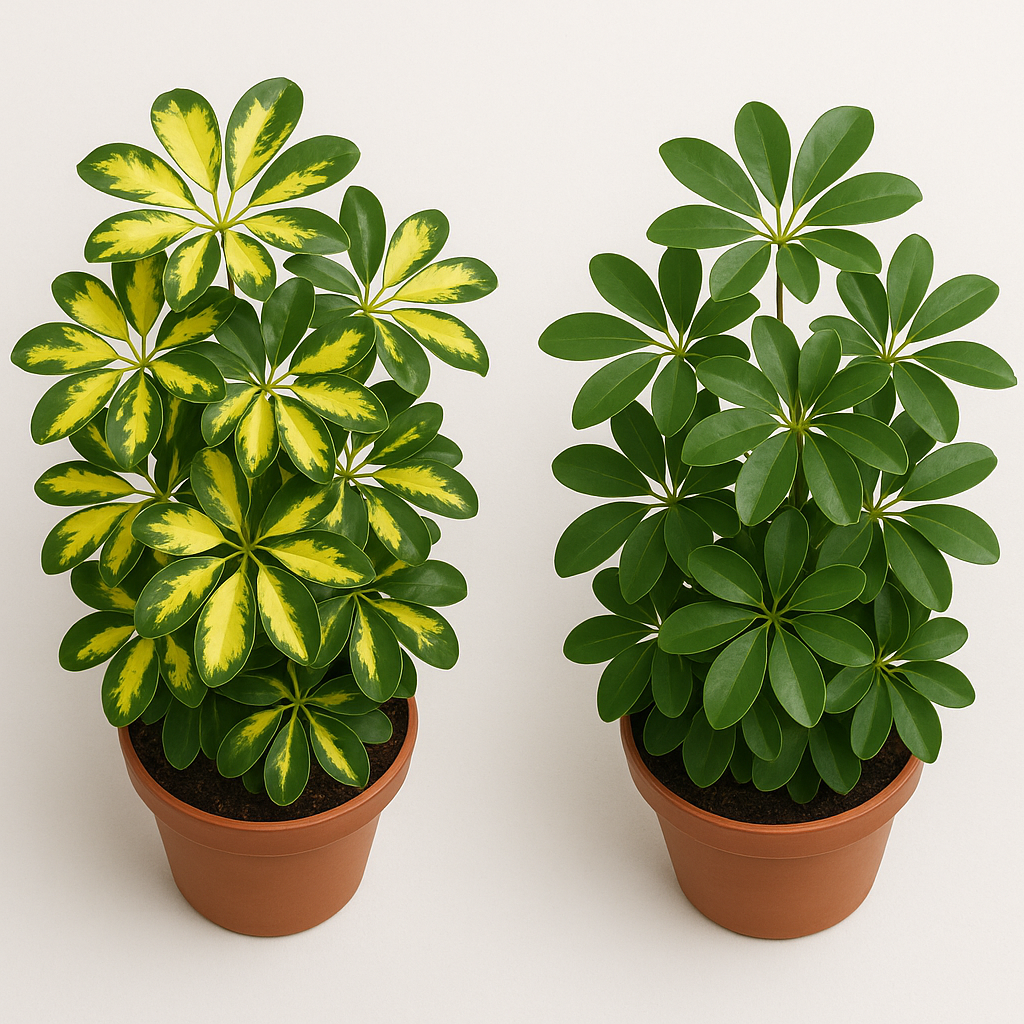
Solid Green Varieties
- Schefflera arboricola (dwarf umbrella tree) — most common, compact, bushy
- Schefflera actinophylla — larger, faster-growing, more tree-like; less common as a houseplant
Variegated Varieties
- Gold Capella — yellow-cream variegation on green leaves; needs more light than solid green
- Luseane Ivory — cream-edged variegation; same light requirements as Gold Capella
Fun fact: the scientific name got shuffled a few years back. Schefflera is now technically Heptapleurum in some classifications. In practice, everyone still calls it schefflera.
Pet Safety & Toxicity
Scheffleras are toxic to cats, dogs, and humans.
They contain calcium oxalate crystals — tiny needle-like structures that cause:
- Oral irritation
- Drooling
- Vomiting
- Difficulty swallowing (in severe cases)
The effects are usually mild and self-limiting, but if your pet has chewed a schefflera, call your vet or poison control. For safer options, see our pet-safe plants guide.
If you have curious pets or small children, this is not the plant for you. There are plenty of beautiful non-toxic alternatives.
The "Don't Move It" Plant
Here's the summary: scheffleras reward consistency.
- Water when the top 1-2 inches of soil are dry
- Give it bright indirect light — east or west window is ideal
- Don't relocate it once you've found its spot
- Fertilize spring and summer, nothing in fall and winter
- Prune to keep it full and bushy
Do that and you'll have a fast-growing, glossy, umbrella-shaped plant that reaches 6-8 feet indoors. Neglect it and it still survives — that's the schefflera's appeal.
The one thing it won't forgive: being moved around. Pick a home, commit, grow together.
Need help diagnosing a specific problem? Plant ER covers yellow leaves, root rot, pests, and more. For specific pest identification (including schefflera's signature scale pattern), see the Pest ID guide.
Products We Love
We use these ourselves:
- Moisture meters — the single most useful tool for avoiding overwatering
- Bypass pruning shears — clean cuts heal faster and prevent disease
- Perlite — mix into potting soil for the drainage scheffleras need
- Cool-mist humidifier — for brown leaf tips in dry months