Scale Insects on Houseplants — Identification & Treatment Guide
Those suspicious brown bumps on your plant are not normal. Here's how to ID them, treat them, and know when you're actually done.
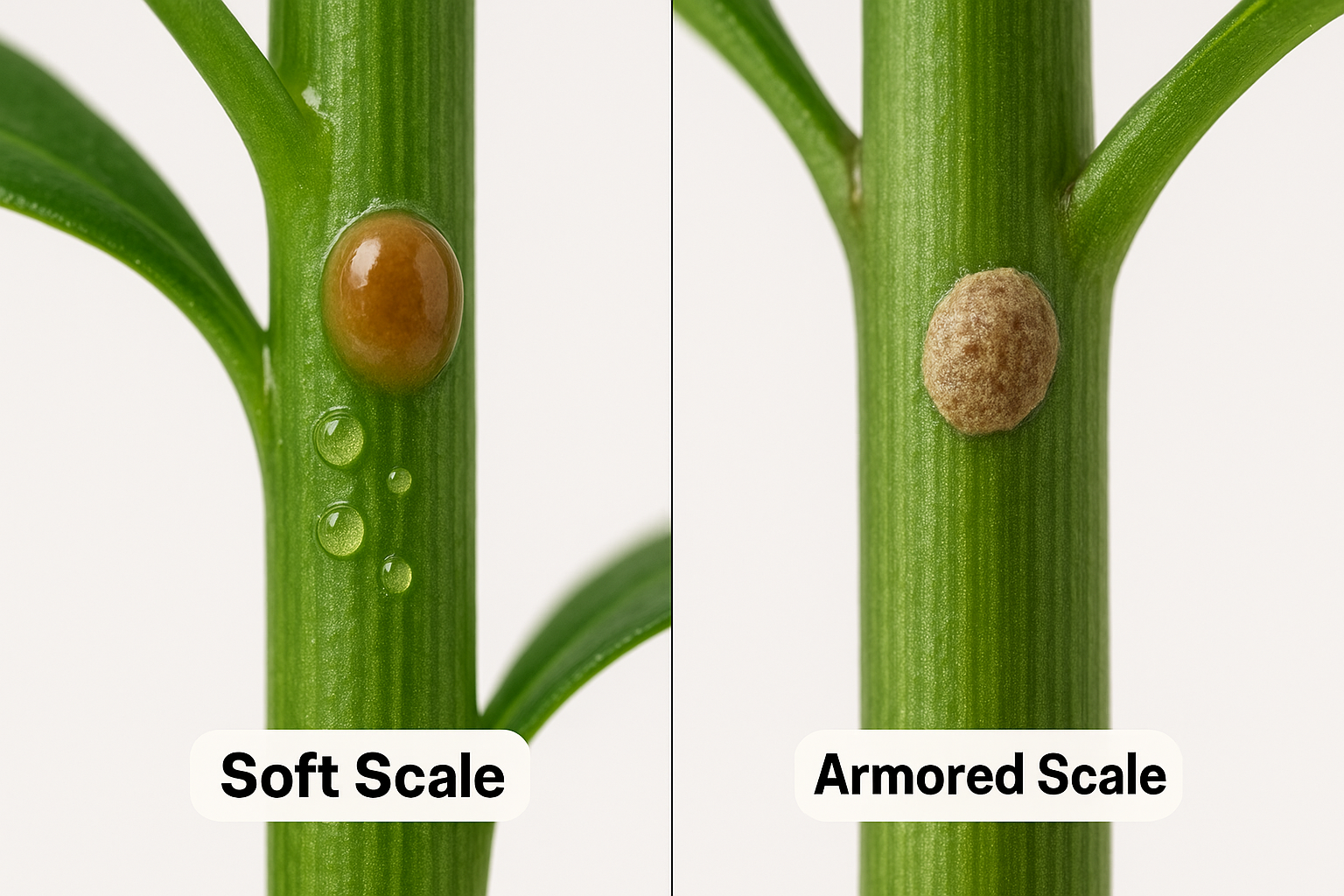
- Scale insects look like small brown or tan bumps stuck on stems and leaves — they don't move once settled.
- Soft scale leaves sticky honeydew; armored scale has a dry, crusty shell. The difference changes how you treat them.
- One spray never works — scale reproduces in overlapping generations indoors. Target the crawler stage, repeat every 7–10 days.
- Stop criteria: two consecutive weekly tape checks with zero live crawlers = you're done.
What Are Scale Insects?
Scale insects are sap-sucking pests that do an impressive impression of a plant problem that isn't a pest problem. They look like bumps, scabs, or crusty bits of bark — which is exactly why people miss them until the infestation is well underway.
There are two types you'll encounter on houseplants, and telling them apart matters because the treatment logic differs slightly.
Soft Scale vs Armored Scale — What's the Difference?
| Feature | Soft Scale | Armored Scale |
|---|---|---|
| Shell | Glossy, dome-shaped, slightly waxy | Flat, dry, crusty — like a tiny plate |
| Stickiness | Yes — produces honeydew | No — dry to the touch |
| Color | Brown, tan, or greenish | Tan, gray, or brown |
| Size | 3–6mm | 1–4mm |
| Vulnerability | Vulnerable to neem oil and soap | Shell protects adults; crawlers are the target |
| Examples | Brown soft scale, cottony maple scale | San Jose scale, oyster shell scale |
The key diagnostic test: Press a bump gently with your fingernail. If it's soft and sticky — soft scale. If it's hard and dry and almost looks like part of the bark — armored scale.
Look-Alikes That Aren't Scale
Before you treat, make sure you actually have scale. Common misdiagnoses:
- Corking — Natural, rough, bark-like texture on mature stems (monstera, ficus). Doesn't scrape off cleanly.
- Mineral deposits — White or chalky crust from hard water. Dissolves with water.
- Mealybugs — Fuzzy, cotton-like white clusters. Not hard bumps. Check our general pest identification guide to sort out which pest you're actually dealing with.
Signs You Have a Scale Infestation
Scale is sneaky. By the time you notice the bumps, the population has already been building for weeks. Here's what to look for:
Sticky leaves or floor below the plant. Soft scale secretes honeydew — a sugary excretion — that coats leaves and drips onto whatever's below. If your plant feels sticky and you haven't spilled anything on it, check for scale.
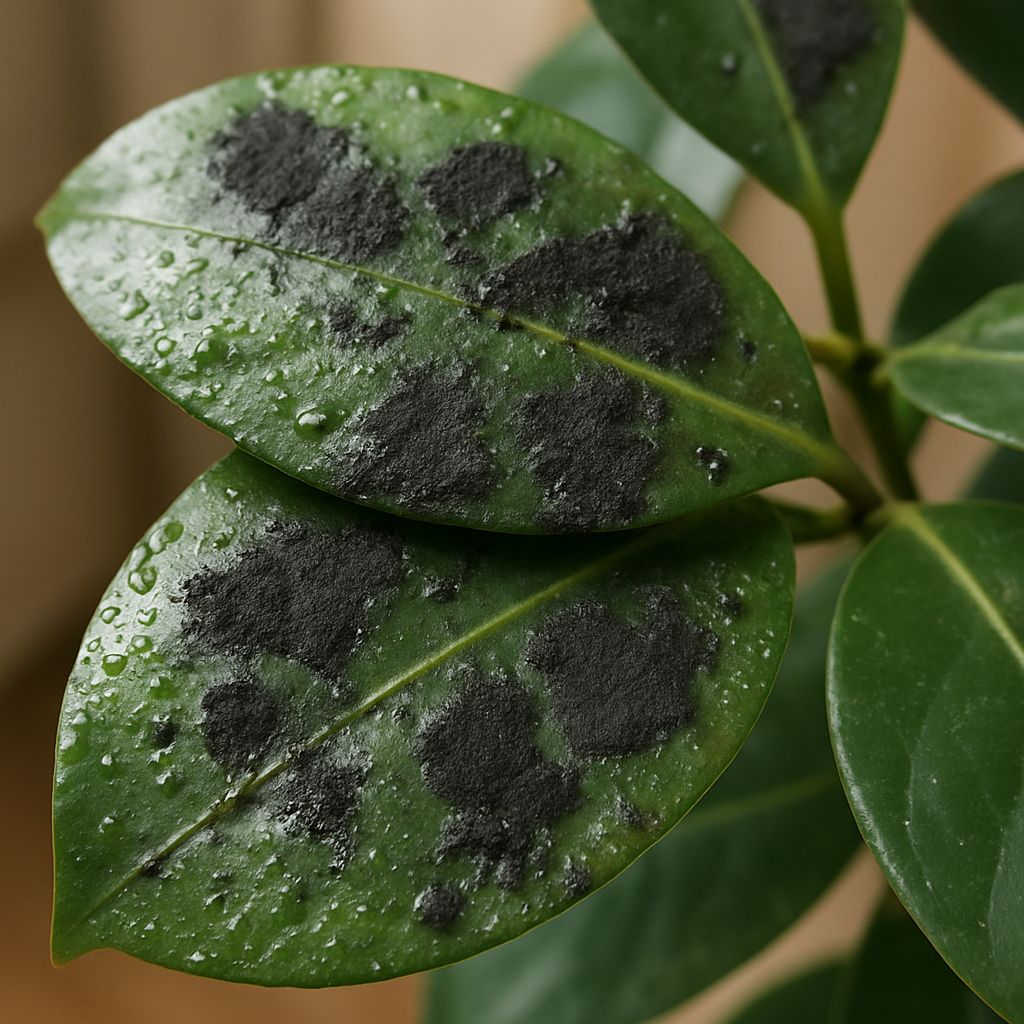
Sooty mold. Black, dusty-looking film on leaves. This is a secondary fungus that colonizes the honeydew. The sooty mold itself doesn't harm the plant directly, but it's a clear signal that sap-suckers have been active.
Brown or yellowing leaves. Scale extracts plant sap. Over time, leaves yellow and drop. In heavy infestations, stems die back.
Actual bumps. Clusters of flat or domed bumps on stems, leaf undersides, and the crevices where leaves meet stems. Scale's favorite hiding spots.
The Scale Lifecycle — Why Spraying Once Doesn't Work
This is the part most guides skip, and it's why people spray once, declare victory, and then find scale again three weeks later.
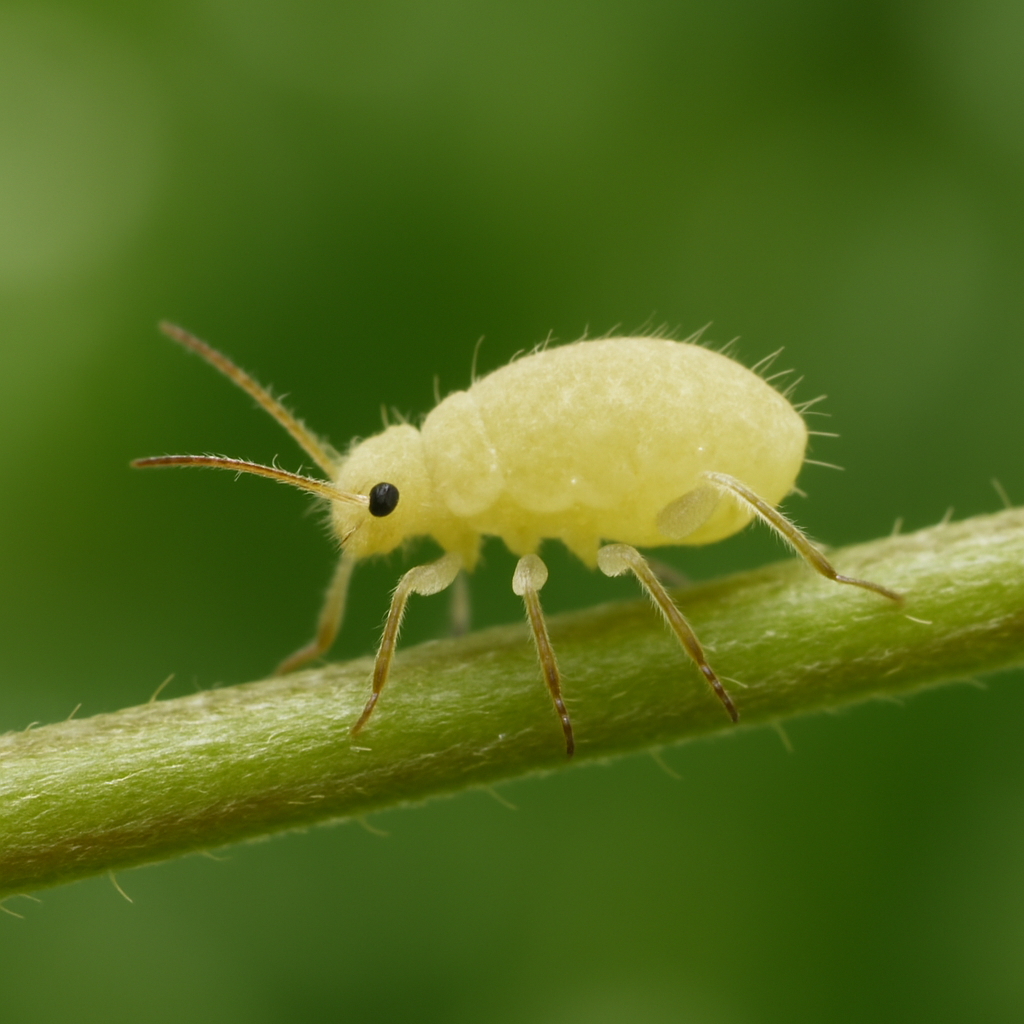
Scale has three life stages: egg, crawler, and adult. Adult scale — the bumps you can see — are protected by their shell. Sprays can't penetrate it effectively. The crawler stage is the only window when scale is vulnerable.
Crawlers are 1–2mm, have visible legs, and move around to find feeding sites before settling and forming their shell. They're nearly invisible to the naked eye.
The indoor problem: Your house is warm year-round. Scale produces overlapping generations continuously — there's no dormant winter season to break the cycle. New crawlers emerge while you're still treating the previous generation. This is why a single spray application never clears a scale infestation.
To see crawlers, you need magnification. A 10x jeweler's loupe is the tool for this. See 10x Loupe on Amazon — any 10–20x option works, including smartphone macro lens attachments.
Monitoring with tape traps: Wrap a short length of clear double-sided tape around a stem near the infestation. Check it 24–48 hours later. Crawlers stick to the tape. Under a loupe, they look like tiny pale specks with legs. This is your most reliable signal for knowing when to spray — and when to stop.
Scale Treatment Plan: Step by Step
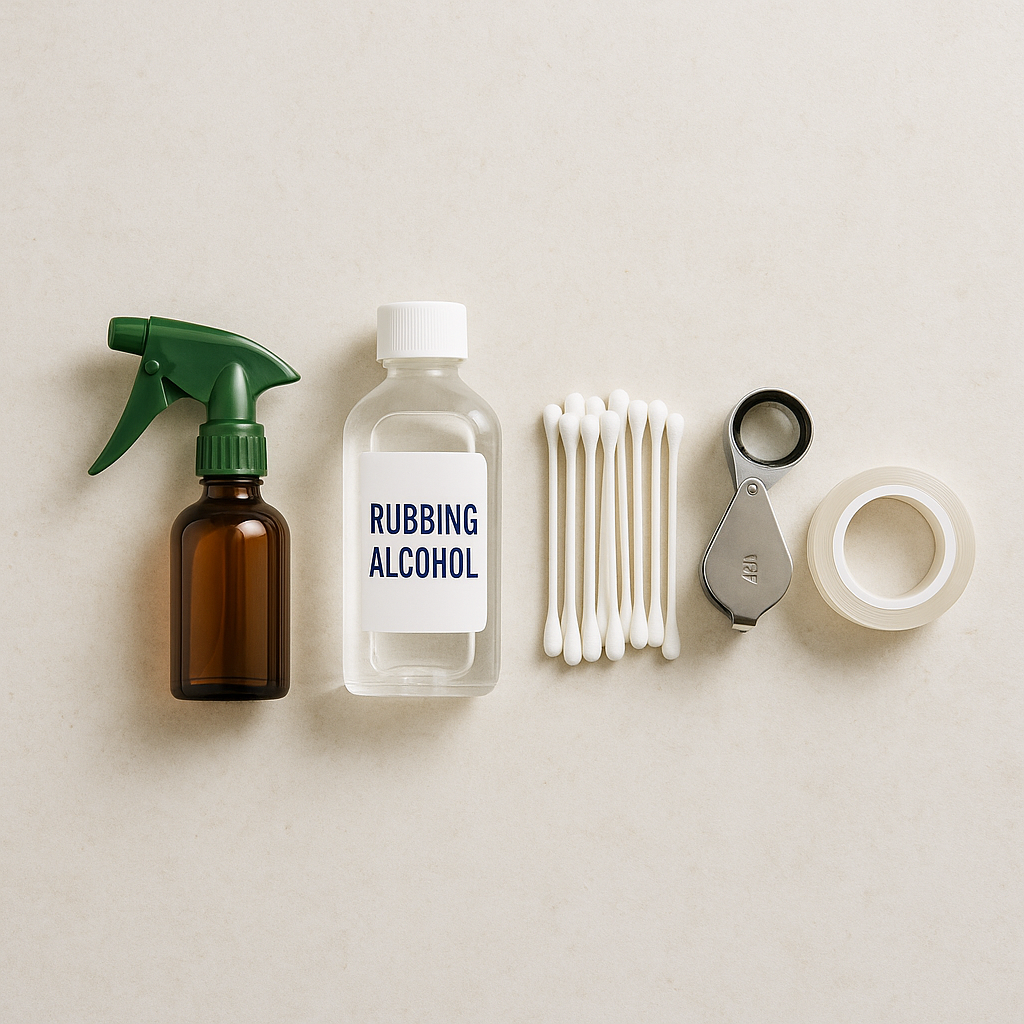
Need the full gear breakdown? Our houseplant pest control starter kit guide covers everything from sprayers to storage.
Step 1: Isolate the Plant Immediately
Move the plant away from your collection now. Scale crawlers spread to neighboring plants by walking, by wind movement, or by anything that brushes the leaves — including you. Quarantine is non-negotiable.
Step 2: Mechanical Removal
Dip a cotton swab in rubbing alcohol and wipe off every visible scale you can reach. This is tedious and effective. The alcohol dissolves the protective coating and kills on contact. For small infestations on a handful of stems, this alone can clear the problem.
For larger plants or heavy infestations, mechanical removal is step one of several — not the whole plan.
Step 3: Choose Your Spray
Neem oil / horticultural oil — smothers crawlers and disrupts the lifecycle. Best used as a spray on the whole plant, hitting undersides of leaves and stem joints. Repeat every 7–10 days. See Bonide Neem Oil on Amazon — Bonide has an indoor-safe ready-to-use formula that skips the mixing math.
Honest take: rubbing alcohol and a cotton swab handles small, isolated cases. Neem oil spray is the practical choice for larger plants, recurring cases, or when you don't want to hand-treat every stem twice a week.
If neem oil isn't doing the job after two full application cycles, escalate to insecticidal soap. See Safer Brand Insecticidal Soap on Amazon — Safer Brand is a reliable indoor-rated option. It works by penetrating soft-bodied insects and disrupting their cells. More effective on armored scale than neem oil alone.
Step 4: Spray Schedule
Apply every 7–10 days, consistently. The goal is to catch each new wave of crawlers before they settle and form shells. Missing a spray window by 3–4 days can let a new generation establish.
Three to four applications is a typical full course. Don't stop because the visible bumps are gone — those may be dead adults (still stuck to the plant). The active population is the crawlers.
Step 5: Monitor with Tape Traps
Set fresh double-sided tape strips on affected stems every week. Find Double-Sided Clear Tape on Amazon — any brand works; this is a commodity item. You can also improvise with a folded loop of regular clear tape, sticky side out.
Check the tape with your loupe every 24–48 hours. You're looking for tiny moving specks. No specks = no active crawlers.
Step 6: Know When to Stop
This is the most anxiety-reducing information in this guide. Most people either quit too early (one clean check) or keep spraying indefinitely because they're not sure if it's really done. Two consecutive clean weeks is the line.
High-Risk Houseplants — Which Plants Get Scale?
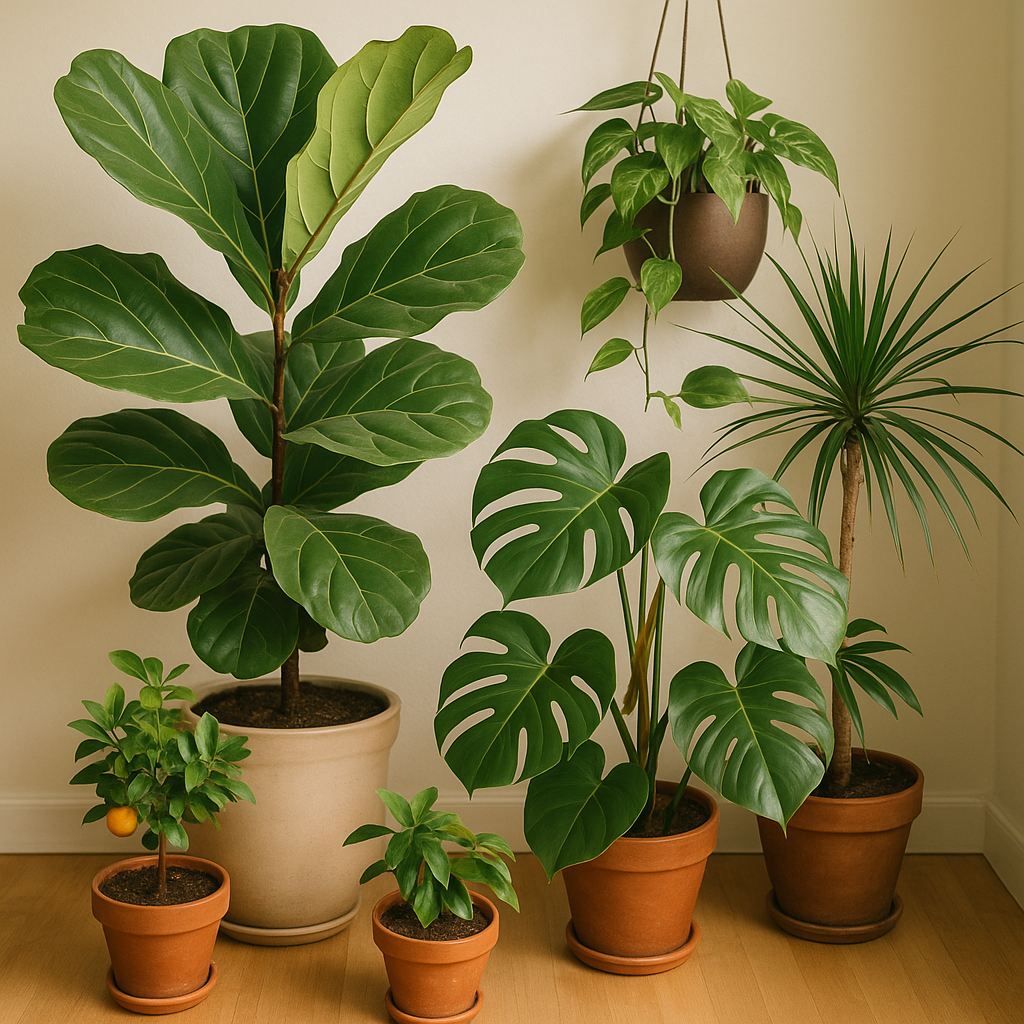
Some plants attract scale more than others. If you have any of these, add them to your regular inspection rotation:
- Fiddle leaf fig — a scale magnet. The thick, waxy leaves are prime real estate for armored scale. Check the main trunk and undersides.
- Monstera — aerial roots and stem joints are hiding spots. Soft scale is most common.
- Citrus — possibly the worst one. Citrus attracts multiple scale species aggressively. Inspect every two weeks if you keep citrus indoors.
- Dracaena — check along the leaf margins and where leaves emerge from the stem.
- Pothos — more resilient than fiddle leaf figs but not immune. Crawler infestations on pothos spread fast because of the trailing stems.
Regular inspection is the difference between a two-week treatment and a six-week one.
When to Give Up
Heavy infestations — scale covering most of the main stem crown, visible on every leaf, plant in rapid decline despite two full treatment cycles — are a legitimate reason to discard the plant.
Before you trash it: take cuttings from healthy growth at the tips. Inspect the cutting under your loupe, wipe the stems with rubbing alcohol, and propagate in clean fresh soil away from your collection. You can often save the genetics even if the parent plant is a loss.
When discarding: seal the plant in a bag before moving it through your home. Don't compost — scale will spread to outdoor plants. Trash it.
Scale Prevention — Quarantine and Inspection Protocol

Most indoor scale infestations come in on a new plant. The quarantine protocol is short, simple, and worth doing every single time.
New plant quarantine checklist:
- Inspect under a loupe before bringing the plant inside — check stems, leaf undersides, and stem-leaf joints
- Keep the new plant isolated for 2–3 weeks in a separate room
- Check it again at week 1 and week 3 with your loupe and a tape trap
- If it's clean at week 3, add it to your collection
- See 10x Loupe on Amazon — essential for catching crawlers before they've settled
For cultural prevention: healthy plants resist pests better than stressed ones. Good soil drainage, appropriate light, and consistent watering reduce vulnerability. See our guide on healthy soil and plant vigor for the basics.
Quick Reference — Scale ID & Treatment Schedule
| Stage | What to Do |
|---|---|
| Suspicion | Check for sticky leaves, honeydew, brown bumps |
| ID confirmed | Isolate plant immediately |
| Day 1 | Mechanical removal (rubbing alcohol + cotton swab) |
| Day 1 | Apply neem oil or horticultural spray |
| Day 7–10 | Check tape trap, reapply spray |
| Day 14–20 | Check tape trap, reapply spray |
| Day 21–28 | Check tape trap — if clean, one more week |
| Day 28–35 | Second clean check = treatment complete |
| Ongoing | Inspect at every watering; re-check all neighboring plants |
Products We Love
Everything referenced in this guide — tested, honest, no fluff:
- Bonide Neem Oil Horticultural Spray — indoor-safe ready-to-use neem oil. The practical choice for treating scale without measuring or mixing.
- Safer Brand Insecticidal Soap — escalation option when neem oil hasn't cleared the infestation after two cycles. Effective on armored scale and crawler stage.
- Jilor 10x Handheld Jewelers Loupe Magnifier — the tool that makes crawler monitoring actually possible. Any 10–20x magnification works; this one is cheap and good.
- Scotch Double-Sided Clear Tape (for crawler traps) — not a glamorous purchase. Essential for monitoring. Regular tape works too if you don't want to buy more stuff.