Is Your Plant Root Bound? Signs to Check & What to Actually Do About It
Your plant looks thirsty. The soil is dry. You water it. A few hours later it still looks droopy. You water it again. Nothing changes. The problem might not be water — it might be roots.
What 'Root Bound' Actually Means
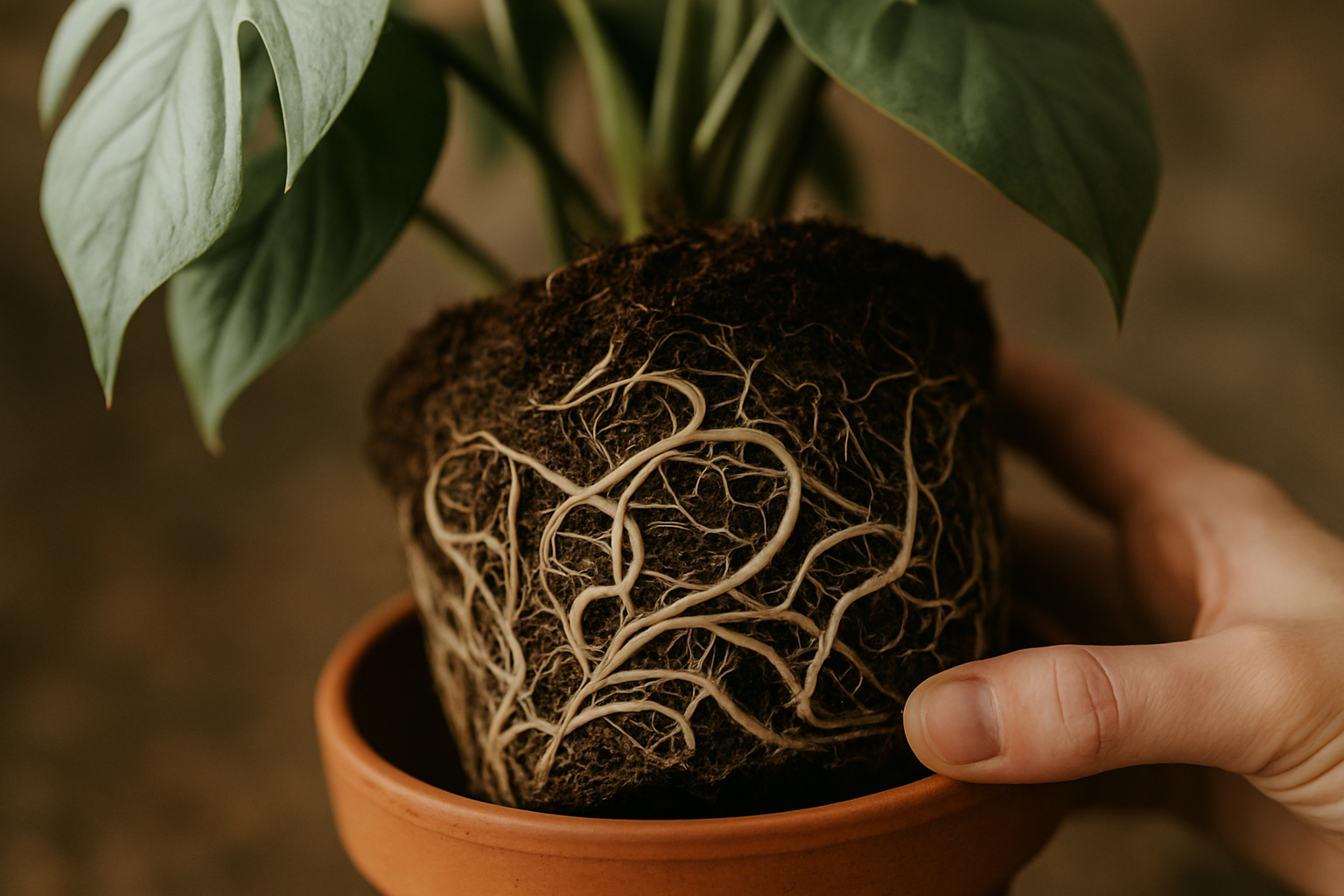
When a plant outgrows its pot, the roots start circling the inside instead of spreading outward. What that causes:
- Less soil — Root mass fills the pot, leaving less space to hold water and nutrients
- Water runs through — Hits the dense root mat and drains out the bottom without soaking in
- Plant can't absorb what it needs — No soil left to hold it
- Roots strangle themselves — Circling roots constrict growth like a too-tight necklace
The plant looks thirsty because it effectively is — but watering more won't fix it. The fix is space, not water.
The Root Bound Diagnostic Checklist
Run through these before you rip the plant out of its pot.
1. Water runs straight through. You water and within seconds it's coming out the drainage holes. This is the most common and most ignored sign.
2. Plant always looks droopy (even after watering). Root bound plants can't absorb water efficiently even when soil is wet. The roots are too compacted.
3. No new growth for months. If your plant has been sitting there looking the same since last spring, it's not lazy — it's cramped.
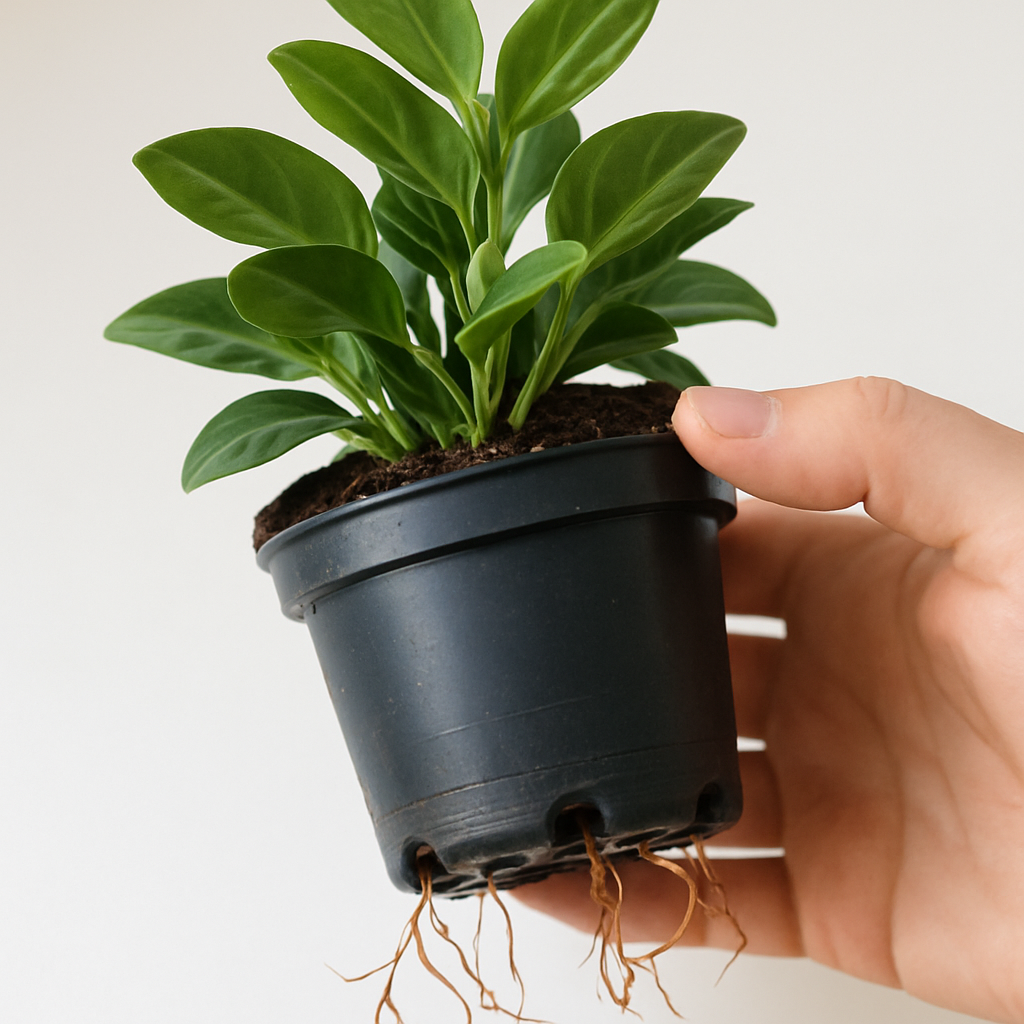
4. Roots poking out of drainage holes. Visual confirmation. If you see white or tan roots pushing out the bottom, the inside is even more packed.
5. The pot is bulging or warping. Flexible plastic nursery pots bow outward when the root mass pushes against the sides.
6. Yellowing lower leaves. When resource-constrained, a plant prioritizes surviving over growing. Older, lower leaves get abandoned first.
7. Soil level has dropped. Root mass expansion pushes soil upward. If you added soil months ago and it's now below the rim, something's going on.
8. It's been in the same pot for 2+ years. Most indoor plants need repotting every 12-18 months. If it's been longer, start checking the other signs.
Check Soil Moisture Before You Assume It's Root Bound →
How to Check Without Removing the Plant
The quick check: Tip the pot sideways at a 45° angle. Hold the plant by the base (not the stems) and slide the root ball out gently. If it's stuck, run a knife along the inside edge first.
What you're looking for:
- White/tan roots spiraling the outside of the root ball — classic root bound
- Roots wrapped multiple times — moderate to severe
- Dark, mushy, or smelly roots — that's root rot (see our plant health troubleshooting guide)
- A few roots but mostly soil — not root bound
Root Bound vs Overwatering vs Nutrient Deficiency
This is the part most articles skip over, and it's also what trips people up the most. The symptoms overlap — which is why root bound plants get watered more and more while nothing improves.
| Symptom | Root Bound | Overwatering | Nutrient Deficiency |
|---|---|---|---|
| Water runs through fast | ✓ | ||
| Soil stays wet for days | ✓ | ||
| Plant looks droopy | ✓ | ✓ | ✓ |
| Yellowing leaves | Lower first | Any | General, pale |
| Stunted growth | ✓ | ✓ | ✓ |
| Roots visible in drain holes | ✓ | ||
| Soil is dry after 3+ days | ✓ | ||
| Leaf edges brown/crispy | ✓ | ||
| Slow, very soft new growth | ✓ |
The fastest way to tell: tip the plant out of the pot. Dense coil with little soil = root bound. Wet soil with brown/mushy roots = overwatering. Fine roots but pale, stalled plant = nutrient deficiency.
What to Actually Do About It — By Severity
"Repot it" is not enough guidance. How you handle it depends on how bad it is.
Clean Cuts Matter — Sharpen Up Before You Prune →
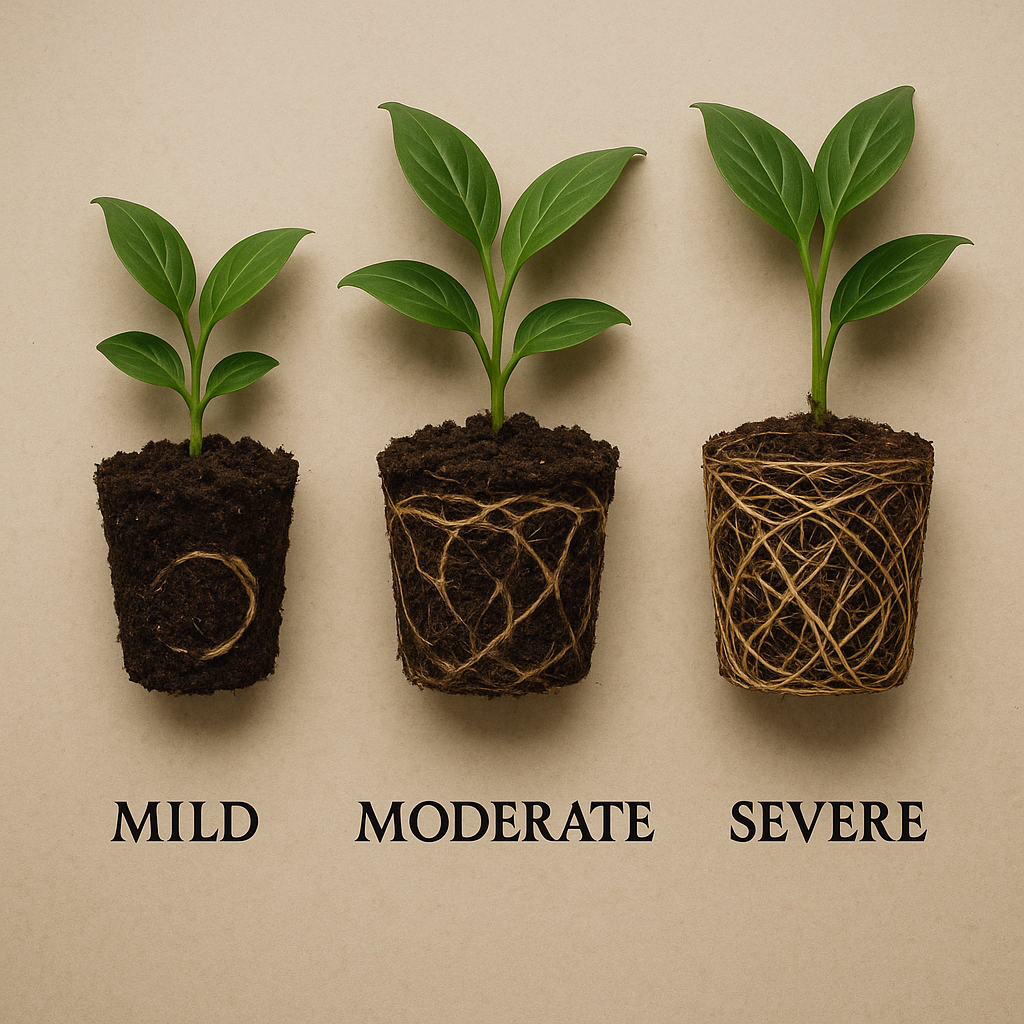
Mildly Root Bound: Massage & Repot
Most cases fall here. Roots have wrapped once or twice around the outside but there's still soil visible between them.
- Loosen outer roots with your fingers — work outward from the base, don't rip
- Separate the spiraling roots so they can grow outward
- Go up 1-2 inches in pot diameter — not more than that
- Use fresh chunky soil — the old soil is likely depleted. A chunky aroid mix gives good drainage and aeration
Fresh Soil = Fresh Start for Root Bound Plants →
Moderately Root Bound: Root Pruning
When roots are packed tight, circling multiple times with little soil visible:
- Soak the root ball first — 20-30 minutes makes roots more pliable
- Trim the outer layer — remove the tight outer spiral with clean pruning shears. You're not removing most of the roots, just the constrictive outer ring
- Score the remaining root ball — make 3-4 shallow vertical cuts (about 1/4 inch deep) on the sides. This encourages roots to grow outward
- Repot in fresh soil with proper drainage
Severely Root Bound: Rescue Method
When roots have formed a solid mat and you can barely see any soil:
- Overnight soak — submerge the root ball in water for 12-24 hours to saturate and loosen the dense mass
- Use the bread knife trick — a serrated knife slices through the outer root mat without crushing inner roots the way scissors might. Score through the outer inch in several places
- Trim conservatively — you can remove up to 1/3 of the root mass. More risks transplant shock
- Pot in well-draining mix — perlite and bark for aeration
- Cut back on light and watering — skip direct sun for a week, water only when the top inch of soil is dry
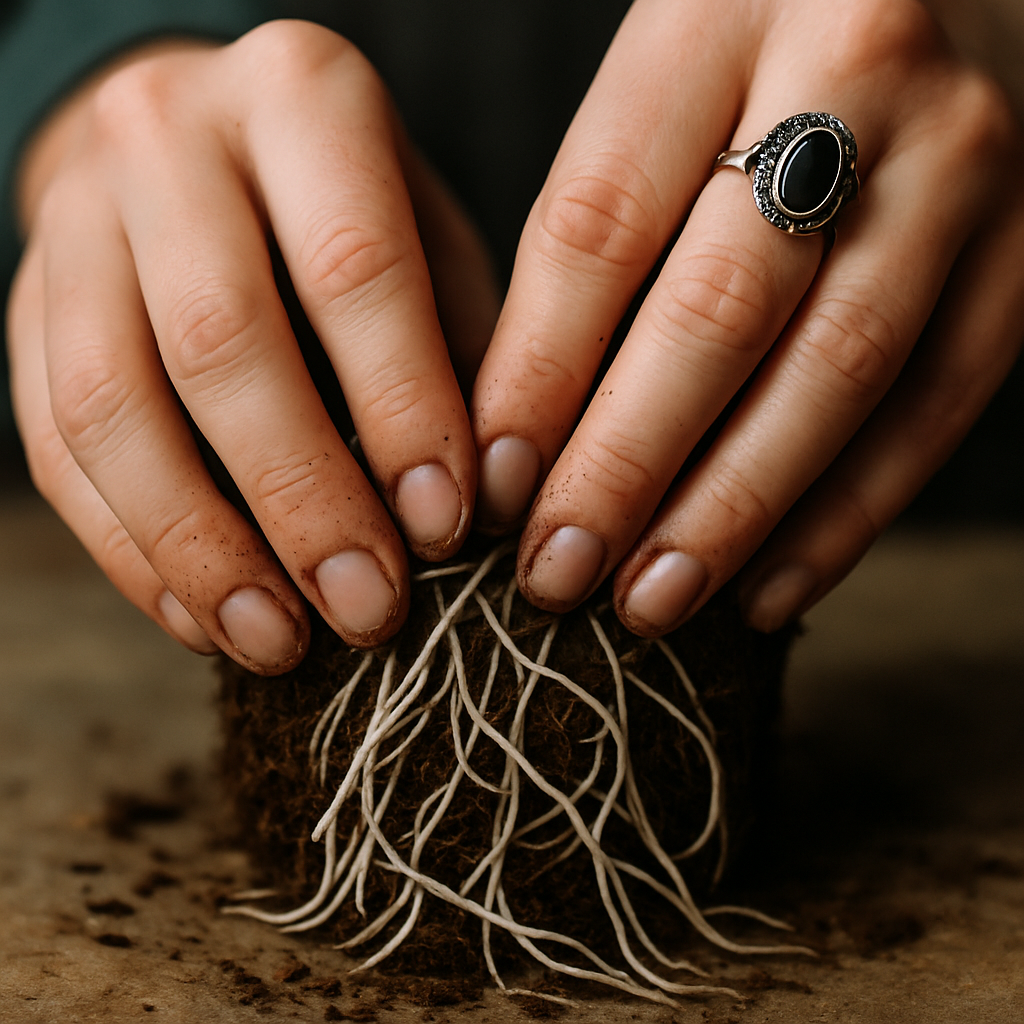
How to Loosen Tangled Roots
The internet is full of vague advice like "loosen the roots." Here's exactly how.
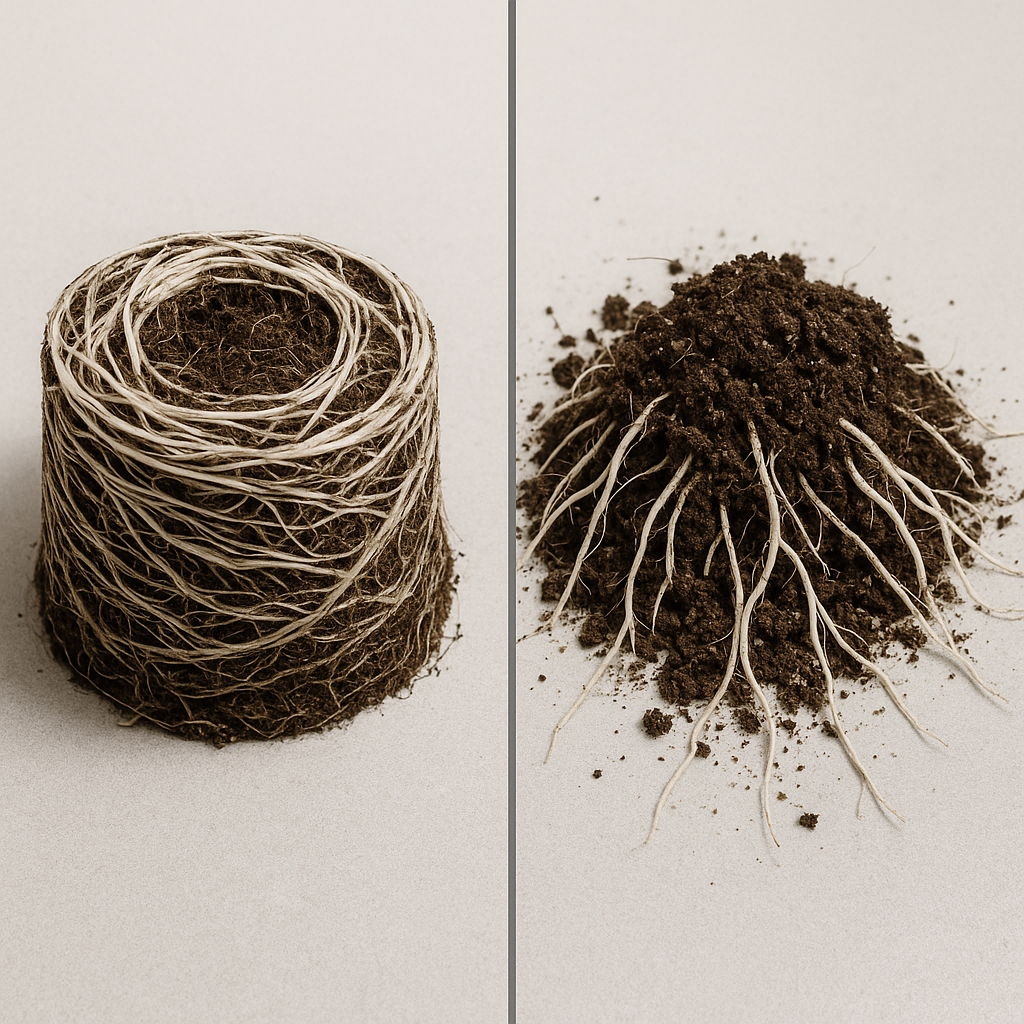
Finger massage method — Best for lightly to moderately bound plants. Hold the root ball with both hands, work from the bottom upward with your thumbs, and work outward from the center. Don't force anything — if a root resists, work around it. Takes 2-3 minutes for a moderately bound plant.
Soak & work method — Best when fingers aren't enough. Soak the root ball for 30-60 minutes, then work through the outer roots while wet — they're more pliable. Use a chopstick or wooden skewer for stubborn sections.
The claw method — After loosening outer roots, gently shape the root mass into a slight dome (bottom curves up in the middle). This creates a base for roots to spread from. When you repot, position roots pointing outward and downward.
Pot Size Guide: Don't Go Too Big
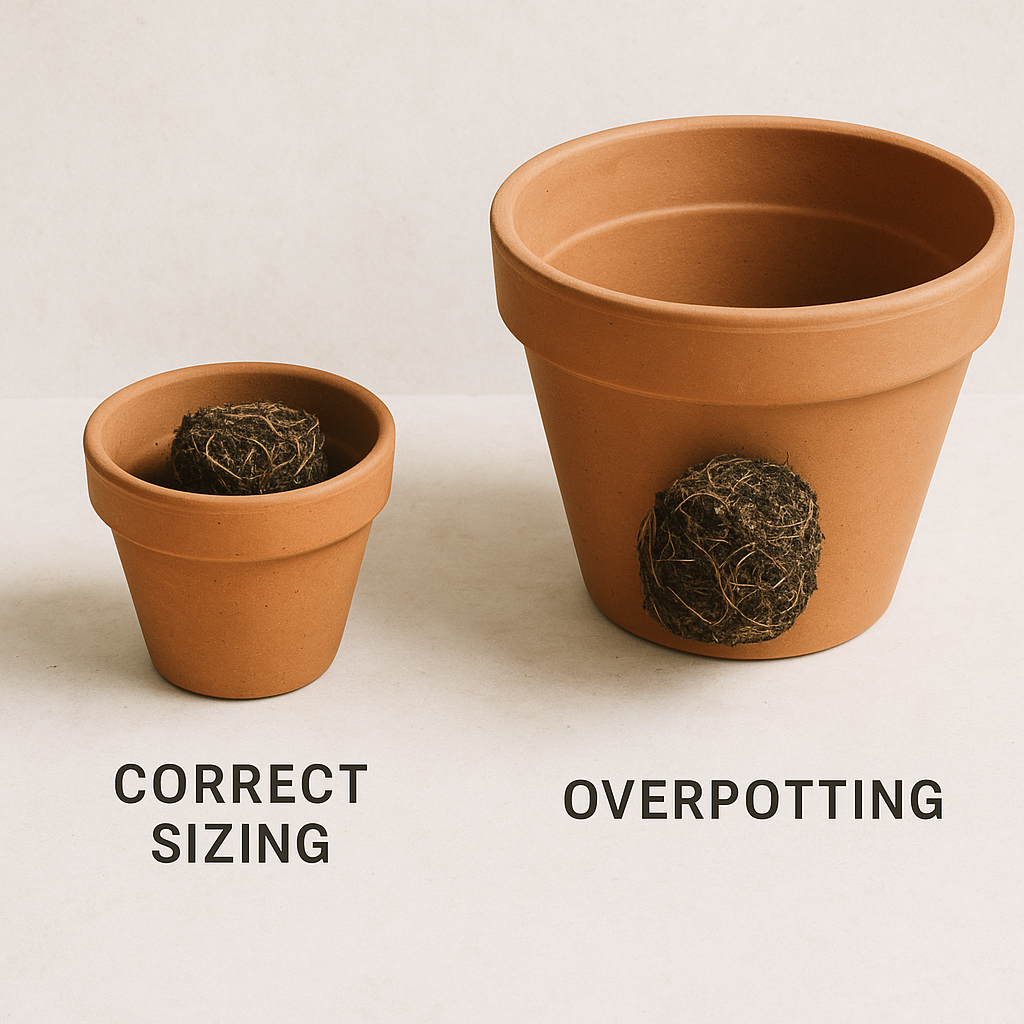
The biggest mistake after fixing root bound is going too big on the new pot.
The 1-2 inch rule: Go 1-2 inches wider in diameter than the current root ball. That's it.
A pot that's too large holds excess moisture against the roots. Without roots to absorb it, soil stays wet for weeks — creating root rot. You've traded one problem for a worse one.
Terracotta vs. plastic: Terracotta breathes. Plastic doesn't. For most tropicals, terracotta is safer because it wicks moisture away. If you water frequently, terracotta forgives more than plastic.
Drainage holes are non-negotiable. If the pot doesn't have them, drill them or don't use the pot.
Upgrade to Terracotta — Breathable, Classic, and Affordable →
Prevention
Root bound is easier to prevent than to rescue.
- Check drain holes every spring — lift the pot, if roots are poking out, it's time
- Know your plant's growth rate — fast growers (pothos, monstera) need repotting every 12 months; slow growers (ZZ, snake plant) can go 2-3 years
- Don't size up dramatically — 1-2 inches max. Always.
- Refresh soil annually — soil breaks down even in properly sized pots. Top-dress or repot every year or two.
When Your Plant Arrives Root Bound (From the Store)
Store-bought plants are often root bound before you get them home. Nurseries want plants to look full and lush in small pots. Big beautiful foliage in a tiny pot is a red flag, not a bargain.
What to do:
- Check drain holes before you leave the store — if roots are poking out, it's already root bound
- Repot within 1-2 weeks, even if the plant looks fine — it won't stay fine
- Acclimate for a few days before repotting, but don't delay beyond two weeks
- Go up 1-2 inches in pot size with fresh soil
The "acclimation period" is real — but it doesn't mean leaving a root bound plant in a too-small pot. Get it into a proper container and let it adjust to your light, not your pot size.
FAQ
How do I know if my plant is root bound? Tip it out of the pot. If roots are wrapped in a tight coil with little soil visible, it's root bound. Faster signs: water runs straight through, roots in drain holes, no new growth.
Is root bound bad for plants? Yes, eventually. Mildly root bound plants look stressed but survive. Severely root bound plants decline and may die. The longer you wait, the harder the recovery.
Should I loosen roots before repotting? Yes. Spiraling roots continue to circle in the new pot if you don't break the pattern. Gently separate outer roots so they can grow outward.
How much can I cut off a root bound plant? Up to 1/3 of the root mass on most indoor plants without causing transplant shock. On severely root bound rescues, trimming the outer constrictive ring matters more than removing bulk.
Should I water after repotting a root bound plant? Lightly, yes. Water thoroughly once, then let it drain. Don't soak it — the roots have been through stress. Skip watering again until the top inch of soil is dry.
For more plant troubleshooting, see our plant health troubleshooting guide and step-by-step repotting guide.
Our Favorite Tools for Root Bound Plant Rescue
We use these ourselves — worth having on hand if you repot regularly:
- Moisture Meter — Confirm soil conditions before you assume root bound is the problem
- Terracotta Pot Set — Breathable pots prevent the overwatering that compounds root bound issues
- Chunky Aroid Potting Mix — Fresh, well-draining soil gives roots room to recover
- Pruning Shears — Clean cuts for root pruning; dull scissors crush rather than cut