Rare Philodendron Varieties Compared: Pink Princess vs Spiritus Sancti
Once $10,000 plants, now under $50. Here's everything you need to know before you buy.
What Happened to Rare Philodendron Prices?
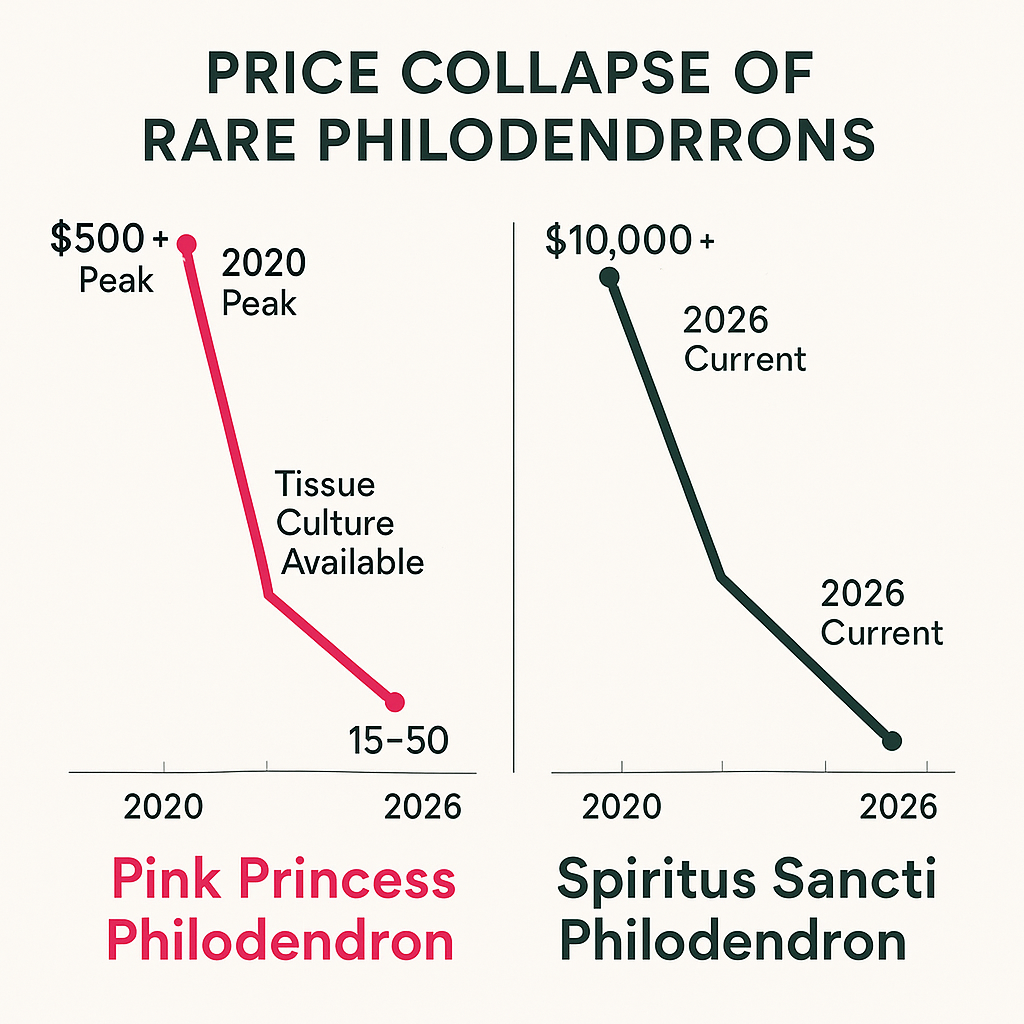
If you spent any time in plant collector circles between 2020 and 2022, you remember the era of the $10,000 philodendron. Spiritus Sancti sold for four figures. Pink Princess cuttings moved for $300-$500 on the regular. People were breeding these in garages, flipping tissue culture plugs for profit margins that would make a tech startup jealous.
Then tissue culture caught up.
Micropropagation labs in Southeast Asia flooded the market with mass-produced Spiritus Sancti and Pink Princess plantlets. Prices collapsed 90-99%. Spiritus Sancti, once a $10,000+ specimen plant, now goes for $25-$300 depending on size. Pink Princess, once a $500 cutting, is now $15-$50 at most retailers.
This is the comparison that matters right now: not which plant was hotter in 2021, but which one is actually worth buying in 2026 — and which one will survive your care routine.
Pink Princess vs Spiritus Sancti: Key Differences at a Glance
| Pink Princess | Spiritus Sancti | |
|---|---|---|
| Origin | Hybrid (believed from P. erubescens cross) | Brazil (discovered in Espírito Santo state) |
| Leaf Shape | Heart-shaped, 7-9 inches, variegated | Long strap leaves, 2-3 feet at maturity |
| Growth Habit | Climbing vine, trails or climbs a pole | Upright grower, self-heading |
| Mature Size | 2-3 feet indoors | 3-5 feet indoors |
| Price Range (2026) | $15 – $109 | $25 – $300 |
| Care Difficulty | Easy-Medium | Medium-Hard |
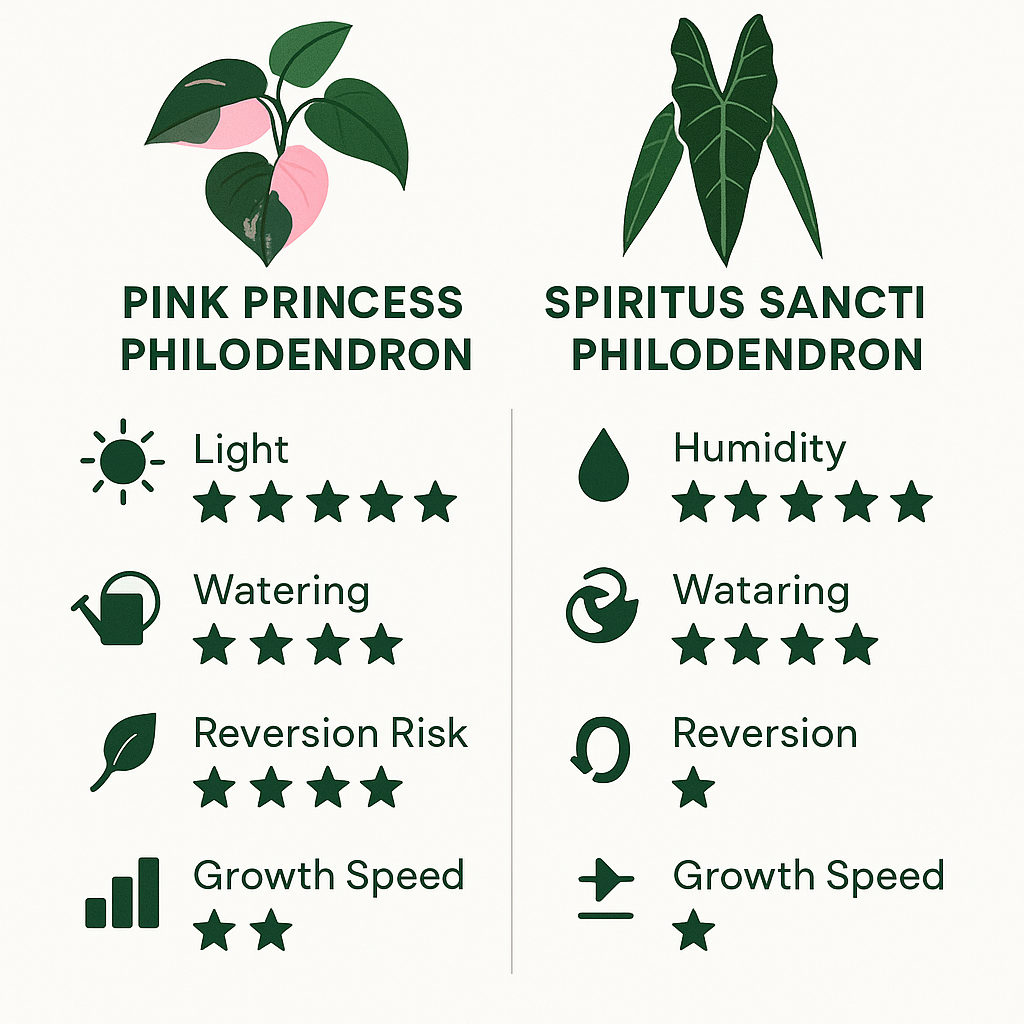
| Humidity Needs | 40-60% (tolerates lower) | 60-80% (demanding) |
| Light Needs | Bright indirect; more light = more variegation | Bright indirect, consistent year-round |
| Reversion Risk | High — all-green reversions common | None — solid color throughout |
| Growth Speed | Fast (noticeable new leaves monthly) | Slow (a few leaves per year) |
| Availability | Widely available, many nurseries | Specialty retailers only |
How to Tell Them Apart
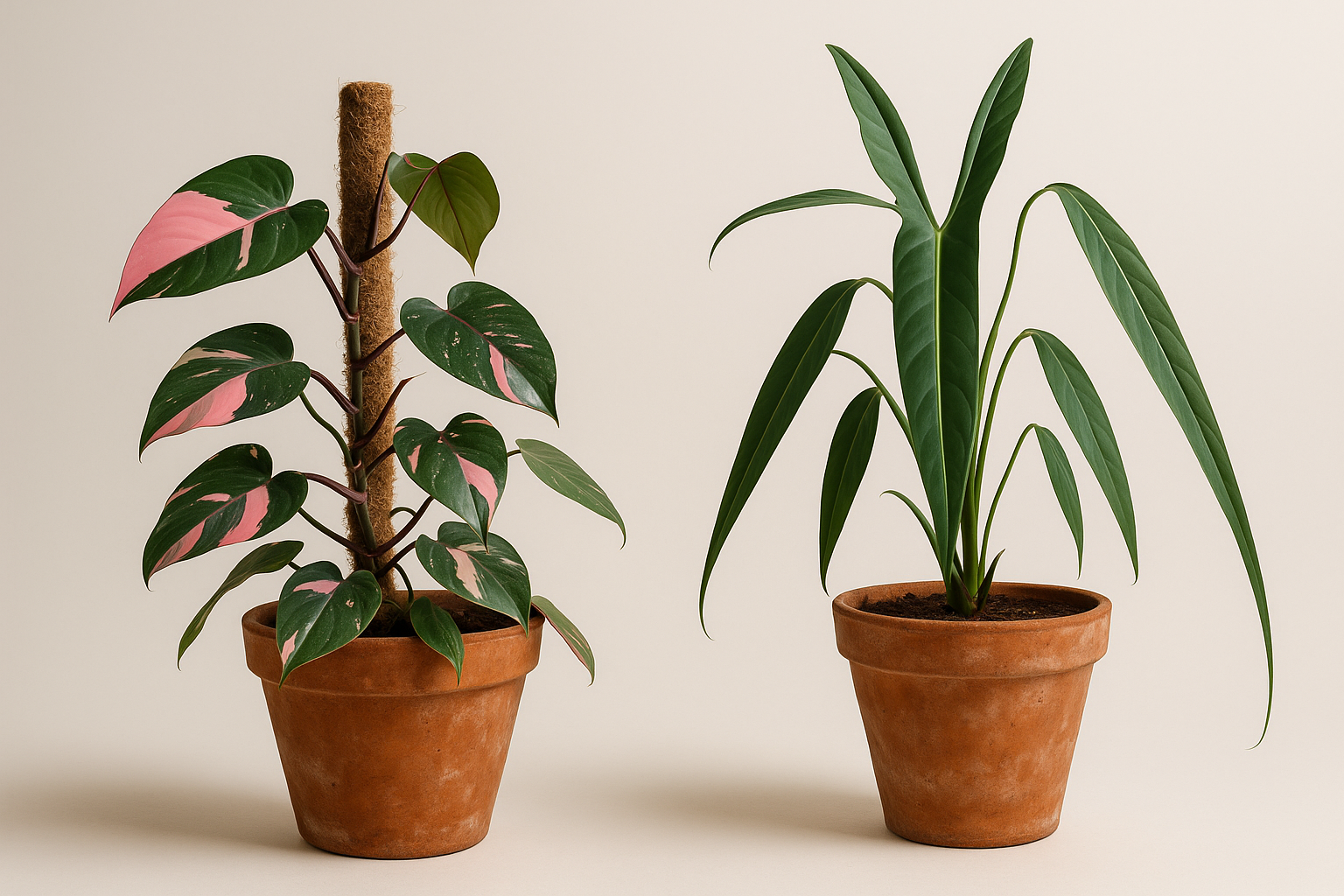
Visually, these two couldn't look more different once mature.
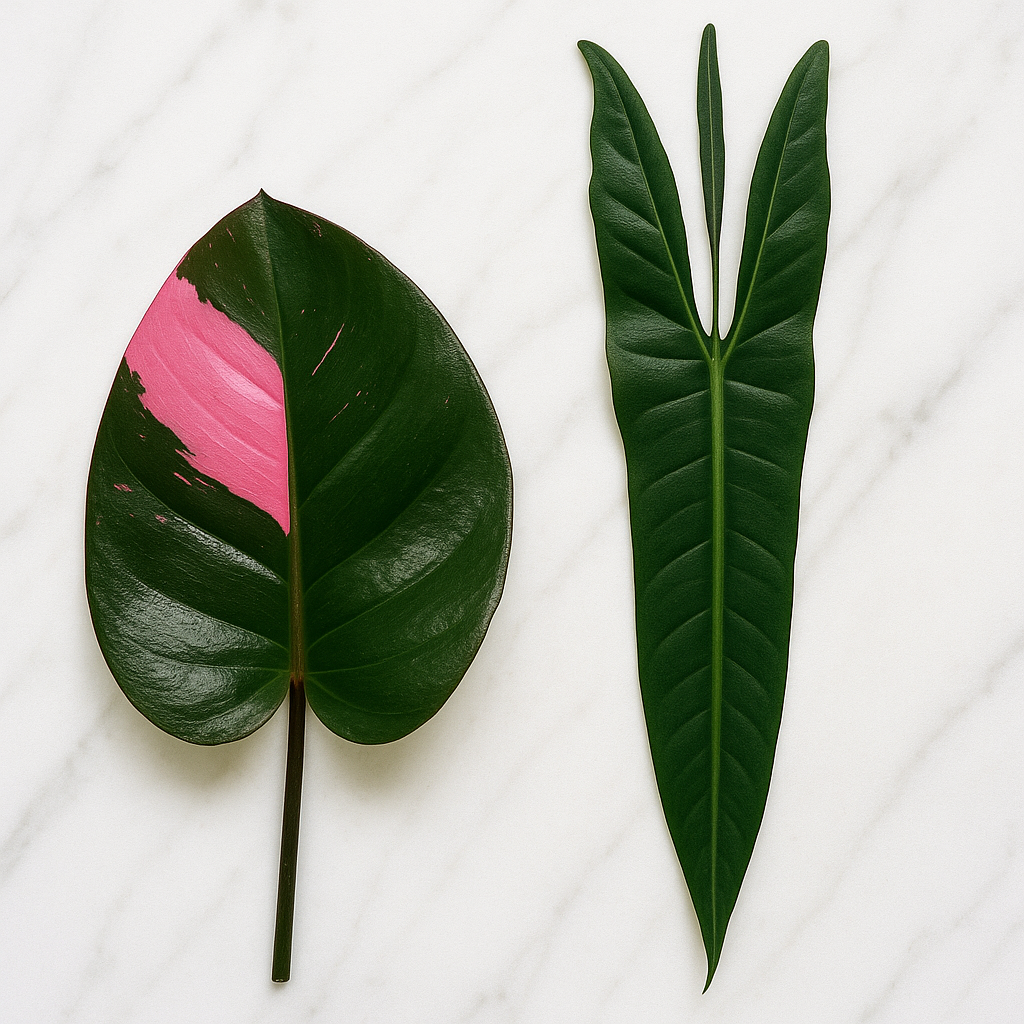
Pink Princess is a climbing vine. Its heart-shaped leaves — typically 7-9 inches — display that signature pink-and-green variegation in unpredictable patches. Some leaves are mostly pink; others are mostly green. The plant climbs or trails, and with a moss pole it'll grow upward with larger leaves.
Spiritus Sancti is an upright, self-heading plant with dramatically long strap leaves that can reach 2-3 feet at maturity. The leaves are deeply lobed, almost strap-like, dark green with a matte finish. It's a completely different visual language from the Pink Princess.
If you're trying to tell a Spiritus Sancti from other philodendrons or identify houseplants by their leaves, the strap-like elongated leaf shape is one of the most distinctive in the aroid world.
Care Difficulty: Which Is Harder to Keep Alive?
Here's the honest answer: Pink Princess is more forgiving. Spiritus Sancti will punish you if you get the humidity wrong.
Light Requirements
Both plants want bright indirect light. This is non-negotiable for aroid health.
For Pink Princess, brighter light directly supports better variegation. The pink sections (which lack chlorophyll) need light to stay energetically viable. Too little light and the plant will push out all-green leaves to compensate — your Pink Princess slowly becoming just a green philodendron. If your home doesn't get enough natural light, a full-spectrum LED grow light like the Mars Hydro will help maintain that variegation.
Spiritus Sancti needs consistent bright indirect light year-round. It doesn't have the variegation complication, but it's a slower-growing understory plant that doesn't appreciate direct sun. An east or north-facing window, or a few feet back from a south/west window, is ideal.
Humidity Needs
This is the biggest practical difference between the two plants.
Pink Princess tolerates 40-60% humidity — within range of most homes without intervention. It'll survive at lower humidity, though the leaf edges may brown a bit.
Spiritus Sancti wants 60-80% humidity. That's a stretch for most apartments, especially in winter when heating systems dry the air out. If you're growing Spiritus Sancti in a typical home, you'll likely need a humidifier running near it, a pebble tray, or ideally a plant cabinet with a humidity lid. Without this, expect crispy leaf edges and slow decline.
When shipping high-value plants like these, humidity stress is one of the biggest post-shipping recovery issues — both plants benefit from extra humidity after transit when you care for mail-order plants after shipping.
Watering and Soil
Both are aroids. Both want chunky, fast-draining soil that stays moist but never waterlogged.
An aroid mix typically includes orchid bark, perlite, peat or coco coir, and a touch of worm castings. A quality premade aroid mix like Rosy Soil Aroid Mix on Amazon takes the guesswork out.
Water when the top 2-3 inches of soil are dry. Don't let either plant sit in standing water — root rot is the most common killer of both, but overwatering Spiritus Sancti is especially common because people baby it.
What Do They Cost in 2026?
Pink Princess is the budget option and widely available. Small 2-inch tissue culture starts run $15-$25. Well-established 4-6 inch plants with solid variegation go for $40-$109 depending on the retailer and current demand.
Spiritus Sancti is pricier and less widely distributed. Small TC plants start around $25-$50. Larger established specimens with multiple leaves run $150-$300. Prices vary significantly by retailer and plant size.
If you've decided Spiritus Sancti is the one, buy a Spiritus Sancti from BWHPlantCo, a trusted specialty rare plant retailer.
The market has stabilized significantly. Unlike 2020-2022, you won't find $500 Pink Princess cuttings or $10,000 Spiritus Sancti specimens. Tissue culture production has normalized supply, which is good news for buyers.
Pink Princess Problems: Reversion Is Real
The #1 issue with Pink Princess is reversion — the plant pushing out all-green leaves instead of variegated ones.
This happens for a few reasons:
Not enough light. The plant's green sections carry more chlorophyll, so in low light, it "prioritizes" all-green leaves to survive. Solution: more light, or prune the reverted stems to encourage variegated growth.
Genetics. Some Pink Princess plants are more stable than others. A plant that consistently reverts may just have unstable genetics — not much you can do except propagate from the most variegated sections.
Over-pruning the variegation. If you cut too aggressively at green growth, you can accidentally select against the variegated meristematic tissue. Aim for balance.
The good news: reversion is cosmetic. The plant is healthy — it's just being practical. More light usually corrects it.
Spiritus Sancti Problems: Slow Growth and Humidity Cracks
Spiritus Sancti is not a plant for the impatient.
Slow growth is normal, not a problem. A healthy Spiritus Sancti might produce 2-4 new leaves per year. That's it. If you're the type who checks for new growth every week, this plant will drive you slightly insane. If you want a fast-growing plant, Pink Princess wins here — it pushes out new leaves monthly once established.
Crispy leaf edges and cracking are almost always humidity-related. If the air is too dry, the leaf margins desiccate and split. The fix is higher ambient humidity — not misting (misting does nothing lasting) but a humidifier or enclosed grow space.
Yellowing leaves usually mean overwatering. Spiritus Sancti is prone to root rot if kept too wet. Let it dry out more than you'd expect between waterings.
Patience is the admission fee for Spiritus Sancti. If you want instant gratification, look elsewhere.
Which Rare Philodendron Is Right for You?
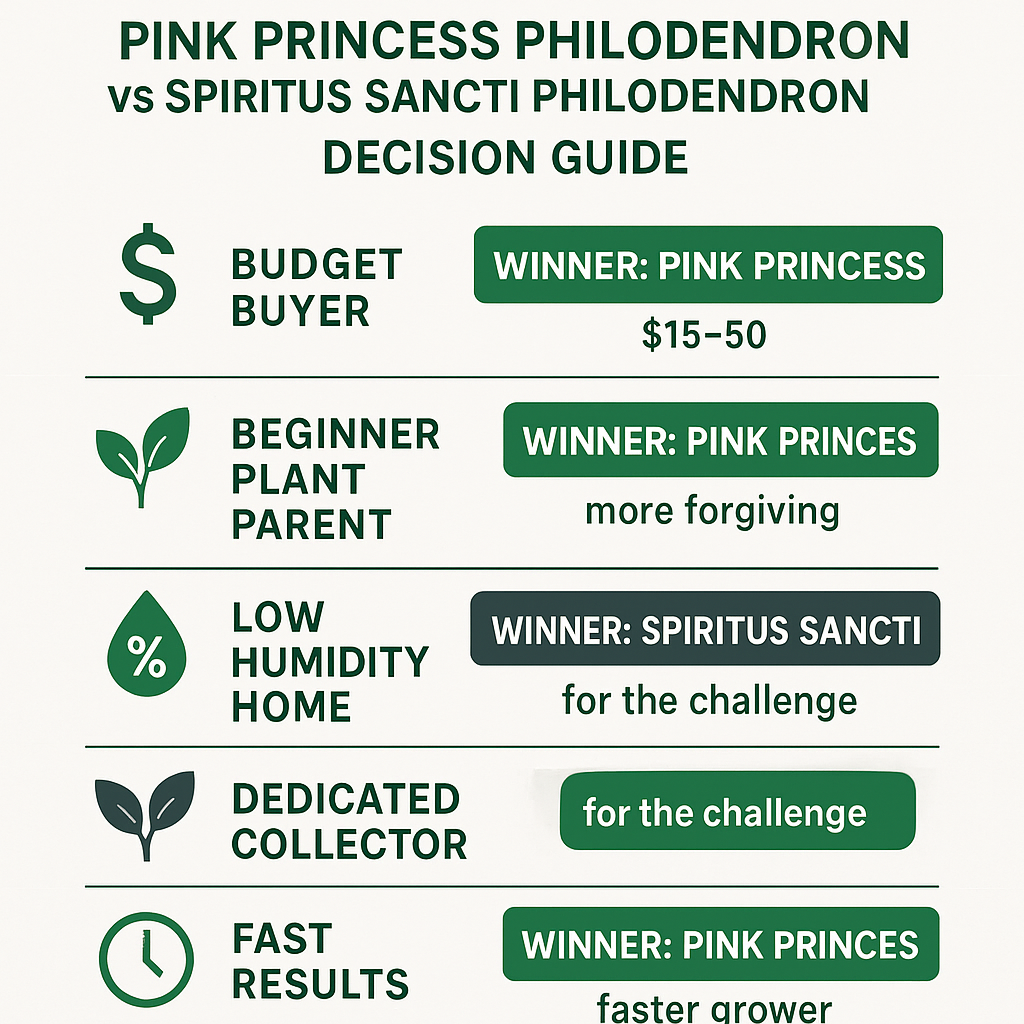
Here's the honest decision guide:
- On a budget → Pink Princess. $15-$50 vs $25-$300. Not even close.
- Beginner plant parent → Pink Princess. More forgiving of inconsistent care, lower humidity demands, faster to see results.
- Humidity-challenged home → Pink Princess. Spiritus Sancti will struggle without supplemental humidity.
- Humidity-controlled grow space → either, but Spiritus Sancti is more impressive in a collection.
- Impatient grower → Pink Princess. New leaves every few weeks vs a few per year.
- Collector who wants a challenge → Spiritus Sancti. Long strap leaves at maturity are genuinely show-stopping.
- Worried about reversion → Spiritus Sancti. No variegation means nothing to lose.
For a broader look at other rare philodendrons worth adding to your collection, check out the dark foliage houseplants guide — many rare philodendrons (including both of these) fall into that category and benefit from similar care principles.
Products We Love
We use these products ourselves for rare philodendrons:
- Aroid potting mix — both plants need chunky, fast-draining mix. Shop aroid soil mixes on Amazon
- Grow light — especially important for Pink Princess variegation maintenance. See full-spectrum LED grow lights on Amazon
- Digital hygrometer — the single best investment for Spiritus Sancti growers. Check humidity levels on Amazon