Pothos Leaves Troubleshooting — Why Is My Pothos Turning Yellow?
Your Pothos is trying to tell you something. Let's figure out what.
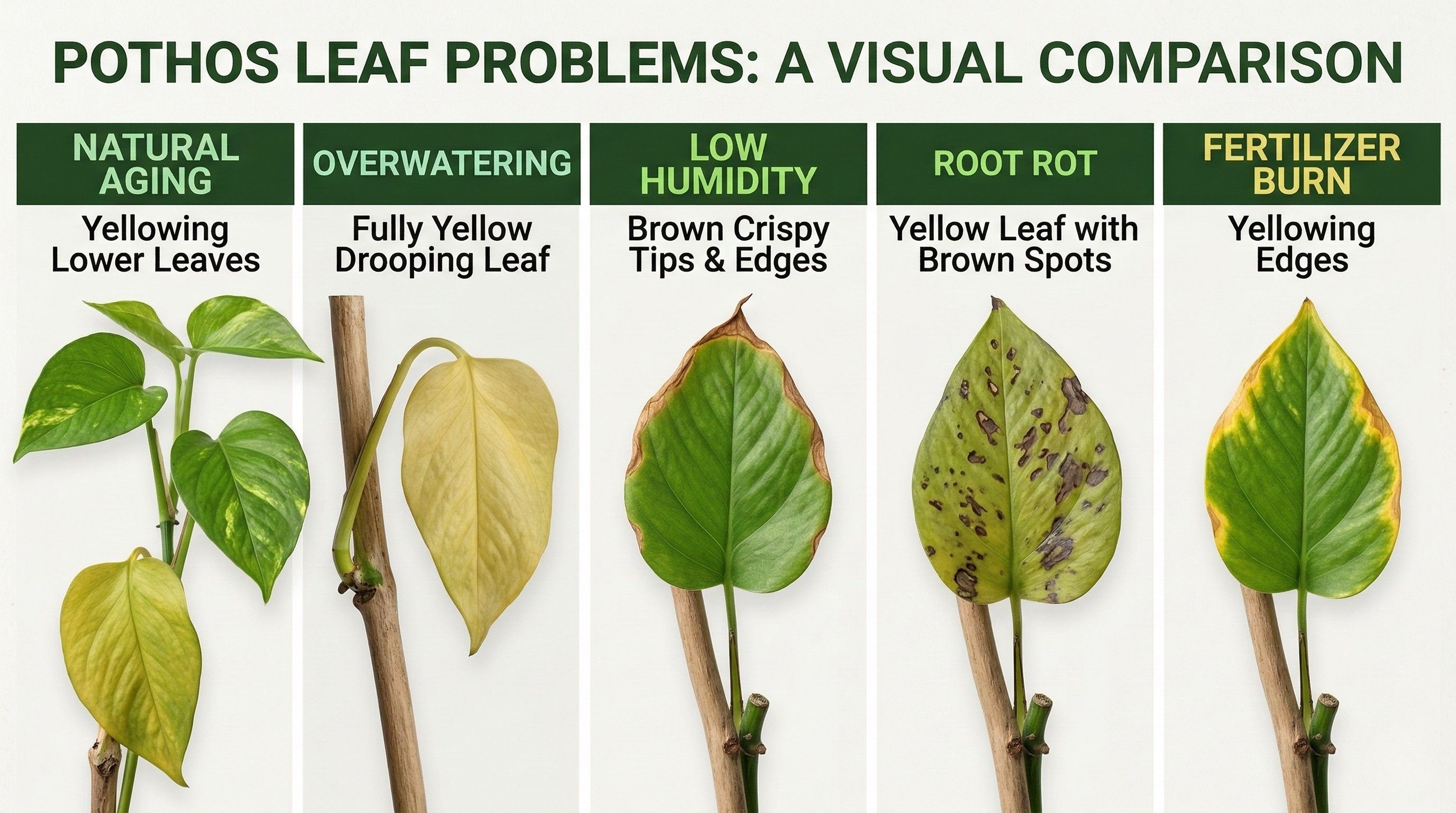
Why Is My Pothos Turning Yellow? Quick Diagnosis Guide
Let's cut to the chase: yellow leaves on your Pothos are common, and usually fixable. The trick is figuring out what's causing it.
Here's the quick breakdown:
- Lower leaves yellowing → Natural aging (totally normal)
- Whole leaf turning yellow + soft/drooping → Overwatering
- Leaf curling + crispy edges + dry soil → Underwatered
- Brown tips on otherwise healthy leaves → Low humidity
- Yellow edges with brown crust → Fertilizer burn
- Yellow + brown spots + mushy stem → Root rot (serious)
Still not sure? Keep reading — we'll walk through each cause in detail.
Overwatering: The #1 Cause of Yellow Pothos Leaves
If your Pothos leaves are going yellow and the soil feels constantly wet, you've got a classic overwatering situation. This is far and away the most common cause of yellowing Pothos.
Signs of an Overwatered Pothos
- Leaves turn yellow but feel soft or mushy
- Soil stays wet for more than a week after watering
- Plant looks droopy even when soil is wet
- Sometimes accompanied by brown spots (root rot starting)
- Pot feels unusually heavy
The Fix
Check Soil Moisture Before Watering — seriously, stick your finger in the soil. If the top 2 inches are still damp, don't water.
- Let the soil dry out — Stop watering until the top 50% of soil is dry
- Check the roots — If roots are brown and mushy, you've got root rot (see below)
- Improve drainage — Make sure your pot has drainage holes
- Consider a moisture meter if you're the type who "just can't tell" — it takes the guesswork out
Get Well-Draining Potting Mix — Pothos aren't fussy, but they hate sitting in water. A chunky aroid mix with perlite or orchid bark helps water flow through.
Root Rot: When Overwatering Gets Serious
If your Pothos has yellow leaves AND the stems feel mushy near the soil line, you're dealing with root rot. This is fixable but requires action.
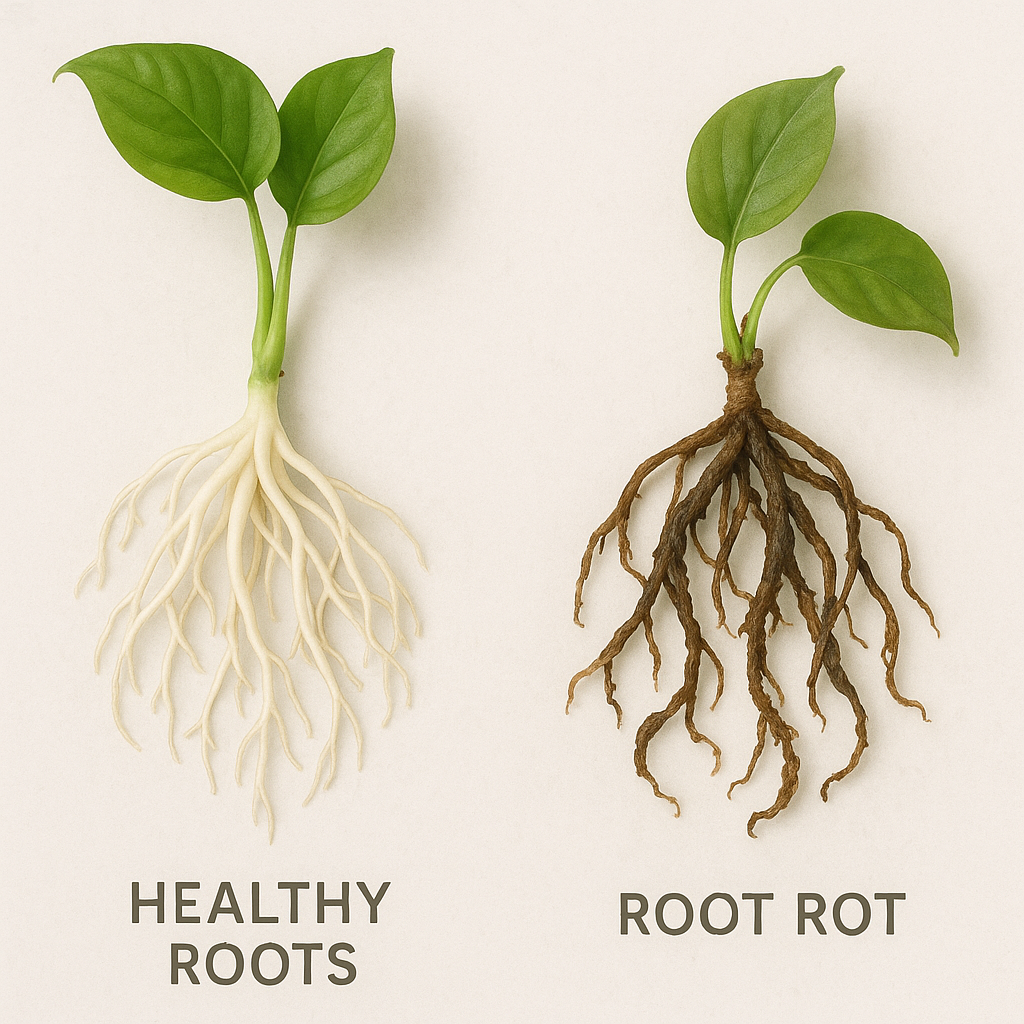
Signs:
- Roots are brown, black, or mushy
- Smelly, rotten odor
- Yellow leaves that keep dropping
- Stem mushiness at the base
How to fix it:
- Remove plant from pot
- Trim away all brown/mushy roots with clean scissors
- Let roots air out for a few hours
- Repot in fresh, well-draining soil
- Water less going forward
Check out our guide on how to treat root rot for more details.
Underwatering: When Your Pothos Is Too Thirsty
Underwatering is less common than overwatering, but it happens — especially if you've got a busy schedule or live in a hot/dry climate.
Signs of an Underwatered Pothos
- Leaves look wilted or curled
- Soil pulls away from the sides of the pot
- Leaves feel dry and crispy, not mushy
- Plant perks up quickly after watering (that's a tell)
- Lower leaves may yellow and drop
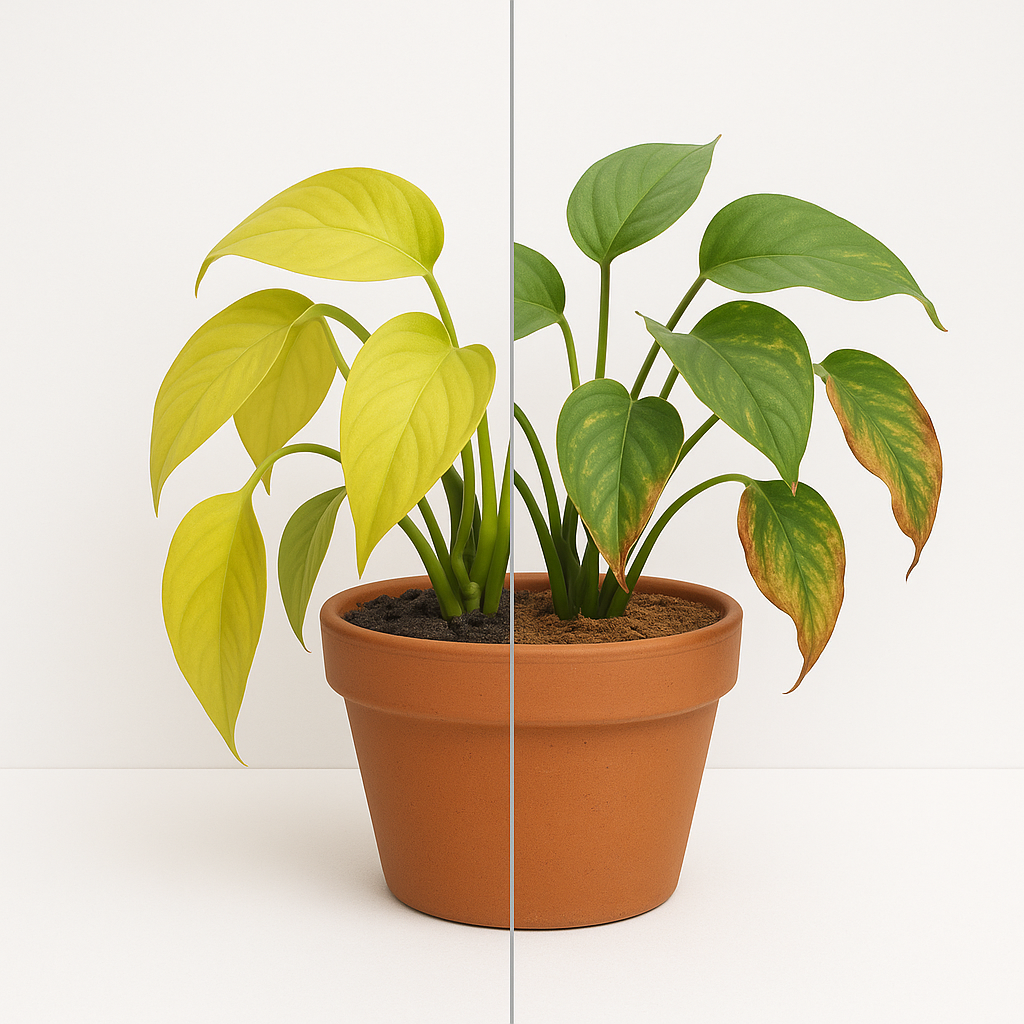
Underwatered vs. Overwatered — The Quick Tell
| Feature | Overwatered | Underwatered |
|---|---|---|
| Soil | Wet, soggy | Dry, pulling away |
| Leaves | Soft, droopy | Crispy, curled |
| After watering | No change | Perks up fast |
The Fix
- Give your Pothos a thorough drink — water until it drains from the bottom
- Set a reminder to check soil moisture weekly
- Check Soil Moisture Before Watering to establish a proper watering routine
Most underwatered Pothos bounce back within a day or two of a good soak.
Too Much Direct Light Can Burn Pothos Leaves
Pothos are notoriously low-light tolerant, but there's a limit. Too much direct sun will scorch those leaves.
Signs of Light Burn
- Yellow or brown patches on leaves, especially on the side facing the window
- Leaves look faded or bleached
- Usually affects upper/newer leaves first
- Often accompanied by overall decline despite otherwise good care
The Fix
Move your Pothos to a spot with bright, indirect light — a few feet from a window is perfect. Morning sun is okay; harsh afternoon sun is not.
Pro tip: If your Pothos was variegated and you're seeing more solid green leaves, that's actually a sign it's getting less light (the plant is prioritizing chlorophyll). Not a problem — just a sign of adaptation.
Nutrient Problems: Fertilizer Burn or Deficiency
Yellow leaves can also mean your Pothos has too much fertilizer (salt buildup) or not enough nutrients.
Signs of Fertilizer Burn
- Yellow leaf edges that turn brown and crispy
- White crust on soil surface (salt buildup)
- Affected leaves look scorched
- Usually happens after fertilizing
Signs of Nutrient Deficiency
- General yellowing, especially between leaf veins
- Stunted growth
- Smaller new leaves
Get Balanced Liquid Fertilizer — Use a diluted, balanced fertilizer (like 10-10-10) during the growing season (spring/summer). Don't overdo it.
The Fix
- For fertilizer burn: Stop fertilizing, flush soil with plain water several times, let dry completely before watering again
- For deficiency: Feed with a balanced liquid fertilizer during growing season
Low Humidity Causing Brown Leaf Tips
If your Pothos has brown, crispy leaf tips but the rest of the leaf looks fine, humidity is likely the culprit.
Signs of Low Humidity
- Brown, crispy leaf tips and edges
- Otherwise healthy-looking plant
- Often worse in winter when indoor heating dries the air
The Fix
- Group plants together (they create a humid microclimate)
- Mist occasionally (helps temporarily)
- Get a humidifier if you're in a dry climate
- Move away from heating vents
Natural Aging: When Yellow Leaves Are Normal
Here's the good news: sometimes yellow leaves are totally normal.
When Aging Is the Cause
- Only lower/older leaves are affected
- 1-2 leaves at a time
- Rest of the plant looks healthy
- New growth is coming in fine
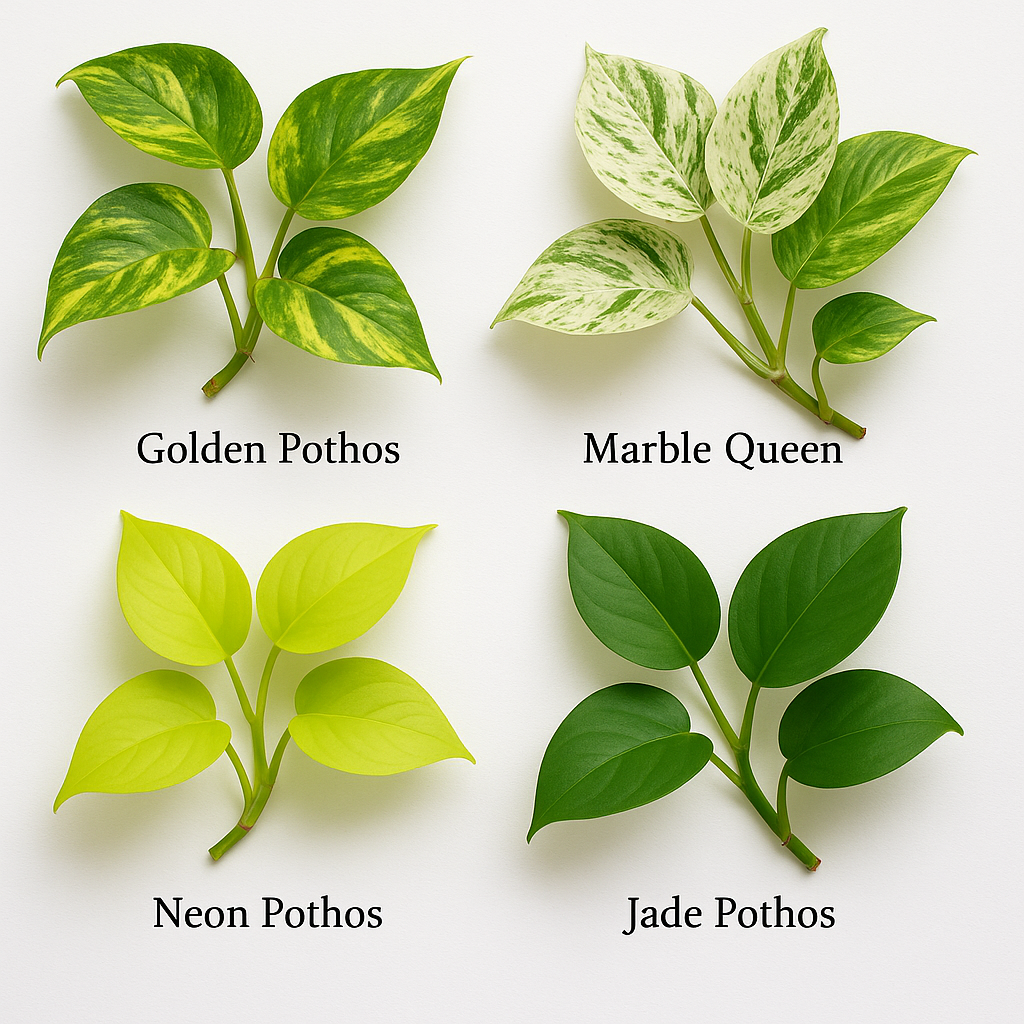
Pothos naturally shed their lower leaves as they grow. It's just the plant redirecting energy to new growth. This is normal and nothing to worry about — unless a bunch of leaves are yellowing at once.
Quick variegation check: Some Pothos varieties (Golden, Marble Queen, Neon) have natural variegation that can look like yellowing. If the yellow is in patterns (marbling, stripes) and the plant is otherwise healthy, it's probably just pretty variegation, not a problem.
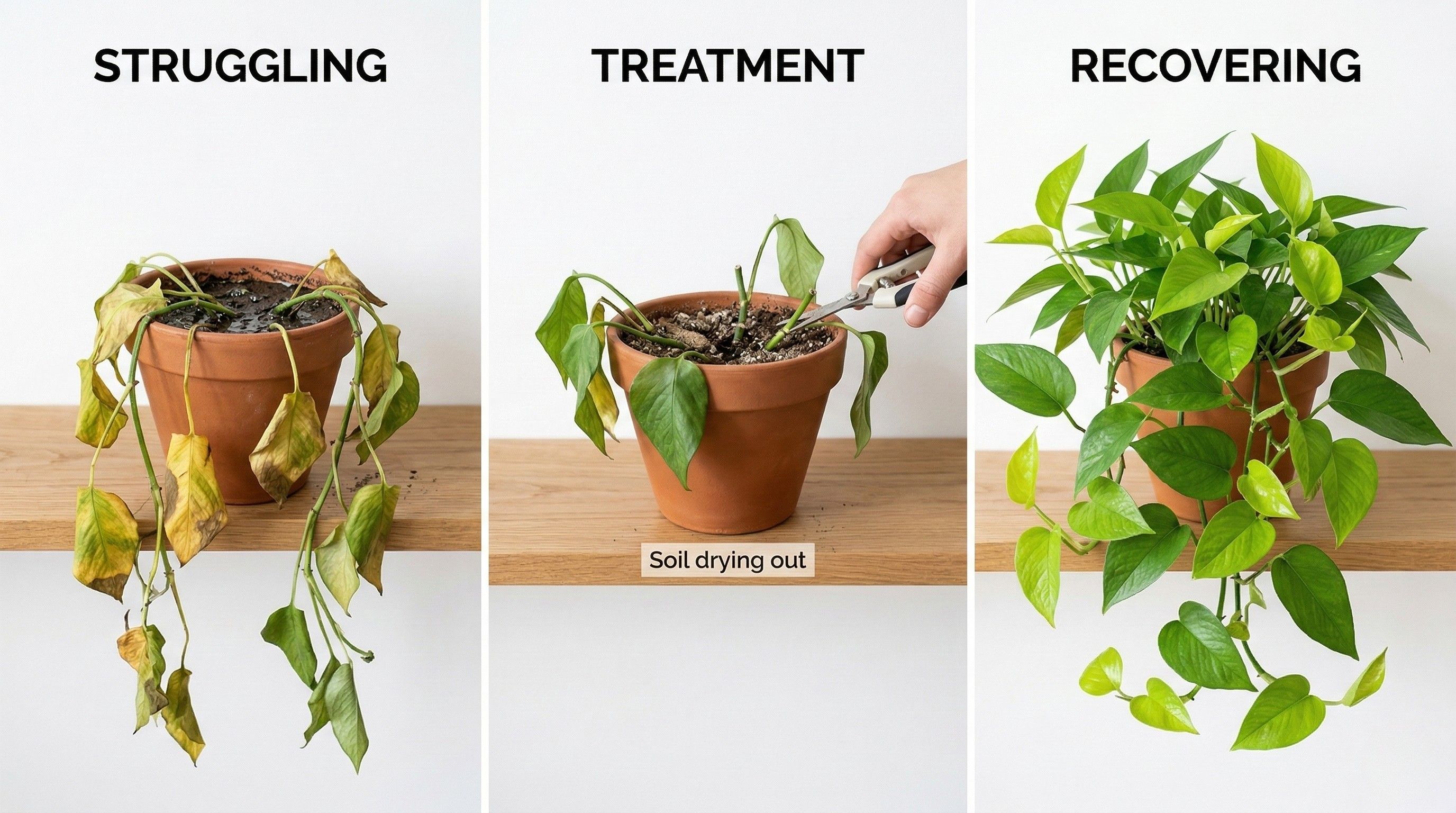
How to Save Your Pothos and Bring It Back to Health
Here's the thing: yellow leaves won't turn green again. The cell damage is done. But your plant can absolutely recover and grow new healthy leaves.
The Recovery Plan
- Identify the cause using this guide
- Take action based on the specific issue
- Remove severely damaged leaves — they won't recover and pulling them lets the plant focus on new growth
- Be patient — new growth takes time, especially in winter
- Adjust your care routine to prevent future issues
Should You Propagate or Save the Plant?
If your Pothos has more yellow leaves than green, you might wonder whether it's worth saving or if you should start fresh with cuttings.
Save the plant if:
- At least 30% of leaves are still healthy
- Roots are mostly healthy (not all mushy)
- There are healthy vines you can propagate from
Propagate if:
- The main plant is mostly gone
- Root rot has taken over completely
- You want to start fresh with healthier cuttings
Good news: Pothos are absurdly easy to propagate. Even a single healthy node can become a whole new plant.
Prevention Tips: Keep Your Pothos Healthy
An ounce of prevention, right? Here's how to keep yellow leaves from coming back:
- Water properly — Let the top 50% of soil dry before watering. Check with your finger.
- Use well-draining soil — Get Well-Draining Potting Mix or add perlite to standard mix
- Bright, indirect light — Not direct sun, not total darkness
- Fertize sparingly — Once a month during spring/summer is plenty
- Check your plant weekly — Catching problems early is way easier than fixing advanced issues
For more on watering, see our complete watering guide and check out the Plant ER hub for troubleshooting other common issues.
Quick Recap
- Yellow leaves = overwatering (most common), underwatering, light issues, humidity, fertilizer problems, or natural aging
- Check where the yellowing is to identify the cause
- Yellow leaves won't turn green — remove them and let the plant grow new ones
- Fix the underlying cause, not the symptoms
- Pothos are resilient — even struggling plants can make a full recovery
Got another plant problem? Head to our Plant ER hub for more troubleshooting guides.
Products We Love
We use these products ourselves and recommend them for Pothos care:
- Moisture Meter — Takes the guesswork out of watering
- Well-Draining Aroid Potting Mix — Great for Pothos and aroids
- Terracotta Pots — Natural moisture wicking helps prevent overwatering
- Balanced Liquid Fertilizer — Gentle feeding for healthy growth