Pothos Complete Care Guide
Everything you need to keep your Pothos thriving—light, water, soil, pruning, and propagation explained plainly.
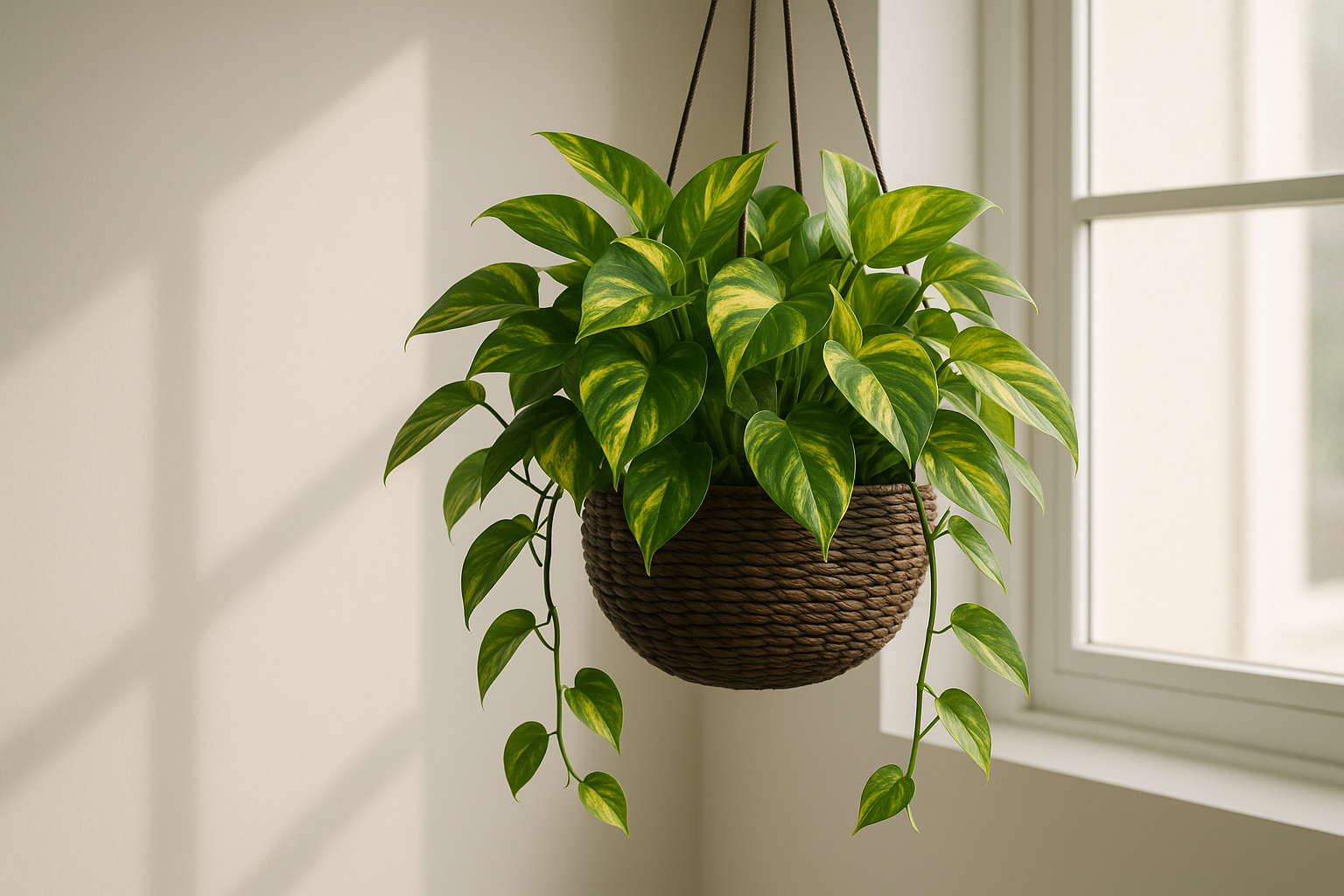
Why Pothos Is Worth Your Time
Pothos (Epipremnum aureum) is the plant equivalent of that friend who never judges you. Forget to water for two weeks? It'll bounce back. Low light apartment? Still fine. You can neglect it, travel without plant-sitters, and generally treat it poorly—and it'll keep growing like nothing happened.
But "surviving" and "thriving" are different things. If you want those long, cascading vines with massive leaves and vibrant variegation, a little care goes a long way.
This guide covers everything: light, water, soil, humidity, fertilizer, pruning, propagation, and troubleshooting. Bookmark it. You'll refer back to it.
Light: Bright Indirect Is the Sweet Spot
Pothos tolerates low light, but it doesn't love it. In dim corners, you'll get weak, stringy growth with tiny leaves and faded variegation. That's not the plant's fault—that's you giving it nothing to work with.
The ideal setup: Bright indirect light. Think a few feet away from a window that gets good natural light but no direct sun. Direct sun will scorch the leaves (brown, crispy patches). Low light will make it leggy.
The variegation factor: If you have a variegated Pothos (Golden, Marble Queen, Silver Satin), more light = more variegation. Less light = greener leaves. This is because the white/yellow parts have less chlorophyll and need light to produce energy.
Window orientation:
- East-facing: Perfect (morning sun is gentle)
- South-facing: Great, but pull back a few feet or filter with a sheer curtain
- West-facing: Also fine, same as south
- North-facing: Will survive but grow slowly
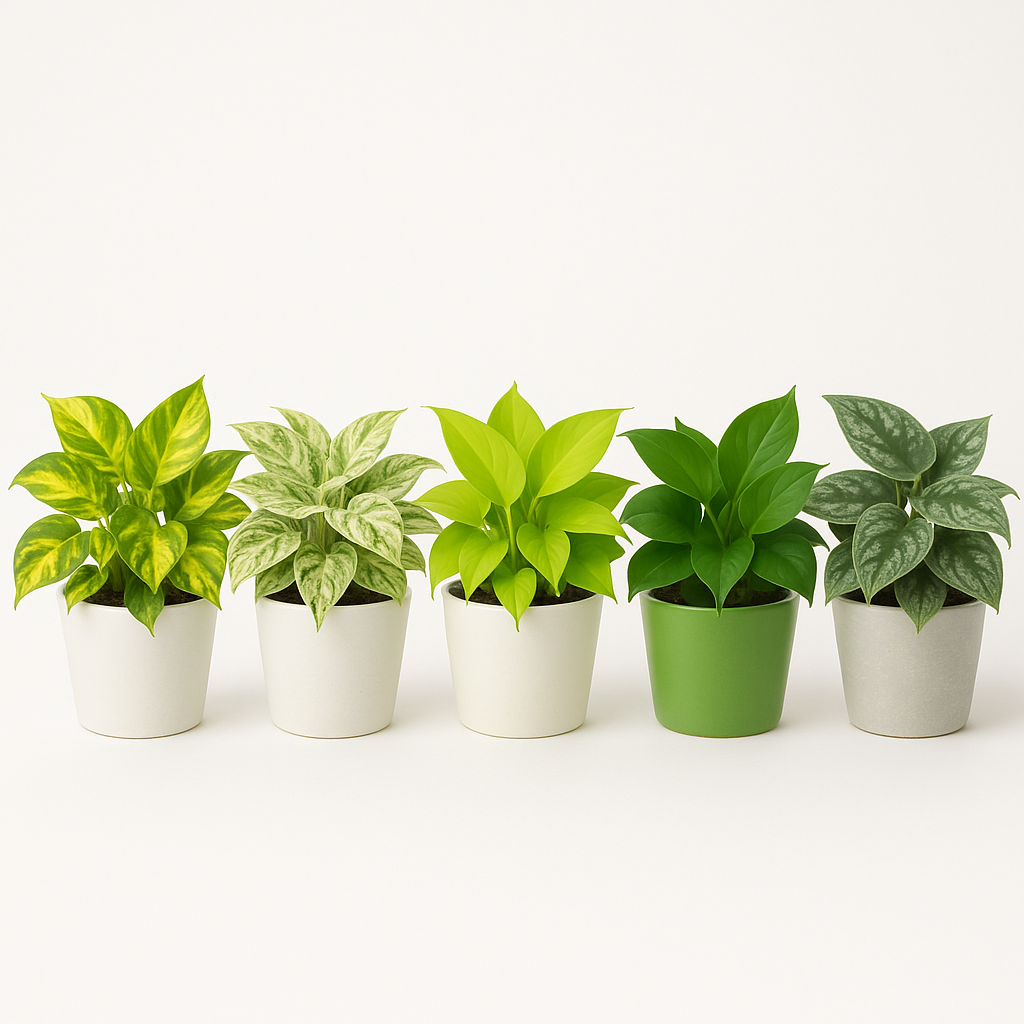
Pothos Varieties Overview
Before we dive deeper, let's acknowledge that "Pothos" isn't just one plant. There are several varieties, and they all share the same care requirements:
Golden Pothos — The classic. Green leaves with yellow variegation. Fast grower, very forgiving.
Marble Queen — White and green marbling. Slower growth, needs more light to maintain variegation.
Neon — Bright chartreuse green. Almost fluorescent. Grows fast, variegation doesn't fade in low light.
Jade — Solid deep green. The most low-light tolerant. Slow, steady growth.
Silver Satin — Green leaves with silver streaks. Slightly more humidity picky, otherwise same care.
All of them want the same thing. Water, light, soil—the variables don't change much between varieties.
Watering Your Pothos
Here's where most people kill their Pothos. And I use "kill" loosely—Pothos is forgiving, but root rot from overwatering is the #1 cause of death.
The rule: Water when the top 1-2 inches of soil are dry. Stick your finger in. If it feels dry, water. If it's damp, wait.
How to water: Pour water slowly until it drains from the bottom. Empty the saucer after 20-30 minutes. Pothos doesn't want to sit in water.
Signs of thirst:
- Drooping leaves (the plant's dramatic way of saying "hey")
- Soil pulling away from the pot edges
- Lighter pot weight
Signs of overwatering:
- Yellow leaves (usually lower/older leaves first)
- Mushy stems
- Moldy soil smell
- Wilting despite wet soil (root rot)
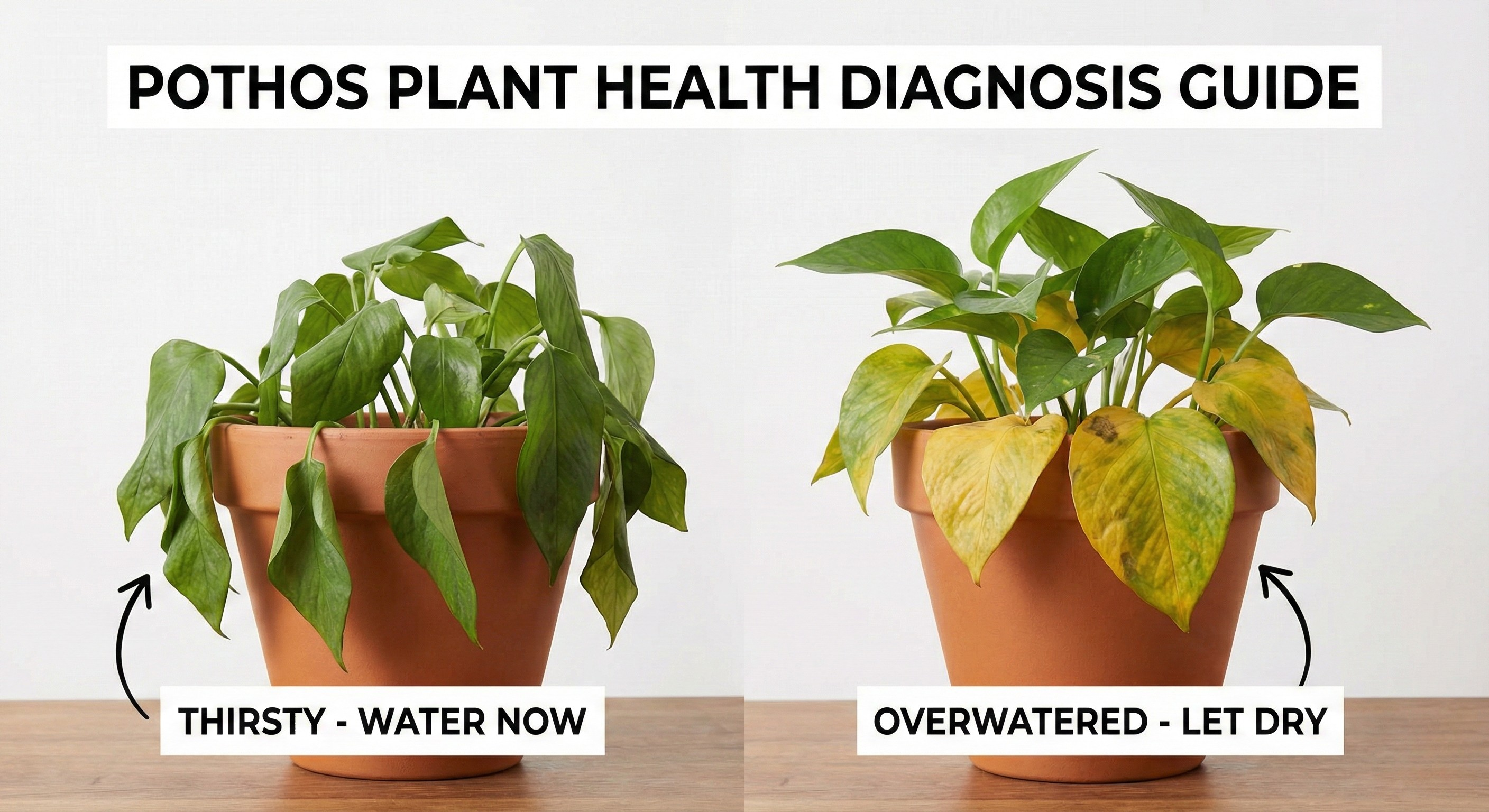
Signs of Thirst vs Overwatering
The difference is subtle but important. Thirsty Pothos perks up within hours of watering. Overwatered Pothos stays droopy or gets worse because the roots are rotting.
If you're unsure, err on the side of underwatering. Pothos bounces back from drought way easier than from root rot.
A moisture meter takes the guesswork out of watering—no more finger-soil tests.
Soil & Potting Mix
Pothos wants well-draining soil. Regular potting mix is fine, but it holds moisture a bit too well for these vines. Here's how to fix it:
Basic mix: 2/3 potting mix + 1/3 perlite
Better mix: 1/2 potting mix + 1/4 perlite + 1/4 orchid bark
The perlite and bark create air pockets around the roots, preventing the soggy conditions that cause root rot. It's a simple change that makes a huge difference.
Pot choice: Terra cotta breathes and dries out faster (good if you tend to overwater). Plastic holds moisture longer (good if you underwater). Either works—just adjust your watering frequency accordingly.
Drainage is non-negotiable. No matter what pot or soil you use, the pot MUST have drainage holes. Pothos will not forgive sitting in water.
Mix perlite into your pothos soil for the drainage these vines crave.
Temperature & Humidity
Pothos genuinely doesn't care about humidity. It'll do fine in the dry air of winter heating and the stale air of AC-cooled offices. That's part of its appeal.
Temperature: 65-85°F (18-29°C). Keep it away from cold drafts in winter (don't place it next to a drafty window or exterior door).
Humidity: 30%+ is fine. If you're comfortable, your Pothos is comfortable. No need for a humidifier unless you're growing something more demanding nearby.
The one thing that bothers it: Temperature swings. Moving from a warm room to a cold balcony will stress it out. Keep it stable.
Fertilizer: Less Is More
Pothos isn't a heavy feeder. Over-fertilizing causes salt buildup, brown leaf tips, and root burn.
When to fertilize: During the growing season (spring and summer). Once a month is plenty.
When to skip: Fall and winter. The plant is resting and doesn't need extra nutrients.
What to use: Any balanced liquid fertilizer diluted to half strength. Something like a 10-10-10 or liquid houseplant fertilizer works fine.
Signs of over-fertilizing:
- Brown leaf tips and edges
- White crust on the soil surface
- Wilting despite moist soil
If you over-fertilize, flush the soil with plain water several times to wash out the salts.
Pruning for Fullness vs Length
Pruning Pothos is optional but highly recommended if you want a bushier, fuller plant. Here's how to think about it:
Encouraging fullness: Cut vines back to a node (the bump where leaves meet the stem). This stimulates two new vines to grow from that node, creating a fuller plant.
Controlling length: If your vines are getting too long or bare at the base, trim them back. You can cut anywhere along the vine—new growth will emerge from the remaining nodes.
The technique: Use clean, sharp scissors or pruning snips. Cut about 1/4 inch above a node at a 45-degree angle.
Where to cut:
- Above a node to encourage branching
- Below a node to redirect growth
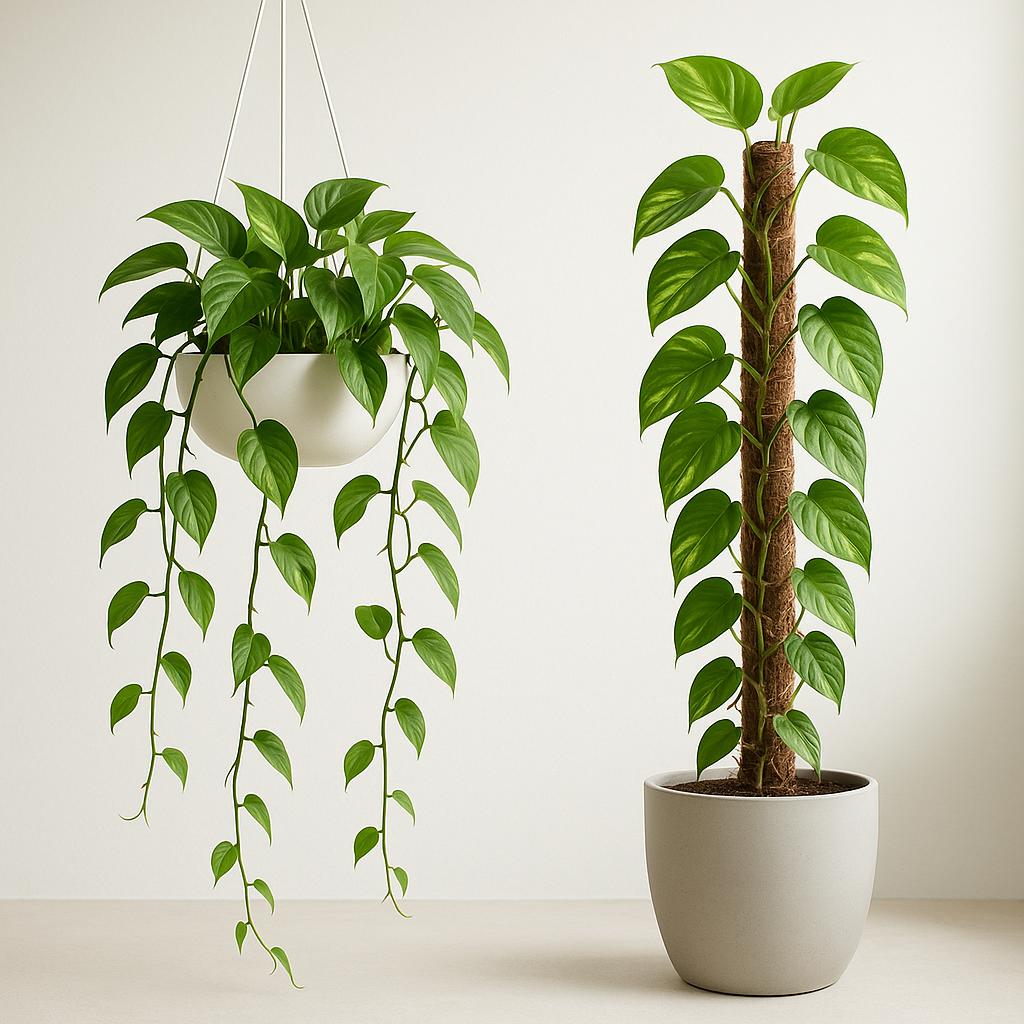
Pruning for Fullness vs Length
If you want long, dramatic trailing vines, let them grow and only trim dead or damaged portions.
If you want a bushy, compact plant, prune regularly to encourage lateral growth.
Clean cuts for healthy propagation—these snips are sharp enough for delicate stem work.
Propagation Guide
Pothos is one of the easiest plants to propagate. Seriously—if you've never propagated anything before, start here.
What you'll need:
- Sharp, clean scissors or pruning snips
- A jar of water
- Patience (2-4 weeks)
Step-by-step:
-
Cut a vine. Find a healthy vine with 4-6 leaves. Cut below a node (the little bump where aerial roots or leaves emerge). Each cutting needs at least one node submerged in water.
-
Remove lower leaves. Strip the leaves that would sit below the water line. Those will just rot.
-
Place in water. Put the cutting in a jar with the node submerged. Use room-temperature water.
-
Wait. Roots will emerge in 1-3 weeks. Change the water every few days to keep it fresh.
-
Plant it. Once roots are 2-3 inches long, plant in soil. Keep the soil moist for the first week or two while the roots adjust.
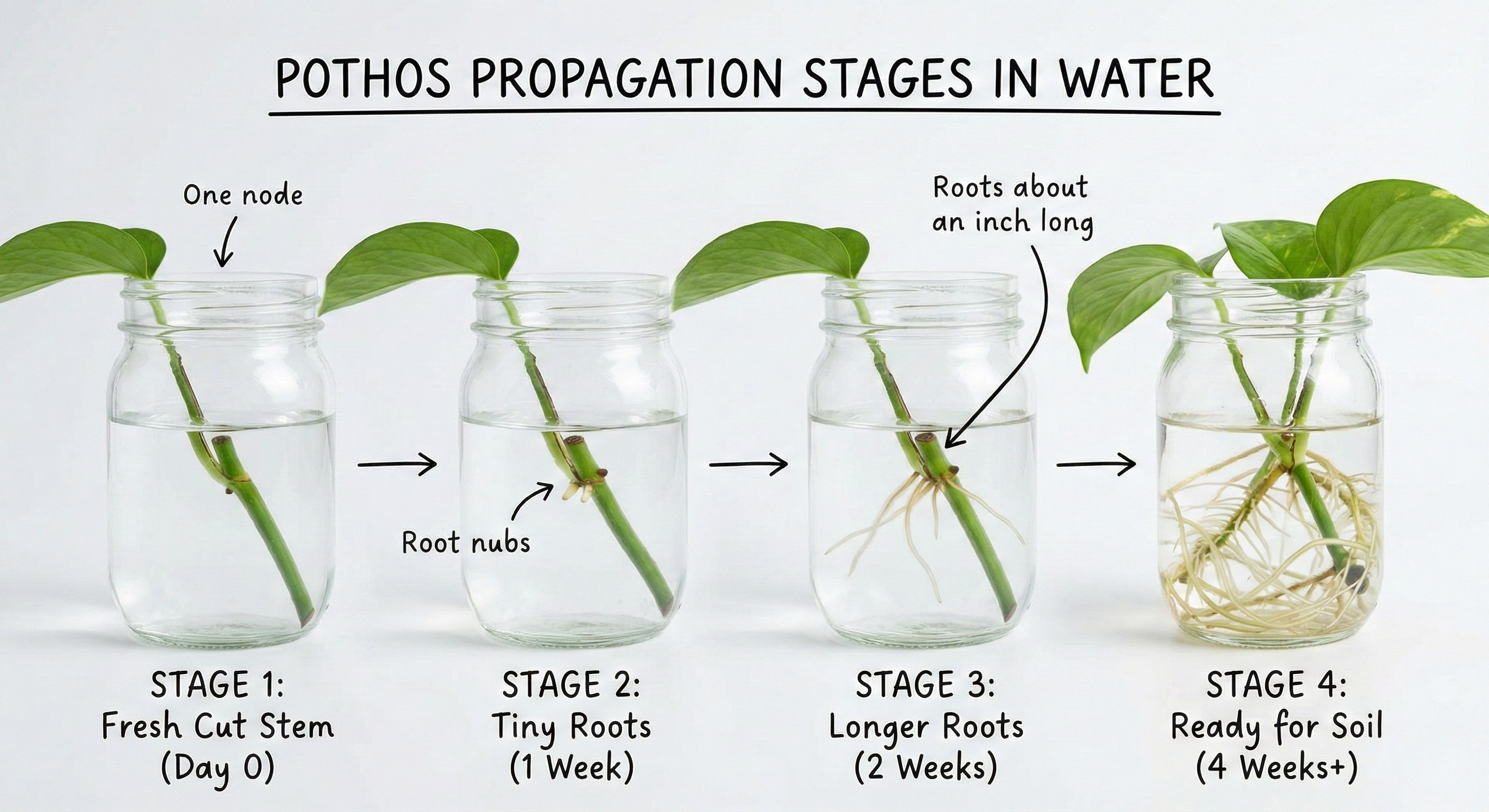
Propagation Guide
Common mistakes:
- Cutting too close to the node (leave a little stem below)
- Not changing the water (it gets murky and smelly)
- Transplanting too early (wait for 2-3 inch roots)
- Using a huge cutting (4-6 leaves is ideal, not 12)
You can also propagate directly in soil—same technique, but skip the water phase. Rooting hormone helps but isn't necessary for Pothos.
Common Problems & Troubleshooting
Yellow Leaves
Almost always overwatering. Check if the soil is soggy. If yes, let it dry out completely and reassess your watering schedule. If no, it could be normal aging (lower leaves yellow and drop as the plant ages—that's fine).
Brown Leaf Tips
Usually caused by:
- Low humidity (not common for Pothos, but possible)
- Over-fertilizing (salt buildup)
- Tap water chemicals (try switching to filtered water for a few weeks)
Leggy Growth / Small Leaves
Not enough light. The plant is stretching toward whatever light it can find. Move closer to a window.
Drooping
Thirsty. Water it. If it doesn't perk up within a few hours, check for root rot (mushy stems, foul smell). If it's root rot, you'll need to propagate the healthy cuttings and discard the rest.
No Variegation
Not enough light. Move to a brighter spot. Variegated Pothos needs light to produce those white/yellow sections.
Pests
Pothos occasionally gets mealybugs, spider mites, or fungus gnats. Wipe leaves regularly, keep humidity up, and if pests appear, treat with neem oil or insecticidal soap. Check out our pest control guide for more details.
Repotting
Pothos likes to be slightly rootbound. You don't need to repot frequently—every 1.5-2 years is fine, or when you see roots coming out of the drainage holes.
When to repot:
- Roots growing out of the bottom
- Growth has slowed significantly
- Water runs straight through (rootball is too dense)
How to repot:
- Choose a pot 1-2 inches larger in diameter
- Add fresh, well-draining soil
- Loosen the rootball gently (don't rip it apart)
- Place in new pot, fill around with soil
- Water thoroughly
Don't go crazy with pot size. Too much soil holds too much water, increasing rot risk.
Quick Reference Cheatsheet
| Factor | What Pothos Wants |
|---|---|
| Light | Bright indirect (tolerates low) |
| Water | Every 1-2 weeks, when top 1-2" soil is dry |
| Soil | Well-draining (add perlite) |
| Temperature | 65-85°F |
| Humidity | Any (30%+) |
| Fertilizer | Monthly in spring/summer, half-strength |
| Pruning | Optional, encourages fullness |
| Propagation | Easy in water or soil |
The Bottom Line
Pothos is the ultimate beginner plant. It forgives neglect, tolerates poor light, and propagates effortlessly. The difference between "alive" and "thriving" is just a few basics: decent light, letting the soil dry between waterings, and well-draining soil.
Once you understand those simple needs, you can keep a Pothos alive for decades. You'll have vines trailing across your ceiling and enough cuttings to give one to every person you know.
Start with one. You'll be hooked.
Want to learn about specific Pothos varieties? Check out our Pothos Varieties Compared guide. Need help with trailing? Our Pothos Not Trailing troubleshooting guide covers common growth issues.
Products We Love
Feed your pothos monthly during growing season for lusher, faster growth.
Give your pothos something to climb—moss poles encourage bigger leaves.