How to Style a Plant Shelf — Shelfie Ideas That Actually Look Good
Your plant shelf doesn't have to look chaotic or sterile. Here's how to hit the sweet spot.
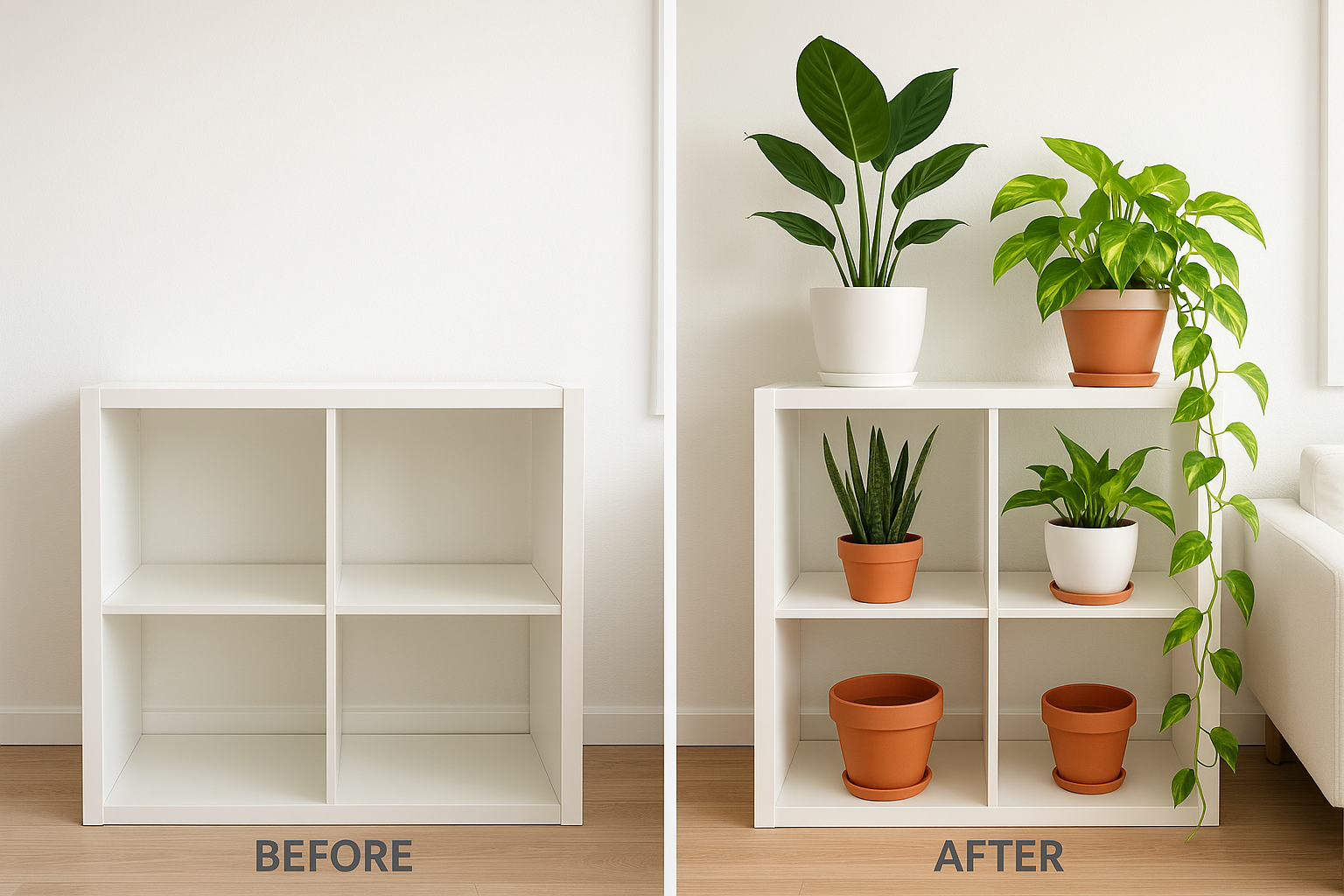
Why Most Plant Shelves Look Off (And the Fix)
Most plant shelves look off for the same three reasons: everything's the same height, everything's in mismatched pots, and nobody checked what light the shelf actually gets. The fix is simpler than you'd think — and unlike most styling guides, we're going to care about plant health too, not just looks. What's the point of a gorgeous shelf if the plants keep dying on it?
The Three Mistakes That Kill a Plant Shelf Look
The first mistake is uniform height. Every plant sitting at the same level makes the whole thing feel flat — like a waiting room, not a display. The second is pot color chaos — grabbing whatever pot was closest instead of building a cohesive palette. The third is ignoring light — putting a shade-loving pothos on a sunny top shelf or a monstera in a dim corner and wondering why it looks progressively worse.
All three are fixable. All three are fixable right now, with plants you already have.
The One Principle That Fixes Everything
Vary the heights, unify the palette. That's it. Tall in back, short in front, consistent pot colors or a tight 3-color range. Once you start looking for this rule, you'll spot it in every good plant shelf photo you've ever saved — and you'll immediately see what's missing in the ones that don't work.
The 5 Rules of Plant Shelf Styling
Rule 1 — Vary the Heights
Tall plants in back, compact plants in middle, trailing plants in front. Use books, risers, or upside-down pots to build tiers. If everything sits at the same height, the shelf looks flat — and flat is the enemy of interesting.
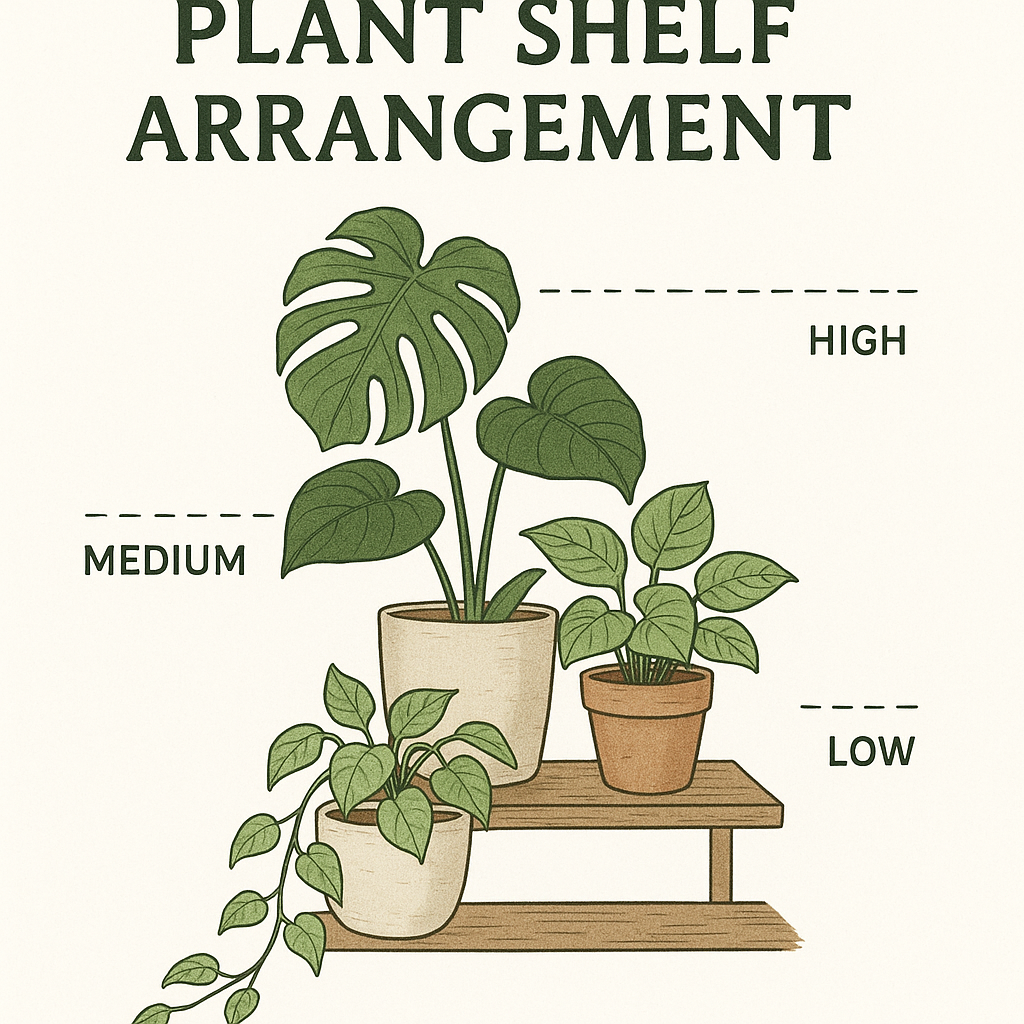
Rule 2 — Unify the Pot Palette
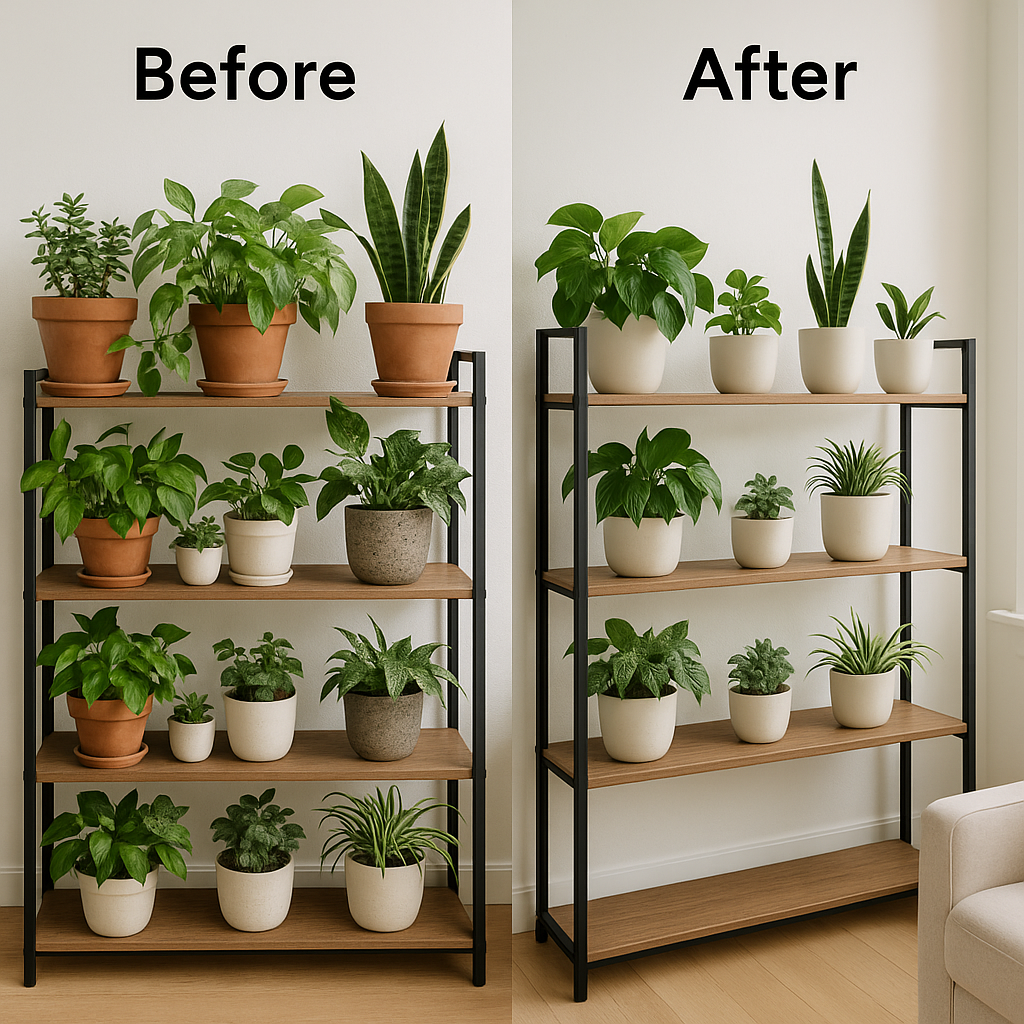
Three colors max, or go all-in on one color. The cohesion does the heavy lifting — it makes a shelf look intentional even if the plants inside the pots are mismatched. Mismatched pots can work, but only if you're deliberately going for an eclectic vibe, which is a harder look to nail and requires more confidence than most of us have on a Tuesday.
Shop neutral pot sets on Amazon →
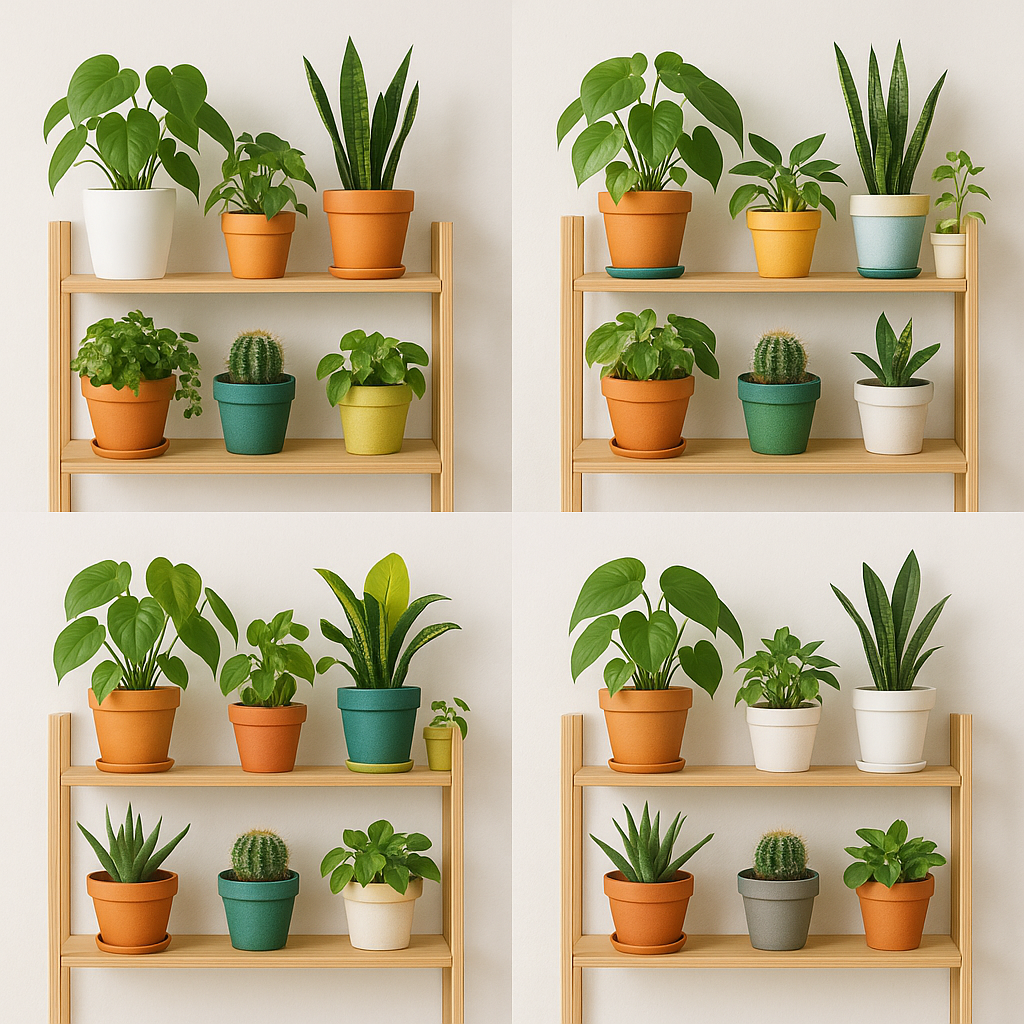
Rule 3 — Mix Shapes and Textures
Broad-leaf + trailing + architectural + small accent. The variety in leaf shape and growth habit is what makes a shelf interesting up close — not the plants themselves, but the contrast between them. One monstera, one trailing pothos, and one compact snake plant is more dynamic than five plants that all look the same.
Rule 4 — Match Plants to Light on the Shelf
Top shelf gets the most light. Bottom shelf gets the least. This seems obvious, but it's the mistake most people make — they arrange by size without checking what each spot actually gets. A monstera on a dark bottom shelf will survive, technically. It just won't look particularly good.
Rule 5 — Leave Air Between Plants
Crowding doesn't just look cluttered — it traps moisture, reduces airflow, and invites pests. Every plant needs room to breathe, literally. If you can't see where one plant ends and another begins, you've lost the structure. Breathing room is doing as much visual work as the plants themselves.
IKEA Kallax and Billy: Specific Shelf Styling
The Kallax is the most-photographed plant shelf on Pinterest, and it's not an accident — the cube format creates natural tiers that work perfectly for plant arrangement. If you've been searching for plant shelf ideas, you've seen this unit a dozen times. Here's how to actually style it well.
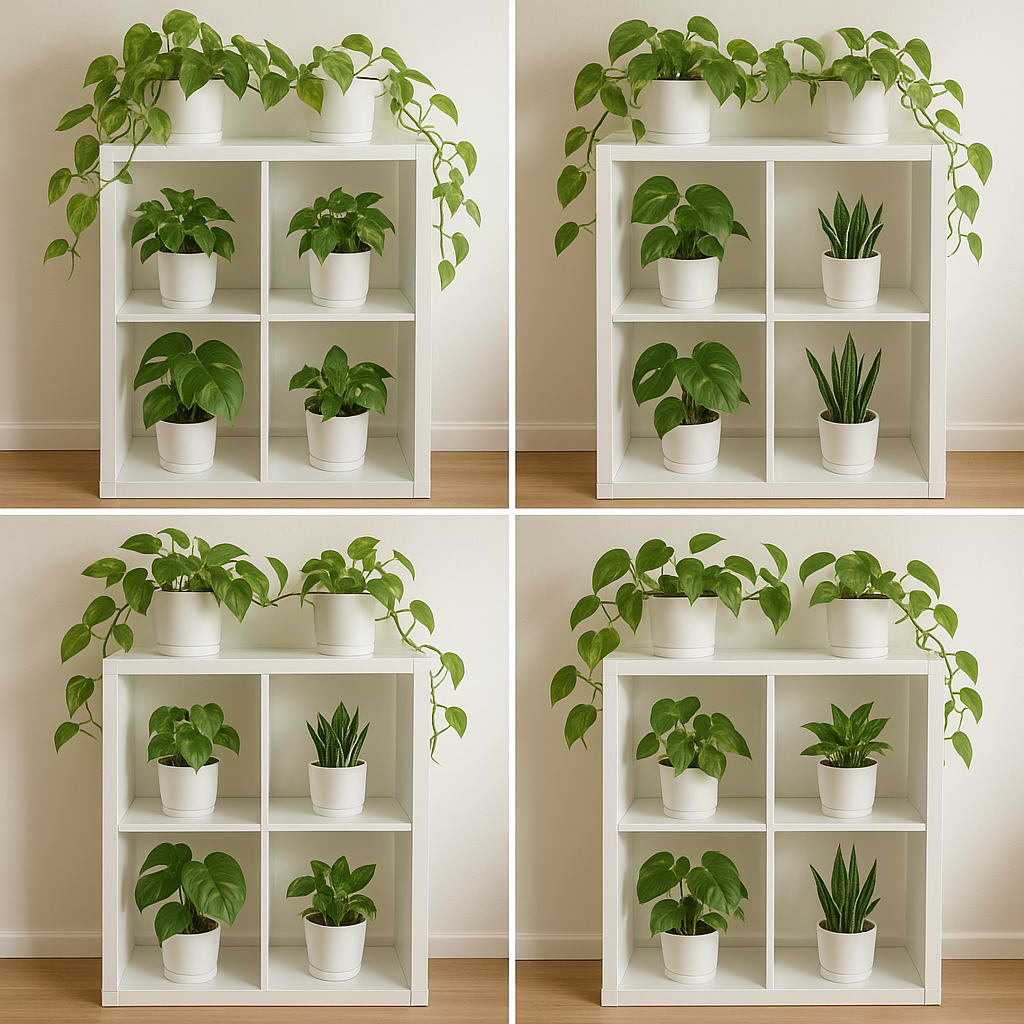
Why the Kallax Is the Most-Searched Plant Shelf Unit
It hits the sweet spot: affordable, widely available, cube-based so it creates built-in height tiers, and dead simple to customize with inserts and bins. The 2x2 and 2x4 configurations both work for plants, and neither requires you to be an interior designer.
One Plant Per Cube vs. Multiple Plants Per Cube
One plant per cube is the cleanest rule. Break it intentionally — a trailing pothos sharing a cube with a tall monstera works well, as long as the monstera isn't blocking light to the pothos. What doesn't work: burying a short compact plant behind a tall one where nobody will see it.
Building Plant Platforms Inside the Cube
Stack books horizontally inside the cube to create a raised platform. This is the Kallax hack that changes everything — suddenly you're not stuck with whatever height the pot gives you. You control the visual height of each plant independently of the pot size.
See Kallax organization options →
What Actually Works in the Kallax
Trailing plants on top (pothos, trailing philodendron) let gravity do the work. Statement plants (monstera, bird of paradise) anchor the lower cubes. Compact plants (snake plant, ZZ plant) fill the middle cubes without competing for attention. The Kallax rewards exactly this kind of intentional placement.
Plant Combinations That Work
The Winning Mix: Statement + Trailing + Compact
1 tall statement plant + 1 trailing plant + 1 compact foliage plant. This formula works for almost any shelf in almost any light condition. The variety in height and texture does the heavy lifting — you don't need a dozen plants, you need the right three.
Low-Light Shelf Combos
Pothos, snake plant, ZZ plant, peace lily — these handle dim corners without falling apart. Snake plants tolerate almost everything. Pothos will drop leaves when it's unhappy but bounces back fast once you fix the problem. Peace lilies are dramatic about everything but especially about low light, so temper your expectations there.
For more options, see our guide to low-light plants for your space.
Bright-Light Shelf Combos
Monstera, fiddle leaf fig, pilea, string of pearls — these need actual sun. If your shelf sits near a dim window, don't force these. They'll survive for a while, but they'll progressively disappoint you. Put them where they can actually thrive.
The Beginner-Proof Shelf
Golden pothos + snake plant + marble queen pothos. Low light tolerant, forgiving of inconsistent watering, affordable, and widely available at any plant shop or home store. This combo works in almost any room and requires almost nothing from you. Start here if you're not sure what else to try.
Styling the High Shelf (Where Plants Go to Die)
Why High Shelves Get Neglected
Light is worse up top — that's just how rooms work. Ceiling-adjacent plants get less of everything: less light, less attention, less water. And high shelves are physically harder to reach, so the watering schedule drifts. Both problems compound, and the plants suffer for it.
Best Plants for High Shelves
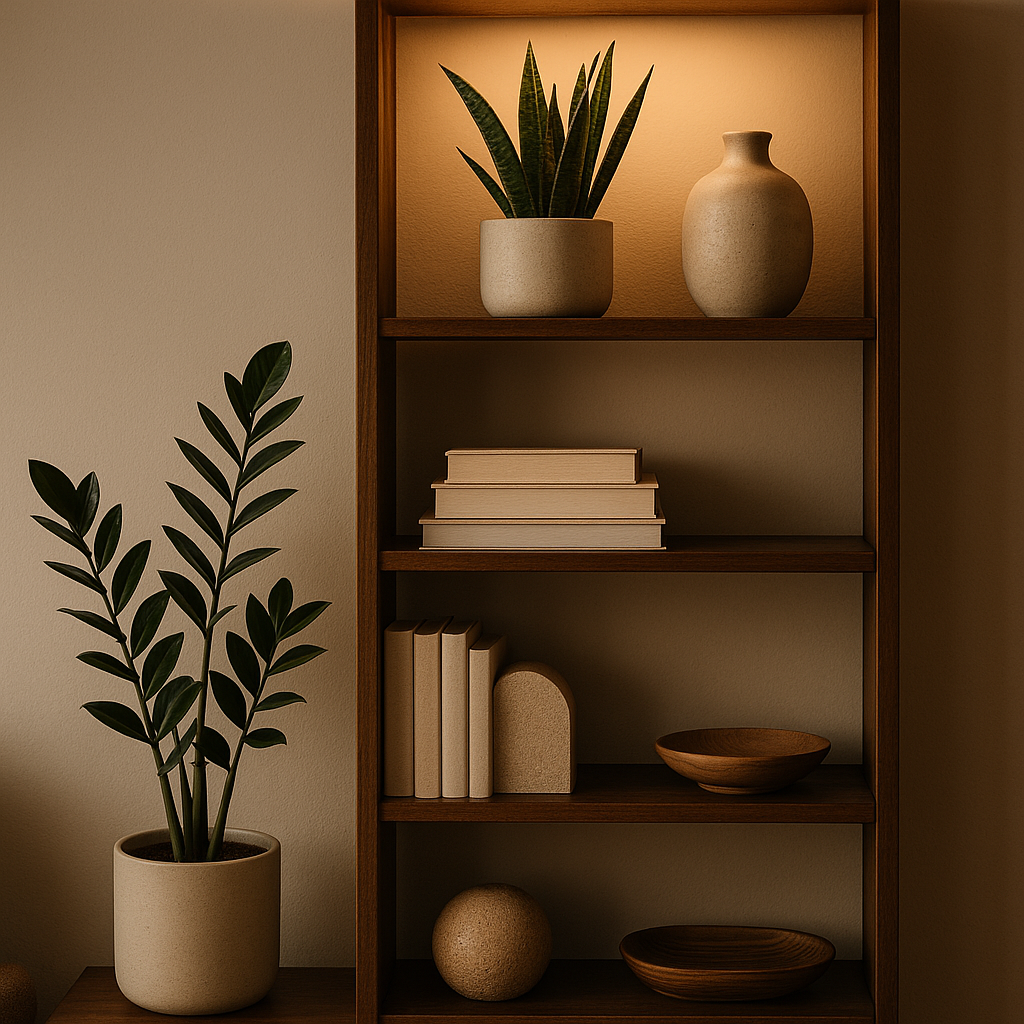
ZZ plant, snake plant, cast iron plant. These tolerate low light, drought, and benign neglect. A high shelf with a ZZ plant and some stacked books looks great and requires almost nothing from you. If you've killed every plant that's gone on a high shelf, the problem isn't you — it's the plant choice.
What Goes on a High Shelf That Isn't a Plant
Books, ceramics, vases — decorative filler that completes the shelf without requiring light, water, or attention. You don't have to fill every square inch with a plant. Some high shelves are just shelves, and that's fine.
Using a Grow Light on the High Shelf
A clip-on grow light extends what you can put on a high shelf. LED grow lights work well for most common houseplants and don't draw much power. If you want actual plants up there and the light isn't cooperating, this is the fix.
Shop clip-on grow lights on Amazon →
Troubleshooting: When Your Shelf Looks Wrong
Too Cluttered
Remove one plant, add one book or object. Empty space is doing work — it lets the eye rest and makes the remaining plants feel more intentional. If you've been adding plants because the shelf looked empty, try subtracting instead.
Too Sterile
Add a trailing plant, mix in a handmade or visually interesting pot. Sterile almost always means too uniform — everything matching too perfectly. A single handmade terracotta pot or one trailing pothos breaking the pattern is often all it takes.
Plants Keep Dying on the Shelf
Check the light level first — is the shelf position right for the plant? Then check whether you're watering consistently. A shelf that's awkward to reach makes plants easy to skip. A moisture meter takes the guesswork out of watering and solves the "is it dry or just in an inconvenient spot" problem.
Shop soil moisture meters on Amazon →
It Feels Off but I Can't Explain Why
Visual weight imbalance. Try the rule of 3: tall plant on the left, medium plant on the right, small anchor plant in the center. Balance doesn't mean symmetry — it means the shelf feels grounded. If one side is significantly heavier than the other, it will always feel off.
Pot Color Chaos
The 3-color max rule. Pick a palette and commit — or just go all white, which works, is clean, and is the default for a reason. If you're already thinking about pot colors, you're further ahead than most people.
Shop neutral pot sets on Amazon →
When to Upgrade Your Shelf Setup
Signs You Need a Plant Stand Instead
Weight, watering runoff, shelf sag. If your current shelf is bowing in the middle or you've moved watering to a different room because the tray situation is a mess, those are signs you're pushing the shelf past what it was designed for. A plant stand is designed for this — weight distribution, drip trays, and the ability to actually water the plant where it lives.
Plant Stands vs. Wall Shelves vs. Cube Storage
Plant stands: best for heavy pots and plants that need stable, dedicated space. Usually have built-in drip trays and are designed to bear weight without bowing.
Wall-mounted shelves: clean and minimal, good for lightweight pots and trailing plants. But they can't take much weight and the installation is permanent-ish.
Cube storage (Kallax, Besta, etc.): the most versatile option — modular, affordable, and works in almost any room. The downside is that most cube units aren't designed for heavy plant pots with water trays. Keep that in mind.
Adding a Grow Light to Extend What Your Shelf Can Hold
Shop clip-on grow lights on Amazon →
A grow light doesn't just help high shelves — it extends the plant palette for any shelf in a lower-light spot. If you've been limiting yourself to "whatever survives in this corner," a good clip-on LED grow light opens up a lot more options.
Go style your shelf — and if something dies or the arrangement doesn't work out, try again. That's the whole game.
Products We Love
We use and recommend these products for plant shelf styling: