Perlite vs Vermiculite vs Pumice — Which Soil Amendment Does Your Plant Need?
The bag your plant came in is lying to you.
Why Your Potting Mix Probably Needs Help
Commercial potting mix is designed to hold moisture and compact together — which is exactly the opposite of what most houseplants want. Peat-based mixes break down over six months, compress the roots, and suffocate them. Your plant survives. Barely. But it's not thriving.
Soil amendments fix this. They improve drainage, add aeration, and prevent compaction. The problem is that "soil amendment" covers a lot of territory — and picking the wrong one can make things worse, not better. Too much perlite in a fern mix and you'll be watering twice a day. Too much vermiculite in a succulent mix and your roots will rot.
So let's be specific.
Quick Answer: Which One Do You Need?
| Amendment | Best For | What It Does |
|---|---|---|
| Perlite | Succulents, cacti, aroids | Drains fast, aerates, lightweight |
| Vermiculite | Ferns, propagation, seed starting | Retains moisture and nutrients |
| Pumice | Succulents, aroids, chunky mixes | Drains + some retention, stays put |
If you want the one-sentence version: Perlite brings air, vermiculite brings water, pumice brings balance.
What Is Perlite? (And When to Use It)
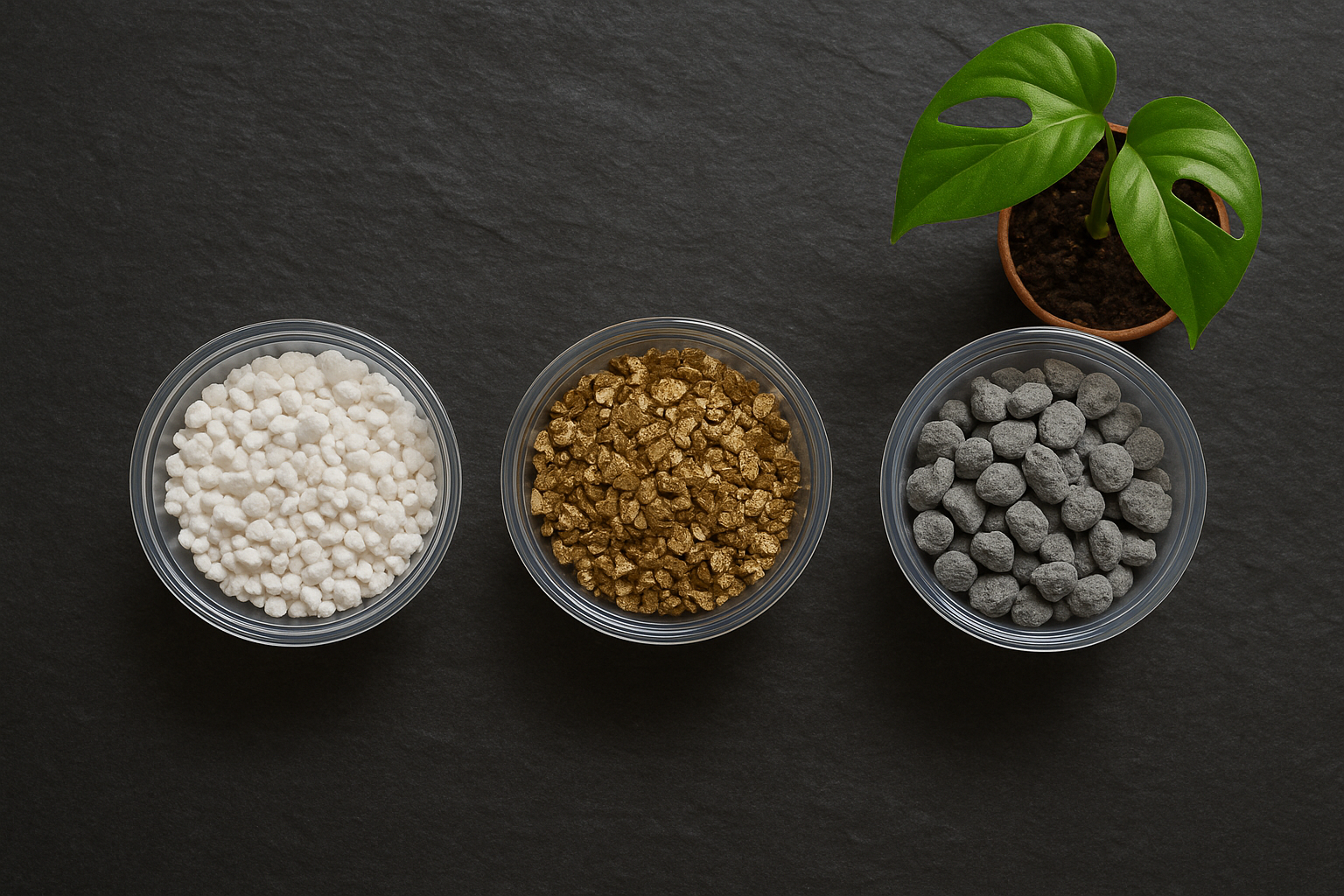
Perlite is volcanic glass — yep, the same stuff as the stuff in those packing peanuts, but heated to 1,600°F where it explodes like popcorn into those white, porous, impossibly light balls you see in potting mix.
It looks like styrofoam. It feels like styrofoam. And like styrofoam, it's basically inert — no nutrients, pH neutral, and completely sterile.
What perlite does: Creates air pockets in your soil and lets water drain through fast. It does not hold onto moisture — water runs through it and out the drainage hole.
The good:
- Cheap and available everywhere
- pH neutral, no nutrients, won't burn roots
- Great drainage = less root rot risk (see our root rot treatment guide if this is already a problem for you)
- Lightweight, easy to mix in
The bad:
- Floats to the surface after watering — not a dealbreaker, just annoying
- Crushes over time, eventually just becomes dust
- Creates fine silica dust when you open the bag (wear a mask if you're sensitive)
- Doesn't retain nutrients at all
Best for: Succulents, cacti, aroids (Monstera, Philodendron, Pothos), any plant that needs fast-draining soil.
What Is Vermiculite? (And When to Use It)
Vermiculite is mica — yes, the sparkly mineral in rock shops — that's been heated until it expands into those golden, accordion-textured flakes. It looks like compressed space dust and has a surprising heft to it compared to perlite.
What vermiculite does: Absorbs water and nutrients, then releases them slowly as the soil dries. It's basically a slow-release moisture system.
The good:
- Excellent for propagation — cuttings stay moist without being waterlogged
- Retains nutrients that would otherwise wash out
- Great for seed starting mixes
- Lasts longer than perlite (doesn't break down as fast)
The bad:
- Can retain too much moisture if overused — don't go heavy-handed with moisture-loving plants either
- Less available than perlite at garden centers
- Higher moisture retention means more pathogen risk if not managed properly
Best for: Ferns, Calathea, propagation cuttings, seed starting, any plant that likes consistent moisture. Check our watering guide to figure out if your plant is one of these.
Espoma Organic Vermiculite, 8 qt →
What Is Pumice? (And When to Use It)
Pumice is volcanic rock — lighter than water, full of pores, and rough-edged. Unlike perlite, it's actual rock that got caught in a volcanic explosion and cooled fast. It's heavier, denser, and doesn't compress the way perlite does.
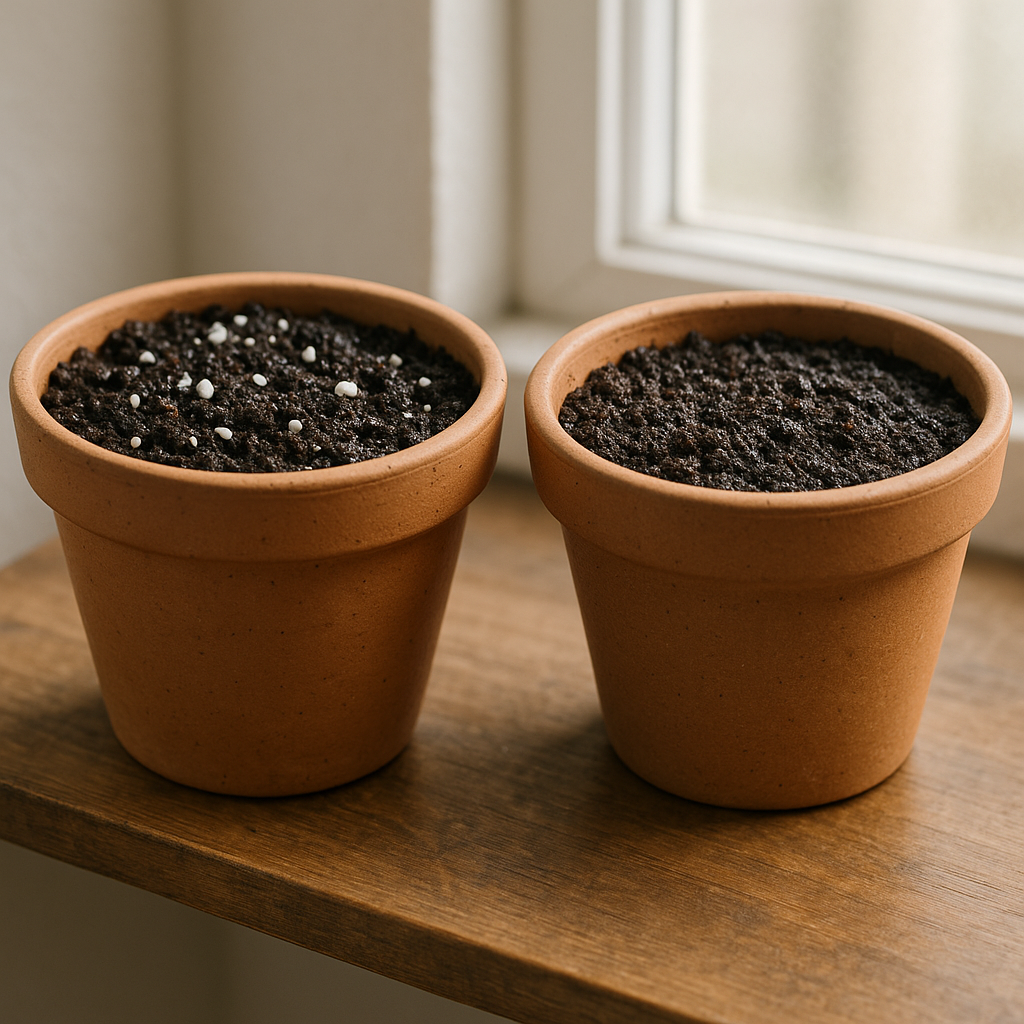
What pumice does: Drains well, aerates, and retains some moisture (more than perlite, less than vermiculite). It's the middle-ground option.
The good:
- Doesn't float — stays mixed in your soil permanently
- Doesn't break down — it's rock, it lasts
- Better moisture retention than perlite
- More eco-friendly than perlite (minimal processing compared to perlite's industrial heating)
- Heavier, so it adds weight to light potting mixes (useful for tall plants that tip)
The bad:
- More expensive than perlite
- Harder to find at regular garden centers — often requires ordering online
- Heavier to ship, which adds to cost
Best for: Succulents, aroids, anyone who's frustrated perlite floating to the surface. If you want the "pro" option, pumice is what serious indoor plant people reach for.
Bonsai Jack Pumice, 1/4 Inch - 2 qt →
Perlite vs Vermiculite vs Pumice: Side-by-Side Comparison
| Property | Perlite | Vermiculite | Pumice |
|---|---|---|---|
| Drainage | Excellent | Poor | Good |
| Moisture Retention | None | High | Moderate |
| Aeration | Excellent | Low | Good |
| Longevity | Breaks down (1-2 years) | Moderate (3-5 years) | Permanent |
| Price | Cheap ($) | Moderate ($$) | Moderate-Expensive ($$$) |
| Availability | Everywhere | Most garden centers | Online/specialty |
| Eco-Friendliness | Energy-intensive processing | Moderate | Best (minimal processing) |
| Floats? | Yes | No | No |
Which One Is Right for Your Plant?
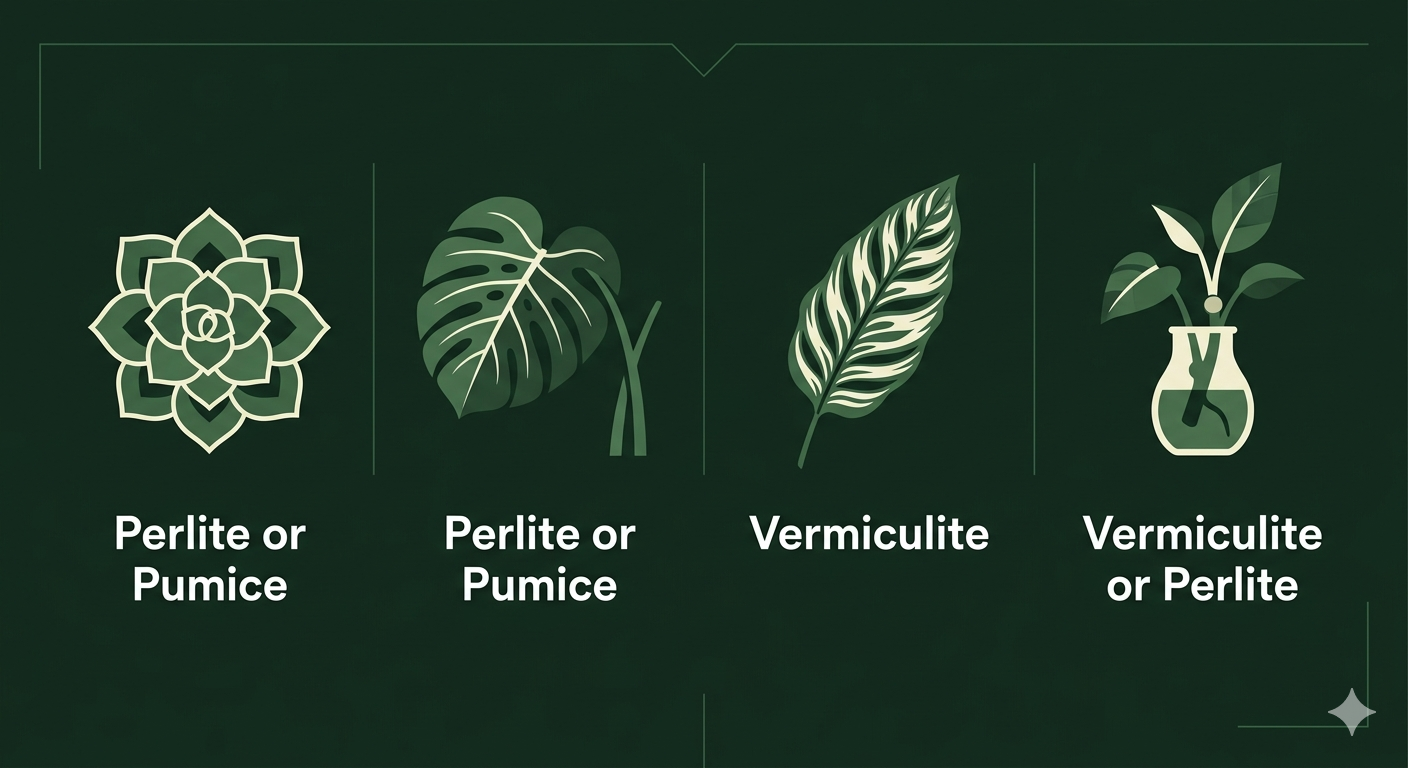
Here's the plant-by-plant breakdown. These are percentages by volume — measure your potting mix by scoops, not by feel.
| Plant Type | Recommended Amendment | Ratio |
|---|---|---|
| Succulents / Cacti | Perlite or Pumice | 25-50% |
| Aroids (Monstera, Philodendron, Pothos) | Perlite or Pumice | 20-30% |
| Ferns, Calathea, moisture-lovers | Vermiculite | 10-20% |
| Propagation cuttings | Vermiculite or Perlite | 20-30% |
| Orchids | Pumice + bark mix | 20-30% |
For succulents and cacti: You want fast drainage. Perlite is the budget choice; pumice is the "I want this to last five years and not float" choice. Both work.
For aroids (Monstera, Philodendron, Pothos): These want chunky, well-draining mix. Either perlite or pumice at 20-30%. Pumice is more popular in the "chunky aroid mix" community because it doesn't break down.
For ferns and moisture-lovers: Vermiculite is your friend. It keeps the soil consistently moist without being waterlogged. If you find your fern dries out too fast with perlite, switch to vermiculite.
For propagation: Vermiculite is the classic seed-starting choice. Cuttings stay moist, roots develop in a well-structured medium. Some growers use pure vermiculite for cuttings. Perlite works too, but you'll need to water more frequently.
For orchids: Standard orchid bark is the base, but adding pumice improves drainage and aeration. Perlite is too light and floats in orchid mix.
Can You Mix Them Together?
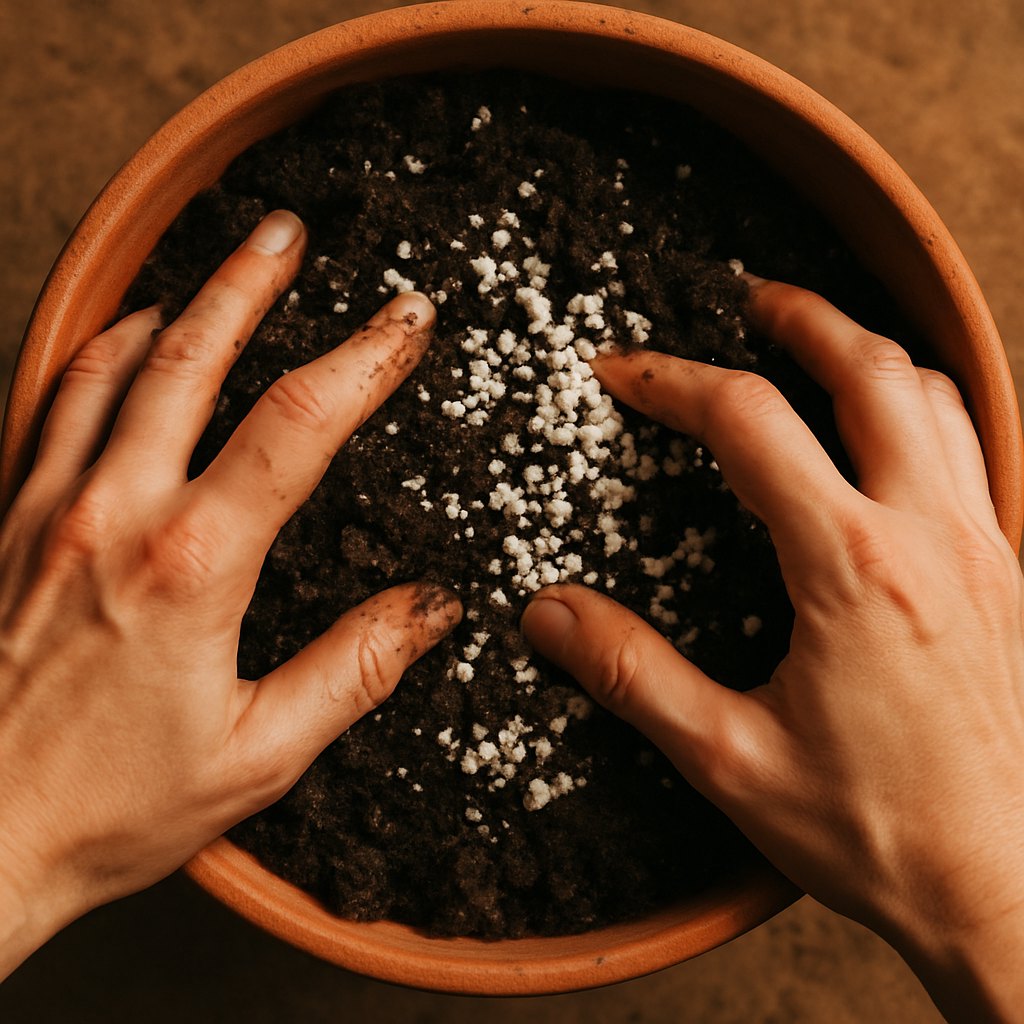
Yes — and many growers do this intentionally. Mixing gives you the benefits of both amendments without the downsides of either one alone.
Popular combinations:
-
Perlite + Vermiculite: For balanced moisture. Perlite handles drainage, vermiculite handles retention. Good for semi-moisture-loving plants that aren't full ferns.
-
Perlite + Pumice: For drainage without floating. Pumice adds weight and longevity; perlite adds extra drainage. Good for chunky tropical mixes.
-
All three: Why not. 70% potting mix + 20% perlite + 10% vermiculite is a solid all-rounder. Add pumice if you want to upgrade.
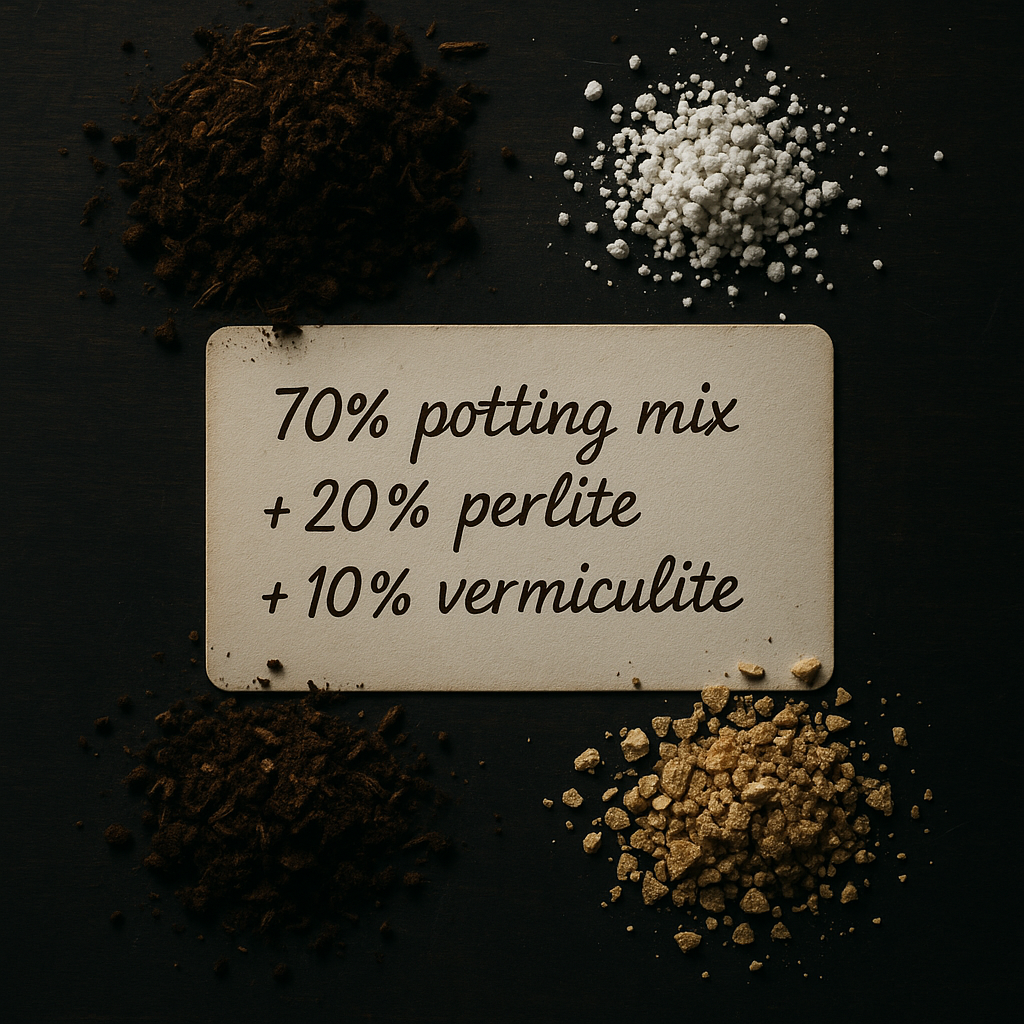
The mixing ratio question comes up a lot: how much perlite to add to potting mix? For most tropical houseplants, 20-30% amendment by volume is a good starting point. Succulents want more (up to 50%). Ferns want less or none (use vermiculite instead).
The Eco Angle: Which Has the Smallest Footprint?
If you're the type who thinks about this — fair. Here's the quick version:
Perlite requires industrial heating to 1,600°F. It's energy-intensive to produce, even if the material itself is abundant.
Pumice is mined directly from volcanic deposits and requires minimal processing. It's the most eco-friendly of the three.
Vermiculite is also heated during processing, similar to perlite.
Pumice wins on sustainability — but perlite is so ubiquitous and cheap that it's hard to fully replace. If you're buying one bag and using it for years, the footprint is manageable either way.
Where to Buy Soil Amendments
Perlite: Available at any garden center, hardware store, or Amazon. Miracle-Gro and Espoma are the common brands.
Vermiculite: Widely available but slightly less common than perlite. Look in the seed-starting section, not the garden soil aisle.
Pumice: You'll likely need to order this online. Bonsai Jack is the gold standard in the houseplant community. It's marketed for bonsai, but it's exactly what you want for succulents and aroids.
When buying: get coarse grade, not fine. Fine grade is too dense and defeats the purpose of adding drainage.
The Bottom Line
- Get perlite if you want cheap, available, and you don't mind it floating.
- Get vermiculite if you're propagating cuttings or growing moisture-loving plants.
- Get pumice if you want the upgrade that actually stays mixed in.
You can also just mix them. Your plants don't care about your budget — but they do care about having roots that can breathe and drains that actually drain.
Products We Love
Espoma Organic Vermiculite, 8 qt →
Bonsai Jack Pumice, 1/4 Inch - 2 qt →
Soil Sunrise Aroid Potting Mix →
Need help applying this? Check out our repotting guide and how to repot your houseplant for the mechanics of actually getting this stuff into a pot.