Peperomia Care Guide: Perfect Small Plants for Any Space
Not all of us have floor-to-ceiling windows and open floor plans. Peperomia doesn't care about any of that.
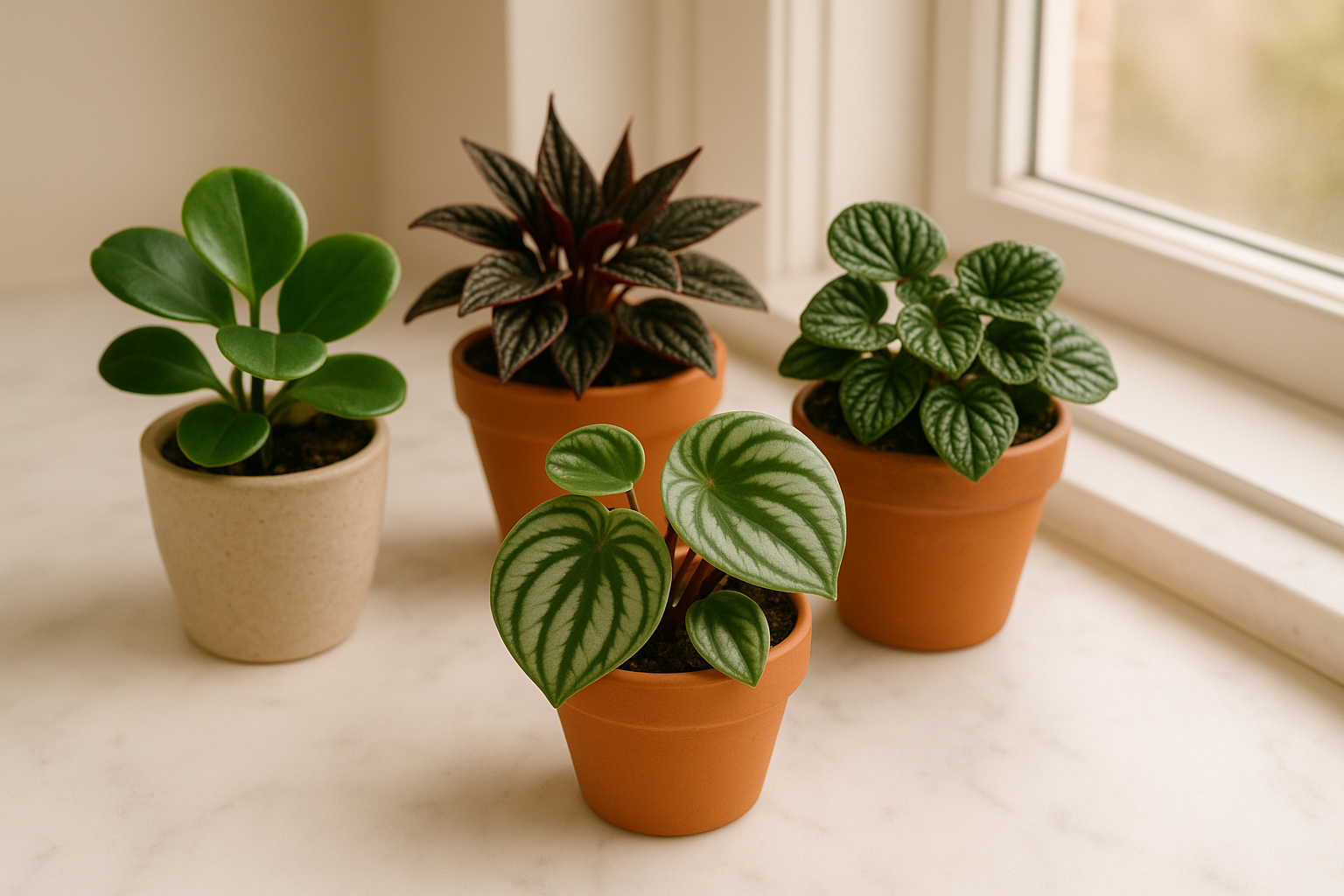
Why Peperomia? The Case for the Ultimate Small-Space Plant
Here's the deal: not everyone has a solarium. Most of us have a desk, a bathroom shelf, a narrow windowsill, a north-facing corner that nothing survives in. Peperomia was built for these situations.
These plants are:
- Compact — most stay under 12 inches. They never outgrow their shelf
- Slow-growing — you won't be repotting every six months
- Low-light tolerant — some varieties thrive in conditions that would kill other houseplants
- Forgiving — they store water in their leaves, so occasional forgotten waterings won't wipe them out
- Pet-safe — non-toxic to cats and dogs, which is more than you can say for most statement plants
- Diverse — hundreds of varieties with leaves ranging from striped watermelon patterns to deep burgundy ripples to trailing strings of tiny turtles
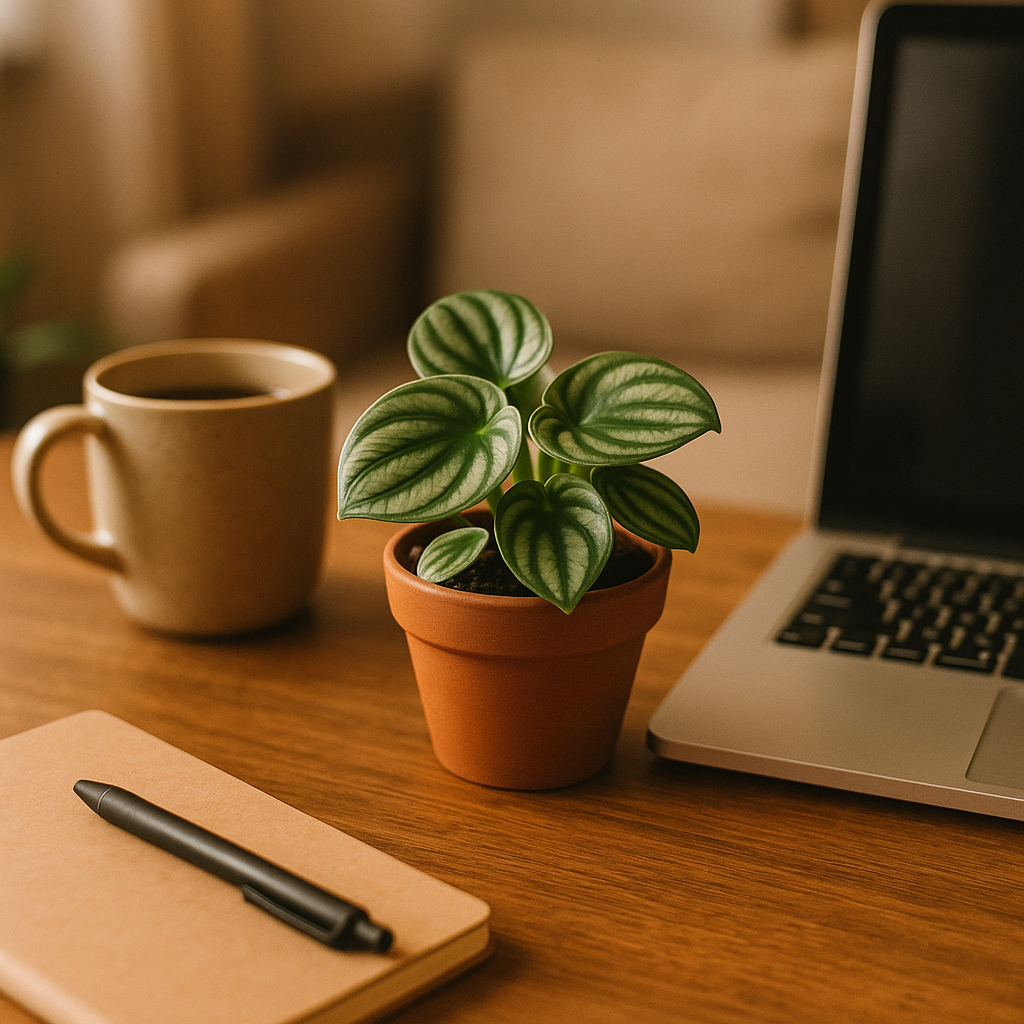
Peperomia is the apartment plant. Compact enough for a desk corner, a bathroom shelf, or a narrow windowsill.
The 8 Best Peperomia Varieties for Beginners
Here's where most care guides fail you: they throw a list of names at you without explaining why you'd pick one over another. We're not going to do that.
The key question: what's your light situation and what do you want the plant to look like?
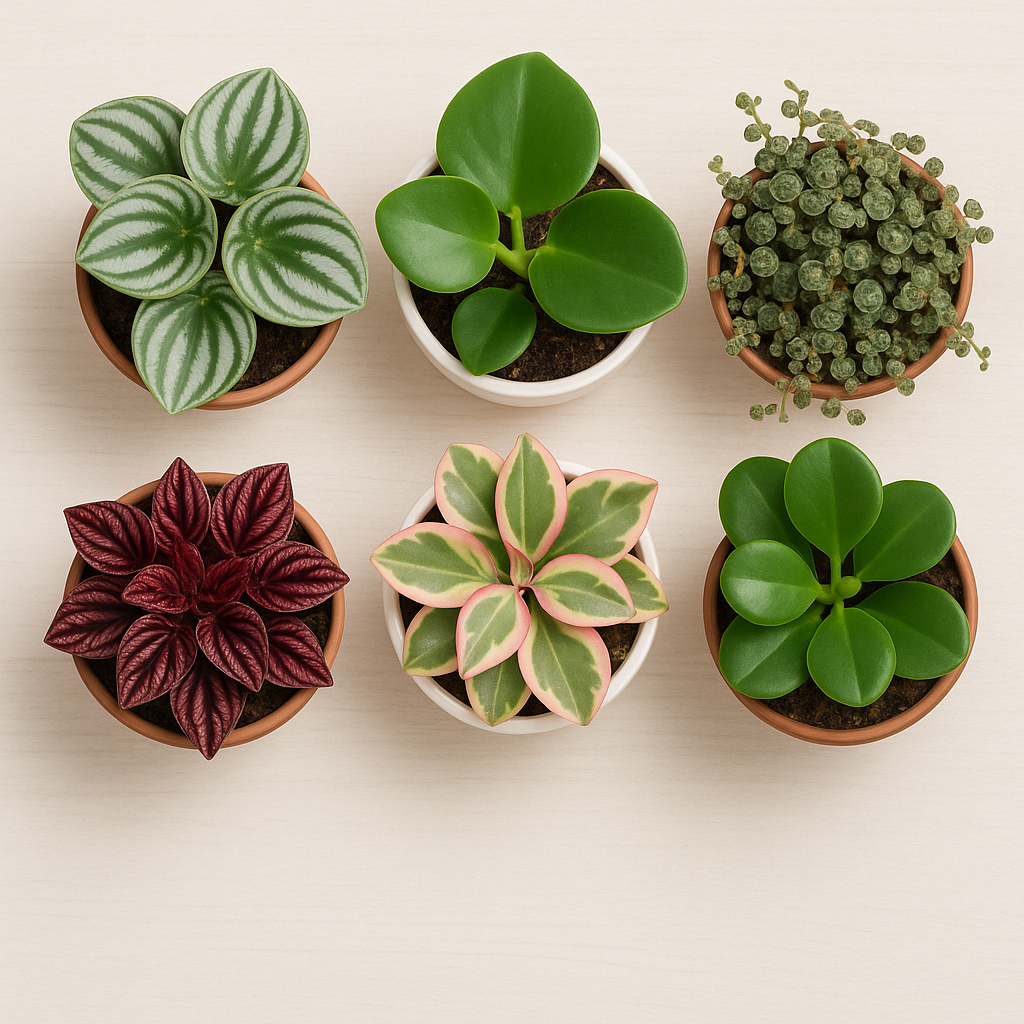
Windowsill Stars
Peperomia argyreia — Watermelon Peperomia Striped oval leaves that actually look like watermelon rinds. Grows to about 8–10 inches. Bright indirect light brings out the best patterns. It's the variety that makes people stop and ask what it is. Place it somewhere you'll see it daily — it earns the attention.
Peperomia polybotrya — Raindrop Peperomia Glossy, teardrop-shaped leaves. Looks almost like a smaller, more elegant monstera. Super easy to care for, tolerates a range of light, and grows into a satisfying compact bush. If you want something with visual impact but zero drama, this is it.
Low-Light & Dark-Room Picks
Peperomia caperata 'Rosso' Dark, deeply rippled leaves with burgundy undersides. The texture alone makes it interesting, and the coloring handles low-light situations better than most variegated varieties. Put it somewhere you want drama without direct sun — a bathroom shelf, a north window, a dim corner of your bedroom.
Peperomia obtusifolia — Baby Rubber Plant The beginner MVP. Glossy oval leaves, tolerates low light, handles inconsistent watering better than almost any other peperomia. Comes in solid green, variegated, and chartreuse cultivars. If you're the type who forgets to water for two weeks and then overcorrects, this one won't judge you.
Trailing & Hanging Varieties
Peperomia prostrata — String of Turtles Tiny round leaves with dark markings that genuinely look like turtle shells. Trails beautifully from a shelf or hanging planter. Slower growing than other trailing plants, but the texture is worth the patience. Thrives in terrariums — the humidity keeps it happy and the closed environment suits its compact nature.
Peperomia rotundifolia — Trailing Jade Soft, round leaves on trailing stems. Not actually related to jade, but the look is vaguely reminiscent. Grows quickly, looks great in hanging planters or cascading off a shelf edge. Medium indirect light.
Peperomia tetraphylla 'Hope' Compact trailing habit with teardrop-shaped leaves in soft green. Another excellent terrarium candidate. Grows steadily without getting leggy, and the small leaf size is perfect for contained spaces where you want lush without bulk.
Statement Desk Plant
Peperomia clusiifolia 'Jelly' Pink, cream, and green variegation on rounded, slightly fleshy leaves. More colorful than most peperomia — almost tropical in its palette. Needs a bit more light to maintain the variegation, but it's worth the extra foot-candles. Makes a statement on a desk without dominating the space.
Peperomia Care Basics
Light
Bright indirect light is the sweet spot for most peperomia. That said, varieties like caperata and obtusifolia handle dimmer conditions remarkably well — they're the ones to grab if your light situation is "my windows are north-facing" or "I work in a cubicle with one sad fluorescent."
Direct sun is the enemy. It scorches the leaves and leaves you with brown patches that won't recover. Think filtered light through a sheer curtain, or a few feet back from a sunny window.
Watering — The Semi-Succulent Rule
This is the part that trips everyone up, and it's exactly why peperomia gets its own section.
Peperomia stores water in its leaves. This makes them semi-succulents, not true succulents, and definitely not tropicals. They're not cacti, but they're not ferns either. Treating them like either will cause problems.
The rule: Let the top 1–2 inches of soil dry out completely before watering again. When you water, water thoroughly until it drains from the bottom. Then leave it alone.
How do you know when it's thirsty? You feel the leaves. Not by poking them aggressively, but by giving them a gentle squeeze.
- Wrinkled, slightly deflated leaves = your peperomia is thirsty. Time to water.
- Soft, mushy leaves = overwatered. Check the roots (see root rot section below).
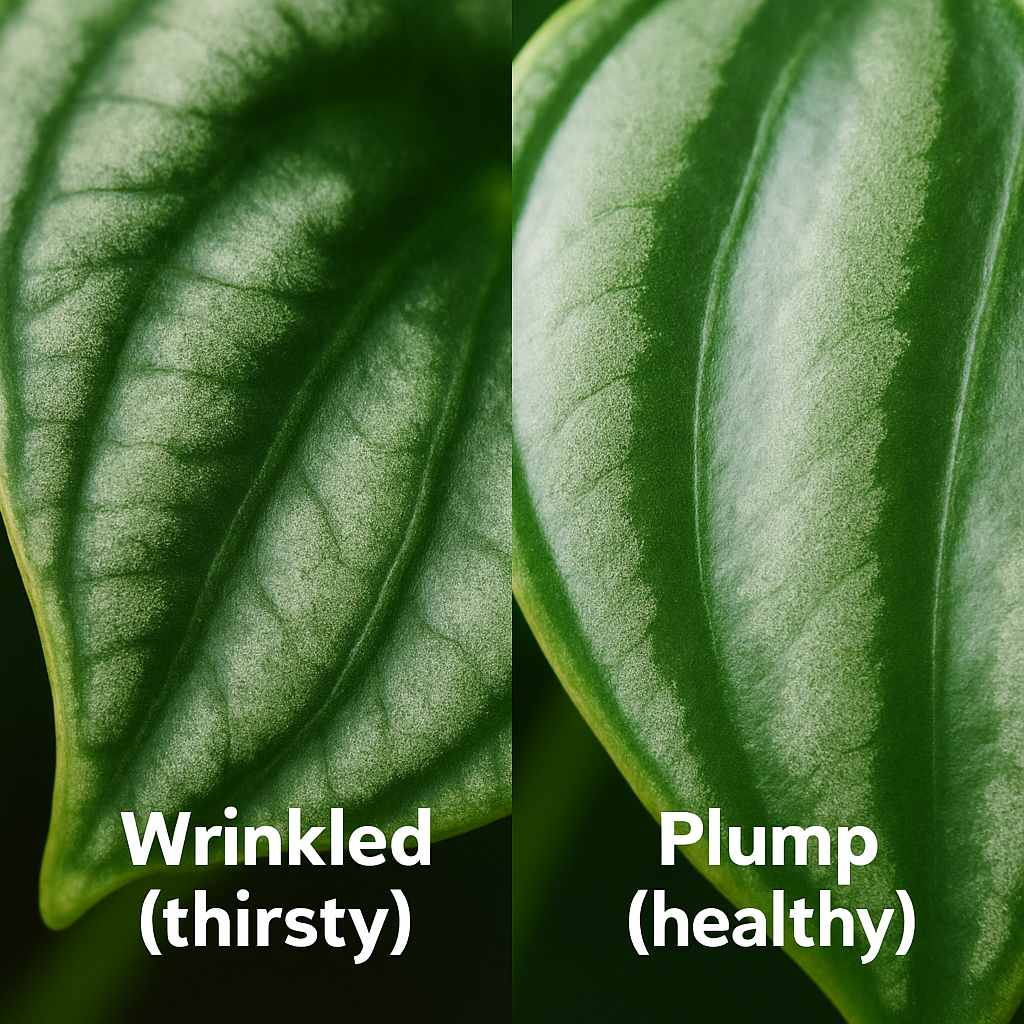
Wrinkled, slightly deflated leaves = your peperomia is thirsty. Soft, mushy leaves = overwatered. Learn the difference.
The frequency depends on your home. In summer with bright light and warm temps, you might water every 7–10 days. In winter with low light and heating running, you're looking at every 2–3 weeks. The moisture meter rule applies here — when in doubt, wait another day.
Grab a moisture meter — the easiest way to avoid overwatering your peperomia
Soil
Drainage is non-negotiable. Peperomia roots are fine and relatively shallow — they hate sitting in water. Regular potting soil compacts and holds moisture for too long.
What you want: a chunky, fast-draining mix. A simple recipe:
- 2 parts perlite
- 1 part coarse sand
- 1 part standard potting mix
Or just grab a quality chunky houseplant mix and throw in a handful of perlite. The goal is that when you pour water through, it flows out the bottom in seconds, not minutes.
Our go-to chunky potting mix for peperomia — good drainage, every time
Humidity & Temperature
Here's the good news: peperomia isn't a humidity diva. Average household humidity (40–60%) is perfectly fine. These plants aren't requesting a terrarium setup or a humidifier running 24/7.
That said, if you live somewhere arid (desert climate, winter with forced-air heating), your peperomia will appreciate the occasional misting or a humidity tray. But it's not required.
Temperature-wise, keep them between 65–80°F. They don't appreciate cold drafts, so avoid placing them near exterior doors in winter or directly under AC vents.
Fertilizer
Peperomia are light feeders. Monthly liquid fertilizer during the growing season (spring through early fall) is plenty. Use a balanced formula at half strength — overfeeding causes salt buildup and can burn the roots.
Skip fertilizer entirely in winter when growth slows.
A gentle balanced liquid fertilizer once a month during growing season is all peperomia needs
Peperomia Troubleshooting — What's Wrong With My Plant?
Most peperomia problems come down to two things: water and light. Fix those and you'll avoid 90% of issues.
Yellowing leaves — usually overwatering. Let the soil dry out more between waterings. Check that the pot has drainage holes.
Drooping or curling leaves — could be underwatering (check for wrinkled leaves) or overwatering (check soil moisture). Feel the soil. If it's wet and the leaves are soft, you've got root rot (see below).
Brown tips or edges — often caused by dry air, fluoride in tap water, or excess fertilizer. Try filtering your water or flushing the soil with plain water to remove salt buildup.
Mushy stems or a wobbly plant — root rot from overwatering. Check the roots: if they're brown, slimy, and smell bad, trim the dead stuff, repot in fresh chunky mix, and water less. See our how to treat root rot guide for the full process.
Leaf drop — usually sudden temperature change (cold draft) or shock from being moved to a different location. Peperomia doesn't like sudden changes. Pick a spot and leave it there.
Mealybugs and spider mites — the usual suspects. Mealybugs look like small white cottony clusters at leaf joints. Spider mites create fine webbing, usually on the undersides of leaves. Wipe down affected plants with neem oil or insecticidal soap. See our pest identification guide for photos and treatment options.
For more complex symptom triage, check out our Plant ER for full symptom troubleshooting.
Repotting Peperomia — When and How
Good news: peperomia likes being root-bound. You don't need to repot every year.
Signs it's time:
- Roots are growing out of the drainage holes
- Water runs straight through without soaking in
- The plant is visibly too big for its pot (top-heavy, tipping over)
- It's been 2–3 years since the last repot
When you do repot, go up only one pot size (so from 4" to 6", not 4" to 10"). Use chunky, well-draining mix. Repot in spring or early summer when the plant is actively growing.
See our step-by-step repotting guide for the full process.
Propagating Peperomia — Free Plants From Leaves
Propagating peperomia is easy. Very easy. The kind of thing that makes you feel like you've figured something out.
Two methods work well:
Leaf cuttings in water: Take a healthy leaf with a short stem attached. Place in a small glass of water with the stem submerged. Change the water every few days. In 4–6 weeks, you'll see roots. Once roots are about an inch long, plant in soil.
Leaf cuttings in soil: Same idea — healthy leaf with stem. Press the stem into damp chunky mix. Keep moist but not soggy. Roots form in 4–8 weeks. You'll often see a tiny new leaf emerge before the original cutting looks like much.
Optional but speeds things up — rooting hormone gives peperomia cuttings a head start
Failure modes: The most common reason propagation fails is rot — the cutting sits in too-wet soil for too long. Use chunky mix, don't overwater, and make sure your cutting isn't touching the bottom of the pot.
For the full propagation walkthrough, see our general propagation guide.
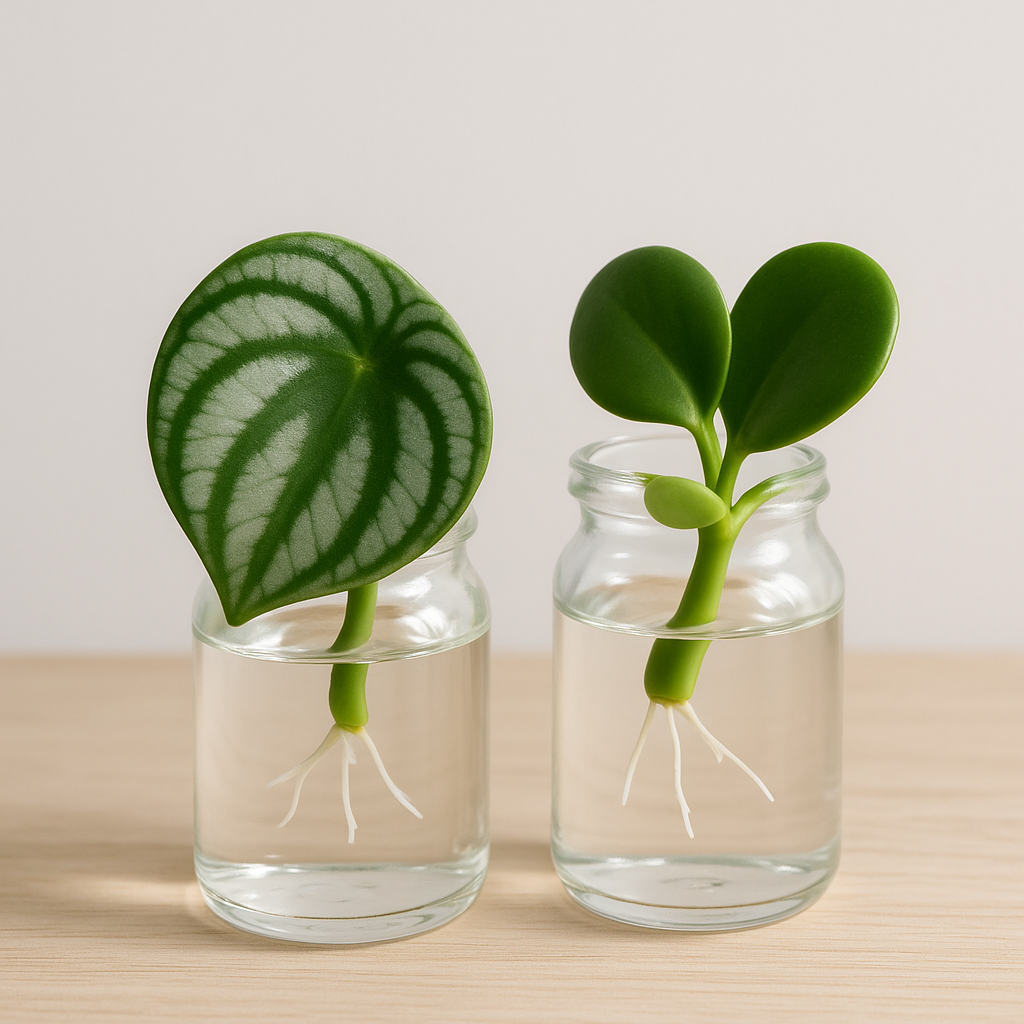
Peperomia propagates easily from leaf or stem cuttings. In 4–6 weeks, you'll have roots. In 8–12 weeks, tiny new plants.
Peperomia FAQ
Is peperomia pet-safe? Yes. Peperomia are non-toxic to cats and dogs according to the ASPCA. That said, ingestion can cause mild digestive upset, so it's not technically "edible" — but it's far safer than lilies, philodendrons, or pothos for pet households.
How often should I water peperomia? When the top 1–2 inches of soil are dry. In summer with bright light, that's roughly every 7–10 days. In winter, every 2–3 weeks. Adjust based on your home's conditions — if it's hot and dry, water more often. If it's dim and cool, water less.
Why are my peperomia leaves wrinkling? Wrinkled leaves mean thirst. Give the plant a thorough watering. If the leaves are soft and the soil is wet, you've got overwatering issues — check the roots for rot.
Can peperomia grow in low light? Yes. Varieties like caperata, obtusifolia, and Rosso handle low-light conditions better than most. That said, "tolerates low light" isn't the same as "thrives in low light" — growth will be slower and the plant may get leggy over time.
How big do peperomia plants get? Most varieties stay between 6 and 12 inches tall and wide. Trailing varieties grow longer but stay compact. They rarely outgrow a 6–8 inch pot, which is part of why they're so well-suited for small spaces.
What's the difference between peperomia and pilea? Both are popular small houseplants, but they're different genera. Pilea (usually Pilea peperomioides, the Chinese money plant) have rounder, flatter leaves on long petioles and grow in a more upward, spreading habit. Peperomia have more varied leaf shapes (some trailing, some upright, some textured) and generally stay smaller and more compact.
Our Favorite Peperomia Care Gear
Since peperomia stays small, you don't need anything bigger than a 4" pot — these are our favorites:
Since peperomia stays small, you don't need anything bigger than a 4" pot — these are our favorites
Low on natural light? A small clip-on grow light keeps peperomia thriving on any desk or shelf
Ready to add more low-maintenance plants to your collection? Check out our 10 Easiest Houseplants for Beginners guide.