Peace Lily Care Guide: Complete Beginner to Expert
Finally — a guide that teaches you to read your plant's signals instead of following rigid rules.
Why Peace Lilies Are Worth the Effort
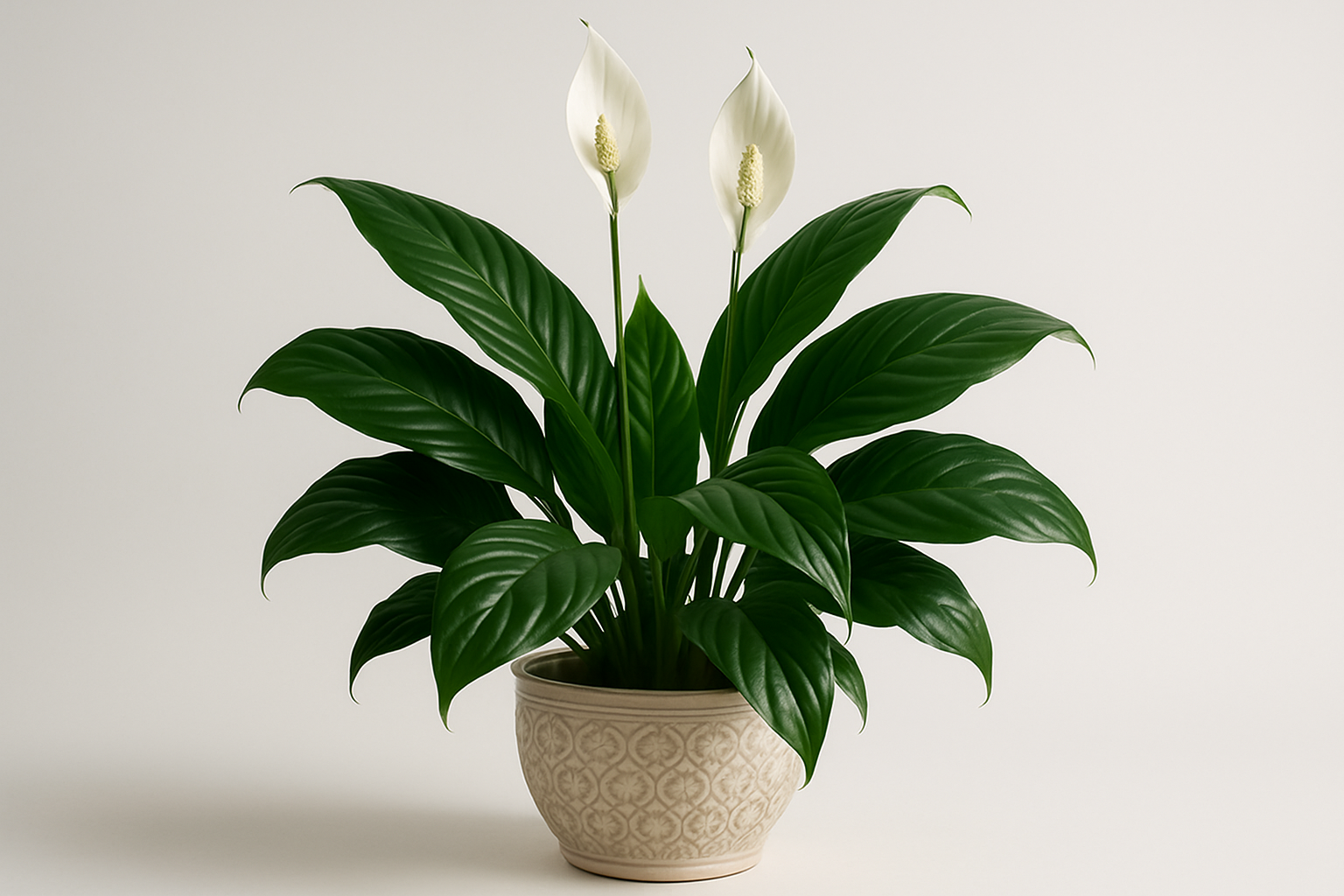
Let's be real: peace lilies get a reputation as "beginner plants" because they're widely available and cheap. But that sells them short. A healthy peace lily is genuinely stunning — glossy dark green leaves, elegant white spathes (the "flowers"), and a compact growth habit that works in pretty much any space.
The real reason peace lilies are worth having? They're incredibly expressive. Unlike some plants that die silently, your peace lily will tell you when something's wrong. Brown tips? Drooping? Yellowing leaves? That's your plant communicating. Your job is to learn the language.
This guide teaches you that language. We'll cover the basics (light, water, soil, humidity), then dive into the troubleshooting section that makes this different from every other peace lily care article on the internet — a visual diagnosis system that helps you identify exactly what's wrong and what to do about it.
Where to Place Your Peace Lily for Best Results
Light is where most peace lily owners go wrong. Not because it's complicated, but because the conventional wisdom is too vague. "Low light" gets thrown around until it means everything from a dark corner to a dim bathroom. Here's the truth:
Peace lilies thrive in bright indirect light. That means a few feet from an east-facing window, or any spot where the sun never hits the leaves directly but the room is generally well-lit. They tolerate lower light, but "tolerate" means "won't immediately die" — it doesn't mean "will thrive."
Signs Your Peace Lily Needs More Light
- New leaves are smaller than old ones
- Plant looks leggy or stretched (reaching for more light)
- Very few or no white spathes (flowers)
- Overall growth is slow and sparse
Signs Your Peace Lily Is Getting Too Much Light
- Leaves look faded or washed out
- Brown scorch marks on leaves (not tips — the leaf itself)
- Leaves drooping even when soil is moist
- Direct sun hitting the plant
Pro tip: If you only have a dark corner, a peace lily will survive there, but it'll grow slowly and probably won't bloom. Consider a snake plant instead if your space is genuinely dim.
How (and How Often) to Water Your Peace Lily
Here's where the "schedule" approach fails hard. Your peace lily doesn't care what day of the week it is. It cares about its soil moisture right now. The only reliable method is the finger test — stick your finger into the soil up to the first knuckle. If it feels dry, water. If it's still moist, wait.
That said, peace lilies are thirsty. They'll let you know dramatically.
The Finger Test: When to Water
- Insert finger 1-2 inches into soil
- If dry → water thoroughly (see below)
- If moist → come back in 2-3 days and check again
Peace lilies are overwatered more often than underwatered. That moisture meter isn't just a nice-to-have — it's genuinely useful for peace lilies because their thirst signals can be mistaken for other problems. Check Current Price on Amazon
Reading Your Peace Lily's Droop Signal
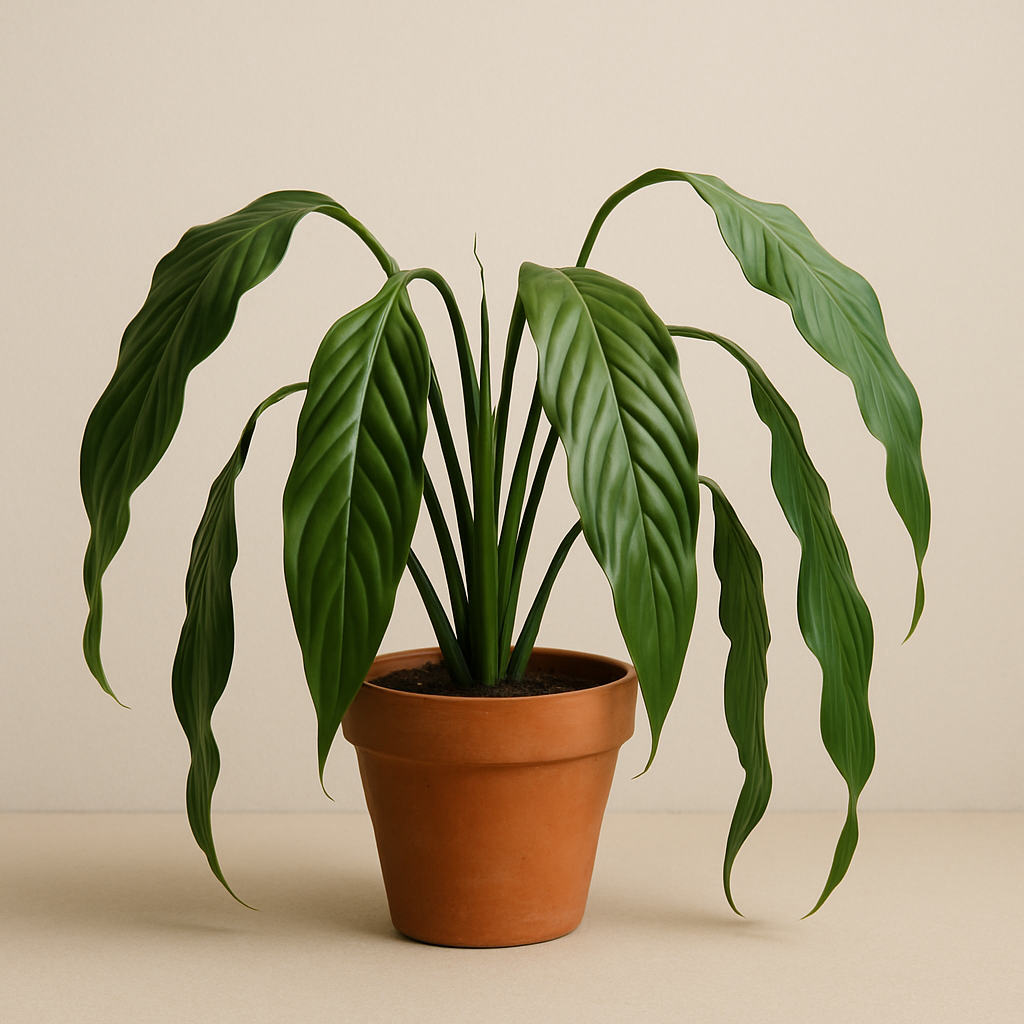
Your peace lily will dramatically wilt when it needs water. Like, wilts-completely-and-dramatically wilts. This isn't a sign of distress — it's a communication method. The plant is saying "hey, I'm thirsty, could get around to watering me whenever."
Here's the wild part: a well-watered peace lily that wilts from thirst can perk back up within an hour of watering. It's dramatic but resilient. That said, don't let it get to the wilting point regularly — consistent mild stress isn't good for any plant.
Why Tap Water Hurts Your Peace Lily
This is the issue no one talks about enough. Peace lilies are sensitive to chlorine, chloramine, and fluoride — all commonly found in tap water. These chemicals build up in the soil and cause the infamous brown tips.
If your peace lily has brown tips and you're watering on schedule with proper technique, check your water. Solutions:
- Let tap water sit overnight — chlorine evaporates, but chloramine doesn't
- Use filtered water — a basic charcoal filter pitcher works
- Rainwater or distilled water — if you're committed
- Reverse osmosis — best option but most expensive
The brown tips section below has the full breakdown of causes and fixes.
Creating the Tropical Environment Your Peace Lily Craves
Peace lilies are tropical understory plants — they grew under the forest canopy in warm, humid conditions. Your apartment might be missing one or both.
Ideal Temperature Range
60-80°F (15-27°C) is the sweet spot. Peace lilies will tolerate down to 50°F and up to 85°F, but growth slows at extremes. Keep them away from:
- Drafty windows in winter
- Heating vents (hot dry air)
- Air conditioning vents (cold drafts)
- Any spot with temperature swings
Humidity Tips for Healthier Leaves
Brown tips are often a humidity issue, not a watering issue. Target 50%+ humidity for a happy peace lily. If your home is dry (especially in winter):
- Group plants together — they create a humid microclimate through transpiration
- Pebble tray — set the pot on a tray filled with pebbles and water (pot sits on pebbles, not in water)
- Bathroom placement — this is why peace lilies are famously "bathroom plants" — the humidity from showers helps
- Humidifier — if you're already running one for yourself, your plants benefit too
A humidifier isn't just for your skin — your peace lily will thank you.
What to Pot Your Peace Lily In (And How to Feed It)
Best Soil Mix for Peace Lilies
Peace lilies need well-draining soil that holds some moisture but doesn't stay soggy. Standard potting mix works, but you can improve it:
- Add perlite (30-40%) for extra drainage
- Add orchid bark or charcoal for aeration
- Mix in some peat moss or coco coir for moisture retention
The goal: water flows through quickly, but the roots have access to moisture. See Premium Potting Mix Options
When and How to Repot
Peace lilies like to be slightly root-bound. Repot only when:
- Roots are coming out of drainage holes
- Water runs straight through (root ball has filled the pot)
- Growth has slowed significantly despite good care
When you do repot, go up one pot size only (e.g., from 6" to 8"). Too much extra soil holds too much moisture and risks root rot.
Fertilizer Tips for Blooms
Peace lilies aren't heavy feeders, but they will bloom more with the right nutrients. Use a balanced liquid fertilizer (20-20-20) diluted to half-strength. Feed every 6-8 weeks during spring and summer (growing season). Skip fertilizer entirely in winter.
Over-fertilizing causes salt buildup, which leads to — you guessed it — brown tips. View Balanced Fertilizer Options
Signs you might be over-fertilizing:
- White crust on soil surface
- Brown leaf tips despite good humidity and water
- Leaf edges looking burned
Peace Lily Troubleshooting: What's Wrong and How to Fix It
This is where this guide differs from every other peace lily article. Instead of generic advice, we're going symptom-by-symptom so you can actually diagnose what's wrong.
Why Your Peace Lily Has Brown Tips (And How to Fix Each Cause)
Brown tips are the #1 peace lily complaint, and the #1 sign that something's off. But "brown tips" isn't one problem — it's several possible problems. Here's how to tell which one you're dealing with:
1. Low Humidity
- Symptom: Brown tips, crispy edges, leaves feel dry
- Fix: Increase humidity (see humidity section above)
- Quick fix: Mist leaves daily or run a humidifier nearby
2. Water Quality (Chlorine/Fluoride)
- Symptom: Brown tips, yellowing between veins, healthy-looking roots
- Fix: Switch to filtered, distilled, or rainwater
- How to test: Use only filtered water for 2-3 weeks and see if new growth improves
3. Over-Fertilizing
- Symptom: Brown tips, white crust on soil, general decline
- Fix: Flush soil thoroughly with plain water, reduce fertilizer frequency
- Prevention: Always dilute to half-strength, never fertilize in winter
4. Root Bound
- Symptom: Brown tips, slow growth, drying out fast between waterings
- Fix: Repot into slightly larger container
5. Under-Watering
- Symptom: Brown tips, leaves drooping, soil pulling away from pot edges
- Fix: Water thoroughly (bottom-watering helps rehydrate dry root balls)
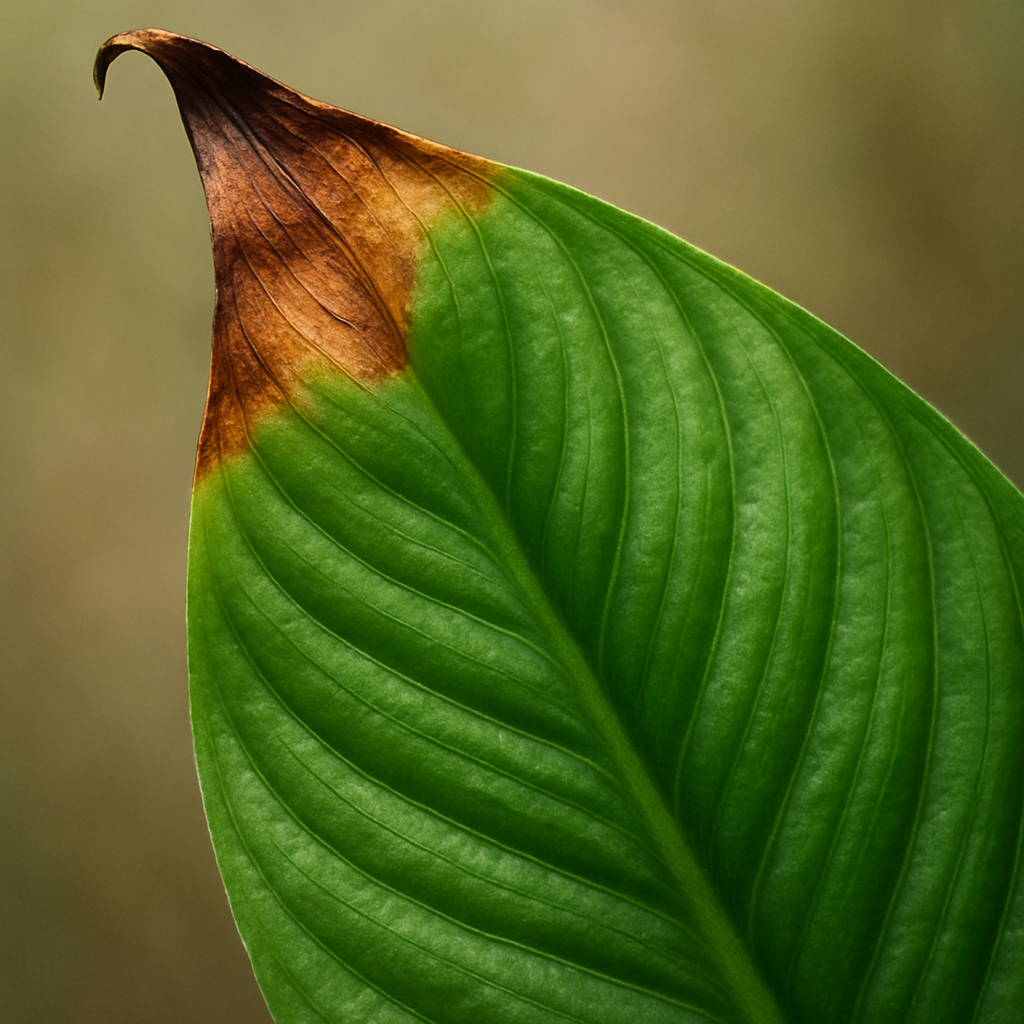
The trick? If you see brown tips, check all five possibilities. Start with humidity and water quality — those are the most common.
Peace Lily Yellow Leaves: Overwatering vs Natural
Yellow leaves can mean two very different things:
Overwatering (the common problem):
- Symptom: Multiple leaves turning yellow, often starting at the base or mid-leaf
- Other signs: Soil stays wet, pot feels heavy, possible root rot smell
- Fix: Let soil dry out more between waterings, check for root rot, improve drainage
Natural Aging (not a problem):
- Symptom: One or two lower/oldest leaves yellowing while rest of plant is healthy
- Other signs: Plant is otherwise healthy, new growth emerging
- Fix: Nothing — just remove the yellow leaf
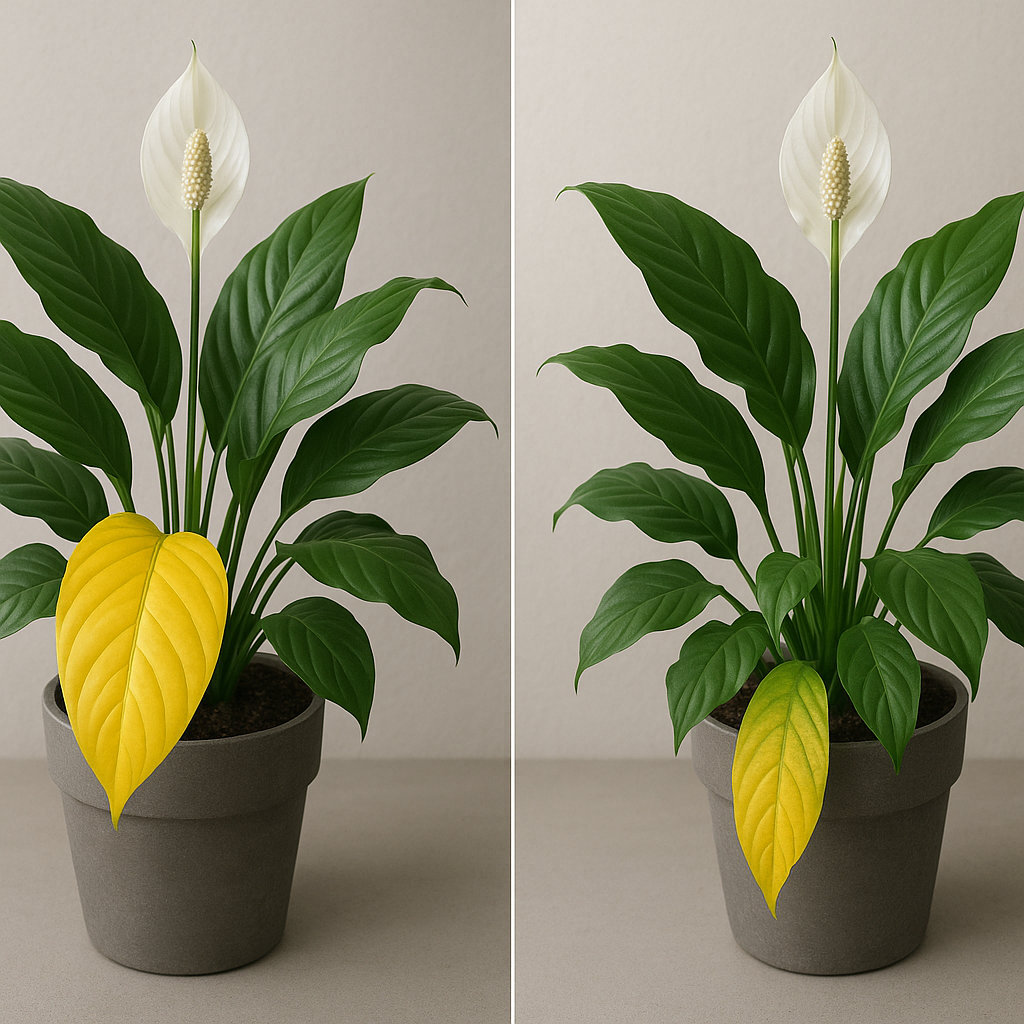
If multiple leaves are yellowing and the plant looks generally unhappy, it's almost always overwatering. Cut back on water, check the roots, and consider better drainage.
Why Is My Peace Lily Not Blooming?
No flowers is one of the most common peace lily frustrations. Here's what to check:
- Not enough light — the #1 bloom killer. Move to brighter indirect light.
- Not mature enough — young peace lilies won't bloom; give it time
- Too much nitrogen — fertilizer that's all nitrogen = leaves, no flowers. Use balanced (20-20-20)
- Not enough humidity — low humidity can inhibit blooming
- Root bound — sometimes a slightly tight pot encourages blooming
Want more detail? Get our detailed guide to peace lily blooms for advanced bloom-boosting techniques.
Common Peace Lily Pests and How to Treat Them
Peace lilies aren't particularly pest-prone, but they can get:
Spider Mites
- Signs: Fine webbing between leaves, tiny dots on leaf undersides
- Treatment: Wipe leaves with soapy water, increase humidity, spray with neem oil
Mealybugs
- Signs: White cottony clusters at leaf joints
- Treatment: Dab with rubbing alcohol on a cotton swab
Fungus Gnats
- Signs: Tiny flies around soil surface
- Treatment: Let soil dry out more, use sticky traps, water from bottom
Pests are usually a sign of an already-stressed plant. Fix the underlying care issue and the pest problem often resolves itself.
Dividing and Repotting Your Peace Lily
Peace lilies are among the easiest plants to propagate — you divide the root ball into smaller sections and pot each one separately. Here's how:
- Timing: Do this in spring when the plant is actively growing
- Remove plant from pot and gently shake off loose soil
- Locate natural divisions — peace lilies grow in clusters that separate easily
- Pull apart the root ball into sections, each with its own leaves and roots
- Pot each division in fresh, well-draining soil
- Water thoroughly and keep in bright indirect light
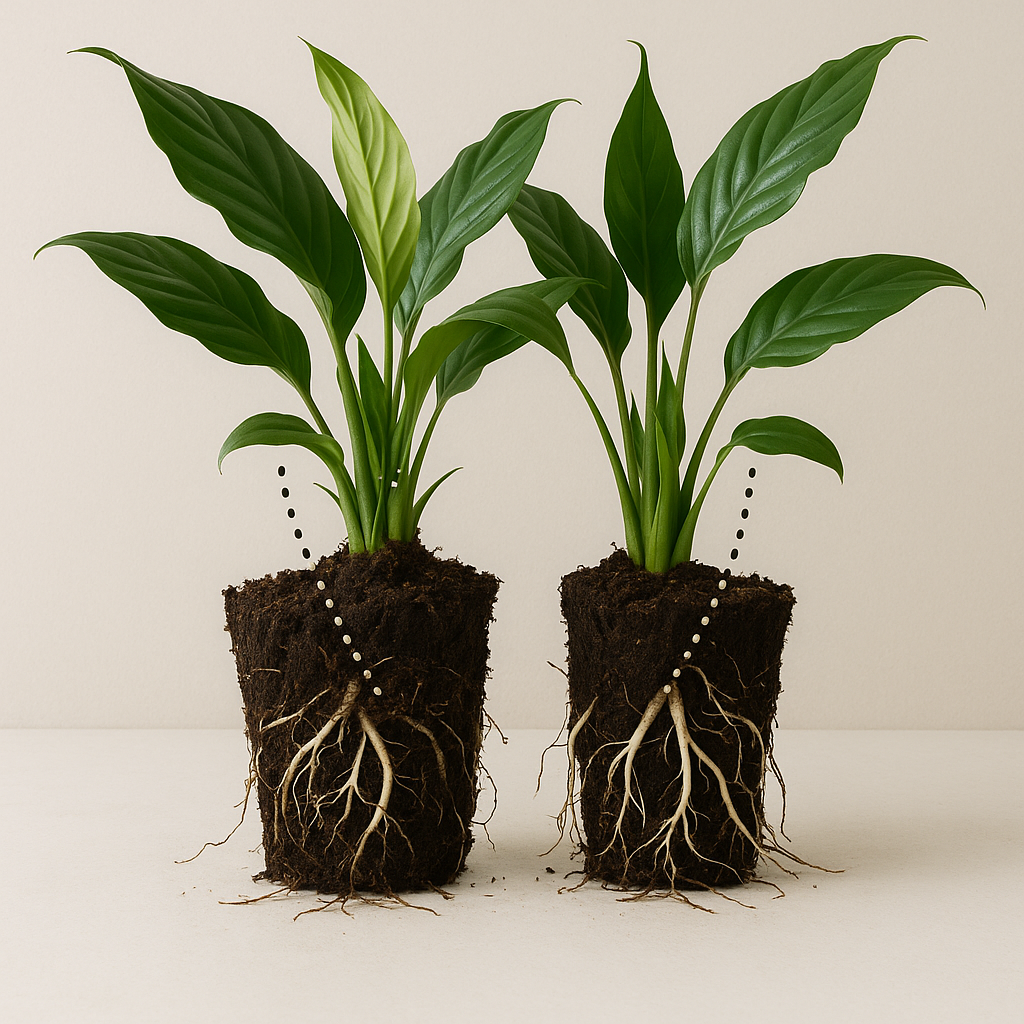
One bonus: peace lilies are forgiving. Even if you mess up a division, the pieces often survive.
Peace Lily Care at a Glance
- Light: Bright indirect; tolerates lower light but won't bloom
- Water: When top 1-2" of soil is dry; don't let it sit in water
- Temperature: 60-80°F; keep away from drafts and heating vents
- Humidity: 50%+; bathroom placement or humidifier helps
- Soil: Well-draining mix with perlite or bark
- Fertilizer: Balanced 20-20-20, half-strength, every 6-8 weeks in growing season
- Pet safety: Toxic to cats and dogs — keep out of reach or choose pet-safe alternatives
Wrapping Up
Peace lilies aren't actually "easy" plants — they have specific preferences and they'll let you know when you miss them. But that's what makes them rewarding. You don't need a green thumb; you need attention to their signals and willingness to adjust.
Start with good light, proper watering technique, and decent humidity. From there, watch how your plant responds and tweak as needed. You'll learn its personality fast.
Having trouble with another houseplant? Use our plant er tool to troubleshoot by symptom.