Why Is My Peace Lily Drooping? Causes & Fixes That Work
The dramatic queen of houseplants is at it again.
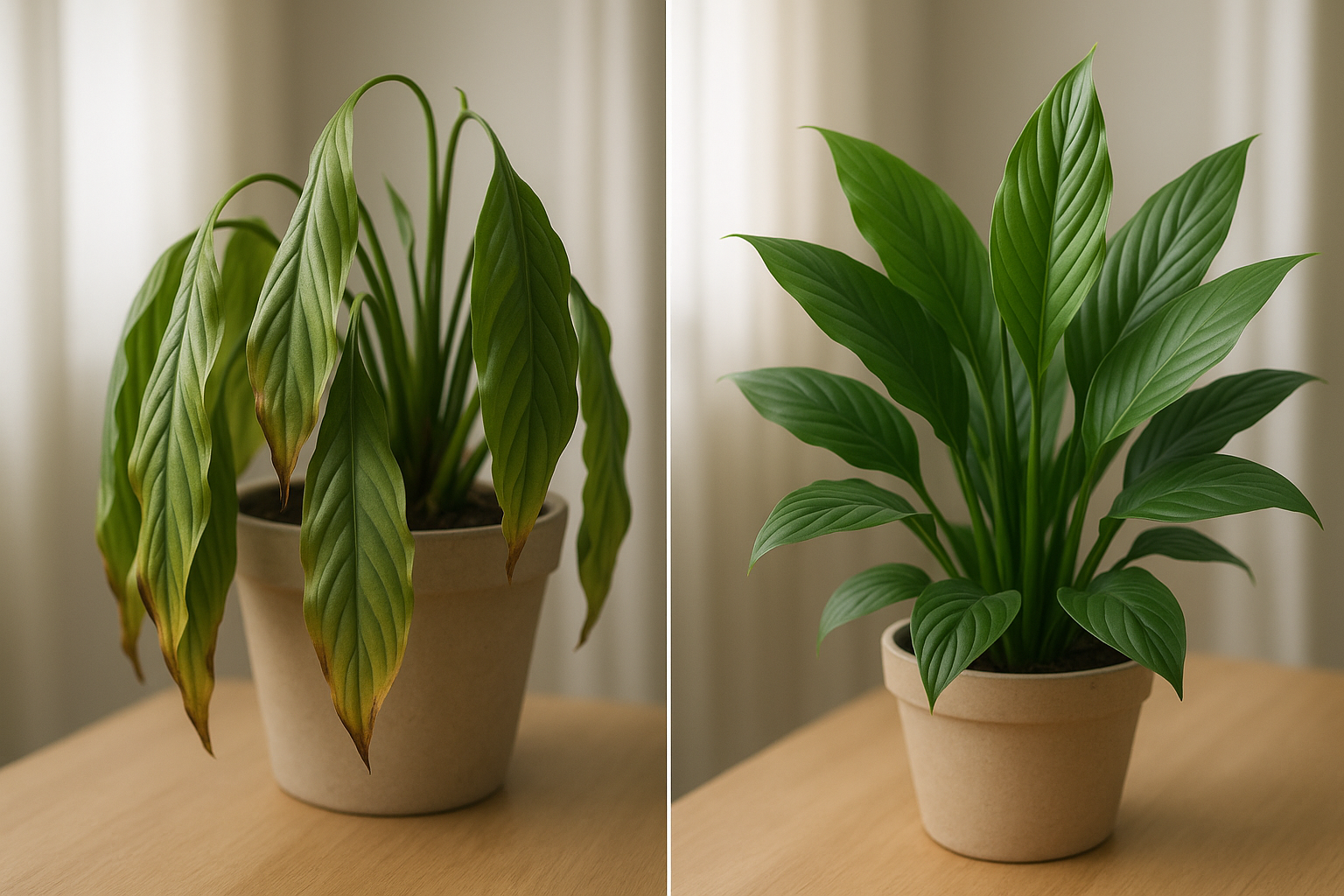
Quick Diagnosis: What's Wrong With Your Peace Lily?
Before you panic, answer two questions:
- Is the soil dry or wet? Stick your finger 1-2 inches deep.
- Are the leaves drooping or just the tips browning?
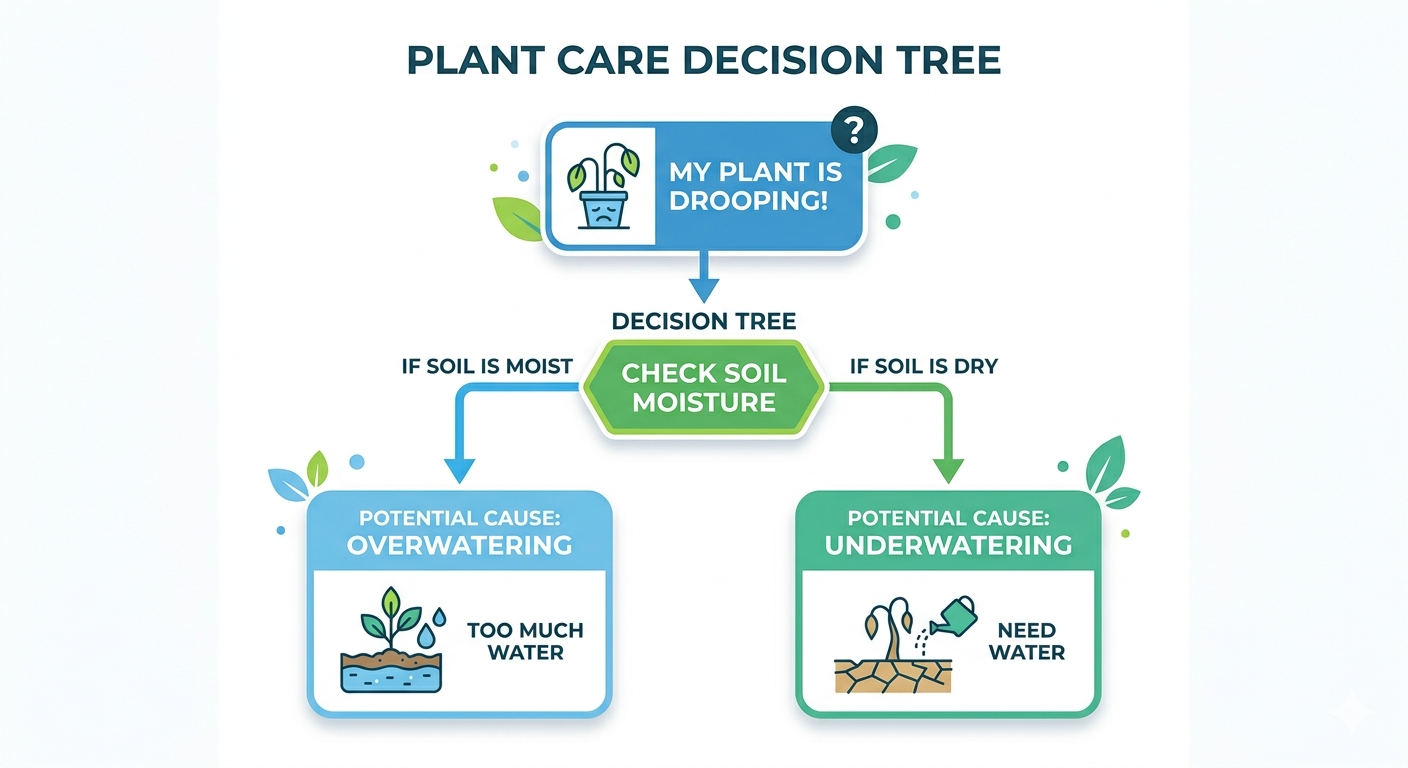
The quick rule:
- Drooping + dry soil = underwatering
- Drooping + wet soil = overwatering (possibly root rot)
- Brown tips only = humidity or water quality
- Both drooping AND brown tips = multiple issues, address the drooping first
Top 6 Causes of Peace Lily Drooping (Ranked by Likelihood)
1. Underwatering – The Most Common Culprit
Peace lilies are dramatic. They'll flop dramatically the second the soil dries out—it's not subtle.
Signs:
- Leaves drooping, especially the newer ones
- Soil feels dry 1-2 inches down
- Leaves feel limp but not crispy
- Plant perks up within hours of watering
How to fix: Water thoroughly until water drains from the bottom. Don't just wet the surface—completely saturate the root ball. If the pot is bone dry, you may need to water twice with 30 minutes between to ensure the soil rehydrates.
Recovery time: 2-4 hours. If your plant was severely dehydrated, give it 2-3 days to fully recover.
2. Overwatering & Root Rot – The #1 Killer
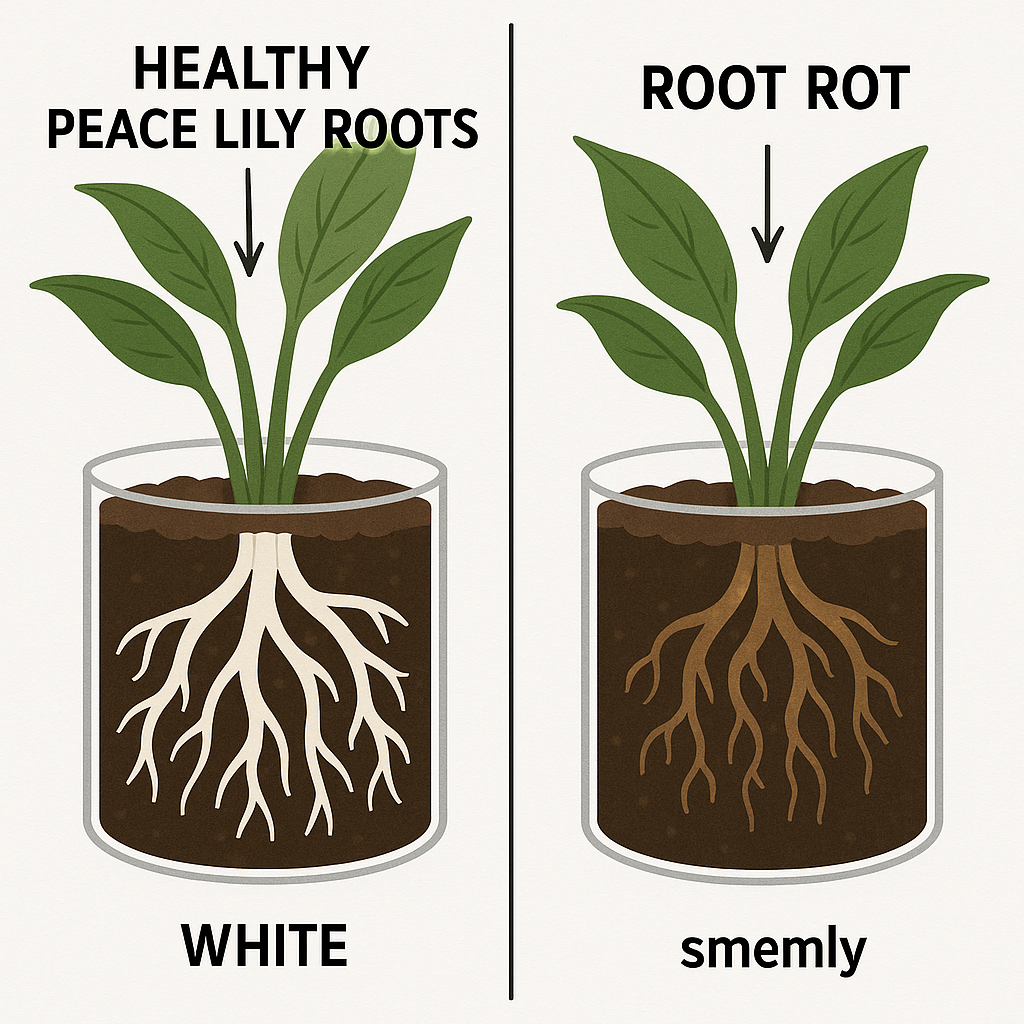
Here's where people get confused: a drooping peace lily with WET soil usually means root rot. The roots are drowning and can't uptake water, so the plant wilts even though there's plenty of water in the pot.
Signs:
- Soil stays wet for more than a week
- Leaves droop but soil is moist
- Yellowing, especially lower leaves
- Mushy, smelly stems at the base
- Roots are brown and mushy (if you check)
How to fix: If you catch it early: stop watering, let the soil dry out, move to brighter light to speed evaporation. If the roots are already mushy, you'll need to treat the root rot.
Severe root rot? It's probably too late to save the whole plant, but you might be able to propagate the healthy leaves.
Recovery time: 1-2 weeks if you catch it early. If significant root damage occurred, it can take a month or more.
Improve Drainage with Better Soil →
3. Low Humidity – The Silent Brown-Tip Maker
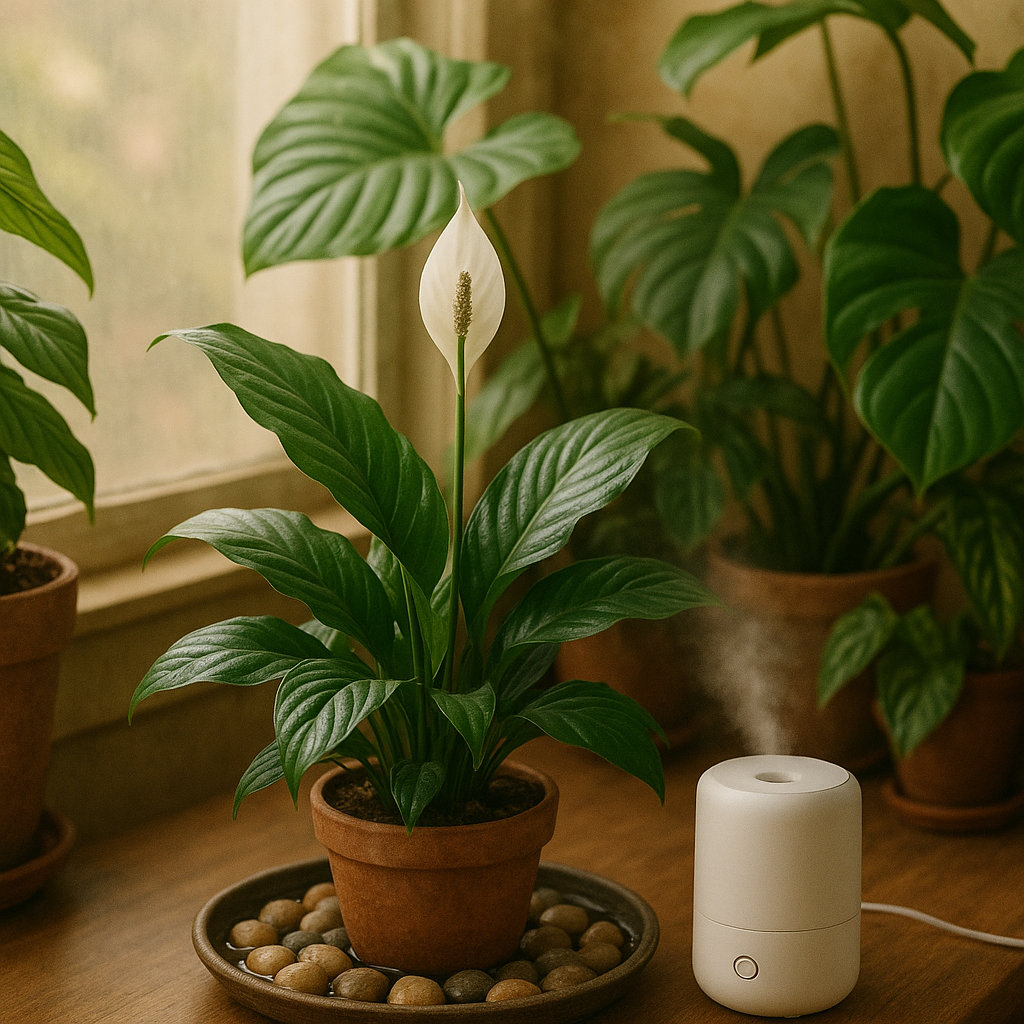
Peace lilies are tropical. Your apartment is not. The brown tips on your peace lily are probably a humidity SOS.
Signs:
- Brown, crispy leaf tips (not the whole leaf)
- Leaf edges turn brown
- Otherwise healthy plant but looks fried at the tips
- Problem worsens in winter when heating runs
How to fix: Quick fixes: pebble tray, misting (temporary), group with other plants. Long-term: humidifier.
Peace lilies want 50-60% humidity. Most homes sit at 30-40%, which is why brown tips are so common.
Get a Humidifier for Your Plants →
4. Water Quality – The Overlooked Cause
Tap water is the enemy of peace lilies. Chlorine and chloramine cause brown tips, and many municipal water supplies have enough minerals to build up in soil and fry the roots.

Signs:
- Brown tips appear suddenly after using tap water
- White crust on soil surface (mineral buildup)
- Tips spread even when humidity is good
- Plant otherwise healthy but looking scorched
How to fix: Switch to filtered, distilled, or rainwater. If you're on well water with high mineral content, this is even more critical. You don't need expensive RO—most Brita or ZeroWater pitchers remove enough to make a difference.
Filter Chlorine for Healthier Plants →
5. Light Issues – Too Much or Too Little
Peace lilies are low-light plants, but "low-light" doesn't mean "dark corner." Too little light stresses them; too much burns them.
Too little light:
- Growth slows or stops
- Leaves look dull, not glossy
- Plant gets leggy
Too much light:
- Leaves look faded or yellow
- Brown scorch marks on leaves
- Growth seems stunted
How to fix: Peace lilies want bright indirect light. Near an east window is ideal. A few feet from a south or west window works if there's a sheer curtain. They can handle low light but won't grow much.
6. Temperature Stress & Fertilizer Burn
Peace lilies are sensitive to temperature swings and over-fertilizing.
Temperature:
- Below 55°F (13°C): leaves turn dark, growth stops
- Near drafty windows or AC vents: sudden drooping
- Ideal range: 65-80°F (18-27°C)
Fertilizer burn:
- Brown leaf tips, especially after fertilizing
- White crust on soil (salt buildup)
- Tip burn spreads even with good care
How to fix: Stop fertilizing in winter. Use a balanced liquid fertilizer at half-strength, max once a month during growing season. Flush soil every few months to prevent salt buildup.
Brown Tips: Why They Happen & How to Fix Them
This is separate from drooping because the causes are different. You can have a healthy, upright peace lily with gross brown tips.
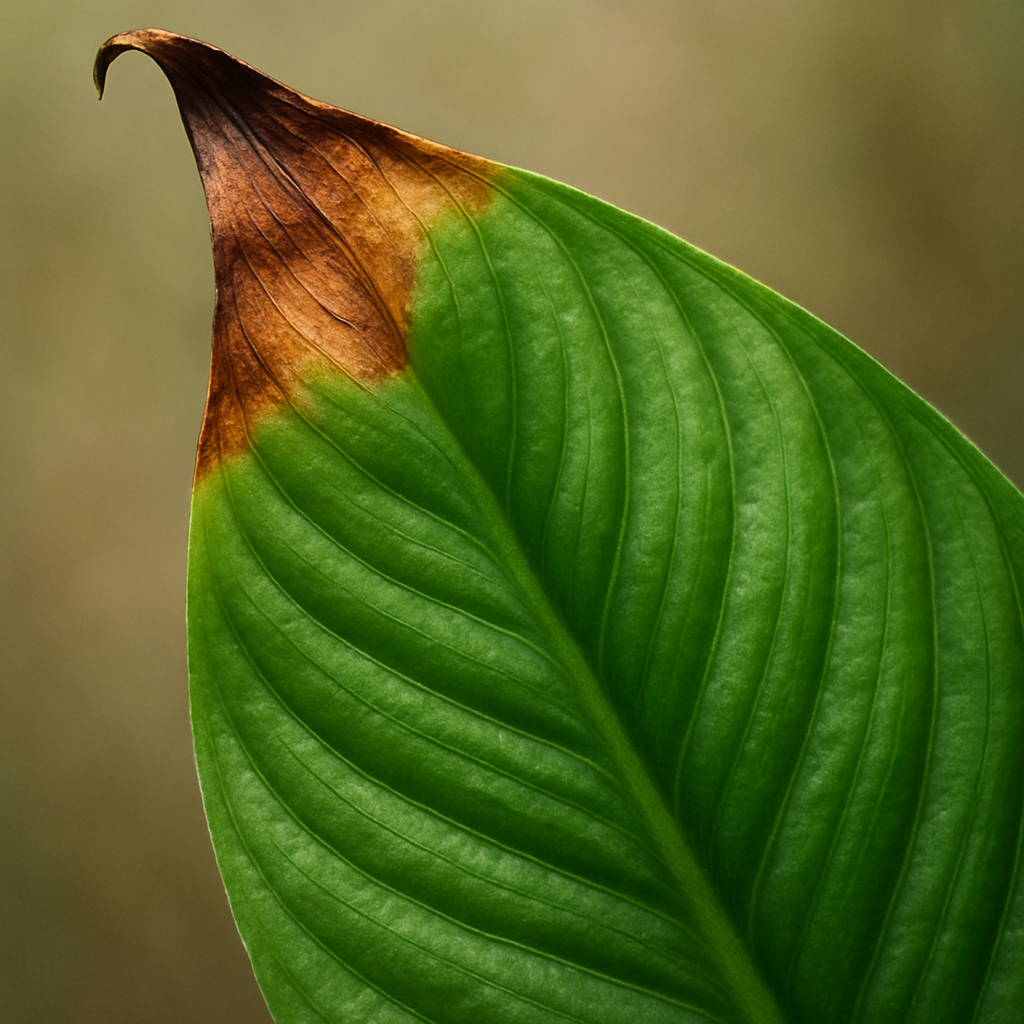
The usual suspects:
- Low humidity – Most common. Increase ambient humidity.
- Water quality – Switch to filtered/distilled water.
- Fertilizer burn – Flush soil, reduce feeding.
- Direct sun exposure – Move to lower light.
- Aging – Older leaves brown at tips naturally. Trim and move on.
To fix brown tips: You can't reverse the damage, but you can stop it from spreading. Fix the underlying cause, then trim the brown parts cleanly if they bother you.
How Long Until Your Peace Lily Recovers?
Here's the honest timeline:
- Underwatering: 2 hours to 3 days
- Overwatering (caught early): 1-2 weeks
- Root rot (treated): 2-4 weeks
- Humidity fix: 2-4 weeks for new growth to look healthy
- Water quality switch: 1-2 months for new leaves to emerge clean
The key word is "realistic." If you fixed the problem yesterday and expect perfect new leaves today, you're going to be disappointed. Plants are slow. Give it time.
Prevention: Keep Your Peace Lily Happy
Want to avoid the drama? Here's the maintenance checklist:
- Water when the top 1-2 inches of soil is dry (not on a schedule—check with your finger)
- Use filtered or distilled water if your tap water is hard or heavily chlorinated
- Maintain 50-60% humidity (humidifier or pebble tray)
- Fertilize sparingly – once a month in spring/summer, not at all in winter
- Repot every 1-2 years – peace lilies like to be slightly rootbound but not suffocating
- Use well-draining soil – chunky aroid mix works well
Check Soil Moisture Instantly →
When to Give Up & Start Over
Sometimes a peace lily is too far gone. Here's when to cut your losses:
- Root rot has killed most of the root system – if roots are brown, mushy, and smell bad, it's probably over
- All stems are mushy – the plant can't recover without healthy stems
- You've tried everything for 2+ months with no improvement
But here's the good news: peace lilies are easy to propagate. If your plant is dying, you can often take healthy divisions and start fresh. It's not the end—it's just a new beginning.
Our Favorite Peace Lily Care Tools
We use these products ourselves:
- Humidifier – View on Amazon
- Moisture Meter – View on Amazon
- Water Filter Pitcher – View on Amazon
- Premium Aroid Potting Mix – View on Amazon
Want more help? Check out our humidity guide or overwatering vs underwatering decision tree.