Monstera Variegation Types: Albo vs Thai Constellation vs Aurea
Variegated Monsteras are the crown jewels of indoor gardening—but they're not all created equal.
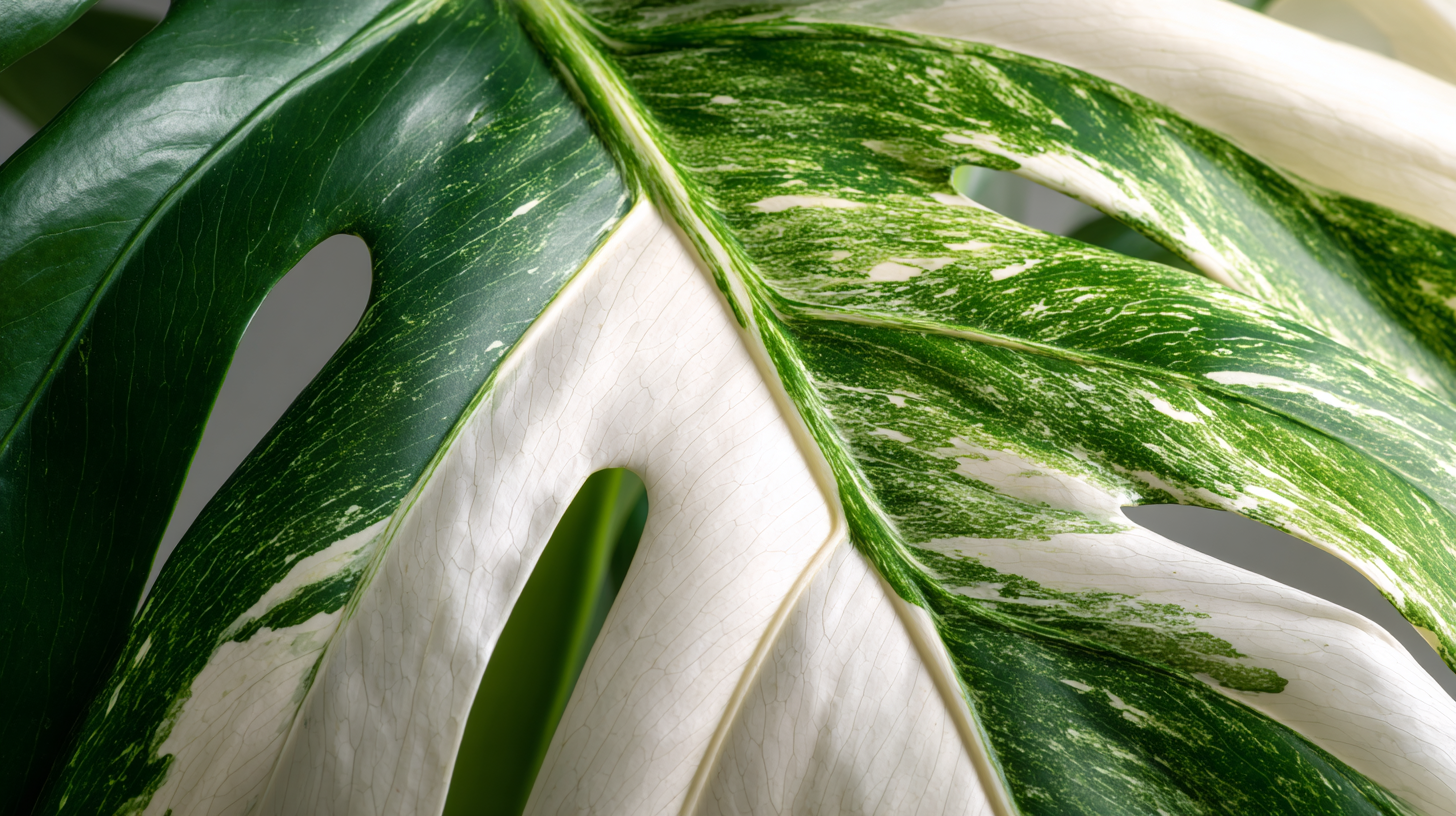
The Variegated Dream
There's no denying the allure of a variegated Monstera. Those splashes of white or gold against deep green foliage make these plants instant statement pieces—and their price tags often reflect that. A single cutting of a high-variegation Albo can sell for hundreds of dollars.
But not all variegation is the same. The three most sought-after types—Albo, Thai Constellation, and Aurea—have distinct genetic backgrounds, care requirements, and visual characteristics. Understanding these differences is crucial before you invest your hard-earned money.
Understanding Variegation Types
Variegation is essentially a mutation that affects the production of chlorophyll. Without chlorophyll, the affected areas of the leaf cannot photosynthesize effectively, which is why variegated plants are often slower growers and require more light than their solid-green counterparts.
There are two main types of variegation:
- Chimeric Variegation: The variegation is unstable and can be passed on inconsistently during cell division. The pattern can change as the plant grows, and it's possible to lose variegation over time (reversion).
- Stable (Sectoral) Variegation: The mutation is encoded in the DNA of the cell lines, resulting in more predictable and consistent patterns.
The Contenders
1. Monstera Albo Borsigiana (The Classic White)
What it looks like: Bright white, sometimes creamy, sectors of variegation that appear sharply defined against the green leaf. The variegation is often sectoral (large blocks of white) or marble-like.
Origin: This is a spontaneous mutation discovered on a Monstera borsigiana. Because it is a chimera, the white variegation is unstable and cannot be propagated reliably from tissue culture. Every Albo is unique.
Care Specifics:
- Light Needs: High. White sectors have zero chlorophyll, so the plant struggles to photosynthesize. It needs bright, indirect light (ideally 2000+ foot candles) to support the energy demands of its variegated leaves.
- Reversion Risk: High. If the plant isn't getting enough light, it may produce solid green leaves to compensate. Conversely, if the mutation is too aggressive, the plant can become "all white" and die because it has no green tissue to sustain itself.
- Growth Rate: Slower than a standard Monstera, especially on high-white variegation.
Is It Worth It? The Albo is the most "classic" and recognizable variegated Monstera. Its beauty is undisputed, but it demands attention to light levels and carries the risk of reversion or all-white leaves.
2. Monstera Thai Constellation (The Reliable Star)
What it looks like: Creamy to pale yellow variegation that is "speckled" or "constellated" throughout the leaf. The pattern is generally more uniform than the Albo and looks almost like starry night scattered across the foliage.
Origin: This plant originated in a laboratory in Thailand via tissue culture (meristem culture). Because it was propagated from a stable mutant cell line, the variegation is genetically stable and heritable.
Care Specifics:
- Light Needs: Moderate to High. While it needs more light than a standard Monstera, it is generally more forgiving than the Albo because the variegation covers more surface area and is often interspersed with green.
- Reversion Risk: Low. This is the big selling point. The Thai Constellation almost never reverts to solid green because the variegation is embedded in its DNA.
- Growth Rate: Faster than the Albo. The stable genetics mean it focuses more energy on growing than surviving.
Is It Worth It? If you want the variegated look without the anxiety of reversion and slow growth, Thai Constellation is the practical choice. It is also often more reasonably priced than high-grade Albos, though prices fluctuate wildly in the market.
3. Monstera Aurea (The Golden Child)
What it looks like: Yellow/golden variegation. This is the rarest of the three and often the most striking. The yellow sectors can range from pale butter to vibrant gold.
Origin: Also a chimeric mutation, similar to the Albo. True Aureas are rare and difficult to propagate.
Care Specifics:
- Light Needs: High. Like the Albo, the Aurea has tissues lacking chlorophyll and needs intense light to thrive.
- Reversion Risk: High to Moderate. Similar stability issues to the Albo.
- Growth Rate: Very slow. Often the slowest grower of the three due to the fragility of the variegated tissue.
Is It Worth It? The Aurea is the collector's grail. It is significantly more expensive and harder to care for than the other two. Unless you are a dedicated collector willing to provide optimal conditions, this might be one to admire from afar.
Comparison Table
| Feature | Albo | Thai Constellation | Aurea |
|---|---|---|---|
| Color | White/Cream | Cream/Yellow (Speckled) | Golden/Yellow |
| Pattern | Sectoral/Marble | Speckled/Constellated | Sectoral |
| Genetics | Chimeric (Unstable) | Stable (Tissue Culture) | Chimeric (Unstable) |
| Price Range | $$$ – $$$$$ | $$ – $$$ | $$$$$+ |
| Light Needs | Very High | High | Very High |
| Reversion Risk | High | Very Low | High |
| Growth Rate | Slow | Moderate | Very Slow |
| Beginner Friendly? | No | Moderately | No |
Buying Tips
- Check the Node: When buying a cutting, ensure it has a healthy, visible node. For Albos and Aureas, try to buy a cutting that has at least one variegated leaf already growing. If the cutting only has a node and a solid green leaf, there's no guarantee the new growth will be variegated.
- Beware of Scams: High-variegation Albos are frequently counterfeited or mislabeled. Buy from reputable sellers with verifiable reviews.
- Don't Overpay for Babies: Variegation can change as a plant matures. A high-variegation baby doesn't always stay high-variegated.
- Consider Thai Constellation for First-Timers: If you are new to variegated Monsteras, the Thai Constellation offers the best balance of beauty, stability, and price.
Reversion Prevention: Can You Save a Reversion?
If your Albo or Aurea starts producing solid green leaves, you have a few options:
- Move it Closer to Light: Increasing light intensity often encourages the plant to push variegated leaves again.
- Prune Back: Cut the plant just above a node that produced a variegated leaf. This can redirect energy to variegated growth points.
- Accept It: Sometimes, a plant just wants to survive. A solid green Monstera is still a beautiful plant, just much cheaper to care for!
💡 Give Your Plants the Light They Crave
Short on natural light? These grow lights help your plants thrive year-round:
*As an Amazon Associate, we earn from qualifying purchases.
Related Articles: