Monstera Adansonii vs Obliqua — How to Tell the Difference (& Which to Buy)
One looks like lace. The other looks like someone left a plant in a paper shredder. Here's how to tell them apart — and whether you should buy either.
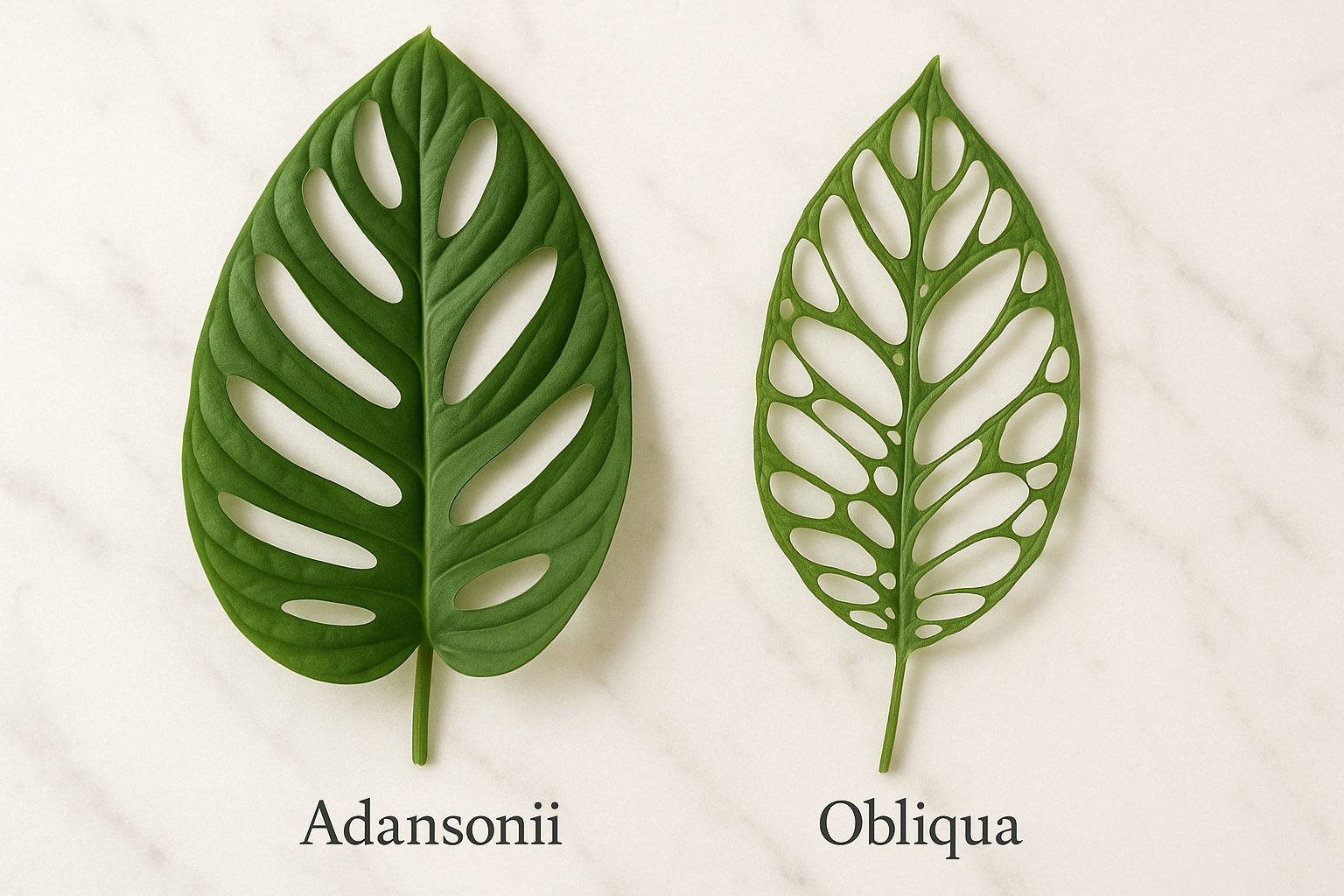
Why Monstera Adansonii and Obliqua Get Confused (and Why It Matters)
Here's the situation: almost every "Obliqua" sold online is mislabeled. Most of those cheap plants on Etsy, Amazon, and Facebook Marketplace labeled as Obliqua? Adansonii. The confusion has been going on for years, maybe decades, and the people selling them either don't know the difference or are counting on you not to.
This matters because if you're dropping serious money on a plant you think is rare, you deserve to know what you're actually buying. And if you're just looking for a cool trailing Monstera, Adansonii is probably what you actually want — and it's a fraction of the price.
Let's break it down.
What Is Monstera Adansonii?
Monstera Adansonii is a tropical aroid from Central and South America. In the wild, it climbs up trees using aerial roots, producing large fenestrated leaves as it matures. It's been in the houseplant trade for decades and is widely available from nearly every plant shop, nursery, and big-box store that sells houseplants.
Key characteristics:
- Fenestrated leaves with rounded or oval holes
- Leaves reach 12–24 inches at maturity
- Fast-growing — can produce a new leaf every 4–6 weeks in good conditions
- Readily available and affordable — expect to pay $20–$60 for an established plant
- Tolerates a range of light, humidity, and care conditions
Adansonii is the plant most people picture when they think "trailing Monstera." It's forgiving, grows quickly, and looks great hanging from a shelf or climbing a moss pole.
What Is Monstera Obliqua?
Monstera Obliqua is a separate, distinct species native to parts of Central and South America. It's one of the rarest plants in the aroid family — there have been only 17 documented wild sightings in history. Yes, you read that correctly.
This is not a common plant. It's the unicorn of the plant world, sought after by serious collectors who have the setup to keep it alive. The most reliably available form is the Obliqua "Peru" variety, which circulates among rare plant traders and specialized collectors.
Key characteristics:
- Extremely thin, almost translucent leaves
- Fenestrations so dense the leaf is 70–90% holes
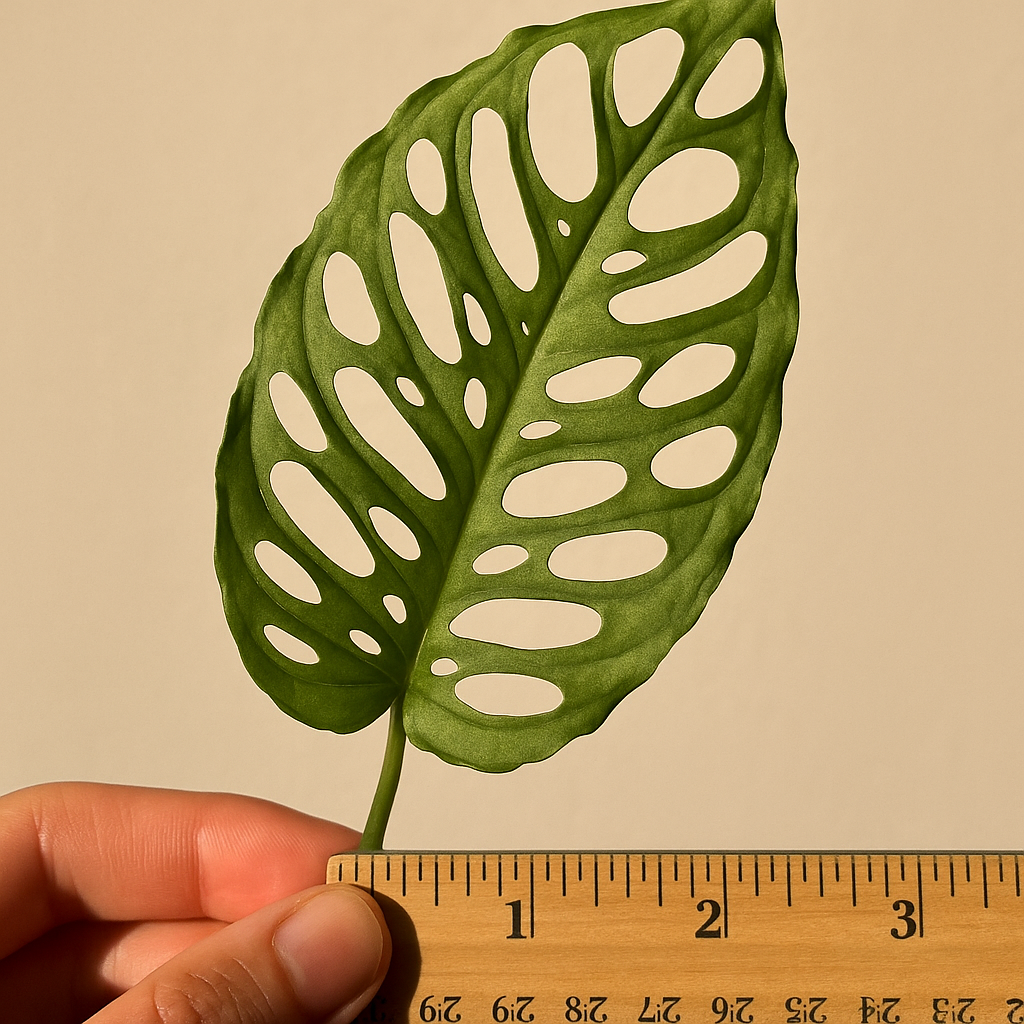
- Leaves max out at 6–7 inches even at maturity
- Growth rate is painfully slow — inches per year, not feet
- Requires 80%+ humidity consistently — most home environments won't cut it
- Expensive — expect to pay $200–$1000+ for a cutting or small plant
If someone is selling you a large, fast-growing "Obliqua" for $40, they don't know what they have. It's Adansonii. This isn't a knock on the seller — even experienced growers have mixed these up for years.
7 Ways to Tell Adansonii from Obliqua
This is the core of the guide. These are the criteria that actually differentiate the two species. Learn these, and you'll never be fooled again.
1. Leaf Thickness
This is the single most reliable differentiator.
- Adansonii: Leaves have some body and structure. They feel like a substantial houseplant leaf — not thick, but not delicate.
- Obliqua: Leaves are paper-thin, almost translucent. Hold one up to the light and you can see through it. This isn't exaggeration — the leaves are startlingly thin.
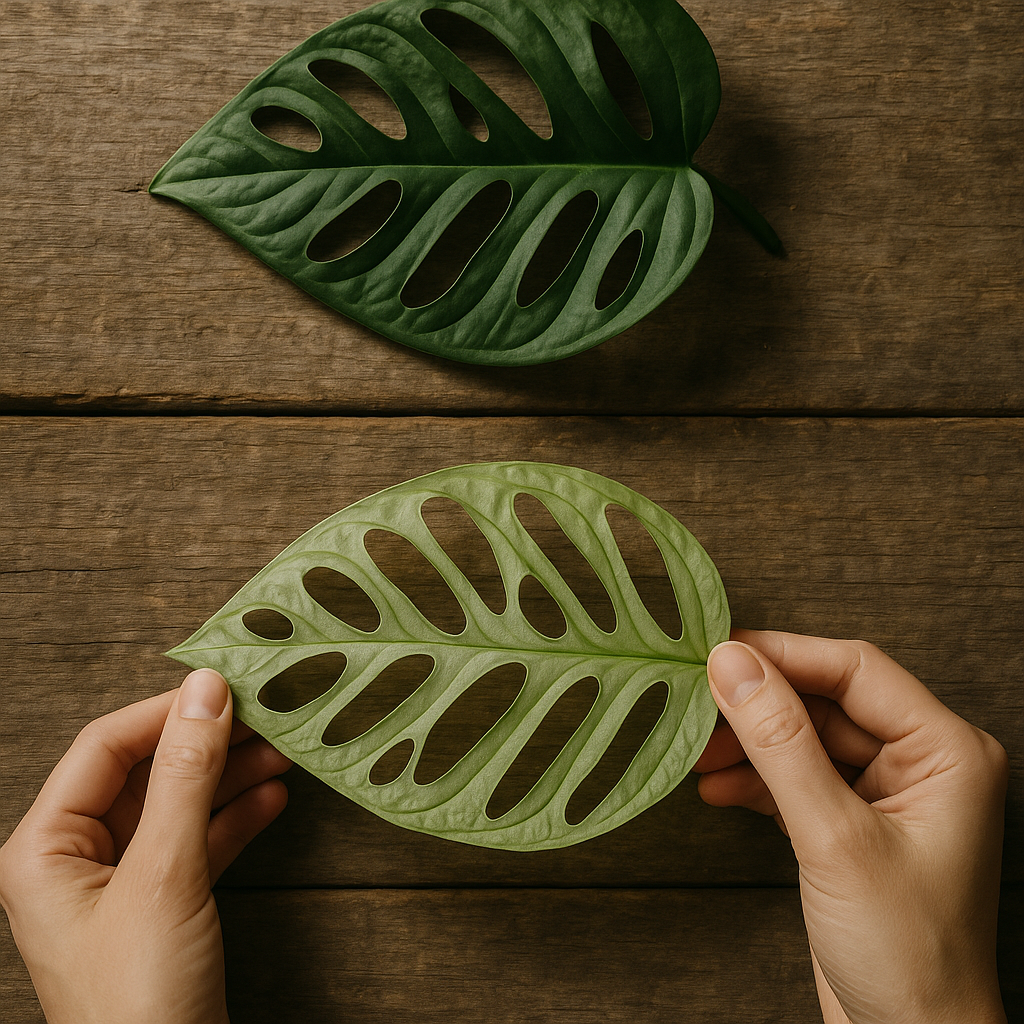
How to check: Gently pick up a leaf. Can you feel any resistance or thickness, or does it feel like holding tissue paper? That's your first clue.
2. Fenestration Density
Both plants have holes in their leaves (fenestrations), but the density is radically different.
- Adansonii: Generous fenestrations, but there's clearly more leaf tissue than holes. The holes are rounded or oval and don't dominate the leaf.
- Obliqua: The holes are so numerous and large that there's more hole than leaf. It's not unusual for 70–90% of the leaf surface to be fenestrations.
When you see a real Obliqua next to an Adansonii, the difference is immediately obvious. Obliqua looks almost skeletal.
3. Hole Shape
- Adansonii: Fenestrations tend to be more rounded or oval, somewhat symmetrical, and fairly consistent in shape.
- Obliqua: Holes are often more irregular and narrow, following the leaf veins in a pattern that can look almost randomly distributed.
This is a supporting clue rather than a hard rule — both plants show variation here. But combined with the other factors, it helps.
4. Leaf Size at Maturity
- Adansonii: Can reach 12–24 inches long at maturity, especially when climbing. Large specimens are impressive.
- Obliqua: Stays small. Leaves max out at roughly 6–7 inches even on a mature plant. If you're looking at a large-leafed Monstera, it's not Obliqua.
This is a useful quick check. A big trailing Monstera with large leaves is almost certainly Adansonii.
5. Leaf Edge Texture
- Adansonii: Leaf edges are generally smooth and consistent.
- Obliqua (Peru form): Distinctive wavy, ruffled edges that feel slightly irregular to the touch. This is a hallmark of the Peruvian variety.
6. Growth Rate
This is one of the most practical differentiators for a buyer.
- Adansonii: Fast-growing. In good conditions, you can expect a new leaf every 4–6 weeks during the growing season. A single plant can trail several feet within a year or two.
- Obliqua: Painfully slow. We're talking inches of new growth per year, not feet. This plant tests your patience in a way that would make a bonsai enthusiast feel vindicated.
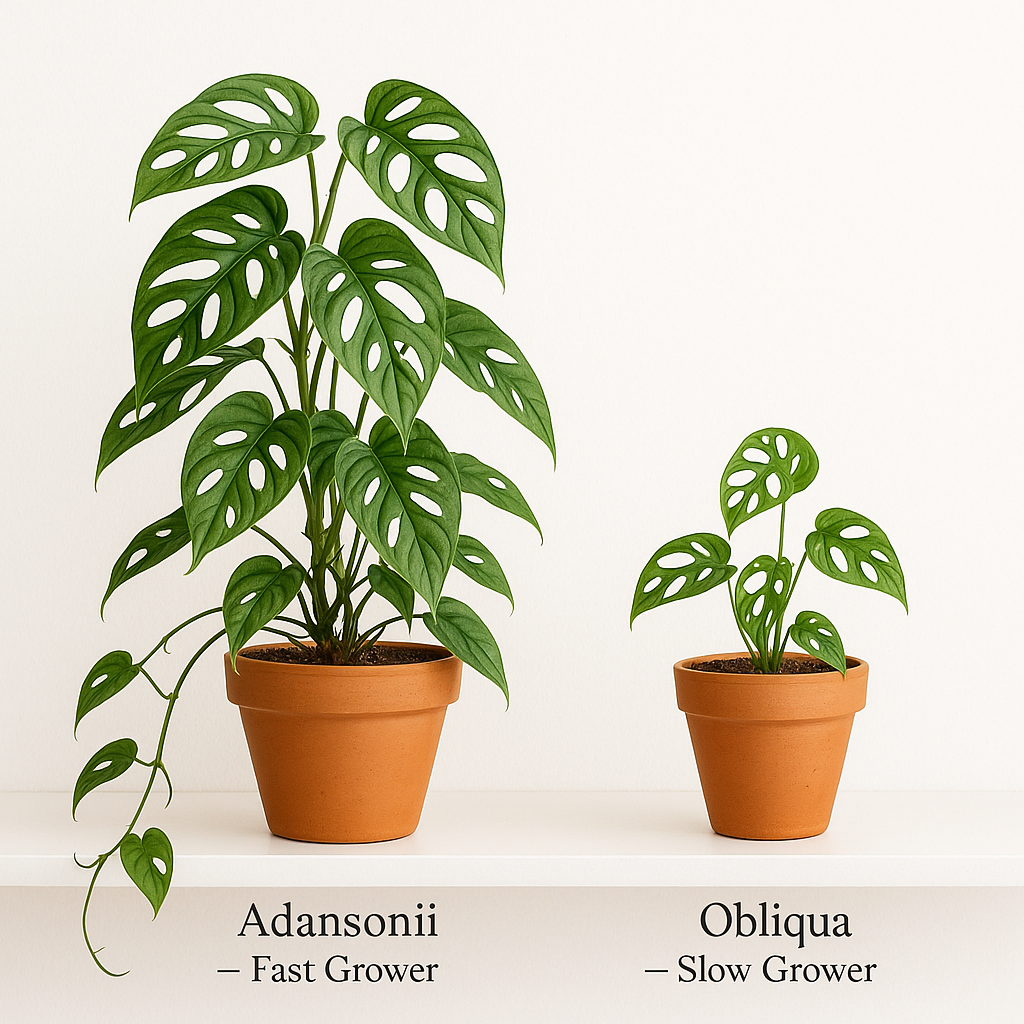
If someone tells you their "Obliqua" is growing aggressively and trailing all over the place, it's Adansonii. Obliqua does not do that.
7. Stolons and Runners
- Obliqua: Produces stolons — horizontal runners that spread across the substrate or climb surfaces. This is part of its natural growth habit.
- Adansonii: Does not produce stolons in the same way. It climbs via aerial roots but doesn't send out runners the way Obliqua does.
This is a more technical differentiator and harder to spot on a small nursery plant, but it's useful if you're evaluating larger specimens.
The Honest Buying Guide: How to Avoid Being Scammed
Here's the uncomfortable truth: most "Obliqua" for sale is mislabeled Adansonii. This happens at every level — big box stores, Etsy shops, even some specialty nurseries. The plant trade has been plagued by this confusion for years, and the stakes are higher now because Obliqua commands a significant price premium.

Red flags when shopping:
-
Price too low — If a plant labeled "Obliqua" is under $100, it's almost certainly Adansonii. Real Obliqua starts at $200 for a small cutting.
-
Large leaves — Obliqua leaves max out at 6–7 inches. If the plant has leaves over 10 inches, it's not Obliqua.
-
Fast growth — Sellers advertising "fast growing Obliqua" don't know what they have. Obliqua grows at a glacial pace.
-
Sold at big box stores — Major retailers do not carry real Obliqua. Ever.
-
No seller verification — Buy from sellers who know the difference and can explain it. If they can't tell you about leaf thickness and growth rate, they may be guessing.
Where to actually buy real Obliqua:
- Specialized rare plant collectors (Reddit r/Aroids, plant Facebook groups)
- Verified rare plant Etsy shops with experienced sellers
- Rare plant auctions and trades within collector communities
Shop Verified Rare Plant Sellers →
The Peruvian form (Obliqua 'Peru') is the most reliably available real Obliqua in circulation. If you're serious about acquiring one, connect with collector communities and be prepared to pay collector prices.
Care Comparison: Adansonii vs. Obliqua Side by Side
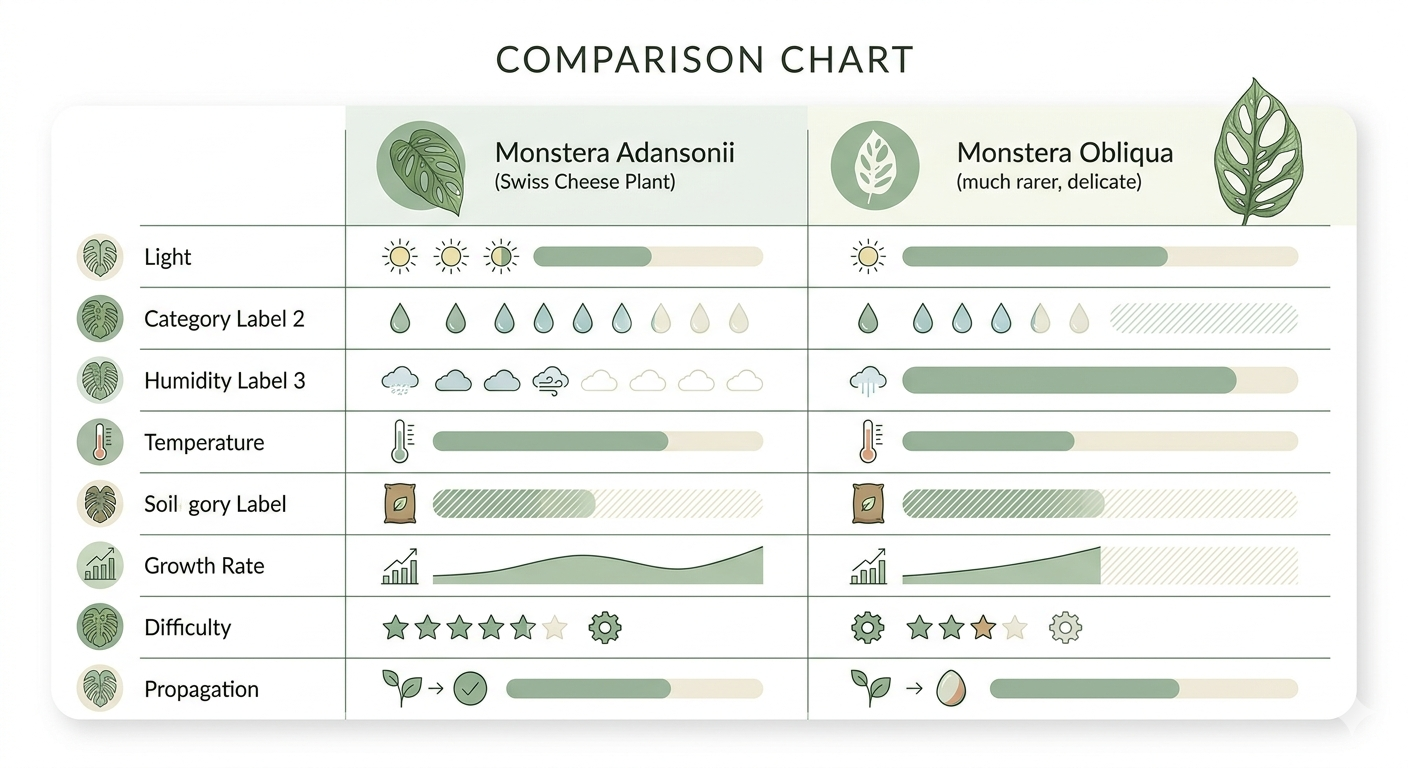
Here's the quick-reference comparison. Adansonii and Obliqua have similar taste in aroids, but Obliqua is far more demanding.
| Factor | Adansonii | Obliqua |
|---|---|---|
| Light | Bright indirect; tolerates lower light | Bright indirect; no direct sun |
| Water | Allow top 2–3 inches to dry; don't overwater | Keep consistently moist but not soggy; more demanding |
| Humidity | 40–60% — tolerates average home humidity | 80%+ consistently — most homes need a humidifier |
| Temperature | 65–85°F | 65–85°F |
| Soil | Chunk, well-draining aroid mix | Same, but with extra perlite and orchid bark |
| Growth rate | Fast (new leaf every 4–6 weeks) | Very slow (inches per year) |
| Difficulty | Beginner-friendly | Advanced — demanding setup required |
| Pet safety | Toxic to pets if ingested | Toxic to pets if ingested |
Both plants want chunky, well-draining aroid soil. If you're mixing your own, aim for roughly equal parts orchid bark, perlite, coco coir, and worm castings. The goal is moisture retention without waterlogging.
Which Should You Buy?
Here's the honest answer most articles won't give you.
Buy Adansonii if:
- You're a beginner or intermediate plant parent
- You want visible progress and regular new leaves
- Your home has average humidity (40–60%)
- You want good value — a beautiful plant that won't break the bank
- You want something forgiving that tolerates occasional care mistakes
Adansonii is the practical, satisfying choice. It grows quickly, looks stunning, and forgives the kind of inconsistent care that would kill a more demanding plant. It's a great plant.
Buy Obliqua only if:
- You have experience with rare aroids and understand their needs
- You can maintain 80%+ humidity consistently (a dedicated humidifier running full-time)
- You have a terrarium or greenhouse setup — not just a sunny windowsill
- You understand it will grow inches per year and you're okay with that
- You're prepared to spend $200–$1000+ on a single plant
If you're serious about Obliqua, a reliable humidifier isn't optional — it's essential. Obliqua needs that consistently high humidity or it will deteriorate quickly.
View Humidifiers for High-Humidity Plants →
Most people should buy Adansonii. It's the plant that will actually thrive in your home and bring you regular satisfaction as it grows. Save Obliqua for when you have the setup and the patience.
Frequently Asked Questions
Is Monstera Adansonii the same as Obliqua?
No — they're two distinct species. Adansonii is widely cultivated and affordable ($20–60); Obliqua is extremely rare, with only 17 documented wild sightings, selling for $200–$1000+. Most plants sold as "Obliqua" are mislabeled Adansonii.
Why is Monstera Obliqua so expensive?
Obliqua is extremely rare, slow-growing (inches per year), requires 80%+ humidity, and is frequently mislabeled. Real Obliqua cuttings start at $200–500, with larger specimens reaching $1000+.
Can Monstera Adansonii turn into Obliqua?
No. A plant's genetics don't change based on care, environment, or age. If it's Adansonii, it will always be Adansonii.
How can I tell if my Monstera is Obliqua?
Check three things: (1) Leaves are paper-thin — translucent when held to light. (2) Fenestrations are extreme — 70–90% of the leaf is holes. (3) Growth is painfully slow — inches per year, not feet. If all three apply, you may have a real Obliqua.
Is Monstera Obliqua a good houseplant?
Only if you have the right setup. Obliqua requires 80%+ humidity consistently and grows at a glacial pace. For most home environments, it's a difficult and frustrating plant. Adansonii is a far better choice for most people.
Where can I buy a real Monstera Obliqua?
Real Obliqua is sold through rare plant collector communities — Reddit r/Aroids, specialized Facebook plant groups, and verified rare plant Etsy shops. It is not sold at big box stores or general nurseries. Be prepared to pay collector prices and verify the seller's knowledge before purchasing.
Related Monstera Guides
Want to go deeper? Here are some related guides:
- How to Propagate Monstera Adansonii — Learn how to multiply your Monstera from cuttings.
- How to Raise Humidity for Houseplants — The practical guide to getting humidity right for humidity-loving plants.
- Best Moisture Meters for High-Humidity Plants — Tools to help you monitor conditions for demanding tropicals.
- Plant ER: Troubleshooting Sick Monstera — When things go wrong, here's how to fix them.
Products We Love
Monitor your Monstera's environment with a hygrometer/moisture meter combo — essential for anyone serious about keeping demanding tropicals like Obliqua thriving.