Indestructible Plants — The Hardest Houseplants That Survive Everything
The plants that thrive while you forget they exist.
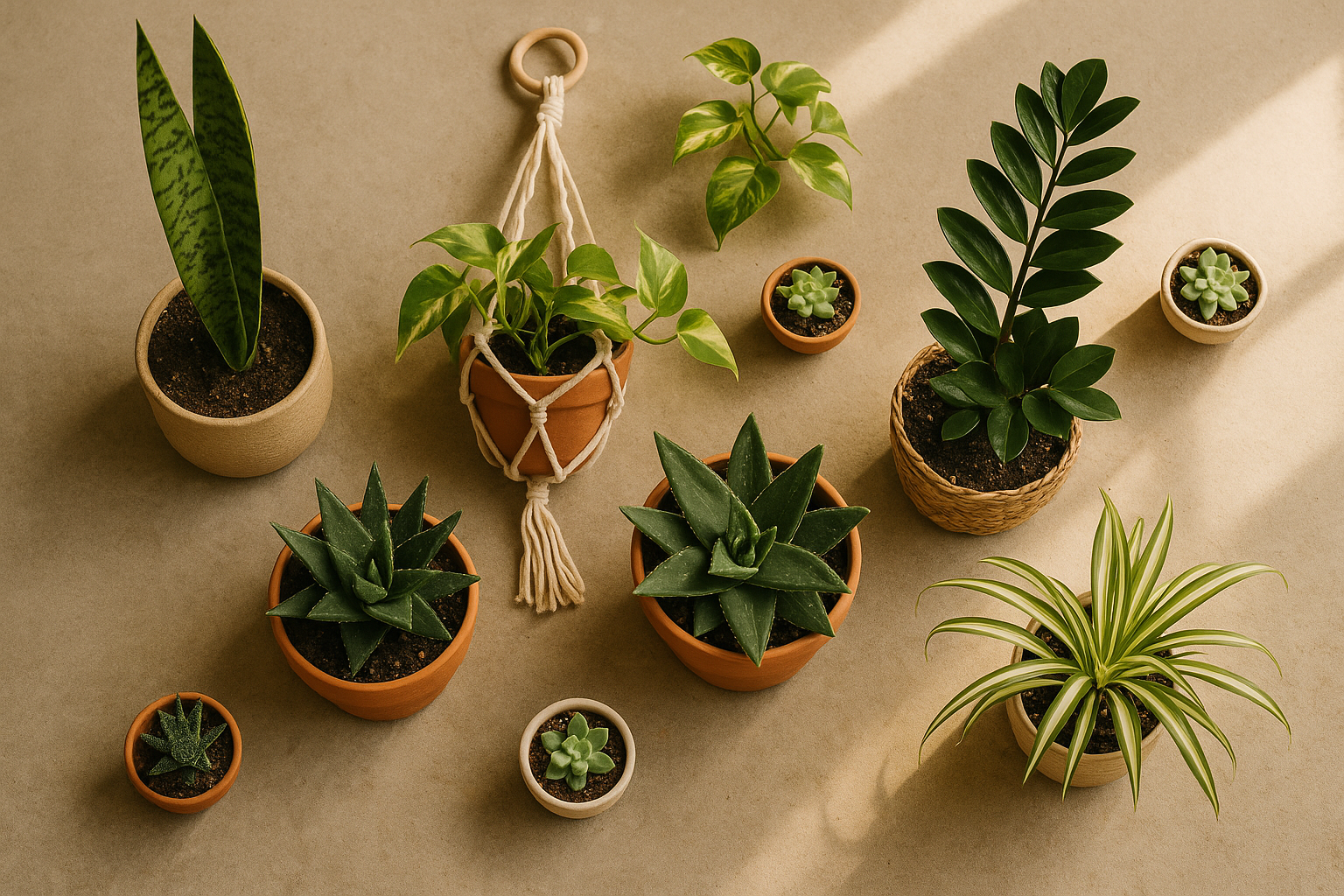
I Killed Every Plant I Owned. Then I Got Serious.
Let me save you years of guilt: most houseplant deaths are caused by the same thing — overwatering. Not forgetting to water. Not low light. Not "I went on vacation for two weeks." Overwatering.
I know because I killed a jade plant by watering it every Sunday like clockwork. The soil never dried out. The roots rotted. It took three months to die, which is exactly long enough to feel personally victimized by a succulent.
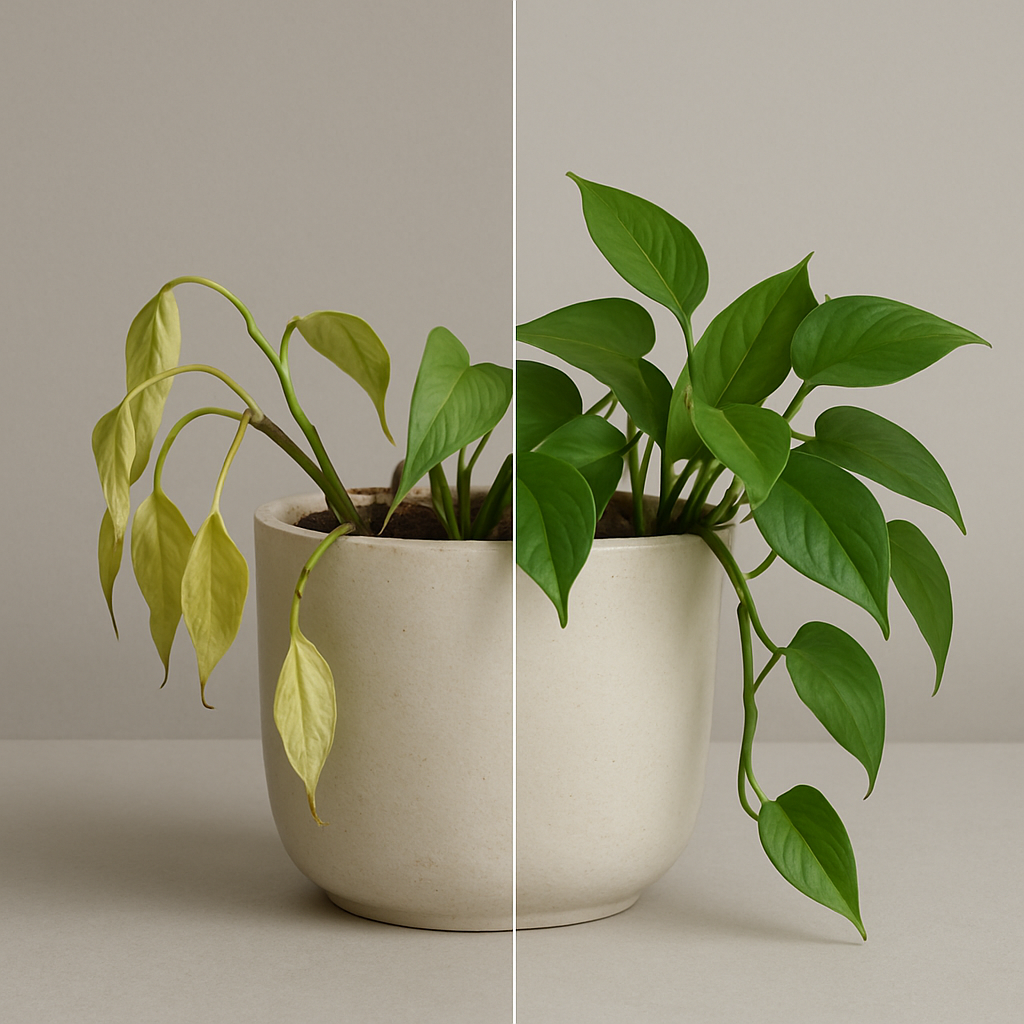
So if you've identified as a "plant killer," listen up. These 12 houseplants are the exceptions. They forgive irregular watering, low light, average humidity, poor soil, and benign neglect. You can ignore them for weeks and they'll still look decent.
The catch: they still can't survive root rot. So read the care notes. They take 30 seconds.
How to Use This Guide
The Resilience Rating (1–10): Based on how tolerant each plant is of irregular care, low light, and neglect. Higher doesn't mean "better" — it means "more forgiving."
🐾 Pet-safe icon: These plants are non-toxic to cats and dogs. No icon means toxic — keep away from pets who chew.
Comparison Table: Scan it first if you want to pick based on your light conditions or watering habits.
One more thing: if you're prone to overwatering, get a self-watering planter before you start. The single best tool to prevent overwatering is one that waters itself. The Lechuza Classico Self-Watering Planter is the premium pick — it has a visible water level indicator so you know exactly when to refill.
At-a-Glance Comparison Table
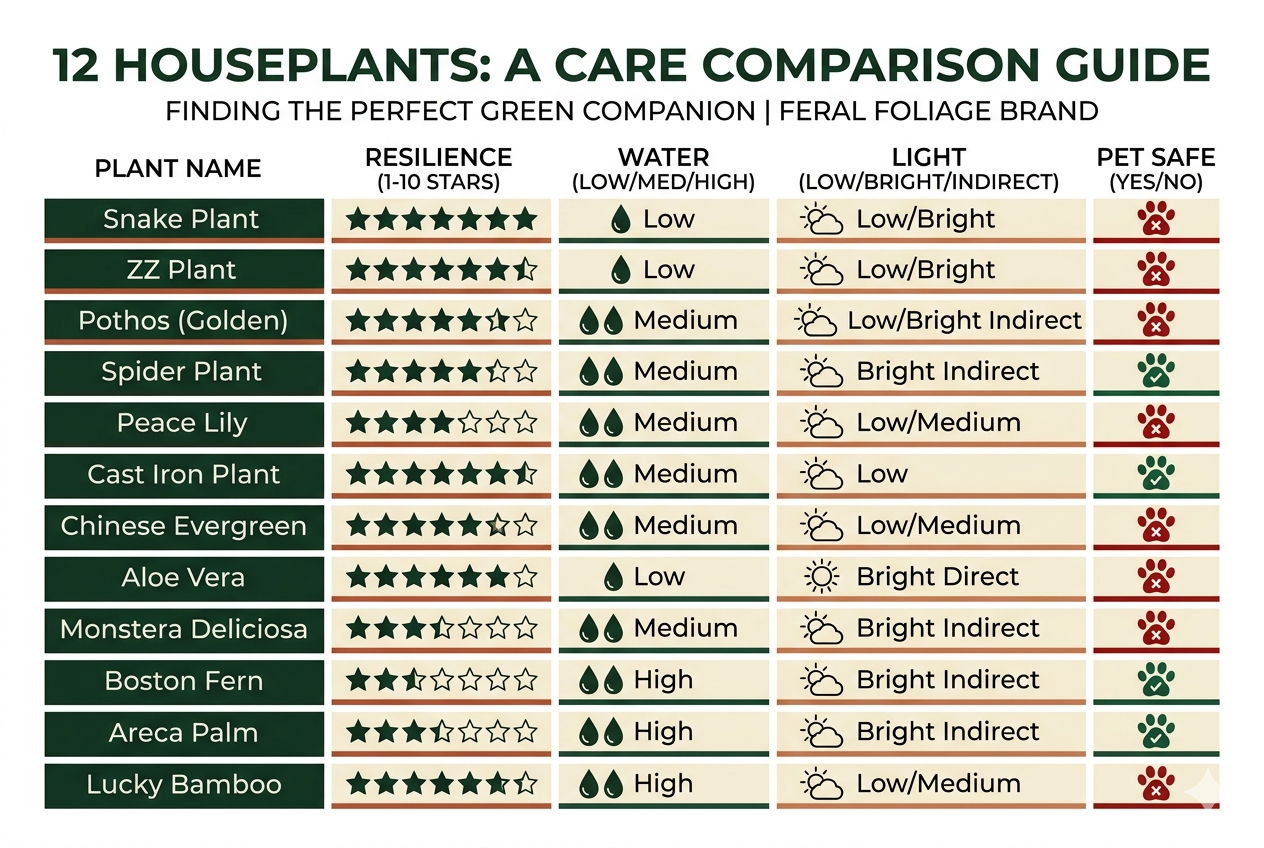
| Plant | Resilience | Water | Light | Pet Safe? | Best For |
|---|---|---|---|---|---|
| Snake Plant | 10/10 | Every 2–4 weeks | Low–bright indirect | ✅ | Dark rooms |
| ZZ Plant | 10/10 | Every 2–4 weeks | Low–bright indirect | ✅ | Neglect |
| Pothos | 10/10 | Every 1–2 weeks | Low–bright indirect | ❌ | Beginners |
| Spider Plant | 9/10 | Every 1–2 weeks | Medium indirect | ✅ | Hanging planters |
| Aloe Vera | 9/10 | Every 2–3 weeks | Bright indirect | Mildly toxic | Sunny spots |
| Peace Lily | 9/10 | Every 1–2 weeks | Low–medium indirect | ❌ | Dramatic flair |
| Chinese Evergreen | 9/10 | Every 1–2 weeks | Low–medium indirect | ❌ | Low light |
| Ponytail Palm | 9/10 | Every 2–3 weeks | Low–bright | ✅ | Architectural |
| Parlor Palm | 8/10 | Every 1–2 weeks | Low–medium indirect | ✅ | Bathrooms |
| Rubber Plant | 8/10 | Every 1–2 weeks | Bright indirect | ❌ | Statement piece |
| Cast Iron Plant | 10/10 | Every 2–3 weeks | Low | ✅ | Very dark spaces |
| Prayer Plant | 8/10 | Every 1–2 weeks | Medium indirect | ✅ | Pet-safe collections |
The 12 Indestructible Plants
Snake Plant (Sansevieria / Dracaena trifasciata)
Resilience: 10/10
The undisputed champion of survival. Snake plants tolerate low light, drought, poor soil, and irregular watering better than almost any houseplant. They have architectural upright leaves that fit any aesthetic.
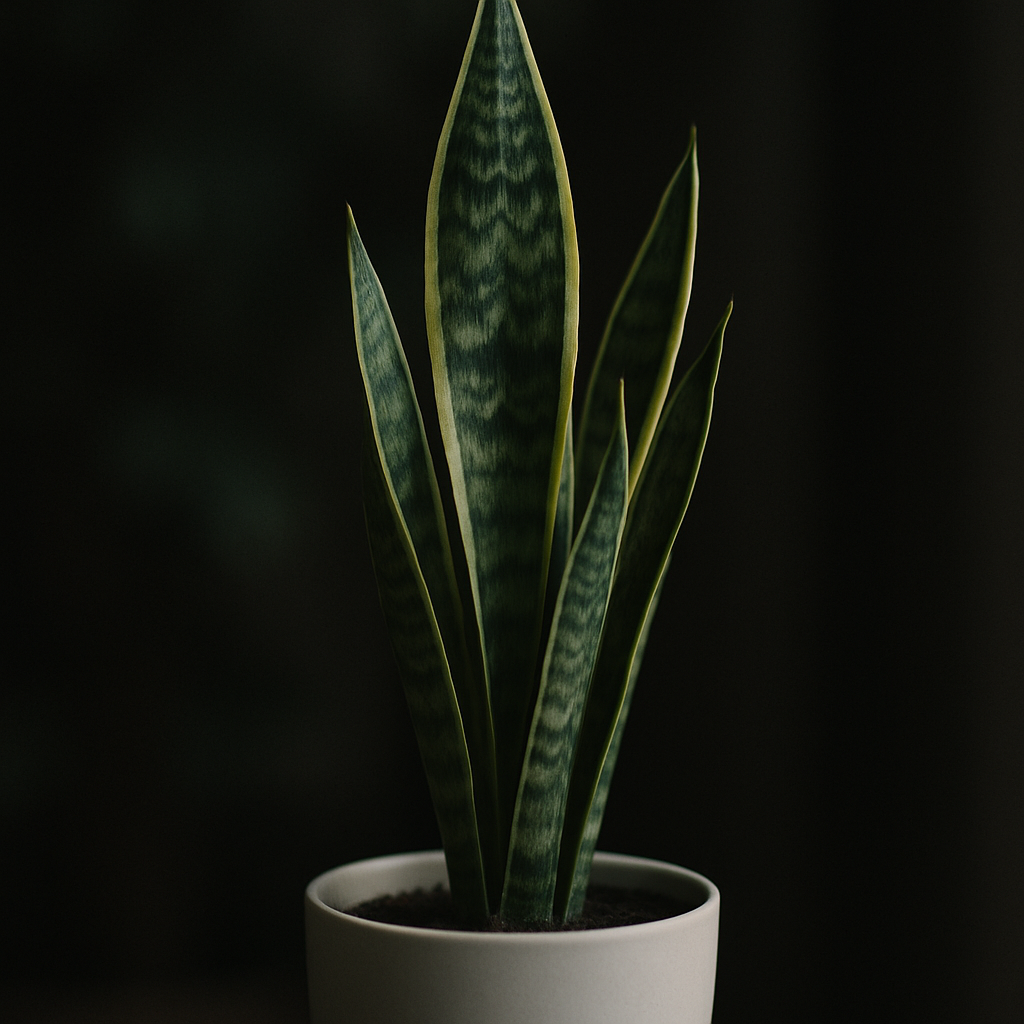 Snake plants tolerate low light, drought, poor soil, and irregular watering better than almost any houseplant. They have architectural upright leaves that fit any aesthetic.
What will actually kill this: Overwatering and root rot. That's it. Cold temperatures below 40°F can cause damage, but it recovers.
Care summary: Water every 2–4 weeks. Let the soil dry completely between waterings. Any light works — it survives dark corners but grows faster in indirect light. Soil matters more than people think — use a fast-draining cactus mix (Espoma Cactus Mix →) to prevent the only thing that kills it.
Pet safe? Yes. Non-toxic to cats and dogs.
ZZ Plant (Zamioculcas zamiifolia)
Resilience: 10/10
Glossy, waxy leaflets on arching stems. The ZZ plant looks almost artificial because its leaves are so thick and shiny.
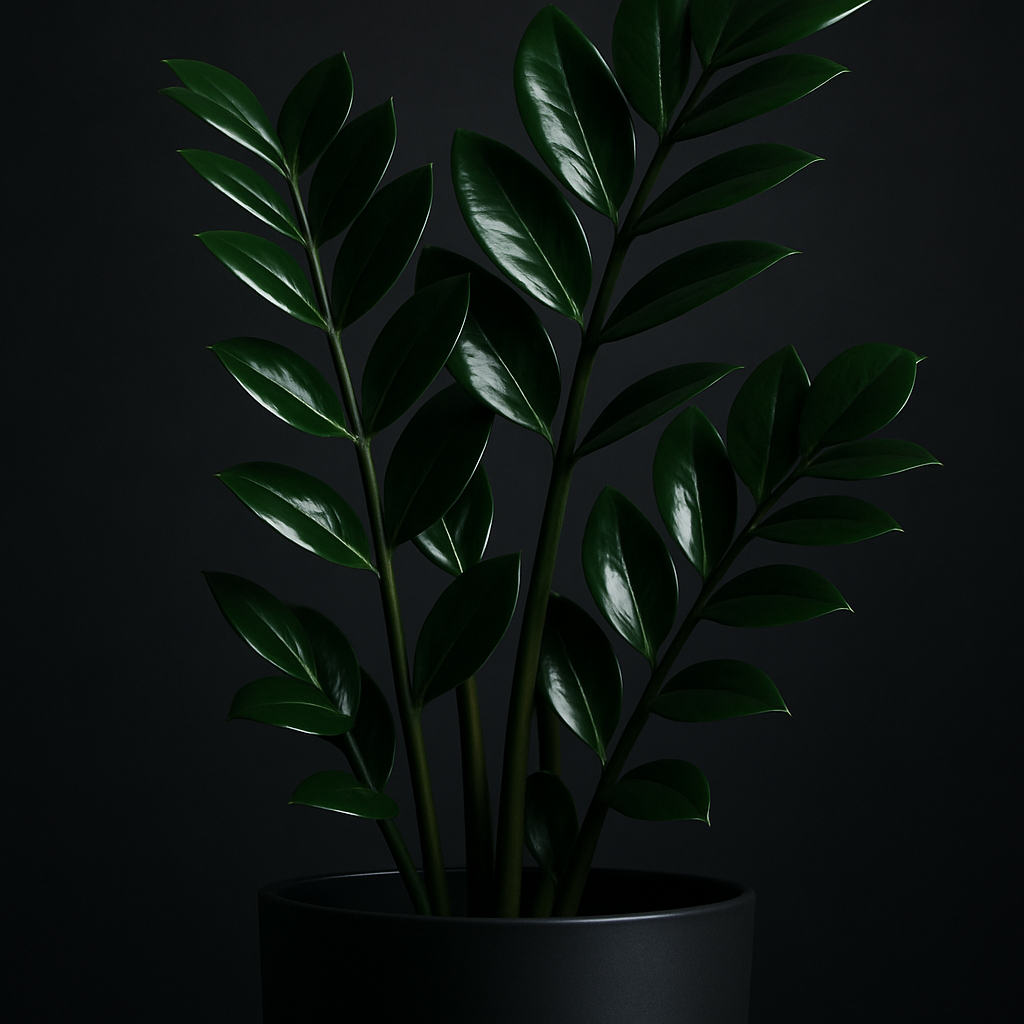 It thrives on neglect.
What will actually kill this: Root rot from overwatering. Otherwise, genuinely hard to kill. Tolerates low light, drought, and average humidity without complaint.
Care summary: Water every 2–4 weeks. Let soil dry fully. Thrives in low to bright indirect light. Use fast-draining soil — ZZ roots are rhizomes that rot easily in standing water.
Pet safe? Yes. Safe for cats and dogs, though ingestion may cause mild stomach upset.
Pothos (Epipremnum aureum)
Resilience: 10/10
Heart-shaped leaves, trailing vines, and the temperament of a plant that has simply decided to survive no matter what. Pothos is the entry point for most plant people for a reason.
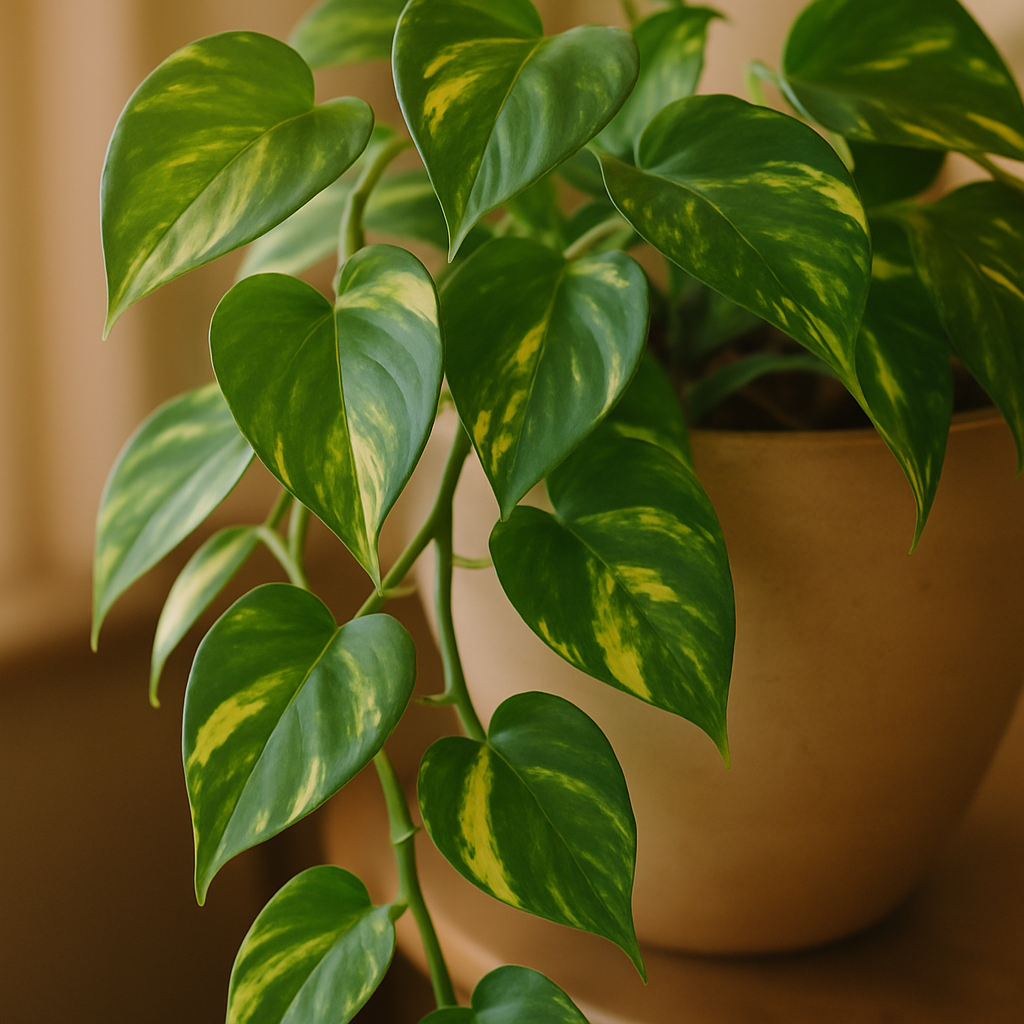
What will actually kill this: Root rot from overwatering. That's the main one. It handles low light and irregular watering with grace. Propagates in water so easily you'll accidentally grow a forest.
Care summary: Water every 1–2 weeks. Tolerates low light but gets leggy — brighter light means fuller growth. Great for shelves, mantels, and macramé hangers. Find one on Amazon or at any local nursery.
Pet safe? No. Toxic to cats and dogs (calcium oxalates). If you have pets, choose a spider plant or parlor palm instead.
Spider Plant (Chlorophytum comosum)
Resilience: 9/10
Produces cascading babies and runners — so many babies that you'll be giving them away. The original "I got this plant for free because it produced too many babies" plant.
What will actually kill this: Fluoridated tap water causing brown leaf tips. Otherwise remarkably tolerant. Tolerates low light but grows faster and produces more babies in medium indirect light.
Care summary: Water every 1–2 weeks. Use filtered water if your tap water is heavily treated. Great in hanging planters to show off the runners. For more pet-safe options, see our full pet-safe plant guide.
Pet safe? Yes. Completely non-toxic to cats and dogs.
Aloe Vera
Resilience: 9/10
Thick, sculptural leaves that store water for the apocalypse. Aloe vera is nearly impossible to kill through drought — it thrives on being ignored between waterings.
What will actually kill this: Overwatering. Frost or freezing temperatures. That's really it. The gel-filled leaves are sensitive to cold.
Care summary: Water every 2–3 weeks. Needs well-draining soil more than most plants — wet soil kills aloe fast. Bright indirect light is ideal. Espoma Cactus Mix is the right call. Bonus: you can break off a leaf and use the gel for burns and skin care.
Pet safe? Mildly toxic. Causes mild GI upset if ingested by pets. Keep out of reach.
Peace Lily (Spathiphyllum)
Resilience: 9/10
The most dramatic plant on this list — and that's saying something. Peace lilies collapse dramatically when thirsty, then perk back up 30 minutes after watering. It's theatrical, not dying.
What will actually kill this: Root rot from overwatering. Cold drafts below 55°F. Otherwise surprisingly tolerant of low light and irregular watering.
Care summary: Water every 1–2 weeks. Thrives in low to medium indirect light — it survives dark corners that would kill other plants. Produces white spathes ("flowers") more reliably than most aroids. Toxic to cats and dogs — keep away from curious pets.
Pet safe? No. Toxic to cats and dogs.
Chinese Evergreen (Aglaonema)
Resilience: 9/10
Colorful, patterned foliage in shades of silver, pink, red, and green. Chinese evergreen is one of the most beautiful plants that tolerates genuinely dark rooms.
What will actually kill this: Root rot from overwatering. Cold — it's a tropical that doesn't handle temperatures below 60°F well. That's the short list.
Care summary: Water every 1–2 weeks. Handles low light better than almost any colorful plant — most varieties keep their color even in low light. A great choice for north-facing rooms. For more options, see our best low-light plants guide.
Pet safe? No. Toxic to cats and dogs.
Ponytail Palm (Beaucarnea recurvata)
Resilience: 9/10
Not actually a palm — it's a succulent with a bulbous trunk that stores water. The ponytail palm looks like a small tree had a breakdown and decided to live in your living room.
What will actually kill this: Overwatering. Specifically, wet feet — roots sitting in water will rot fast. It needs excellent drainage and prefers to dry out between waterings.
Care summary: Water every 2–3 weeks. Let soil dry completely. Any light from low to bright works — it adapts. Tolerates average household humidity. Native to arid regions, so it's built for drought. Use fast-draining soil and never let it sit in water.
Pet safe? Yes. Non-toxic to cats and dogs.
Parlor Palm (Chamaedorea elegans)
Resilience: 8/10
Feathery, delicate fronds on compact stems. Parlor palm is the plant equivalent of "I have lived through worse and I am still here."
What will actually kill this: Direct sunlight (scorches the fronds), overwatering, and heavy soil that doesn't drain. Otherwise remarkably tolerant of low light and neglect.
Care summary: Water every 1–2 weeks. Prefers low to medium indirect light. Great for bathrooms and low-light corners. Adapts to average household humidity. Non-toxic to cats and dogs — see our pet-safe plants guide for more options.
Pet safe? Yes. Completely non-toxic to cats and dogs.
Rubber Plant (Ficus elastica)
Resilience: 8/10
Thick, glossy leaves that practically shine without any help. The rubber plant is a statement piece that forgives the kind of care that would kill a fiddle leaf fig in a week.
What will actually kill this: Root rot from overwatering. Cold drafts below 50°F. That's the main two. Moves well once established.
Care summary: Water every 1–2 weeks. Tolerates low light but gets leggy — bright indirect light keeps it compact and glossy. Wipe the leaves with a damp cloth to keep them shiny. Toxic to pets. Find them at local nurseries or online.
Pet safe? No. Toxic to cats and dogs.
Cast Iron Plant (Aspidistra elatior)
Resilience: 10/10
The plant that earns its name. Aspidistra is called "cast iron" because it survives conditions that kill other plants — low light, drought, poor soil, heat, and genuine neglect. If you have a dark corner nothing else survives in, this is your plant.
What will actually kill this: Direct hot sunlight (scorches), wet feet (root rot), and extended freezing temperatures. Otherwise genuinely indestructible.
Care summary: Water every 2–3 weeks. Thrives in low light — actually prefers it. Grows slowly but lives forever. Tolerates average household temperatures. Non-toxic to pets. Find it at Steve's Leaves or local nurseries.
Pet safe? Yes. Non-toxic to cats and dogs.
Prayer Plant (Maranta leuconeura)
Resilience: 8/10
Leaves that fold up at night like hands in prayer — and during the day, they sit flat with dramatic herringbone patterns. One of the most visually striking plants that tolerates low light.
What will actually kill this: Direct sunlight (burns the leaves), overwatering (root rot), and low humidity (brown leaf edges). Cold drafts also cause damage.
Care summary: Water every 1–2 weeks. Keep soil consistently moist but not soggy. Medium indirect light is ideal — it tolerates lower light but keeps its color in brighter conditions. Non-toxic to pets. Great in a standard pot or a hanging planter. See our pet-safe plants guide.
Pet safe? Yes. Completely non-toxic to cats and dogs.
Pet-Safe Indestructible Plants
Not all indestructible plants are pet-safe. Here's the subset that won't send your cat to the vet:
- Spider Plant — Resilient, produces babies, completely non-toxic
- Parlor Palm — Feathery fronds, tolerates low light, non-toxic
- Prayer Plant — Dramatic foliage, pet-safe, one of the few colorful plants that won't hurt your pet
- Cast Iron Plant — The hardest plant on this list, genuinely indestructible, and safe for pets
- Snake Plant and ZZ Plant — Both non-toxic, though ingestion may cause mild stomach upset
If you have curious pets who chew plants, these five will not ruin your evening or your budget. For the full rundown, see our full pet-safe plant guide.
The Honest Truth: What Actually Kills These Plants
Here's the contrarian close you've been waiting for.
These plants are hard to kill. Not impossible.
The #1 killer of every plant on this list: overwatering. Not underwatering. Not low light. Not forgetting to fertilize. Overwatering.
These plants evolved in conditions where water was scarce — arid deserts, shaded forest floors, tropical understories with sporadic rainfall. Their root systems are adapted to dry out between waterings. When the soil stays consistently wet, the roots can't breathe. They rot. Root rot, which is fungal, spreads fast. By the time the leaves droop visibly, the roots are often already compromised.
The fix: Terra-cotta pots with drainage holes, well-draining soil, and a moisture meter so you're not guessing. We like the XLUX Soil Moisture Meter because it has no batteries, no app, and gives you an instant reading. Stick it 2–3 inches into the soil before watering — if it reads above "moist," wait.
What about underwatering? These plants handle drought far better than soggy soil. An occasional missed watering won't kill them. The brown leaf tips from underwatering are cosmetic, not fatal. If you want to go away for two weeks, skip the neighbor who kills everything and just water well before you leave.
For more on proper watering technique, see our watering guide and how to treat root rot.
Free Printable Care Card
We're working on a one-page printable care card with all 12 plants, resilience ratings, water frequency, light needs, and pet safety — designed to print on a single sheet and stick to your fridge.
Bookmark this page. We'll link to it as soon as it's ready. Until then, screenshot the comparison table. You already know what kills these plants.
Want more beginner picks? See 10 Easiest Houseplants to Keep Alive.
Products We Love
We use and recommend these:
- Lechuza Classico Self-Watering Planter — Premium self-watering planter with visible water level indicator. Prevents overwatering before it starts.
- XLUX Soil Moisture Meter — No-battery, no-app soil moisture meter. The fastest way to know if your plant actually needs water.
- Espoma Cactus Potting Mix — Fast-draining soil blend. Essential for snake plants, ZZ plants, aloe vera, and ponytail palms.
- GE BR30 Grow Light Bulb — Fits in standard lamps. Adds grow light to any room without rewiring. Great for dark apartments.