How to Identify Any Houseplant by Its Leaves
You got a plant with no label. Let's fix that.
Got a Mystery Plant? Here's Your Game Plan
You inherited a plant. A friend gave you a cutting. You bought something unlabeled at a nursery sale. Now you're standing there thinking, "What even is this thing?"
It happens to everyone. Plants don't come with name tags, and the people who gave them to you almost never remember what they are.
The good news: you don't need a botany degree. You just need to know what to look at — and in what order. This guide walks you through a 5-step process to identify any houseplant using nothing more than your eyes, a phone camera, and a few free apps.
By the end, you'll either have a name or a solid shortlist. And if you're still stuck, we'll cover how to get a human to help you.
Step 1: Take a Good Photo
This sounds obvious, but the quality of your identification starts here. A blurry photo taken at the wrong angle can make even a well-known plant look unrecognizable.
What to capture:
- Multiple angles — at least 2-3 sides of the plant, including from above if possible
- The whole plant — step back and get the full silhouette, not just one leaf
- The base and soil — root structure and soil type can rule things in or out
- Close-ups of leaves — both the top and underside; include stems and leaf joints
- Natural light — indirect sunlight is ideal; harsh direct sun creates glare that hides vein patterns
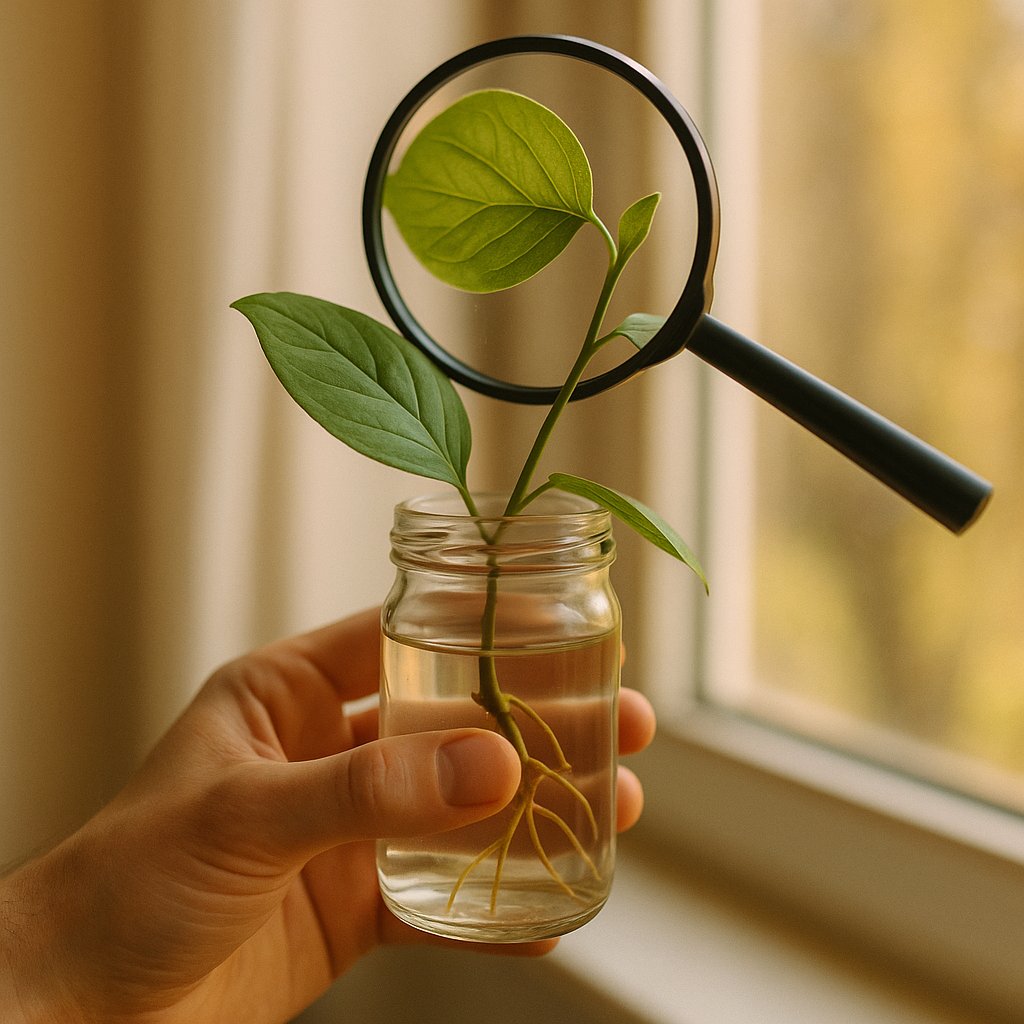
Avoid using flash. If you're photographing a plant indoors, try a window nearby for natural side-light — it reveals leaf texture and vein patterns better than overhead artificial light.
Step 2: Read the Leaves — Your Leaf-Shape ID Guide
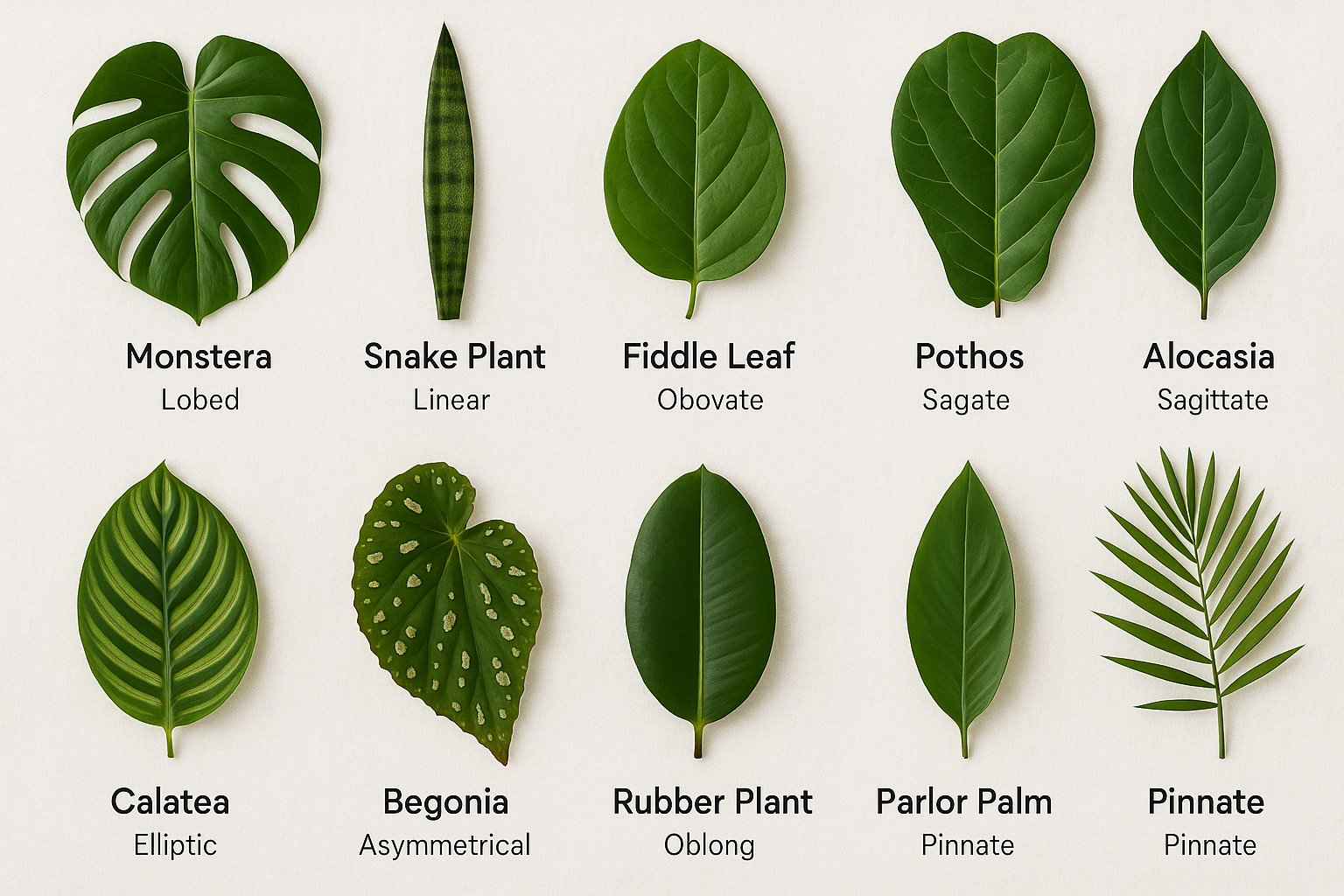
Leaf shape is the fastest way to narrow down a mystery plant. Most common houseplants fall into five broad categories. Find the one that matches yours, and you'll cut your search space by 80% in about 30 seconds.
Heart-Shaped Leaves
If your plant's leaves are roughly heart-shaped — wider at the base, tapering to a point at the tip — you're looking at a large group that includes:
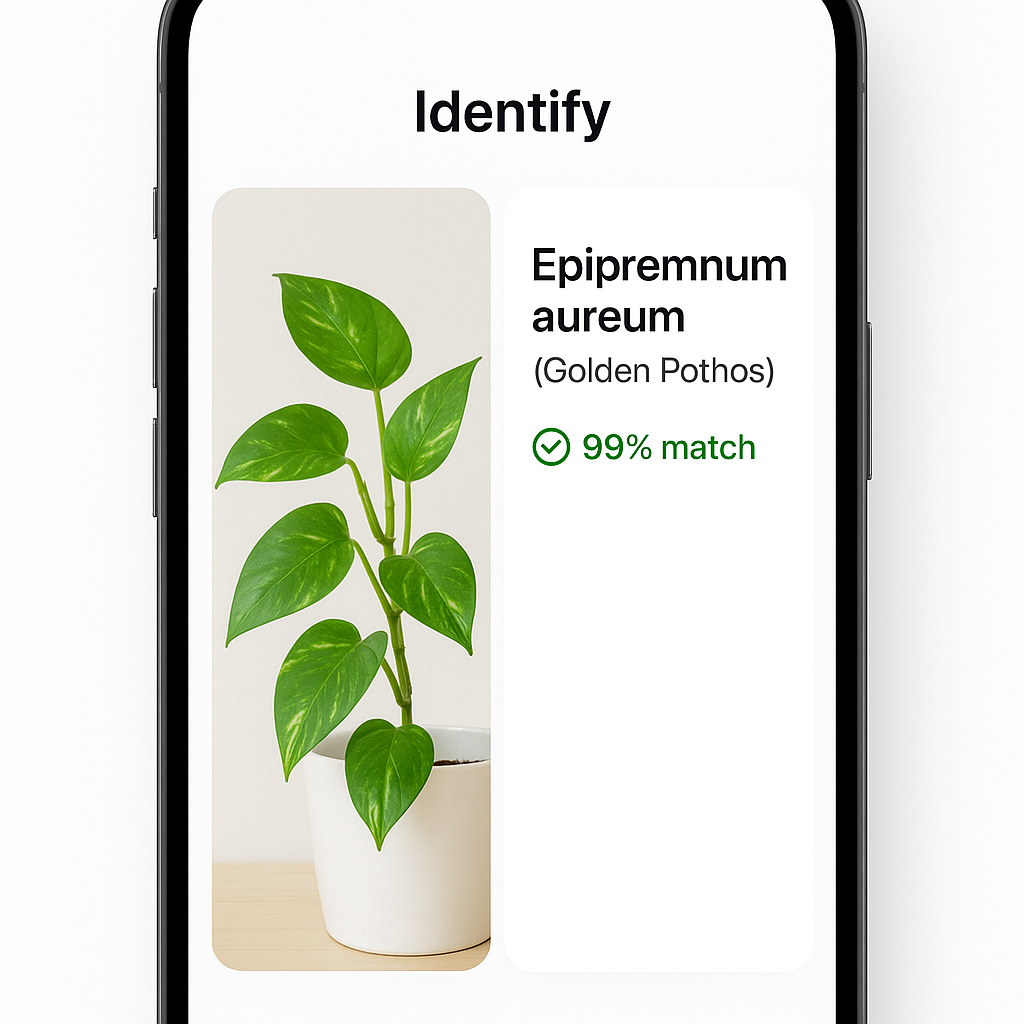
- Pothos (Epipremnum aureum) — the classic houseplant. Heart-shaped leaves, usually with some variegation. Trailing or climbing.
- Philodendron — similar to pothos but leaves are generally broader and less waxy. Many varieties, including heart-shaped Philodendron cordatum.
- Anthurium — also heart-shaped, but with a waxy red spath (the "flower"). Not a true flower — but it's very distinctive.
- Syngonium (Arrowhead Vine) — starts with arrow-shaped leaves that become more heart-like as they mature.
Round and Oval Leaves
Rounded leaves (or oval-to-circular) point toward a different group:
- Pilea peperomioides (Chinese Money Plant) — coin-shaped round leaves on tall stems. Impossible to mistake once you see it.
- Peperomia — thick, waxy oval leaves. Many varieties. Often compact.
- Prayer Plant (Maranta leuconeura) — oval leaves with a distinctive herringbone vein pattern. At night, the leaves fold upward (hence the name).
- Hoya — rounded to oval waxy leaves, often with prominent veining. Many varieties, some with spectacular blooms.
- Begonia — asymmetric oval leaves with serrated edges and often colorful undersides.
Lance and Narrow Leaves
Long, narrow, lance-shaped leaves are their own category:
- Snake Plant (Dracaena trifasciata, formerly Sansevieria) — tall, stiff, sword-like leaves. The ID is usually obvious.
- Spider Plant (Chlorophytum comosum) — long narrow arching leaves that produce baby plantlets on long stems.
- Cast Iron Plant (Aspidistra elatior) — dark green, long oval leaves that are almost sword-like. Slow-growing and nearly indestructible.
- Grass-like houseplants — Chlorophytum (spider plant), Ophiopogon (mondo grass), Acorus (sweet flag) — narrow leaf fans that stay low.
Arrowhead Leaves
Distinctly arrow-shaped (triangular with the base pointing backward) is a narrower ID:
- Syngonium (Arrowhead Vine) — young leaves are clearly arrow-shaped; older plants may show more variation.
- Arrowhead Plant (Sagittaria) — true aquatic or semi-aquatic, so if it's in regular potting soil and indoors, it's almost certainly Syngonium.
Succulent and Fleshy Leaves
Thick, fleshy, water-storing leaves indicate a succulent or semi-succulent:
- Jade Plant (Crassula ovata) — oval fleshy leaves on woody stems. Easy to ID once you know the look.
- Aloe — triangular or lance-shaped fleshy leaves with toothed edges. The gel inside is the giveaway.
- Echeveria — rosette of thick, fleshy, often colorful leaves. Compact and symmetrical.
- Haworthia — small rosettes with translucent "windowed" leaf tips. Often dark green with white ridges.
- Kalanchoe — thick oval leaves, often with scalloped edges and tubular flowers.
Step 3: Check the Growth Habit
Leaf shape gets you close. Growth habit gets you the rest of the way. Plants grow in predictable patterns, and matching your mystery plant to one of these four categories immediately rules out a lot of wrong answers.
Trailing — stems cascade downward. Common in: pothos, philodendron (trailing varieties), trailing peperomia, hoya, string-of-pearls, string-of-hearts.
Upright — stems grow upward, either as a single trunk or multiple canes. Common in: snake plant, rubber plant, fiddle-leaf fig, corn plant (Dracaena fragrans), monstera (young plants stand upright).
Bushy — multiple stems branch from the base, creating a full, dense plant. Common in: prayer plant, calathea, pepperomia varieties, croton, fuschia.
Rosette — leaves radiate from a central point, often in a spiral. Common in: echeveria, haworthia, aloe, hens and chicks (Sempervivum), bromeliads.
A good shorthand: if your plant is trailing, you can basically ignore all the upright growers. Same for rosette — it's a very specific look that doesn't overlap with bushy or upright types.
Once you've matched shape + growth habit, you should have a list of 3-5 candidates. Not sure about light needs yet? Our light guide covers matching plants to the right spot in your home.
Step 4: Look at the Details — Texture, Veins, and Variegation
When leaf shape and growth habit aren't enough to seal the ID, the details do it. These secondary traits are where the real plant detectives earn their keep.
Leaf Texture
Run your finger over the leaf. Is it:
- Glossy and waxy — pothos, philodendron, anthurium, rubber plant
- Matte or velvety — prayer plant, calathea, begonia ( Rex begonias especially)
- Fuzzy or hairy — pilea (slightly), some peperomia varieties, geranium (Pelargonium)
- Thick and fleshy — any succulent: aloe, jade, echeveria, haworthia
- Leathery or rigid — snake plant, cast iron plant, rubber plant (mature)
Parallel vs Netted Venation
Vein patterns are one of the most reliable identification tools most beginners skip. Hold the leaf up to light and look at how the veins run.
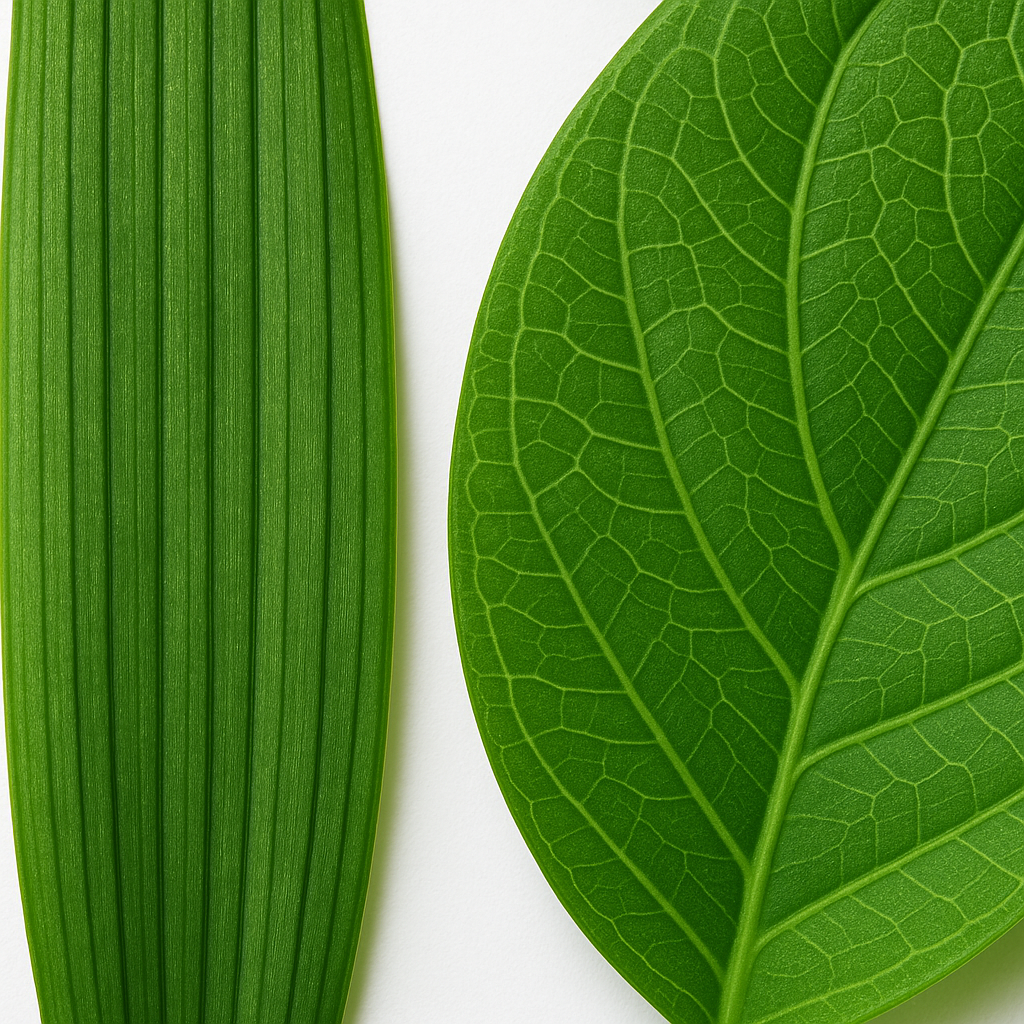
Parallel venation — veins run side-by-side from base to tip, like train tracks. This is typical of monocots: snake plant, peace lily, cast iron plant, spider plant, grasses. If your plant has parallel veins, it's almost certainly not a pothos or philodendron.
Netted (pinnate or palmate) venation — veins branch and rejoin in a net-like pattern, like a leaf skeleton. This is typical of dicots: pothos, philodendron, monstera, rubber plant, prayer plant, most broadleaf houseplants.
A 10x hand lens lets you see leaf vein patterns and surface texture in detail — a small investment that pays off when you're trying to tell two similar plants apart. Under $15 on Amazon.
View on Amazon — 10x Hand Lens for Plant ID
Variegation
Variegated leaves (patches of white, cream, yellow, or lighter green alongside the normal green) are a strong clue — but only if present. A non-variegated version of a normally variegated plant is just harder to ID. Some plants to know:
- Golden pothos is normally variegated; a solid green one is often just low-light reverted
- Thai constellation monstera has cream marbling; solid green ones are common
- Pink princess philodendron has pink variegation that should be in patches, not uniform
Stem Color and Structure
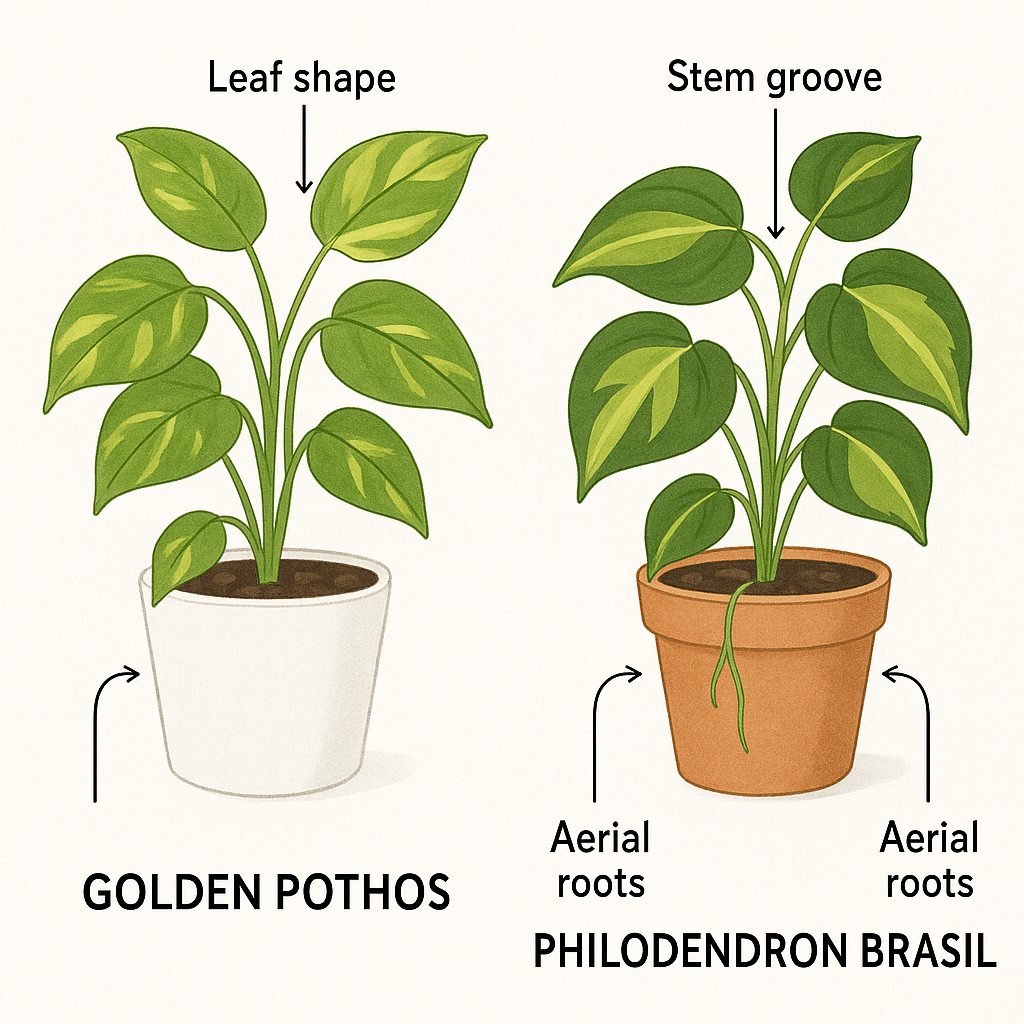
Stems tell you a lot. Color (green vs red vs brown vs variegated), thickness, and whether the stem is grooved or rounded are all diagnostic. Pothos stems are grooved with a single aerial root per node. Philodendron stems are rounded with multiple aerial roots per node. This single difference resolves most pothos/philodendron confusion.
Step 5: Use a Plant ID App
Apps are a useful confirmation tool — but only after you've done your own homework. An app identifying something as "pothos" when you don't know if that's right is still useless. Use apps to confirm, not to discover.
PlantNet (Free) Best for: Common houseplants, garden plants, and wild plants you might encounter. Pros: Open-source, no account needed, broad plant database. Cons: Accuracy drops for cultivars, variegated varieties, and less common tropicals. iOS | Android
iNaturalist (Free) Best for: Naturalists and anyone who wants to contribute to science while they ID. Pros: Huge database, community verification, works on wild and cultivated plants. Cons: Overwhelming interface for casual users, slow verification on rare IDs. iOS | Android
Plant.id (Free tier) Best for: Quick results on common houseplants. Pros: Fast, simple interface, reasonable accuracy on houseplants. Cons: Free tier is limited; premium unlocks better accuracy and ad-free experience. Web | iOS | Android
Google Lens (Free) Best for: A fallback when specialized apps fail. Pros: Built into Google app, no separate download, decent general recognition. Cons: Not trained specifically on plants; better for objects than organisms. iOS | Android
If the free apps aren't giving you a confident answer, PictureThis Premium uses advanced AI image recognition and is a natural next step. FF readers can try it free for the first week.
Try PictureThis Premium — Free First Week
Common Look-Alike Pairs — And How to Tell Them Apart
Some plants are almost never confused with anything else. Others look dangerously similar and get misidentified constantly. Here's how to tell them apart.
Pothos vs Philodendron
This is the most common mix-up in houseplants. They're in the same family (Araceae) and look similar at first glance.
Pothos: Stems are grooved. One aerial root per node. Leaves are typically heart-shaped with a defined point. Can tolerate very low light and infrequent watering.
Philodendron: Stems are rounded. Multiple aerial roots per node. Leaves are generally broader and less waxy. Many varieties trail or climb. Prefers more humidity than pothos.
The stem difference is the fastest differentiator. Feel the stem — grooved = pothos. Rounded = philodendron.
Monstera vs Split-Leaf Philodendron (Thaumatophyllum bipinnatifidum)
These get confused because the mature split-leaf philodendron looks like a Monstera that lost its way.
Monstera (Monstera deliciosa): Leaves have large irregular holes (fenestrations) as they mature. Fenestrations appear progressively from the bottom of the leaf upward. Grows as a climber with a strong aerial root system.
Split-Leaf Philodendron (Thaumatophyllum bipinnatifidum): Leaves are deeply lobed (pinnate) but the lobes don't create true holes — the leaf tissue connects between the splits. More tree-like in form, often multi-stemmed. Doesn't fenestrate the same way.
If the leaf has true holes with separate green islands between them = Monstera. If the leaf is deeply lobed but still connected = split-leaf philodendron.
Snake Plant vs Mother-in-Law's Tongue
Same plant. "Mother-in-law's tongue" is an old common name for Dracaena trifasciata (formerly Sansevieria trifasciata) — i.e., snake plant. If you're comparing two plants and someone calls one each name, they're the same thing.
If you encounter the name "Mother-in-law's tongue" in older literature, just mentally translate it to "snake plant" and move on.
Prayer Plant vs Calathea
These are closely related (same family: Marantaceae) and both have prayer-like leaf movement, but they're not the same genus.
Prayer Plant (Maranta leuconeura): Leaves lie flat during the day, fold up at night. Typically green with dark herringbone markings. More adaptable to casual care.
Calathea: Leaves also move, but the genus is more humidity-sensitive and demanding. Calathea leaves often have a more ornate pattern and the undersides are frequently purple. Calatheas are generally less forgiving than prayer plants.
If it's being dramatic about humidity and the leaf undersides are purple = Calathea. If it's more easygoing with the classic herringbone pattern = Prayer Plant.
ZZ Plant vs Rubber Plant Seedlings
Young ZZ plants (Zamioculcas zamiifolia) and young rubber plants (Ficus elastica) can look vaguely similar — both have glossy, somewhat oval leaves on thick stems.
ZZ Plant: Leaves are compound (pinnae leaflets arranged along a central stem). The leaflets are thick, waxy, and almost plastic-looking. Stems grow directly from the soil (rhizome). Very low water needs.
Rubber Plant: Leaves are simple and large (can grow 6-12 inches on mature plants). Young leaves emerge red/maroon and harden to dark green. Single stem or multiple canes. More water and light hungry than ZZ.
The compound leaf structure of the ZZ plant is the giveaway — each "leaf" is actually many small leaflets on one stem. Rubber plant leaves are singular and much larger.
Leaf-Shape Glossary — Botanical Terms in Plain English
Cordate — heart-shaped. Used for leaves like pothos and anthurium.
Ovate — egg-shaped, wider at the base and tapering to the tip. Most peperomia and some philodendrons.
Lanceolate — lance-shaped, long and narrow with pointed tips. Snake plant, spider plant.
Peltate — the leaf stalk attaches to the center of the leaf rather than the edge. Rare in common houseplants but shows up in some umbrella plant varieties.
Pinnate — feather-like venation; a central vein with smaller veins branching off to each side. Most dicot houseplants.
Palmate — veins or lobes radiate from a central point like fingers from a palm. Monstera and split-leaf philodendron have palmate venation.
Rosette — leaves arranged in a circular pattern from a central point, like an echeveria or aloe.
When You Still Can't Identify It
Sometimes you've done everything right and the plant still doesn't give up its name. That's fine. There are people who will look at a photo and tell you exactly what it is.
Asking for Help Online
Reddit r/whatsthatplant — the gold standard for plant ID. Post your best photo, describe where you got it, and experienced folks will help. Follow the posting guidelines (clear photos, location info if wild) and you'll get answers fast.
Facebook Plant ID Groups — search for "Plant ID" or "What plant is this?" groups. Thousands of members, mostly helpful. Less curated than Reddit but often faster on common houseplants.
Local Nursery — bring your phone with photos if you can't bring the plant. Many nursery staff are happy to help, especially independent shops where the people actually care about plants.
Botanical Gardens — some offer plant identification services, usually free or low-cost. Worth a try for unusual or obscure species.
When posting for help, include:
- At least 2-3 clear photos from different angles
- A photo of the whole plant for scale
- Close-up of leaves (top and underside if possible)
- Where you got the plant (nursery, friend, wild)
- Your general location (some plants are region-specific)
Don't feel bad about not knowing. Everyone who knows a lot of plants started exactly where you are now.
Printable Plant ID Worksheet
Use this checklist as you work through the guide. Fill it in and you'll have a complete plant profile to cross-reference.
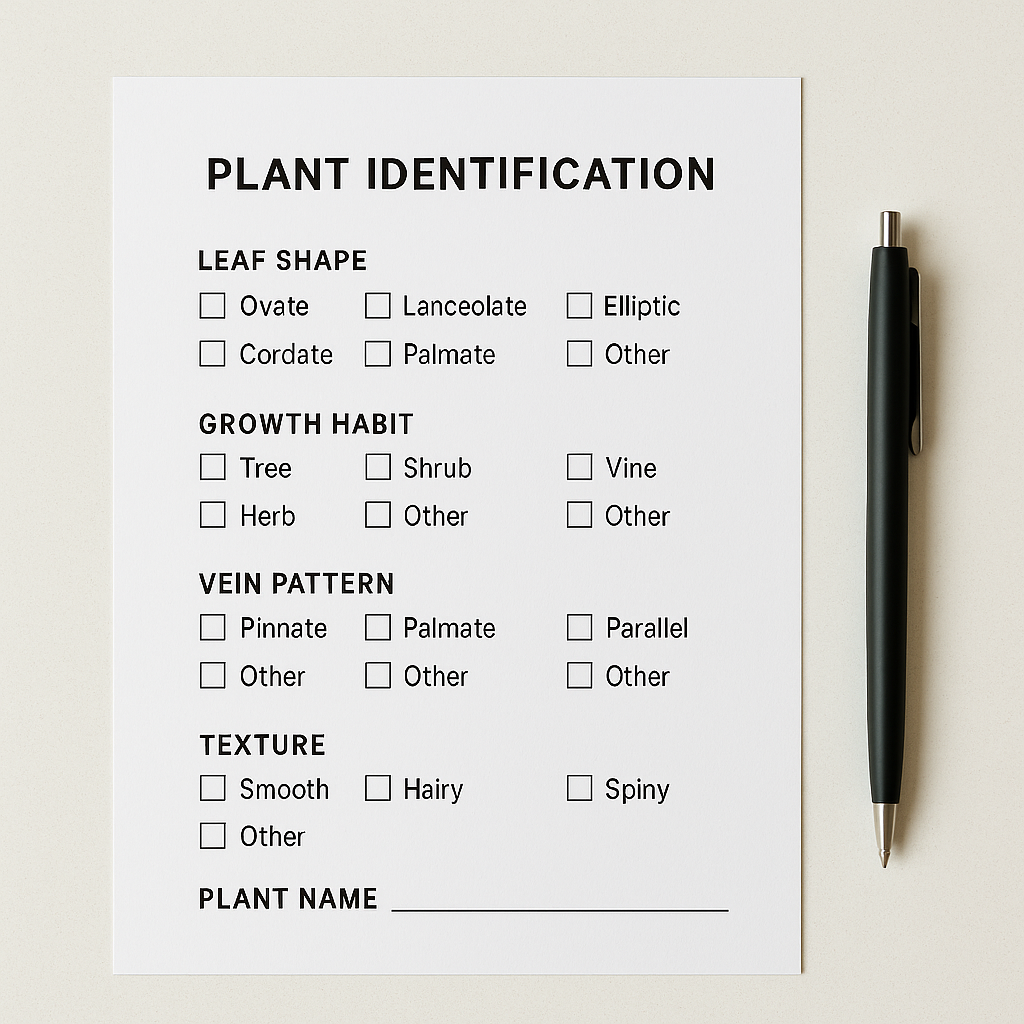
Print it, grab a pen, and go examine your plant. The act of writing down what you observe forces you to look more carefully than just glancing — and that's exactly what good plant ID requires.
Once you've identified your plant, the next step is figuring out how to keep it alive. Our watering guide covers everything from drench-and-dry succulents to moisture-loving tropicals.
If your newly identified plant turns out to be struggling, our Plant ER symptom checker can help you figure out what's wrong before it gets worse.
Products We Love
Track Your Plant on Amazon — Plant Care Journal
Once you've identified your mystery plant, the best thing to do next is track its care. A plant journal or garden binder helps you log watering, fertilizing, and any issues that come up.