How to Save a Dying Monstera from Root Rot (Step-by-Step Emergency Guide)
If your Monstera has mushy roots, you have 24-72 hours to act. Here's exactly what to do.
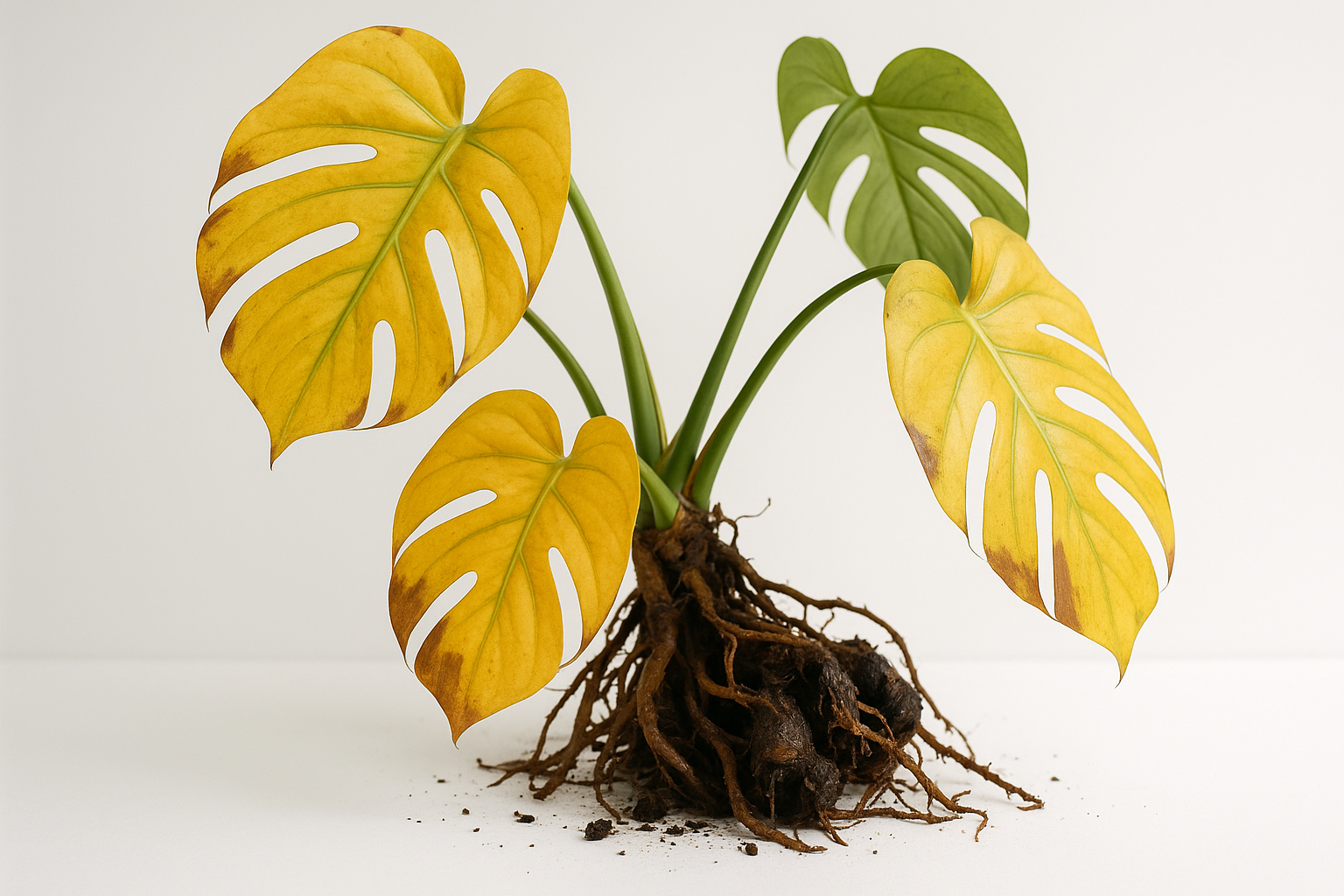
The Emergency Checklist (Can You Save It?)
Before you dive in, do this quick triage. Answer these three questions:
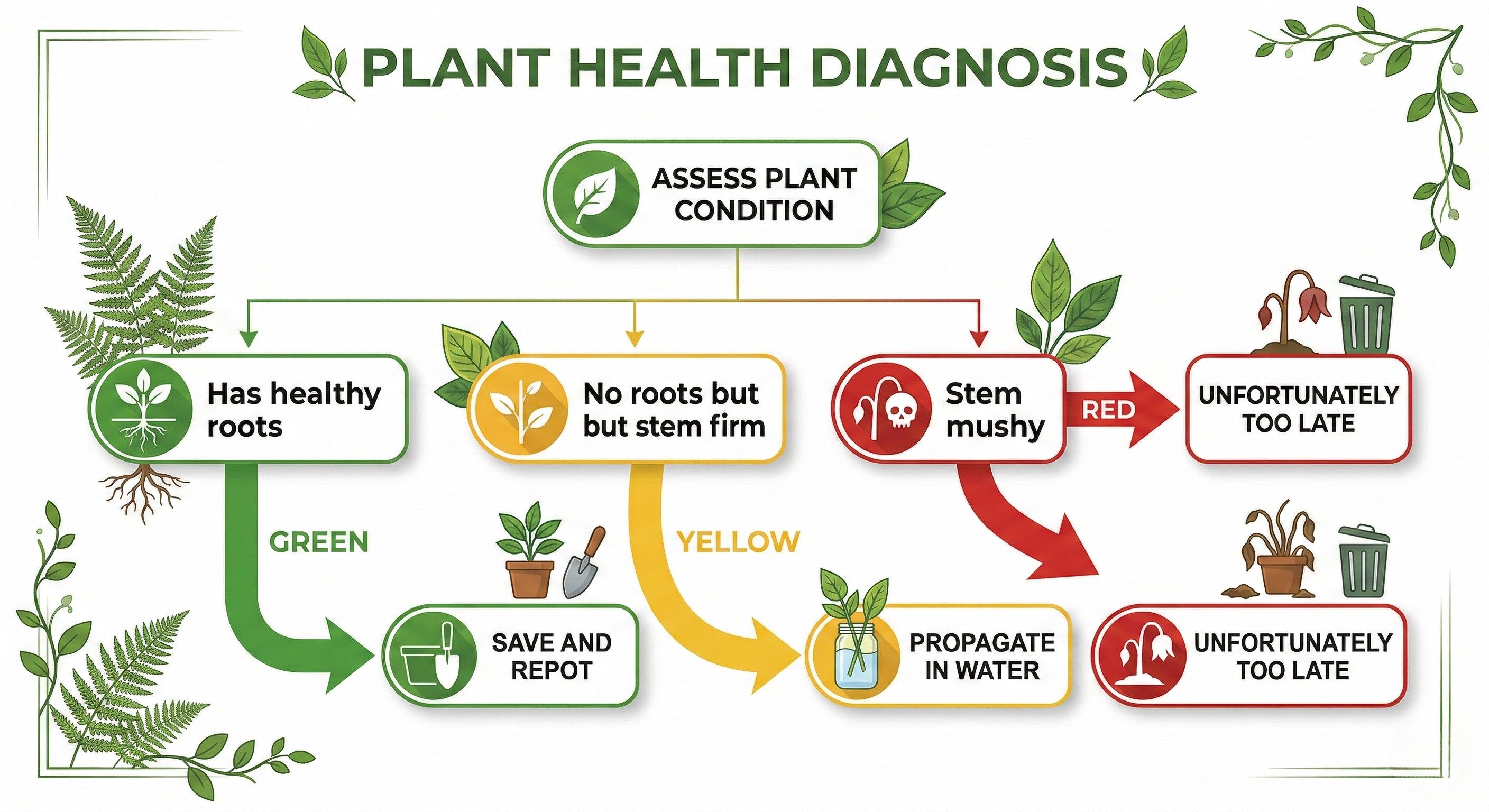
1. Is the stem firm? Gently squeeze the main stem just above the soil line. If it's mushy or soft, that's stem rot — and unfortunately, that's much harder to save. If it's firm, you still have a fighting chance.
2. Are there ANY healthy white roots? Healthy Monstera roots are thick, white, and firm. If you see even a few stragglers that aren't brown, black, or slimy, your plant can recover.
3. Are the leaves still green (even if yellowing)? Yellow leaves are a symptom, not a death sentence. As long as the leaves aren't turning black or crispy-brown, there's life in the plant yet.
If you answered yes to at least two of these, keep reading. If not, skip to "When to Propagate Instead" — all hope isn't lost, you just might need a different approach.
What Is Root Rot (In Monstera Terms)
Root rot happens when roots sit in waterlogged soil for too long. The roots suffocate, die, and then become a breeding ground for fungi and bacteria. It's basically the plant equivalent of drowning.
Why Monsteras are extra vulnerable:
Monstera roots are thicker and denser than many common houseplants. They hold onto moisture longer, which means if you water on a normal schedule but the soil stays wet, they're sitting in a swamp. Their aerial roots also make them a bit more finicky — those thick, wiggling roots aren't just decorative; they're part of the plant's water uptake system, and they hate being smothered.
The difference between root rot in a Monstera versus a Pothos or Snake Plant? Monsteras are slower to show symptoms and slower to recover. That "wait and see" approach that might work with other plants will kill a Monstera faster than you'd expect.
Step 1: Diagnose - Is It Actually Root Rot?
Don't assume yellow leaves = root rot. Let's confirm.
9 Signs of Root Rot in Monsteras
- Yellow leaves, especially lower/older ones — The plant is stressed and can't take up nutrients
- Mushy, black, or brown roots — Healthy roots are white and firm; rotten roots fall apart
- Foul smell — If the soil smells like rot or sewage, that's bacteria doing its thing
- Wet soil that won't dry — Soil staying wet for 10+ days after watering is a red flag
- Stunted growth — No new leaves? Root rot might be the reason
- Drooping despite wet soil — The roots can't deliver water, so the plant looks thirsty even when drowning
- Leaf edema — Blisters or bumps on leaves from excess moisture
- Stem softening — The rot is spreading upward — this is an emergency
- Slowed or stopped fenestration — If your Monstera used to split its leaves and suddenly stopped, check the roots
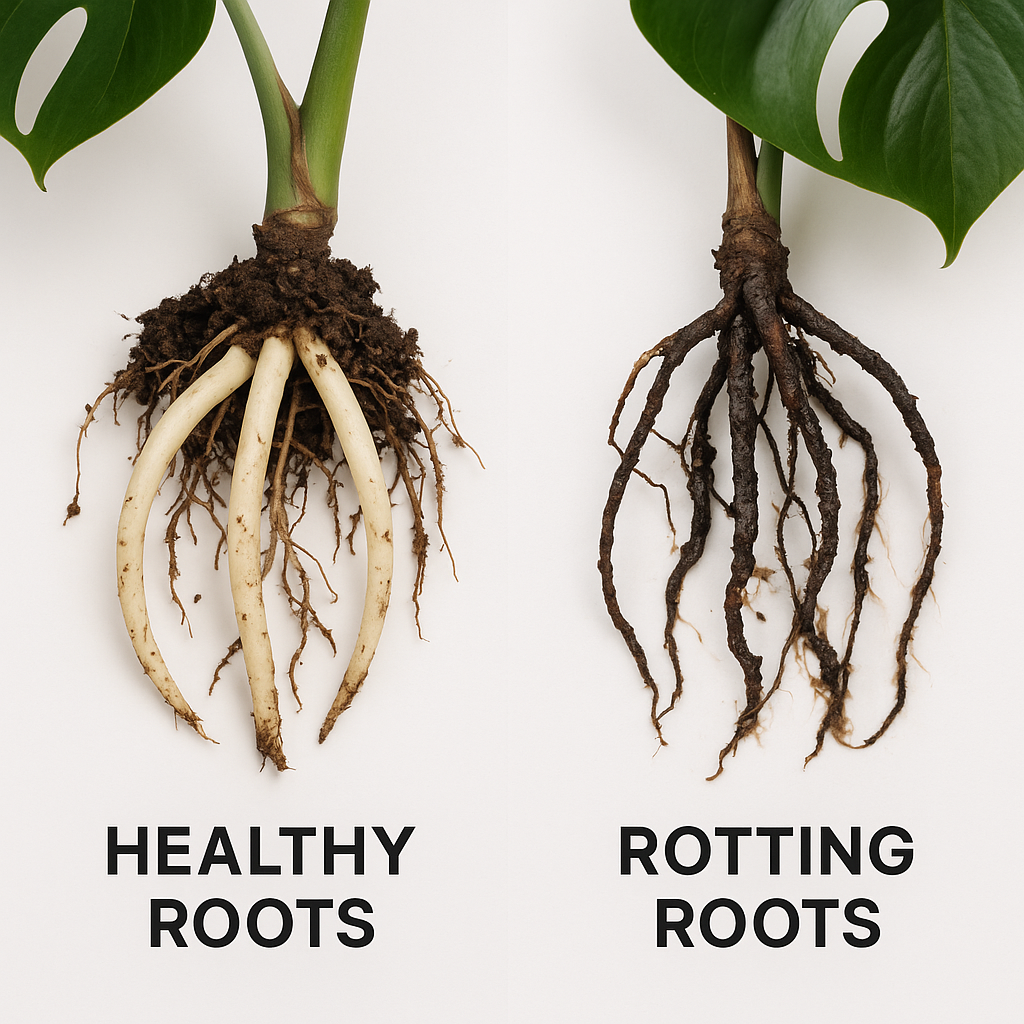
Stem Rot vs Root Rot - What's Killing Your Monstera?
Here's the thing nobody talks about: stem rot is different from root rot, and it's worse.
- Root rot starts in the soil, works upward. You can often save the plant by trimming roots.
- Stem rot starts in the stem and works down. This means the plant's main artery is compromised.
How to tell: If the stem is mushy, black, or feels hollow below the soil line, that's stem rot. If it's just the roots, you're in better shape. If the stem is firm above the soil line, even if the roots are gone, you can potentially propagate.
Step 2: The Rescue - How to Treat Root Rot in Monsteras
Here's the part you've been dreading. Let's do this.
Tools You'll Need
- Clean pruning shears or scissors (sharp, disinfected)
- Fresh, dry potting mix (chunky, well-draining)
- A clean pot with drainage holes (terracotta is best — it breathes)
- Optional: hydrogen peroxide (3% solution)
- Optional: Get a Moisture Meter — for prevention going forward
The Step-by-Step Treatment Process
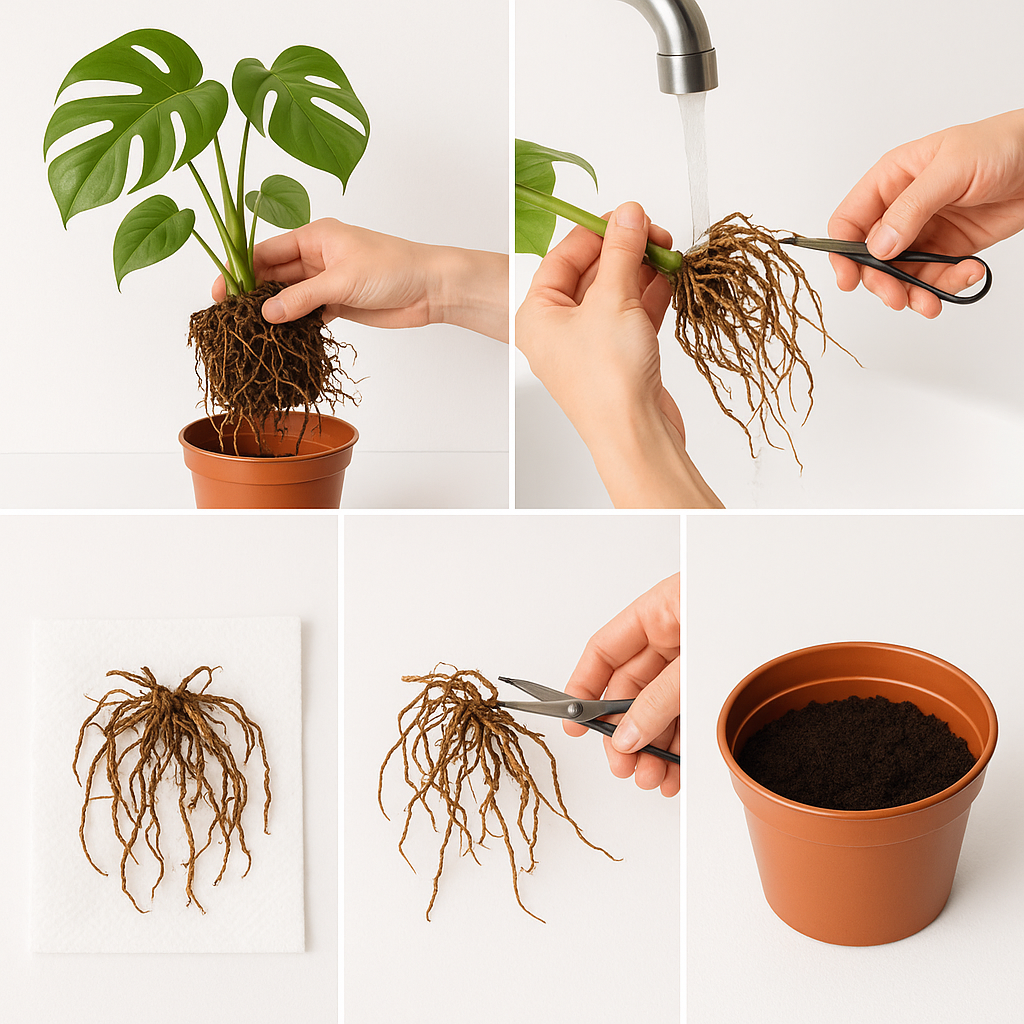
Step 1: Unpot the plant Gently remove the Monstera from its pot. Don't yank — the roots might be clinging for dear life. Tip the pot and let gravity do the work.
Step 2: Rinse the roots Use lukewarm water to gently wash away all the soil. You need to see what you're working with. Old soil harbors bacteria, so get it all off.
Step 3: Inspect and assess Spread the roots out and examine them critically. You're looking for:
- Healthy roots: White, thick, firm — keep these
- Squishy roots: Brown, black, slimy — cut these off
- Brittle roots: Dry and papery — dead, remove them
Step 4: Trim the damage Using clean, sharp scissors, cut away all rotted roots. Go slightly into the healthy tissue to make sure you're getting all the rot. If you leave even a bit, it'll spread.
Step 5: Treat with hydrogen peroxide (optional but recommended) Mix 1 part 3% hydrogen peroxide with 2 parts water. Dip the trimmed roots in this solution or spray it on. It kills the bacteria and gives the healthy roots a fighting chance. Let the roots air dry for 2-4 hours — this is critical. You're letting the cuts callous over so they don't re-rot.
Step 6: Repot in fresh soil Use a fresh, chunky Monstera mix. No, regular potting soil won't cut it — Monsteras need airflow around their roots. A mix of orchid bark, perlite, and coco coir works wonders.
Step 7: Water carefully Don't water immediately! Wait 5-7 days before the first watering. The plant needs time to regrow roots before it can absorb water. When you do water, go light — just enough to moisten the soil, not saturate it.
Handling Monstera Aerial Roots
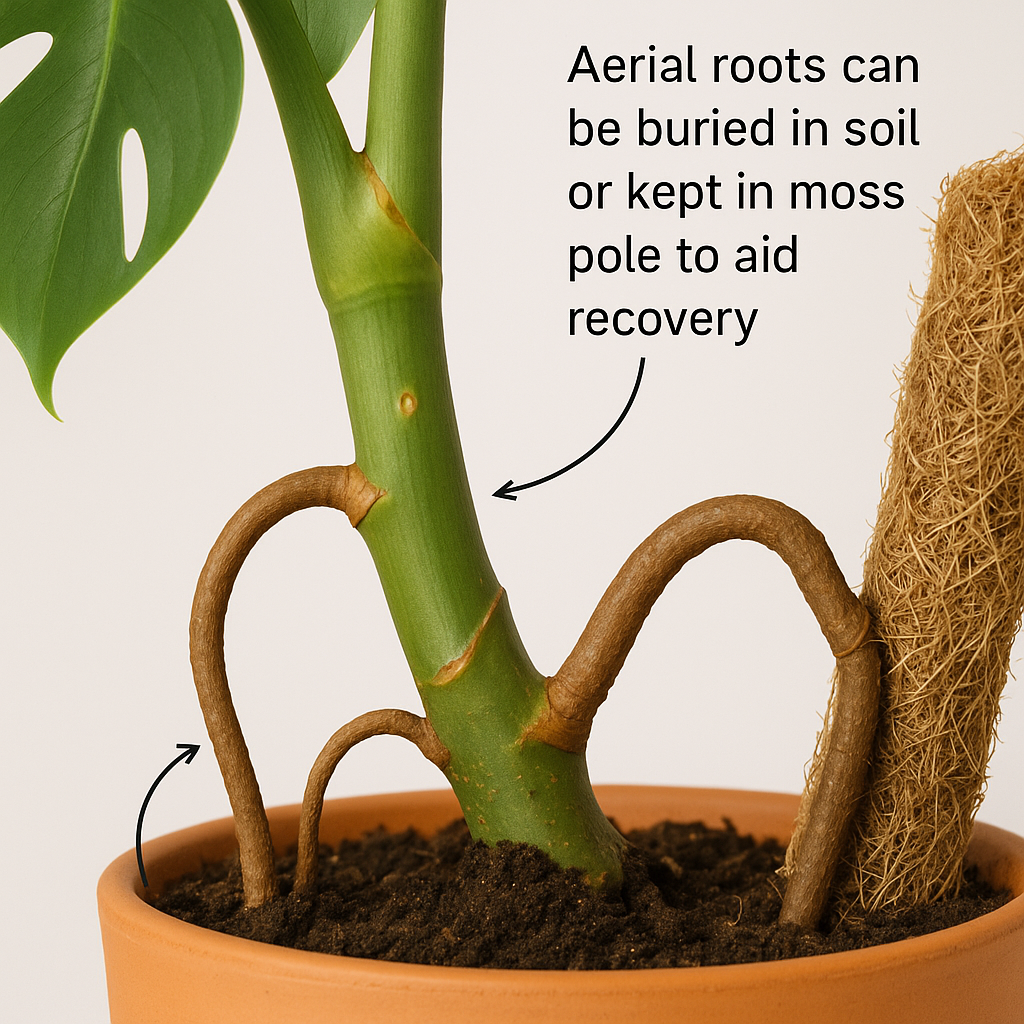
Don't ignore the aerial roots! Those thick, nubby things climbing up the stem are part of your Monstera's water system, and they can help it recover.
What to do:
- If the aerial roots are long enough, gently tuck them into the soil when you repot. They'll grow into regular roots and help with water uptake.
- If they're too short, you can wrap them in damp sphagnum moss or direct them toward a moss pole.
- Don't break them off. They're not hurting anything, and removing them stresses the plant.
Step 3: When to Propagate Instead
Sometimes the roots are too far gone. If you've trimmed and trimmed and there's nothing left but a bare stem, it's time to propagate.
When to give up on saving the roots:
- Zero white/healthy roots remaining
- Stem is firm but roots are completely gone (this is actually good — you can propagate!)
- Stem is mushy (sorry — it's too late)
How to Propagate a Monstera After Root Rot
If your Monstera has no roots but the stem is firm, you have two options:
Option 1: Water propagation Take a clean cutting with at least one node (the bumpy part where leaves and roots grow). Place the node in a jar of water, keeping the leaf above the waterline. Change the water every 3-5 days. In 2-4 weeks, you'll see roots start to grow.
Option 2: Moss propagation Wrap the node in damp sphagnum moss, then wrap that in plastic wrap to hold in humidity. Keep it in bright, indirect light. Check weekly and mist if the moss dries out.
Get Rooting Hormone can speed up root growth if you're using water or moss propagation — dip the node before placing it in your medium.
Recovery Timeline - What to Expect
Patience is the hardest part. Here's a realistic timeline:
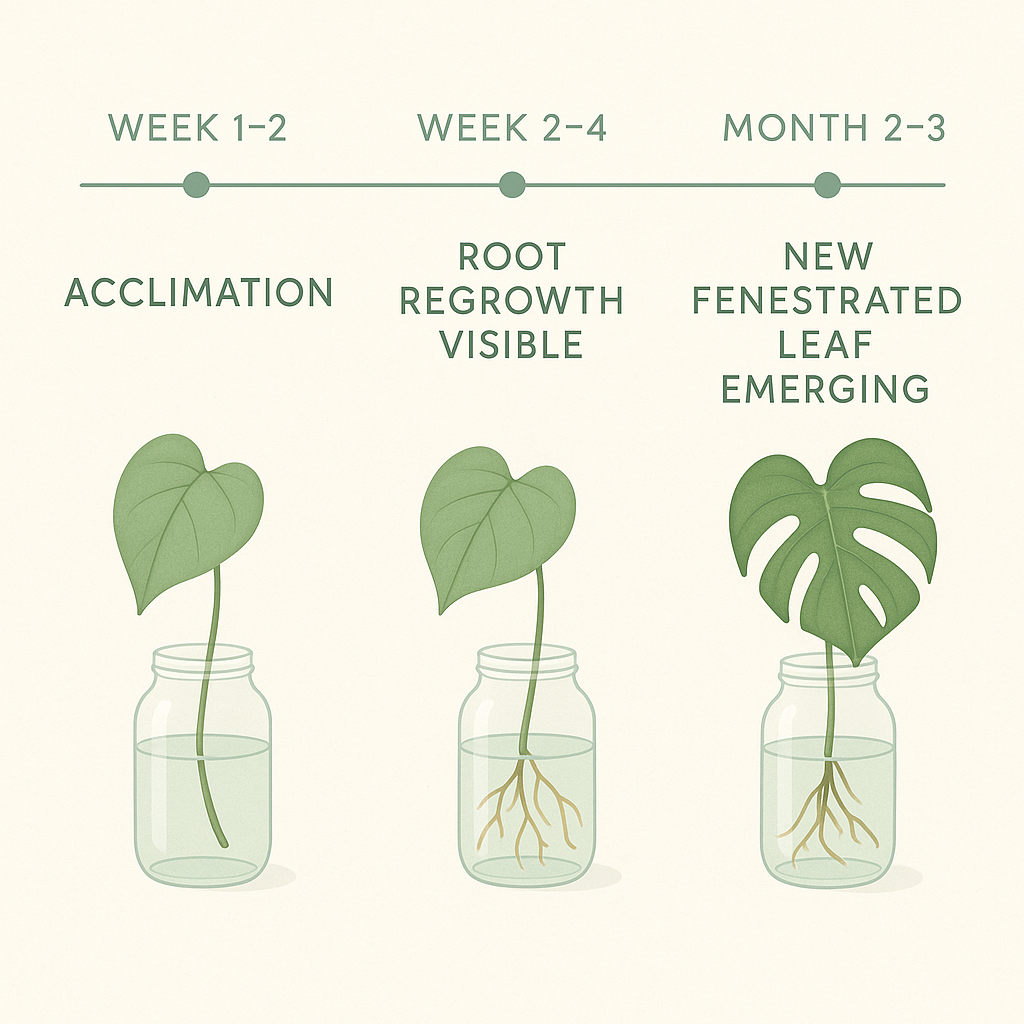
Week by Week Recovery Guide
Week 1: The plant is acclimating. It might look worse before it looks better — some leaf yellowing or drooping is normal. Don't panic.
Weeks 2-4: If the roots are regrowing, you'll start to see new growth at the top. Maybe a tiny new leaf unfurling, or the existing leaves looking perkier.
Months 2-3: With good care, you should see a significant new leaf — and if your Monstera is mature enough, it might even start fenestrating again.
Month 6+: The plant is fully recovered. Resume normal watering and care routines.
What to do in the meantime:
- Keep it in bright, indirect light (not direct sun — the plant is stressed)
- Don't fertilize until you see active new growth
- Water only when the top 2-3 inches of soil are dry
- Be patient. Monsteras are slow. Faster than a Fiddle Leaf Fig, slower than a Pothos.
Prevention - Don't Let It Happen Again
Root rot is a "trust issues" situation — once it happens, you're going to be paranoid about watering. Good. That paranoia will keep your plant alive.
The Perfect Monstera Soil Mix
Regular potting soil holds too much water. Monsteras need a chunky mix that dries faster and lets roots breathe. Here's what works:
- Orchid bark (40%) — adds air flow
- Coco coir or peat moss (30%) — holds moisture without suffocating
- Perlite (20%) — extra drainage
- Worm castings (10%) — optional, adds nutrients
Or just grab a Get Fast-Draining Soil Mix — something labeled for aroids or orchids works great for Monsteras.
Watering Schedule for Healthy Monsteras
The number one cause of root rot is overwatering. But here's the thing — "once a week" isn't a rule. Your Monstera's watering needs depend on:
- Pot size: Smaller pots dry faster
- Season: Winter = dormant = water less
- Humidity: High humidity = water less
- Pot material: Terracotta dries faster than plastic
The finger test: Stick your finger 2-3 inches into the soil. If it's dry, water. If it's damp, wait.
The best way to prevent root rot? Get a Moisture Meter. It's the only way to know for sure what's happening at the root zone. No guessing, no "maybe it's dry enough."
Final Thoughts
Root rot is scary, but it's not a death sentence. The key is acting fast, being ruthless with trimming, and having patience during recovery. Your Monstera wants to live — give it a chance.
And remember: the number one way to prevent root rot is understanding that Monsteras are epiphytes. They grow on other plants in the wild. Their roots need air. Treat them accordingly.
Want more Monstera help? Check out our Plant ER for general plant emergencies, or browse our Monstera care guides for more tips.
Products We Love
We use these products ourselves and recommend them for Monstera root rot treatment and prevention:
- Moisture Meter — Know exactly when your soil is dry
- Fast-Draining Soil Mix — Chunkier than regular potting soil, perfect for Monsteras
- Clean Pruning Shears — Sharp, clean cuts are critical when trimming rotted roots
- Rooting Hormone — Speeds up root growth for propagation rescues