How to Prune Houseplants
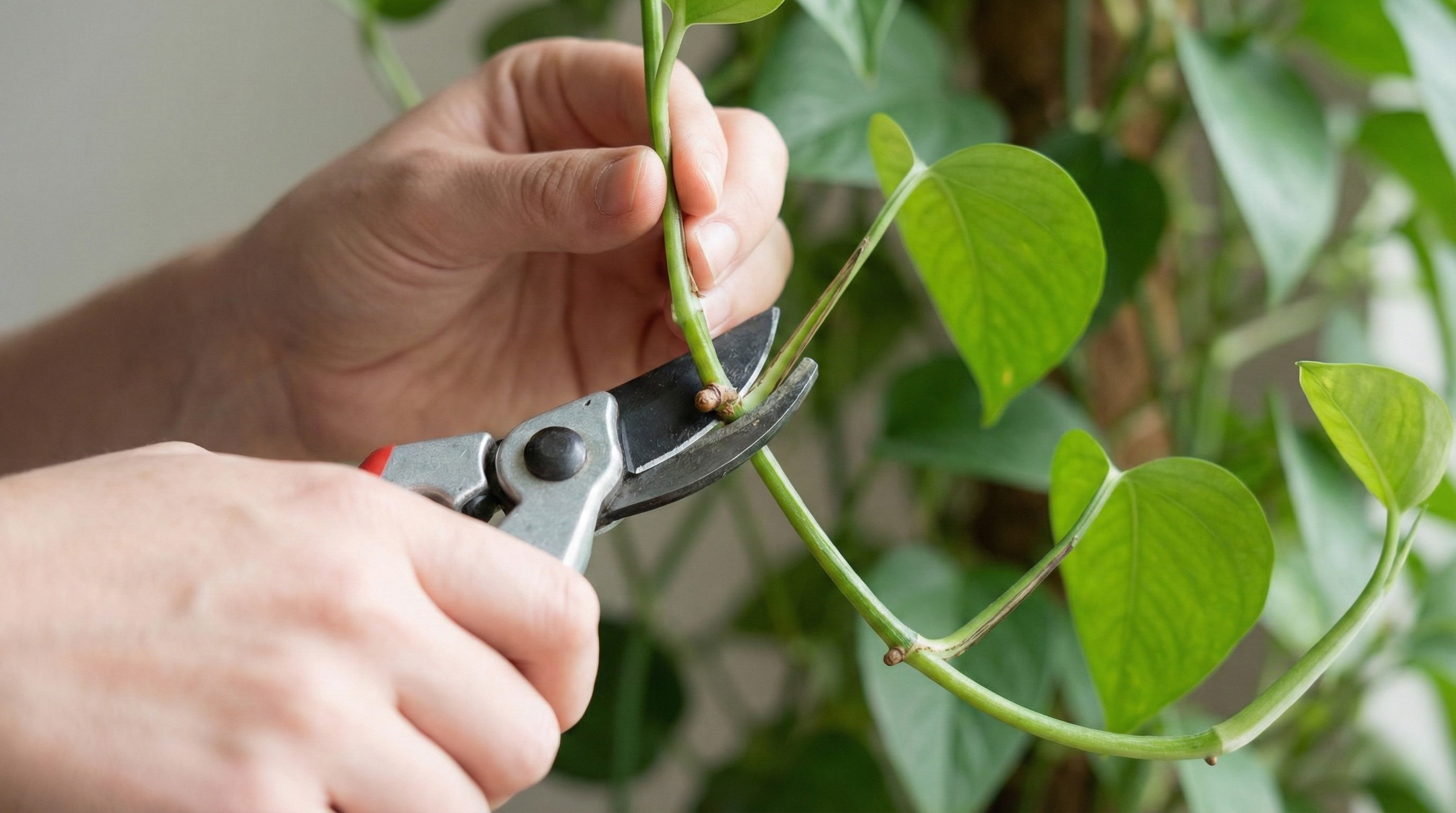
Cut with confidence. Pruning makes plants bushier, fuller, and gives you free plants.
Why Prune?
Benefits
| Benefit | What It Means |
|---|---|
| Bushier growth | Cutting tips encourages branching |
| Shape control | Keep plants from getting leggy or messy |
| Remove damaged growth | Yellow/brown leaves don't come back |
| Propagation material | Cuttings = free plants |
| Disease control | Remove infected parts before spread |
When to Prune
Best Time
Active growing season: Spring through early fall
Plants are actively producing growth hormones. Pruning stimulates new growth.
Acceptable Time
Early fall: Still some growing season left. Plants will recover.
Avoid Pruning
- Dormant season (late fall-winter) — no growth to replace what you cut
- Stressed plants — wait until they recover
- Recently repotted plants — give them 2-4 weeks
How to Prune Correctly
The Basic Technique
-
Use clean, sharp scissors or shears
- Clean with rubbing alcohol between plants
- Dull tools crush stems = damage
-
Cut at a 45-degree angle
- Angled cut sheds water
- Flat cuts can pool water = rot
-
Cut just above a node or leaf
- Nodes are where new growth emerges
- Cutting above a node encourages branching below
-
Don't remove more than 20-25% at once
- Too much stress on the plant
- Leaves = energy production
Pruning by Plant Type
Trailing Plants (Pothos, Philodendron, Heart Leaf Ivy)
Goal: Encourage fullness, control length
Technique:
- Cut long vines back by 1/3
- Cut just above a node
- New vines will grow from that point
- Cuttings can be propagated
Result: Bushier, fuller plant with more vines
Bushy Plants (Pilea, Peperomia, Prayer Plant)
Goal: Maintain shape, remove dead growth
Technique:
- Remove yellow/brown leaves at the base
- Cut back any stems that are getting too long
- Pinch back tips for bushier growth
- Remove any dead or dying stems entirely
Result: Neat, compact, healthy plant
Upright Plants (Snake Plant, ZZ Plant, Corn Plant)
Goal: Control height, remove damaged leaves
Technique:
- Remove yellow or damaged bottom leaves
- Cut tall leaves back if they're drooping
- Cut at an angle at the same level as surrounding leaves
- Don't cut into the crown (center growth point)
Result: Taller, more upright growth
Monsteras and Large Tropicals
Goal: Control size, encourage fenestration
Technique:
- Remove yellow leaves at the base
- Cut back any aerial roots if desired (they grow back)
- Don't remove more than 20-25%
- Cuttings can be rooted and potted
Result: Controlled size, healthier growth
Pruning Problems Solved
Leggy Growth
Problem: Long stems with few leaves, stretched toward light
Cause: Not enough light
Solution:
- Prune back by 1/3
- Move to brighter location
- Propagate cuttings for fuller plant
Too Big or Out of Control
Problem: Plant has taken over the room
Solution:
- Prune back by 1/3 to 1/2
- Cut just above nodes
- Propagate cuttings for new plants
- Repot if root-bound
Dying or Damaged Sections
Problem: Parts of the plant are yellow, brown, or mushy
Solution:
- Cut away all damaged tissue
- Cut back to healthy green stem
- Check roots if many leaves are dying
- Propagate healthy cuttings if plant is failing
Pruning for Propagation
The Connection
Every pruning cut can become a new plant.
What to Propagate from Pruning
| Plant | What to Cut | How to Root |
|---|---|---|
| Pothos | 4-6" cutting with node | Water |
| Philodendron | 4-6" cutting with node | Water |
| Spider plant | Baby plantlets | Water or soil |
| Succulents | Leaf or stem | Soil |
| Snake plant | 4-6" leaf section | Water or soil |
| Peperomia | Leaf or stem | Water or soil |
Pruning Tools
What You Need
| Tool | Use |
|---|---|
| Sharp scissors | Small plants, precision cuts |
| Pruning shears | Woody stems, thicker growth |
| Rubbing alcohol | Sterilize between plants |
| Gloves | Handle sap (some plants are toxic) |
✂️ Snip Snip: Pruning Shears That Don't Suck
Dull scissors crush stems. These actually cut clean — your plants will thank you:
*As an Amazon Associate, we earn from qualifying purchases.
What NOT to Do
Don't Cut the Crown
The crown (center growing point) is where new growth emerges. Cutting it can kill the plant.
Don't Prune More Than 25%
Removing too much at once shocks the plant. Space out major prunings.
Don't Prune Dormant Plants
Winter = no growth. Plants can't recover from pruning when they're not growing.
Don't Use Dull Tools
Crushed stems invite disease. Keep tools sharp.
Pruning Schedule
| Season | What to Do |
|---|---|
| Spring | Major pruning, shape control, propagate |
| Summer | Light touch-ups, remove dead growth |
| Fall | Light pruning only, stop by late fall |
| Winter | No pruning (dormant) |
The Bottom Line
- Prune during growing season (spring-summer)
- Cut just above nodes at 45-degree angles
- Never remove more than 25% at once
- Sterilize tools between plants
- Propagate your cuttings for free plants
- Don't prune dormant plants
Pruning makes your plants healthier AND gives you free plants. It's the ultimate plant parent win.
Want to propagate your pruning cuts? Check our Propagation Guide.