How to Clean Houseplant Leaves: The Right Way
The 5 methods, the plant-type decision tree, and the science behind why it matters.
Why Cleaning Houseplant Leaves Actually Matters
Most people skip this step. It's not in the "water when dry" routine. Nobody's posting their leaf-wiping session to Instagram.
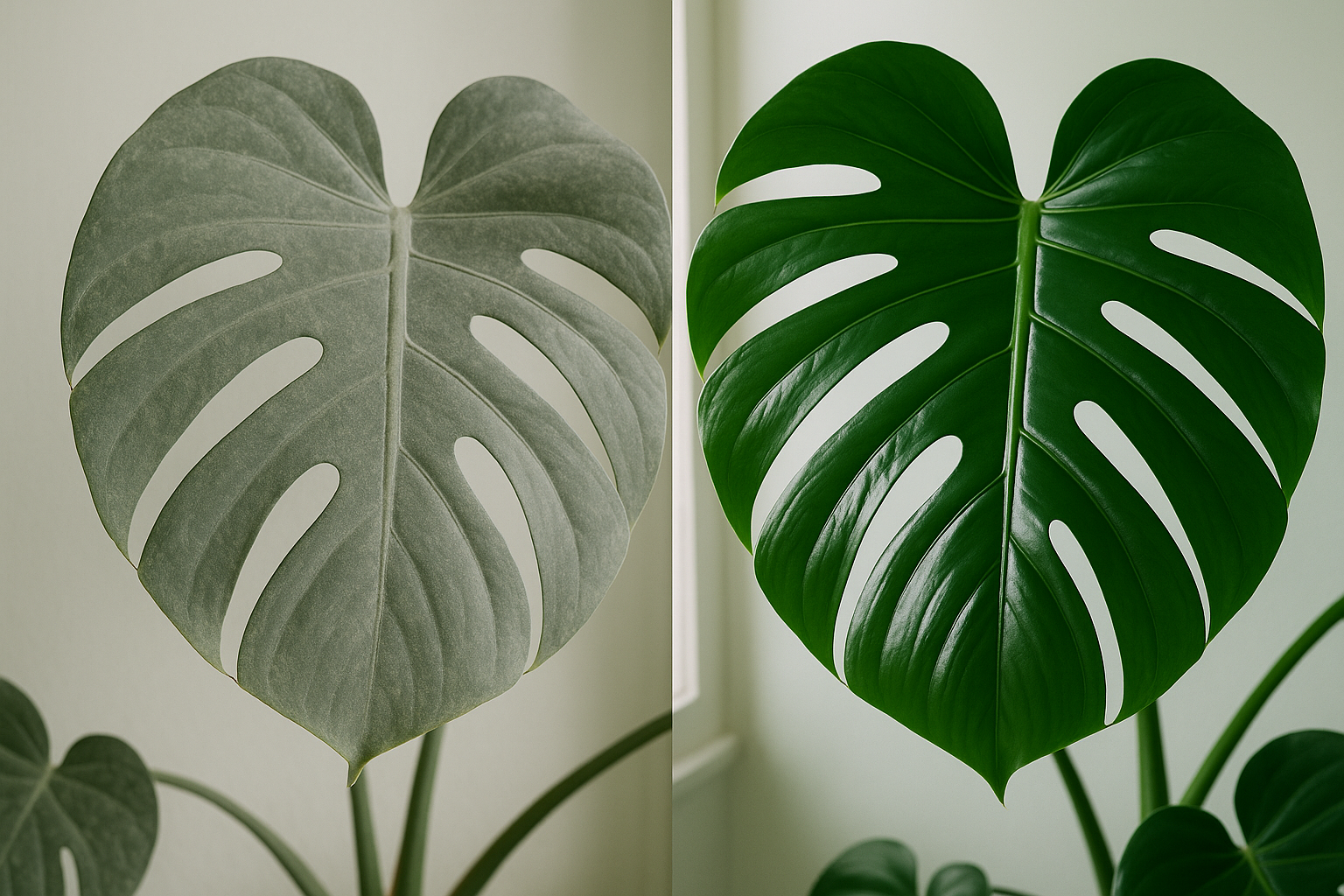
But here's the thing: dust on leaves is blocking the machinery.
Plants photosynthesize through their leaves — light hits the surface, gets absorbed by chlorophyll, and the plant turns CO₂ and water into food. Dust, grime, and sooty film act like a filter over that machinery. Studies on agricultural crops show that dusty leaves can reduce photosynthesis by 20–30%. Your window-hunting Monstera in your living room isn't getting field-grade sunlight anyway, so the last thing it needs is an extra layer of gunk reducing what little it gets.
Dust also clogs stomata — the tiny pores on leaf surfaces plants use to breathe and regulate water. When those pores are blocked, gas exchange suffers. The plant can't release oxygen and moisture efficiently, which cascades into stress and reduced growth.
There's also the pest argument. Spider mites, mealybugs, and scale insects love dusty, dry environments. A regular leaf cleaning disrupts their happy little colonies and makes your plant less inviting to them.
The 5 Methods (And When to Use Each)
Not all methods work for all plants. Here's the honest breakdown.
Method 1: Damp Cloth Wipe
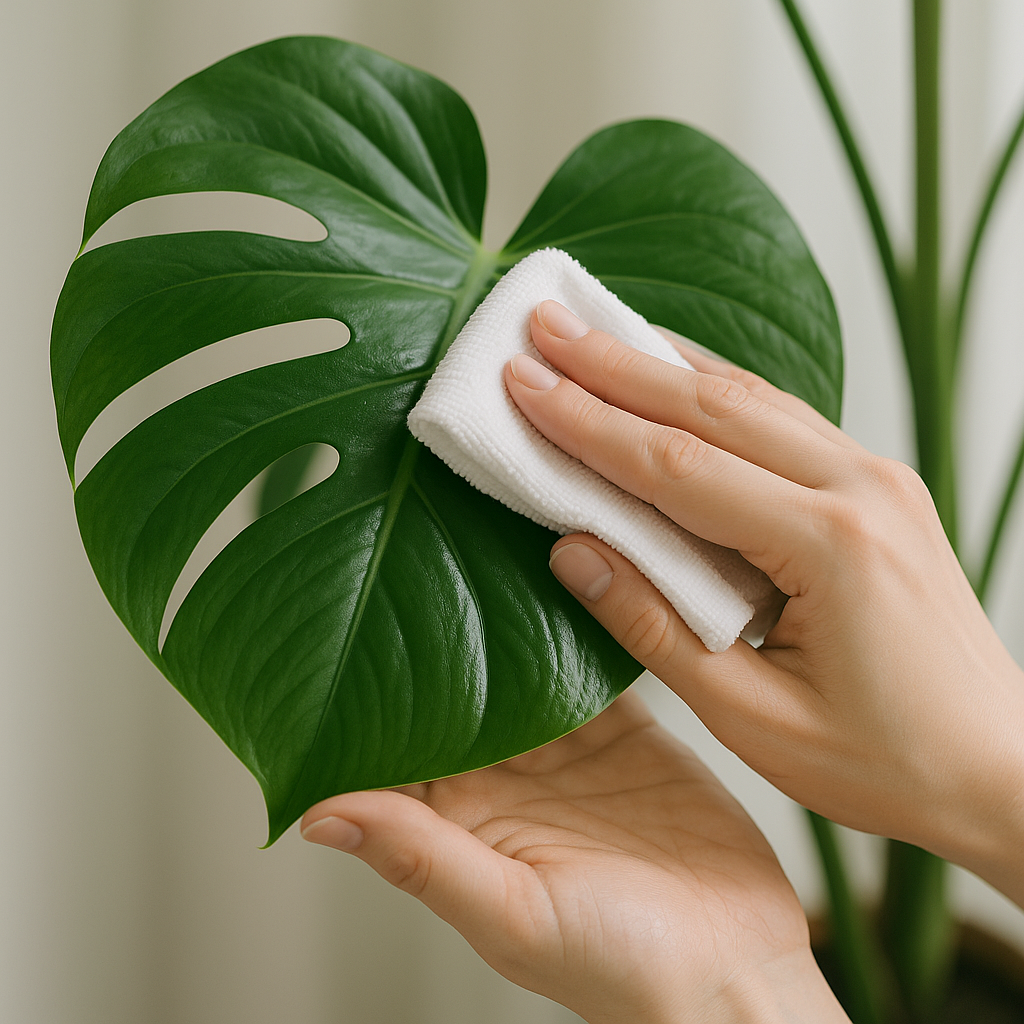
The default method for most smooth-leafed houseplants — Monstera, Fiddle Leaf Fig, Rubber Plant, Bird of Paradise.
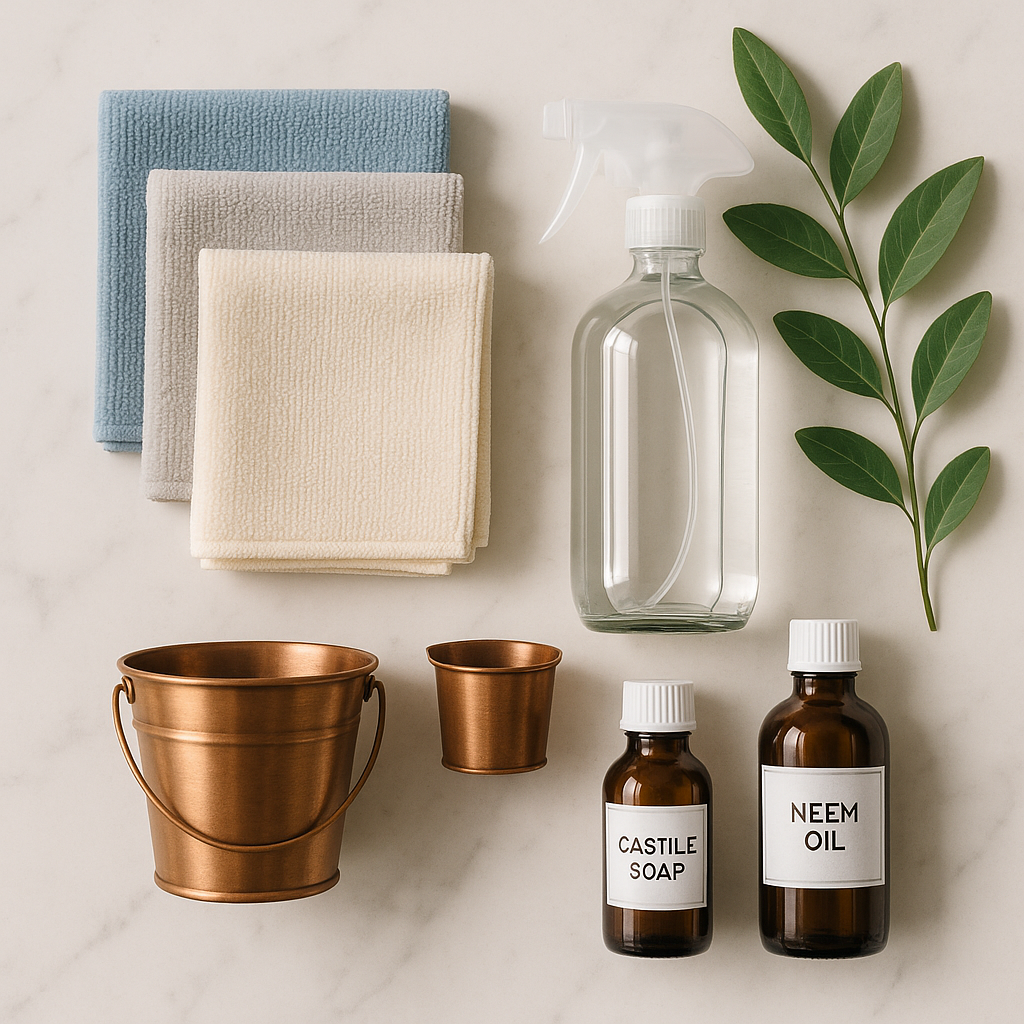
Support the leaf from below with one hand so it doesn't bend or tear. Wrap a soft damp microfiber cloth around your fingers and wipe gently with the grain of the leaf — not in circles, not aggressively. Circles can create micro-scratches over time.
Wring out the cloth frequently. You're not flooding the leaf; you're gently moving dust off the surface.
Skip paper towels — they can leave micro-scratches on delicate leaf surfaces. A plush microfiber cloth grabs dust without abrasion.
Get the Right Cloth for the Job →
Method 2: Shower or Hose Method
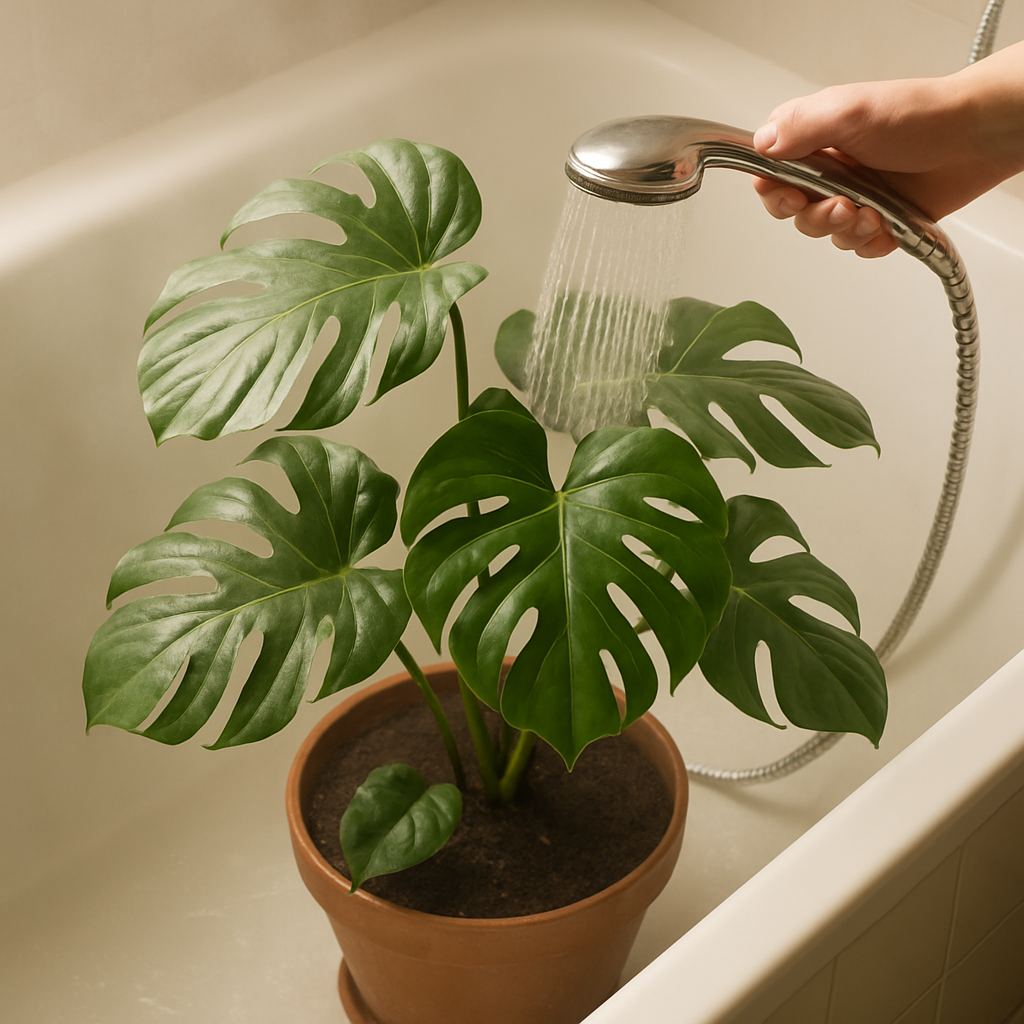
For large plants with heavy dust buildup — the kind where wiping would take an hour. Think big Monsteras, Bird of Paradise, large Fiddle Leaf Figs.
Move the plant to the shower or bathtub. Use lukewarm water on a gentle spray setting — not hot, not cold, not pressure-washer. Hot water shocks the roots and can damage leaves; cold water does the same. Lukewarm only.
Let the water run through the foliage for 2–3 minutes. You can gently tilt pots to avoid soaking the soil too much, but a brief rinse won't hurt most plants. Let the plant drain and dry in the shower or a shaded area for an hour before moving it back.
Method 3: Misting + Gentle Brush
For small, delicate, or clustered plants where individual leaf wiping isn't practical — ferns, Prayer Plants, small pothos, Episcia.
Fill a spray bottle with room-temperature water and mist the leaves to dampen the dust. Then use a soft paintbrush, a clean soft-bristle toothbrush, or a child's hairbrush to gently sweep dust away from the leaf surface. Work from the stem outward.
This method is slower but far gentler on fragile leaves that can tear or bruise under direct wiping pressure.
Method 4: Dunking for Small Pots
For small pots (4"–6") with multiple small leaves — small pothos, small ferns, Spider Plants.
Fill a bowl or bucket with room-temperature water. Invert the pot so the soil stays in (support the root ball with one hand) and dunk the foliage into the water. Swish gently for 10–15 seconds. Lift and let drain upside down on a towel.
This works well for plants with lots of small leaves that are individually tedious to wipe. Don't try this with large pots — the physics get awkward and you risk dropping the plant.
Method 5: Leaf Shine Spray (Hard-Leaf Glossy Plants Only)
Commercial leaf shine products have a bad reputation, and fairly so. Many are oil-based sprays that clog stomata and create a film that actually interferes with photosynthesis rather than helping it. But there are a few safe options for specific plants.
This method is for hard-leaf glossy plants only — Monstera, Fiddle Leaf Fig, Rubber Plant, Philodendron with thick leaves. Do not use leaf shine sprays on fuzzy, waxy, or newly unfurled leaves.
If you want a commercial option, The Sill's Leaf Care Spray uses a neem oil plus castile soap formula — gentler than most leaf shines and safe for hard-leaf plants. Always test on one leaf first and wait 48 hours to check for any reaction.
How to Clean Different Leaf Types
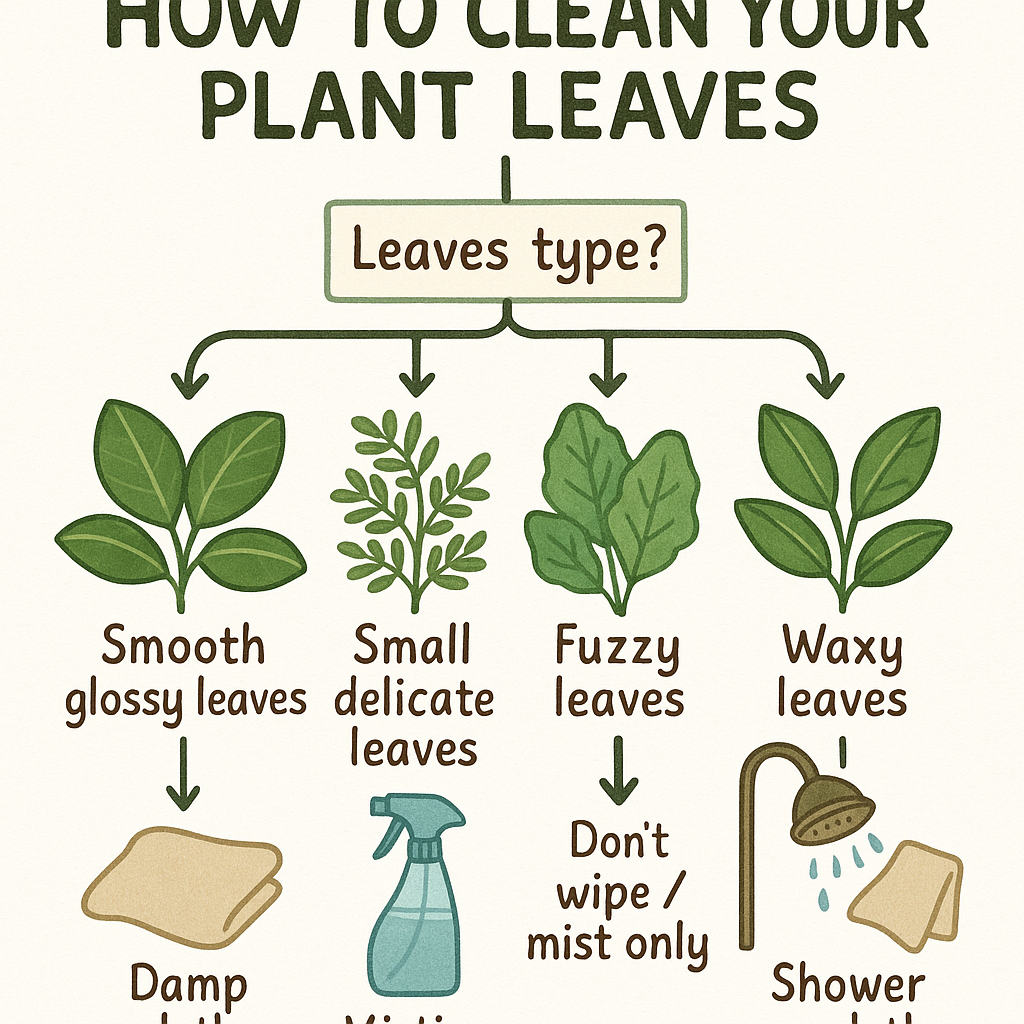
Not sure which method to use? Match your leaf type:
- Big smooth leaves (Monstera, Fiddle Leaf Fig, Rubber Plant, Bird of Paradise): Damp cloth wipe. Support from below, wipe with the grain. The shower method works too for big plants.
- Small delicate leaves (Pothos, small-leafed Philodendron, Syngonium): Misting + gentle brush. Don't try to wipe each leaf individually — you'll be there all day.
- Fuzzy leaves (African Violet, Gloxinia, some Begonias): Don't wipe. Ever. The tiny hairs are protective and wiping damages them permanently. Mist only from below to avoid water on the leaves, or use a soft dry brush.
- Waxy leaves (ZZ Plant, Snake Plant, Peperomia): Very forgiving. Shower method or damp cloth — both work. These leaves can take a bit more than delicate plants.
DIY Leaf Cleaning Solutions (Natural)
You don't need to buy fancy products. Most leaf cleaning jobs work fine with things you already have.
Castile Soap Dilution
A few drops of pure castile soap in warm water is all you need for a gentle, effective leaf cleaning solution that won't clog leaf pores. Dr. Bronner's Unscented is a good choice — it's mild, plant-based, and widely available.
Mix about 1/4 teaspoon of castile soap per 8 oz of warm water in a spray bottle. Shake gently — you want it mixed, not frothy. Spray onto the cloth first (not directly on the leaf in most cases) and wipe. For plants with multiple small leaves, you can mist lightly.
Grab Dr. Bronner's on Amazon →
Neem Oil Method
Neem oil does double duty — it cleans dust and acts as a mild pest deterrent. Win-win.
Mix 1/2 teaspoon of neem oil + 1/4 teaspoon of castile soap (as an emulsifier) per 32 oz of water. The castile soap is critical because neem oil and water don't mix without it. Spray on leaves and wipe gently. Best applied in the evening so the plant isn't sitting in direct sunlight after application — neem oil can cause leaf burn in strong sun.
Water-Only Method
Plain room-temperature water works fine for regular dust removal. The main goal is physical removal of dust particles — the water itself does that. Use a spray bottle to mist the leaf surface, then wipe with a damp cloth. No soap, no fuss.
Vinegar — When to Avoid It
Vinegar (acetic acid) is sometimes promoted as a DIY leaf cleaner. Skip it. Even diluted vinegar can damage the waxy cuticle layer on leaves, and acid buildup in soil over time causes root burn. If you have hard water with mineral deposits on leaves, use distilled or filtered water instead.
Leaf Shine Products: What Works, What Doesn't
Commercial leaf shine products are hit or miss — mostly miss. Here's the honest breakdown.
Safe Commercial Sprays
Some newer products use gentler formulas than the old-school oil-based shines. The Sill's Leaf Care Spray is one of the better options — it uses neem oil and castile soap rather than petroleum derivatives. For hard-leaf glossy plants (Monstera, FLF, Rubber Plant), it's a reasonable shortcut if you're in a hurry.
Products to Avoid
Old-school leaf shines and furniture polishes (like those that promise to make your Ficus "showroom ready") are typically silicone- or petroleum-based. They create a glossy film that clogs stomata and can cause leaf burn, especially on plants exposed to any direct light. If the product's first ingredient is "mineral oil" or "silicone," skip it.
DIY Alternatives
The castile soap dilution and neem oil methods above are genuinely effective, cheaper, and less likely to cause harm. The "best" leaf shine is just a clean leaf — no product needed.
See Leaf Care Sprays on Amazon →
Mistakes That Damage Leaves
- Using leaf shine on fuzzy or waxy leaves — this is the most common mistake. If the leaf has texture (hairs or a thick waxy coating), don't use shine products on it.
- Cold water shock — always use lukewarm water for any rinse or wipe method.
- Abrasive materials — paper towels, rough sponges, and dusty rags can all micro-scratch leaf surfaces.
- Cleaning new growth — newly unfurled leaves are delicate and easily damaged. Wait until the leaf has fully hardened off before cleaning.
- Over-cleaning — once a month is fine. Cleaning weekly is overkill and can stress sensitive plants.
- Direct sunlight after wet cleaning — wet leaves in direct sun can develop burn spots. Let the plant dry in shade first.
How Often to Clean Houseplant Leaves
Once a month is the general recommendation for most plants in most environments.
Adjust up if:
- You live in a dusty area or near construction
- You run forced-air heating or cooling (which dries out and deposits dust)
- You have large-leafed plants that visibly accumulate dust quickly
Adjust down if:
- You have mostly small-leafed or fuzzy plants
- Your environment is relatively dust-free (humid, well-filtered spaces)
- It's winter and plant growth has slowed
For a full monthly plant care routine that includes leaf cleaning, check out our monthly plant care calendar.
FAQ
How often should I clean my houseplant leaves? Once a month is generally sufficient, but dusty environments or large-leafed plants may need cleaning every 2–3 weeks. Fuzzy-leaved plants (like African violets) should never be wiped — mist only.
Can I use leaf shine spray on all plants? No. Leaf shine sprays are safe only for hard-leaf glossy plants like Monstera, Fiddle Leaf Fig, and Rubber Plant. Never use leaf shine on fuzzy leaves, waxy leaves (Snake plant), or new tender growth.
What is the safest way to clean delicate leaves? Misting + a soft brush is the gentlest approach for small delicate leaves. Use room-temperature water and work from the stem outward so you don't tear the leaf.
Does cleaning plant leaves really help photosynthesis? Yes. Dust and grime reduce the amount of light reaching leaf cells and can clog stomata. Removing that layer restores effective gas exchange and light absorption. Studies on crop plants show photosynthesis reductions of 20–30% on dusty leaves.
Can I use vinegar to clean plant leaves? No. Even diluted vinegar can damage the protective waxy cuticle layer on leaves and cause root burn in the soil over time. Use water, castile soap dilution, or neem oil instead.
Want plants that are actually hard to kill? Check out our 10 Easiest Houseplants guide. Cleaning leaves is easy when your plant is still alive — and these survivors practically clean themselves.
Products We Love
We use and recommend these products ourselves:
- Evridwear Microfiber Plant Dusting Gloves — soft, plush, great for large smooth leaves
- Dr. Bronner's Pure-Castile Liquid Soap — the go-to for DIY leaf cleaning spray
- The Sill Leaf Care Spray — gentler than most commercial options, safe for hard-leaf glossy plants