How to Clean Houseplant Leaves — Why It Matters More Than You Think
The "it's just dust" excuse isn't working here. Here's why your plant's leaves need a wipe-down, and how to do it right.
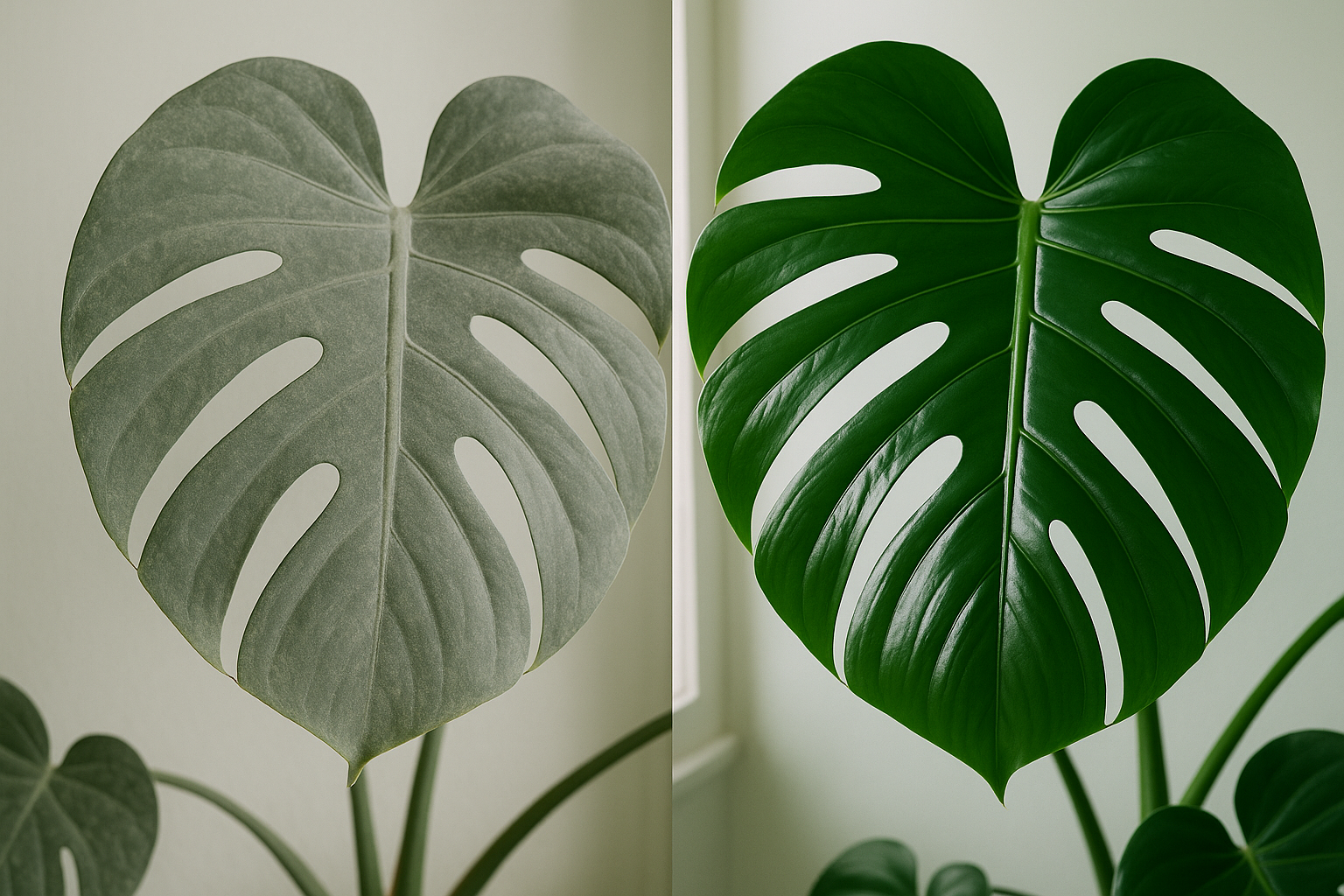
What's Actually Building Up on Your Plant's Leaves
If you haven't cleaned your plant's leaves in a while, congratulations — you've made a tiny ecosystem. Here's what's sitting on them:
Dust and airborne particles. The big one. Dust settles on horizontal surfaces constantly, and plant leaves are dust magnets. It accumulates as a fine grey film that you might not even notice until you wipe it off and see the color difference.
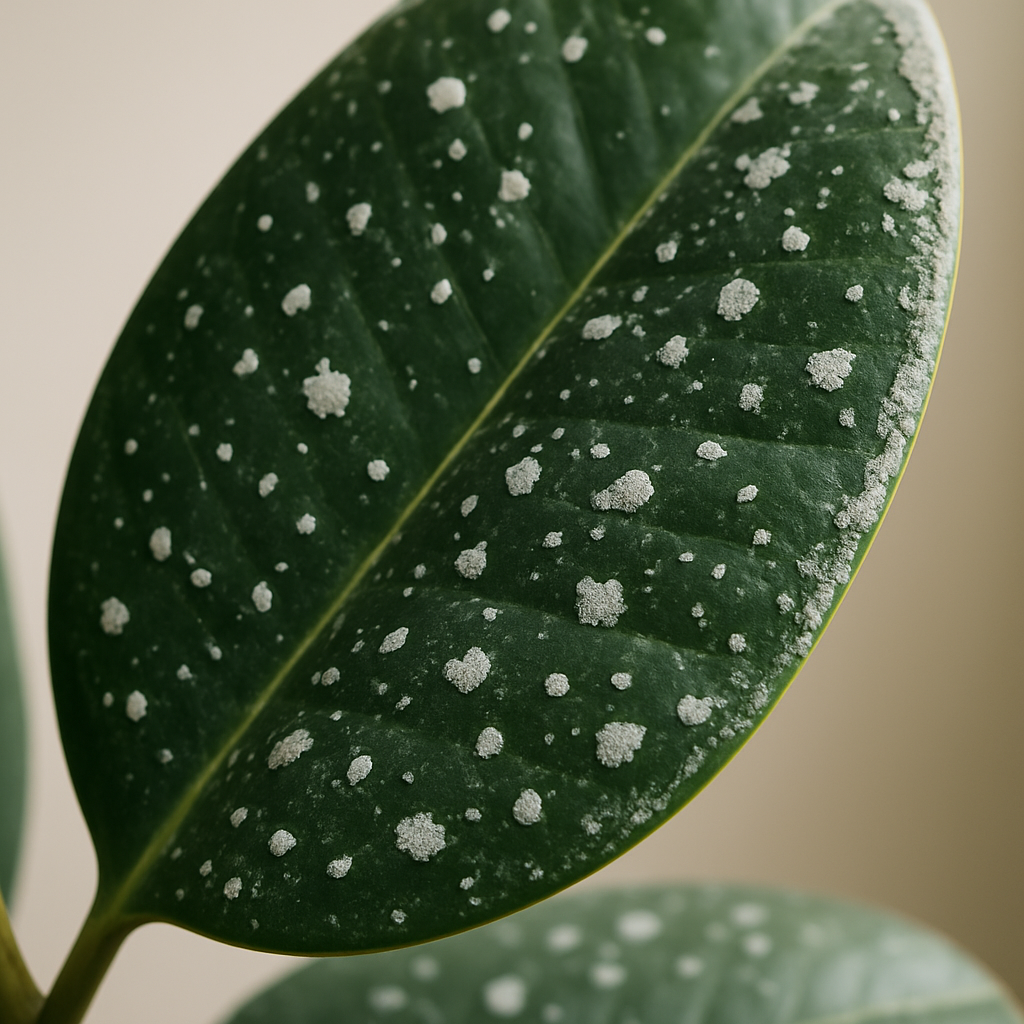
Hard water mineral deposits. Those white crusty patches? Calcium, magnesium, and lime from your tap water. Especially visible on glossy-leaved plants like rubber plants and Monsteras. If you live somewhere with hard water, this builds up fast.
Fertilizer salt residue. If you fertilize regularly and get some residue on the leaves (or if salts migrate upward as the soil dries), you'll see white crusting around the leaf edges and along the veins.
Kitchen grease. Plants near the stove or in poorly ventilated kitchens collect an invisible film of grease and cooking odors. Yes, your plant is basically a kitchen air freshener. Lucky plant.
Pest residue. Aphids, scale, and mealybugs excrete honeydew — a sticky, sugary substance that shows up as shiny patches on leaves. If your plant has sticky leaves after cleaning, pests are your problem, not dust.
The "more than you think" part isn't just about aesthetics. All of this buildup has a measurable effect on how your plant functions.
The Science: How Dust Blocks Your Plant's Light
Plants make food through photosynthesis. And photosynthesis needs light. Seems obvious, but here's the part most people miss: the light has to actually reach the leaf.
Dust, mineral films, and residue coat the leaf surface and act like a pair of cheap sunglasses. Research on agricultural crops shows that dust accumulation on leaf surfaces can reduce photosynthetic efficiency by 20–30%. Your monstera in the corner isn't a wheat field, but the principle holds — the less light that gets through, the less energy your plant has to grow.
Beyond light absorption, dust and residue can clog stomata — the tiny pores on leaf undersides that plants use to breathe and regulate moisture. Blocked stomata mean the plant struggles to transpire and exchange gases properly.
And then there's the pest angle: dirty, dusty leaves are harder to inspect. Problems that would be obvious on a clean leaf become invisible under a dust coat until they've gotten out of hand.
Signs Your Plant Is Overdue for a Clean
You don't need a schedule — just look:
- The leaves look dull or matte instead of glossy
- You can see a layer of grey dust when light hits at an angle
- White mineral crusting is visible around leaf edges
- Sticky patches that don't wipe off with water alone
- Webbing in leaf axils or along stems
- Your plant just looks... sadder than it should given the care you give it
If any of those ring true, it's cleaning time.
5 Methods for Cleaning Houseplant Leaves (Ranked by Effectiveness)
Here's the honest ranking — based on how well each method works for the average plant parent's situation.
1. Damp Wipe (Best for Large-Leaf Plants)
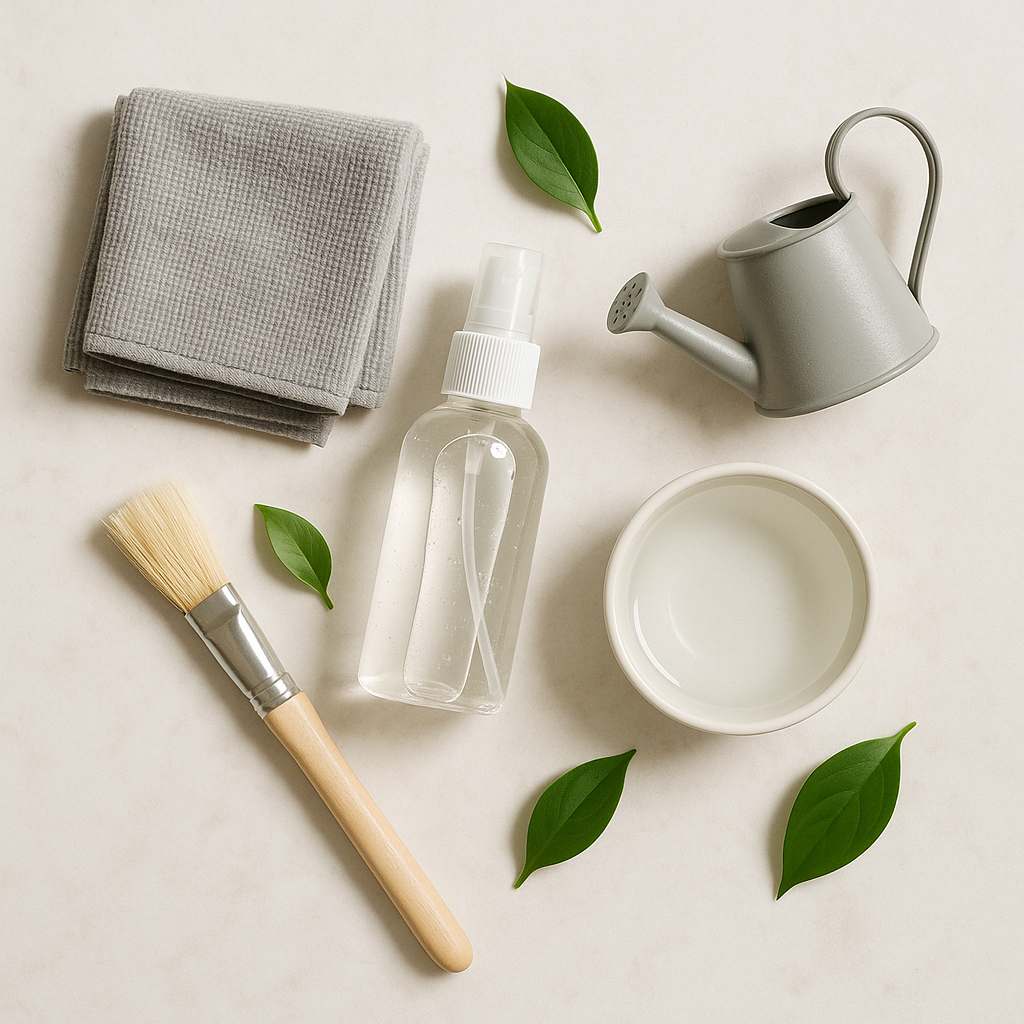
This is the workhorse method. Grab a soft, damp microfiber cloth and gently wipe the top and bottom of each leaf.
Works best for: Monsteras, philodendrons, fiddle-leaf figs, pothos, rubber plants, peace lilies — anything with big, smooth leaves.
The key word is damp, not wet. Sopping-wet cloth invites rot and water-staining. Just moist enough to pick up dust.
Grab a multi-pack of microfiber cloths — they're the single most useful thing you can add to your plant care kit. You'll use them for everything from wiping leaves to cleaning glass and dusting shelves.
2. Shower Rinse (Best for Robust, Fast-Draining Plants)
Move your plant to the bathroom, put it in the tub or shower, and give it a gentle rinse with lukewarm water. Use the showerhead on a gentle setting or let the water fall like rain from the faucet. Let the plant sit for 30–60 minutes to drain fully before moving it back.
Works best for: Pothos, spider plants, palms, philodendrons, and most medium-statured tropicals that aren't sensitive to a full drenching.
Skip this for: succulents (they hate sitting wet), African violets, and anything that needs to stay dry between waterings. Also skip it if your plant is already waterlogged — you're cleaning leaves, not drowning the roots.
After a thorough leaf cleaning, let plants drain completely before returning them to their spots. More on post-clean care in our watering guide.
3. Fine-Mist Spray (Best for Medium-Leaf, Sensitive Plants)
For plants that don't need or want a full rinse, a fine-mist spray is the gentler option. Fill a clean spray bottle with room-temperature water (distilled if you have hard tap water), mist the leaves lightly, then wipe with a soft cloth or let them air-dry.
Works best for: Orchids, African violets (carefully, just mist around not on), ferns, calatheas, and other delicate-leaf plants.
A fine-mist spray bottle makes all the difference — no harsh streams that bruise delicate leaves. We recommend a fine-mist plant spray bottle over the typical hardware-store spray bottle, which puts out a jet instead of a cloud.
4. Sink Bath (Best for Small Plants with Soil That Dries Quickly)
Fill a basin or clean sink with room-temperature water and set your small potted plant in it. Let it soak from the bottom for 15–20 minutes — the soil will absorb water from below, and the leaves will appreciate the humidity.
Pull it out, let it drain, and you're done.
Works best for: Small pots (4"–6"), tropicals that like to stay evenly moist, and plants that need a humidity boost. Great for small philodendrons, baby Monsteras, prayer plants, and pothos.
5. Soft Brush (Best for Hairy-Leaf and Succulent Plants)
Some plants can't handle water on their leaves. Fuzzy-leaf plants like African violets, rex begonias, and most succulents are better off dry-brushed.
Use a soft, clean paintbrush or a dry microfiber cloth and gently sweep dust off the leaf surface. Work from the stem outward — don't press hard.
Works best for: Succulents, cacti, African violets, and any plant that says "fuzzy" on its label.
The golden rule with these: never use water. Moisture trapped in fuzz or on succulent leaves causes rot faster than you'd think. Dry brush only.
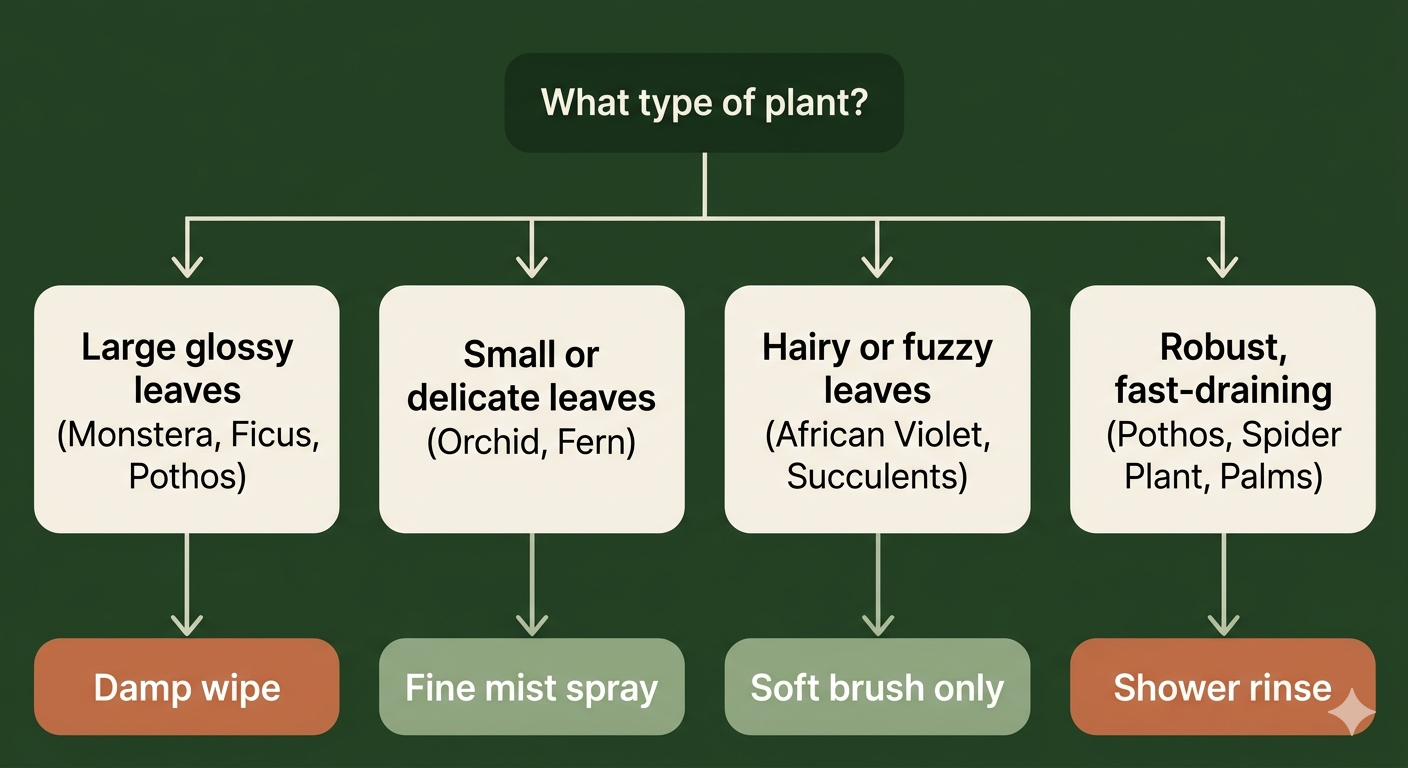
Which Method Is Right for Your Plant?
Not sure? Here's a quick guide.
| Plant type | Best method | What to avoid |
|---|---|---|
| Monstera, Ficus, Pothos (large smooth leaves) | Damp wipe | Shower for large floor plants |
| Spider plant, small philodendron, palms | Shower or sink bath | Nothing too harsh |
| Orchids, ferns, calatheas | Fine-mist spray only | No full soaking |
| Succulents, cacti, aloe | Dry brush only | Water on leaves, full soaking |
| African violets, fuzzy begonias | Dry brush only | Any water on leaves |
What NOT to Put on Your Plant Leaves
Let's address the elephant in the room: the mayo hack.
You've seen it. Someone on social media swears by wiping plant leaves with a thin layer of mayonnaise to make them "shine." They post a blurry photo of a glossy leaf and the comments go wild.
Skip it.
Mayonnaise does nothing good. The oil in mayo (and coconut oil, olive oil — all the kitchen-cabinet "hacks") sits on the leaf surface, attracts dust, and can suffocate the stomata. It's sticky. It's greasy. And it's food for mold. The "shine" fades in days, and you've created a new problem.
Here's the full list of things to never put on plant leaves:
Commercial leaf shine sprays. These are basically waxy polishes. They coat the leaf in a film that builds up over time, clogs stomata, and can cause leaf burn. Some plants in the nursery look amazing because they've been freshly sprayed — it's not sustainable at home.
Mayo, olive oil, coconut oil, baby oil. All of these. No. Sticky, dust-magnets, potential rot-causers. Just no.
Baby wipes. People use these because they're convenient, but the moisture and any残留 chemicals (alcohols, fragrances, surfactants) can damage the leaf cuticle over time. If you must use a wipe, make it a plain water-wipe. But microfiber and water does the same job better.
Furniture polish. I shouldn't have to say this but apparently I do. Do not spray Pledge on your houseplants.
The honest truth about shiny leaves: clean leaves are naturally shiny. If your plant is healthy and its leaves are clean and well-hydrated, they'll have a natural gloss. You don't need to add anything to them.
The Leaf Shine Spray Problem
The exception some people ask about: can I use leaf shine spray if my plant came from the nursery looking amazing?
Here's what's actually happening. Nursery plants are maintained in controlled conditions with regular misting, professional-grade fertilizers, and often — yes — fresh leaf shine applications. They also get replaced every few months. That showroom shine isn't a baseline you should expect to maintain indefinitely. Keep the leaves clean, give your plant good light and proper watering, and the natural shine will follow.
How to Remove Hard Water Spots from Plant Leaves
Those white chalky deposits on leaf edges and surfaces are mineral buildup from your tap water. Common if you live in a hard water area. Fixable.
The diluted vinegar method:
- Mix 1 part white vinegar with 3 parts distilled water
- Dip a soft cloth or cotton ball in the solution
- Gently wipe the affected areas
- Rinse the leaf with a cloth dampened in plain distilled water
- Let air-dry or gently pat dry
The vinegar dissolves the calcium carbonate and other mineral deposits. The distilled water rinse removes any remaining vinegar residue so it doesn't dry as new buildup.
Prevention: Switch to filtered water or collected rainwater for misting and leaf wiping. It takes more effort but eliminates the root cause. If you can't do that, wipe leaves with distilled water regularly and the buildup won't get a foothold.
How Often Should You Clean Houseplant Leaves?
Here's the honest answer: there's no single correct schedule. It depends on your home.
| Environment | Suggested frequency |
|---|---|
| Dusty home (construction, pets, open windows) | Every 2 weeks |
| Normal home, average conditions | Monthly |
| Clean, filtered-air, low-dust environment | Every 6–8 weeks |
| Kitchen or near a smoker | Every 1–2 weeks |
Winter note: Heating systems dry out indoor air and increase dust circulation. Plants near radiators or heating vents collect more dust in winter. Clean them more often during heating season.
The real signal is your plant's leaves. When they start looking dull, clean them. Think of it like checking your car's windshield — you'd notice when you can't see through it.
Bonus: Make Cleaning Time Pest Inspection Time
Here's a habit that will save you grief: every time you clean your plant's leaves, do a quick pest inspection at the same time.
While you're wiping or spraying:
- Flip the leaves. Check the undersides — spider mites, scale, and leaf-hoppers hide there
- Look in the leaf axils. Mealybugs cluster in the joints where leaves meet stems
- Check the soil surface. Fungus gnats are more about soil than leaves, but if you're seeing them flying around while you clean, you have a gnat situation
- Look for sticky residue. That honeydew we mentioned earlier is the calling card of sap-sucking pests
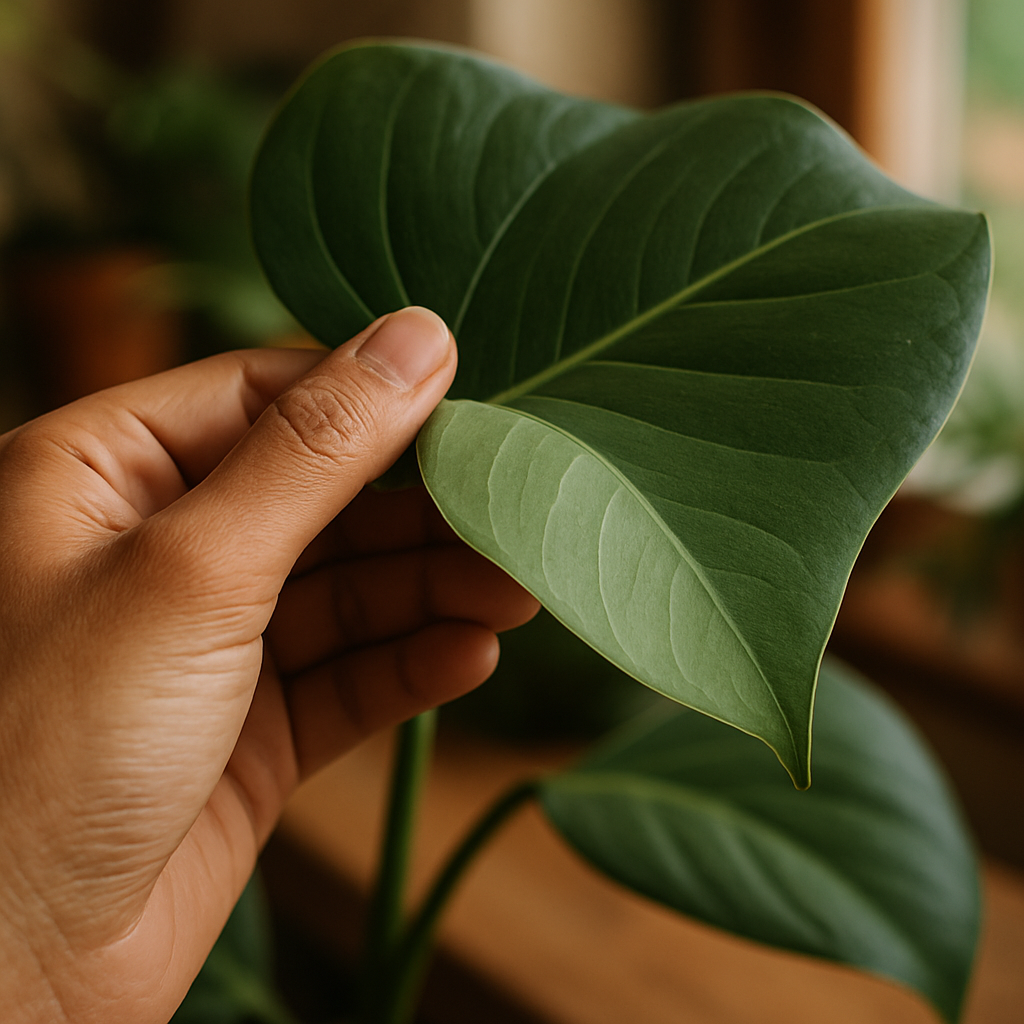
Catching a pest problem early is infinitely easier than treating an established one. If you find sticky residue or signs of pests, treat it immediately — a mild neem oil wipe at the first sign is often all you need.
If you find something more established, head to our plant er guide for treatment options. The inspect-as-you-clean protocol is the single best proactive habit you can build into plant care.
If you find early signs of pests during your cleaning check, a diluted neem oil wipe is your first line of defense. It disrupts the pest lifecycle without the harshness of stronger treatments.
Frequently Asked Questions
Can I use banana peels to shine plant leaves?
No. This is a myth that won't die. Banana peels leave behind sugars and organic matter that attract pests and can promote mold growth on the leaf surface. Clean with water. That's it.
Is it okay to use olive oil on plant leaves?
No. Olive oil (and any cooking oil) coats the leaf surface, blocks gas exchange through the stomata, and attracts dust. It can also go rancid. Save it for the kitchen.
Why are my plant's leaves sticky after cleaning?
If the stickiness doesn't wash off with water, your plant has pests — specifically sap-sucking insects like mealybugs, scale, or aphids. The sticky substance is honeydew, their waste product. Inspect closely, particularly the undersides of leaves and stem joints. Treat with insecticidal soap or neem oil. See our pest identification guide if you need help identifying what you're dealing with.
Can I clean plant leaves with tap water?
For most plants and most tap water, yes — plain tap water is fine for wiping and misting. If you have very hard water, use filtered or distilled water for misting to avoid leaving mineral deposits. If you've already got hard water spots, use the diluted vinegar method above.
Should I clean the leaves of every plant I own?
Most tropical houseplants benefit from regular leaf cleaning. Smooth-leafed plants especially — Monsteras, philodendrons, rubber plants, pothos, peace lilies. Fuzzy-leaf plants (African violets, succulents) are the exception — dry brush only. Plants with very small leaves (trailing small-leaf pothos, moss poles) are less practical to wipe individually but benefit from occasional shower rinses.
Can cleaning leaves actually improve plant growth?
Yes, indirectly. When you remove dust and residue, you're restoring the leaf's ability to absorb light — which means better photosynthesis and more energy for growth. It's not dramatic, but over months of consistent cleaning, the difference in plant vigor becomes noticeable. A cleaner plant is a more efficient plant.
Want more plant care routines that actually make a difference? Check out our plant er guide for handling common problems, or browse our plant care starter kit for the essential tools every plant parent needs.