Mail-Order Plant Unboxing: How to Save Sad Shipping Survivors
You unboxed your dream plant and it looks like it survived a war. Here's what's actually going on — and exactly what to do next.
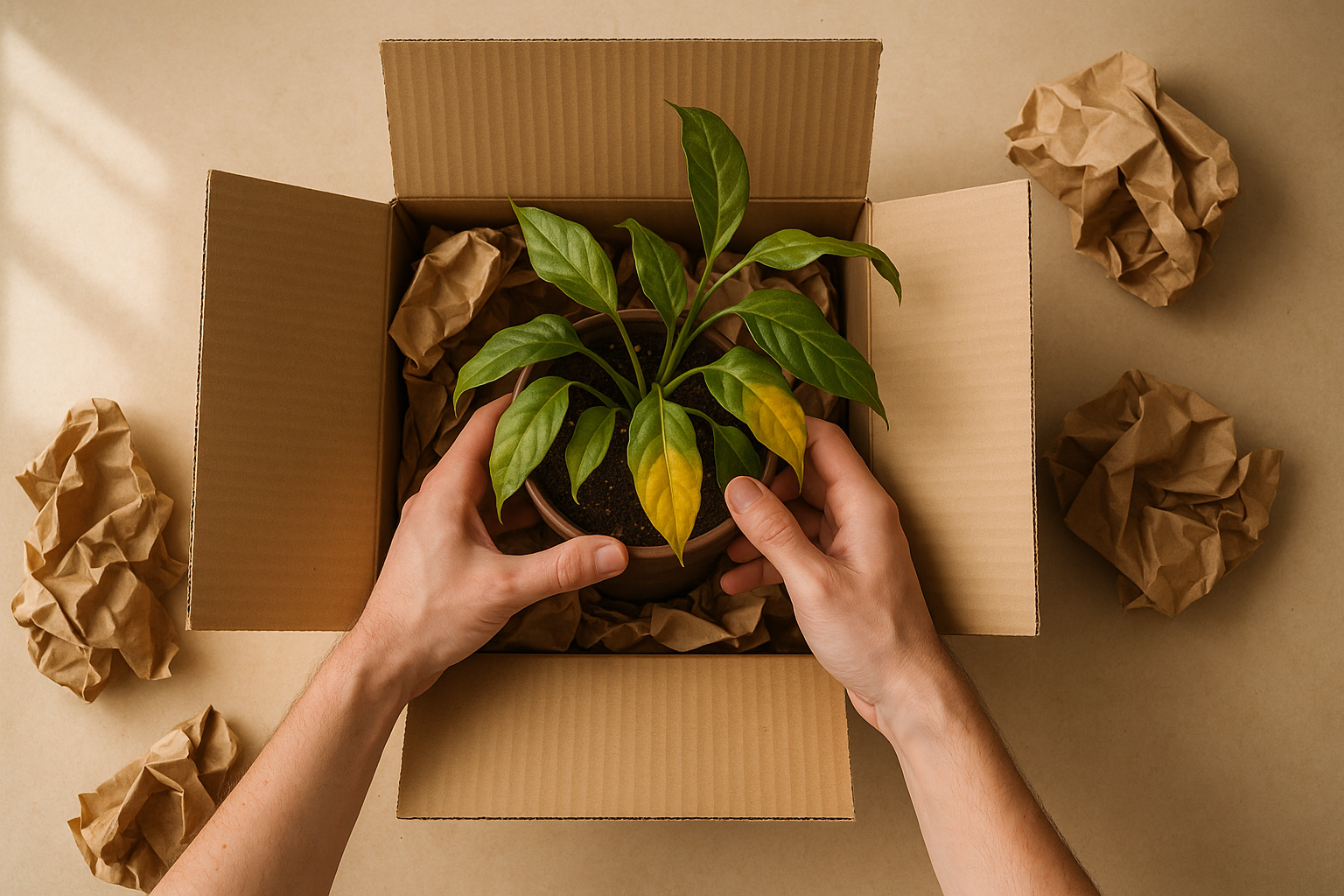
First 10 Minutes: The Unboxing Checklist
Before you do anything else: slow down. Everything in this first 10 minutes matters.
-
Open the box from the bottom. Carriers shake packages during transit. The top is usually where the plant has bounced around most — work upward from the base to minimize damage.
-
Remove all packing materials. Crumpled paper, foam peanuts, moss — get it all out. These hold moisture and can encourage rot during transit.
-
Check the soil moisture before anything else. This is the single most important diagnostic step. Insert your finger into the soil up to the second knuckle. Is it dry? Soaking wet? Slightly damp? Write it down. Photograph it. This determines your entire next week.
-
Inspect the roots through the nursery pot. Hold the pot and look underneath. Do you see roots poking out of the drainage holes? Are any roots visible above the soil line? This tells you if the plant was rootbound at time of shipping — common and usually fine, but good to know.
-
Photograph everything before you disturb anything. Wide shot of the box label. Open box with plant inside. Close-up of the plant's condition. Soil moisture. Roots visible through the pot. These photos are your warranty claim documentation — more on that in "When to Contact the Seller" below.
-
Identify immediate vs. wait-and-see issues. A drooping leaf that just needs water is an immediate fix. A crushed stem that might be root rot needs a different response. You're not diagnosing everything right now — just separating "act now" from "watch and wait."
Is It Shipping Shock or Something Worse?
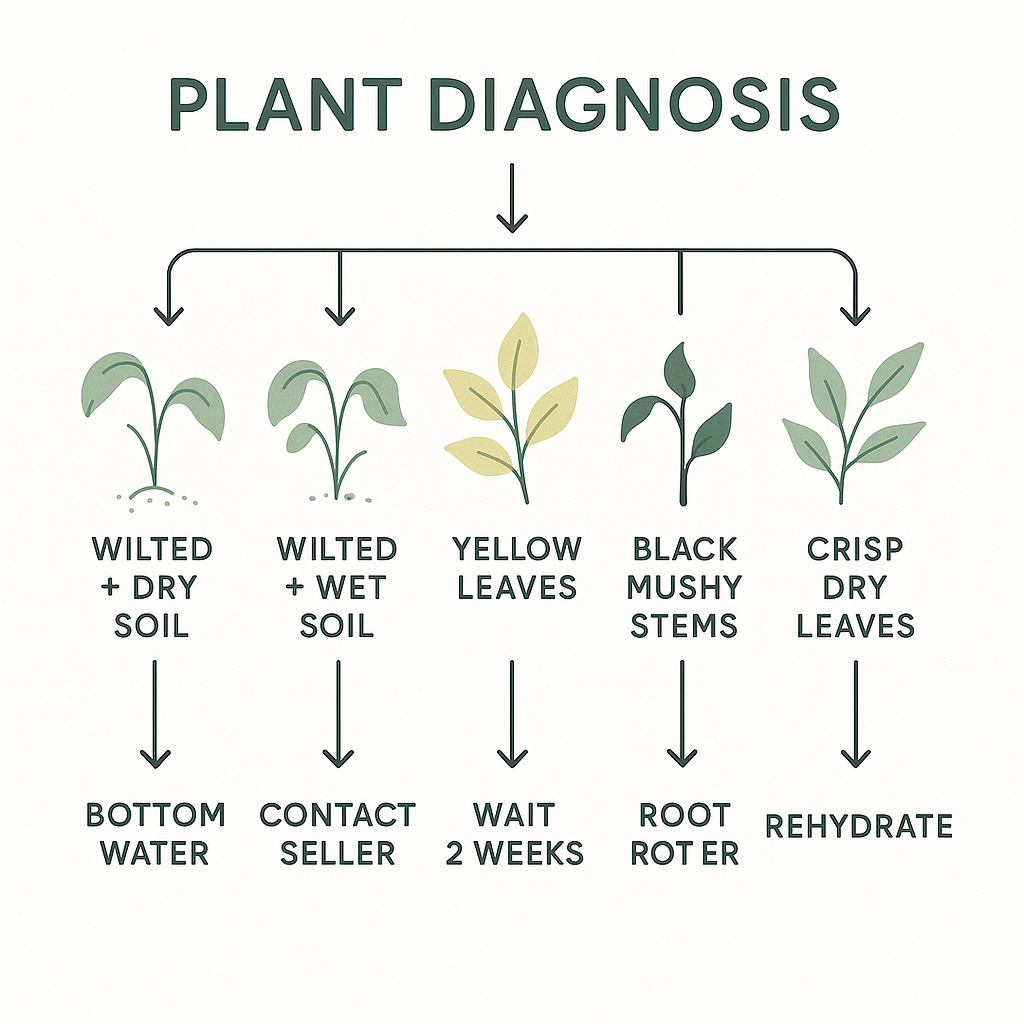
Here's the thing most guides skip: not all damage is equal. Some of what you're seeing is normal stress response. Some of it is a genuine emergency. This decision tree tells you which is which.
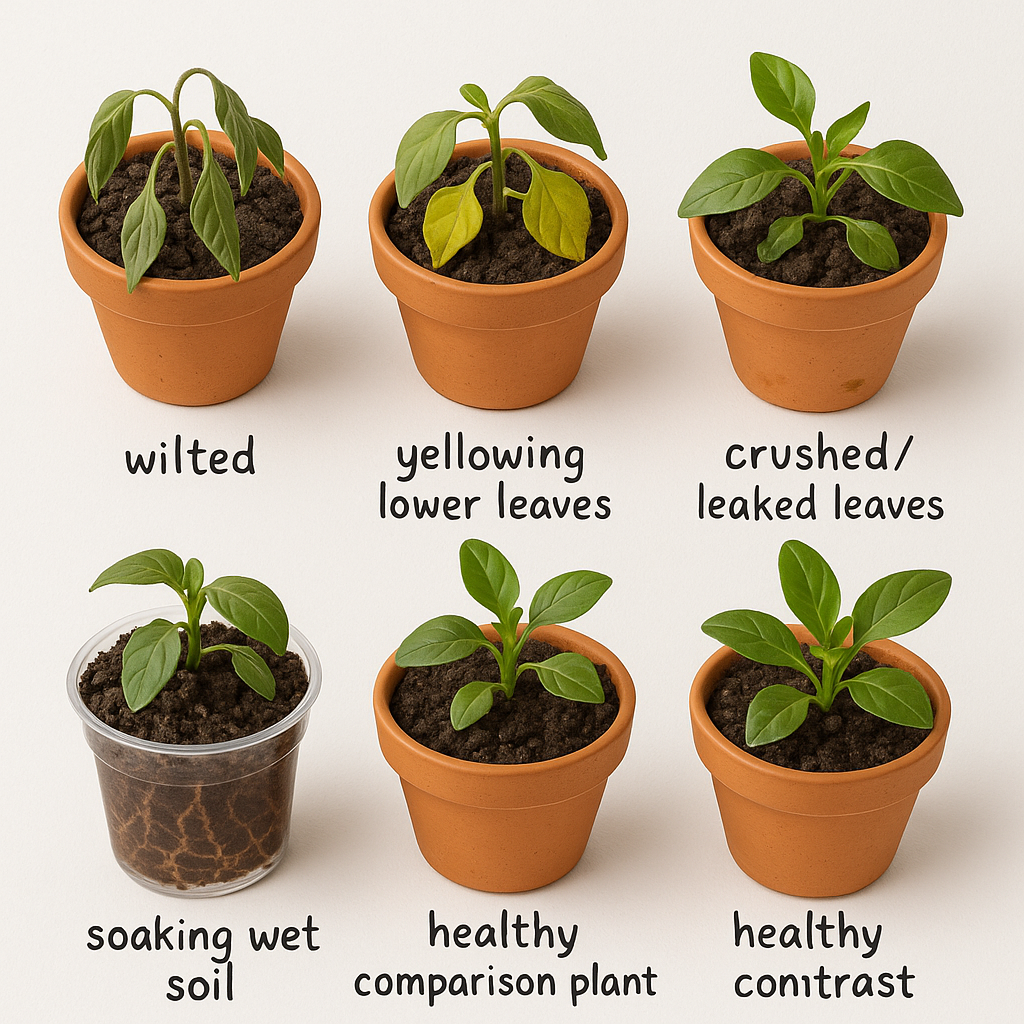
Your plant arrived wilted and the soil is dry → shipping shock, recoverable. Bottom water and wait.
Your plant arrived wilted and the soil is soaking wet → do NOT water. Contact the seller immediately. This is root rot territory.
Your plant has yellowing leaves → normal stress response. Leave them on for now. Yellow leaves often recover or drop naturally — removing them prematurely can stress the plant further.
Your plant has black or mushy stems → root rot. See our root rot care guide (Plant ER) for immediate steps. This is not a "wait and see" situation.
Your plant has crisp, dry leaves → severe dehydration. Recovery is possible but slower. Bottom water and move to low light for 48 hours.
The "Do Not" List: What to Avoid After Unboxing
Here's where new plant owners make their biggest mistakes. The plant looks terrible and your instinct is to do something. Resist it.
Don't repot immediately. I know. It looks cramped. The pot is ugly. The plant is clearly suffering. But repotting adds another stress on top of shipping stress. The general rule: wait 14 days minimum before repotting. If the plant arrived in a biodegradable nursery pot and it's clearly rootbound, wait until you see new growth — that tells you the plant has stabilized enough to handle the transition.
Don't fertilize. Your plant is not in a state to use nutrients right now. Fertilizing a stressed plant can burn roots that are already struggling. Wait 2-4 weeks, and only after you see clear signs of recovery (new growth, upright leaves).
Don't put it in direct sun. Even if the plant was sold as "bright light." Shipping is traumatic. The plant's photosynthetic machinery is compromised. Direct sun on a stressed plant can cause photodamage on top of shipping stress. Start in indirect low light and gradually increase over 3-5 days.
Don't overwater because it looks sad. This is the #1 killer of mail-order plants. A drooping plant isn't necessarily thirsty — it might be waterlogged. Check the soil first. If it's wet, the plant is drowning. If it's dry, water carefully with a narrow-spout can (not a flood).
Don't remove damaged leaves until you see new growth. I know yellow and wilted leaves are ugly. But the plant is still extracting what it can from those leaves — water, nutrients, energy. Removing them prematurely can stall recovery. Once you see new growth appearing, you can clean up the damaged leaves safely.
Step-by-Step Recovery: What to Do Based on What You Found
Dehydrated plant (dry soil, wilted leaves)
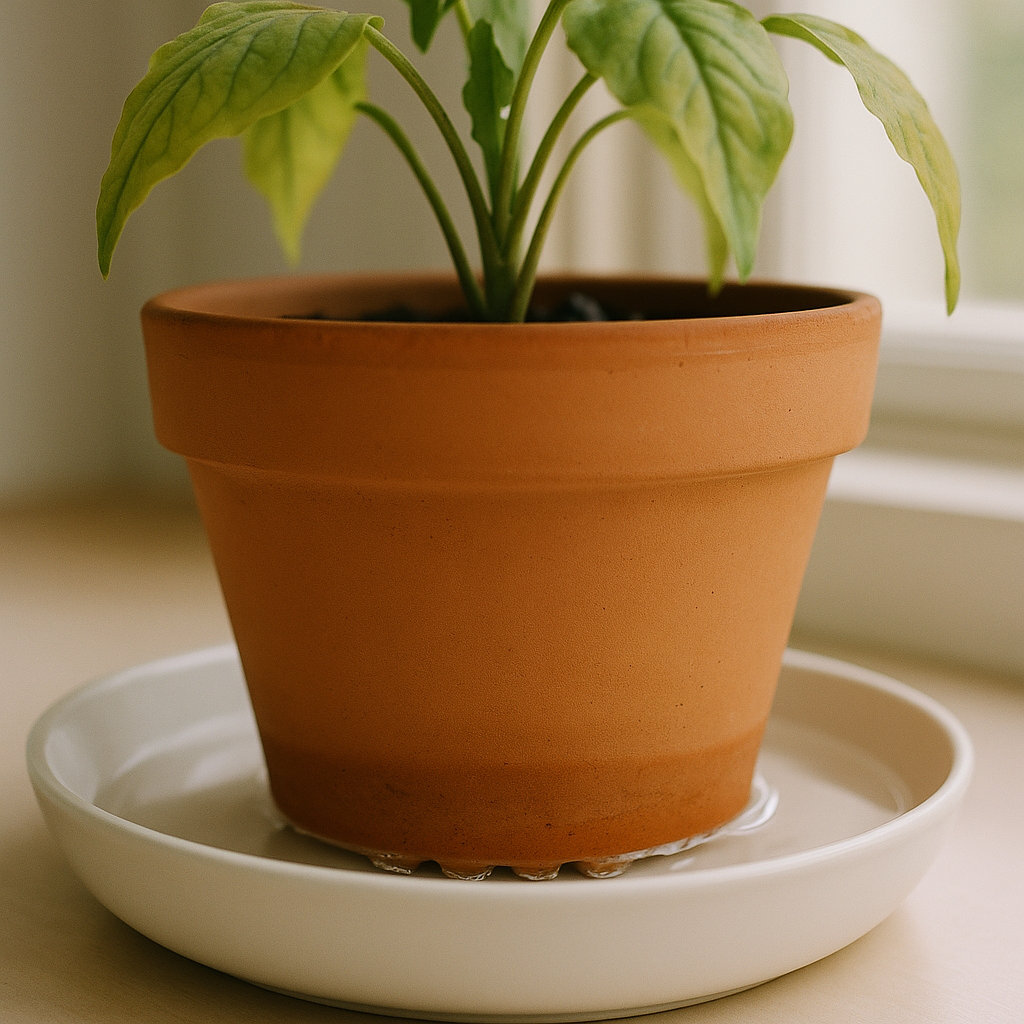
Bottom watering is your best tool here. Traditional top watering floods roots that may have already been stressed by the shipping journey. Bottom watering lets the plant drink at its own pace, absorbing water through the drainage holes without overwhelming the root system.
To bottom water: set the nursery pot in a tray or container of room-temperature water. Let it sit for 20-30 minutes. Check the soil surface — when it's damp to the touch, remove the pot from the water and let it drain fully.
Check Soil Moisture Before Watering →
For the dehydrated plant: bottom watering is the safest recovery method. If you're unsure whether the soil is dry or still holding moisture from shipping, a moisture meter takes the guesswork out of the equation.
Overwatered plant (wet soil, wilting despite being waterlogged)
Stop watering. Put the plant somewhere warm (65-75°F) with good air circulation. Do not water again until the soil has dried out significantly — use a moisture meter to confirm. If the pot has poor drainage, poke extra holes or set it on a rack so air can reach the bottom.
The temptation here is to do something — it looks bad, you want to fix it. But the worst thing you can do is add more water. Warmth and air circulation will help the soil dry out. If the roots are already rotting, you may need to repot into fresh, dry soil — but that's covered in the root rot section below.
Root rot suspected (black/mushy stems, foul smell, roots that are mushy instead of firm)
See our Plant ER guide for root rot recovery steps. Root rot from shipping is serious, but it's not automatically a death sentence. The key is fast identification and fast action: rinse the roots, trim everything that's black and mushy, let the plant dry, repot in fresh dry soil.
Leaf damage (yellowing, brown edges, crushed leaves)
Leave it alone. Seriously. The plant is managing the stress as best it can. Removing damaged leaves before new growth appears can actually stall recovery — the plant has to expend energy to close those wounds, which takes away from recovery energy. Once you see new growth, you can prune the damaged material.
Bare-root arrivals
Some plants (especially rare and expensive cuttings) ship without soil — bare root. This is actually less stressful for the plant in many ways (no soggy soil during transit), but requires different handling:
- Inspect roots immediately. Trim anything that's dried, dead, or mushy.
- Soak roots in room-temperature water for 15-30 minutes.
- Pot in fresh, well-draining soil appropriate for the species.
- Keep in low indirect light for the first week.
- Do not water for 48 hours after initial soak — let the roots settle.
Water Precisely Without Overshooting →
A narrow-spout watering can lets you water precisely at the root zone without disturbing a recovering plant. This matters when your plant is already stressed — you want to water the roots, not flood the leaves.
The 30-Day Recovery Timeline: What to Expect Week by Week
This is where most guides fail you. They tell you what to do on day one and go silent. Here's what the next 30 days actually looks like.
Week 1: Stabilization The plant is in triage mode. Wilting should stabilize within 3-4 days if the issue was dehydration and you've bottom-watered. Some leaf drop is normal — the plant is jettisoning leaves it can't support. Yellowing leaves that appeared on arrival may continue to yellow and drop. This is fine.
Do: Keep the plant in low indirect light. Check soil moisture every 2 days. Do not fertilize. Do not repot.
Week 2: First Signs of Recovery or Trouble By day 10-14, you should see one of two things: (1) new growth appearing — tiny leaves, new buds, roots visibly growing through drainage holes — or (2) stable condition — no improvement, but no deterioration either.
New growth is the best sign. Stable condition at day 14 is acceptable — it means the plant has stopped declining and is holding. If you're still seeing active decline (more wilting, new yellowing, blackening stems), you may be dealing with root rot that wasn't visible on day one.
See our bottom watering technique guide for detailed recovery watering instructions →
Week 3-4: Active Recovery If the plant made it to week 3 without active decline, it's in recovery mode. New root growth is happening below the soil line. Leaves that were wilted may be perking up. You might see color returning to yellowing leaves that were just stressed, not dying.
At this point, if the plant is showing clear recovery, you can start transitioning it to its longer-term spot — gradually increasing light over 5-7 days. Still no fertilizer until week 4 at the earliest, and only at half strength.
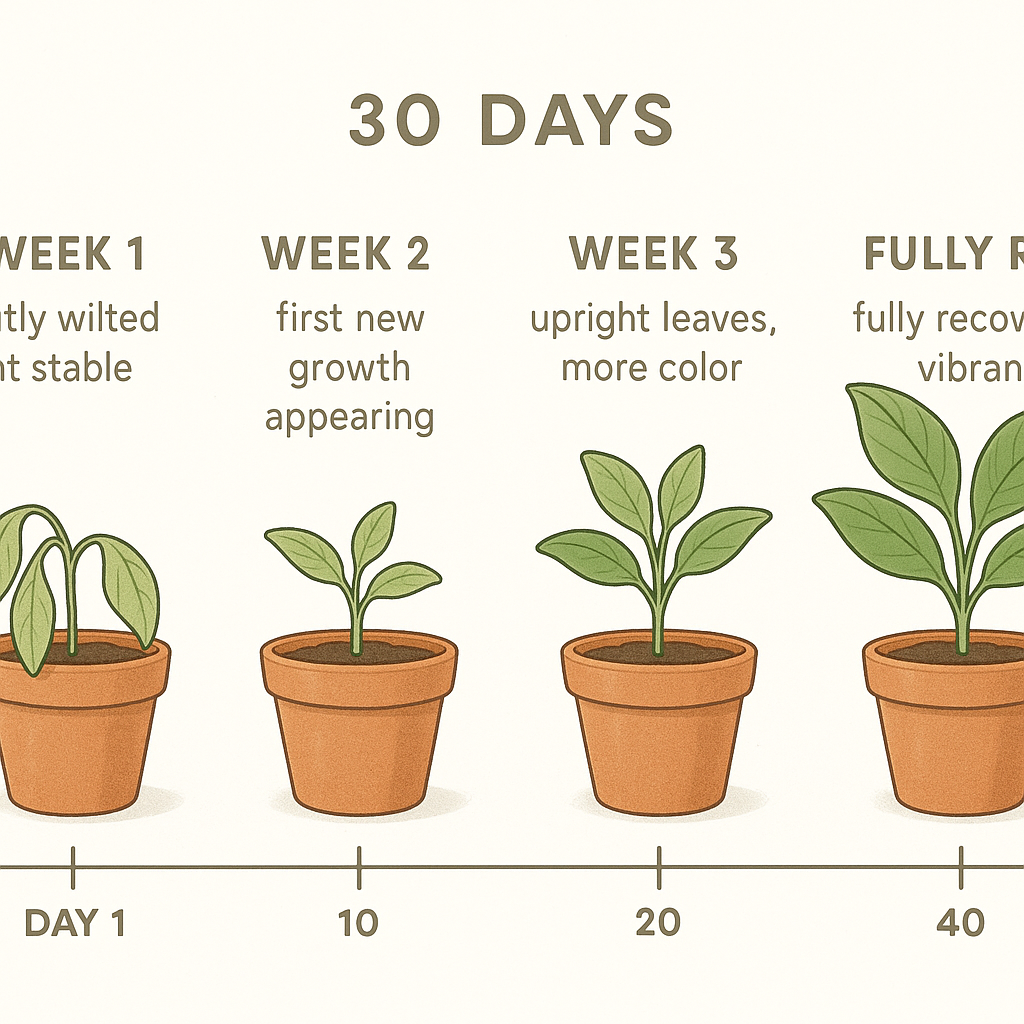
If there's no improvement by Day 30: At day 30 with no new growth and no stability improvement, it's time to contact the seller. More on that below.
When to Contact the Seller (and How)
This step is critical and most plant owners skip it because they don't know what documentation to collect. Here's what you need.
Photo documentation checklist (do this BEFORE you do anything else)
- [ ] Box label (shows carrier, date, shipping info)
- [ ] Plant inside unopened box (shows arrival condition)
- [ ] Plant removed from box with packing materials visible
- [ ] Close-up of damaged areas (leaves, stems, soil)
- [ ] Soil moisture photo (finger inserted, pot lifted to show weight)
- [ ] Roots visible through drainage holes (bottom of pot)
- [ ] Any packing slip or documentation included by seller
What counts as "shipping damage" vs. "shipping stress"
Shipping stress is: wilting, mild yellowing, slight leaf drop, mild dehydration, temporary droopiness.
Shipping damage is: crushed stems, broken main stalks, completely dead roots (rot), plants that arrived with soaking wet soil and are now dying of root rot, physical damage to the main plant structure (not just outer leaves).
Stress is part of the process. Damage is the seller's responsibility.
Email template
Subject: Shipping Damage Report — [Order Number]

Hi [Seller Name],

I received my order on [date] and want to report shipping-related issues with [plant name, quantity].

Upon arrival, the plant showed the following symptoms:
- [describe what you found]

I've attached photos documenting the condition upon arrival, including soil moisture and root status.

I want to be transparent: I'm invested in saving this plant, not just getting a refund. But I need [replacement / refund / partial refund] to proceed.

Please advise on your policy for shipping damage claims. I'm within [48 hours / 14 days / your warranty window] of receipt.

Thank you,
[Your name]
Timing windows
Most reputable sellers have a 48-hour notification window for immediate shipping damage and a 14-30 day window for "plant didn't make it" claims. The 48-hour window is typically for physical box damage or plants arriving in obviously terrible condition. The longer window covers plants that were damaged but the damage wasn't immediately visible (root rot that shows up in a few days, for example).
If you're within either window: contact the seller. Now, not tomorrow.
Rare and Expensive Plants: Special Handling After Shipping
If you dropped serious money on a Monstera Albo, Thai Constellation, Pink Princess, or other high-value plant, the stakes are different. These plants are expensive precisely because they're harder to keep alive — and shipping stress hits harder.
What to do differently for bare-root expensive cuttings:
Bare-root shipping is standard for rare cuttings. The plant is wrapped in sphagnum moss or similar damp medium and shipped without a pot. Here's the critical difference: the moss should be damp, not soaking wet. If it arrives bone dry, the roots have been stressed. If it arrives soaking wet, root rot may already be in progress.
On arrival: unbox immediately, check roots, follow the bare-root steps in the recovery section above. If the roots look questionable (dark, mushy, smell bad), take photos before doing anything and contact the seller — you may have a root rot case that's the seller's responsibility, not your fault.
Humidity tents and heat mats:
Rare tropicals (especially aroids like Albo and Thai Constellation) benefit from higher humidity during recovery. A humidity tent — a clear plastic bag or propagation dome over the plant — reduces water loss through leaves while the roots are recovering. Run it for 1-2 weeks, then remove gradually.
Keep Roots Warm During Recovery →
For plants arriving in cold weather or showing signs of cold stress, a heat mat under the pot can make the difference between recovery and root rot stall. Set to 75°F and keep the plant on the mat for 1-2 weeks after arrival.
When to intervene vs. let it recover naturally:
The temptation with expensive plants is to over-manage — check every few hours, repot immediately, add fertilizer, move to "better" light. Resist it. The same recovery rules apply. If the plant is stable after 48 hours, it's recovering. Check in at day 7, day 14, day 30. Between those checkpoints, leave it alone.
Prevention: How to Set Up for Success Next Time
You can't control how a carrier handles your package, but you can set yourself up for better outcomes.
Best ordering windows by season:
Summer and early fall are the safest shipping windows for most of the continental US. The plant isn't sitting in a freezing truck. If you're ordering in November through March in a cold climate, you're taking on additional risk — and should plan accordingly (heat packs, faster shipping, signature confirmation).
Heat pack recommendations for winter shipping:
If you're ordering in cold months, add a heat pack to your order. Most nurseries offer this as an add-on. The heat pack goes in the box, typically against the outside of the nursery pot, not directly on the plant. It adds 10-15°F of warmth for 48-72 hours. If your order doesn't include one and the temperatures are below 45°F, ask the seller before confirming — or choose a different shipping window.
What to look for in nursery shipping practices:
Reputable sellers use:
- Biodegradable nursery pots (not plastic galoshes that hold water)
- Well-draining soil mix (not heavy peat that stays wet for days)
- Packaging that breathes (not sealed poly bags)
- Moisture恰到好处的 (not sopping wet)
If a seller ships plants in sealed plastic bags with no drainage, that's a red flag. Walk.
Preparing your space before plants arrive:
Have your recovery setup ready before the box arrives:
- Clean workspace with good light
- Moisture meter (so you're not guessing at soil moisture)
- Narrow-spout watering can filled with room-temperature water
- Bottom watering tray or container
- Humidity tent supplies if you're expecting rare plants
- Heat mat if ordering in cold months
The 10 minutes you spend setting up before the plant arrives are worth more than an hour of scrambling after.
Bottom Line
Shipping stress is normal. It's fixable. The worst thing you can do is panic — over-water, over-repot, over-fertilize, over-manage. The plant needs time, consistent conditions, and for you to do less.
Check the soil. Check the roots. Then act based on what you find.
And if it all goes sideways — document everything, contact the seller within the warranty window, and know that one bad shipping experience doesn't mean you're bad at plants. It means the carrier had a bad day.
Now go save your plant.
Related guides: Plant ER — root rot recovery • Watering Guide — bottom watering technique • Best Online Plant Shops — vetted sources with good warranty policies
Our Favorite Recovery Tools
We use these ourselves: