How to Care for Chinese Evergreen — Aglaonema Indoor Guide
The plant that thrives in your dim corner office while everything else gives up and dies.
Meet the Aglaonema — This Is Your Low-Maintenance Workhorse
Here's the thing about Chinese Evergreen (botanical name: Aglaonema): it's the plant that interior designers, office managers, and anyone without a shred of natural light reach for when everything else they've tried has failed.
And yet it doesn't get the respect it deserves. It just... quietly thrives. In the corner. In the bathroom. In that office with the fluorescent lighting that makes everyone look vaguely zombie-ish. No complaints. No drama. Just steady, handsome growth.
You're sleeping on this plant. Let's fix that.
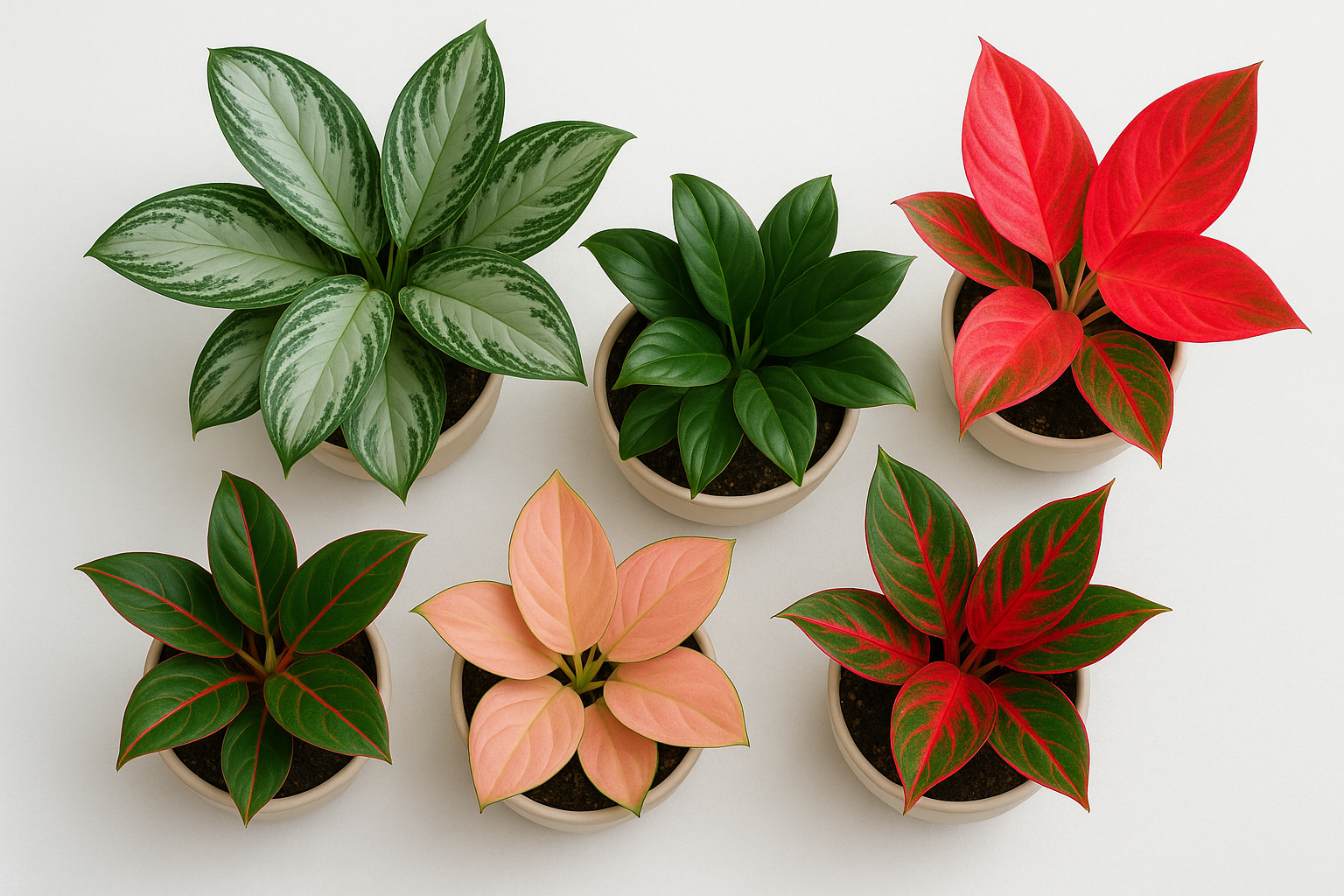
Before we dive in, here's a quick reference for the most common varieties — because yes, different Aglaonemas have meaningfully different needs, especially when it comes to light:
| Variety | Color | Light Needs | Beginner-Friendly? |
|---|---|---|---|
| Silver Bay | Silver-green | Low to medium indirect | ✅ Most forgiving |
| Maria | Deep green | Low to medium indirect | ✅ Very hardy |
| Red Siam | Red-pink variegation | Medium indirect | ✅ Good second plant |
| Pink Pearl | Pale pink-green | Medium bright indirect | ⚠️ Needs more light for color |
| Crete | Dark green/red edges | Low to medium indirect | ✅ Solid choice |
Notice the pattern: the more color (red, pink) a variety has, the more light it needs to keep that color. A Red Siam in a dark corner will slowly fade to more green. That's not the plant failing — that's just physics.
Light — What It Actually Needs (and Why Dark Rooms Are Its Sweet Spot)
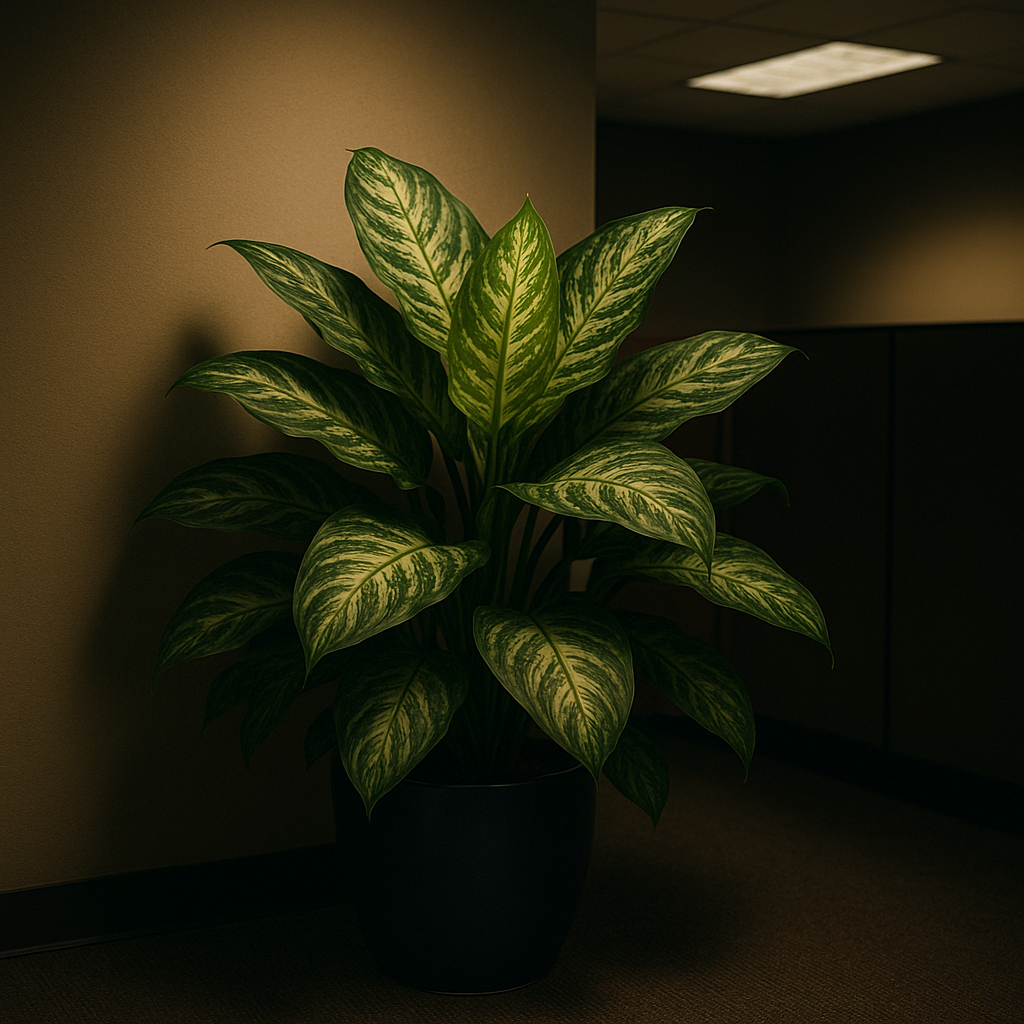
Let's get this out of the way: Aglaonema tolerates low light better than almost any other houseplant you'll commonly find at the garden center. It originated as an understory plant in Southeast Asian forests, which means it spent evolutionary time chilling in shade. Direct sun? That's a leaf-scorching problem. But dim corners, north-facing windows, offices with no natural light at all? It's in its wheelhouse.
This is the plant that will look genuinely great in your guest bedroom that nobody ever uses, or that corner of the living room where the light just... doesn't go.
That said, a few practical notes:
- Bright indirect light is ideal if you want faster growth and more vibrant color
- Direct sun = burned leaves (brown, crispy patches, especially on the most exposed parts)
- Colored varieties (red, pink, cream) need more light than solid green ones to maintain their variegation — without enough light, they'll slowly green out
- Fluorescent lighting is fine. Offices with no windows? Aglaonema doesn't care. It's unbothered.
Water — The Overwatering Problem (and How to Fix It Before It Starts)
Here's where people kill Aglaonema: overwatering. Specifically, watering on a set schedule (every Tuesday! every week!) without actually checking whether the plant needs water.
The golden rule: let the top 1–2 inches of soil dry out before watering again. In spring and summer, that's typically every 7–10 days. In winter, when growth slows, it might be every 2–3 weeks. There's no fixed schedule — the plant tells you.
How to tell:
- Finger test: Stick your finger in the soil up to the second knuckle. Dry? Water. Damp? Wait.
- Pot weight method: Pick up the pot when it's dry vs. just watered. The dry pot is noticeably lighter. After a while, you'll just know by the heft.
- The moisture meter shortcut: If you want to be scientific about it — and honestly, for a $15 tool that prevents you from killing a $30 plant, it's worth it — a moisture meter takes the guesswork out entirely. Check soil moisture before you water — $15 that saves your plant →
Seasonal adjustment matters. In winter, your Aglaonema isn't doing much. Less water. Seriously — most Aglaonema deaths in winter are from well-meaning owners who kept up their summer watering schedule.
Overwatering vs. Underwatering — What's Going On With Your Plant?
Both look similar (sad plant, yellowing leaves) but the fix is completely opposite. Here's how to tell:
Overwatered Aglaonema:
- Soil stays wet for more than a week after watering
- Leaves turn yellow starting from the bottom/newer growth
- Soil smells musty or rotten
- Stem near the soil line feels soft or mushy
- Roots are brown and mushy when you check them
Underwatered Aglaonema:
- Soil pulls away from the edges of the pot
- Pot feels very light when you pick it up
- Leaves go limp and droopy before they yellow
- Leaf tips go brown and crispy first
- Plant perks up within hours of watering
If you've got mushy roots and stinky soil: Already got mushy roots and smelly soil? Here's how to save your plant.
Soil Mix — Drainage Is Non-Negotiable
Aglaonema is an aroid. It wants the kind of soil that drains fast and lets the roots breathe. Standard potting mix from the garden center? Too dense. It holds too much water and stays wet too long.
What you want: a well-draining aroid mix, or a standard houseplant soil amended to drain better.
DIY mix that works:
- 2 parts potting soil
- 1 part perlite
- 1 part orchid bark or bark chips
This drains fast, holds some moisture without staying soggy, and the bark gives the roots something to grip. You can also grab an Grab the aroid mix — Aglaonema needs fast-draining soil, not straight potting mix → pre-made if you're not feeling like mixing your own.
What happens in poorly draining soil:
- Root rot (the #1 killer)
- Soil becomes hydrophobic over time (water runs straight through without absorbing)
- Fungus gnats move in (they love wet topsoil)
- The plant slowly declines for no obvious reason
Repotting every 2–3 years refreshes the soil and gives you a chance to check root health.
Temperature & Humidity — The Cold Draft Problem
Here's the thing most care guides skip over or bury: cold kills Aglaonema. Not dramatically — it doesn't freeze overnight. But drafty spots, AC vents, windowsills in winter, that gap under the front door that lets in a trickle of cold air — these cause stress that shows up as yellowing leaves, mushy stems, or a plant that just sits there not growing.
Ideal temperature: 65–80°F. Below 60°F for extended periods? Stress. Below 50°F? Damage. Below freezing? You're a grieving plant parent.
The most common cold damage scenario: someone puts their Aglaonema on a windowsill in winter, the glass gets cold at night, and the plant slowly sulks its way into decline over 2–3 weeks. The leaves don't turn dramatic yellow all at once — they just gradually look less great. By the time you notice, you've forgotten it was ever cold.
Keep Aglaonema away from:
- Cold windows in winter (even insulated glass transmits cold)
- AC vents (cold air blowing directly on leaves causes stress)
- Drafty doorways
- Unheated porches or conservatories
Humidity: Aglaonema is flexible here. It tolerates low humidity better than most tropical houseplants. 40–60% is comfortable. If your home is very dry (common in winter with heating), occasional misting or a pebble tray with water nearby helps, but it's not a requirement. Don't stress the humidity.
Feeding — Light Feeder, Heavy Tolerance
Aglaonema doesn't need much. It's not a heavy feeder — too much fertilizer causes the exact problems you're trying to avoid (brown tips, salt buildup in the soil, crispy edges).
The approach: Use a balanced liquid fertilizer diluted to half-strength. Apply every 4–6 weeks during spring and summer (the growing season). Skip it entirely in fall and winter.
A balanced liquid fertilizer at half-strength is all Aglaonema needs →
Signs you're over-fertilizing:
- Brown leaf tips (the most common sign)
- White crust on the soil surface (salt buildup)
- Wilting even when soil is moist
- Leaves browning at the edges
If you've over-done it: flush the soil thoroughly with plain water (run water through the pot multiple times) to leech out the excess salts. Then stop fertilizing for a few months.
Moisture meters and proper fertilizer technique are covered in our Level Up Your Basics guide.
Repotting — When and How
Aglaonema doesn't need frequent repotting — every 2–3 years is fine. In fact, being slightly root-bound is better than being in an oversized pot with too much soil (that holds water and causes rot).
Signs it's time to repot:
- Roots growing out of the drainage holes
- Water runs straight through the pot without absorbing
- Soil pulling away from the pot edges
- Growth has slowed significantly despite good care
- The plant looks top-heavy or unstable
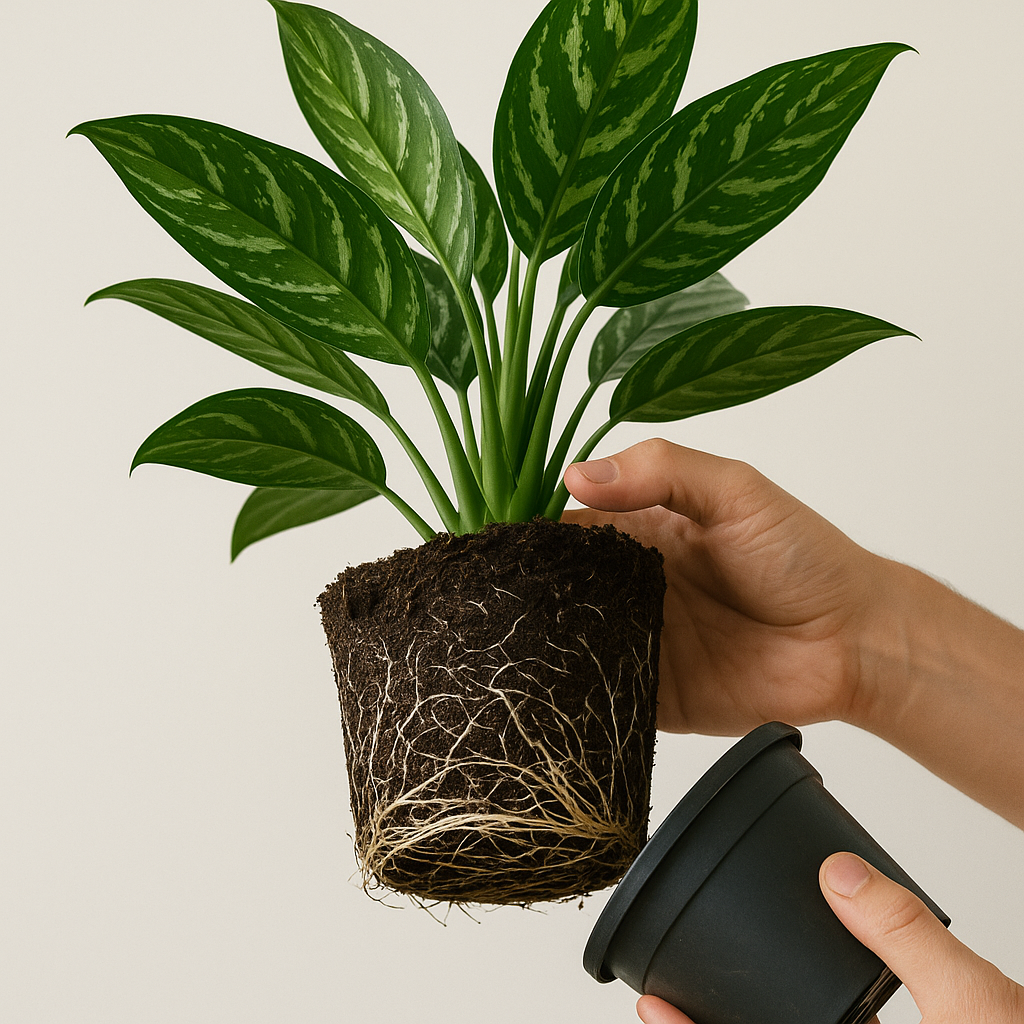
When you repot:
- Go up one pot size only (2" bigger if it was in a 6" pot, not 10")
- Spring is ideal, but if your plant is struggling, just repot it
- Use fresh well-draining soil (see Soil Mix section above)
- Don't fertilize for 4–6 weeks after repotting — the fresh soil has nutrients, and the roots need time to recover
Troubleshooting — What's Your Aglaonema Telling You?
Here's where most care guides let you down. They give you a list of problems but don't help you figure out which one applies to your plant.
Aglaonema tells you what's wrong if you know how to read it.
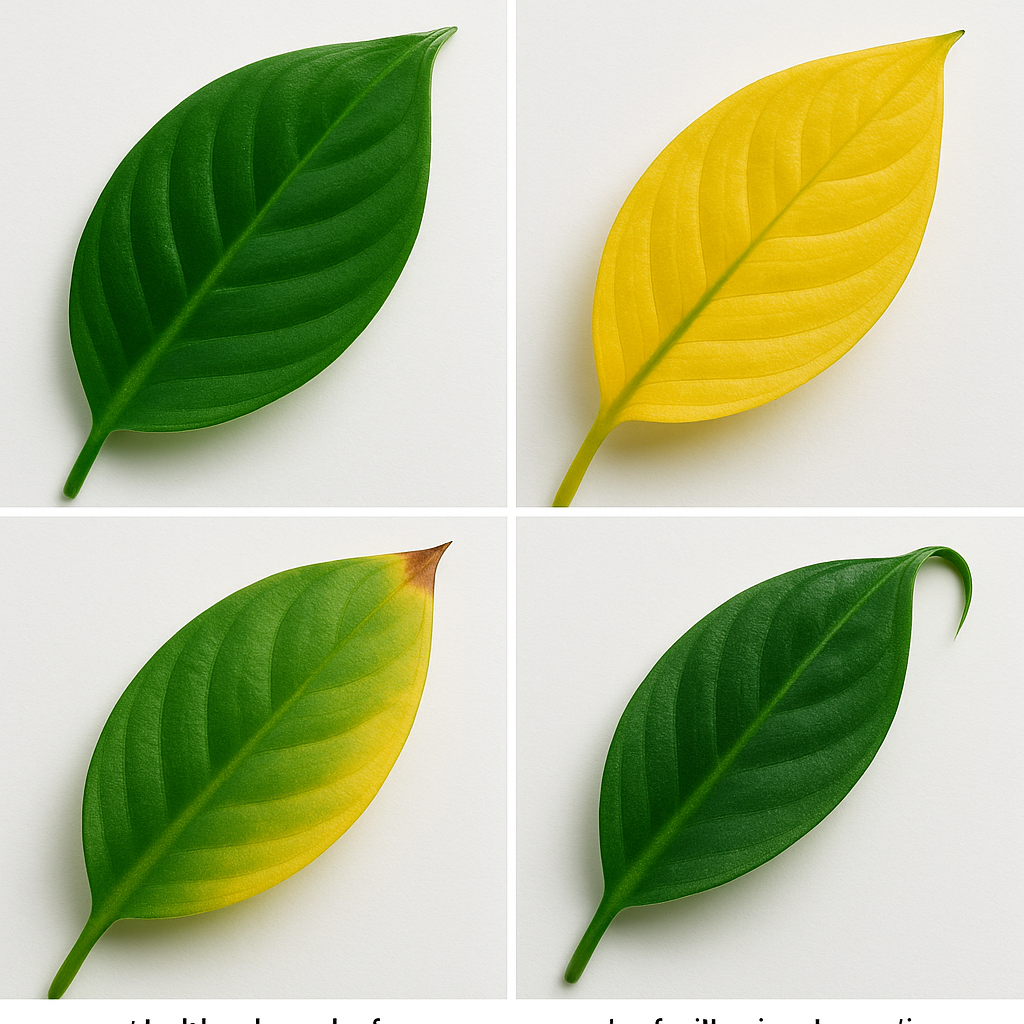
Quick Diagnostic
| Symptom | Likely Cause | Fix |
|---|---|---|
| Yellow leaves (lower/newer) | Overwatering | Let soil dry more, check roots for rot |
| Yellow leaves (top/older) | Normal aging | One or two lower leaves yellowing is fine — plants shed old leaves |
| Yellow leaves (all over) | Too much light | Move away from direct sun or very bright spots |
| Brown leaf tips | Over-fertilizing, low humidity, or dry air | Flush soil, reduce fertilizing, increase humidity |
| Brown leaf edges | Cold damage or inconsistent watering | Move away from cold drafts, establish a consistent watering routine |
| Drooping leaves (soil wet) | Overwatering / root rot | Let dry out, check roots if no improvement |
| Drooping leaves (soil dry) | Underwatering | Water thoroughly, pot should drain |
| Leaves curling | Underwatering, cold shock, or pests | Water if dry, check for drafts, inspect for spider mites |
| Slow growth | Low light, too cold, or dormant season | Increase light, check temperature, don't worry in winter |
| Loss of variegation | Not enough light for colored varieties | Move to brighter spot gradually |
For symptoms not covered here, try the general Plant ER symptom checker.
Not sure if it's overwatered? Not sure if it's overwatered? A moisture meter takes the guesswork out. →
Propagation — Easy to Do at Home
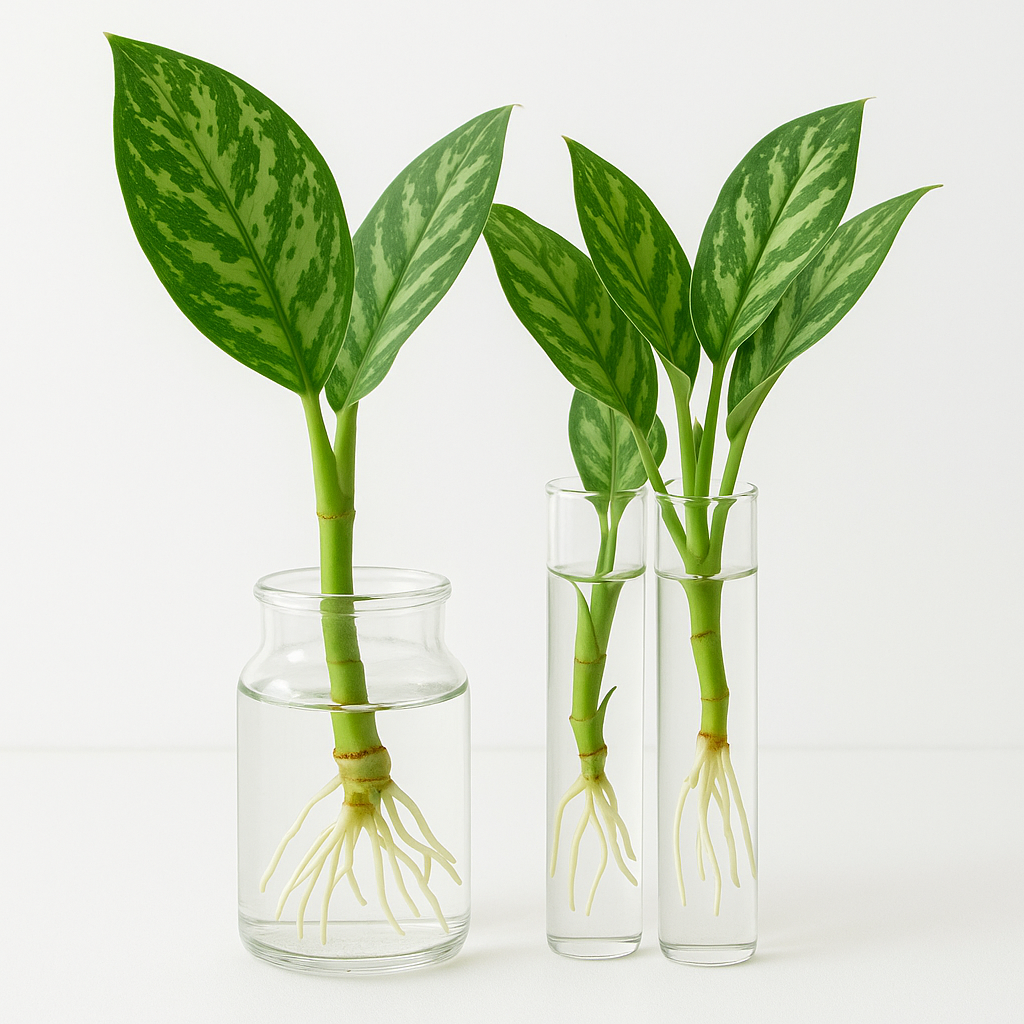
Aglaonema propagates easily from stem cuttings, and you can also divide established plants at repotting time. Both methods are beginner-friendly.
Stem Cuttings in Water
This is the easiest method and lets you watch the roots grow, which is genuinely satisfying.
- Take a 4–6 inch cutting from a healthy stem — make sure it has 2–3 nodes (the bumps where leaves attach)
- Remove the lower leaves, leaving 2–3 at the top
- Place in a glass of room-temperature water, node submerged
- Put in bright indirect light (no direct sun)
- Change the water every few days to keep it fresh
- Roots appear in 4–6 weeks. Once roots are 2–3 inches long, pot in well-draining soil.
Division at Repotting
When you repot an established Aglaonema, you can separate the root ball into two or more plants. Gently tease the roots apart — if they're really tangled, use a clean knife to cut between them. Each division needs a good chunk of roots and several stems. Pot separately and water well. This is lower-risk than cuttings because the divisions already have established root systems.
Toxicity Heads-Up — Keep Away from Pets and Kids
Important: Aglaonema is toxic to cats, dogs, and humans if ingested.
It contains calcium oxalate crystals, which cause oral irritation, excessive drooling, vomiting, and difficulty swallowing. It's not going to kill your pet outright, but it's deeply unpleasant and requires a vet visit.
If you have cats who treat every plant as a salad bar, or dogs who chew everything, Aglaonema is not the right plant for you. Consider one of the non-toxic alternatives in our Best Low Light Plants guide.
Keep it on a high shelf or in a room your pets don't access. Wash your hands after handling if you have any cuts.
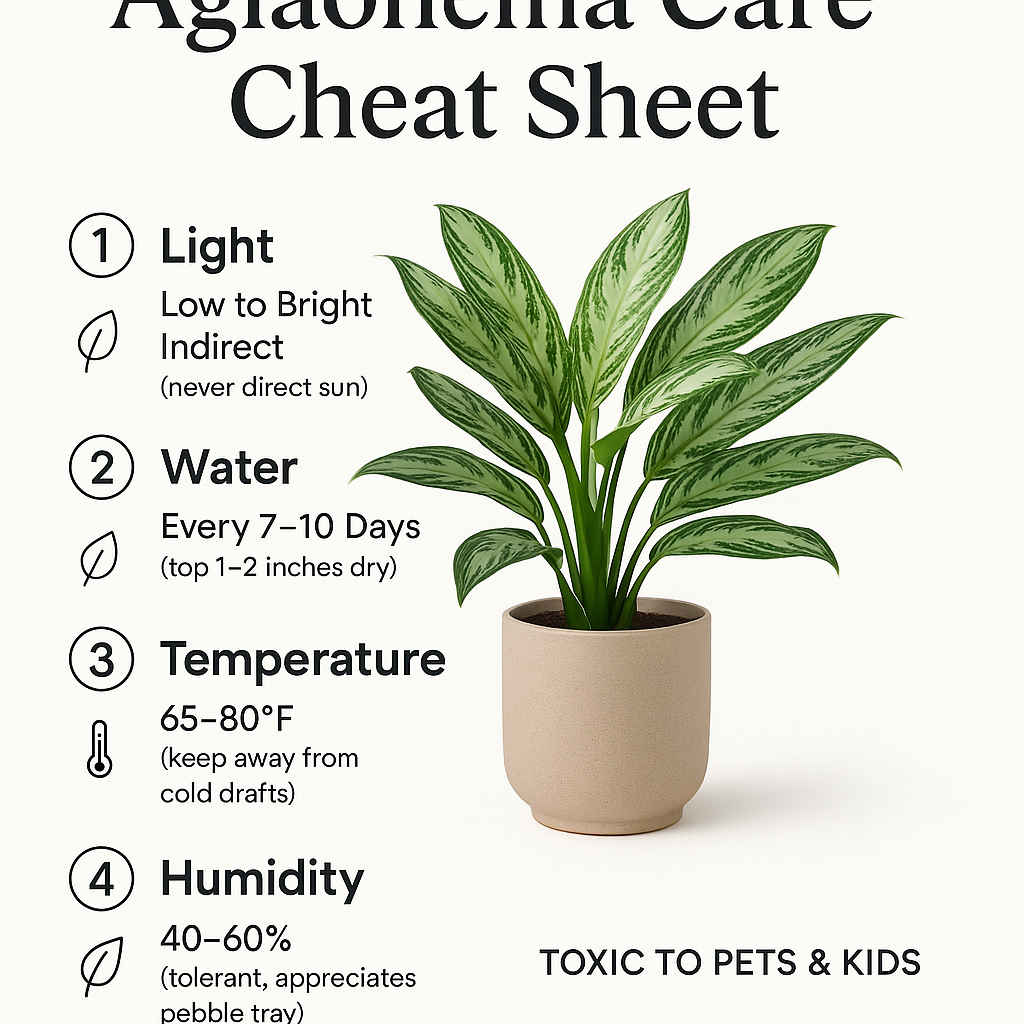
Aglaonema Care Cheat Sheet — Everything in One Place
Here's the quick-reference card. Pin it, screenshot it, bookmark it — whatever helps.
- Light: Low to bright indirect (never direct sun). Colored varieties need more light to maintain color.
- Water: Every 7–10 days in growing season, every 2–3 weeks in winter. Top 1–2 inches dry first.
- Temperature: 65–80°F. Keep away from cold drafts and AC vents.
- Humidity: 40–60% — tolerant, not required.
- Fertilizer: Balanced liquid fertilizer at half-strength, every 4–6 weeks in spring/summer only.
- Repotting: Every 2–3 years, spring, one pot size up.
- Toxicity: Toxic to pets and kids.
Frequently Asked Questions About Aglaonema
Is Aglaonema safe for pets? No. Chinese Evergreen is toxic to cats, dogs, and humans if ingested. It contains calcium oxalate crystals that cause oral irritation, drooling, and vomiting. Keep it out of reach of pets and small children.
How much light does Aglaonema need? Low to bright indirect light. It tolerates low light better than most houseplants and handles fluorescent office lighting without complaint. Avoid direct sun, which burns the leaves. Colored varieties (red, pink) need more light to maintain their hues.
Why are my Aglaonema leaves turning yellow? Usually overwatering — the most common Aglaonema killer. Check the soil: if it's wet and stays wet, ease up on watering and make sure the pot has drainage holes. If only the bottom/older leaves are yellowing, that can be normal aging (plants shed old leaves). If the whole plant is yellowing, it's likely too much light or a root problem.
How often should I water Chinese Evergreen? Every 7–10 days in spring and summer when the top 1–2 inches of soil are dry. In winter, reduce to every 2–3 weeks. Always check the soil before watering — never water on a fixed schedule.
Can Aglaonema grow in an office with no windows? Yes. Aglaonema tolerates fluorescent lighting and genuinely low-light spaces better than most houseplants. It won't grow vigorously in a windowless room, but it will survive and look decent. It's the go-to for exactly this scenario.
What Aglaonema varieties are best for beginners? Silver Bay and Maria are the most forgiving. Both handle low light well and aren't fussy about humidity. Red Siam is a good next step if you want more color — just give it a bit more light.
Have a specific Aglaonema problem not covered here? Check our Plant ER for more symptom diagnosis, or browse the Best Low Light Plants guide if you're looking for options.