How to Build a Terrarium — Closed Ecosystem Guide for Indoor Plants
It waters itself. Mostly. Here's how to build a closed terrarium that actually works — and why it works.
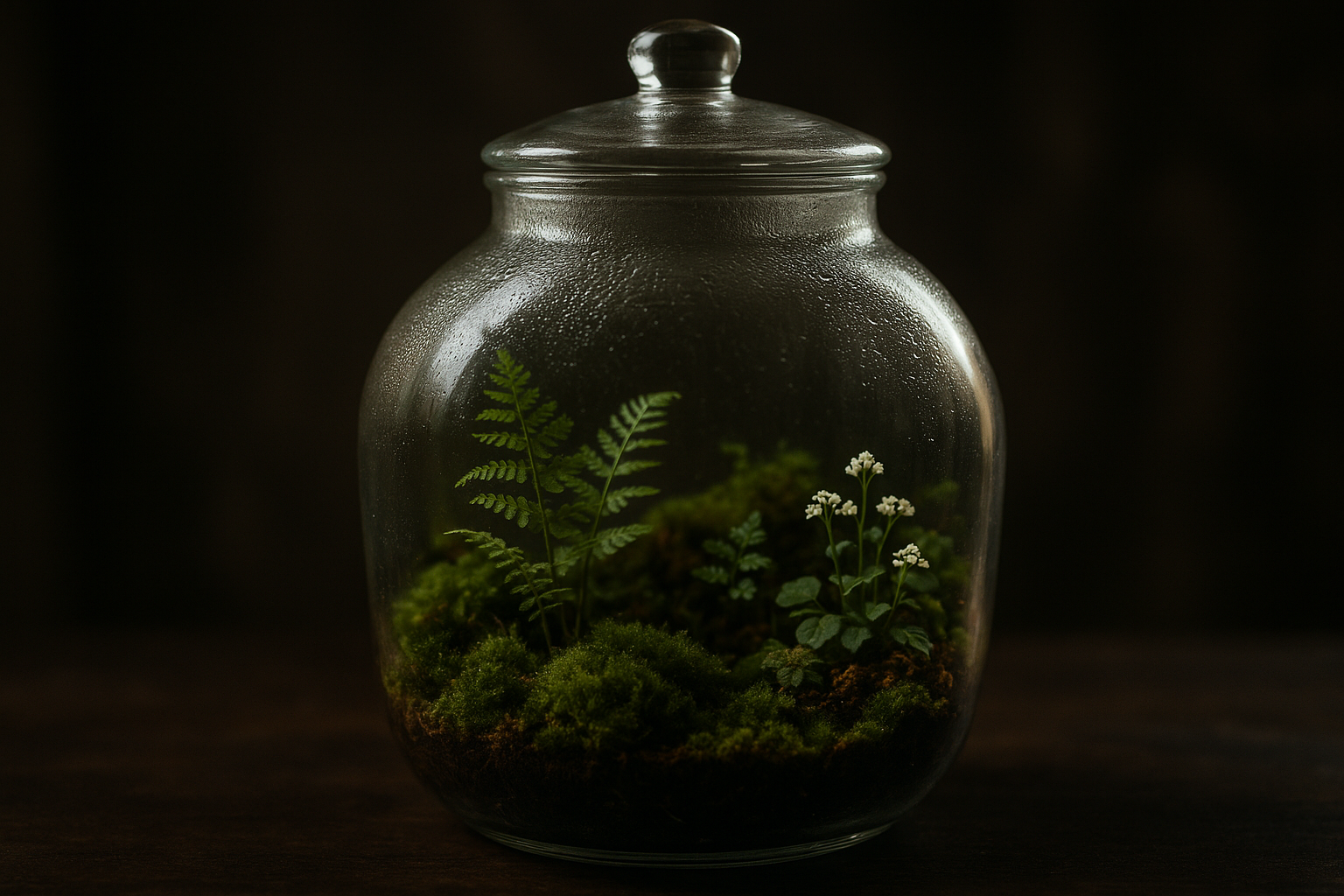
- A closed terrarium is a sealed glass vessel that creates its own miniature rain cycle — low maintenance by design
- Layer order matters: drainage → activated charcoal → barrier → soil → plants
- Best plants: slow-growing, humidity-loving — ferns, moss, Fittonia, Selaginella
- If it's constantly fogged up, crack the lid; if it's wilting, yes, even a closed terrarium needs water sometimes
What Is a Closed Terrarium? (The Science of a Miniature Ecosystem)
A closed terrarium is a sealed glass container that creates a self-sustaining miniature ecosystem. That sounds like marketing copy. Here's what it actually means:
Water evaporates from the soil. Condenses on the cool glass walls. Runs back down into the soil. Plants photosynthesize during the day, releasing oxygen and pulling CO₂. Microbes in the soil break down organic matter, releasing CO₂ back to the plants. The whole thing cycles on its own.
You're not just planting a jar of plants. You're building a tiny weather system.
This is why closed terrariums can go weeks — sometimes months — without any intervention from you. The ecosystem does the work. The catch: you have to build it right in the first place. Too much water at setup causes mold. Wrong soil causes rot. Fast-growing plants mean a glass box of chaos within six months.
Get it right once, and you're mostly hands-off from there.
Closed vs. Open Terrarium: Which Should You Build?
The short version: closed = tropical/humid plants + low maintenance. Open = succulents and cacti + more hands-on involvement.
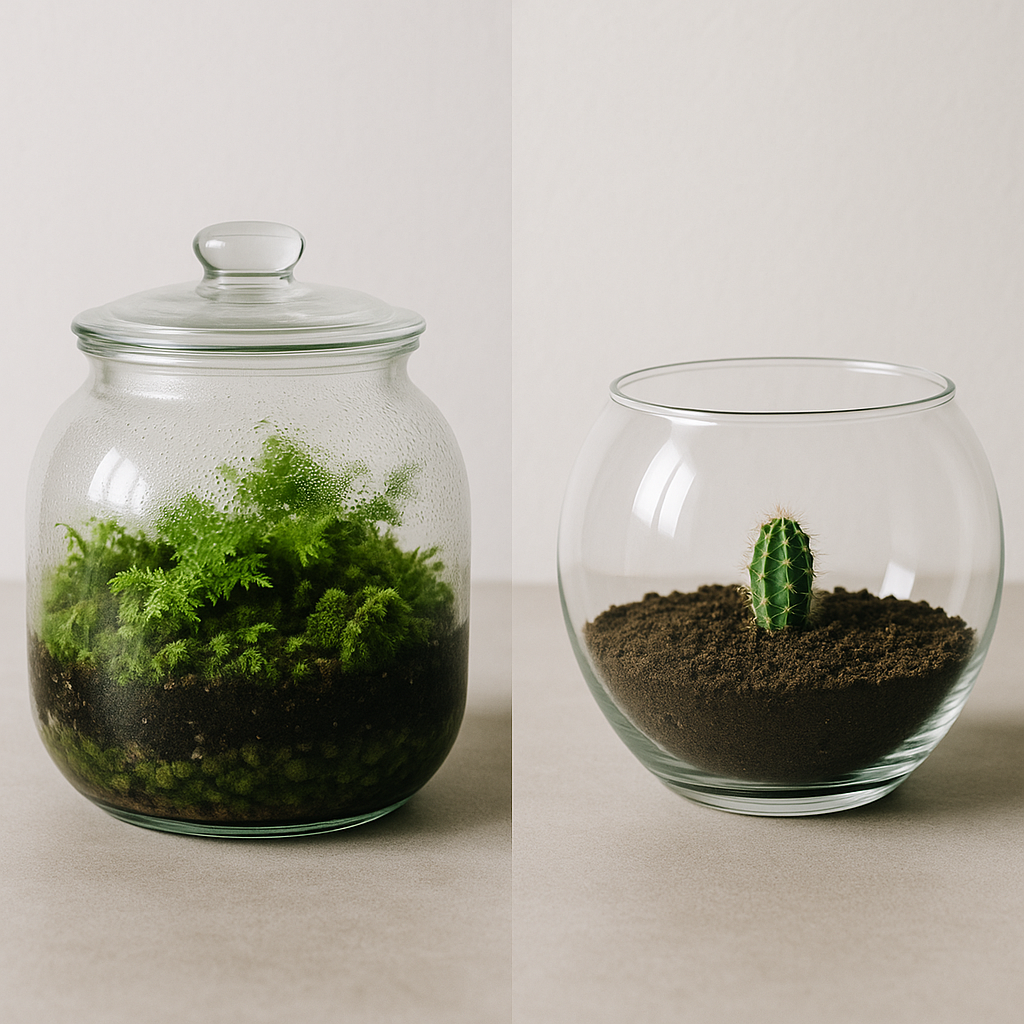
Choose closed if you:
- Want ferns, moss, and tropical ground cover that love humidity
- Want to water it as infrequently as humanly possible
- Are building a gift or a statement piece
Choose open if you:
- Want succulents, cacti, or drought-tolerant plants
- Want easy access for regular watering and pruning
- Couldn't care less about the self-sustaining ecosystem novelty
This guide covers closed terrariums. If you're building open, the layering and plant advice still applies — just skip the lid and adjust your plant choices accordingly.
What You Need: Materials & Tools Checklist
You don't need a lot. You do need the right things.
The container: Any glass vessel with a lid works — apothecary jars, fish bowls with covers, old pasta jars, dedicated terrarium vessels. Minimum 3-inch opening so you can actually get your hand in there to plant.
The layer materials:
- Drainage layer: pebbles, LECA balls, or coarse gravel (1–2 inches)
- Activated charcoal: thin layer on top of drainage (about ½ inch)
- Barrier: mesh screen, landscape fabric, or tightly packed sphagnum moss — keeps soil from falling into the drainage layer
- Terrarium soil mix: not standard potting soil. Needs to drain well. More on this in the layering section.
Tools: Long tweezers or chopsticks for planting in tight spaces, a fine-mist spray bottle, small pruning snips.
Skip the sourcing headache with a kit. If you're just starting out, a beginner kit gives you the vessel, soil, charcoal, and plants in one box — no guesswork required. Shop Budget Terrarium Kits on Amazon for options in the $20–30 range that get the job done.
For a design-forward, everything-included build with handpicked plants and a beautiful vessel, the Terrart NYC DIY Ecosystem Kit is worth it — especially as a gift for someone who'd never research this stuff themselves.
Not sure what other gear belongs in your plant toolkit? Our plant care starter kit guide covers the tools worth having before you need them.
How to Layer a Terrarium (Step-by-Step)
This is where most terrariums fail. Get the layers wrong and no amount of good plant choices will save you.
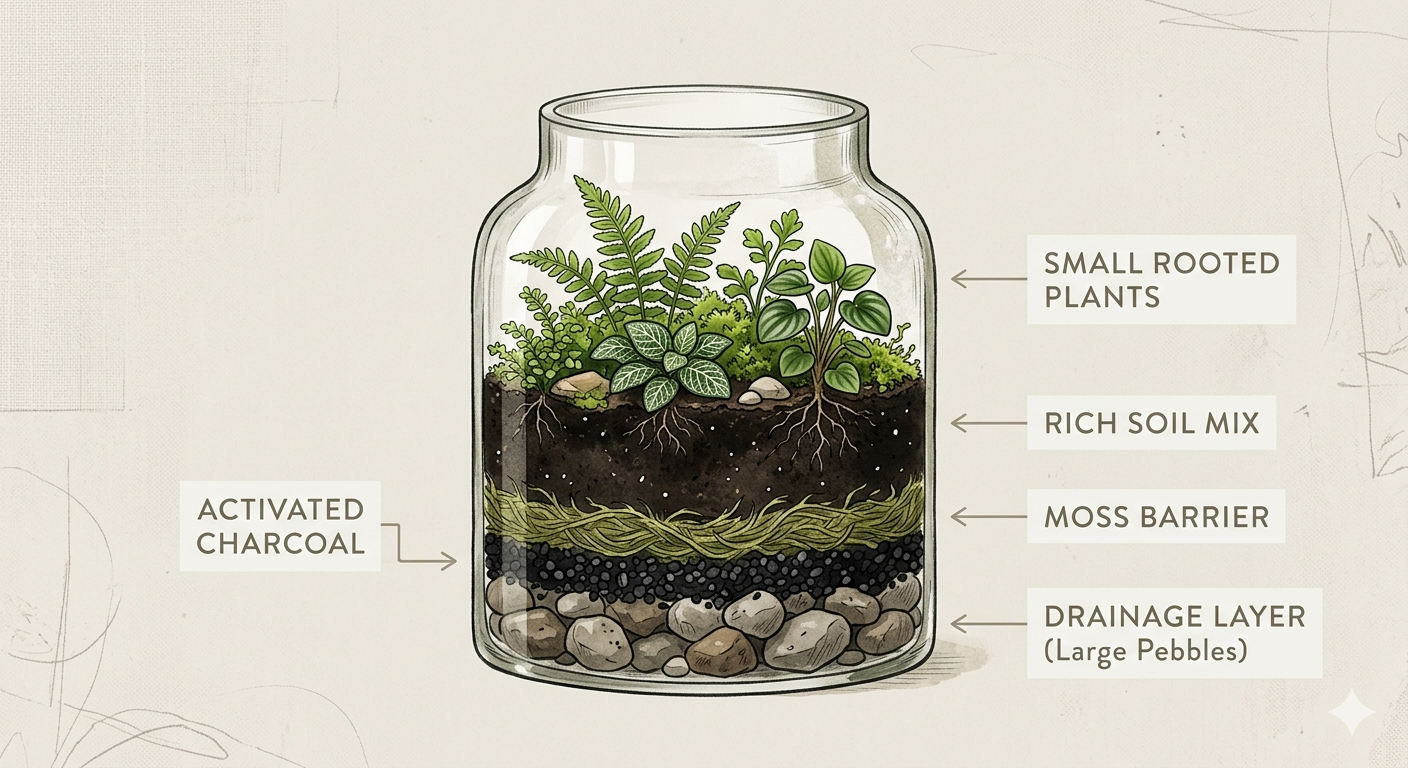
Layer 1 — Drainage (goes first): 1–2 inches of pebbles, LECA, or coarse gravel. This is your water reservoir. It keeps roots out of standing water so they don't rot.
Layer 2 — Activated charcoal: About ½ inch directly on top of the drainage layer. Charcoal isn't decorative — it absorbs odors, inhibits mold and bacterial growth, and keeps the stagnant water in the drainage layer from going foul. Don't skip it.
Layer 3 — Barrier: A piece of mesh screen, fine-woven landscape fabric, or a flat layer of packed sphagnum moss. Its job: stop the soil from falling through into the drainage layer and turning everything into swamp mud.
Layer 4 — Terrarium soil: 2–3 inches minimum. Standard potting mix retains too much moisture and will rot your roots in a sealed environment. Use a specialty terrarium or succulent blend. Bio Dude Terrarium Soil Mix on Amazon drains well while holding what plants actually need — worth the specific purchase.
Layer 5 — Plants and top dressing: Plant your specimens, tuck decorative moss around the base, mist lightly, seal the lid.
Best Plants for Closed Terrariums (Beginner Picks + Plant Palettes)
The rule: slow-growing, humidity-loving, compact. Anything that thrives in high humidity, doesn't mind indirect light, and won't hit the glass ceiling within three months.
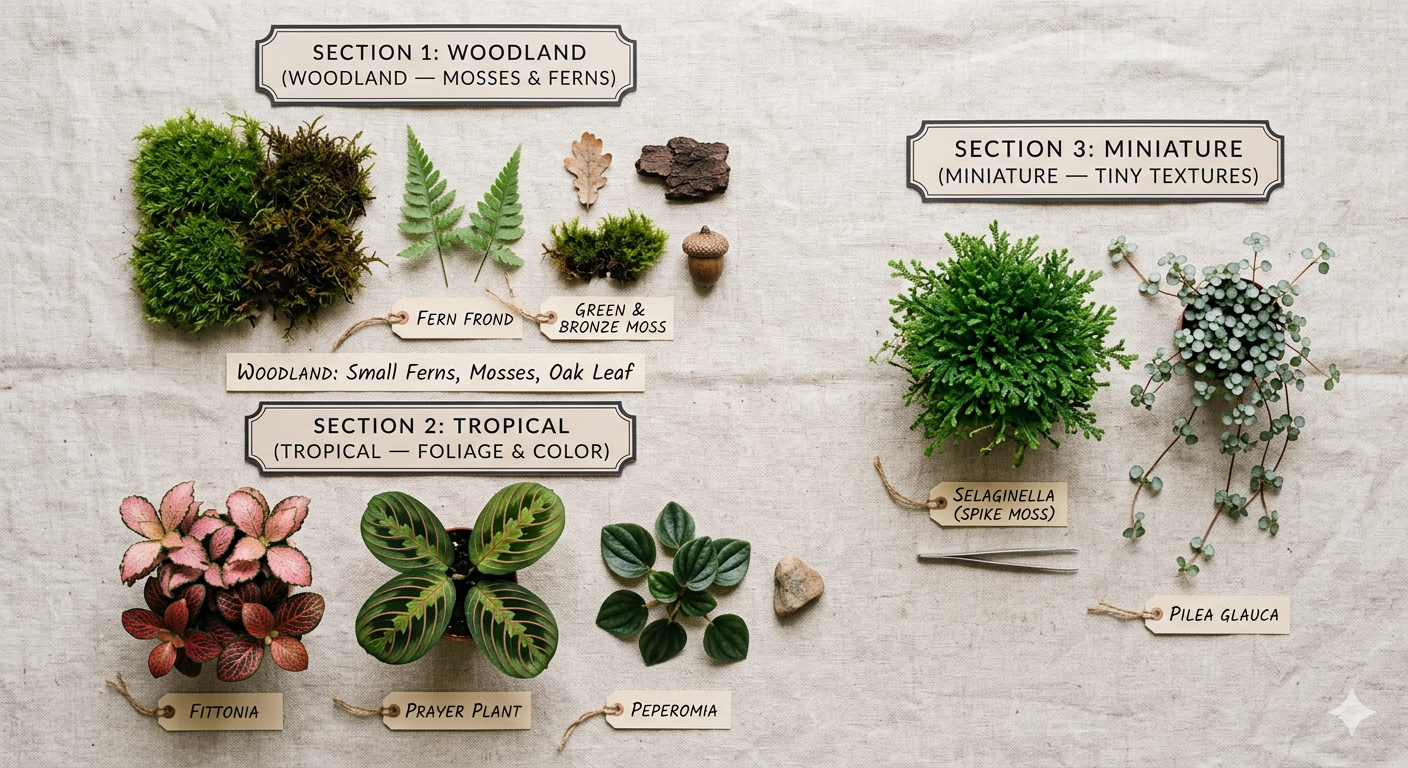
Woodland Palette: Ferns, Moss & Shade-Loving Favorites
Maidenhair fern, lemon button fern, cushion moss, sheet moss. Classic woodland aesthetic — ferns stay compact (for a while), moss fills in beautifully, and the whole thing looks like a tiny forest floor. This is the most forgiving palette for beginners. Easy sourcing, predictable behavior, looks incredible in an apothecary jar.
Tropical Palette: Fittonias, Prayer Plants & Color
Fittonia (nerve plant in pink, red, or white veins), Maranta (prayer plant), Peperomia caperata. High humidity is their love language — they'll genuinely thrive sealed in glass in a way they never quite do out in the open. High visual appeal, colorful foliage, slightly more dramatic about drought if you ever let it slip.
Miniature Palette: Selaginella, Pilea & Tiny-Leafed Picks
Selaginella (spike moss), Pilea glauca, baby tears. These stay actually small. Good for compact containers where a fern would take over within a year and start pressing its fronds against the glass in a vaguely haunting way.
What to avoid: succulents, cacti, orchids, or anything that prefers dry conditions. They'll rot in a sealed system. Don't let the "low maintenance" pitch override the plant's actual needs.
Most terrarium plants do well in low to indirect light — our guide to low-light houseplants has more options worth considering for shaded spots.
Building Your Terrarium: A Visual Step-by-Step
Once your layers are in order, the actual build is satisfying and straightforward. It takes about 30–45 minutes.
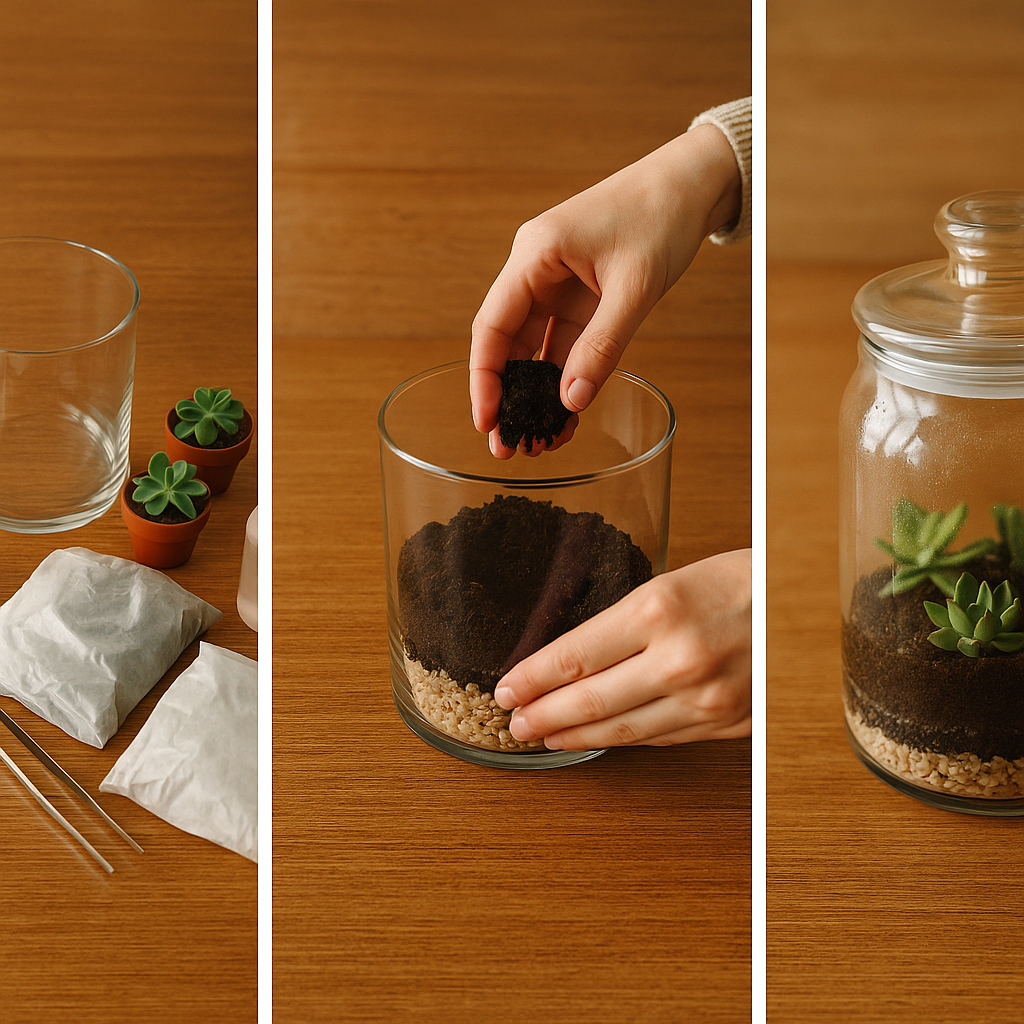
- Clean your container. Soap and water, rinse thoroughly. Any residue can introduce bacteria to a sealed environment.
- Add the drainage layer. Pour 1–2 inches of pebbles or LECA. Tap gently to level it.
- Add activated charcoal. Thin layer — ½ inch is plenty. Even distribution.
- Add the barrier. Cut mesh or fabric to fit flat, or pack a thin layer of damp sphagnum moss.
- Add terrarium soil. 2–3 inches. Use a spoon or funnel to keep soil off the glass walls. Hollow small pockets where your plant roots will sit.
- Plant your specimens. Start with the largest plant, then work smaller. Use long tweezers to position plants in tight containers. Tuck moss around the base once everything is placed.
- Mist lightly. Soil should be damp, not wet. When you seal the lid, you should see condensation forming on the glass within an hour or two. If nothing appears after a few hours, add a light additional mist.
- Seal and observe. Place in indirect light. The condensation cycle should be visible within 24 hours. Light morning fog that mostly clears by afternoon = you nailed it.
Closed Terrarium Care: How to Keep Your Ecosystem Thriving
The honest answer: a well-built closed terrarium barely needs you.
Watering schedule: Once every 1–3 months, if at all. Read the condensation, not a calendar. Light fog in the morning that clears by afternoon = balanced. Constant fog with large droplets running down the glass = too wet (crack the lid for 24–48 hours). No condensation = too dry (mist lightly and reseal). For a deeper read on moisture signals, our watering basics guide explains exactly what you're looking for.
Light: Indirect only. A north or east-facing window is ideal. Direct sunlight heats the sealed interior and will cook the plants from the inside. A grow light on a timer (8–12 hours/day) works well if window placement is limited.
Seasonal Adjustments: Summer vs. Winter Care
In summer: higher ambient temperatures accelerate the condensation cycle. If condensation is excessive or the terrarium feels warm to the touch, crack the lid slightly on hot days.
In winter: condensation slows down. That's normal — the ecosystem runs on less in lower light months. Don't panic and start misting.
Pruning: When plants crowd the glass, trim back. Swap out specimens that've genuinely outgrown the space. The terrarium doesn't have to last forever unchanged — it's okay to refresh the planting every year or two.
Troubleshooting: When Your Terrarium Goes Wrong
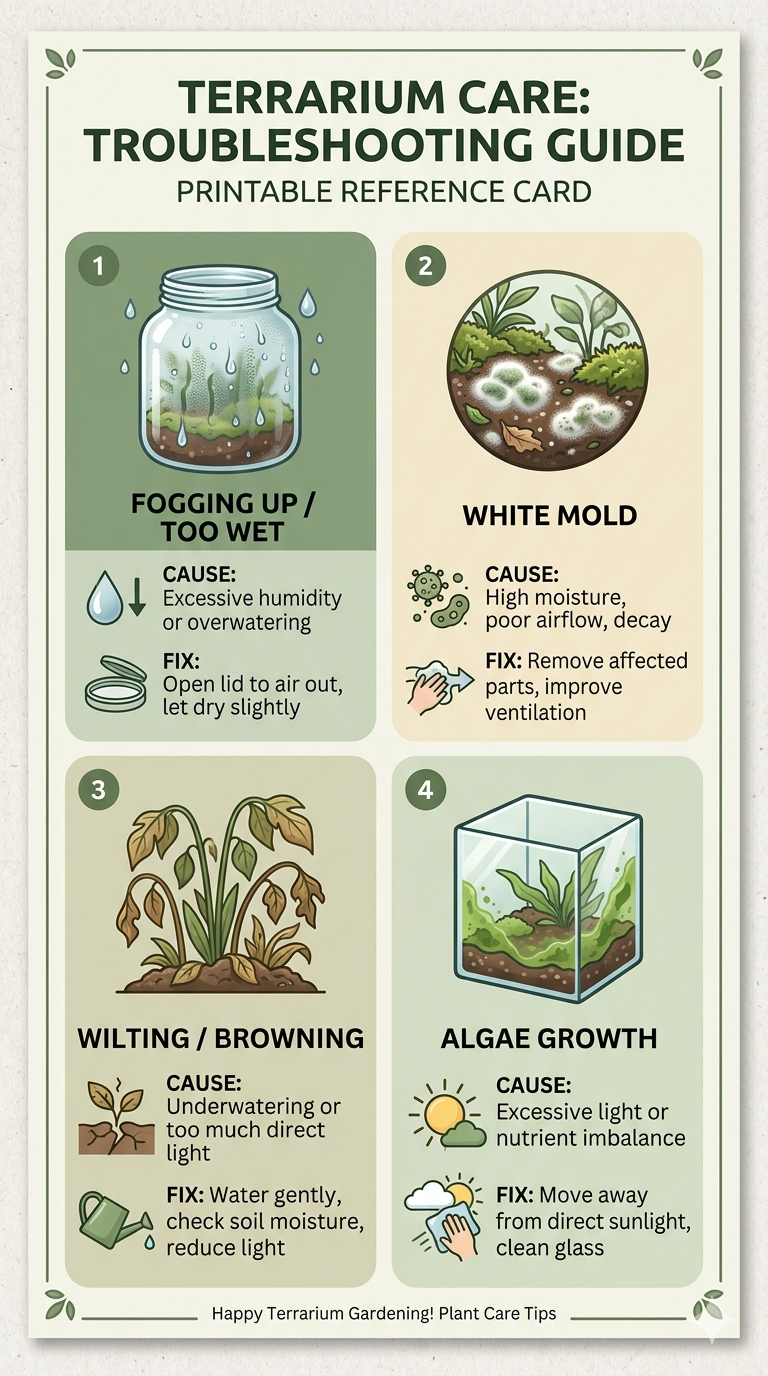
Too Wet: Fogging, Mold & Algae
Constant dense fog, water pooling at the bottom, white fuzzy mold on soil or leaves: You added too much water at setup — or watered it when it didn't need it. Open the lid for 24–48 hours to let it breathe. If mold appears, remove the affected material immediately, scrape the top layer of soil, and air it out for 48 hours before resealing. Caught early, mold is manageable. Left alone, it spreads.
Algae (green film on the glass) is caused by too much direct light, not overwatering. Move to indirect light and wipe the glass interior clean at your next maintenance window.
Too Dry: Wilting, Browning & Crispy Edges
No condensation, wilting leaves, dry soil pulling away from the glass walls: It needs water. Even closed terrariums lose moisture over time through imperfect seals. Add a light mist, reseal, and wait 24 hours to see condensation return.
Note: wilting can also mean too much direct light (heat stress rather than drought). If there's condensation but plants are browning at the edges, light is your culprit — not moisture.
Plants Growing Too Big or Leaning
Trim regularly. If a fern is pressing its fronds against the glass, it's time for a prune or a swap. Closed terrariums are not prisons — replacing a plant that's outgrown the space is normal maintenance, not failure. Keep compatible replacement plants on your radar when you're shopping.
Products We Love
Ready to build? Here's what we recommend:
See Our Full Terrarium Kit Guide — the complete roundup of the best terrarium kits for every budget, from beginner starter sets to design-forward ecosystem builds.