Houseplants for Clean Air — What Actually Works vs. NASA Myth
The internet won't tell you this, but the "plants purify air" claim is mostly marketing.
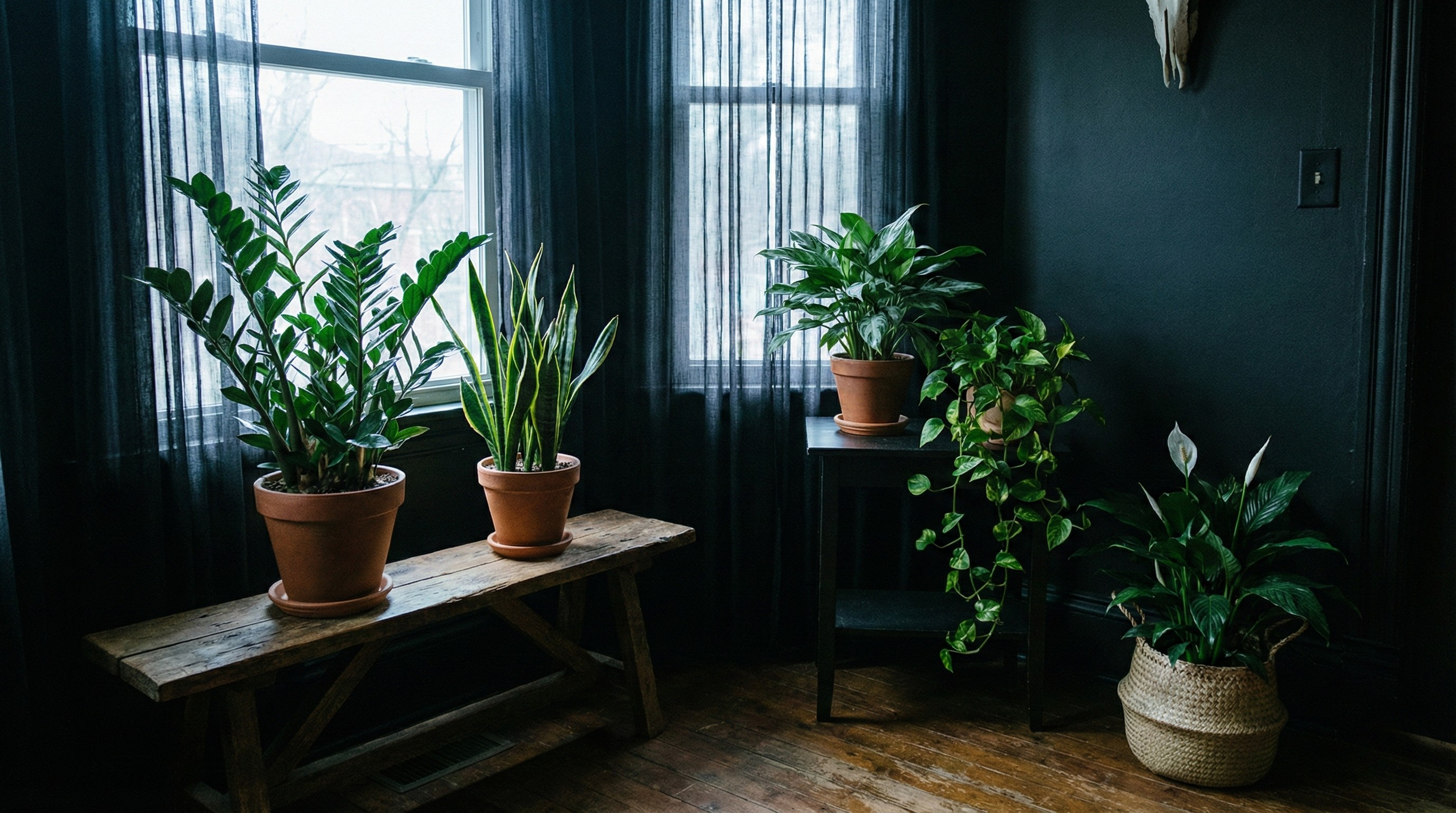
The Origin of the Myth
In 1989, NASA conducted a study to find ways to clean air on space stations. They found that certain plants could remove volatile organic compounds (VOCs) from sealed chambers.
The problem: A space station is a sealed environment. No fresh air enters. No air leaves. Anything the plants remove stays removed.
Your apartment? Your office? Your home has air exchange. Windows open. HVAC runs. Doors open and close. Fresh air comes in, stale air goes out.
What Science Actually Says
A 2019 Drexel University review of 30 years of plant air research found something fascinating:
"Natural ventilation far outpaces plants when it comes to cleaning the air."
The researchers calculated the "Clean Air Delivery Rate" (CADR) — the actual metric for air purifiers — and found that plants are essentially ineffective in real-world indoor environments.
The numbers:
- A typical plant removes roughly 0.01-0.05% of VOCs per hour in a real room
- Opening a window or turning on HVAC achieves 100x more air exchange in the same time
- You'd need 1 plant per 100 square feet to have a measurable effect
So Plants Do Nothing?
No — they don't "purify" air, but that's not why you should get them.
Plants are not air purifiers. They're:
- Psychologically beneficial — studies show plants reduce stress and improve mood
- Aesthetic anchors — they make spaces feel alive and intentional
- Humidifiers (slightly) — they release moisture through transpiration
- Conversation pieces — they're nice to look at and care for
🌫️ Give Your Calathea the Humidity It Craves
Want to give your calathea the humidity it craves? Here are our tested humidifiers that keep tropical plants happy:
*As an Amazon Associate, we earn from qualifying purchases.
If you want clean air, get a HEPA air purifier. If you want a plant, get a plant because you want a plant.
The Plants That Actually (Technically) Work
If you want the "most effective" plants based on the NASA study — and you understand the limitations — here's the honest list:
1. Snake Plant (Sansevieria)
NASA study result: High VOC removal (benzene, formaldehyde) Real-world result: Technically the best, but still minimal
These are still the champions of the "plants clean air" myth because they have a large surface area and are hardy enough to grow in the conditions where the study was conducted.
2. Spider Plant (Chlorophytum comosum)
NASA study result: Effective at removing formaldehyde and xylene Real-world result: Same caveat as above
Spider plants are easy to grow and produce babies, so they're a low-commitment entry point if you're curious about the "air cleaning" angle.
3. Peace Lily (Spathiphyllum)
NASA study result: Good at removing ammonia, benzene, formaldehyde Real-world result: The drama makes them high-maintenance for the benefit
Peace lilies are effective in sealed chambers but the real-world effect is negligible. They're also toxic to pets.
4. Aloe Vera
NASA study result: Removes formaldehyde and benzene Real-world result: Useful gel, minimal air effect
Aloe is genuinely useful for burns and skincare. The air cleaning is incidental.
5. English Ivy (Hedera helix)
NASA study result: Effective at removing airborne fecal matter (seriously) Real-world result: Works, but toxic to pets and humans if ingested
What Actually Improves Indoor Air Quality
| Method | Effectiveness |
|---|---|
| HEPA air purifier | High (designed for this) |
| Open windows | Immediate and free |
| HVAC filtration | High if filters are changed |
| Houseplants | Negligible |
| Activated charcoal | Minimal |
If indoor air quality is a genuine health concern (allergies, asthma, chemical sensitivities), address the source:
- Ventilation — open windows, use exhaust fans
- Source control — stop bringing in VOCs (new furniture, paint, cleaning products)
- Filtration — HEPA purifiers for particles, carbon filters for gases
Plants are not a solution to air quality problems. They are decoration.
The Verdict
Should you buy plants for clean air? No. Buy plants because you want plants.
Do any plants actually clean air? Technically, yes. But the effect is so small you'd need dozens to see any difference, and ventilation does more in minutes.
What plants should you get if you want the "best" air-cleaning plants? Snake plant, spider plant, peace lily, aloe vera — they're the ones that performed best in the studies.
But also: Get plants you actually like and can keep alive. A dead plant cleans zero air.
The One Exception
There's one scenario where plants genuinely help with air quality:
Bathrooms with no windows.
If you have a windowless bathroom with a fan that recirculates air (no exhaust), a spider plant or peace lily can help absorb some VOCs from cleaning products and moisture. It's not a huge effect, but it's one of the few real-world applications.
Bottom Line
The "plants clean air" claim is technically true in a sealed chamber with no air exchange.
Your home is not a sealed chamber.
Enjoy your plants for what they are — beautiful, calming, alive. They're not air purifiers. If you want clean air, open a window and get a HEPA filter.
Want plants that are actually hard to kill? Check out our 10 Easiest Houseplants guide.
Our Favorite Air-Purifying Plants Tools
We use these products ourselves: