Houseplant Light by Window Direction — Find Your Perfect Spot
Stop guessing where to put your plants. Here's the honest breakdown of what each window actually delivers.
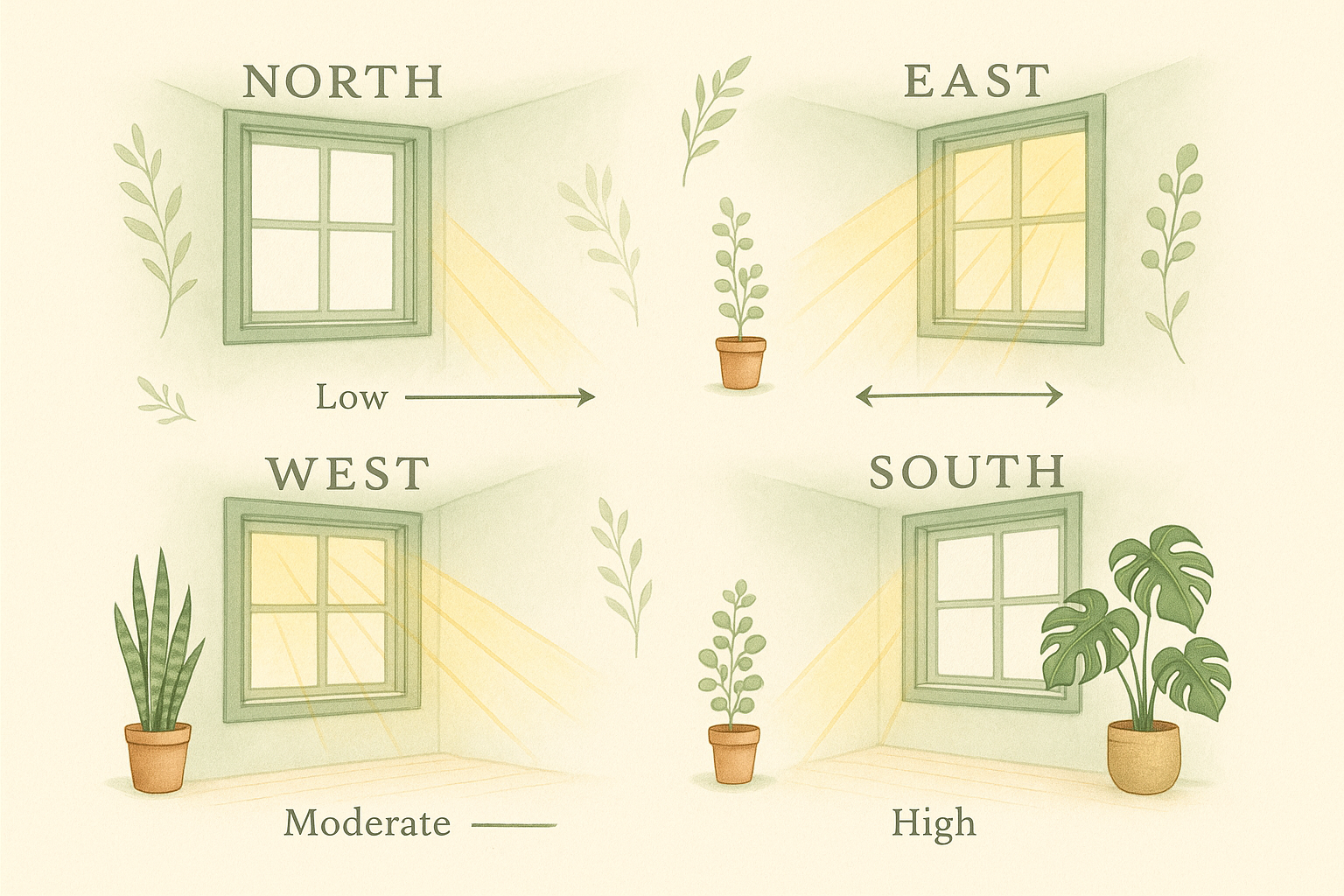
Why Window Direction Matters for Houseplants
Light is the engine of photosynthesis. No light = no energy = your plant slowly becoming a crispy brown memorial to your optimism.
Window direction determines how much light your plants actually get and what kind (direct vs. diffused). A south-facing window in June blasts plants with roughly 10,000+ foot-candles at noon. A north-facing window? Maybe 500-1,000 on a good day.
That difference is the gap between a thriving monstera and one that looks like it's giving up.
Most plant care advice says "bright indirect light" and leaves you to figure out what that means. This guide won't do that. We'll break down exactly what each direction gives you and which plants actually thrive there.
Understanding Light Measurements for Indoor Plants
Before we get directional, let's talk about what "light" actually means for plants.
Foot-Candles Explained
Foot-candles (fc) are a measurement of light intensity — how much light hits a surface from one candle one foot away. It's the most practical way to think about plant light because it translates directly to what your plant experiences.
| Light Level | Foot-Candles | Real-World Example |
|---|---|---|
| Low | 50-150 fc | North window, back of room |
| Medium | 150-500 fc | East window, few feet from bright window |
| Bright Indirect | 500-1,000 fc | Near (not in) south/west window |
| Direct Sun | 1,000+ fc | Unobstructed south window |
Most houseplants fall between 100-500 fc. Few handle over 1,000 fc without protection.
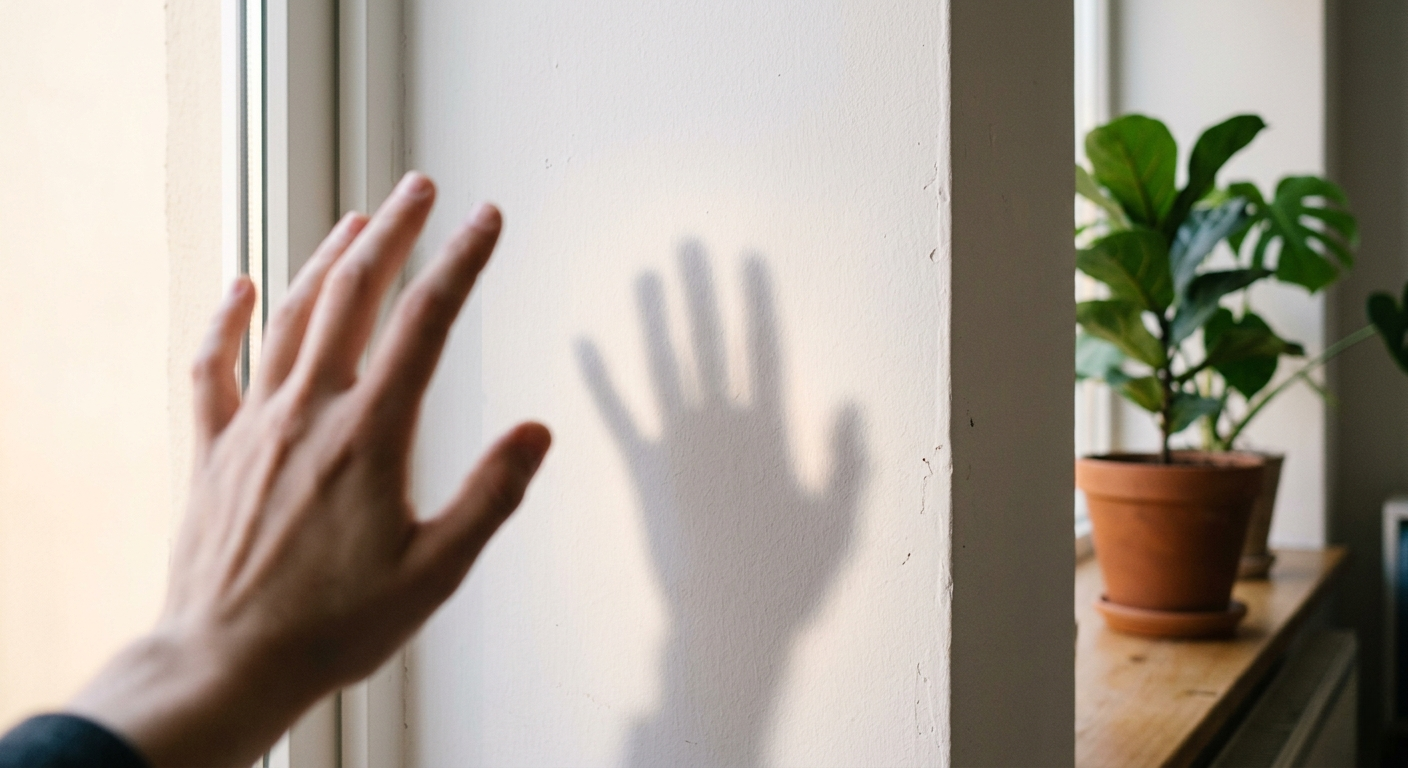
The Shadow Test: Measure Light Without a Meter
Don't want to buy a light meter? The shadow test is surprisingly accurate:
Hold your hand 6 inches above a white surface (a piece of paper or white wall works great).
- Crisp, dark shadow = Bright light (500+ fc) — plants in this spot need sun-lovers
- Fuzzy, soft shadow = Medium light (150-500 fc) — most tropicals are happy here
- No shadow or barely visible = Low light (under 150 fc) — snake plants and ZZ plants only
Want precise numbers? A light meter takes the guesswork out entirely. Dr. Meter LX1330B Digital Light Meter runs about $25 and gives you exact foot-candle readings.
North-Facing Windows: Low Light, Big Opportunities
North-facing windows get consistent but limited light throughout the day. No direct sun ever hits them in the Northern Hemisphere (flip this if you're in Australia).
What you're working with:
- 500-1,000 foot-candles max (often lower)
- All diffused, soft light
- Very stable — no dramatic intensity changes
This is the lowest light direction. If someone tells you a plant does fine in "any window," they're probably thinking of a north window and a very forgiving plant.
Best Plants for North-Facing Windows
These plants actually thrive in the limited light north windows provide:
- Snake Plant (Sansevieria) — The indestructible champ of low light
- ZZ Plant (Zamioculcas) — Thrives on neglect and darkness
- Pothos — Tolerates low light better than most
- Peace Lily — Low light tolerant, though it may not bloom
- Cast Iron Plant (Aspidistra) — Named for a reason
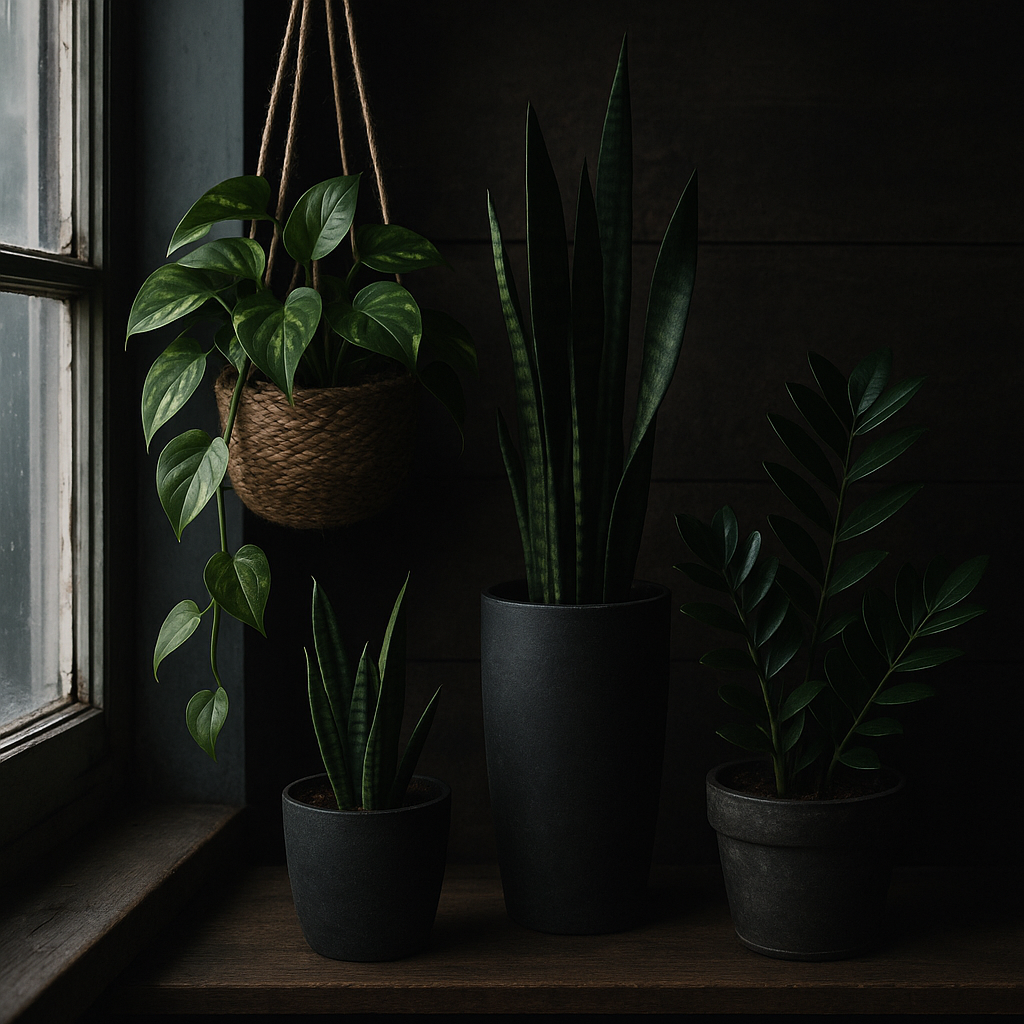
Pro tip: Place these plants directly in the window — not back in the room. Every foot of distance from the window drops light levels dramatically.
Need more options? Check out our best low-light plants for north-facing windows guide for more recommendations.
South-Facing Windows: Maximum Light Guide
South-facing windows are the powerhouses of the plant world. In the Northern Hemisphere, they get direct sun for most of the day, year-round.
What you're working with:
- 5,000-10,000+ foot-candles in summer
- Direct sun exposure (can cause burning)
- Hot, intense light especially in afternoon
South windows are where succulents, cacti, citrus, and flowering plants actually thrive. But that intensity is a double-edged sword — too close to the glass in summer and you're running a plant sauna.
Managing Intense Summer Light
The biggest mistake with south-facing windows? Leaving plants pressed against the glass in summer.
- Move plants 2-4 feet back from the window
- Use sheer curtains to diffuse harsh afternoon sun
- Watch for: brown crispy patches, faded/bleached leaves, wilting despite wet soil
In winter, south windows are glorious — the sun is lower, the intensity drops, and your tropicals finally get the light they need. Many plants actually do better in south windows in winter than summer.
Best Plants for South-Facing Windows
These plants actually want (and need) that much light:
- Succulents — Echeveria, sedum, string of pearls
- Cacti — Most cacti need that direct sun
- Citrus trees — Lemon, lime, orange trees
- Fiddle Leaf Fig — Actually needs bright light to thrive
- Bird of Paradise — Demands the light
- Jade Plant — Classic south-window succulent
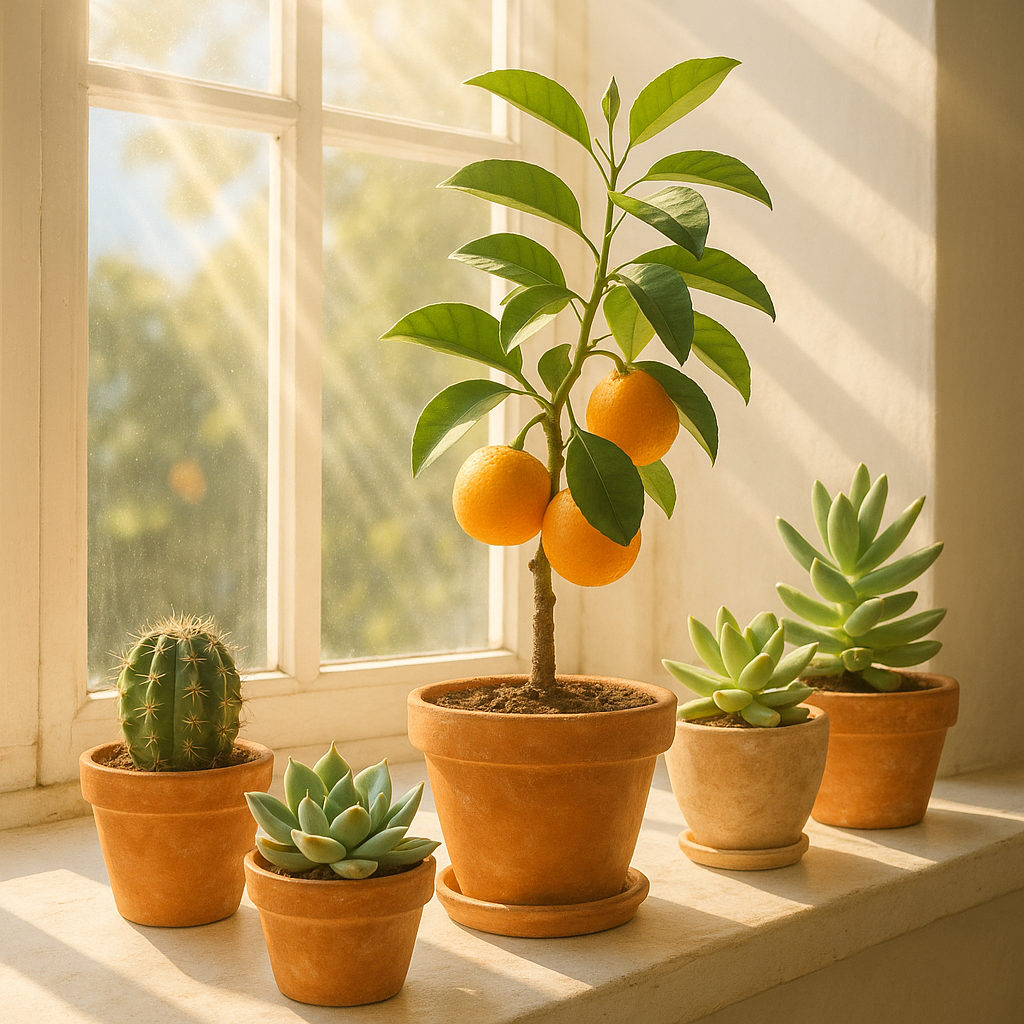
If your south window still isn't enough (or you don't have one), supplemental grow lights can fill the gap.
East-Facing Windows: The Gentle Morning Light
East windows get gentle morning sun — usually 2-4 hours of direct light followed by bright indirect light for the rest of the day.
What you're working with:
- 1,000-5,000 foot-candles (morning peak)
- Cooler temperatures than afternoon sun
- Soft, forgiving light quality
This is arguably the easiest direction for most houseplants. The morning sun is warm but not scorching, and the rest of the day provides bright indirect light that most tropicals love.
Ideal Plants for East Windows
East-facing windows are the sweet spot for:
- Most Philodendrons — Monstera, pothos, heartleaf
- Ferns — Boston fern, bird's nest fern
- Calathea — Sensitive to direct sun but needs brightness
- Peperomia — Perfect for east exposure
- Alocasia — Prefers morning light, gets burned by harsh afternoon sun
The stable, moderate light makes east windows forgiving. You can put most "medium light" plants here and they'll be happy.
West-Facing Windows: Afternoon Sun Power
West windows get intense afternoon sun — the strongest, hottest light of the day. This is direct sun from roughly noon until sunset (though it varies by season).
What you're working with:
- 3,000-8,000 foot-candles
- Hot — temperatures near the glass can spike
- Direct afternoon sun can be harsher than morning
West windows are the second-brightest after south. They share many of the same plant recommendations but with one key difference: heat management.
Heat Management Tips
That afternoon sun doesn't just bring light — it brings heat:
- Check soil more often — Bright windows mean faster drying
- Increase humidity — Heat dries out leaves; mist or use a humidifier
- Rotate plants — One-sided growth is real with west windows
- Pull back in summer — Similar to south windows, 2-3 feet from glass
Best plants for west windows are similar to south: succulents, cacti, fiddle leaf figs, bird of paradise. The afternoon intensity is similar to a south window, just without the full-day sun.
Seasonal Changes: Winter vs Summer Window Light
Here's something most plant guides skip: window light changes dramatically by season.
The Summer vs Winter Difference
In summer, the sun is high in the sky. Light hits windows more directly and bounces off at sharper angles. More light enters, but it stays closer to the window.
In winter, the sun is low. Light enters at a shallower angle, reaching further into your room. That south-facing window that burned your plants in July might be the perfect spot in December.
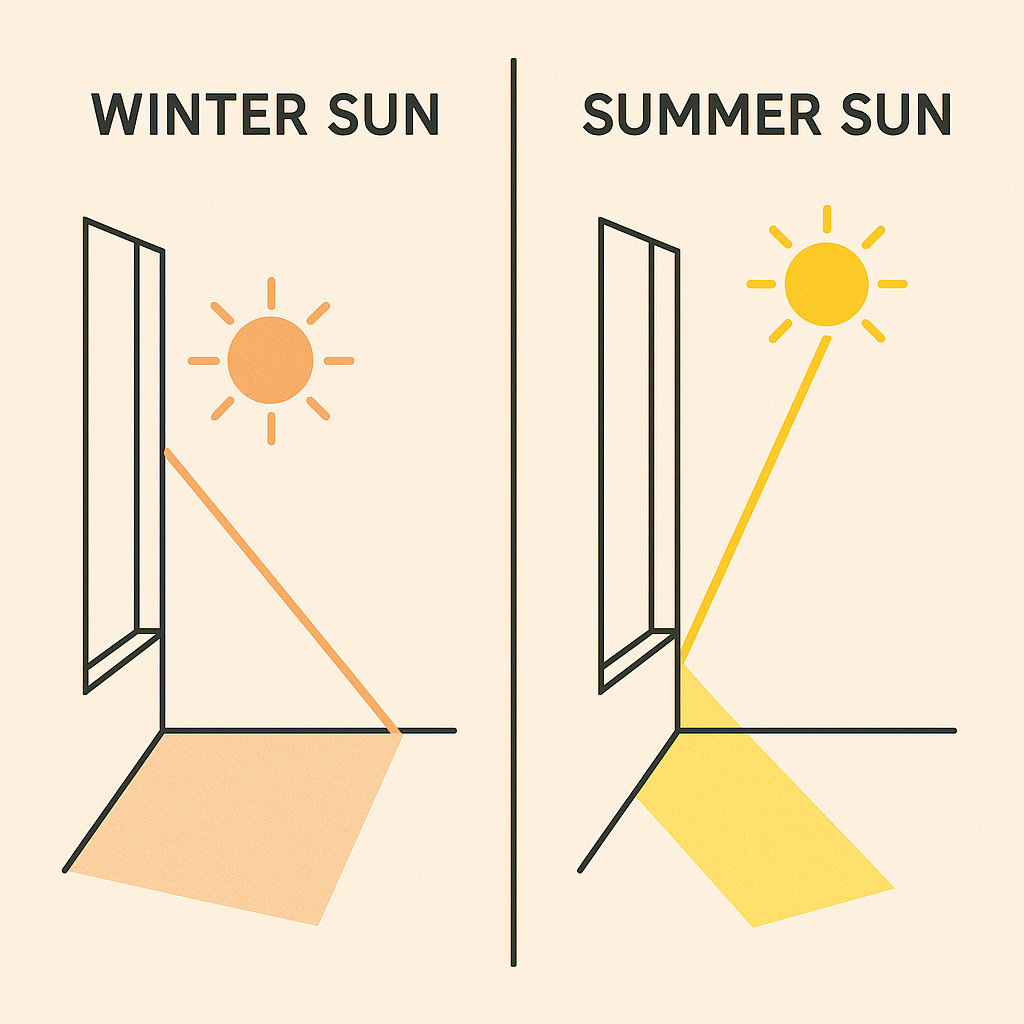
What this means for your plants:
- Summer: Pull plants back from south/west windows. Monitor for heat stress.
- Winter: Move plants closer to windows. That dark corner might now get enough light.
This is also why plants often "struggle" in winter even if nothing changed — the light literally dropped by 50-70% compared to summer.
Quick Reference Chart: Window Direction & Plant Picks
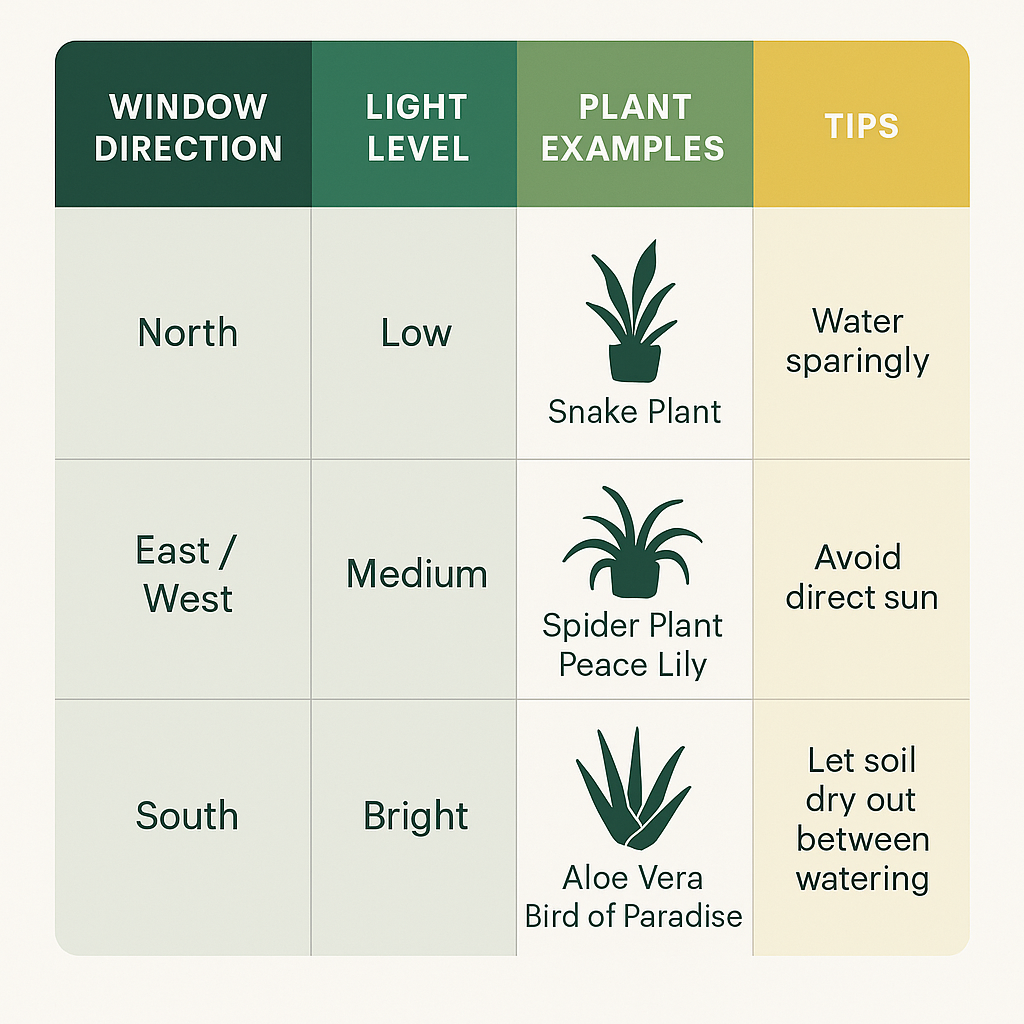
| Direction | Light Level | Best Plants | Watch Out For |
|---|---|---|---|
| North | Low (500-1,000 fc) | Snake Plant, ZZ, Pothos | Not enough for most plants |
| East | Medium (1,000-3,000 fc) | Philodendron, Ferns, Calathea | Usually fine, no major issues |
| West | Bright (3,000-8,000 fc) | Fiddle Leaf Fig, Succulents | Heat stress in summer |
| South | Brightest (5,000-10,000+ fc) | Cacti, Citrus, Bird of Paradise | Move back in summer to prevent burn |
The Bottom Line
Window direction isn't a suggestion — it's the foundation of plant placement. A plant that "needs bright light" in a north window is a plant that's slowly dying of starvation.
- Got a north window? Stick to low-light survivors.
- Got south/west? You've hit the jackpot for sun-lovers.
- East is the easy button — most plants do fine there.
- Season matters — winter light is half as strong as summer.
And remember: watering needs change with light levels. That south-facing windowsill plant dries out faster than its north-facing cousin. Factor that in.
Now go put your plants where they actually belong.
This guide is part of our complete houseplant light guide — check that out for more on grow lights, signs of light stress, and measuring your actual conditions.
Products We Love
These tools help you dial in the right light for your plants:
Barrina LED Grow Light (2 Pack) — Perfect for supplementing low-light windows or adding brightness to darker rooms. Full spectrum, linkable design.
XLUX Soil Moisture Meter (No Batteries Needed) — Light affects watering frequency. This no-battery meter takes the guesswork out of knowing when to water.