Fittonia Care Guide — The Drama Queen Nerve Plant That Faints When Thirsty
The plant that wilts dramatically, recovers just as theatrically, and tells you exactly what it needs — if you know how to listen.
What Is Fittonia? Meet Your New Drama Queen
Fittonia albivenis (fit-TOH-nee-uh al-bih-VEN-is) is a tropical understory plant from the rainforests of Peru — the place where "consistent humidity" isn't a suggestion, it's the law.
Commonly called the nerve plant (for obvious reasons — those veins are striking) or mosaic plant (for less obvious reasons), Fittonia has some of the most dramatic foliage in the houseplant world. We're talking pink veins on dark green leaves, white veins so delicate they look hand-painted, and red veins that pop like circuitry.
The Nerve Plant Name
Those intricate vein patterns are what give Fittonia its common names. The veining looks eerily like human nerve endings, which is either fascinating or slightly unsettling depending on how you feel about botany. Either way, it's a conversation starter.
Why Your Fittonia Keeps Fainting (And Why That's Fine)
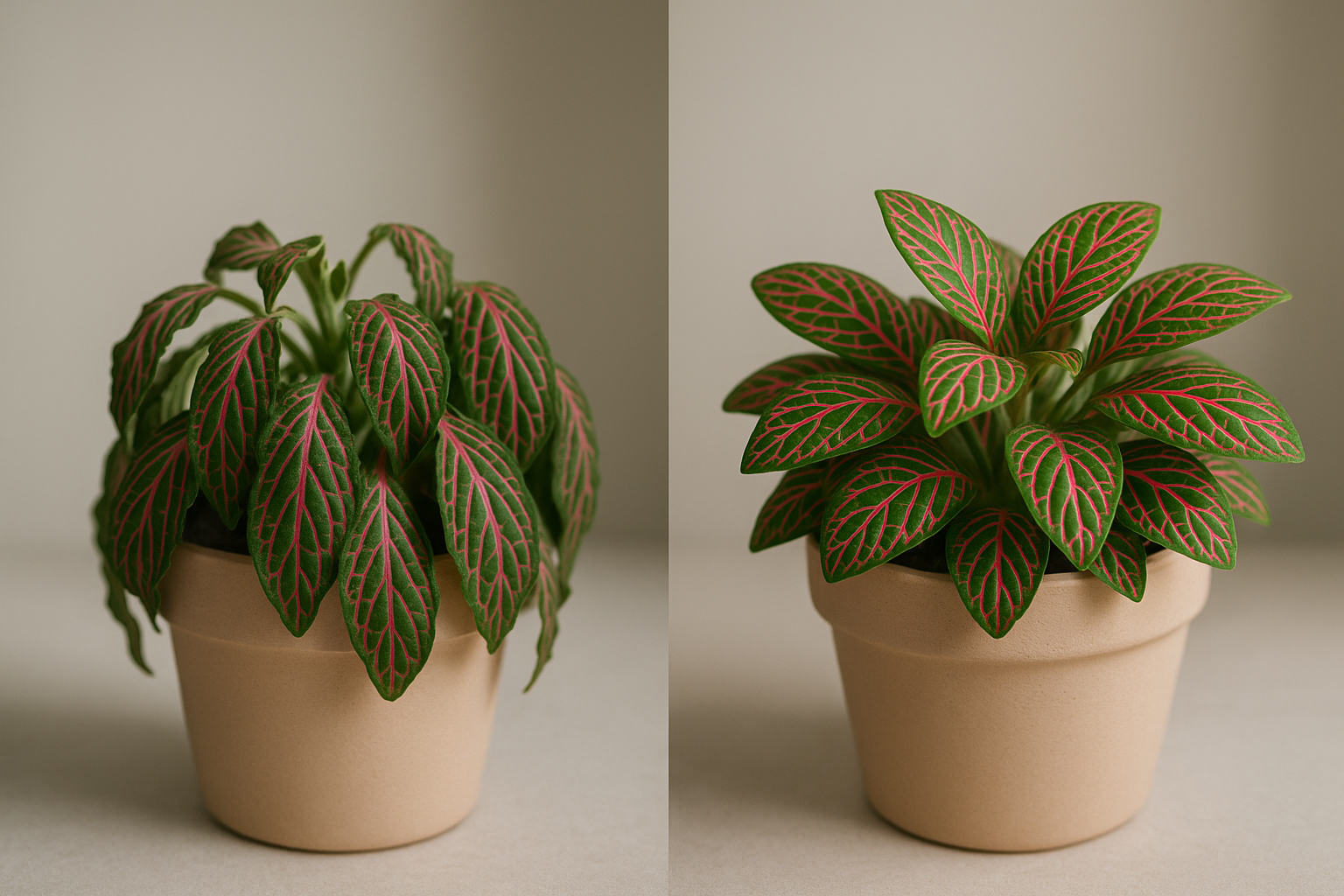
Here's the thing about Fittonia: it's not broken when it wilts. It's talking to you.
This plant has evolved in a rainforest understory where the soil stays consistently moist. When that moisture drops — even slightly — Fittonia's response is immediate and dramatic. The leaves droop, the stems go limp, and suddenly you have what looks like a plant on its deathbed.
But here's the magic: Give it a good drink of water, bump up the humidity, and within 1-2 hours, your "dying" Fittonia is perky again like nothing happened. It's a party trick, a survival mechanism, and honestly? Kind of adorable once you understand what's happening.
How to Revive a Fainting Fittonia
When your Fittonia starts dramatic wilting:
- Check the soil — Stick your finger 1 inch in. If it's dry, water thoroughly.
- Bottom water — Let the plant soak from below for 10-15 minutes.
- Boost humidity — Group it with other plants, run a humidifier, or pop it in a terrarium.
- Wait — Recovery usually happens within 1-2 hours. If it's been days, check for root rot.
Light: Bright Indirect Only, Please
Fittonia is a low-light survivor in the wild (understory = shade), but it thrives in bright indirect light. Think: a north-facing window, a few feet back from an east-facing window, or under grow lights.
What kills Fittonia light-wise:
- Direct sun = burned leaves, crispy edges, sad plant
- Deep shade = leggy growth, reduced variegation, slow death
Terrarium Light Placement
If you're growing Fittonia in a terrarium (and honestly, you should — more on that later), place it where it gets ambient light but no direct sun. LED terrarium lights work great. The glass amplifies light intensity, so even "low light" spots inside a terrarium can be too bright.
Watering: The #1 Cause of Dramatic Droops
Fittonia is not forgiving of drought. Forget to water for a week in summer and you'll come home to a fainted plant begging for mercy.
Watering schedule:
- Summer/active growth: Every 3-5 days, depending on your home's conditions
- Winter/dormant: Every 5-7 days, when growth slows
- Always: Check soil first. If the top inch feels dry, water.
The finger test is your best friend here. Insert your index finger 1 inch into the soil. If it feels dry, water. If it still feels moist, wait a day or two.
The Bottom Watering Method
Fittonia loves bottom watering. Here's how:
- Place your Fittonia pot in a shallow tray or sink
- Pour water into the tray — don't water from above
- Let the plant soak for 10-15 minutes
- Remove from water and let drain completely
This encourages deep root growth and keeps the foliage dry (which helps prevent fungal issues). Plus, the plant drinks at its own pace.
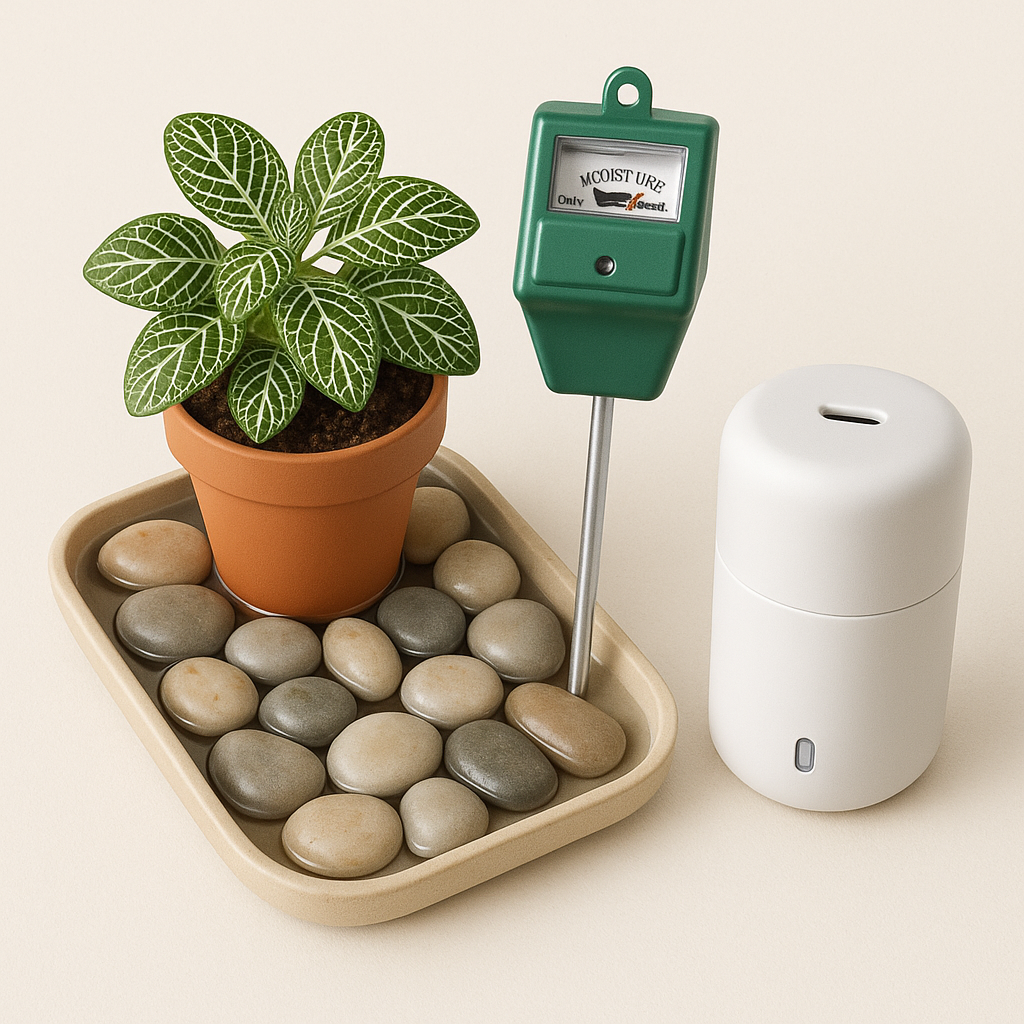
moisture meter can help you dial in the perfect watering schedule — no more guessing, no more fainting episodes.
Humidity: The Non-Negotiable
If there's one thing that will make or break your Fittonia experience, it's humidity. This plant needs minimum 50% humidity to be happy, and "happy" means perky leaves, vibrant veins, and zero sulking.
In most homes, ambient humidity hovers around 30-40%. That's not enough for a rainforest understory plant. Your Fittonia will survive, but it'll be dramatic about it.
Budget-Friendly Humidity Solutions
You don't need a fancy setup to keep Fittonia happy. Here are your options, ranked by budget:
Pebble tray (budget option):
- Place a tray filled with pebbles under your pot
- Add water so it reaches just below the top of the pebbles
- As the water evaporates, it creates localized humidity
- Cheap, effective, and you already have pebbles
pebble tray set — decorative options that look nice on a shelf while doing the work.
Grouping plants:
- Cluster your Fittonia with other humidity-lovers
- Plants transpire moisture, creating a humid microclimate
- Works best with 3+ plants together
Bathroom or kitchen placement:
- These rooms naturally have higher humidity
- Great for Fittonia if you have enough light
When to Upgrade to a Humidifier
If you have multiple humidity-needy plants (Ferns, Calathea, Alocasia — the demanding divas), a humidifier is worth the investment. It maintains consistent humidity 24/7, which means less dramatic wilting for you and happier plants overall.
compact humidifier — small, quiet, and perfect for a single plant shelf or terrarium area.
Soil & Potting: Drainage Is Everything
Fittonia roots hate sitting in water. Give them a chunky, well-draining mix that holds moisture without becoming waterlogged.
Recommended soil mix:
- 2 parts potting soil
- 1 part perlite
- 1 part orchid bark or charcoal
This creates a mix that holds some moisture but drains fast. The perlite and bark create air pockets the roots need.
Pot selection:
- Terra cotta pots wick moisture too fast (they'll dry out too quickly)
- Plastic or ceramic pots retain moisture longer
- Always, always, always have drainage holes
perlite — grab a bag and mix it into your potting soil for that perfect chunky drainage Fittonia craves.
Temperature: Keep It Consistent
Fittonia likes it warm — 60-79°F (15-26°C) is the sweet spot. It is not cold-tolerant.
Temperature killers:
- Cold drafts from windows or AC vents
- Temperatures below 55°F — this can cause permanent wilting
- Sudden temperature swings
Keep your Fittonia away from:
- Drafty windows in winter
- Air conditioning vents
- Doors that open to cold outdoors
Fittonia Varieties: Choosing Your Vein Pattern
Here's where Fittonia gets fun. There are two main cultivar groups, each with stunning options:
White Vein Group (Argyroneura)
- White Knight — Deep green leaves, white veins
- White Angel — Heavily veined, almost white-on-green
- Argyroneura — The classic white-veined Fittonia
Pink/Red Vein Group (Verschaffeltii)
- Pink Star — Hot pink veins on medium green
- Red Angel — Red veins, bold and dramatic
- Verschaffeltii — The original pink-veined variety
- Mini Superba — Compact growth, pink-red veins
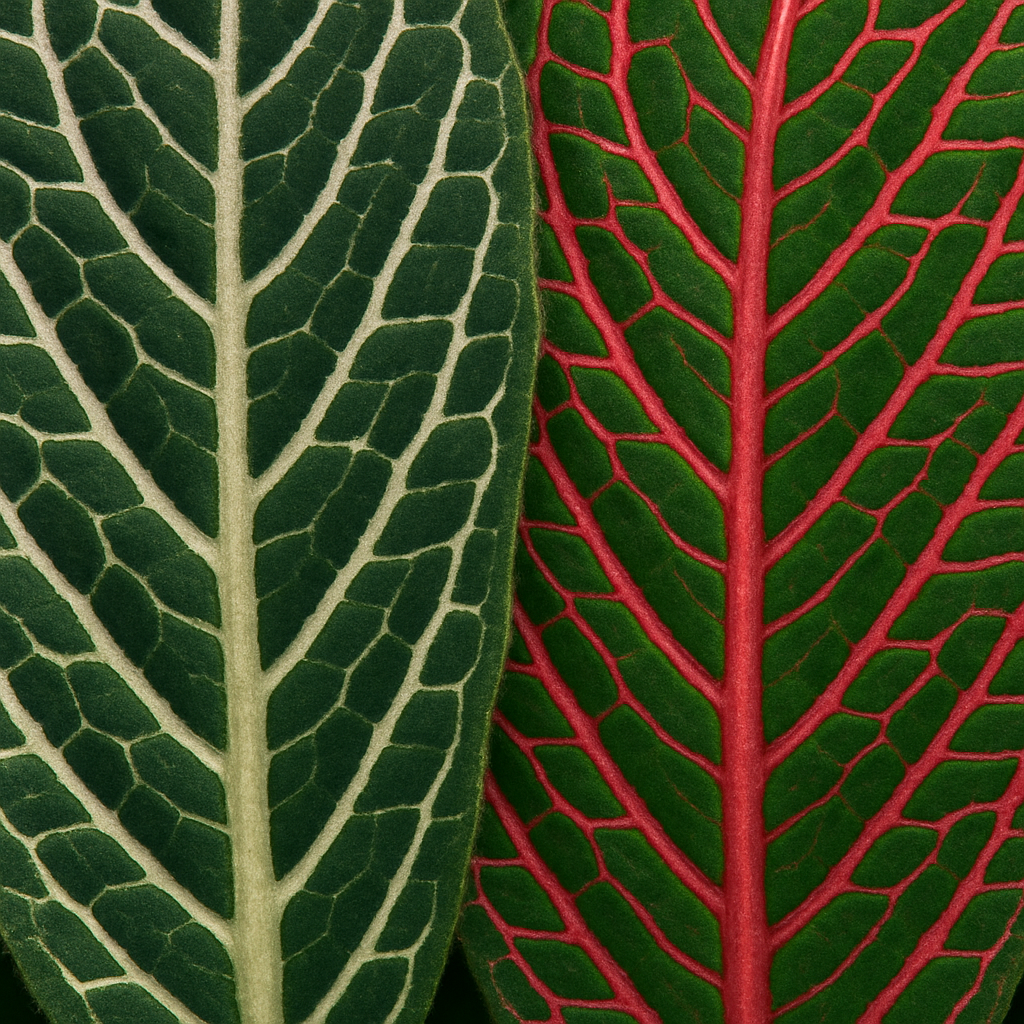
Choosing your drama queen: Pick based on vein color that catches your eye. They're all equally dramatic (and equally demanding). The white-veined varieties show off more dramatically against dark green; the pink/red varieties have that "under-the-skin" look that gives the plant its nerve plant nickname.
Propagation: Grow Your Drama Queen Collection
Fittonia is easy to propagate, which means one plant can become many. Win.
Stem cutting method:
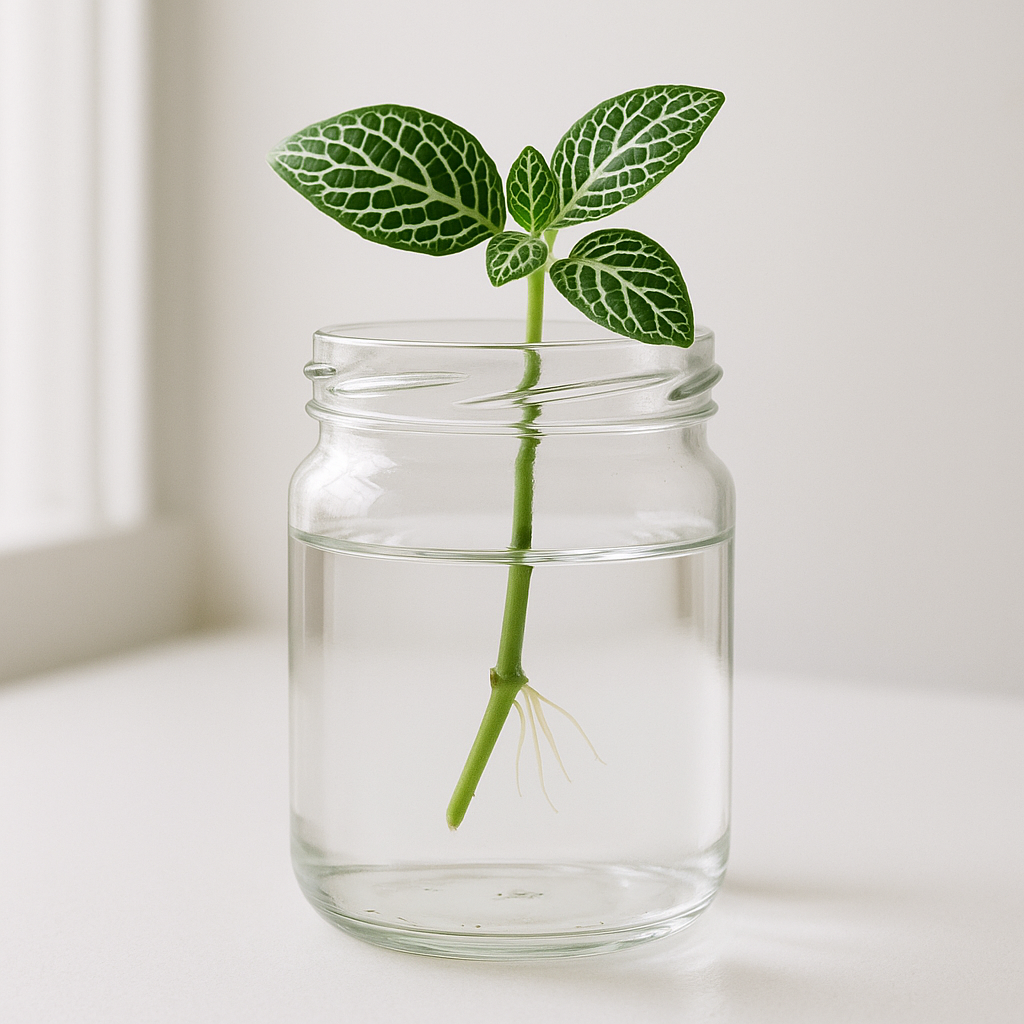
- Cut — Take a stem cutting with 2-3 leaves and at least one node (the bump where roots grow)
- Water — Place in a jar of room-temperature water, node submerged
- Wait — Roots appear in 2-3 weeks
- Pot — Once roots are 1-2 inches long, plant in well-draining soil
Soil propagation method:
- Cut — Same stem cutting
- Dip — Optional: dip in rooting hormone
- Plant — Stick in moist potting mix
- Cover — Cover with a plastic bag or put in a terrarium to maintain humidity
- Wait — Roots in 3-4 weeks
Pro tip: Spring and summer are the best times to propagate. Fittonia grows actively during warm months, which means faster rooting.
Growing Fittonia in a Terrarium
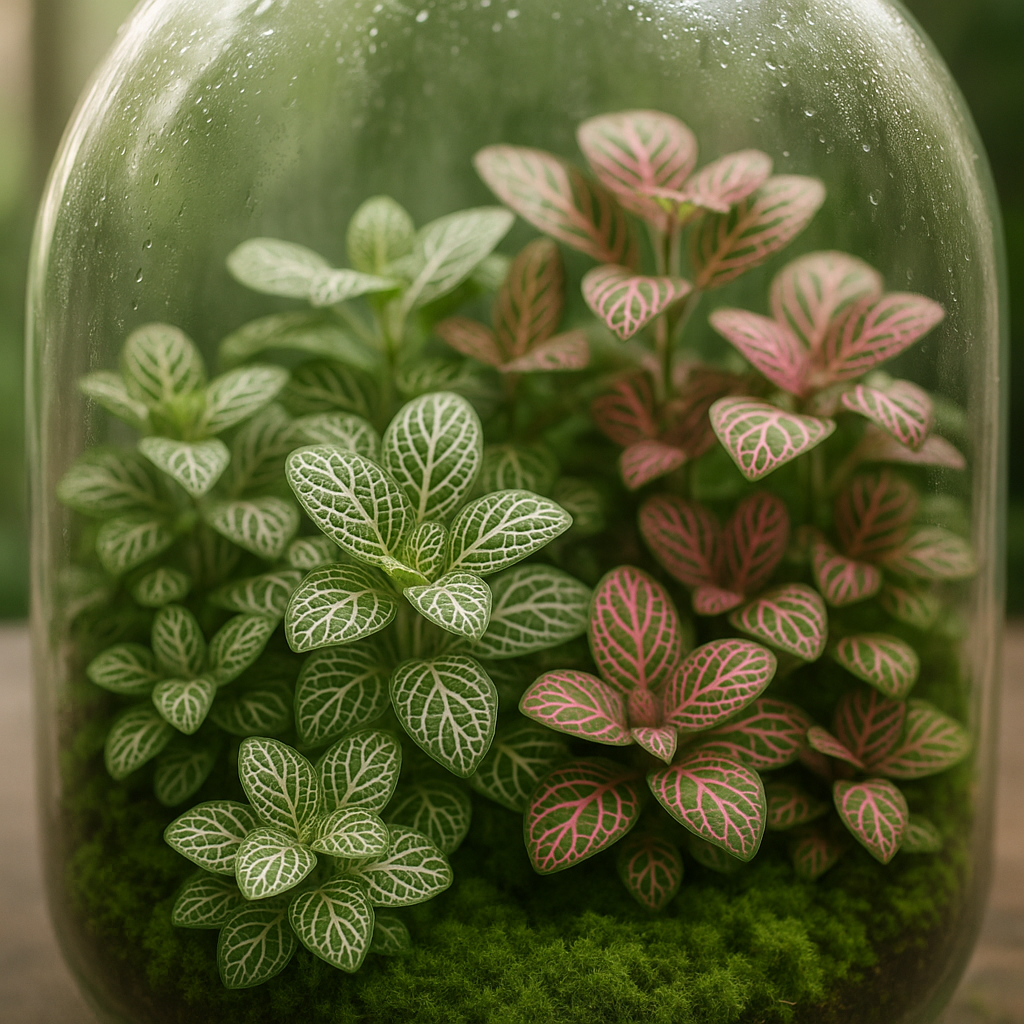
If you've been nodding along thinking "this plant sounds high-maintenance," here's the secret: Fittonia thrives in terrariums.
A closed terrarium creates a self-sustaining humid environment. The water evaporates from the soil, condenses on the glass, and drips back down — exactly like a rainforest. Your Fittonia stays perky without you needing to mist hourly or run a humidifier.
Container Selection
- Closed terrariums — Best for Fittonia, maintains humidity automatically
- Wardian cases — Classic option, often comes with a handle for moving
- Glass cloches — Single plant display, decorative
- BiOrb terrariums — Modern look, built-in LED light
compact terrarium kit — everything you need to create the perfect Fittonia home.
Drainage Layer Setup
In any enclosed container, drainage is critical:
- Layer 1: 1-2 inches of activated charcoal (prevents odor and bacterial buildup)
- Layer 2: Mesh or sphagnum moss (keeps soil from sinking into the charcoal)
- Layer 3: Chunk potting mix (the actual growing medium)
Without this setup, water pools at the bottom and roots rot. Even in a terrarium, Fittonia needs drainage.
Common Problems & Solutions
Yellow Leaves
Cause: Overwatering. Fittonia likes moisture but hates soggy soil.
Fix: Let the soil dry out more between waterings. Check that your pot has drainage holes. If the roots are mushy, you've got root rot — repot into fresh soil and trim damaged roots.
Brown Tips
Cause: Low humidity. The edges of leaves dry out first.
Fix: Increase humidity immediately — pebble tray, humidifier, or move to a terrarium. Trim the brown tips with clean scissors.
Crispy Leaves
Cause: Underwatering or direct sun burn.
Fix: If soil is dry, water thoroughly (bottom water). If leaves are burned (brown/white patches), move away from direct light.
Leggy Growth
Cause: Not enough light. Fittonia stretches toward any available light.
Fix: Move to a brighter spot. Leggy growth can be propagated — cut the long stems and root them to start fresh.
Pests: Prevention Through Good Humidity
Fittonia's main pest enemies are:
- Spider mites — Love dry conditions. Keep humidity high and they'll disappear.
- Mealybugs — Wipe with alcohol on a cotton swab.
- Fungus gnats — Caused by consistently wet soil surface. Let the top inch dry out between waterings.
Prevention: The higher the humidity, the fewer the pest problems. Spider mites especially hate moisture. A healthy Fittonia in a terrarium rarely has pest issues.
FAQ: Quick Answers to Common Questions
Is Fittonia toxic to cats and dogs?
Good news: Fittonia is non-toxic to cats and dogs according to the ASPCA. It's a safe choice for pet-friendly homes. That said, nibbling should still be discouraged — it's stressful for the plant and the pet might swallow something they shouldn't.
How long does it take for a fainting Fittonia to recover?
Typically 1-2 hours after watering and humidity boost. If your Fittonia has been wilted for days, give it up to 24 hours. If there's no recovery by then, check for root rot or other damage.
Can Fittonia grow in low light?
Technically yes, but it'll be slow-growing and less dramatic. "Low light" to Fittonia means north window or a few feet from a bright window — not a dark corner. It survives in low light; it thrives in bright indirect.
How long do Fittonia plants live?
With proper care, Fittonia can live 5+ years as a houseplant. Many people treat them as annuals (replacing them each year), but they're actually perennial with the right conditions. Terrarium Fittonia can live for years in a stable environment.
Bottom Line
Fittonia isn't a plant for neglectful plant parents — it's for plant parents who like a little feedback. This plant tells you when it's thirsty (the dramatic wilt), when it's unhappy (the brown tips), and when it's happy (the perky leaves and vibrant veins).
Once you understand the drama, it becomes fun. You're not killing your plant — you're learning its language.
Embrace the diva. Give it moisture, humidity, and bright indirect light, and it'll be the most striking plant on your shelf.
Want more drama in your plant collection? Check out our Calathea Care Guide — another humidity diva that will keep you on your toes.
Products We Love
We use these products ourselves and recommend them for Fittonia care: