Fiddle Leaf Fig: Complete Care Guide
Because killing this plant is practically a rite of passage — but it doesn't have to be.
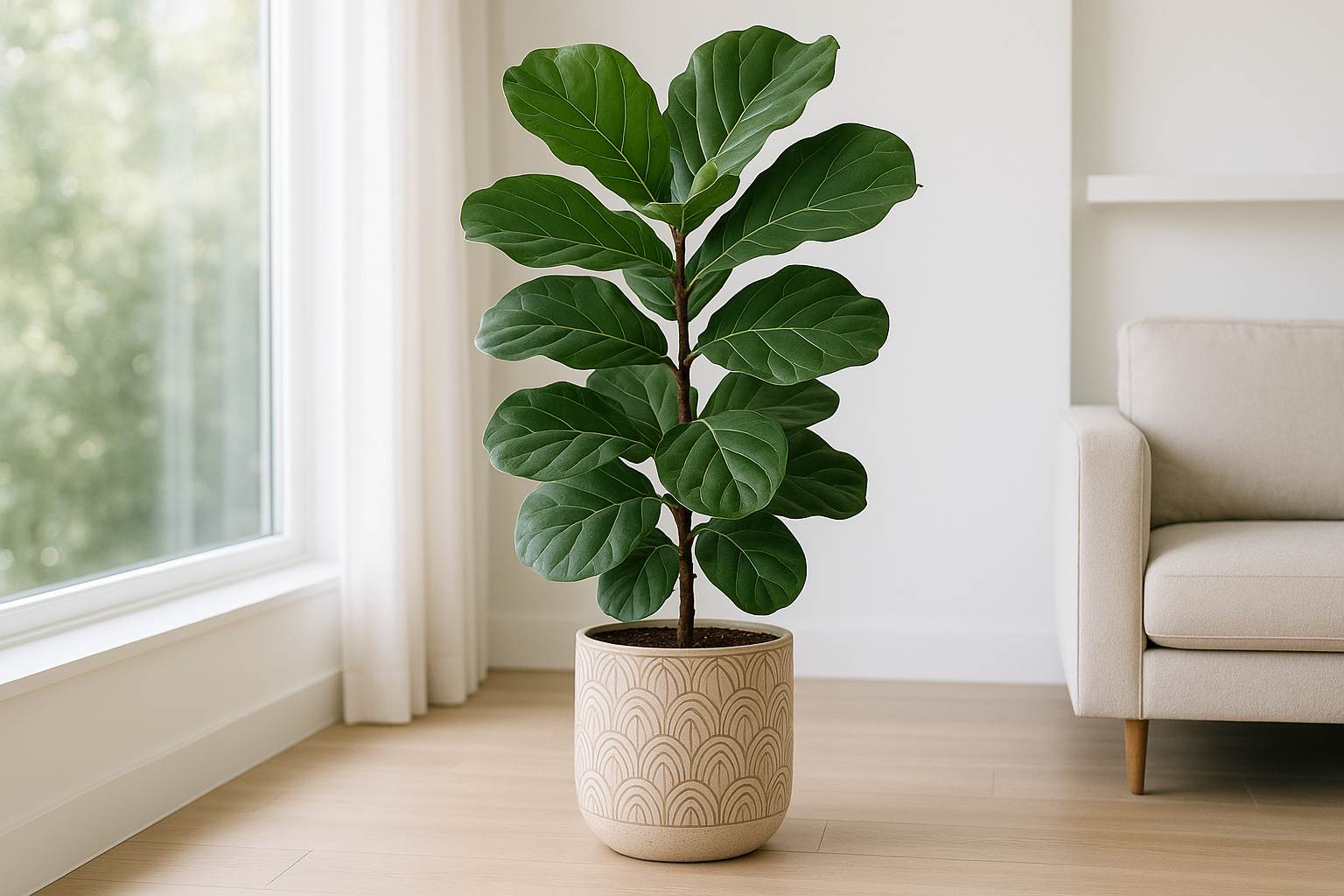
Why Fiddle Leaf Figs Are Worth the Effort
Let's be honest: fiddle leaf figs (Ficus lyrata) have a reputation for being dramatic. They drop leaves at the slightest offense. They yellow at perceived judgment. They brown tips like they're auditioning for a gothic opera.
But here's the thing — when they're happy, they're stunning. Those massive violin-shaped leaves make a statement no other houseplant can match. They're the Instagram plant for good reason.
The good news? They're not actually that hard once you understand what they want. Most fiddle leaf fig problems come from treating them like every other houseplant. They're not. This guide will fix that.
Quick Care Checklist
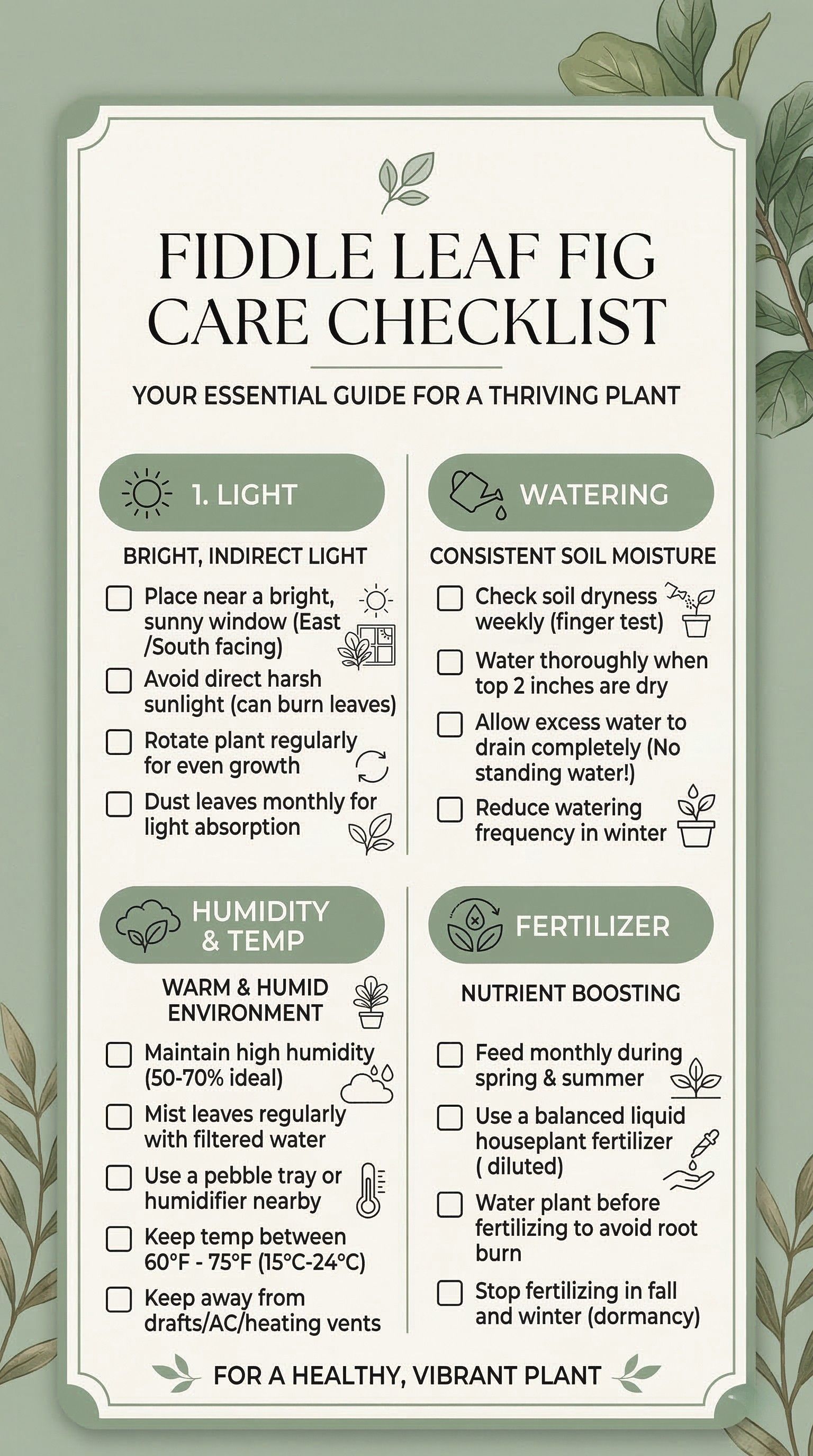
- Light: Bright indirect — near a north or east window, or back from a south/west
- Water: Every 1-2 weeks, when top 2 inches of soil are dry
- Soil: Chunk, well-draining mix (more on this below)
- Humidity: 30-65% — higher is better
- Temperature: 60-75°F (15-24°C) — no cold drafts
- Fertilizer: Monthly during spring/summer, NPK 3-1-2
Light Requirements
Fiddle leaf figs are native to West African rainforests, where they grow as understory plants. They get bright, filtered light — direct sun is rare in their natural habitat.
Signs Your FLF Needs More Light:
- Leggy growth (long stems with widely spaced leaves)
- Small, pale new leaves
- Leaning toward the window
- Overall sluggish growth
Signs of Too Much Direct Sunlight:
- Brown, crispy patches on leaves
- Faded, bleached-looking leaves
- Leaves that feel hot to the touch
Best Window Placement:
- North or East: Ideal — bright indirect all day
- South or West: Fine if back 3-5 feet from the window, or with sheer curtains
- Dark corners: Don't do it. FLFs need light to thrive.
If your space doesn't have enough natural light, a grow light can absolutely substitute. Place it 12-18 inches above the plant and run it 8-12 hours daily.
Need more detail? Check out our complete light guide for everything about matching plants to your windows.
Watering Guide
Here's where most people kill their fiddle leaf fig. Not through neglect — through love. Too much water, too often.
How Often to Water Fiddle Leaf Fig
The real answer: when the soil tells you, not on a schedule. Every 1-2 weeks is a rough guide, but your plant doesn't care about calendars.
The Deep Watering Method
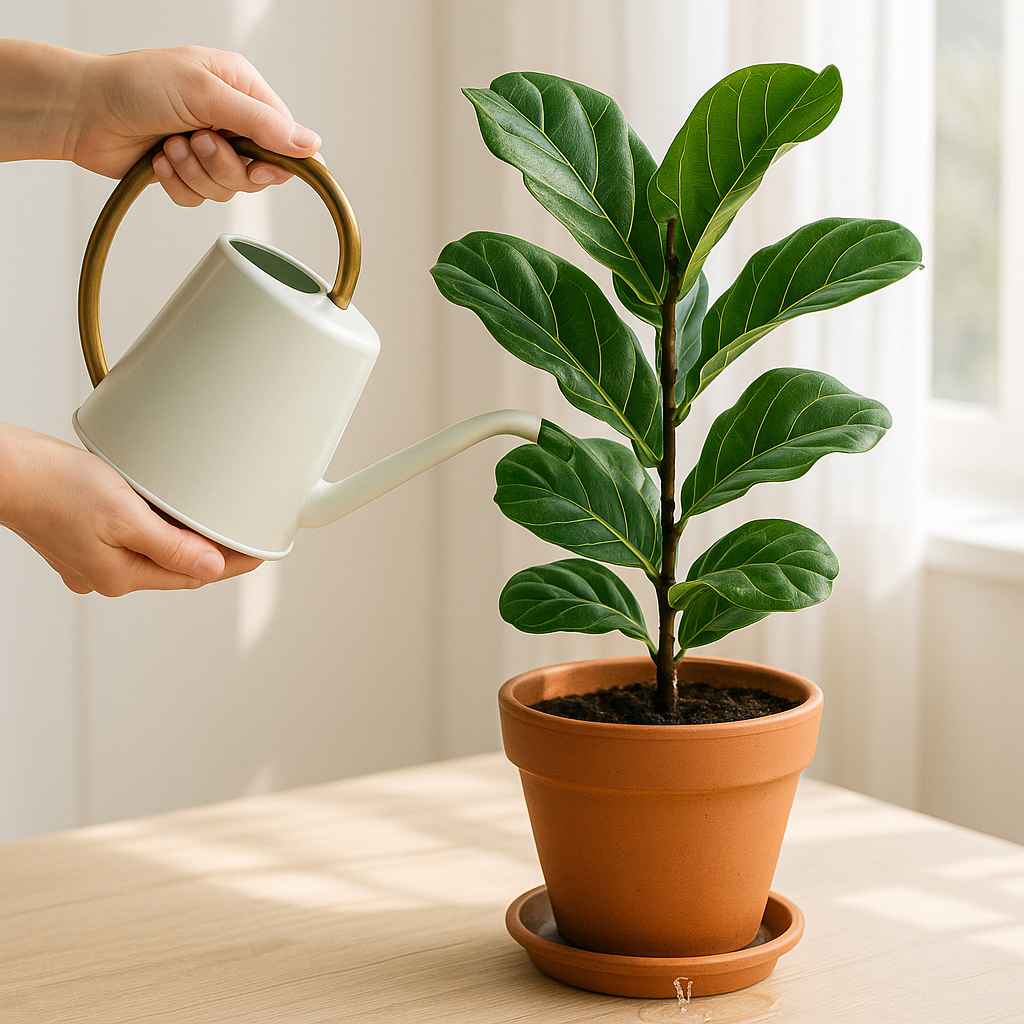
- Check soil moisture — stick your finger 2 inches in
- If dry, water thoroughly until it drains from the bottom
- Let it drain completely — FLFs hate wet feet
- Don't let the pot sit in standing water
How to Check Soil Moisture
Check Soil Moisture with a Meter →
If you're unsure, a moisture meter takes the guesswork out entirely. Overwatering is the #1 killer of fiddle leaf figs. This is the single most useful tool you can buy for FLF care.
For more watering fundamentals, see our watering guide — FLF-specific tweaks included.
Soil & Potting Mix
Fiddle leaf figs need soil that dries out relatively quickly. Standard potting mix holds too much water, leading to root rot.
DIY Fiddle Leaf Fig Soil Recipe:
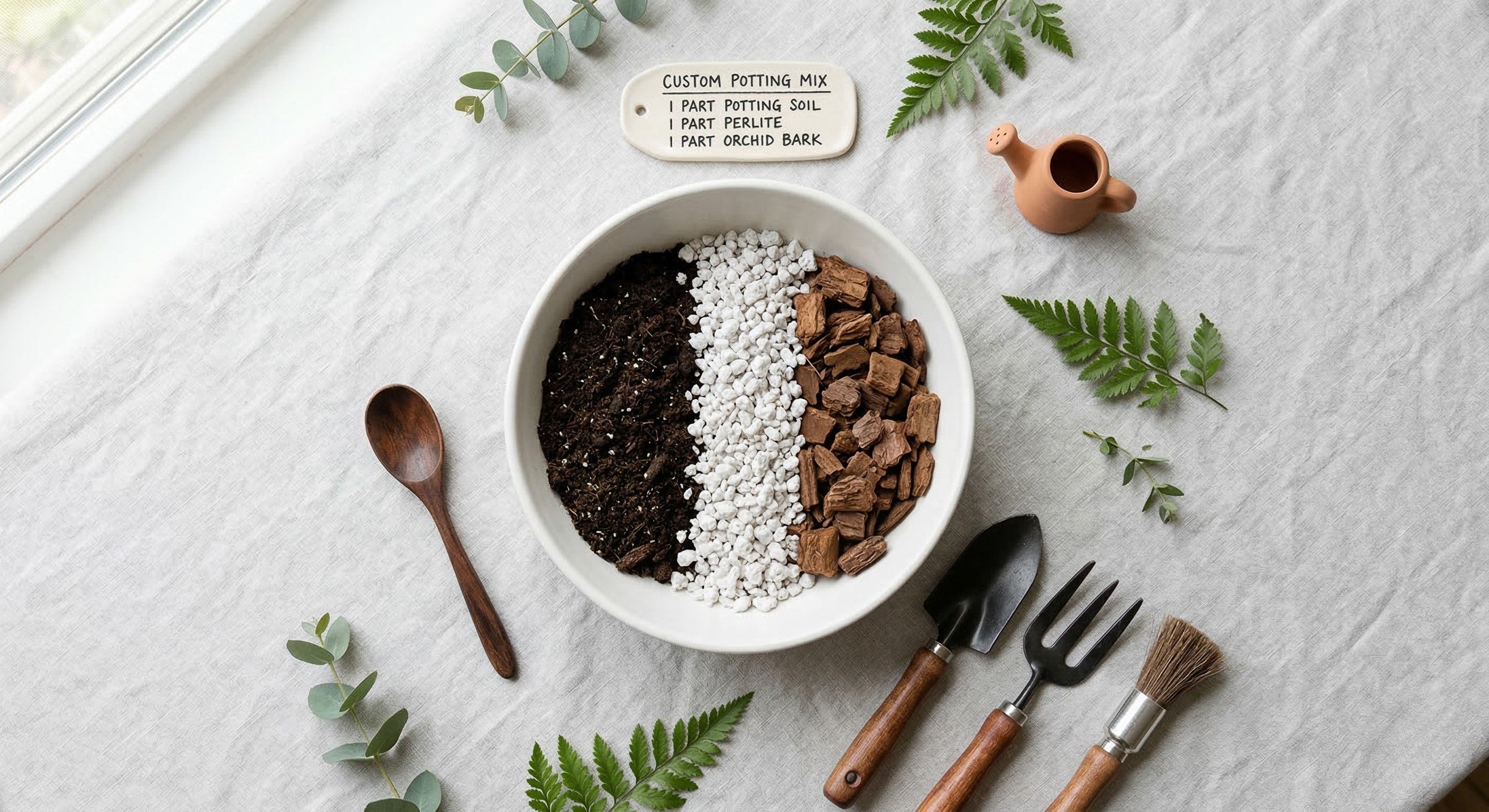
Mix:
- 2 parts standard potting soil
- 1 part perlite
- 1 part orchid bark
This chunky mix drains fast and gives roots the air they need. You can buy pre-mixed FLF soil, but the DIY version is cheaper and you know exactly what's in it.
Best Pot for Fiddle Leaf Fig
- Terracotta or fabric pot — both wick away excess moisture
- Drainage holes — non-negotiable
- Only 2-3 inches larger than the root ball — too much soil stays wet too long
When to Repot
Every 1-2 years, or when roots come out of the drainage holes. Spring is best. Don't repot in winter — the plant is dormant and won't recover as quickly.
Our how to repot guide walks through the process step by step.
Temperature & Humidity
Ideal Temperature Range:
60-75°F (15-24°C). Keep away from:
- Cold drafts from windows/doors in winter
- Heating vents (hot dry air)
- AC vents blowing directly on leaves
Humidity Solutions for Apartments
Fiddle leaf figs prefer 30-65% humidity. Standard apartments run 30-40%, which is fine but not ideal. If your FLF gets brown edges, low humidity is likely the culprit.
Easy fixes:
- Group plants together (they create a microclimate)
- Place on a pebble tray with water
- Run a humidifier
- Mist? It helps temporarily, but doesn't raise humidity long-term
Our humidity guide has all the details on boosting moisture without losing your mind.
Fertilizing Schedule
Best Fertilizer for Fiddle Leaf Fig
Get Fiddle Leaf Fig Fertilizer on Amazon →
Fiddle leaf figs do best with a balanced fertilizer in the 3-1-2 NPK ratio. That means 3 parts nitrogen, 1 part phosphorus, 2 parts potassium. This supports the big, leafy growth FLFs are known for.
When and How to Feed:
- Feed monthly during spring and summer (active growing season)
- Skip fall and winter — dormancy period
- Always water before fertilizing to prevent root burn
- Dilute to half-strength if unsure — less is more
Common Problems & Solutions
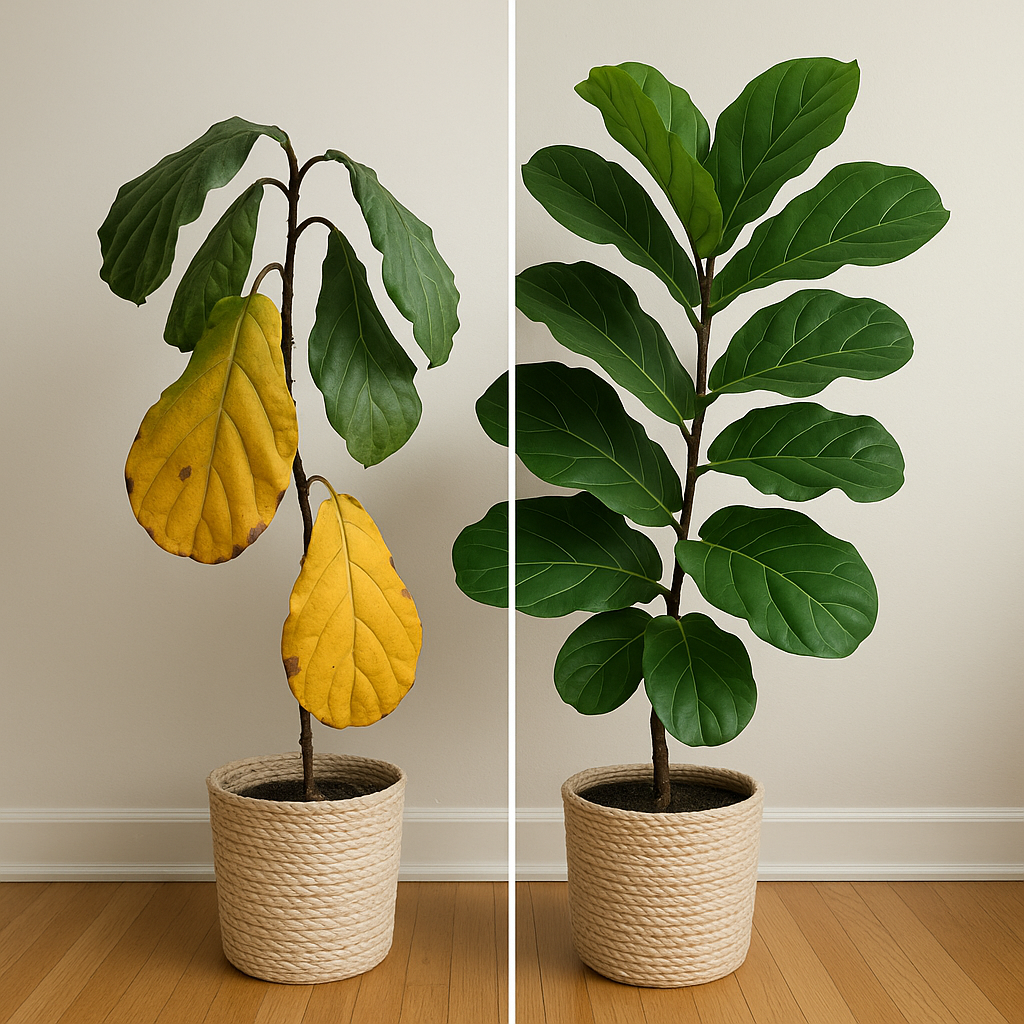
Fiddle leaf figs are expressive. When something's wrong, they show it. Here's how to read the signals.
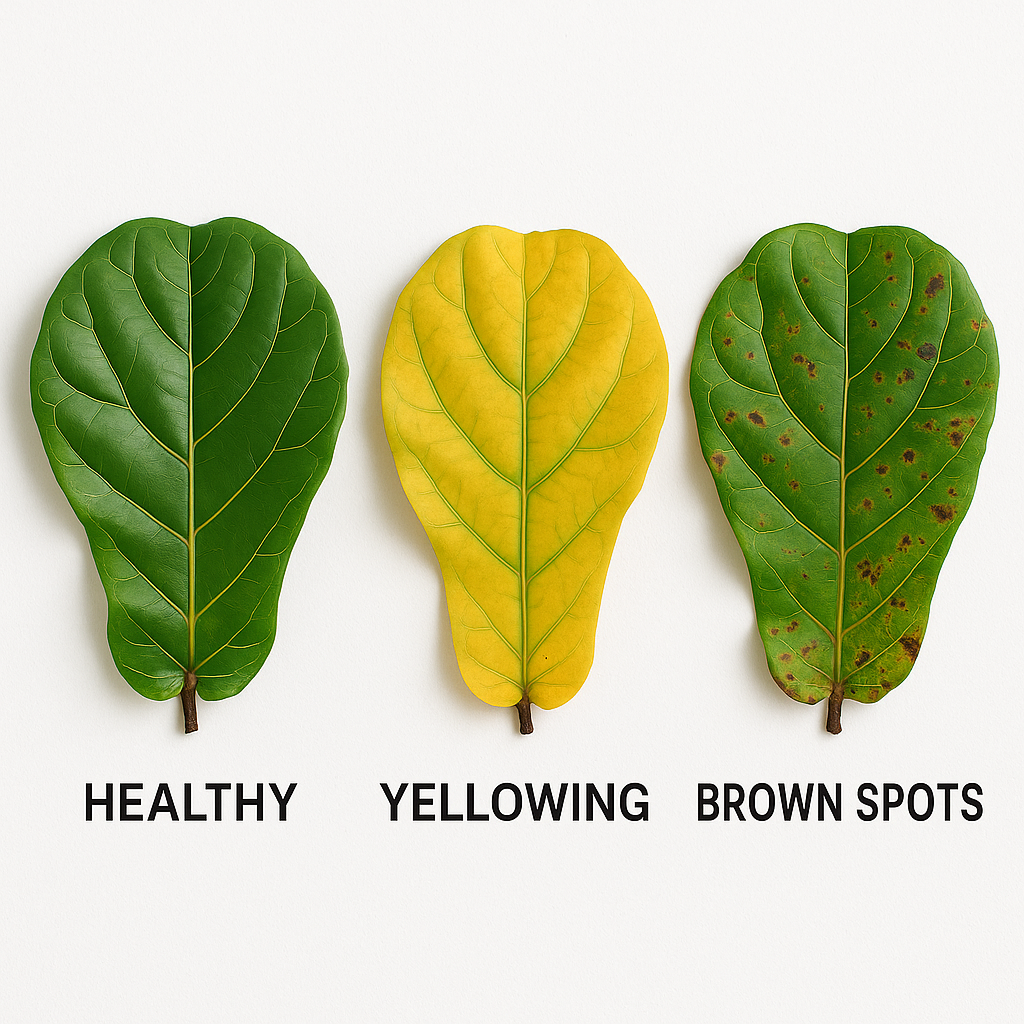
Yellow Leaves
Most common cause: Overwatering. Check soil moisture immediately. If wet, let it dry out completely. If root rot has set in, you'll need to act fast — see our root rot treatment guide.
Other causes:
- Underwatering (leaves droop + crisp edges)
- Nutrient deficiency (general yellowing, not just lower leaves)
- Sudden change in environment (they hate that)
Brown Spots
- Brown edges: Low humidity or salt buildup from tap water
- Brown patches in center: Usually root rot or bacterial infection
- Small brown dots: Could be pests — check the undersides of leaves
Dropping Leaves
A few lower leaves dropping is normal — that's the plant shedding older growth. But if it's dropping multiple leaves at once:
- Check for drafts or temperature changes
- Assess your watering (too much or too little)
- Did you move it recently? They hate that.
Root Rot
This is the big one. Caused by overwatering or poor drainage. Signs: yellow leaves, mushy stems, foul smell from soil.
If you suspect root rot:
- Remove plant from pot
- Trim any black, mushy roots
- Let it dry out for a few hours
- Repot in fresh, dry soil
- Water sparingly until recovery
Our troubleshooting hub has more detail on diagnosing and fixing FLF problems.
Seasonal Care Adjustments
Spring and Summer Care
- Water more frequently as growth picks up
- Start fertilizing monthly
- Great time to repot if needed
- Watch for pests — they're more active in warm months
Fall and Winter Care
- Cut back watering — soil stays wet longer in cooler temps
- Stop fertilizing entirely
- Keep away from cold windows
- Dry air from heating can cause brown edges — run a humidifier
Frequently Asked Questions
How do I know if my fiddle leaf fig is healthy?
Healthy FLFs have upright stems, glossy green leaves, and steady growth. If it's producing new leaves regularly (especially in spring/summer), you're doing something right.
Can I propagate my fiddle leaf fig?
Yes! Take a stem cutting with 1-2 leaves, let it callous for a few hours, then root in water or moist perlite. It takes patience — roots appear in 4-6 weeks typically.
Why is my fiddle leaf fig not growing?
Usually light or nutrients. If it's in a low-light spot, it won't grow much. Fertilize during growing season. Also check if it's root-bound — if roots are circling the pot, it needs repotting.
Products We Love
We use these products ourselves:
Ready to tackle more plant drama? Check out our troubleshooting hub for diagnosing problems across all your houseplants.