Best Feng Shui Houseplants — Plants That Attract Positive Energy to Every Room
Stop randomly plonking plants in corners. Here's which ones actually work and where to put them.
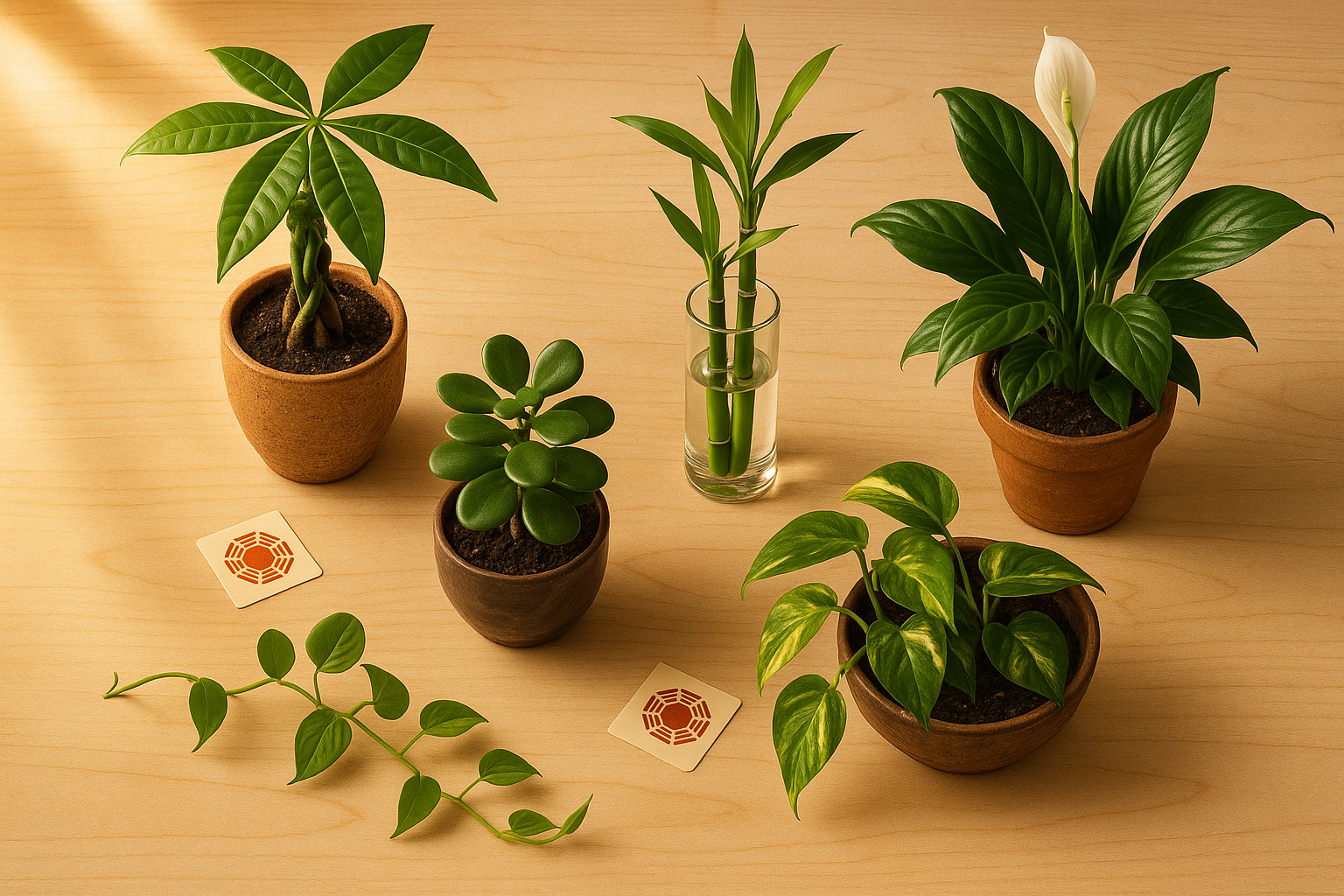
Feng Shui Plants Are Having a Moment — Here's Why That Makes Sense
Look, I'm usually the first person to roll my eyes at "spiritual interior design." But feng shui plant placement? It's actually just... interior design that works. The rules aren't mystical nonsense — they're based on how energy (chi) moves through spaces. Corners create stagnant pockets. Doorways are where energy enters. Left-side placement has historically signified power and authority. Plants with rounded leaves create a sense of harmony; pointy ones feel tense.
You don't have to believe in chi to acknowledge that intentionally placing things in your home beats randomly scattering decor wherever there's an empty spot. And if you're going to put plants somewhere, why not put them somewhere that matters?
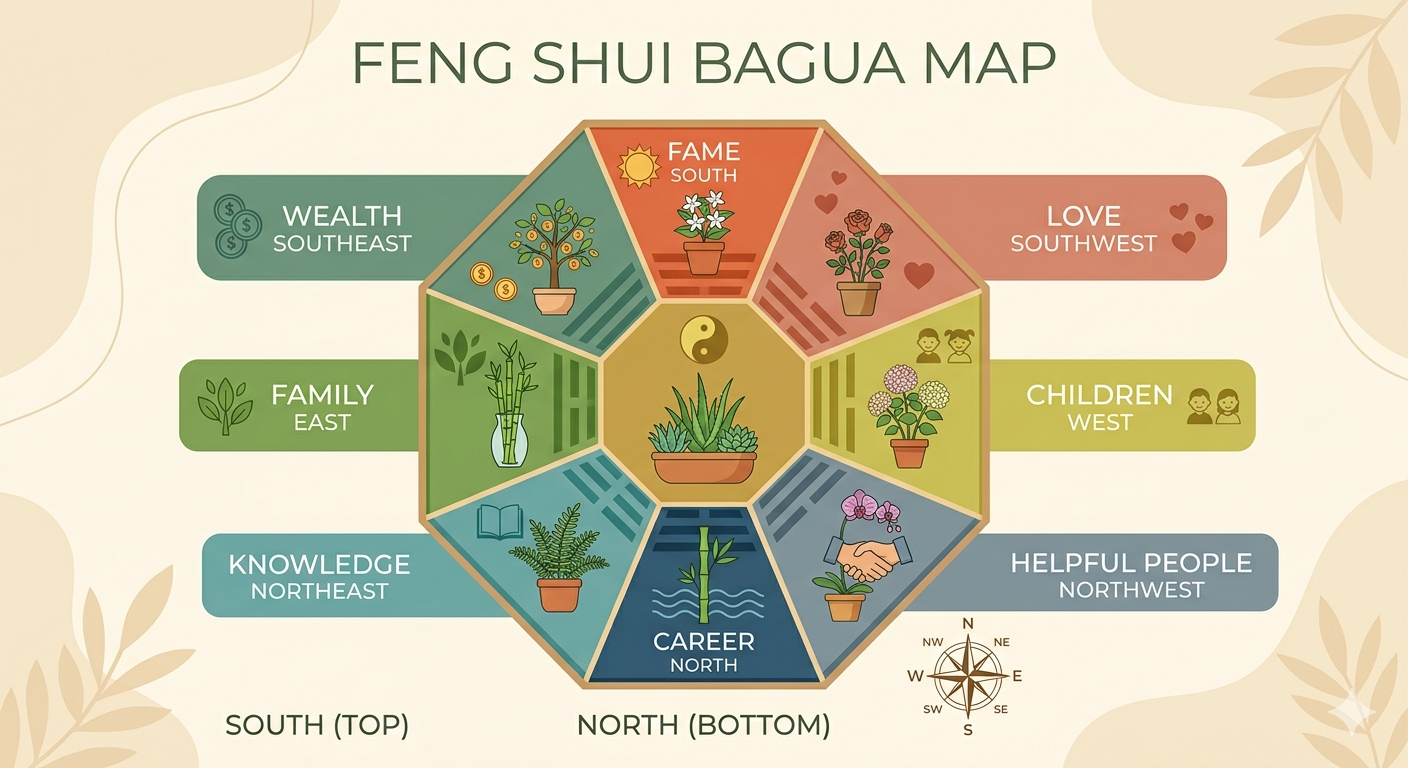
The feng shui framework that ties this all together is called the bagua map — a tool that divides your space into nine life areas. Wealth in the southeast. Health in the east. Love in the southwest. Career in the north. You can use the whole map or just focus on the areas relevant to your goals.
This guide covers how to place feng shui plants for maximum benefit, room-by-room recommendations, full plant profiles with care info, and a quick-reference chart so you can implement it today.
How to Place Feng Shui Plants for Maximum Benefit
The Bagua Map: Your Plant Placement Blueprint
The bagua map overlays your space like a tic-tac-toe grid. Each zone corresponds to a life area and has plant associations:
- Southeast (Wealth): Money tree, jade plant — place here for prosperity intentions
- East (Health/Family): Rubber plant, peace lily — growth and vitality
- Southwest (Love/Relationships): Jasmine, any heart-leaved plant — harmony in partnerships
- North (Career): Bamboo, lucky bamboo — flexibility and career progress
- Northeast (Knowledge): Philodendron, ferns — learning and wisdom
The diagonal corner from your main entrance is the wealth area in almost every room. That's your default feng shui plant spot if you don't want to map the whole bagua.
Feng Shui Plant Placement Rules (The Non-Negotiables)
A few rules that come up again and again across feng shui traditions — some more grounded than others, but worth knowing:
Corners vs. open spaces: Chi flows through open spaces and gets stuck in corners. If your plant is in a corner, it's doing feng shui heavy lifting. Place your most meaningful feng shui plants in corners, not mid-room.
Round leaves vs. pointy leaves: Round leaves = harmonious, soft energy. Pointy/spiky leaves (cacti, spiky succulents) = cutting, aggressive energy. Keep spiky plants away from seating areas and bedrooms.
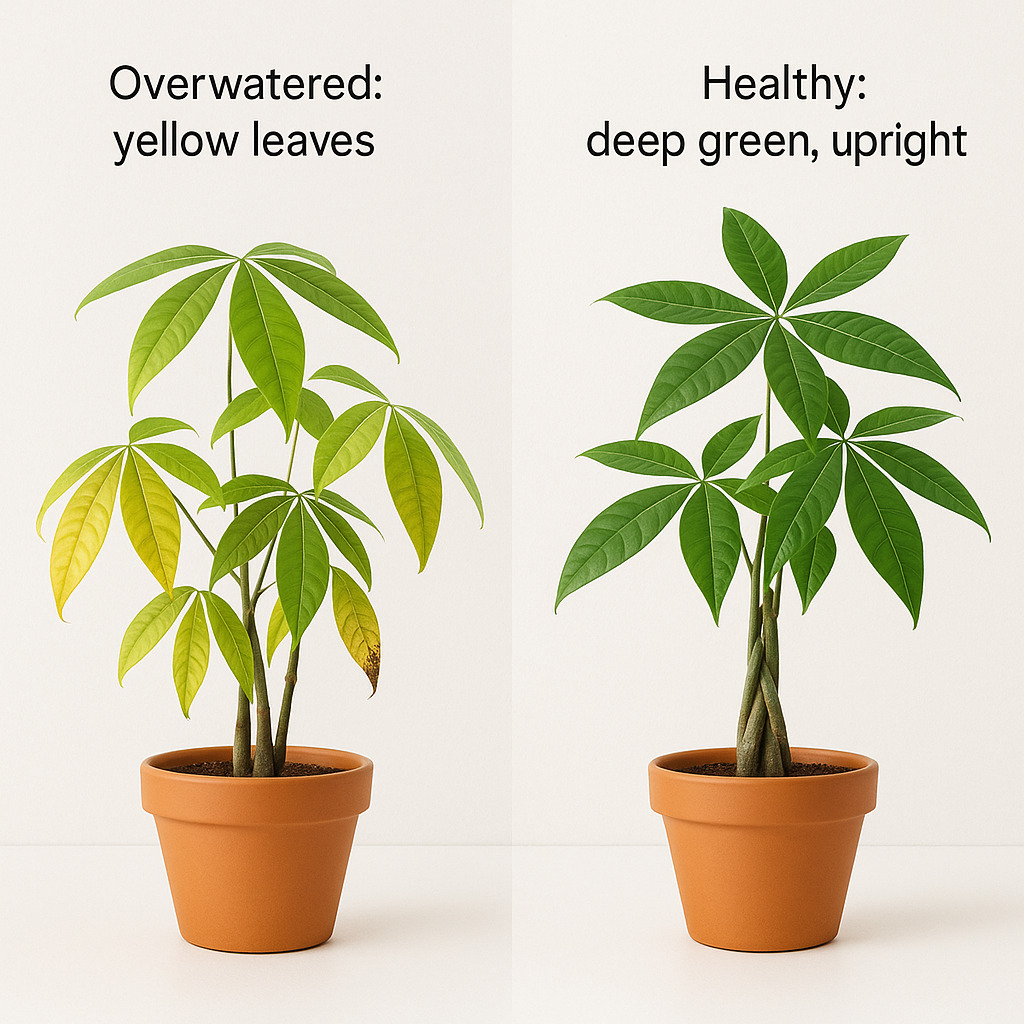
Living plants only — dying plants bring negative chi: This one I actually agree with literally. A wilted, yellowing plant is a sign something is wrong (root rot, overwatering, pests). Feng shui calls that negative energy. Plant care calls it "probably overwatered again." Either way: fix it or remove it.
Odd numbers of plants are preferred: Single plants or groupings of 3, 5, or 7 are considered more potent than even numbers. Less迷信, more visual balance.
The dragon side of the desk: In feng shui, the left side is the "dragon" side — the power position. Plants on the left side of a desk are in the power position for career and authority.
Best Feng Shui Plants for Every Room in Your Home
Feng Shui Plants for the Entryway
The entryway sets the chi tone for your entire home. Energy walks in through your front door — what does it meet first?
Best plants: Snake Plant (protection, air purification) and Lucky Bamboo (growth, resilience)
Placement: Wealth corner diagonal from the door, or flanking either side of the entrance
The entryway is not the place for a plant that needs constant attention. Go with something hardy that can handle drafts and inconsistent care. A snake plant here acts as a guardian — plus it filters the air of whatever you track in on your shoes.
Feng Shui Plants for the Living Room
The living room is your gathering space, so it's a natural fit for prosperity and harmony plants. This is also where you'll get the most visual mileage from your feng shui picks.
Best plants: Rubber Plant (rounded leaves, growth energy), Money Tree (prosperity), Peace Lily (purification, calm)
Placement: Southeast corner (wealth) or east wall (health/family)
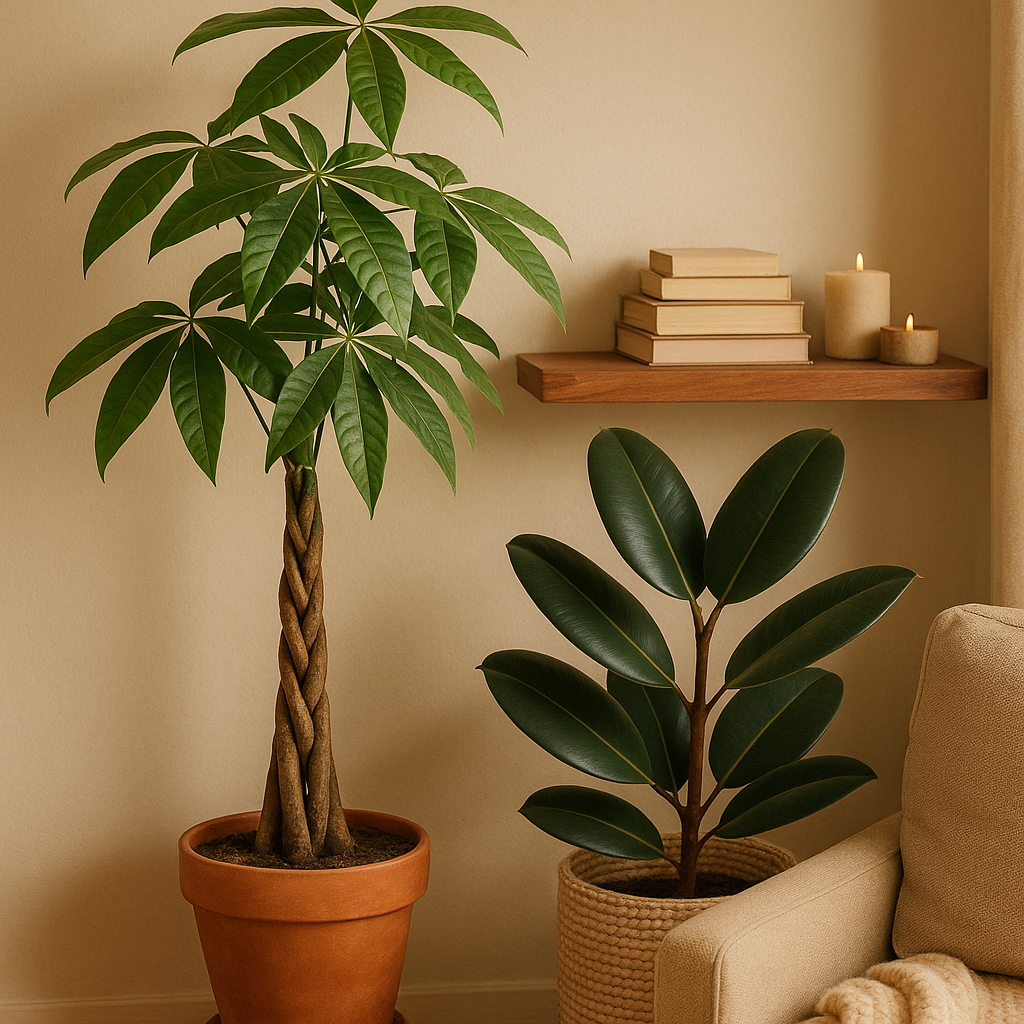
If you have the space, put a money tree in the southeast corner and a rubber plant on the east wall. The rubber plant's broad, glossy leaves are excellent for generating that sense of abundance feng shui is always going on about. Just give them enough light — neither of them is a low-light hero.
Feng Shui Plants for the Bedroom
The bedroom is for rest and relationships. Feng shui strongly advises against spiky or aggressive plants here, and honestly, your sleep quality probably agrees.
Best plants: Jasmine (love and relationships), Lavender (calming, sleep), Snake Plant (air purification, extremely low maintenance)
Placement: East or southeast wall. Never directly beside the bed.
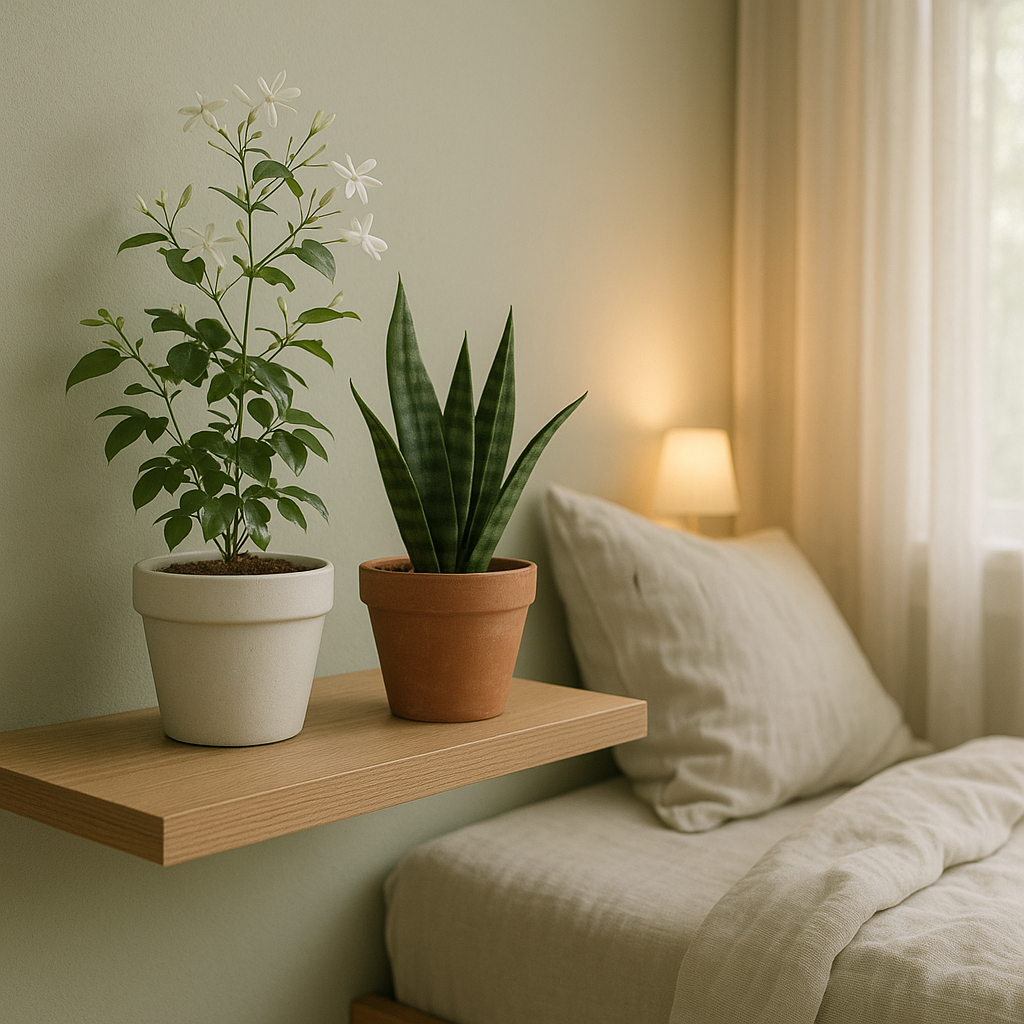
The jasmine is lovely if you can keep it alive (it's picky about humidity), but the snake plant is the real bedroom feng shui workhorse. It produces oxygen at night, tolerates basically anything, and doesn't need your attention every three days.
Feng Shui Plants for the Kitchen
The kitchen is about nourishment and abundance. Plants here should be culinary-adjacent or air-purifying.
Best plants: Pothos (resilience, air purification), Basil (prosperity, culinary), Peace Lily
Placement: Windowsill or corner, away from heat sources
Pothos is genuinely the plant that keeps on giving. It tolerates low light, irregular watering, and the general chaos of being next to a stove. Plus it's one of the best plants for low-light rooms if your kitchen doesn't get direct sun. Put it on a high shelf and let it trail — flowing chi.
Feng Shui Plants for the Home Office
The home office is where feng shui and productivity overlap nicely. Plants here support focus, creativity, and career energy.
Best plants: Money Tree (focus, success), Lucky Bamboo (growth, flexibility), Philodendron (creativity, learning)
Placement: Left side of desk (dragon side) or wealth corner of the room
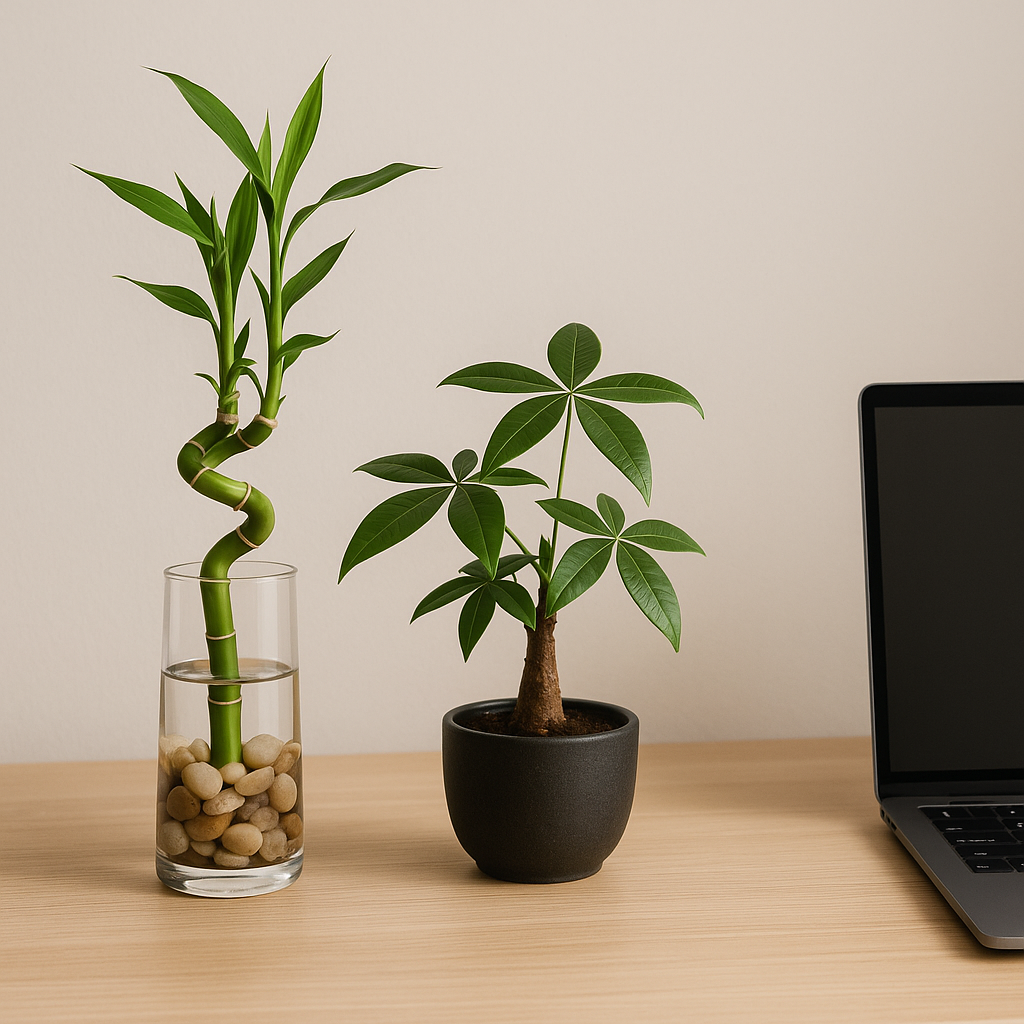
The dragon-side desk placement is the move here. Lucky bamboo on the left, money tree on the right — or just one if you're working with limited desk space. Lucky bamboo is absurdly easy to keep alive since it grows directly in water. If you forget to water things, it's your plant.
If you're buying plants specifically for your office setup, a lucky bamboo arrangement is the best starting point.
Feng Shui Plants for the Bathroom
Bathrooms drain energy in feng shui — water flows out, taking energy with it. Living plants counteract this, and some actually love the humidity.
Best plants: Lucky Bamboo (thrives in humidity), Pothos (moisture-tolerant), Orchid (purification, elegance)
Placement: Shelf or windowsill, not floor-level
The north bagua area = career/water element, which makes bamboo a natural fit here. Lucky bamboo genuinely enjoys bathroom conditions — the humidity keeps it happy without you having to do anything. Orchids also do well in bathrooms with natural light.
The Best Feng Shui Plants Ranked: Full Profiles
Money Tree (Pachira aquatica)
Feng shui benefit: Wealth, luck, and prosperity. The braided trunk symbolizes trapped luck that can't escape.
Bagua placement: Southeast corner
Care difficulty: Moderate. Needs bright indirect light and a thorough watering when the top inch of soil is dry — usually weekly. Don't let it sit in water or the roots will rot.
Common mistakes: Overwatering (the number one killer), not enough light, moving it around too much (it's sensitive to location changes).
Jade Plant (Crassula ovata)
Feng shui benefit: Friendship, prosperity, and fortune. Known as the "money plant" in its own right.
Bagua placement: Southeast corner or near the entryway
Care difficulty: Low. It's a succulent — drought-tolerant, fine with neglect, needs bright light. Water only when the soil is completely dry.
Common mistakes: Overwatering (again, the jade is basically a camel), not enough light causing leggy growth.
Snake Plant (Sansevieria / Dracaena trifasciata)
Feng shui benefit: Protection and purification. One of the few plants that actually produces oxygen at night.
Bagua placement: Entryway, bedroom east wall, or anywhere you need a hardy protector
Care difficulty: Extremely low. Tolerates low light, drought, and neglect. Water every 2-3 weeks, less in winter. It's basically a pet rock that happens to be green.
Common mistakes: Overwatering (it's a desert plant — it will rot if you baby it), not enough light for variegated varieties (they'll lose their stripes).
Lucky Bamboo (Dracaena sanderiana)
Feng shui benefit: Growth, luck, and resilience. Actually not bamboo at all, but it looks the part.
Bagua placement: Entryway, office, bathroom, or anywhere you want to encourage flow
Care difficulty: Very low. Grows in water — just keep the roots submerged and change the water every 1-2 weeks. Tolerates low light.
Common mistakes: Using tap water with chlorine (use filtered or let tap water sit out overnight), placing in direct sunlight (it'll scorch).
Peace Lily (Spathiphyllum)
Feng shui benefit: Purification, calm, and harmony. Also one of the few plants that blooms reliably indoors.
Bagua placement: Living room, kitchen, or anywhere needing a calm energy boost
Care difficulty: Moderate. It's dramatic — it droops dramatically when thirsty and perks back up after watering. Bright indirect light is ideal, but it tolerates lower light. Keep soil consistently moist but not waterlogged.
Common mistakes: Letting it droop repeatedly from neglect (it recovers but the stress adds up), too much direct sun (it burns easily).
Rubber Plant (Ficus elastica)
Feng shui benefit: Growth, abundance, and — because of its large rounded leaves — harmonious chi.
Bagua placement: Southeast (wealth) or East (health) wall in a bright room
Care difficulty: Easy. Bright indirect light, water every 1-2 weeks when the top inch is dry. Wipe the leaves occasionally — glossy leaves are part of the feng shui appeal.
Common mistakes: Overwatering (the rubber plant is more forgiving than most, but still), cold drafts (it doesn't like temperature swings).
Pothos (Epipremnum aureum)
Feng shui benefit: Resilience, purification, and flowing energy (the trailing habit represents chi that keeps moving).
Bagua placement: Any room. It's the feng shui plant equivalent of a "goes with everything" wardrobe piece.
Care difficulty: Very easy. Tolerates low light, irregular watering, and neglect. Water when the soil is dry. If you kill a pothos, you should probably just get a fake plant.
Common mistakes: Too much direct sun (it'll burn), overwatering (if you have to err, err on the dry side).
Philodendron
Feng shui benefit: Creativity, learning, and loving energy (many have heart-shaped leaves).
Bagua placement: Home office, study, or northeast bagua area for knowledge
Care difficulty: Easy. Tolerates lower light and irregular watering. Water when the top inch is dry. Heart-leaf philodendron trails beautifully; tree-form varieties stand upright.
Common mistakes: Overwatering, cold temperatures (it tropical and will protest if it's chilly).
Feng Shui Plants to Avoid (And What to Use Instead)
This section is where feng shui advice and plant care advice align completely:
Dying or wilted plants → replace immediately or move to recover. A struggling plant isn't generating positive chi. It's generating negative chi and looking bad. If you can't fix it, check the Plant ER for troubleshooting — or accept defeat and start fresh.
Cacti and spiky succulents in bedrooms → use pothos or snake plant instead. That said, if you love your cacti, keep them in the living room, not the bedroom. Nobody sleeps well next to a plant that looks like it wants to stab them.
Artificial/fake plants → no living chi. Full stop. They look fine in photos, but there's no energy being generated. They're decoration, not feng shui.
Overly demanding plants that die quickly for your climate → pick a hardier alternative. If you travel constantly and forget plants exist, a high-maintenance fiddle leaf fig is not your feng shui answer. Pothos, snake plant, and lucky bamboo are your friends.
Keep the Energy Alive: Caring for Your Feng Shui Plants
Here's where feng shui plant advice becomes regular plant advice, because they genuinely overlap: a healthy plant is a positive-energy plant.
A neglected, dying plant doesn't bring good luck. It brings yellow leaves, root rot, and depression every time you look at it.
What to watch for:
- Yellow leaves = overwatering. Ease up. Check soil moisture with a moisture meter before you water.
- Drooping = underwatering (or overwatering — the peace lily will droop for both, so check the soil).
- Brown tips = humidity or mineral buildup from tap water. Switch to filtered water or increase humidity around the plant.
General care for feng shui plants:
- Repot when root-bound — usually annually for most of these plants
- Rotate quarterly to encourage even growth and refresh the energy
- Clean the leaves every few weeks — dusty leaves can't photosynthesize efficiently, and a happy plant is a feng shui plant
Feng Shui Plant Placement Quick-Reference Guide
| Room | Best Plants | Placement Tip | Bagua Area | Care Difficulty |
|---|---|---|---|---|
| Entryway | Snake Plant, Lucky Bamboo | Wealth corner diagonal from door | Southeast | Low |
| Living Room | Rubber Plant, Money Tree, Peace Lily | Southeast corner or east wall | Southeast / East | Easy–Moderate |
| Bedroom | Jasmine, Snake Plant, Lavender | East or southeast wall, never beside bed | Southwest / East | Low–Moderate |
| Kitchen | Pothos, Basil, Peace Lily | Windowsill or corner, away from heat | South / Southeast | Low |
| Home Office | Money Tree, Lucky Bamboo, Philodendron | Left side of desk (dragon side) | Southeast / Northeast | Low–Moderate |
| Bathroom | Lucky Bamboo, Pothos, Orchid | Shelf or windowsill, not floor | North | Very Low |
Final Thoughts: Let Your Plants Do the Feng Shui Work
The whole point of feng shui plant placement is intention. You're not just putting a plant in a corner — you're putting it somewhere that matters, with some thought behind why it's there.
That said, none of this works if the plant is dead. A struggling money tree in the southeast corner brings exactly as much prosperity as a plastic one. Pick plants you can actually keep alive. Start with pothos or a snake plant if you're not a natural gardener. Add the money tree once you've proven you can water something without killing it.
The feng shui rules are the easy part. The keeping-it-alive part? That's where Feral Foliage comes in. Browse our plant care guides to keep your feng shui plants thriving long after you've arranged them in their bagua corners.
Ready to shop for feng shui plants? We cover where to buy plants online — vetted shops with good quality and fair prices.
Products We Love
We actually use and recommend these:
Money Trees on Amazon: A quick search will surface solid options from sellers like Brussel's Bonsai or Costa Farms. Look for 4-6" pots if you want something desk-sized.
Lucky Bamboo Arrangements: 3-stalk or 5-stalk arrangements in the $10–$20 range are the standard feng shui sweet spot.
Feng Shui-Inspired Planters: Ceramic pots in earth tones, woven basket planters, or simple terracotta — the material matters less than the intention. Avoid plastic.