English Ivy Care Guide — The Classic Hanging Indoor Plant
Hedera helix has been trailing down shelves and hanging from porches for centuries. Here's how to keep it alive without losing your mind.
What is English Ivy?
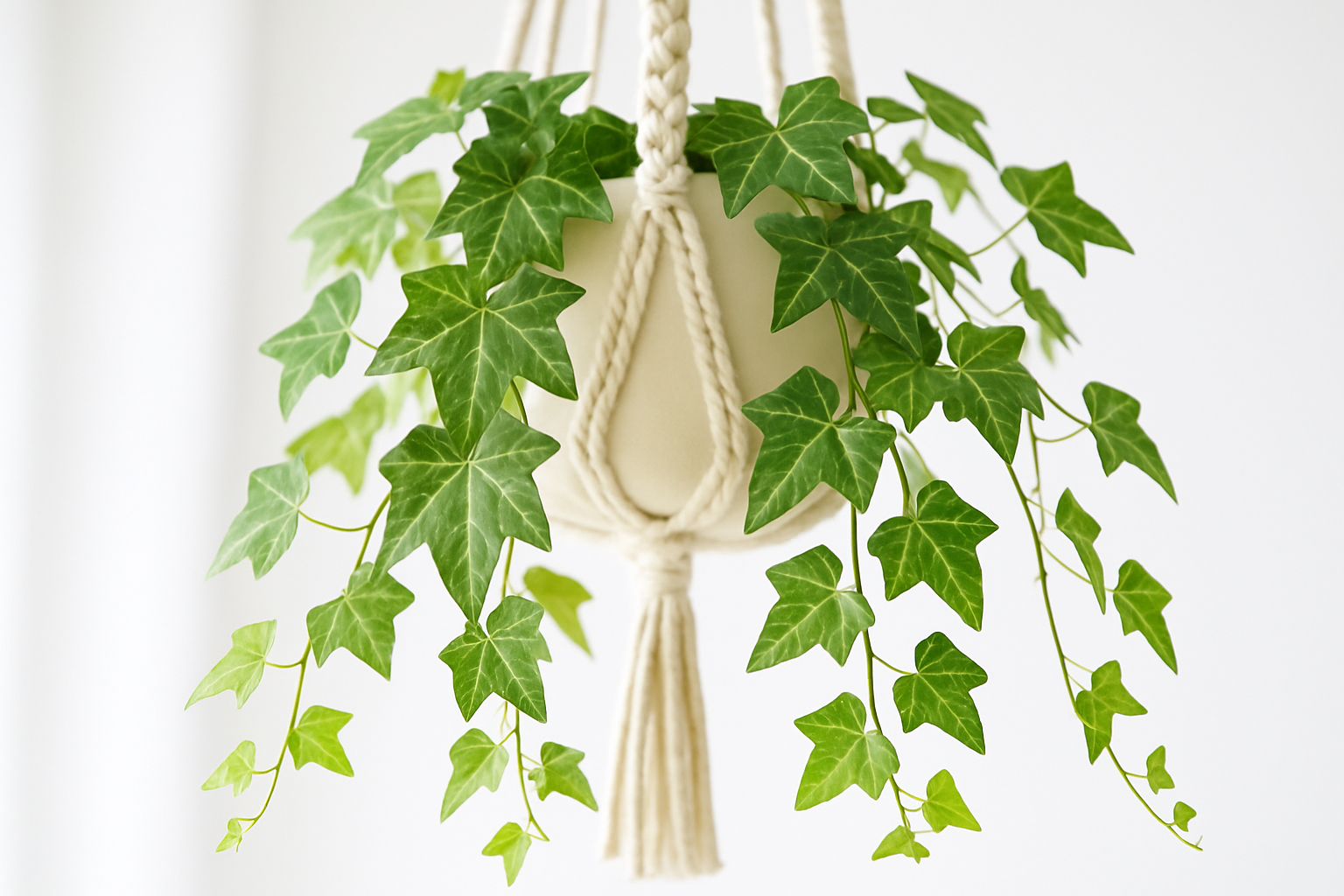
English Ivy (Hedera helix) is the trailing vine you see in old English cottages, Gothic mansions, and literally every gothic dorm room since the 1970s. It's a classic for a reason — it's adaptable, grows fast, and looks good cascading from a high shelf or trained up a trellis.
The catch: it's invasive in many parts of the United States. Plant it outside and it'll escape, smothering native plants and dominating forest floors. Indoors, it's well-behaved. Outdoors in the wrong climate? It colonizes. Keep your ivy contained if you ever put it on a patio.
As a houseplant, it's one of the more forgiving trailing plants. It tolerates lower light than you'd expect (though it won't thrive), handles inconsistent watering better than some divas, and propagates easily if you want to share with friends or fill more pots.
The Basics: Light, Water, Temperature & Humidity
English Ivy isn't fussy, but it has preferences:
| Light | Bright indirect — survives lower light but gets leggy |
| Water | Weekly-ish, let top inch dry between waterings |
| Temperature | 60–75°F (15–24°C) — typical room temp works fine |
| Humidity | Moderate to high — spider mites love dry conditions |
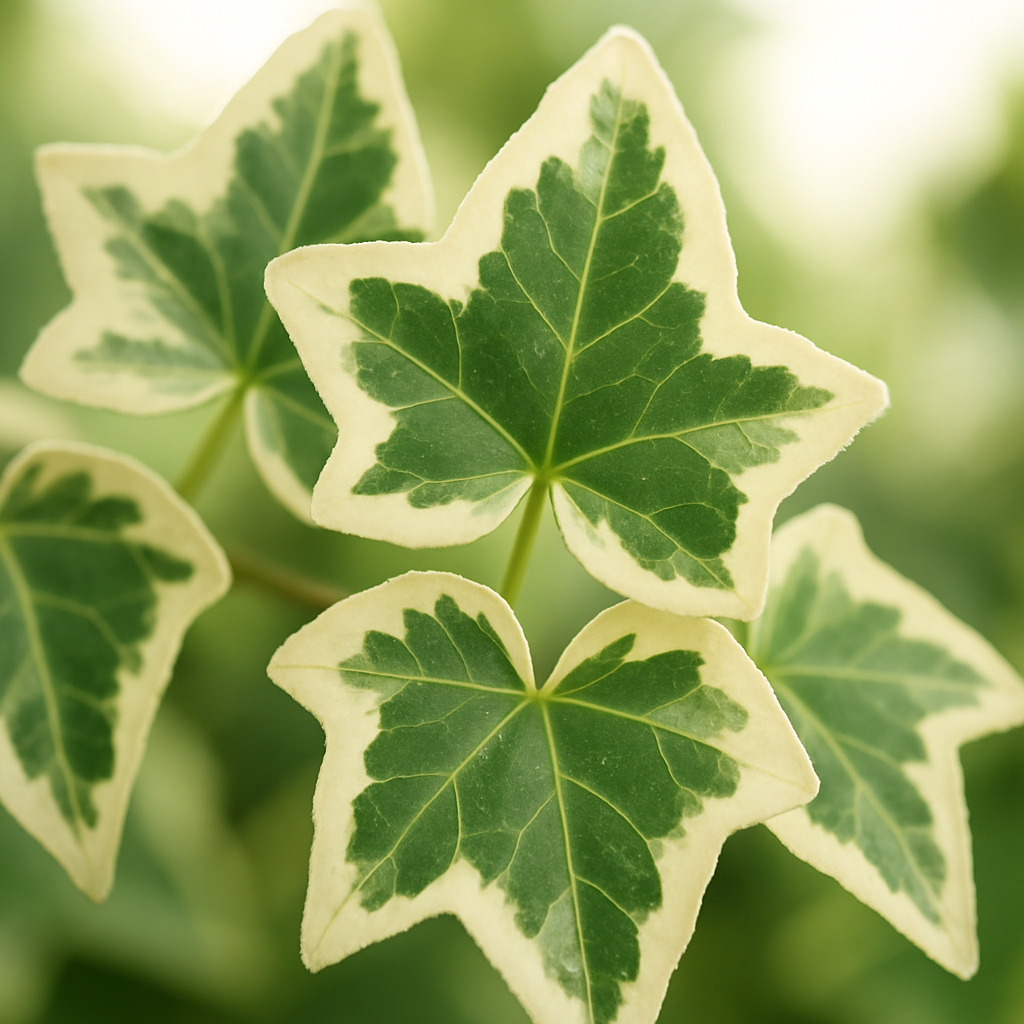
The light thing: Variegated ivy (Glacier, Effy) needs more light to maintain its color. All-green varieties are more forgiving. If your ivy starts reverting to solid green, it needs more light.
The humidity thing: This is where most people fail. Spider mites love dry air. If you keep your ivy in a room with forced-air heating in winter, you're creating a spider mite paradise. Misting helps, but a humidifier nearby is better.
How to Plant English Ivy
Use well-draining potting mix — standard houseplant mix with some perlite works well. Don't pack it tightly; ivy roots like to breathe.
Drainage is non-negotiable. English Ivy hates sitting in soggy soil. If your pot doesn't have a drainage hole, you're setting yourself up for root rot. Drill one or move it to something that does.
Container sizing: Go up 1–2 inches from the current root ball. Too big and the soil holds too much moisture. Too small and you're watering constantly. Aim for "slightly snug but not cramped."
When to repot: Every 1–2 years when you see roots coming out of the drainage hole or growth has slowed significantly. Spring is the best time.
For more container options, check out our container picks for trailing plants.
How Often to Water English Ivy
Water when the top inch of soil is dry — typically once a week in spring and summer, and every 10–14 days in fall and winter.
The easy way to check: stick your finger in the soil. If it feels dry up to your first knuckle, water. If it's still damp, wait.
Bottom watering works great for ivy. Set the pot in a tray of water for 20–30 minutes, then let it drain. This encourages roots to grow downward and helps the soil absorb moisture more evenly than top-watering, which can run straight through.
Overwatering is the #1 killer of indoor ivy. Yellow leaves, mushy stems, and a general "this plant is dying" vibe are usually root rot. Let it dry out more between waterings.
For the full breakdown on watering best practices, see our watering guide.
How to Prune English Ivy (And Why It Matters)
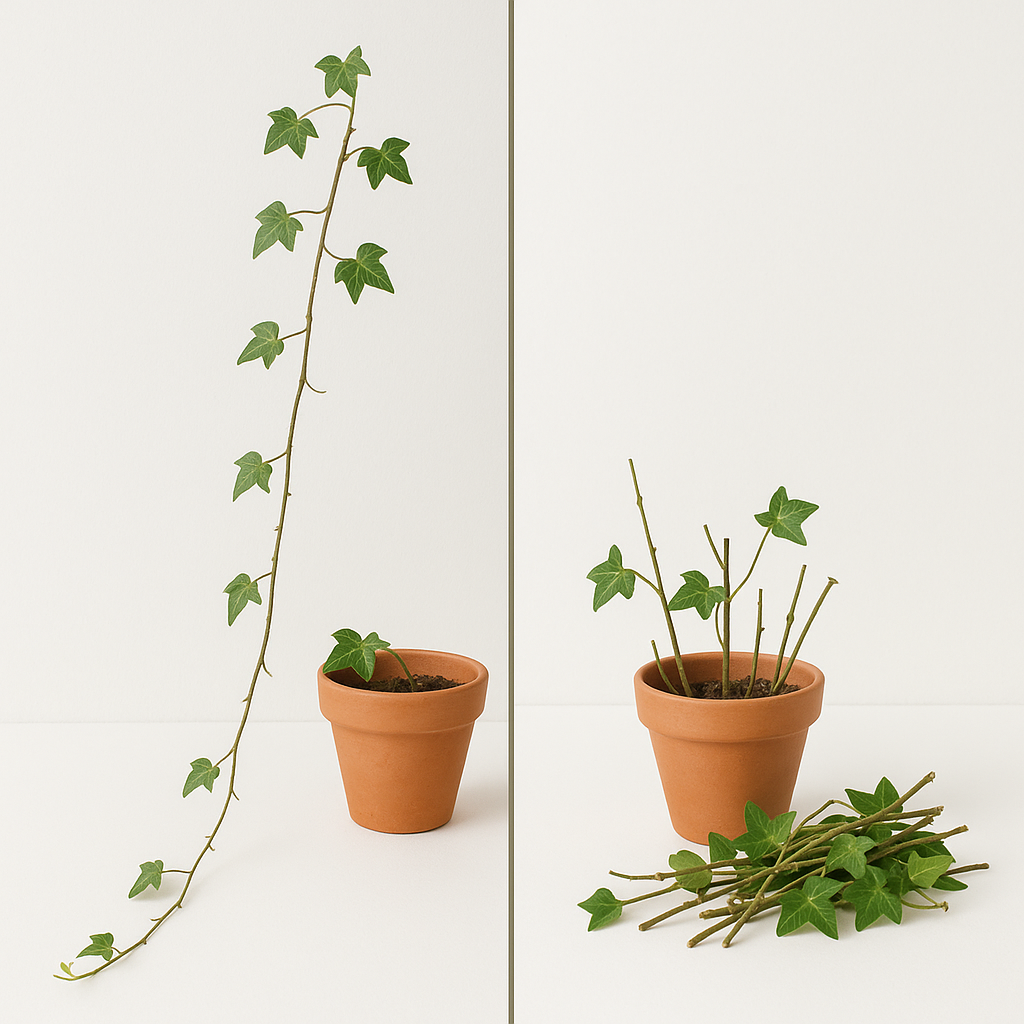
If you don't prune English Ivy, it gets leggy — long, bare vines with leaves only at the ends. It starts looking like a horror movie prop instead of a lush trailing plant.
The fix: Cut back long vines to just above a leaf node. This is where the growth hormone concentrates; cutting there triggers branching, which means bushier, fuller growth.
How often: Every 2–3 months during the growing season (spring-summer). You can do light maintenance trims anytime. Heavy pruning: early spring or late winter, right before the growth surge.
What to cut: Anything dead, damaged, or disproportionately long. If a vine has more than 12 inches between leaf nodes, it's leggy — cut it back.
The bonus: Every cutting you take is a free plant. Ivy propagates easily (more on that below). Pruning gives you cuttings to expand your collection or trade with friends.
For more on pruning technique, see our pruning basics guide.
Propagating English Ivy: Water vs Soil
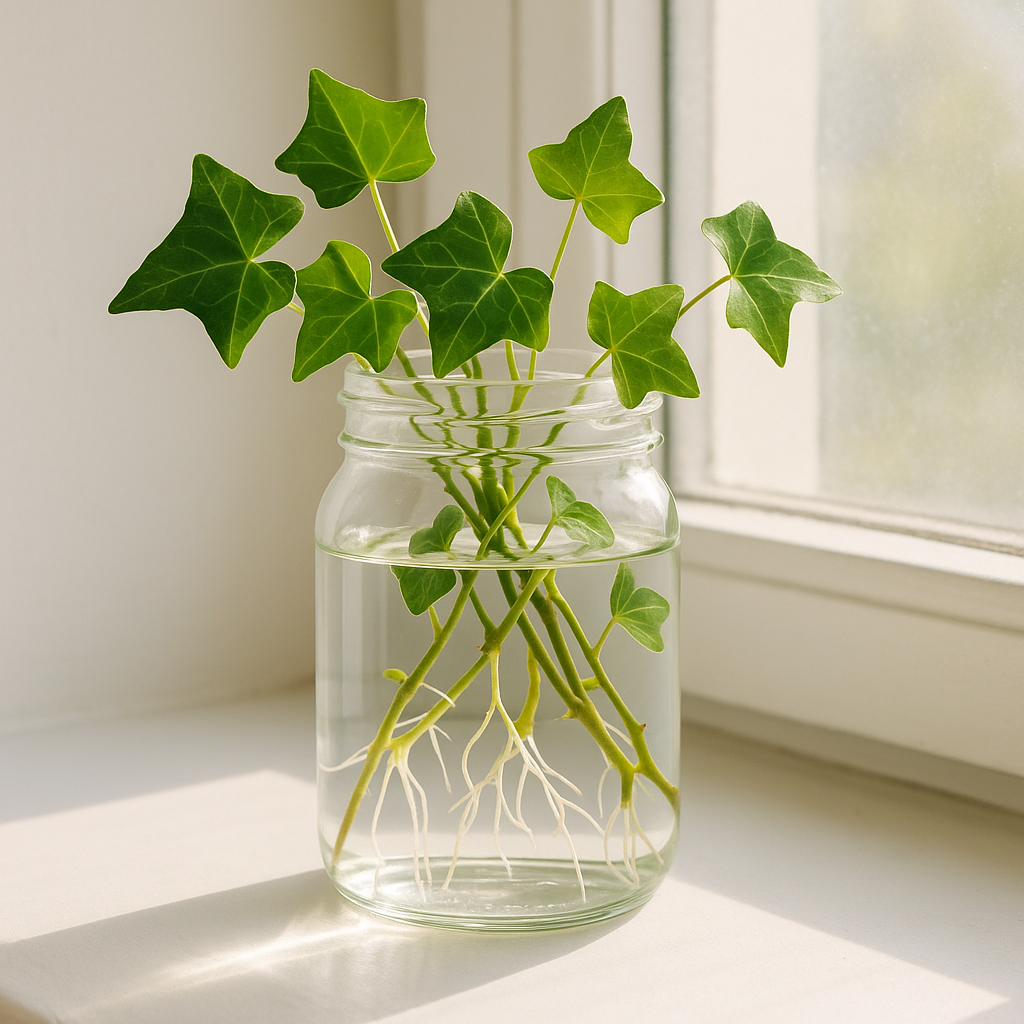
You can propagate English Ivy in water or soil — both work, but with different tradeoffs.
Water propagation:
- Faster root development (2–3 weeks typically)
- You can see the roots growing (satisfying)
- Easy to monitor progress
- The catch: Ivy roots are prone to rot if left in water too long. Change the water weekly, and pot it up within 3–4 weeks once roots are 2–3 inches long.
Soil propagation:
- More stable long-term (no transplant shock)
- Better for plants that need to stay in soil eventually
- Takes a bit longer to root (3–4 weeks)
- Use a humidity dome for best results
My honest recommendation: Start in water, then pot up when roots are established. It gives you the visual feedback of water propagation with the stability of soil.
Common English Ivy Problems and How to Fix Them
Spider Mites
This is the big one. Spider mites are to English Ivy what locusts are to crops — they'll destroy it if you don't catch them early.
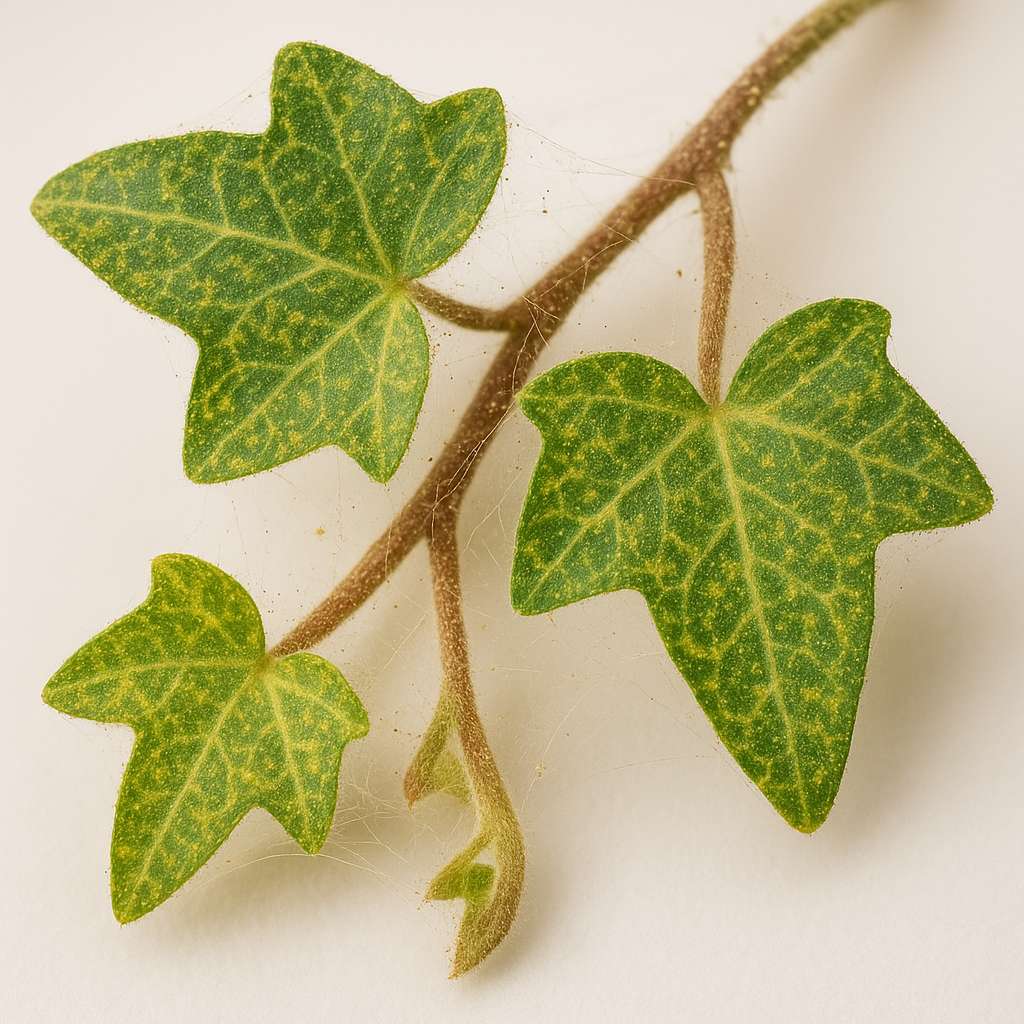
Signs of spider mite infestation:
- Fine webbing between leaves and stems
- Yellow stippling on leaves (tiny yellow dots)
- Leaves looking dusty or dirty even when you haven't touched them
- Tiny moving specks (you'll need a magnifying glass to see them clearly)
Treatment:
- Isolate the plant immediately (spider mites spread fast)
- Wipe down leaves with a damp cloth to remove the bulk of the webbing
- Spray with neem oil or insecticidal soap, covering the undersides of leaves thoroughly
- Repeat every 5–7 days for at least three weeks
- Increase humidity — spider mites thrive in dry conditions
Prevention: Regular misting, occasional leaf wipes, and keeping humidity up in winter. Spider mites are much easier to prevent than eradicate.
Other Pests
Aphids: Usually appear on new growth. Soft-bodied, clustering on stems and leaf undersides. Treat with insecticidal soap or neem oil.
Mealybugs: White cottony masses in leaf joints. Dab with rubbing alcohol on a q-tip, then spray with neem oil.
Root Rot
Yellow leaves, mushy stems, general decline = overwatering. Unpot, trim rotted roots, repot in fresh well-draining mix, and water less frequently.
Yellowing Leaves
Multiple causes: overwatering, underwatering, too much direct sun, or nutrient deficiency. Check the soil moisture first — that's usually it.
Leaf Drop
Usually caused by dry air, inconsistent watering, or temperature fluctuations (drafts from windows or heating vents). Check the environment before assuming the plant is sick.
For more on identifying plant problems, see our plant troubleshooting guide.
Is English Ivy Safe for Pets and Kids?
No. English Ivy is toxic to cats, dogs, and humans if ingested.
Symptoms in pets: Vomiting, drooling, diarrhea, difficulty breathing, skin irritation from contact with the plant. The sap can cause dermatitis in both pets and humans.
What to do: If your pet eats ivy, call your vet or the ASPCA Poison Control line (888-426-4435). Don't wait for symptoms to appear — get advice immediately.
Safe placement: High shelves, hanging planters out of reach, or rooms your pets don't access. It's also not ideal if you have young children who might put things in their mouths.
Pet-safe alternatives: If you want the trailing look without the toxicity risk, try:
- Pothos (Epipremnum aureum) — non-toxic, easy, similar trailing habit
- Spider Plant (Chlorophytum comosum) — non-toxic, produces babies
- Peperomia — lots of trailing varieties, pet-safe
Training English Ivy: Trailing vs Climbing
English Ivy is versatile — it trails beautifully, but it also climbs if you give it something to grab onto.
For trailing: Let it spill over shelf edges, mantles, or the sides of tall bookcases. It's a classic for a reason.
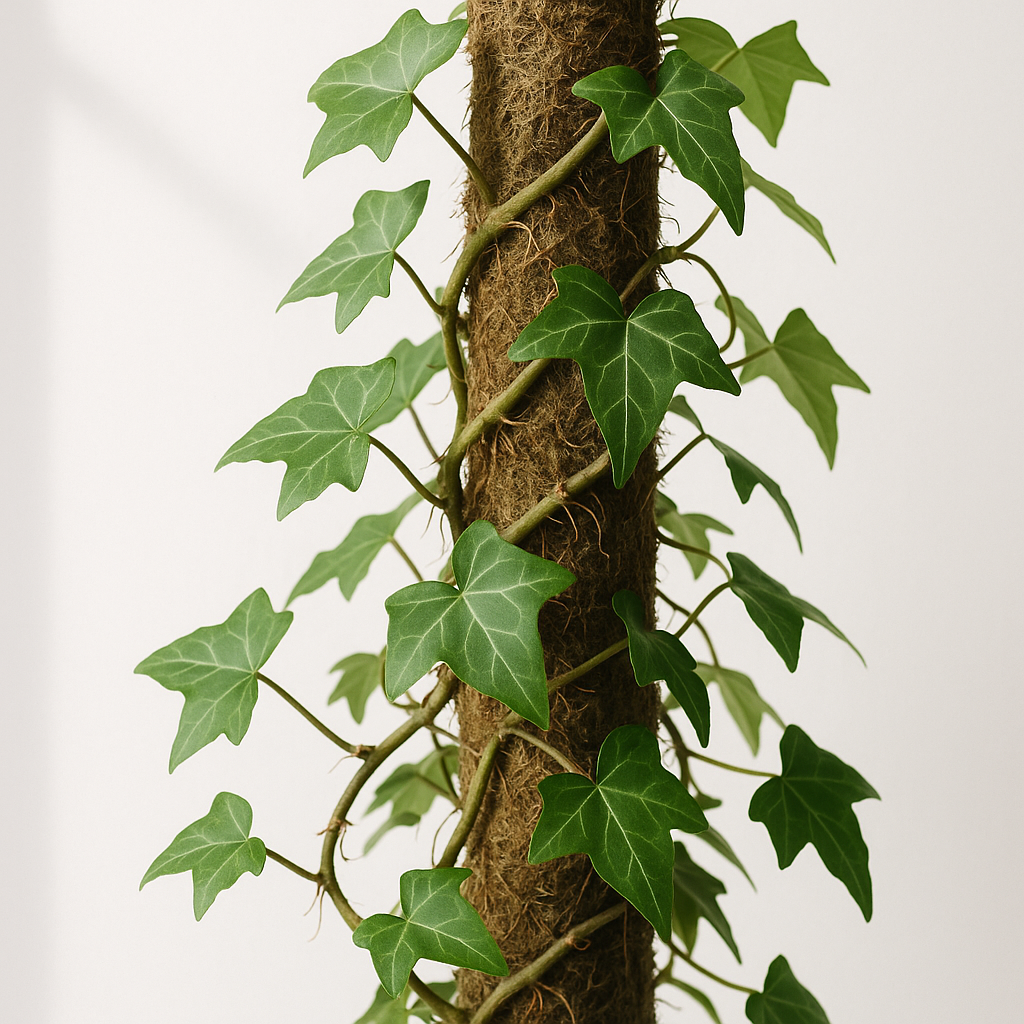
For climbing: Provide a moss pole, trellis, or trellis. English Ivy has aerial roots that grip surfaces naturally. Set up a support structure and gently tie the vines to it; the plant will eventually hold itself in place.
Controlling the chaos: If ivy is getting out of hand, redirect trailing vines with small hooks or clips. You can also trim back any vines growing where you don't want them.
Aerial roots on walls: If you let ivy climb a wall, those little root holdfasts can leave marks when you remove the plant. This isn't a problem with moss poles or trellises, but it's worth knowing before you let it climb exposed plaster or wallpaper.
English Ivy Varieties Worth Knowing
Glacier English Ivy: Variegated with cream and white edges on green leaves. Probably the most common variegated variety. Needs bright indirect light to maintain its color — too little light and it reverts to solid green.
Needlepoint Ivy: Deeply lobed leaves with pointed tips. More architectural looking than the standard rounded ivy leaf. Very classic English ivy look.
Effy Variegated: A newer variety with heavier variegation — more cream than green in some leaves. Very pretty but needs more light than standard varieties.
Baltic Ivy: Hardier variant with smaller leaves, often sold as a more cold-tolerant option.
Golden Child: Yellow-edged variegation, fairly new to the market.
FAQ
How often should I water English Ivy? Water when the top inch of soil feels dry, typically once a week during the growing season (spring and summer) and every 10–14 days in fall and winter. Never let the soil stay soggy.
Is English Ivy toxic to cats and dogs? Yes. English Ivy (Hedera helix) is toxic to cats, dogs, and humans if ingested. Keep it out of reach of pets and children, and watch for symptoms like vomiting, drooling, or diarrhea if exposure occurs.
Why does my English Ivy have webbing on the leaves? Webbing on English Ivy leaves is a sign of spider mites, the most common pest affecting ivy. Increase humidity, isolate the plant, and treat with neem oil or insecticidal soap.
How do I make English Ivy fuller and less leggy? Prune the long trailing vines back to just above a leaf node every few months. This encourages branching and bushier growth. Regular pruning also gives you cuttings to propagate.
Can English Ivy grow in low light? English Ivy prefers bright, indirect light. It will survive in lower light but will grow slowly and become leggy. Variegated varieties lose their color patterns in insufficient light.
Products We Love
We actually use these for our own plants:
Shop Neem Oil for Spider Mites
Shop Moss Poles for Climbing Plants
Want something harder to kill? Check out our easiest houseplants guide for lower-maintenance options.