10 Easiest Houseplants to Keep Alive (Ranked by Kill Difficulty)
The honest guide to plants that won't judge you for forgetting to water them for three weeks.
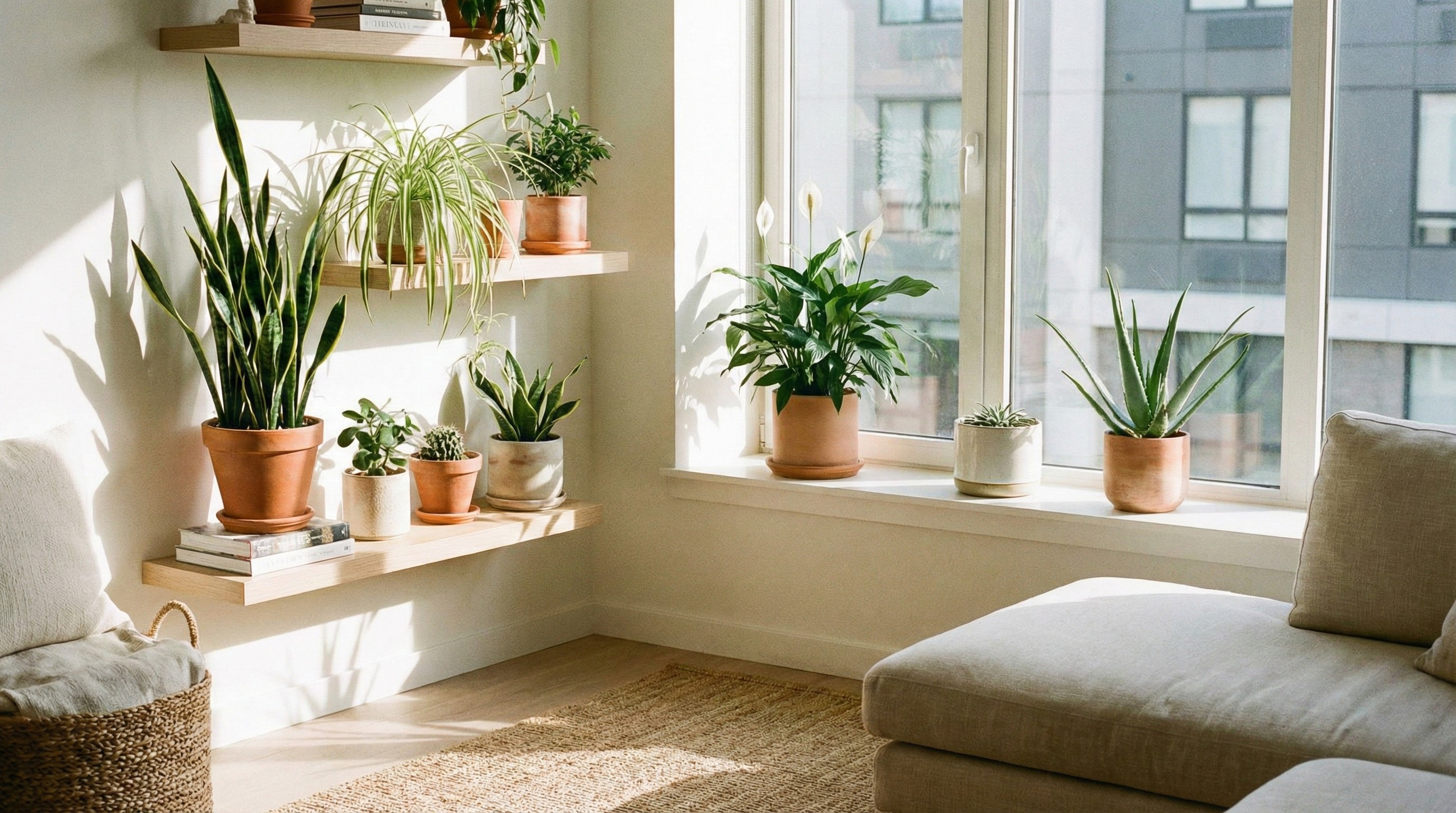
Tier 1: Literally Unkillable
These plants have survived the worst humanity has to offer. Neglect. Low light. Forgetting exists. They don't care.
1. ZZ Plant (Zamioculcas zamiifolia)
Difficulty: Pre-verbal pet level
The ZZ is what happens when a plant decides to stop needing you. It grows in low light. It goes weeks without water. It tolerates the exact environment your apartment provides because, frankly, it has low expectations.
Care: Low to bright light. Water when the soil is completely dry (like, genuinely dry, not "maybe dry"). If you're unsure, wait another week.
Why it survives: Rhizomes underground store water and nutrients like a tiny plant emergency fund.
2. Snake Plant (Sansevieria)
Difficulty: Committed non-committer
The snake plant doesn't just survive your neglect — it silently judges it. Those upright architectural leaves have been surviving droughts since before your grandmother was born.
Care: Low to bright light. Water every 2-3 weeks, less in winter. The worst thing you can do is overwater it.
Warning: Toxic to pets. Don't let the cats chew on it.
3. Pothos (Epipremnum aureum)
**Difficulty: ** The starter plant that actually works
Pothos is the "I'm not a plant person" plant. It trails. It vine. It tells you it needs water by drooping dramatically — and then forgives you immediately once you water it.
Care: Low to bright indirect light. Water when leaves start to droop slightly (or every 1-2 weeks). If it gets too long, cut it and propagate the cuttings in water.
The trick: Pothos will tell you what it needs. Learn to read the leaves.
Tier 2: Pretty Hard to Mess Up
These need slightly more attention, but not much. They're the "I actually want to feel like I'm doing something" plants.
4. Spider Plant (Chlorophytum comosum)
Difficulty: Neglect-tolerant beginner
Spider plants have been in homes since the 1800s because they just work. They produce babies (plantlets) that you can propagate or give away. They tell you when to water by looking slightly pale.
Care: Medium to bright indirect light. Keep soil lightly moist. They'll tell you they're thirsty by lightening in color.
Fun bonus: They bubble (produce tiny plantlets on runners). Very satisfying.
5. Chinese Evergreen (Aglaonema)
Difficulty: Low light champion
If you have a dark corner and want something other than a fake plant, this is your answer. The silver-and-green leaves brighten up low-light spaces that would kill other plants.
Care: Low to medium light. Keep evenly moist but not soggy.
Warning: Toxic to pets and humans if ingested.
6. Peace Lily (Spathiphyllum)
Difficulty: The dramatic one who still survives
Peace lilies are the theater kids of the plant world. They droop. They flop. They tell you EXACTLY when they're thirsty by collapsing dramatically — and perk up within hours of watering.
Care: Low to medium light. Water when it droops. It'll survive occasional drying out, but prefers consistent moisture.
Trade-off: They bloom (white flowers) if given enough light.
Tier 3: Actual Plants, But Forgiving
These need more light or water than the tiers above, but still won't die if you slip up occasionally.
7. Peperomia
Difficulty: The cute one
Peperomias are small, waxy, and come in textures that look like someone designed them on purpose. Ripple, watermelon, baby rubber plant — they're all similarly easy.
Care: Low to medium light. Let the soil surface dry between waterings. They store water in their thick leaves, so overwatering is the main risk.
Best for: Desks, shelves, small spaces where you want something interesting but not demanding.
8. Philodendron
Difficulty: The forgiving trailing plant
Heart-leaf philodendrons are basically pothos with different leaves. They trail. They climb. They forgive forgetting.
Care: Low to bright indirect light. Water when the top inch of soil is dry.
Warning: Toxic to pets. The calcium oxalate crystals will not be fun for your cat.
9. Aloe Vera
Difficulty: The succulent that's actually forgiving
Aloe is a succulent that doesn't demand perfect drainage or careful watering. Let the soil dry out completely, then water thoroughly. That's it.
Care: Bright light (south or west window ideal). Water every 2-3 weeks, less in winter.
Bonus: You can break off a leaf for burns if you ever need it. It grows back.
10. Jade Plant (Crassula ovata)
Difficulty: The slow-and-steady one
Jade plants grow slowly and live forever if you stop fussing. They're basically tiny trees on your windowsill.
Care: Bright light (direct sun is fine). Water when the leaves feel slightly soft or wrinkled — that's when it's actually thirsty.
The secret: They prefer being root-bound. Don't rush to repot.
The Real Secret
Here's what actually separates plant killers from plant keepers:
| Plant killers do | Plant keepers do |
|---|---|
| Water on a schedule | Check the soil |
| Put plants anywhere | Match light to plant needs |
| Repot immediately | Let the plant acclimate first |
| Panic at problems | Google before acting |
The number one killer of houseplants is not forgetting to water. It's overwatering. Seriously. Most houseplants die from too much water, not too little.
🚿 Level Up Your Watering Game
Ready to make watering easier? Here are our tested tools that actually make a difference:
*As an Amazon Associate, we earn from qualifying purchases.
Start With One
If you're genuinely nervous about killing something, start with a pothos or snake plant. They're cheap, widely available, and will survive your learning curve.
Once you've kept one alive for six months, then worry about the next one.
Still killing everything? The problem might not be you — it might be your light. Check our Light Guide before you blame yourself.