Calathea Ornata is gorgeous and deeply annoying. Here's how to keep one alive — and actually thriving.
What Is Calathea Ornata? (Meet the Pin Stripe Plant)
Calathea Ornata — technically Goeppertia ornata since the taxonomy nerds reclassified the whole genus in 2012, but nobody actually calls it that — is a tropical plant from Colombia and Venezuela. In the wild it grows as an understory plant, meaning it sits under the rainforest canopy and catches the light that filters through.
That heritage tells you almost everything you need to know about care: it wants bright, indirect light. Not a sunbeam. Not a dark corner. Bright indirect light.
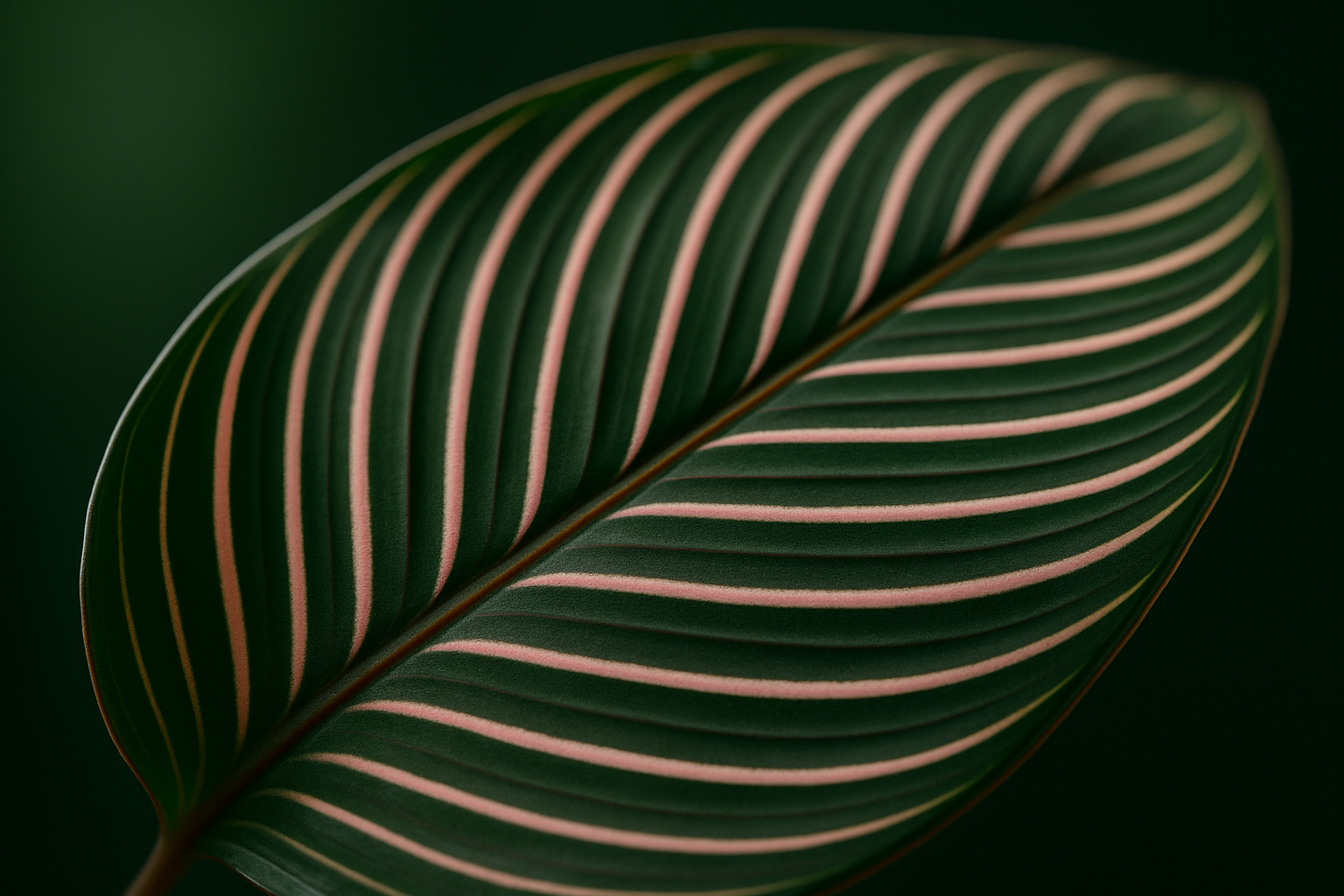
The look is what sells it: deep green, glossy leaves traced with pinkish-cream pinstripes that run parallel from midrib to edge. It also moves — leaves rise and fall with the day/night cycle in a behavior called nyctinasty, which is why Calathea shares the "prayer plant" nickname with its Maranta and Marantaceae cousins.
Now here's the honest part: Calathea Ornata is demanding. It wants more humidity than most homes naturally provide, it has opinions about water quality, and it will develop brown tips at the slightest provocation. Garden centers sell it next to pothos, which is a crime against plant parents. Pothos tolerates neglect. Ornata holds a grudge.
Before you buy: can you run a humidifier in the same room? Can you commit to watering with something other than straight tap water? If yes, keep reading. If not, get a pothos and revisit Ornata when your plant-parent skills are sharper.
Light Requirements: The Sweet Spot
Calathea Ornata wants bright indirect light. That's a north or east-facing window, a few feet back from a south or west window, or a spot that gets filtered light through a sheer curtain.
Direct sun is the enemy. A few hours of hot afternoon sun will bleach and burn those stripes, leaving you with brown patches and white streaks where the cells died. You'll see this as large bleached patches on the most sun-exposed leaves.
Too little light shows up as: slow or no growth, smaller new leaves, and — most noticeably — the pink stripes fading toward pale green or cream. The plant is reaching for light and "spending" the pigments that make it beautiful. Move it closer to a window (not into direct sun) and the next leaves should be more striped.
Best placement: A few feet back from an east-facing window. Morning sun is gentle. North-facing windows work well year-round in the Northern Hemisphere. If your only option is a south/west window, pull the plant 4–5 feet back or use a sheer curtain as a filter.
Watering: The #1 Skill for Calathea Ornata
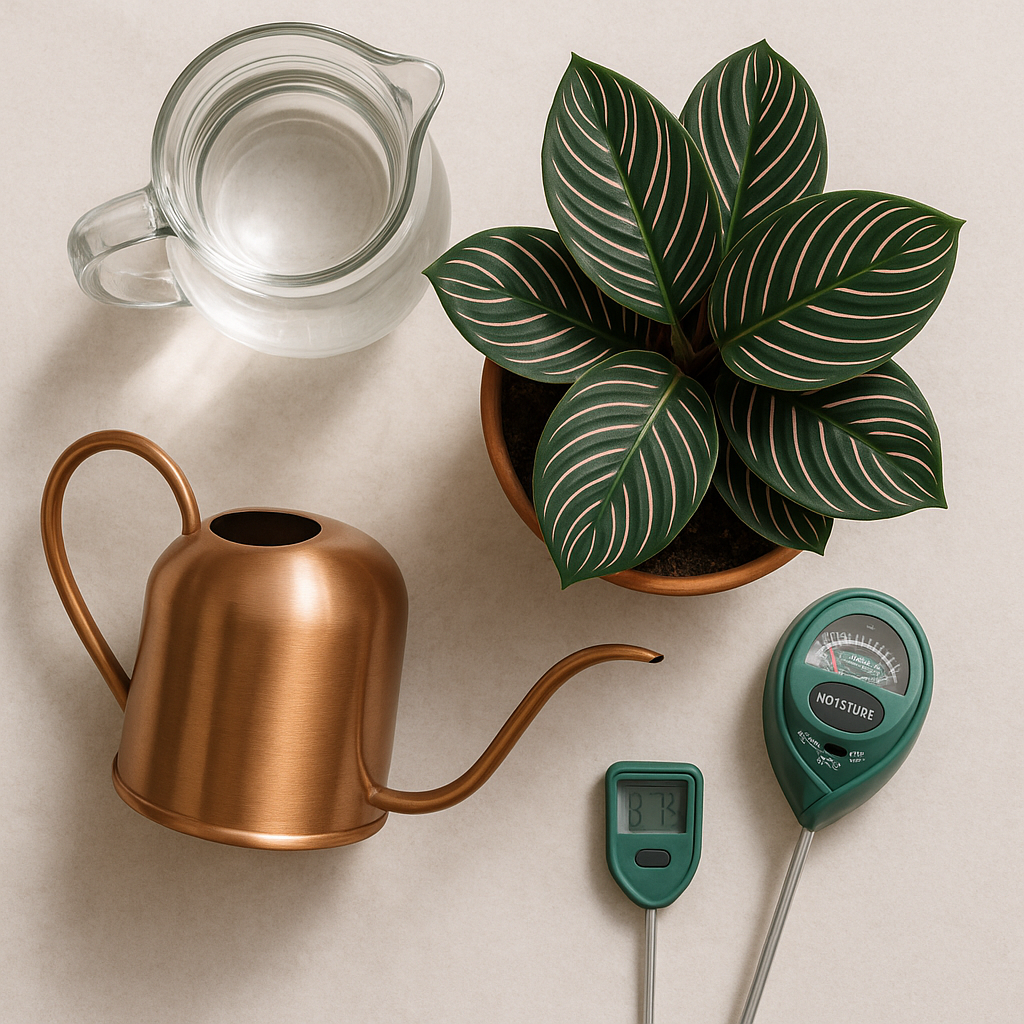
Here's the thing that almost every care article gets wrong: the watering issue with Calathea Ornata is rarely about frequency and almost always about water quality.
Why Tap Water Harms Calathea Ornata
Ornata is sensitive to the dissolved solids in tap water — specifically the fluoride and chlorine that municipal water systems add, plus the mineral load in hard water areas. The result is brown leaf edges and tips, often with a hard crispy edge between dead and healthy tissue.
This isn't the soft brown of inconsistent watering or the yellow-brown of over-fertilizing. It's a sharp, hard edge. If you see it, especially on newer leaves, water quality is your prime suspect.
What Water to Use Instead
- Distilled water — the gold standard. Available at any grocery store for $1–2 per gallon. Yes, it's an ongoing cost. Yes, it's worth it.
- Rainwater — free and pH-perfect, assuming you're not in an industrial area with acidic rain.
- RO (reverse osmosis) water — if you have an RO system, use it.
- "Just let tap water sit overnight" — this removes chlorine but does nothing for fluoride or mineral content. Don't bother.
Brita-style filters? They improve taste but don't reliably remove fluoride. A $30 filter won't save your Ornata.
The difference shows up in 1–2 weeks. Switch to distilled water, and new growth comes in clean. Existing brown tips won't heal, but they won't spread as fast.
How to Check Soil Moisture
Consistency matters more than frequency. Water when the top 1–2 inches of soil feel dry to the touch, but don't let the plant sit bone-dry for extended periods.
With the chunky soil mix described below, the finger test works fine — but if you want precision, a moisture meter removes all the guesswork. Water when the meter reads "3" (on a scale of 1–10, with 1 being bone dry). In winter, let it drift toward "2" before watering again.
Check soil moisture with a meter (affiliate link)
Humidity: Recreating the Tropics
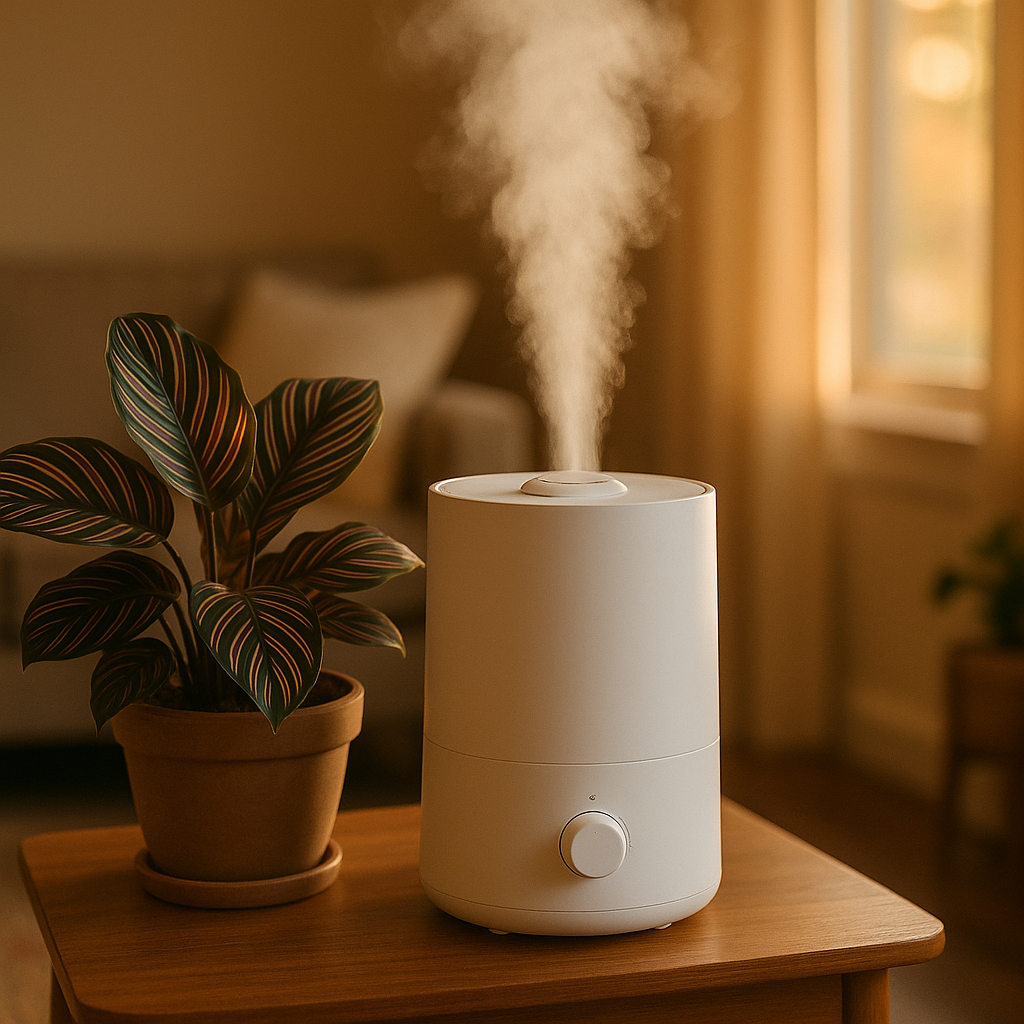
Calathea Ornata wants 50–70% relative humidity. Most homes sit at 30–40%. That's the gap.
Low humidity shows up first as crispy leaf edges, and no amount of watering right will fix it if the air is dry. You'll see brown tips and edges appear on new leaves even though you're doing everything else correctly.
A humidifier is the single most effective fix. Not a pebble tray (they don't raise humidity enough to matter), not misting (misting does nothing except waste your time), not grouping plants together (marginal improvement at best).
See current price on Amazon (affiliate link)
Set it and forget it. Run the humidifier in the same room as your Ornata consistently — not just when you remember. In winter when heating runs, the air dries out faster and the problem gets worse. If you're fighting brown tips in January, humidity is almost certainly the reason.
Target: 60% relative humidity. You can verify with a cheap hygrometer ($10–15, often sold as "digital thermometer hygrometer").
Humidity vs. Water Quality: Which Is Causing Brown Tips?
Both cause brown tips. Here's how to tell:
| Symptom | Most Likely Cause |
|---|---|
| Hard crispy brown edge, new leaves affected | Water quality (fluoride/minerals) |
| Soft brown edges, plant looks overall stressed | Low humidity |
| Yellowing between veins + brown edges | Fertilizer salt buildup |
| Brown patches + stippling on leaf undersides | Spider mites |
When in doubt, fix water quality first — it's the most common culprit and the cheapest to address.
Soil Mix: Chunky + Moisture-Retentive
Calathea roots want two things that sound contradictory: moisture and air. The trick is a mix that holds moisture in the fine particles but has plenty of chunky gaps for oxygen.
The DIY recipe that works:
- 2 parts coco coir (moisture retention, sustainable alternative to peat)
- 1 part perlite (air pockets, prevents compaction)
- 1 part orchid bark (chunky structure, extra airflow)
- ½ part worm castings (slow-release nutrients)
Mix it all together. The result: water soaks in quickly but drains fast, and the chunky particles keep air in the root zone. This matters because Calathea roots rot easily in soggy soil but also stress in soil that dries too fast.
Commercial mix alternative: Fox Farm Ocean Forest is a solid base. Add 20–30% extra perlite to open it up for Calathea. Regular potting mix from the garden center is too dense — don't use it straight.
When to Repot
Ornata likes being slightly root-bound. Repot when:
- Roots come out of the drainage holes
- Water runs straight through the pot (roots have displaced most of the soil)
- Growth has noticeably slowed in spring/summer despite good care
Go up 1–2 inches in pot diameter. Spring only. Don't repot in winter — the plant is semi-dormant and recovery is slower.
Fertilizing: Less Is More
Feed monthly during spring and summer with a balanced liquid fertilizer (10-10-10 or similar) diluted to half the recommended strength.
Ornata is a light feeder. Over-fertilizing causes salt buildup, which shows up as — you guessed it — brown tips and crispy edges. If you're already fighting brown tips and you've addressed water quality and humidity, look at your fertilizing schedule.
Flush the soil every 2–3 months if you fertilize regularly: run water through the pot 2–3 times in succession to dissolve and flush accumulated salts.
Skip feeding entirely in fall and winter. The plant isn't growing and doesn't need it.
The Prayer Movement: Your Plant's Health Barometer
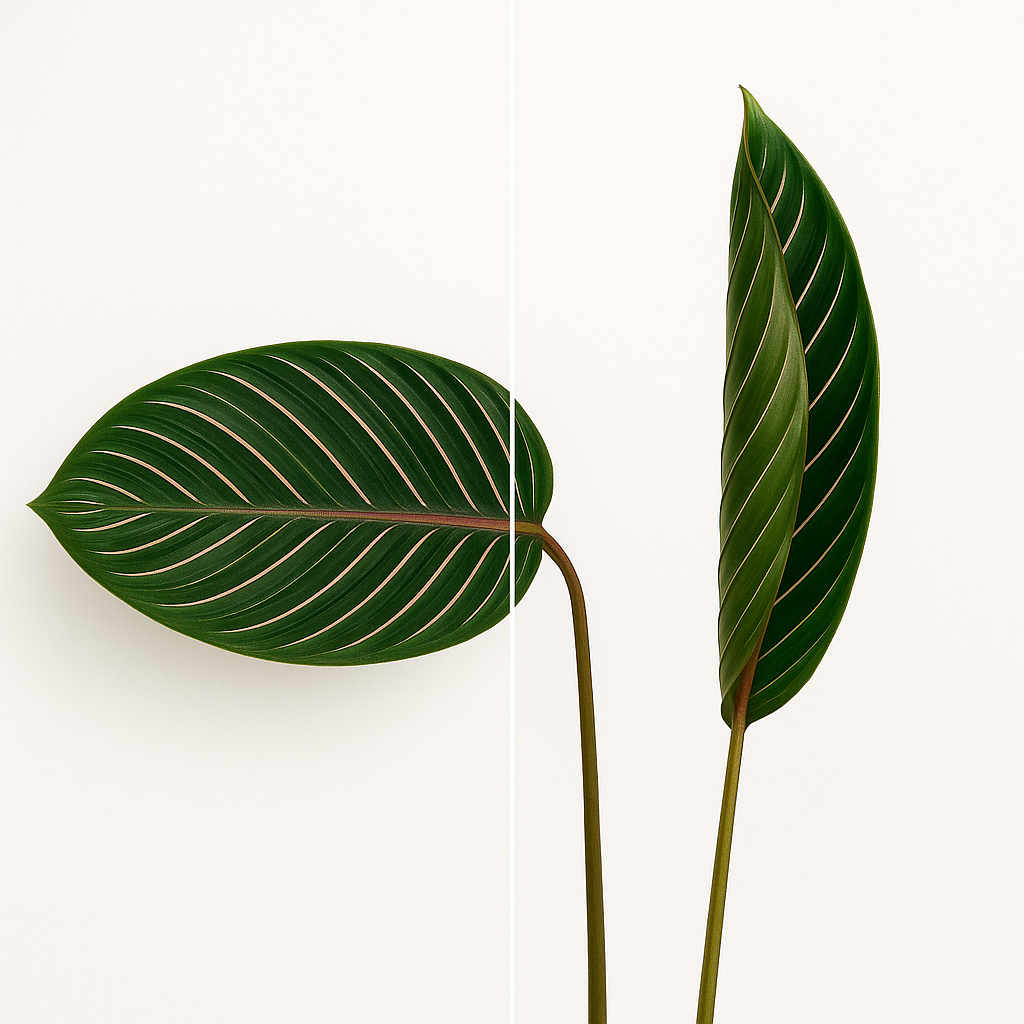
The prayer movement is what makes Calathea Ornata special. During the day the leaves lie flat, maximizing light absorption. At night they fold upward toward the stem, which is where the "prayer" nickname comes from.
The mechanism: specialized cells in a joint called the pulvinus at the base of each leaf change water pressure in response to light and circadian rhythms. It's not a response to light itself — it's a response to darkness. If your Ornata is near a bright lamp at night or a streetlight outside, the cycle can be disrupted.
When movement stops, something is wrong. Calathea Ornata that isn't moving at night is telling you it's stressed. Check light levels, temperature fluctuations, and whether the roots are happy (not waterlogged, not root-bound).
A healthy, happy Ornata shows visible movement every evening. Once you start watching for it, you'll notice it's remarkably consistent. When it stops, you know something in the environment has changed.
Brown Tips & Crispy Edges: Diagnosis & Fix
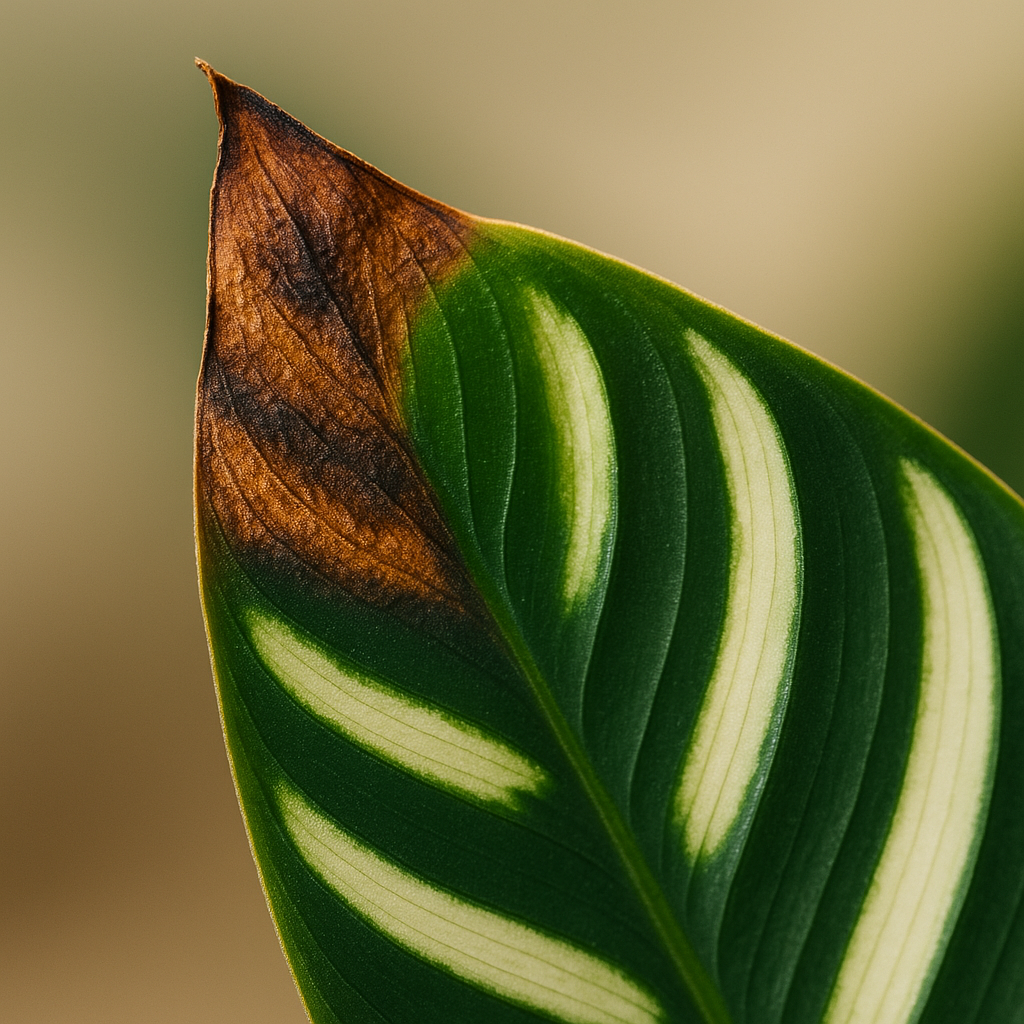
This is the #1 complaint about Calathea Ornata, and it has one clear rule-out order:
Rule out in this order:
- Water quality — Switch to distilled or rainwater. Wait 2 weeks. If new growth comes in clean, you found your answer.
- Low humidity — Is your humidifier running consistently? Is the plant near a heating vent or draft? Aim for 50–70% RH.
- Inconsistent watering — Chronic dry cycles followed by floods cause soft brown patches. Set a consistent schedule.
- Fertilizer salt buildup — Flush the soil. Cut fertilizer to half-strength.
- Light stress — Too much direct sun bleaches and burns. Move back from the window.
- Spider mites — Check the undersides of leaves for stippling, tiny mites, or fine webbing.
Once a leaf has gone brown, it won't heal. Remove it with clean scissors and focus your energy on fixing the conditions for new growth.
Leaves Curling or Drooping
Curling inward: The plant is conserving water. Check the soil — if it's dry, water. If the soil is moist but the leaves still curl, the air is too dry. Run the humidifier.
Drooping (not curling): Usually means overwatering or root issues. Check the soil. If it's wet and heavy: ease up on watering, let the top 2 inches dry before the next drink. If the pot feels suspiciously light, you may have been underwatering.
The 24-hour rule: Calathea Ornata bounces back from watering mistakes faster than most plants. Fix the problem, and leaves typically perk up within 24 hours. If they don't, the issue is deeper — check for root rot or pest damage.
Propagation by Division (Not Cuttings!)
Calathea Ornata cannot be propagated from stem cuttings. It just doesn't work. The plant grows from a rhizome underground, and stem sections won't generate new roots.
Propagation is done by division — separating the root ball into smaller clumps, each with their own rhizome and foliage.
When: Spring, when you're already repotting. The plant is in active growth and recovers faster.
How:
- Water the plant 1–2 days before dividing
- Tip the plant out of its pot
- Gently separate the root ball into 2–3 sections, each with multiple leaves and a section of rhizome
- Pot each division in fresh soil mix at the same depth it was growing
- Water thoroughly, then keep consistently moist for 2–4 weeks
Aftercare: Keep the divisions in bright indirect light, maintain high humidity (60%+), and don't fertilize for 4–6 weeks. A clear plastic bag loosely draped over the pot helps retain humidity during recovery.
Success signal: new growth in 2–4 weeks.
Common Pests & Problems
Spider mites are the most common pest on Calathea Ornata. They love dry conditions, so they're more likely when humidity is low. Look for stippling (tiny yellow dots) on leaf tops, fine webbing between leaves, and the mites themselves on leaf undersides. Treat with neem oil or insecticidal soap, and raise your humidity — spider mites hate moisture.
Mealybugs show up as white cottony clusters where leaves meet stems. Wipe with a cotton swab dipped in rubbing alcohol, then spray with neem oil.
Fungus gnats are a sign of overwatering or consistently wet soil surface. Let the top inch of soil dry between waterings. Yellow sticky traps help control the adult population.
Prevention: Quarantine any new plant for at least a week before putting it near your existing collection. Inspect the undersides of leaves before purchasing. Run a humidifier — spider mites specifically hate high humidity.
Calathea Ornata vs. Beauty Star: Which to Choose?
Calathea 'Beauty Star' is a cultivar of Calathea Ornata, so it has the same care requirements — but there's one meaningful difference.
Beauty Star has more variegation: brighter pink and cream stripes on a darker green leaf. That extra variegation means the plant needs slightly more light to sustain the pattern. Keep it in the same bright indirect conditions as standard Ornata, but move it closer to the window than you'd put a regular Ornata. Without enough light, Beauty Star gradually reverts to all-green leaves.
Otherwise, they're equally demanding. Beauty Star is not "easier" because it's a cultivar. If you love the look and can meet the care requirements, either plant will reward you.
What to pay: Small Ornata typically runs $15–$30. Beauty Star commands a small premium, $20–$40 depending on size and source. Local nurseries usually stock healthier plants than big box stores, which are often grown in near-perfect greenhouse conditions and struggle to adjust to home humidity.
What to avoid: Yellowing leaves, limp stems, or any sign of pests on the undersides of leaves. Pass on those plants.
FAQ
How often should I water Calathea Ornata? When the top 1–2 inches of soil feel dry, typically once a week during spring and summer. The chunkier your soil mix, the more frequently you may need to water. Use a moisture meter for precision.
Why are the tips of my Calathea Ornata turning brown? Usually water quality (fluoride/minerals in tap water), low humidity, or both. Switch to distilled water, run a humidifier, and rule out in this order: water quality → humidity → fertilizer salts → light stress → pests.
Can Calathea Ornata be propagated from cuttings? No. Stem cuttings don't work. Calathea Ornata must be propagated by division — separating the root ball into clumps, each with their own rhizome and foliage.
What kind of water should I use for Calathea Ornata? Distilled water is the gold standard. Rainwater and RO (reverse osmosis) water also work. Tap water, even left out overnight, still contains fluoride and minerals that cause brown tips.
Why does my Calathea Ornata not close its leaves at night? It may be near a light source (lamp, streetlight) that disrupts its light/dark cycle. Check for stress: are light, temperature, and watering all correct? Healthy Ornata shows consistent nightly movement. If movement stops, something in the environment needs fixing.
How much humidity does Calathea Ornata need? 50–70% relative humidity. Most homes sit at 30–40%. A humidifier running consistently in the same room is the most reliable way to maintain this. Pebble trays and misting do not meaningfully raise humidity.
Is Calathea Ornata difficult to care for? Yes, relative to most common houseplants. It's unforgiving about water quality, demands high humidity, and develops brown tips when any condition is off. It's not a good beginner plant unless you're willing to invest in a humidifier and switch to distilled water.
When should I repot Calathea Ornata? Every 1–2 years in spring, when roots come out of the drainage holes or growth has slowed despite good care. Go up 1–2 inches in pot diameter. Ornata likes being slightly root-bound, so don't size up dramatically.
Products We Love
We use these products ourselves:
- Levoit 6L Humidifier — The Reddit-recommended humidifier for plant parents who need 50–70% humidity. Large tank, quiet on auto mode, runs consistently without babysitting. See current price on Amazon (affiliate link)
- XLUX Moisture Meter — Takes the guesswork out of watering Ornata's chunky soil mix. Stick it in, read the number, water when it hits 3. Check soil moisture with a meter (affiliate link)
Last updated: 2026-08-01