Calathea Leaves Curling — Causes & Fixes That Actually Work
The drama queen of the plant world is trying to tell you something. Let's decode it.
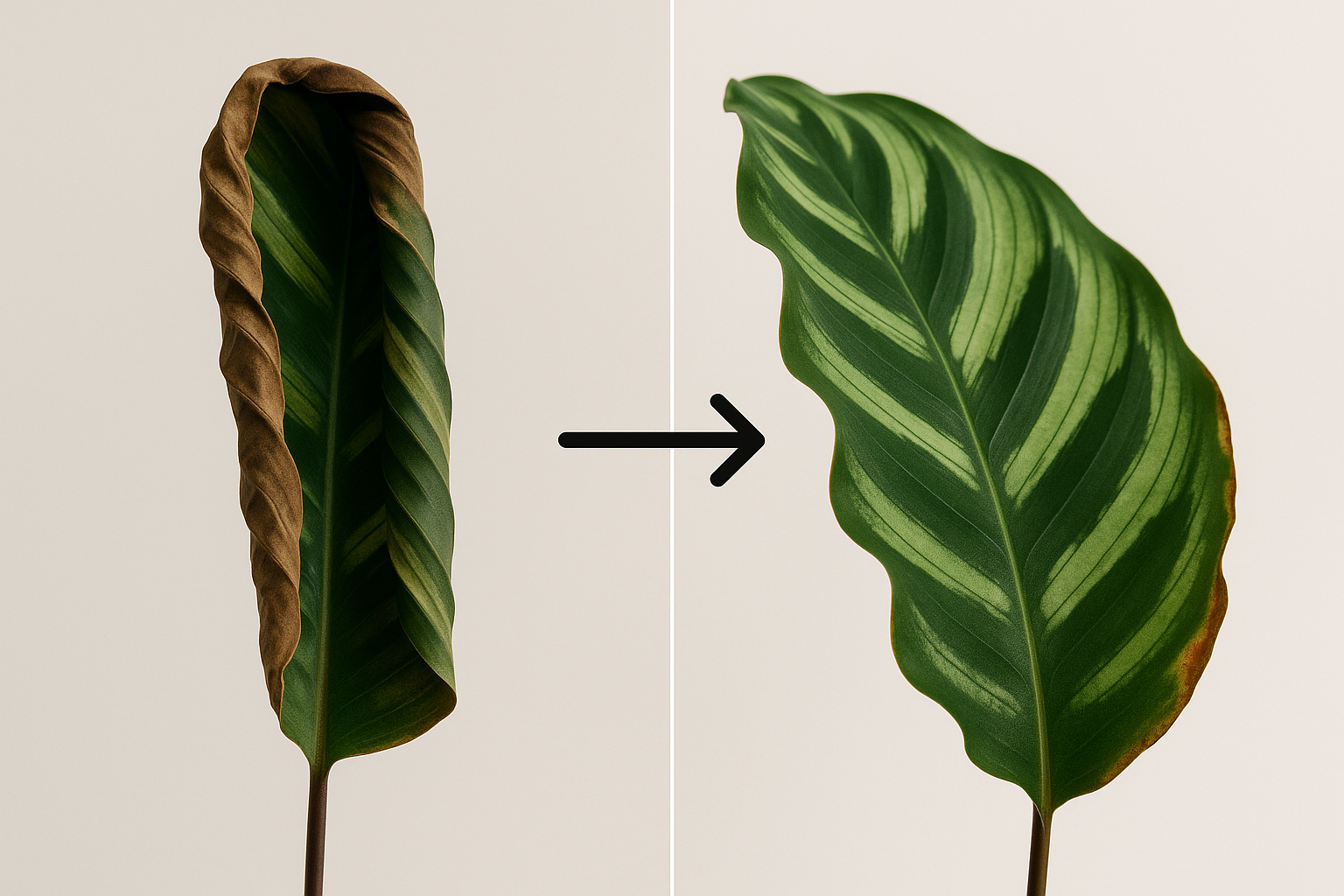
Why Are My Calathea Leaves Curling?
The Drama Queen Nature of Calathea
Calatheas are the divas of the plant world. While your pothos shrugs off neglect and your snake plant thrives on indifference, your Calathea will dramatically announce any minor inconvenience. Leaves curling? Yellowing? Drooping? That's just your Calathea performing for an audience.
The good news: when a Calathea curls its leaves, it's actually helping you. Unlike other plants that silently suffer, Calathea makes it obvious something's wrong. Your job is to read the signals.
How to Read Leaf Curl Direction
Here's the secret nobody tells you: the direction of the curl points to the cause.
- Curling inward (edges rolling toward the center): Usually underwatering or low humidity
- Curling outward (edges flaring away from the center): Usually overwatering, root rot, or too much light
This single observation can cut your troubleshooting time in half.
Quick Diagnosis: 5 Questions to Find the Cause
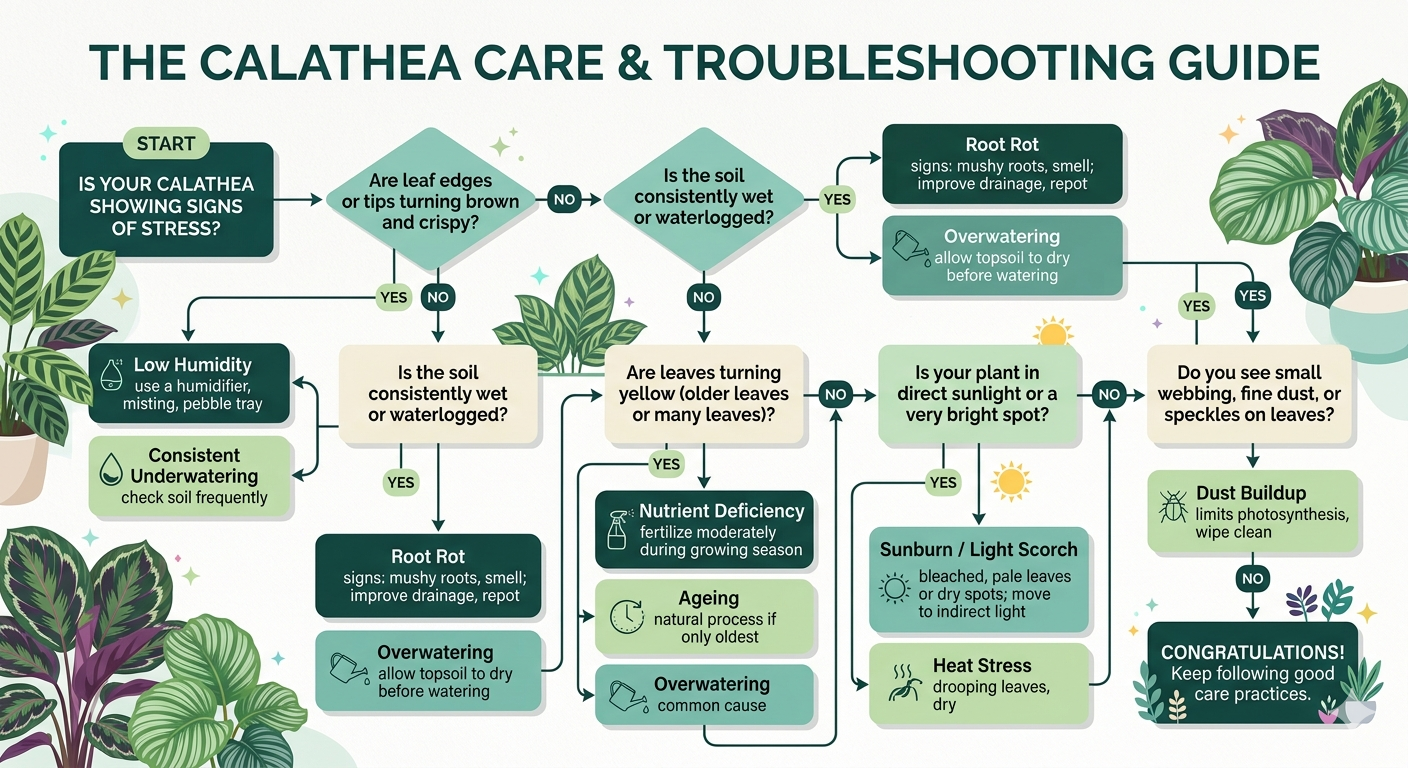
Before you dive deep, answer these five questions:
- Is the soil wet or dry? Stick your finger 2 inches in. Wet = overwatering risk. Dry = underwatering likely.
- Is the curl inward or outward? This is your biggest clue.
- What's the humidity near your plant? Below 50% = humidity problem. Above 60% = probably not humidity.
- Is the plant near a draft or vent? AC vents, heaters, and drafty windows cause temperature stress.
- Did you recently fertilize? Salt buildup from overfertilization can cause curling.
Most of the time, one or two answers will point you to the cause. Let's break down each one.
Cause #1: Underwatering
Symptoms of Underwatering
When a Calathea doesn't get enough water, it curls its leaves inward as a survival mechanism—this reduces the surface area losing water to transpiration. You'll see:
- Soil pulling away from the edges of the pot
- Leaves curling inward (rolling toward the center)
- Leaf edges turning crispy or brown
- The whole plant looking droopy and sad
- Pot feels very light when lifted
How to Fix It
- Bottom water the plant for 20-30 minutes—set the pot in a tray of water and let it drink from below
- Check drainage—make sure the pot has holes and water can escape
- Establish a schedule—Calatheas like consistently moist (not wet) soil
- Consider the soil—if it dries out too fast, you may need a more water-retentive mix
Recovery Timeline
If you catch it early, Calathea leaves can recover within 1-2 weeks of consistent proper watering. Leaves that have turned crispy at the edges won't unfurl back to perfect, but new growth will be healthy.
Cause #2: Low Humidity
Signs of Humidity Stress
Low humidity is the #1 cause of Calathea curling in most homes. These tropical plants crave 50-60% humidity—most homes sit at 30-40%, especially in winter.
Look for:
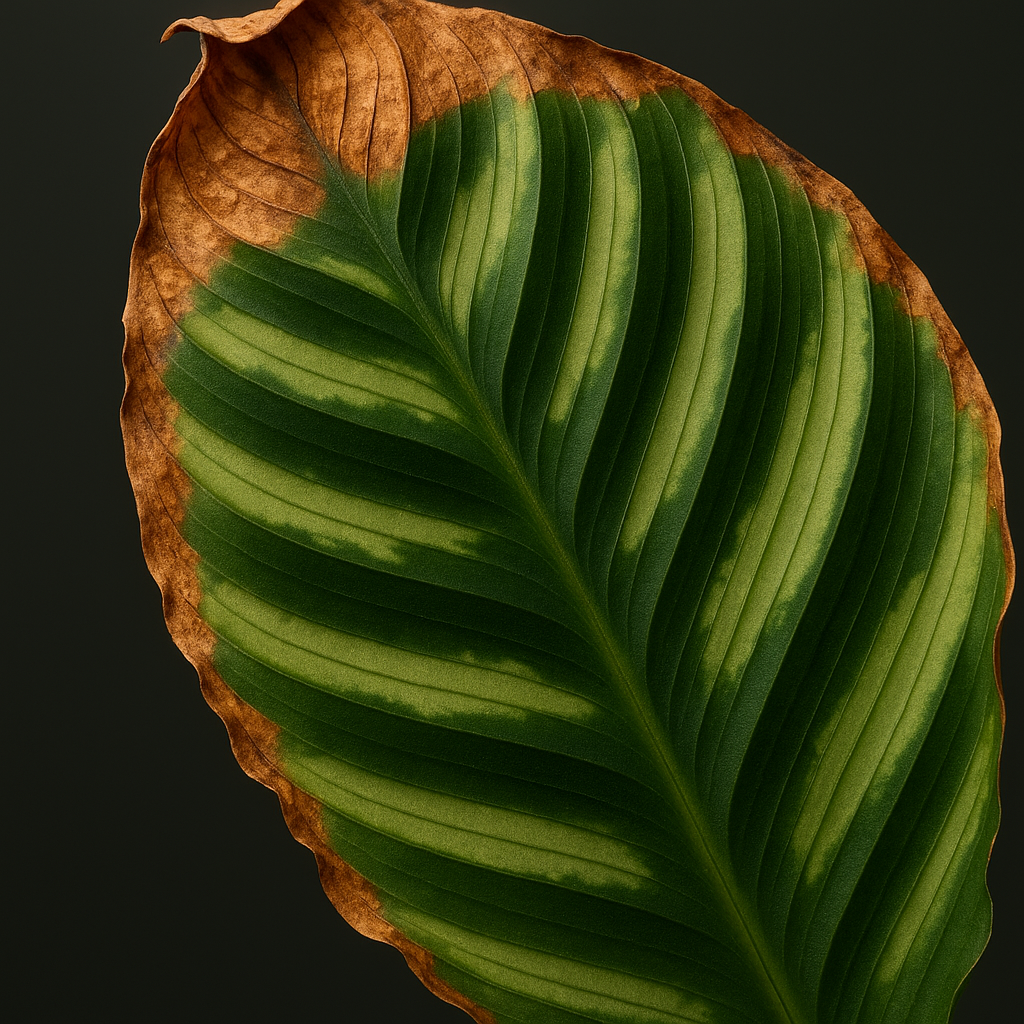
- Brown, crispy leaf edges (not just the tips)
- Leaf curling inward
- Leaves looking dull or faded
- New leaves not unfurling fully
- The whole plant looking stressed
How to Increase Humidity
Quick fixes:
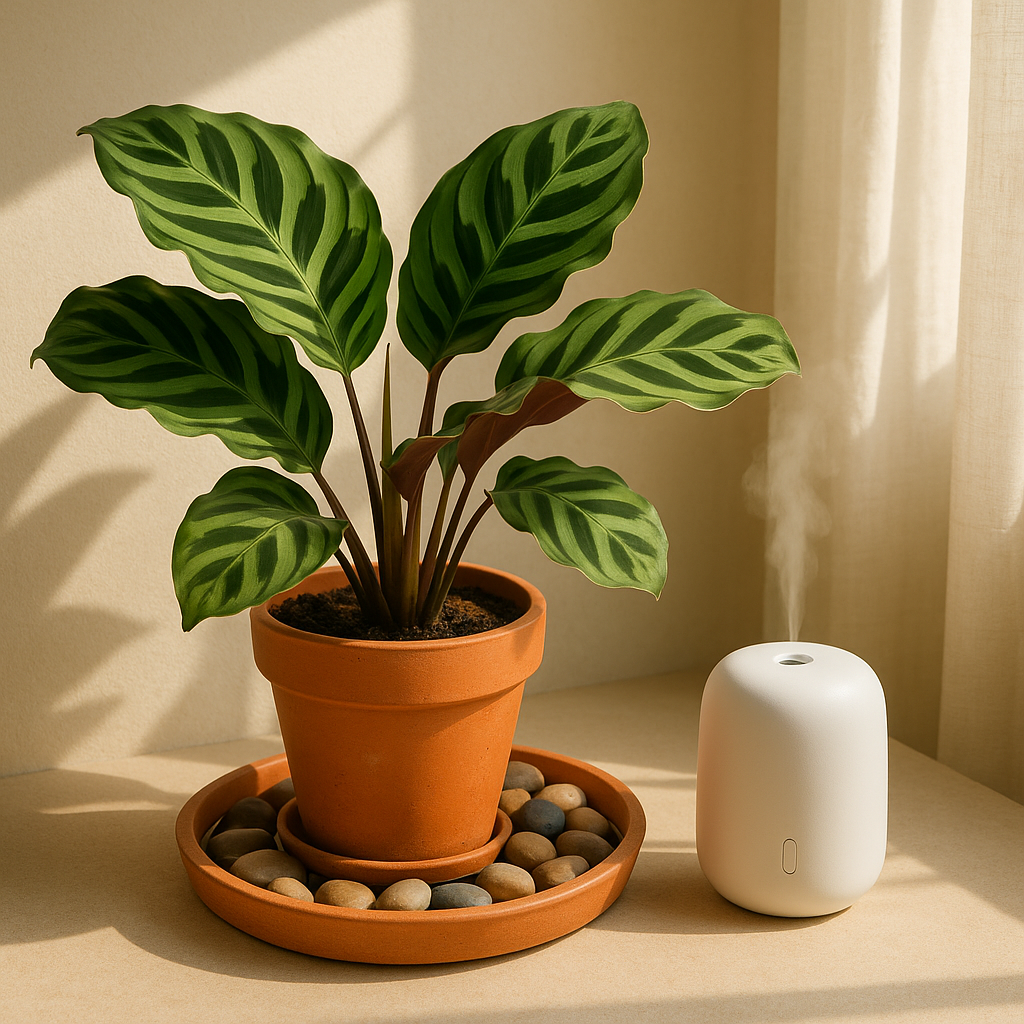
- Pebble tray: Set the pot on a tray filled with pebbles and water (don't let the pot sit in water)
- Group plants together: They create a microclimate through transpiration
- Mist the leaves (helps temporarily, not a long-term solution)
- Bathroom or kitchen — these rooms are naturally more humid
Real solution:
- Humidifier — this is the only reliable long-term fix for consistent humidity
Best Humidifiers for Calathea
A cool-mist humidifier near your Calathea collection is the single best investment you can make. Look for:
- 3-5 liter capacity — enough for a room, not too big
- Ultrasonic (quiet) — won't disturb your space
- Timer settings — so you can run it during the day only
- Auto shutoff — safety feature when water runs out
Levoit makes reliable, affordable options that work great for plant spaces. Run your humidifier for 6-8 hours a day to maintain 50%+ humidity.
Cause #3: Overwatering & Root Rot
How to Check for Root Rot
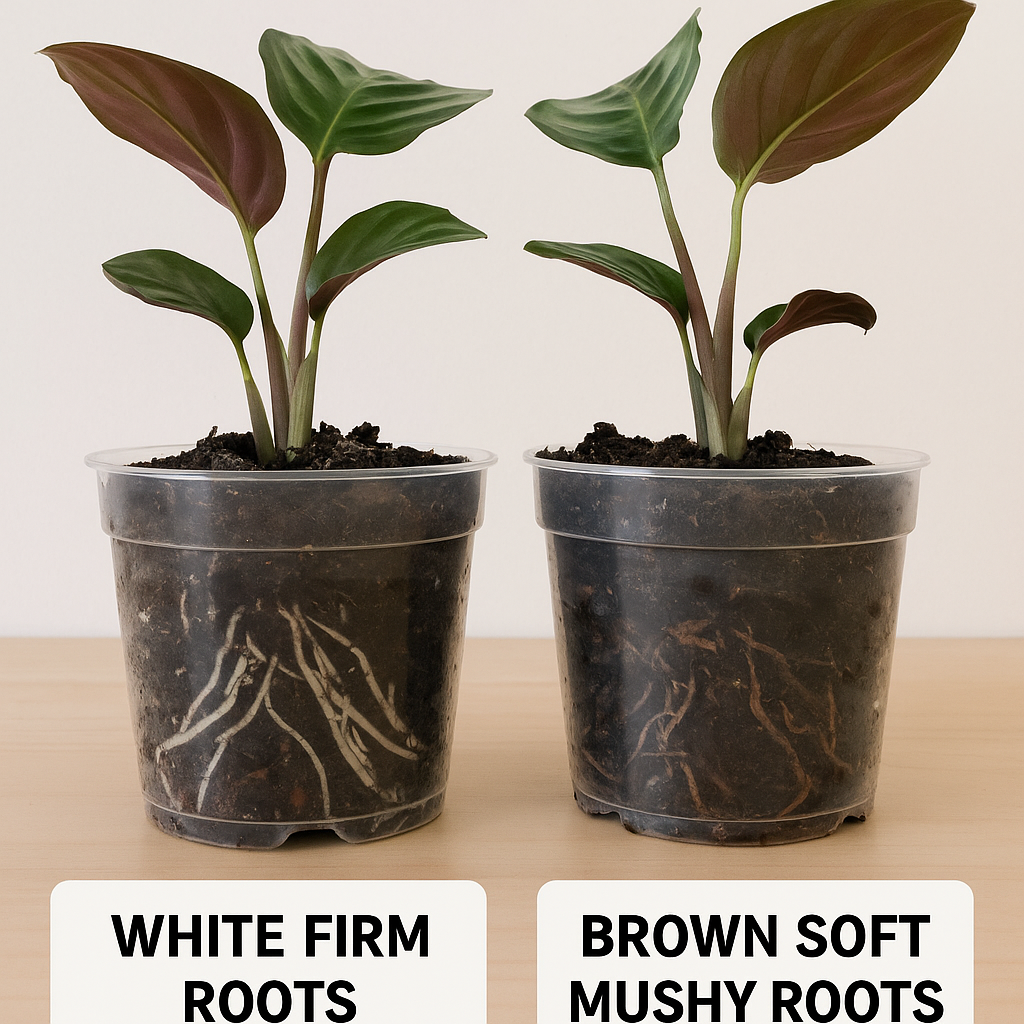
Overwatering is the second most common cause of Calathea curling, and it's sneaky. The plant curls outward (edges flaring), leaves turn yellow or brown, and the soil stays wet. Root rot happens when roots sit in water too long and start to decay.
To check for root rot:
- Gently remove the plant from the pot
- Smell the roots — healthy roots smell like soil; rotten roots smell like decay (rotten fruit, sulfur)
- Look at the roots — healthy = white and firm; root rot = brown, mushy, slimy
- Check the soil — is it soggy? Does water pool on top?
Steps to Save Your Plant
If you catch root rot early:
- Remove the plant from the pot immediately
- Trim rotten roots — use clean scissors, cut away all brown mushy sections
- Let the root ball dry for a few hours
- Repot in fresh, well-draining soil
- Water less — let the top 2 inches dry between waterings
When to Repot
If more than half the roots are rotted, your Calathea is in trouble. Repot into fresh soil, reduce watering, and hope for the best. Seriously affected plants may need to be propagated from healthy stems if the roots are too far gone.
Cause #4: Water Quality
Why Tap Water Harms Calathea
Calatheas are sensitive to chlorine, fluoride, and salts in tap water. These build up in the soil over time and cause leaf curling, brown tips, and general decline.
If your tap water is hard (lots of minerals) or heavily treated, your Calathea will protest.
Best Water Alternatives
- Filtered water — Brita pitcher works for chlorine removal
- Distilled water — pure, no minerals
- Rainwater — if you can collect it
- Let tap water sit overnight — lets chlorine dissipate (doesn't remove fluoride)
For the sensitive Calathea, switching to filtered or distilled water can make a huge difference. It's an easy fix that many people overlook.
Cause #5: Temperature Stress
Drafts and Vents to Avoid
Calatheas hate temperature extremes. They'll curl and droop when exposed to:
- AC vents — cold air blasting directly on leaves
- Heating vents — hot dry air is just as bad
- Drafty windows — cold in winter, hot in summer
- Near exterior doors — temperature fluctuations
Ideal Temperature Range
- Daytime: 65-80°F (18-27°C)
- Nighttime: Above 60°F (15°C)
- No sudden drops — don't move your Calathea from a warm room to a cold patio
Keep your Calathea away from heating and cooling vents, and avoid windows with strong drafts. A consistent temperature is what they want.
Cause #6: Too Much Light
Sunburn vs Normal Light Needs
Calatheas want bright indirect light—think forest floor, not sunny windowsill. Direct sun burns their leaves, causing:
- Curling outward (edges flaring away)
- Brown scorch marks or bleached patches
- Faded, washed-out colors on variegated varieties
Where to Place Your Calathea
- East-facing window — ideal (morning sun, gentle)
- North-facing window — good (consistent indirect light)
- South/West window — only with a sheer curtain filter
- 2-3 feet from any window — bright but not direct
Move your Calathea away from direct sun immediately if you see curling with brown patches—it's sunburn.
Cause #7: Overfertilization
Salt Buildup Signs
Too much fertilizer causes salt buildup in the soil, which draws moisture away from roots. Signs:
- White crust on the soil surface
- Leaves curling despite adequate water
- Brown leaf tips (similar to humidity damage)
- Stunted growth
How to Flush the Soil
- Run water through the pot for 2-3 minutes (let it drain fully)
- Repeat 2-3 times over an hour
- Let drain completely before putting back in its saucer
- Don't fertilize for 2-3 months after flushing
In the future, fertilize sparingly—Calatheas are light feeders. Once a month during growing season (spring/summer), diluted to half-strength.
Cause #8: Pest Infestations
Spider Mites on Calathea
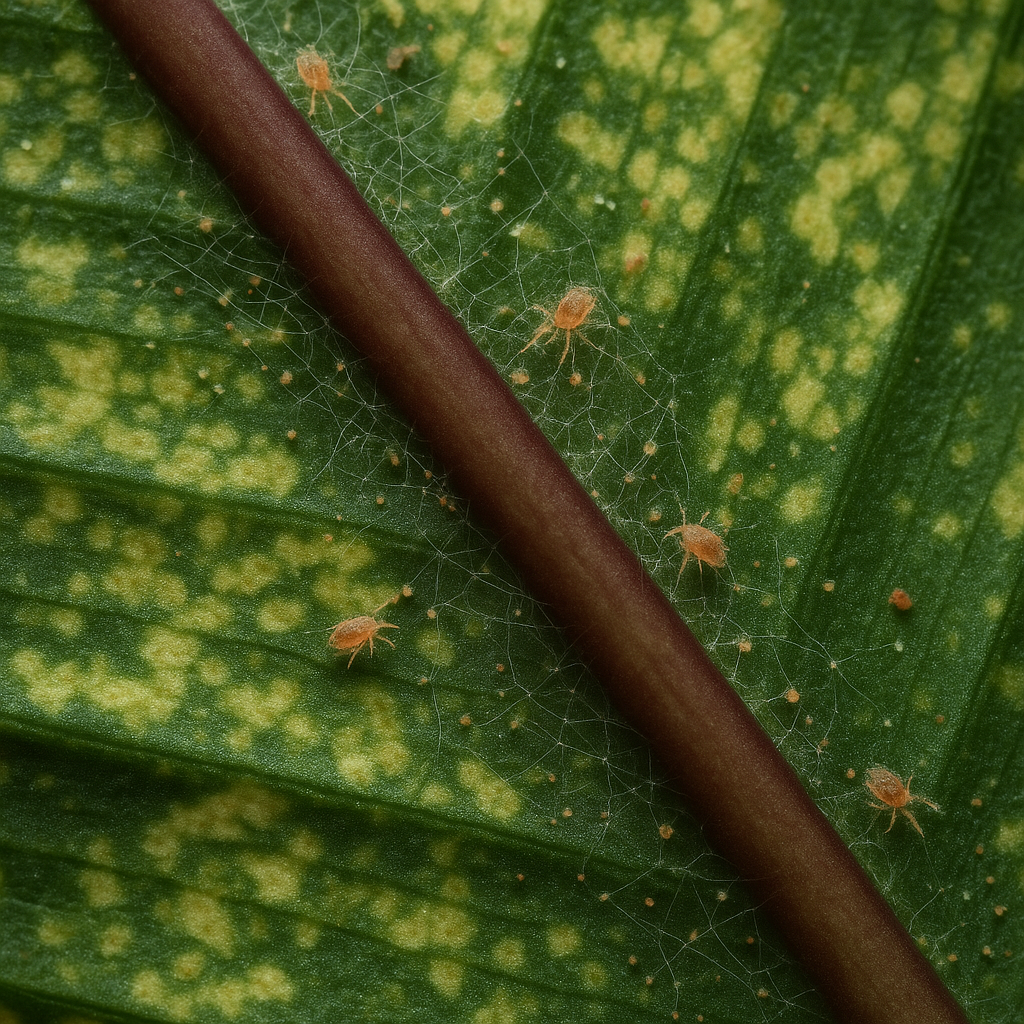
Spider mites love dry conditions, so if your humidity is low, they're more likely to show up. They live on the undersides of leaves and create fine webbing.
Signs of spider mites:
- Fine webbing between leaves
- Tiny dots or stippling on leaves (yellow spots)
- Leaves looking dusty or faded
- Curling and distorting leaves
Other Common Pests
- Mealybugs — white cottony masses in leaf joints
- Aphids — small green bugs, usually on new growth
- Fungus gnats — tiny flies around soil (related to overwatering)
Treatment Options
- Isolate the affected plant immediately
- Spray with neem oil or insecticidal soap weekly
- Wipe leaves with a damp cloth to remove pests
- Increase humidity — spider mites hate it
- For severe infestations, you may need to prune heavily affected leaves
Check your other plants too—pests spread.
Can These Leaves Be Saved?
When Leaves Recover vs When to Prune
Here's the honest truth: not all curling leaves will recover.
- Mild curl with no damage: Will likely unfurl within 1-2 weeks once the cause is fixed
- Crispy brown edges: The leaf will never look perfect, but the plant can still use it for photosynthesis
- Severely damaged leaves (more than 50% brown): Consider pruning—cut at the stem
How to Assess Leaf Damage
- Check the entire leaf — is it mostly green with just curled edges? Give it time.
- Look for new growth — if your Calathea is pushing new leaves, it's recovering
- Trim conservatively — never remove more than 1/3 of the plant at once
- Wait and watch — give it 2-3 weeks after fixing the cause before deciding to prune
The plant knows what it's doing. If it's still producing new leaves, you're on the right track.
Prevention: The Perfect Calathea Setup
Calathea Soil Mix Recipe
Calatheas want moisture-retentive but well-draining soil. Here's a mix that hits both:
- 2 parts potting mix (Fox Farm Jungle Mix works great)
- 1 part perlite (for drainage)
- 1 part coco coir (holds moisture)
- A handful of orchid bark (adds chunkiness for airflow)
Shop Well-Draining Potting Mix
This chunky mix lets water flow through while holding enough moisture for Calathea roots. The perlite and bark prevent compaction and root rot.
Watering Routine
- Check soil with your finger—2 inches down should be dry before watering
- Bottom water when you do water (lets roots absorb evenly)
- Don't follow a strict schedule — check the soil, not the calendar
A moisture meter takes the guesswork out. Stick it in the soil and check the reading—no more guessing if it's dry enough.
Humidity Maintenance
- Keep your humidifier running 6-8 hours daily
- Group Calatheas together for shared humidity
- Use pebble trays under pots
- Avoid placing near heat/AC vents
Frequently Asked Questions
Why is my Calathea still curling after watering? If you watered and the curl hasn't improved in 1-2 days, the problem isn't underwatering. Check humidity, light exposure, and whether the soil is actually drying out properly. Root rot from overwatering can cause similar symptoms.
Should I cut off curling Calathea leaves? Only if more than 50% of the leaf is damaged. Leaves with mild curl can recover. Cut at the stem using clean scissors, and never remove more than 1/3 of the plant's foliage at once.
How long does it take for Calathea to recover? With the cause fixed, you'll see improvement within 1-2 weeks. New leaves will be perfectly healthy. It can take a month or more for a stressed plant to fully recover and start producing new growth again.
Which Calathea varieties are most sensitive? Calathea Medallion, Calathea Ornata (Prayer Plant), and Calathea Roseopicta are the most drama-prone. They curl at the slightest changes. Calathea Lancifolia (Rattlesnake) and Calathea Musaica are slightly more forgiving.
Final Thoughts
Calatheas are drama queens—but they're also forgiving. The key is paying attention to the signals and acting fast. A curling leaf today that's fixed tomorrow will likely recover completely.
Remember: inward curl = underwatering or humidity, outward curl = overwatering or light. Use that, and you can diagnose most Calathea problems in seconds.
Your Calathea isn't trying to annoy you. It's just trying to communicate. Now you speak fluent Calathea.
Want more Calathea care tips? Check out our Calathea Care Guide and Calathea Crispy Edges for deeper dives into keeping your prayer plant happy.
Products We Love
Levoit Humidifiers — The easiest fix for low humidity problems
Dr. Meter Soil Moisture Meter — Takes the guesswork out of watering
Fox Farm Jungle Mix — The base for a great Calathea soil mix
Brita Pitcher — Simple solution for water quality issues