Calathea Crispy Edges: Causes & Fixes to Save Your Plant
Your calathea is trying to tell you something — and that something is usually "I'm unhappy."
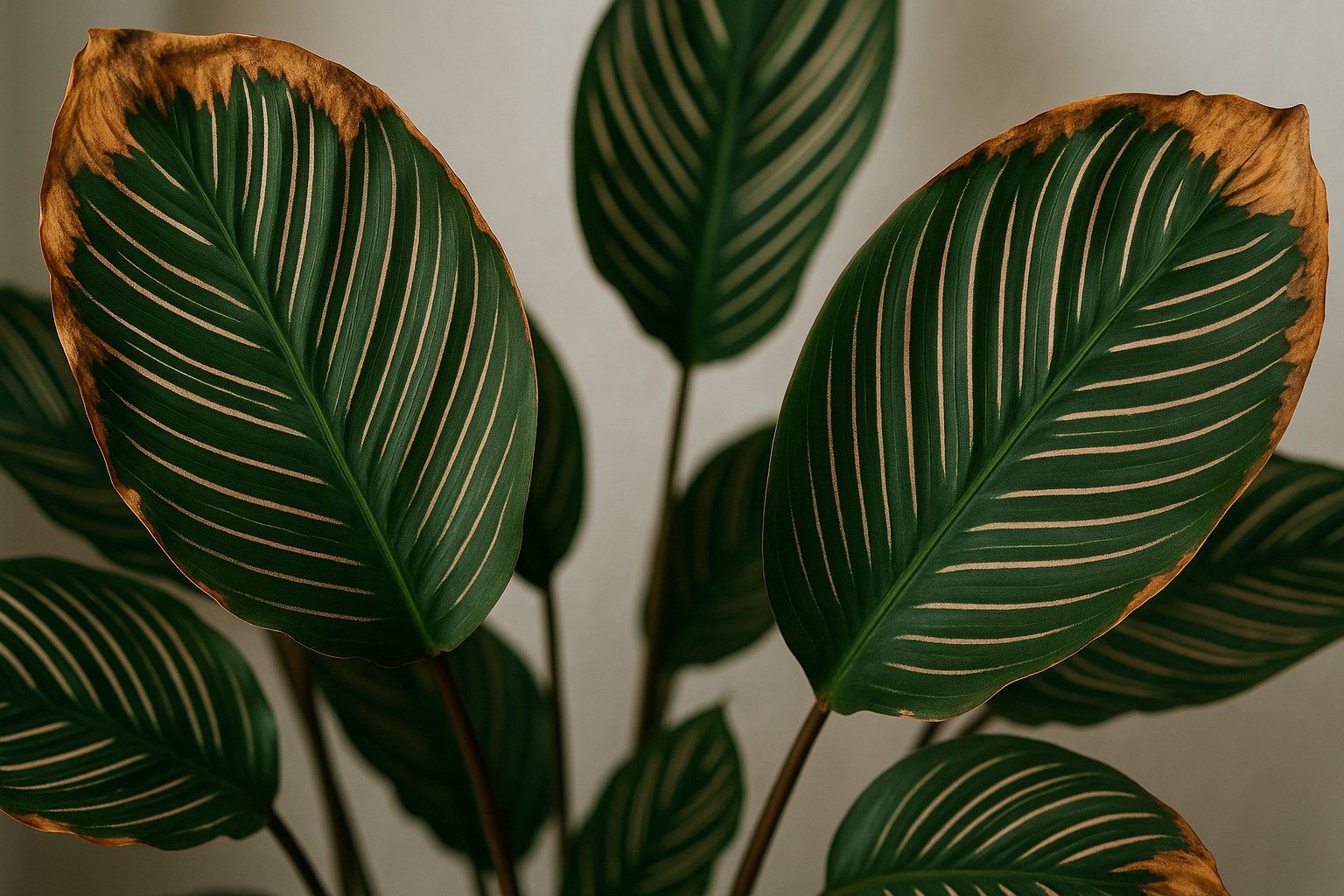
What Causes Calathea Crispy Edges?
Here's the thing about calatheas: they're drama queens. But unlike that friend who complains about everything, they have legitimate grievances. Crispy edges are your plant's way of saying something in its environment is off.
The six main culprits, ranked by how often they're responsible:
- Low humidity — the #1 cause, by a lot
- Tap water quality — minerals and chemicals they hate
- Overwatering — root rot shows up as crispy leaves too
- Underwatering — yes, it goes both ways
- Temperature stress — they're picky about warmth
- Fertilizer burn — too much love, chemically speaking
Let's break each one down so you can play plant detective.
Low Humidity — The #1 Culprit
If your calathea has crispy edges, 9 times out of 10, it's humidity. These are rainforest plants. They came from places where the air is thick with moisture, and your living room? It's a desert in comparison.
What to look for:
- Brown, crispy edges on most leaves
- Leaves curling inward
- New growth coming out damaged
The fix: Aim for 50-60% minimum humidity. Ideally 65%+. If that sounds like a greenhouse, that's because it basically is. You can get a hygrometer (they're cheap) to actually measure what you're working with.
🌫️ Give Your Calathea the Humidity It Craves
Want to give your calathea the humidity it craves? Here are our tested humidifiers that keep tropical plants happy:
*As an Amazon Associate, we earn from qualifying purchases.
Quick humidity wins:
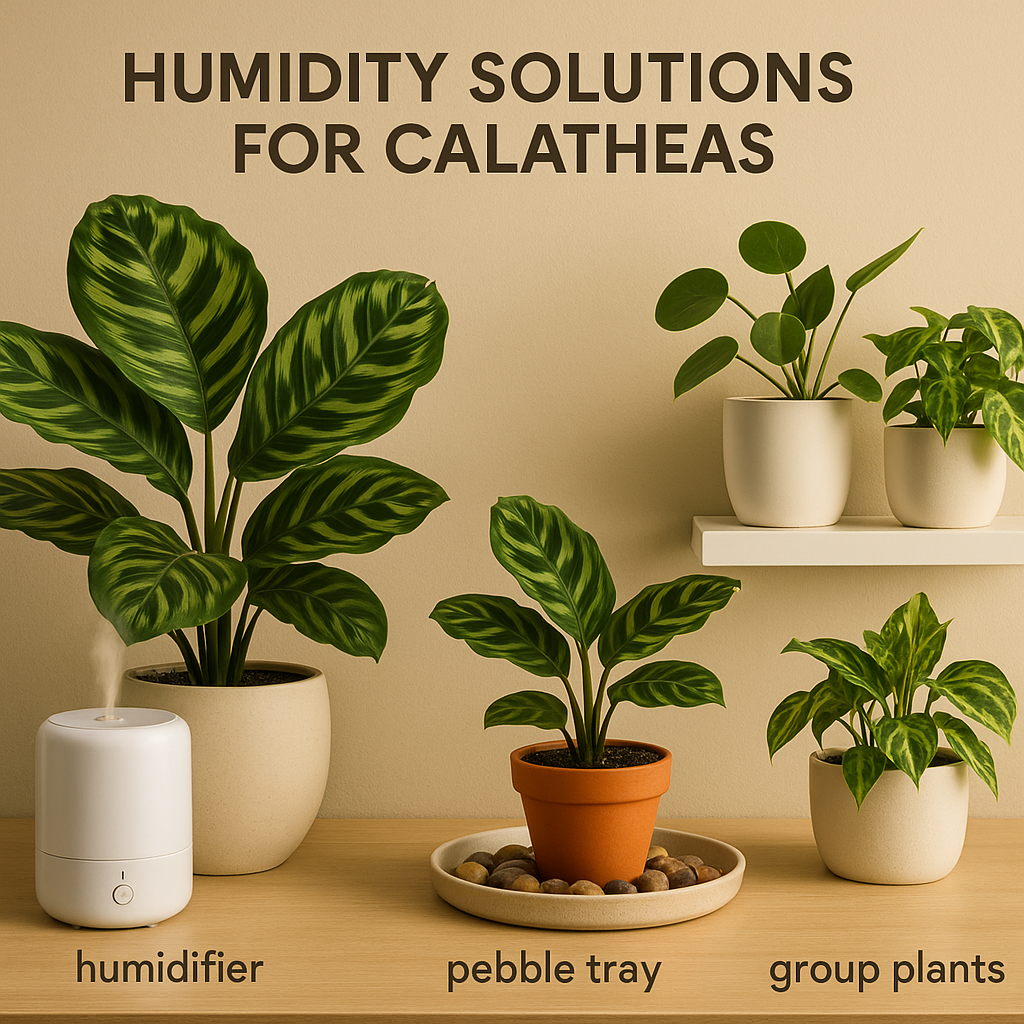
- Group plants together (they create a microclimate)
- Use a pebble tray with water
- Run a humidifier near your plants
- Move them to a bathroom or kitchen (naturally more humid rooms)
Tap Water Quality Issues
Calatheas are incredibly sensitive to the minerals and chemicals in tap water. Fluoride, chlorine, and dissolved solids? All enemies.
What to look for:
- Brown leaf tips (not just edges)
- White crust on soil surface (mineral buildup)
- Affected leaves across the plant, not just old ones
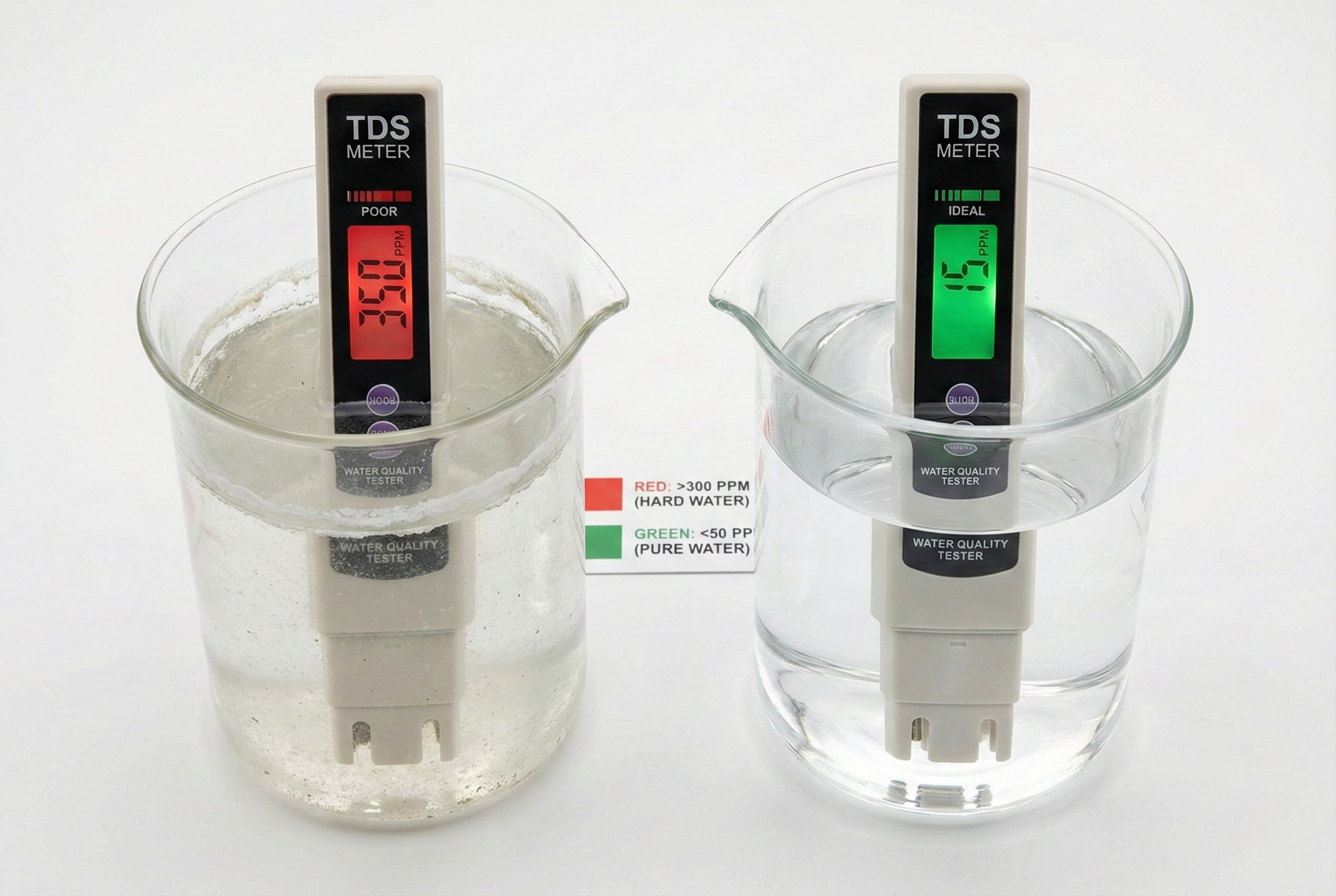
The fix: Switch to filtered, distilled, or rainwater. If you only have tap water, let it sit out overnight to off-gas some chlorine, but that doesn't remove the minerals. A basic TDS meter can tell you if your water is in the safe zone — under 100 ppm is ideal.
💧 Test Your Water Quality
Not sure if your water is safe for your calathea? A TDS meter takes the guesswork out — under 100 ppm is the sweet spot for calatheas:
*As an Amazon Associate, we earn from qualifying purchases.
Overwatering vs Underwatering
Both can cause crispy edges, but the rest of the plant tells you which one you're dealing with.
Overwatering signs:
- Soil stays wet for weeks
- Leaves drooping AND crispy
- Possible root rot (mushy, brown roots)
- Pot feels heavy constantly
If you suspect root rot, check out our root rot treatment guide for help saving your plant.
Underwatering signs:
- Soil dries out completely between waterings
- Leaves drooping but perk up after watering
- Pot feels light when you pick it up
The fix for both is the same basic principle: water when the top 1-2 inches of soil are dry. Stick your finger in. If it's dry, water. If it's damp, wait. Revolutionary, I know.
Temperature Stress
Calatheas don't like being cold, and they really don't like temperature swings.
What to look for:
- Crispy edges plus browning patches
- Leaves near windows or AC vents affected most
- Problem started after a weather change or moving the plant
The fix: Keep your calathea away from drafts — both cold (windows, exterior doors) and hot (heating vents, radiators). They like temperatures between 65-80°F (18-27°C). Sudden temperature drops are especially problematic.
Fertilizer Burn
More is not better. If you're fertilizing too often or too strongly, the salts build up in the soil and burn the roots, which shows up as crispy leaf edges.
What to look for:
- Crispy edges plus stunted growth
- White crust on pot edges (salt buildup)
- Problem started after fertilizing
The fix: Flush the soil thoroughly with plain water. Going forward, dilute your fertilizer to half strength and only fertilize during the growing season (spring/summer). Our fertilizer guide has the full breakdown.
Quick Diagnosis: Which Cause Applies to You?
Answer these three questions to narrow it down:
Question 1: Are the crispy edges on the tips only, or do they extend along the full edge?
- Tips only → likely tap water or fertilizer
- Full edges → likely humidity
Question 2: Is the soil usually wet or dry when you check it?
- Wet → overwatering or humidity
- Dry → underwatering or humidity
Question 3: What does your tap water test at? (If you can test it.)
- Over 150 ppm → likely water quality
- Under 100 ppm → probably not the water
Still not sure? It's probably humidity. It's always humidity.
How to Fix Calathea Brown Edges
Increase Humidity
If humidity is your issue (and it probably is), here's your action plan:
- Get a humidifier — The most reliable solution. Place it near your plants.
- Make a pebble tray — Fill a tray with pebbles and water, set the pot on top. The evaporating water increases local humidity.
- Group plants together — Plants release moisture through transpiration, so clustering them creates a humid microclimate.
- Move locations — Bathrooms and kitchens naturally have higher humidity.
Switch to Filtered or Distilled Water
For water quality issues:
- Start using filtered water — A basic pitcher filter is fine, or just use distilled water.
- Rainwater works great — If you can collect it, your plants will thank you.
- Flush soil regularly — Every few weeks, run plain water through the soil to flush out mineral buildup.
Adjust Your Watering Routine
For watering-related crispy edges:
- Check soil before watering — Stick your finger 1-2 inches deep. Only water if dry.
- Make sure drainage is good — The pot needs holes. No exceptions.
- Consider the pot size — Too much soil holds too much water. Go up only when roots are circling the pot.
Need help perfecting your watering technique? Our watering guide has everything you need to master the finger. test and more
Timeline: When Will I See Results?
Here's the honest truth: damaged leaves won't heal. Those crispy edges are permanent. But once you fix the cause, new growth will come in healthy.
- Humidity fix: 2-4 weeks for new leaves to emerge healthy
- Water quality fix: 1-2 months for full recovery
- Watering adjustment: 2-3 weeks for the plant to stabilize
Patience is key. The plant has to grow new leaves to show you it's happy again.
How to Trim Crispy Edges Without Ruining the Look
Okay, here's where I give you permission to be a little aggressive. Those crispy edges aren't coming back, and they're distracting.
The aesthetic approach:
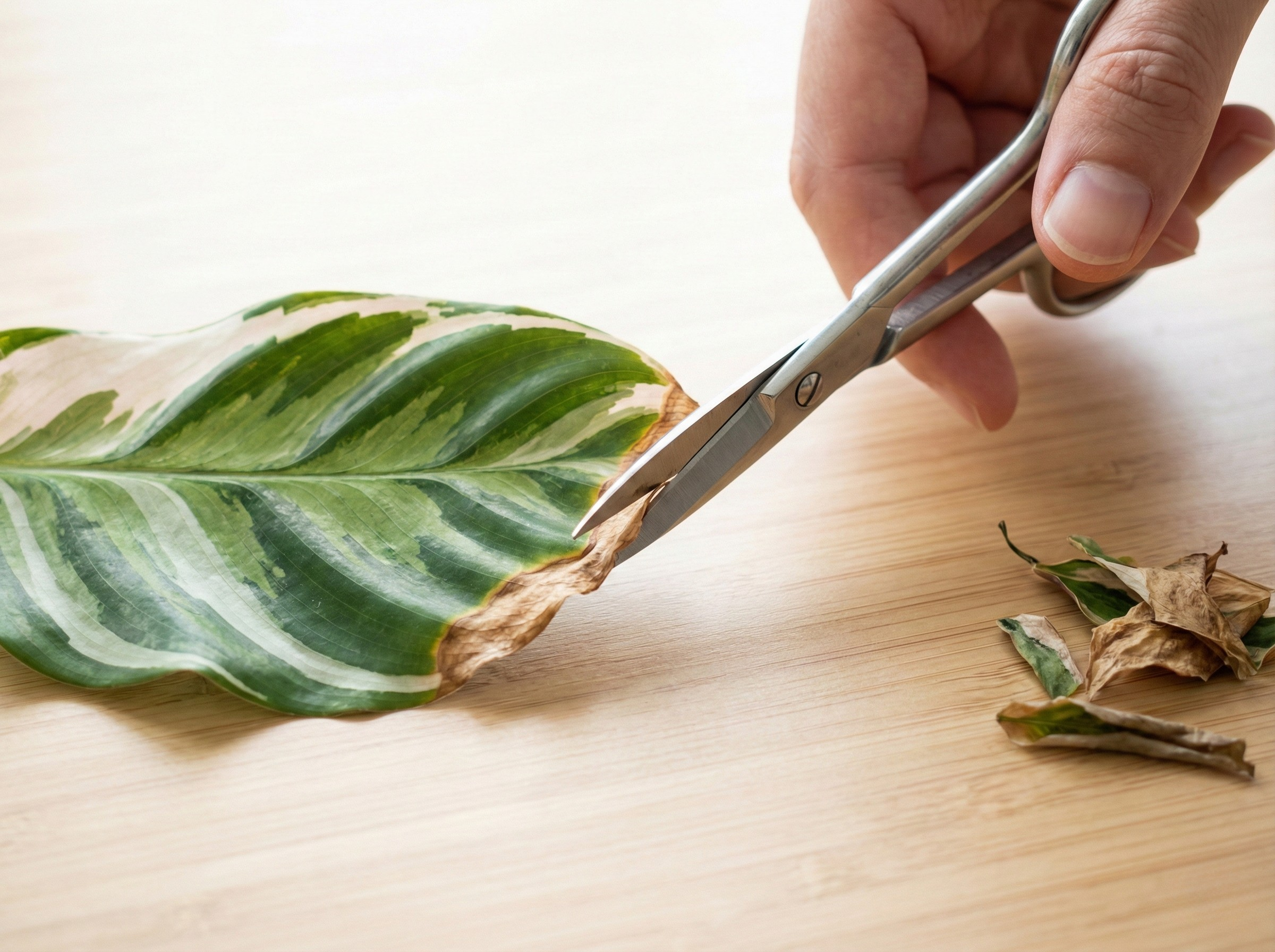
- Follow the leaf shape — Use sharp, clean scissors to trim along the natural curve of the leaf. Don't cut in a straight line — follow the margin.
- Leave a small margin — Don't cut flush with the green. Leave a tiny brown border (like 1-2mm). It looks more natural as the leaf grows.
- Remove completely damaged leaves — If more than 50% of a leaf is crispy, just cut the whole thing off at the stem. Your plant will grow new ones.
Pro tip: Clean your scissors with rubbing alcohol between plants to avoid spreading any potential issues.
Prevention Protocol — Keep Crispy Edges From Returning
An ounce of prevention, right?
- Keep humidity consistent — Don't let it drop below 50%. A humidifier with a timer helps.
- Use filtered water — Make it a habit from day one.
- Monitor seasonally — Winter heating dries out air significantly. This is when most crispy edge problems reappear.
- Check your plants weekly — Catching issues early means easier fixes.
- Don't fertilize in winter — Reduced light = reduced growth = fertilizer buildup.
Calathea Varieties and Their Hardiness
Not all calatheas are equally dramatic. Some are slightly more forgiving:
More forgiving varieties:
- Calathea orbifolia — Larger, more resilient leaves
- Calathea rufibarba (Furry Feather) — Tolerates slightly lower humidity
High-maintenance varieties:
- Calathea makoyana (Peacock) — The diva of divas
- Calathea roseopicta (Rose Painted) — Stunning but sensitive
- Calathea ornata (Pinstripe) — Classic beauty, classic problems
If you're new to calatheas, start with orbifolia. It's the "gateway drug" to the calathea addiction.
Frequently Asked Questions
Will my calathea recover from crispy edges? Yes, absolutely. The damaged leaves won't heal, but once you fix the underlying issue, new growth will be healthy. It takes a few weeks to months, depending on the cause.
Can I cut off the crispy parts? Yes — trim them following the leaf's natural curve. It won't damage the plant, and it looks better.
Why are only the edges brown? That's classic humidity or water quality. Whole-leaf browning usually points to overwatering or temperature issues.
What's the ideal humidity for calatheas? 50-60% minimum, 65%+ ideal. Below 40% and you'll constantly battle crispy edges.
Does misting help? Briefly, but it doesn't raise humidity long-term. The water evaporates quickly and can actually cause fungal issues if the leaves stay wet. A humidifier or pebble tray is more effective.
Bottom Line
Calathea crispy edges are annoying but fixable. The plant isn't dying — it's just complaining. Figure out whether it's humidity, water, or something else, make the adjustment, and wait for new growth.
The real secret? Accept that calatheas are high-maintenance. If you can keep them happy, you're basically a plant god.
Want more help with troubleshooting? Check out our humidity guide for solutions that actually work, or dive into our watering guide to master your watering routine. If you're not sure whether you're overwatering or underwatering, our overwatering vs underwatering decision tree will help you figure it out.